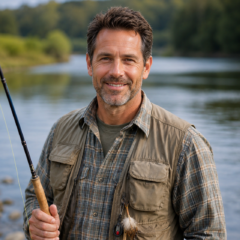
Pond fishing is like learning to ride a bike: simple to start, rewarding as you get the hang of it, and easier when you focus on the basics first. You’ll learn which gear actually matters, how to pick bait that gets bites, where fish like to hide, and how to fish safely without overcomplicating your first trips.
Quick Answer
For pond fishing, start with a medium-light spinning rod, 6- to 8-pound monofilament line, small hooks, split shot, a bobber, and simple bait like worms or crickets. Cast near weeds, logs, banks, drains, shade, and drop-offs. Fish early or late, stay quiet, check local rules, and adjust bait depth until you find bites.
Key Takeaways
- Ponds are beginner-friendly because they are smaller, easier to read, and often hold bluegill, bass, catfish, and crappie.
- A simple spinning setup with light line, small hooks, split shot, bobbers, worms, and a few small lures is enough for most pond trips.
- Fish usually hold near structure, shade, inflows, weed edges, drop-offs, dams, drains, and other places that offer food or cover.
- Season matters: fish shallow in warmer spring periods, target shade and oxygen in summer, follow baitfish in fall, and slow down in deeper winter water.
- Always get permission, check license rules, follow limits, pack out trash, and avoid moving bait or water between ponds.
At a Glance
| Time Required | 1 to 3 hours for a beginner-friendly pond trip |
| Difficulty | Easy for beginners, with room to build casting and lure skills |
| Tools Needed | Spinning rod and reel, 6- to 8-pound line, hooks, bobbers, split shot, pliers, bait, and a small tackle box |
| Cost | Low to moderate, depending on whether you already own basic fishing gear and need a license |
Why Pond Fishing Is Great for Beginners

Because ponds are small and nearby, they make a perfect place to learn fishing without a lot of fuss. You’ll find pond fishing liberating because local, accessible spots let you practice casting, baiting hooks, reading water, and landing fish without long drives or expensive gear.
Still, “small” does not always mean “rule-free.” Many public ponds require a fishing license, and private ponds require landowner permission. Before you cast, check your state or local fishing rules so you know the license, size limit, season, and bag limit requirements for that water.
The compact size helps you read water and fish behavior fast, so you’ll improve casting and timing in fewer trips. Farm and community ponds often hold bluegill, bass, channel catfish, and crappie, giving beginners steady chances to catch fish and build confidence.
Shallow water, bank access, weed lines, and visible cover make it simpler to test different bait and see quick results. Pond outings also invite family and friends to share the process, turning lessons into shared freedom and connection.
Stick to basic techniques, watch the water, and you’ll find those first catches aren’t just trophies. They are proof that you are learning, adjusting, and ready to take your skills further.
Note: Pond fishing rules vary by state, city, park, and property owner. Check local regulations before you fish, even when the pond looks small or informal.
Essential Gear and Tackle for Pond Fishing
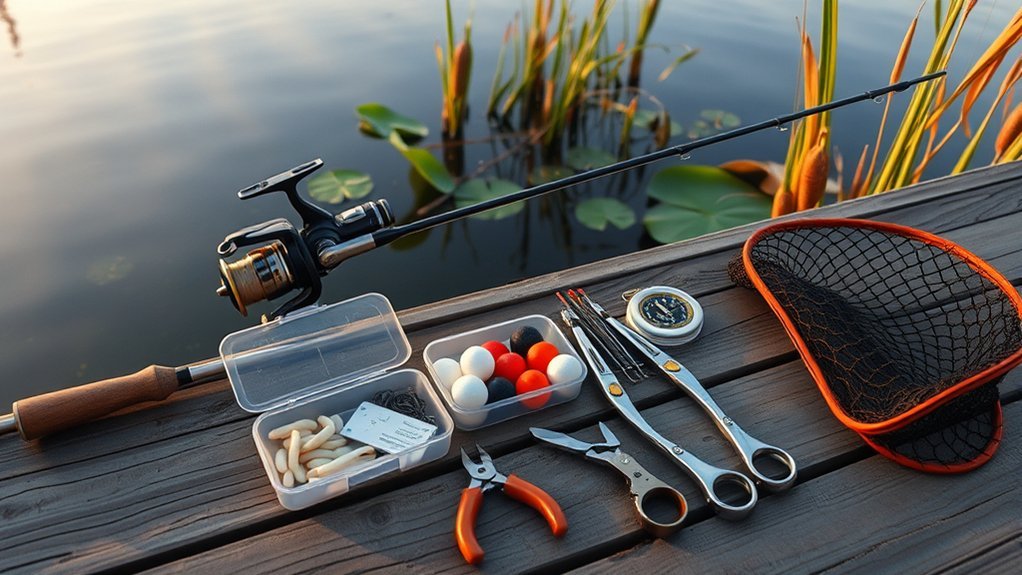
Start with a simple setup, and you’ll spend more time fishing and less time dealing with gear. For essential gear, pick a medium-light to medium spinning rod in the 5-foot-6-inch to 7-foot range. Pair it with a small spinning reel, such as a 500 to 1000 size reel for panfish or a 1000 to 2500 size reel if you also want to target bass.
Start simple: a medium-light spinning rod, light monofilament line, small hooks, split shot, and live bait can catch most common pond fish.
Thread 6- or 8-pound monofilament fishing line for versatility across common pond species and conditions. Monofilament is beginner-friendly because it is affordable, easy to tie, and forgiving when a fish runs or shakes.
Keep your tackle box focused: No. 6 Aberdeen hooks, size 8 to 4 bait hooks, split shot sinkers, small bobbers, and a few swivels cover basic rigs. Bring live bait like night crawlers, red worms, wax worms, crickets, or minnows where legal. They are accessible and effective for bluegill, catfish, crappie, and bass.
Add a handful of small lures, such as Rooster Tails, Beetle Spins, small curly-tail grubs, 4- to 5-inch soft plastic worms, small crankbaits, and a compact topwater lure. These give you movement and flash when fish are chasing bait instead of eating still presentations.
Pack needle-nose pliers, a line cutter, extra leaders, sunscreen, insect repellent, drinking water, a towel, and a small trash bag. You don’t need a lot to be effective. You need reliable pieces that free you to fish more and worry less.
This compact kit gives you freedom on the water and confidence to learn without carrying a heavy tackle bag.
Simple Beginner Pond Rig
A basic bobber rig is one of the easiest ways to start. Tie on a small hook, pinch one or two split shot sinkers 6 to 12 inches above the hook, and clip a bobber above the sinkers. Start with the bait hanging 1 to 3 feet below the bobber, then adjust deeper or shallower until you get bites.
For catfish, remove the bobber and fish the bait on the bottom with a split shot or small slip sinker. For bass, switch to a soft plastic worm, spinner, or small crankbait and cast around cover.
Choosing Baits and Lures That Work in Ponds

Wondering which bait to reach for when you hit the pond? You’ll want options that free you from guesswork and put fish near your hook. In small ponds, tiny lures like Wordens Rooster Tail, Johnson Beetle Spin, or a 1/4-ounce chatterbait can mimic baitfish and trigger strikes from active bass and panfish.
Use live bait such as earthworms, night crawlers, crickets, or minnows on a No. 6 Aberdeen hook with split shot for versatile presentations that catch bluegill, catfish, and other pond fish. Check local rules before using minnows or collecting bait from the pond because some waters restrict live bait use.
| Type | When to Use |
|---|---|
| Small lures | Clear water, active fish |
| Live bait | Slow bites, structure edges |
| Topwater lures | Early morning/evening surface activity |
| Experiment | Change colors/sizes by day |
Topwater lures such as Heddon Tiny Torpedo, small poppers, or floating frogs shine at dawn and dusk when fish feed near the surface. In stained water, use vibration, scent, or darker silhouettes. In clear water, use smaller, natural-looking baits and make softer casts.
You’ll build confidence by trying different baits, colors, depths, and retrieve speeds. Fishing ponds vary from one property to the next, so adapt quickly and keep notes on what works.
Pro Tip: Start with live worms under a bobber if you only want bites. Switch to small spinners, soft plastics, or topwater lures when you want to target more active bass.
Reading Pond Structure and Finding Fish

After you’ve picked a few reliable baits, the next skill is reading the pond so you know where to cast them. Fish do not spread evenly across a pond. They gather where food, shade, oxygen, comfort, and cover overlap.
Look first at whether the pond is structureless or structured. In structureless ponds, rely on subtle clues such as ripples, color changes, wind-blown banks, insect activity, and baitfish movement. Those clues show where fish are feeding.
Start by noting whether a pond has obvious cover. If it does not, read ripples, wind, shade, color shifts, and baitfish activity.
In structured ponds, target visible features: points, creek channels, submerged logs, weed edges, docks, culverts, rocks, brush, and the dam side where deeper water often collects. Larger fish often use these areas as ambush points.
Check the shallow side around inflows, especially after rain if the water remains safe and not muddy beyond visibility. These flats can concentrate food and become fishing hotspots when oxygen and current pull baitfish into the area.
Watch water movement closely. Surface disturbances, fleeing minnows, swirls, and small wakes can tell you when predators are nearby. Birds, frogs, insects, and dragonflies can also point you toward active shorelines.
Move quietly, cast accurately, and let observed patterns guide you rather than assumptions. That approach frees you from guessing and helps you deliberately test likely spots until you find consistent bites.
Best Pond Fishing Spots to Try First
- Weed edges: Bluegill, bass, and baitfish often hold along the outside edge where cover meets open water.
- Fallen trees and brush: These areas give fish shade, ambush cover, and protection from birds.
- Dams and deepest banks: Fish often slide deeper here during heat, cold fronts, and winter.
- Inlets and culverts: Moving water can bring oxygen, insects, and small baitfish.
- Shady banks: Shade can hold fish during bright, hot, or low-water periods.
- Wind-blown banks: Wind can push plankton, insects, and baitfish toward one side of the pond.
Seasonal Strategies: Spring, Summer, Fall, and Winter
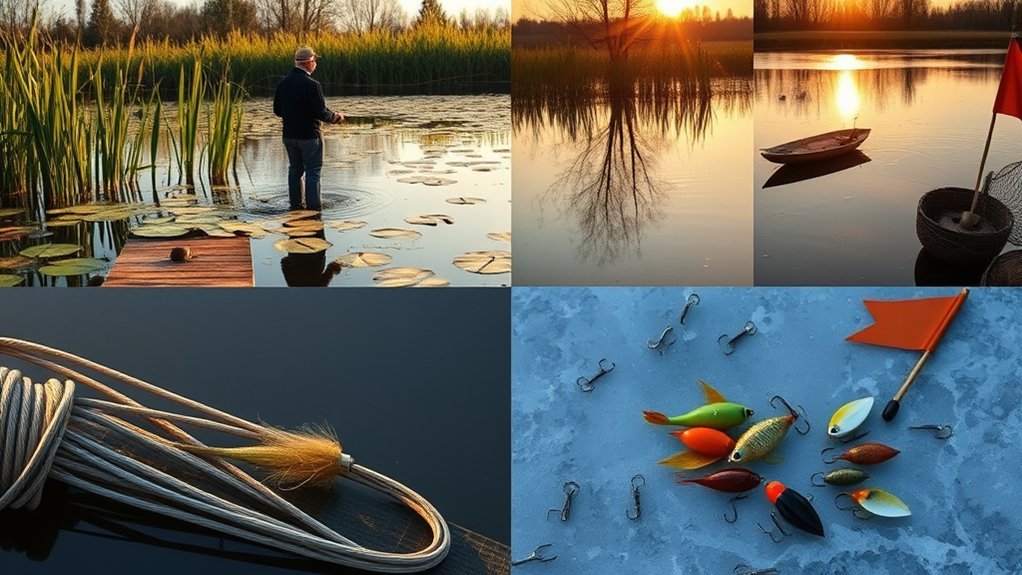
Pond fishing changes with water temperature, daylight, rainfall, oxygen, and available food. You do not need advanced electronics to adjust. Watch where baitfish move, how deep the fish seem to hold, and whether they react better to fast or slow presentations.
In spring, work moving baits in shallow water around the dam, fallen trees, rocks, weeds, and firm-bottom areas as bass and panfish move toward spawning areas.
In summer, focus on shade, early mornings, evenings, deeper water, weed edges, and any place with oxygen or cooler water. In fall, follow baitfish and use moving lures. In winter, shift to the deepest spots near dams, drains, and channels while slowing your presentations.
Adjusting your approach for these seasonal changes will keep you catching through the year.
Spring: Spawn and Shallow Fishing
Because bass move into shallow water to spawn when water temperatures warm, spring is a strong time to target them near shore with moving baits, soft plastics, and small lures. Bluegill and crappie may also become easier to catch around shallow cover as the season progresses.
You’ll find bass staging on gravel, sand, firm bottom, weed edges, and protected coves. They can get aggressive during the spawn, so fish close to cover like fallen trees, rocks, and vegetation.
Fish early morning or late evening when activity peaks, but do not ignore warm afternoons after a cold night. Stay patient, move deliberately, and respect the water.
- Cast along edges and around cover; retrieve with steady, enticing action.
- Probe gravel and sandy flats where nesting bass may gather; vary speed until you trigger strikes.
- Use soft plastics or crankbaits that mimic forage to tempt defensive or feeding fish.
Summer: Shade, Oxygen, and Low Light
Summer pond fish often avoid the brightest, hottest part of the day. Start early, return near sunset, or fish shaded banks when the sun sits high. Bass may hold under mats, overhanging trees, docks, or deeper edges. Bluegill often stay near weeds, brush, and shallow cover.
Use topwater lures at dawn and dusk, then switch to worms, soft plastics, jigs, or small spinners when the sun climbs. If fish stop chasing, slow down and place bait near shade or the outside edge of weeds.
After heavy rain, watch inflows and culverts, but avoid fishing during lightning, flooding, or unsafe bank conditions.
Fall: Follow Baitfish and Cover Water
In fall, many pond fish feed actively before winter. Look for baitfish flickering near the surface, birds working the bank, or bass pushing minnows into shallow coves. Moving baits can shine because they let you cover water and find active fish.
Try small crankbaits, spinnerbaits, Beetle Spins, Rooster Tails, chatterbaits, and soft plastics. If fish follow but do not strike, downsize your lure or pause during the retrieve.
Winter: Deep, Slow Presentations
When water cools and bass retreat to the deepest holes and drain areas, you’ll need to slow your approach and present baits that match the lethargic pace of cold-weather forage. Think jigs and soft plastics fished deliberately around submerged logs, rocks, dams, drains, and other structure where fish seek shelter and stable water.
Head to deep water and target drain outlets, ledges, steep banks, and the dam side, working tight to cover. Use slow presentations that imitate sluggish baitfish in cold water. Drag, hop, and pause with plenty of contact time.
Fish the warmest afternoon window, when a slight rise in temperature can trigger movement. Stay patient, focus on structure, and trust minimal, deliberate action.
You’ll find liberation in methodical, efficient winter tactics.
Casting, Retrieval, and Presentation Techniques
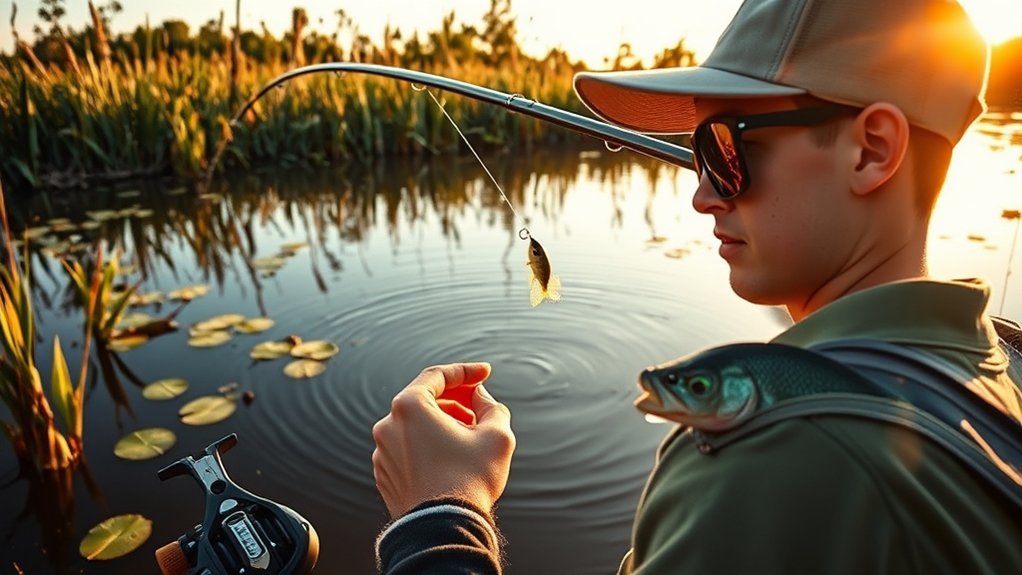
Though it may seem simple, your casting, retrieval, and presentation choices make the difference between a quiet afternoon and steady action on the line.
When fishing a pond, aim your casting close to shore and near structure because fallen trees, weed edges, rocks, and shady banks hold fish. Practice soft, low-splash casts so you don’t spook wary fish in small ponds.
Adjust lure weight or use a bobber to explore the water column. Changing depth helps you find where fish are holding. With bait, move the bobber up or down every few minutes until you get bites. With lures, count the bait down before retrieving to test shallow, middle, and deeper water.
Adopt a steady, smooth retrieval to imitate prey, then vary speed when fish refuse to commit. For topwater lures like poppers or frogs, twitch to create surface commotion at dawn and dusk. With soft plastics, try a slow lift-and-drop or drag-and-pause retrieve near cover.
You’ll gain freedom on the water by learning simple presentation techniques and trusting your reads.
- Aim casts near shorelines and underwater structure.
- Use smooth retrievals, then change tempo if needed.
- Vary depth with weight or a bobber to target different layers.
- Pause often when water is cold, clear, or calm.
- Make repeated casts from different angles before leaving a good-looking spot.
Common Beginner Mistakes to Avoid
- Fishing too fast: Slow down when bites are light, especially in cold water or after a front.
- Standing too close to the bank: Fish may hold right at your feet, so make your first casts before walking to the edge.
- Using hooks that are too large: Smaller hooks catch more bluegill, crappie, and cautious pond fish.
- Ignoring wind: A wind-blown bank can collect food and baitfish.
- Leaving trash or line behind: Discarded line can harm wildlife and damage access for other anglers.
How to Access Private and Public Ponds Respectfully
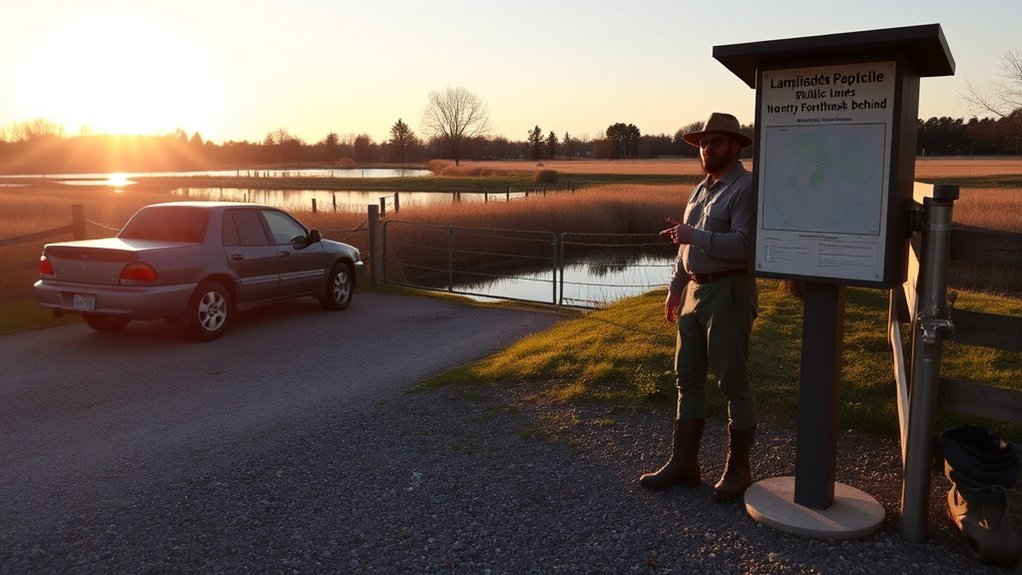
If you want reliable access to good fishing spots, start by treating landowners and local rules with respect. Always ask permission before fishing private ponds, offer to help with maintenance when appropriate, and carry the proper license for public waters.
When you approach a private pond, knock, introduce yourself, and state your intent plainly. People respond better to honesty than to someone sneaking around a fence or parked at a field gate. Ask where you may park, which banks are safe, whether guests are allowed, and whether the owner has catch-and-release rules.
Offer to help pick up trash, respect livestock and gates, avoid blocking drives, and leave the property cleaner than you found it. Some owners may appreciate a shared catch, but ask first because many pond owners manage fish populations carefully.
For public ponds, use maps, park websites, local tackle shops, and community forums to find spots. Then check local regulations and secure required fishing licenses before you go.
Move quietly to the water’s edge, minimize disturbance, and pack out any trash. Follow bag limits and species rules. Engage respectfully with other anglers and landowners. That community knowledge frees you to fish more places and keeps waters healthy.
Respect the environment and you’ll keep access open.
Warning: Never climb fences, ignore posted signs, or assume a private pond is open because other people fish it. Trespassing can lead to fines, conflict, and lost access for everyone.
Target Species and How to Catch Them
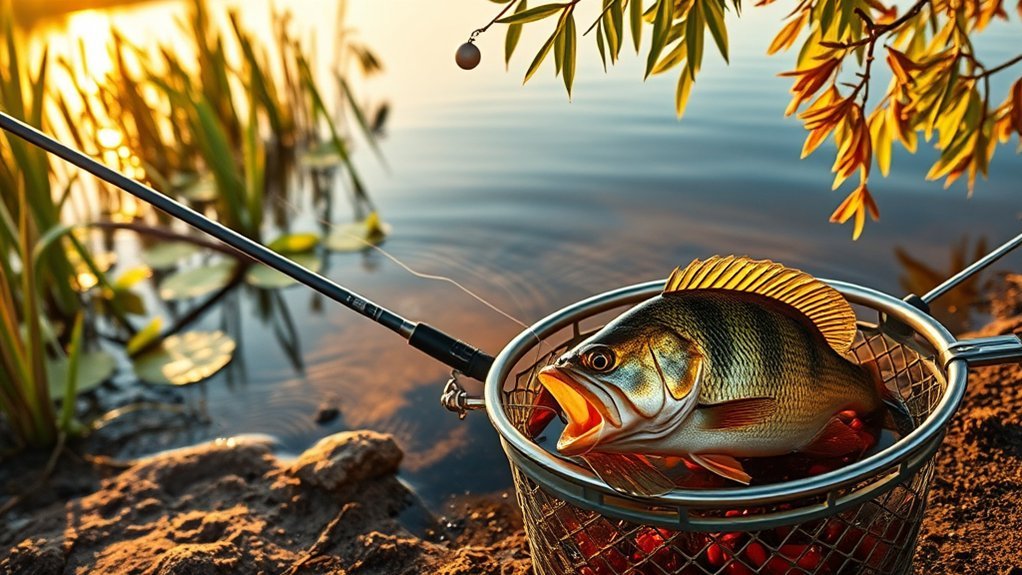
Start by focusing on the four species you’re most likely to find in farm ponds: largemouth bass, bluegill, channel catfish, and crappie. Each responds to different presentations and gear.
Know your target species and match bait and fishing techniques so you catch more and learn faster. Use light tackle for bluegill and crappie. Switch to sturdier rigs for bass and heavier line for large catfish.
- Largemouth bass: Try soft plastic worms, spinners, crankbaits, frogs, or small swimbaits around fallen trees, weed edges, points, shade, and submerged rocks to provoke strikes.
- Bluegill: Use size 8 to 4 hooks, live worms or crickets, small jigs, or a bobber rig. Bluegill are ideal for quick, beginner-friendly action.
- Channel catfish and crappie: Fish catfish on the bottom with worms, cut bait, prepared bait, or stink bait where legal. Use stronger line if large fish live in the pond. For crappie, vertical jig small jigs or minnows near cover, especially in spring.
Adapt gear and approach to each species, and you’ll feel more confident catching fish in farm ponds.
Quick Species Cheat Sheet
| Species | Best Beginner Bait | Where to Cast | Simple Tip |
|---|---|---|---|
| Bluegill | Worms, crickets, wax worms | Weeds, docks, shallow cover | Use a small hook and tiny bait piece. |
| Largemouth bass | Soft plastics, spinners, crankbaits | Logs, weed edges, shade, points | Cast past cover and retrieve beside it. |
| Channel catfish | Worms, cut bait, prepared bait | Bottom near deeper water or inflows | Let the bait sit and watch the line. |
| Crappie | Small jigs or minnows where legal | Brush, docks, timber, deeper edges | Fish slowly and keep the bait near cover. |
Safety, Regulations, and Stewardship Tips

Before you cast a line, make sure you’ve got permission from the landowner and a valid fishing license for the state or local water when required. Those two steps protect you legally and help maintain good relationships with property owners.
Respecting private access and following local fishing regulations isn’t just law. It is how you keep the freedom to fish. Check bag limits, size restrictions, seasonal rules, bait restrictions, and special pond rules so you can fish near sensitive areas without harming populations.
Practice basic safety: watch your footing around muddy banks, keep children away from steep drop-offs, wear a life jacket if you’re on a boat, and handle hooks carefully. Bring water, sun protection, and insect repellent. Stop fishing during lightning or dangerous weather.
Talk with pond owners about their preferences. Some want catch-and-release, others allow keeping certain fish under state rules, and some manage ponds by removing specific species or sizes. That dialogue supports stewardship and protects pond health.
Avoid overfishing, remove tackle debris, and never transfer bait, plants, fish, or water between ponds. Moving organisms between waters can spread disease or invasive species. By following regulations and making conservation choices, you’ll enjoy the pond now and preserve it for the future.
Catch-and-Release Basics
If you plan to release a fish, handle it quickly and gently. Wet your hands before touching the fish, keep it close to the water, remove the hook with pliers, and avoid squeezing the belly or touching the gills. If the hook is deep, cut the line close to the hook rather than tearing the fish.
For photos, get the camera ready first, lift the fish briefly, then return it to the water. Hold the fish upright in the water until it swims away on its own.
Frequently Asked Questions
How do I clean and store pond-caught fish safely?
Keep fish alive on a stringer only where legal and safe, or place them on ice as soon as possible. Rinse your hands and tools, gut or fillet the fish with a clean knife, avoid cross-contamination, and keep the meat cold. Store cleaned fish in a sealed bag or container on ice or in the refrigerator, then cook it promptly.
Can I use live bait from the pond itself?
Sometimes, but check local regulations and landowner rules first. Some waters restrict trapping minnows, using game fish as bait, or moving bait between waters. If you collect bait from the same pond, use it only there and never release unused bait into another pond, lake, creek, or river.
What smartphone apps help identify pond fish species?
Apps such as iNaturalist, Fishbrain, and FishVerify can help with fish identification, catch logs, maps, and community reports. Treat app suggestions as a starting point, not final proof. For regulations, size limits, and legal species names, use your state fish and wildlife agency’s official website or app.
How do I manage algae or aquatic weeds while fishing?
As an angler, you usually manage weeds by changing location, using weedless lures, fishing the outside edge, or casting into open pockets. Do not apply herbicides or remove large amounts of vegetation unless you own or manage the pond and understand local rules. Aquatic plants can provide important habitat for fish, insects, and young baitfish.
Are night fishing techniques for ponds different?
Yes. At night, fish often rely more on vibration, scent, and silhouette. Use slower retrieves, darker lures, noisy topwater baits, worms, or catfish bait. Bring a headlamp, tell someone where you are, avoid steep banks, and get permission because many public ponds close after dark.
What is the easiest fish to catch in a pond?
Bluegill are usually the easiest pond fish for beginners. Use a small hook, a tiny piece of worm or cricket, one split shot, and a small bobber. Cast near weeds, docks, shade, or shallow cover, then wait for the bobber to dip or move sideways.
What time of day is best for pond fishing?
Early morning and late evening are often best because light is lower, temperatures are more comfortable, and fish may feed closer to shore. During summer, shade and low light matter more. During winter, the warmest part of the afternoon can be better.
Conclusion
You’ll master pond fishing faster when you keep the first trips simple. Bring a light spinning setup, a few small hooks, split shot, bobbers, worms, and a handful of small lures. Start near weeds, logs, shade, drains, dams, and bank edges instead of casting randomly.
Each trip teaches you something useful. You’ll fumble lures, miss bites, adjust depth, find the right bait, and eventually discover the best spot on a pond that looked ordinary at first. Keep regulations, safety, access, and respect in mind, and you’ll leave ponds healthier than you found them while building better fishing stories every season.
Sources
- Take Me Fishing — beginner fishing basics, simple tackle, and fish-catching guidance
- Take Me Fishing state fishing license information — license-checking guidance by state
- U.S. Fish & Wildlife Service Aquatic Invasive Species Program — why anglers should avoid moving bait, plants, fish, or water between waters
- National Park Service catch-and-release guidance — safe fish handling and release practices