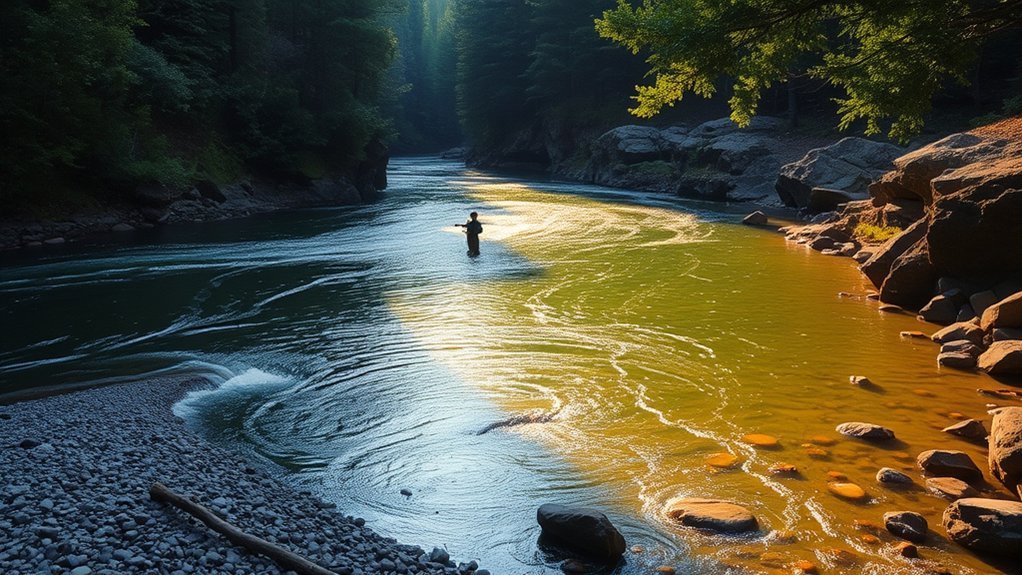
You might think spotting fish is just luck, but you can learn to pick river features that consistently hold trout. Look for where current changes, including riffles, seams, pools, runs, and eddies. Notice bubbles, foam lines, depth shifts, shade, and surface texture because those clues reveal feeding lanes. This guide shows how each feature concentrates food and where you should place your bait or fly next.
Quick Answer
To read water for trout fishing, find current breaks where food, oxygen, cover, and safe holding water meet. Start with riffles, seams, foam lines, eddies, runs, and pool edges. Cast slightly upstream, let your bait or fly drift naturally, and adjust depth, weight, and angle until it stays in the feeding lane.
Key Takeaways
- Trout rarely spread evenly across a river. They hold where current delivers food while nearby cover helps them save energy.
- Riffles, seams, runs, pool heads, pool tails, eddies, rocks, logs, undercut banks, and foam lines are high-percentage targets.
- A natural drift matters more than a long cast. Cast upstream or quartering upstream so your offering moves with the current.
- Clear water, bright sun, and low flows call for stealth, smaller flies or baits, lighter line, and longer leaders.
- Fast water, wind chop, stained water, and low light often let you fish closer and use slightly bigger or brighter presentations.
At a Glance
| Time Required | 5 to 10 minutes to scan a new stretch, then keep adjusting as you fish upstream or downstream. |
| Difficulty | Beginner-friendly, but it improves with practice, quiet movement, and careful observation. |
| Tools Needed | Polarized sunglasses, thermometer if available, wading staff, suitable rod, flies or bait, split shot or indicators as needed. |
| Cost | No extra cost if you already fish, though polarized sunglasses and a thermometer make water reading easier. |
Why Reading Water Determines Success

If you want to catch more fish, stop casting at random and learn to read the water. Successful anglers do it because fish are not evenly spread across a river. Trout concentrate where cover, food, oxygen, depth, temperature, and the right current come together.
You’ll see why reading the water flips the odds. Skilled anglers usually catch more fish because they choose productive spots instead of hoping luck puts a trout in front of them.
Watch seams, eddies, pools, riffles, undercut banks, fast-water edges, and soft pockets behind rocks. These places collect insects, baitfish, and other food while giving trout a place to hold without fighting heavy current all day.
Look for weedbeds, boulders, logjams, cutbanks, ledges, and shadowed cover where fish can rest, hide from predators, and ambush food. Trout want food close, safety nearby, and just enough current to bring meals to them.
You’ll practice noticing subtle cues, including ripple patterns, foam lines, color changes, surface slicks, and places where water accelerates around structure. Then you’ll adjust your cast, angle, weight, and drift before moving to the next likely lane.
Over time, you’ll stop wasting casts and start fishing smarter. You will spend less time covering empty water and more time presenting bait or flies where trout already want to feed.
Mastery is not mystical. It comes from patient observation, quiet movement, and choosing the spots where the river tells you life concentrates.
Note: Reading water works for fly fishing, spin fishing, and bait fishing. The presentation changes, but the trout’s needs stay the same: food, cover, oxygen, comfort, and a current speed it can use.
Start With a Simple Water-Reading Process
Before you cast, pause for a minute and scan the whole stretch. Many anglers step straight into the best water or cast across the best seam before they notice it.
Start close, then look farther out. Trout often sit at your feet in shallow pockets, bank seams, or the soft edge beside a riffle. If you wade first and think later, you can spook the easiest fish of the day.
- Check safety first: Watch the speed, depth, bottom type, and exit points before wading.
- Find the main current: Identify where the strongest flow enters the run, pool, or riffle.
- Mark the soft edges: Look for seams where fast water slides beside slower water.
- Find cover: Note rocks, logs, weeds, undercut banks, shade, and broken surface water.
- Follow the food: Track foam, bubbles, floating insects, drifting leaves, or baitfish movement.
- Pick your first cast: Choose the nearest high-percentage lane before covering distant water.
- Adjust after each drift: Change depth, angle, mend, weight, lure speed, or position instead of repeating the same bad drift.
This simple routine keeps your fishing organized. You are not guessing. You are reading the river, choosing a target, testing it, and learning from the result.
Warning: Never wade into fast or unfamiliar water just to reach a seam. Use a wading belt, felt or rubber soles suited to the streambed, and a wading staff when footing looks slick or uneven.
Riffles: Where Trout Feed
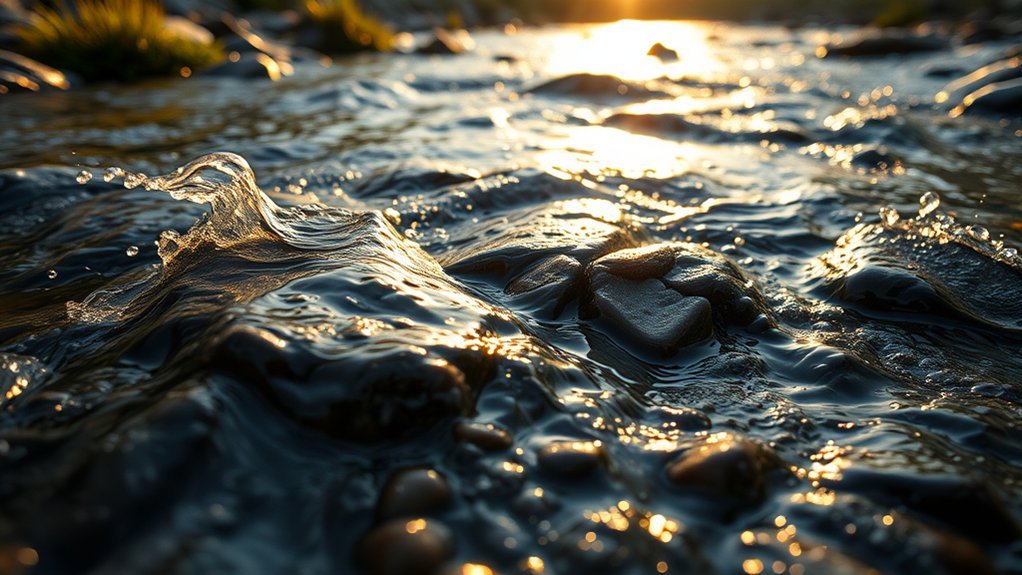
Reading water teaches you to hunt seams and edges. Riffles are one of those high-probability spots you should target often. They are shallow, fast-moving sections where broken water adds oxygen, hides your approach, and turns the river into a reliable feeding zone for trout.
You’ll want to scan where turbulent water meets slower seams along the edges. Those current changes give trout cover while delivering insects, nymphs, worms, eggs, and other drifting food.
Watch bubbles and surface agitation because they reveal the downstream drift of nymphs and terrestrials. Cast slightly upstream and let your fly, lure, or bait drift naturally through the current so it looks like food being carried along.
Early morning and late evening can make riffles especially productive when insects are active and light levels are low. Cloud cover, light rain, or wind chop can also push trout shallower because the broken surface helps them feel safer.
Fish these spots with intention. Move quietly, present upstream, and read subtle takes rather than forcing strikes. In a riffle, a take may look like a hesitation, a slight line twitch, or a tiny pause in the indicator.
Riffles reward patience and precision. They are compact powerhouses of food and oxygen that free you from guesswork and put trout in clear, predictable feeding zones.
Where to Cast in a Riffle
Do not cast randomly across the whole riffle. Start with the soft edge closest to you, then work across the current in narrow lanes.
- Top of the riffle: Trout may sit where the shallow water first breaks and food starts tumbling.
- Middle pockets: Small dips behind stones can hold fish even when the water looks too shallow.
- Riffle edges: The seam between rough water and smoother water is often the best feeding lane.
- Riffle tail: Food slows here, so trout can feed without fighting the fastest current.
Runs: The River Highways
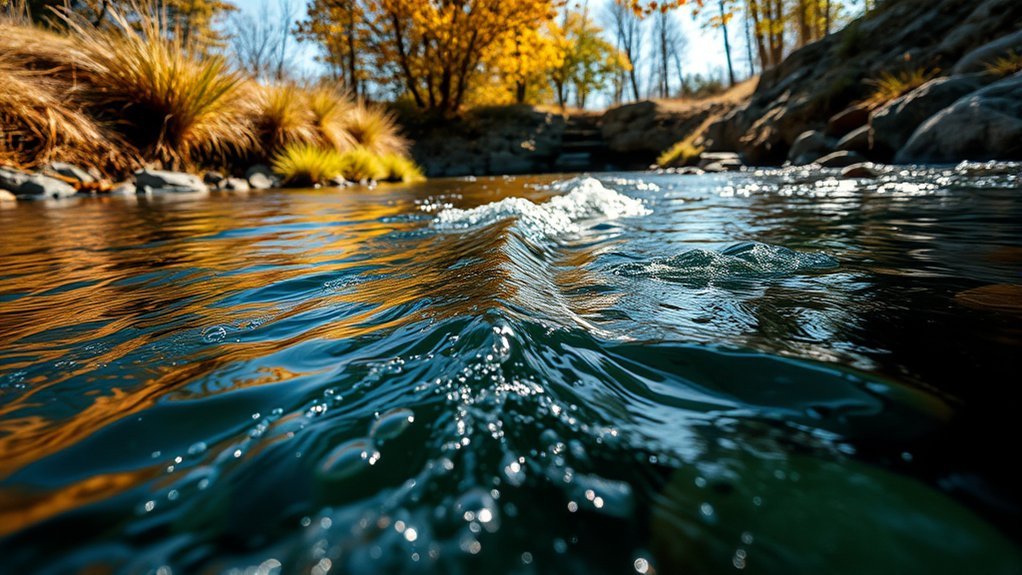
Even though they do not flash like riffles, runs are the river’s highways. They are deeper stretches with steady flow that move trout between feeding riffles and quiet pools.
When you’re reading water, focus on consistent currents and places where flow eases before deeper water. That is where trout pause, feed, and slide from lane to lane without spending too much energy.
Bubbles and foam mark oxygen-rich lanes that attract fish, so target those seams first. Also watch for color changes. Darker green, blue, or brown water often means added depth, while a lighter strip may reveal a gravel bar or shallow shelf.
Fish upstream through runs to get a natural drift and present nymphs, bait, spinners, or streamers correctly. That upstream angle gives your offering life and reduces drag.
Start with a nymph rig or weighted presentation to probe depth, then switch to streamers, small spoons, or spinners if strikes suggest more aggressive fish. If trout chase but do not commit, slow the retrieve or downsize.
Adjust retrieve and weight by bite feedback. Runs tell you what they want if you change one thing at a time. Add a little weight when you drift above the fish. Remove weight when you snag often or your fly drags unnaturally.
Stay mobile and decisive. Runs reward anglers who read subtle changes and act.
You want freedom on the water. Use runs as predictable corridors to locate fish and keep your fishing purposeful.
How to Fish a Run From Top to Bottom
Begin at the head of the run where riffled water smooths out, then work toward the middle and tail. The head often holds active fish because food enters there first.
Next, cover the main current tongue and both edges. If the run has a deeper center slot, drift your offering along the side of that slot rather than straight down the fastest water.
Finish with the tailout. Trout often slide into the tail during low light because food slows there and the shallow water gives them easy access to drifting insects.
Pools: Resting and Holding Zones
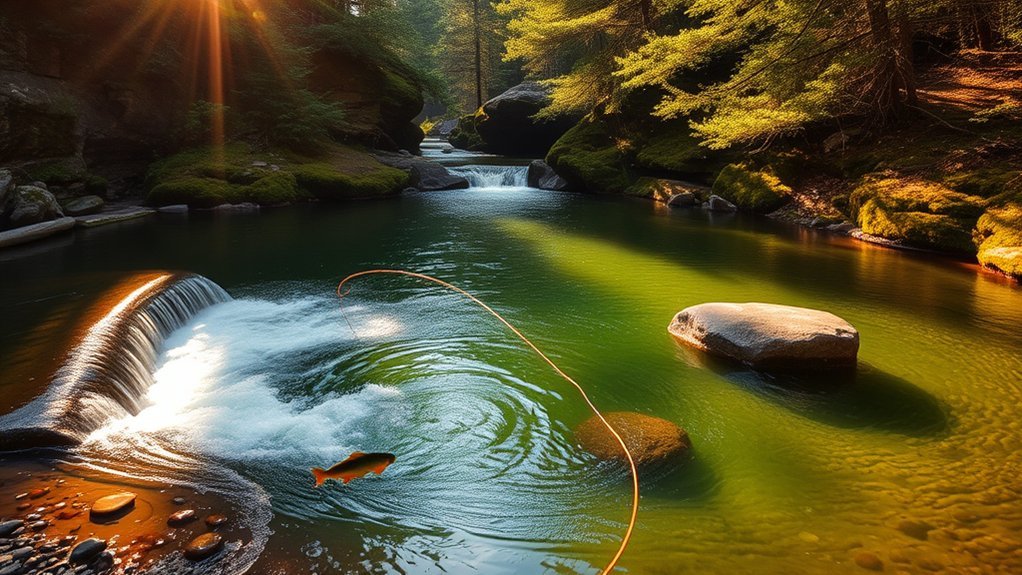
Pools are the river’s safe rooms. They are deeper, slower basins where trout rest, shelter from predators, and conserve energy before and after feeding.
You scan for dark water below falls, bends, boulder gardens, or logjams. Depth shows safety and promise, but depth alone does not guarantee feeding fish.
Pools sit quiet, so trout can be easier to spook. Brown trout and larger fish often tuck into edges, pockets, shelves, or the tail where subtle currents bring food. You’ll find they spare energy here, then rise more confidently at dawn and dusk when insects activate and light levels fall.
Fish rarely cruise the open center all day. They usually hug structure, shade, depth changes, current tongues, and the pool head or tail. Think like an opportunist. Present flies, bait, or lures where an ambush makes sense.
Use weighted nymph rigs, split shot, or sinking presentations to get offerings into the zone. Hold a slow, natural drift through seams of current within the pool, especially where faster water enters and slows.
Watch surface clues and read the bathymetry with your eyes. Casts that respect depth and land gently into likely holding spots reward you. Fish these areas patiently. Pools are where trout recharge, and where smart anglers win freedom on the water.
Pool Head, Middle, and Tail
A pool has three main zones, and each fishes differently. The head is where current enters, food arrives, and active trout often feed. The middle offers depth and cover, but it may need a slower, deeper presentation. The tail is shallower, smoother, and excellent during low light.
- Pool head: Use nymphs, bait, or streamers where fast water drops into deeper water.
- Pool middle: Fish deeper shelves, boulders, logs, and shade lines with patience.
- Pool tail: Use delicate casts, longer leaders, smaller flies, or subtle lures when trout rise or cruise.
Seams and Eddies: Productive Transition Lines
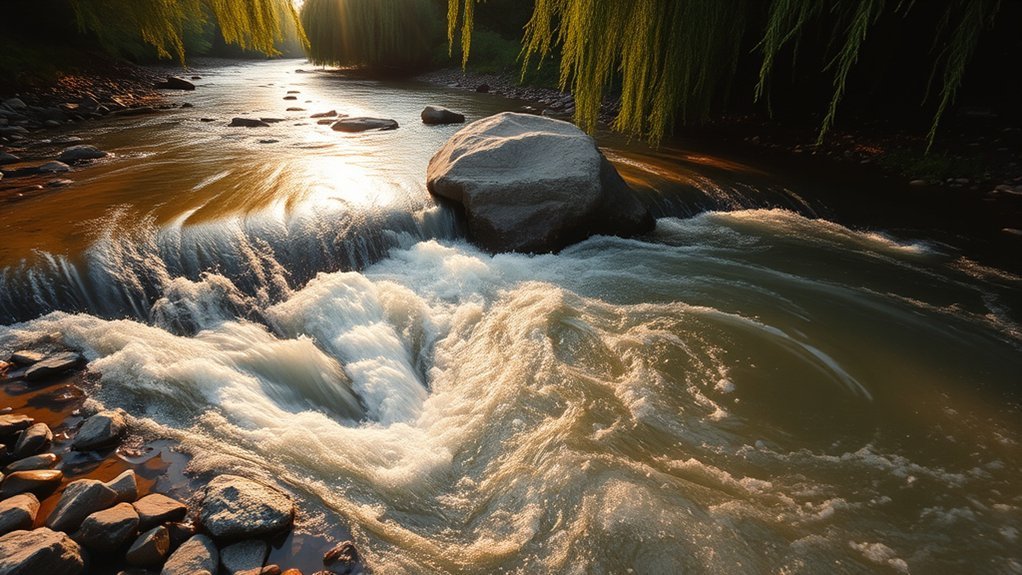
Watch for bubble lines where fast water meets slow water. They mark seams and often show where trout are feeding.
Cast just into the calm of an eddy to let your fly, lure, or bait sit in a holding pocket behind the flow.
Read flow breaks and adjust your angle so your offering drifts naturally through both current types.
Identifying Bubble Lines
How do you spot the most productive water? Look for bubble lines where fast current meets slow water. Those seams collect food and draw trout.
You’ll see a streak of foam or tiny bubbles flowing along a boundary. That line shows how the river gathers drifting insects, dislodged nymphs, and other food into a narrow path. Trout can hold near the softer edge and slide into the lane to feed while conserving energy.
Nearby eddies, which are calm, swirling pockets behind rocks or along banks, often show circular bubble patterns. These pockets hold fish waiting for drifting food to swing past.
These seams and eddies are dependable in many seasons, so training your eye pays off. By watching bubble lines, you learn where trout position themselves and how water moves. That knowledge frees you to choose smarter approaches and strike where fish are consistently concentrated.
Casting Into Eddies
Now that you can read bubble lines, put that knowledge to work by casting into eddies where seams curl and slow water shelters trout.
You’ll watch currents wrap around rocks and form calm pockets. These are prime holding spots where fish wait for food without fighting the main flow.
Aim upstream of the eddy, then let your bait, lure, or fly drift naturally into the slower water. That upstream cast gives a natural presentation and higher hookup chances.
Focus on seams where fast and slow currents meet. Bubbles and swirl marks show those junction lines. Move deliberately, pick the most promising seams, and repeat accurate casts.
You’re not just fishing water. You’re choosing where freedom and food converge, exploiting currents to put trout in your net.
Reading Flow Breaks
Because seams and eddies mark where currents meet and slow, you can zero in on the exact lines trout use to feed. Read the bubbles, foam, and surface swirls to spot those shift zones. Then place your cast just upstream so your bait or fly drifts naturally into the calmer water where fish wait.
Watch seams formed where fast-moving water pushes against slack water. Those lines carry food and concentrate trout. Look for foam seams and trailing bubble lines because they are visible highways to fish.
Use eddies behind rocks and logs as holding pockets where trout rest and pick off snacks. Cast upstream into the transition, let your offering swing or drift through the break, and you’ll intercept fish using predictable currents.
This focus frees your fishing. You spend less energy guessing and more time working the lanes that trout already use.
Pro Tip: When you find one trout in a seam, keep fishing the same lane before moving. Trout often stack in the same current line because the food path benefits several fish at once.
Levels and Lanes: Understanding Trout Territories
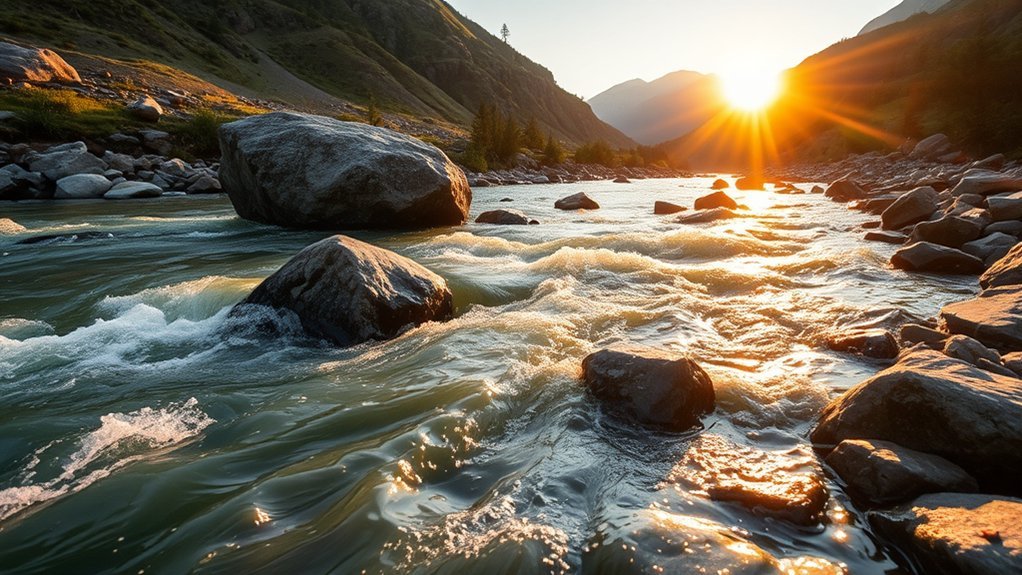
When you learn to read levels and lanes, you’ll start finding trout with less guesswork. Trout hold in distinct depth bands and feed predictably in lanes and seams, so spotting level breaks and current sources tells you where to present your fly, lure, or bait without pushing fish into adjacent levels.
You’ll look for obvious level breaks, including drop-offs, shallow-to-deep shifts, ledges, shelves, and the lip of a pool. Also watch for subtle changes, such as a shallow riffle that deepens by a few inches or a bank that undercuts beneath smooth water.
In smaller streams, those shifts are clearer because the river compresses trout into fewer options. In larger rivers, you’ll map longer levels and wider lanes before choosing an approach.
Focus on lanes as feeding highways. Note their width, speed, and origin so your presentation rides cleanly into the trout’s zone. Seams where fast and slow water meet concentrate food, so fish them first and quietly.
Read levels, pick lanes, and move with intention. Freedom on the water comes from knowing where fish live and how to reach them without disturbance.
Primary Lies, Feeding Lies, and Shelter Lies
Trout use different lies for different needs. A primary lie is a comfortable holding spot with safety and nearby food. A feeding lie may expose the fish more but gives it better access to drifting insects. A shelter lie protects the fish during bright sun, heavy pressure, high water, or danger.
When trout feed actively, they may move from deep shelter to a seam, riffle edge, or pool tail. When they feel pressured, they slide back under cover, into shade, or deeper in the pool. Your job is to decide which mood the water suggests.
Interpreting Flow, Bubbles, and Oxygen
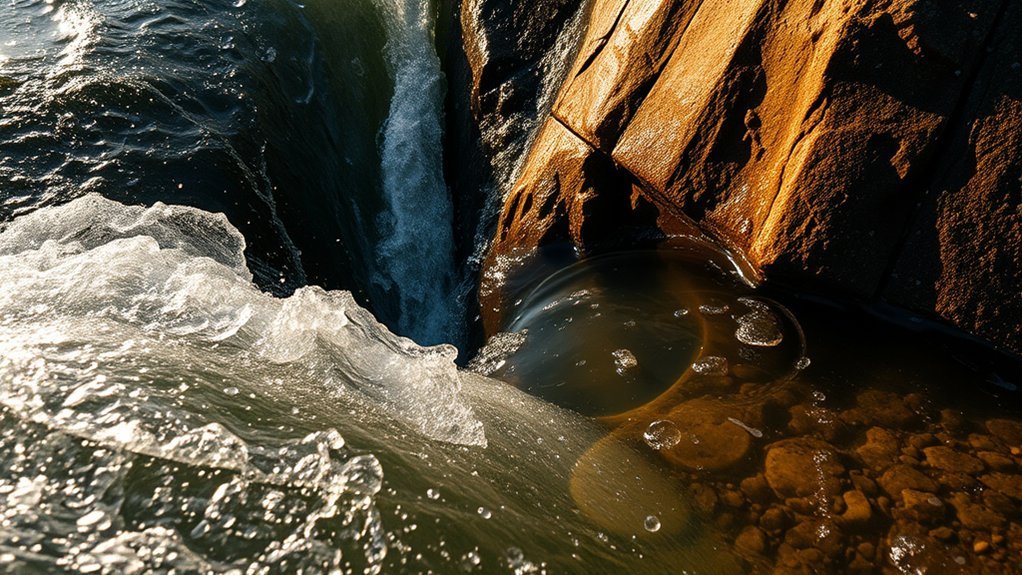
Watch the bubble line where foam and streams of bubbles mark seams between fast and slow water. That is where food often concentrates, and trout often feed nearby.
Pay attention to pockets below rapids or waterfalls, riffle tails, plunge pools, and slow deep runs because those areas can hold both oxygen and shelter.
Use these visual oxygen indicators to pick your casts and target likely holding spots.
Follow the Bubble Line
Look for the thin ribbon of bubbles where fast water meets slow. It marks seams that concentrate food and attract trout. You’ll follow that bubble line to find feeding areas and read fishing conditions quickly.
Cast upstream so your fly, bait, or lure drifts into the seam. Fish often hold just below or beside the point where the current slows.
- Watch where bubbles collect against structure: edges, rocks, and tailouts.
- Note bubble speed and width to judge drift and presentation.
- Target the lanes where bubbles concentrate because trout key on those food paths.
- Adjust cast length and angle to keep the fly or bait in the seam longer.
- Move quietly because seams are obvious to fish and to you when you learn them.
Use this simple observation to free your decisions on any run.
Read Oxygen Indicators
Oxygen shows itself in the water. Bubbles, foam, broken surface water, and churning seams tell you where trout may concentrate, so train your eye to read those signs quickly.
Watch seams where fast and slow currents meet. Bubbles collect there and often mark strong feeding opportunities.
Check riffles and the tails of rapids. Fast water forces air into the river, then trout wait in calmer pockets below to feed.
Look for slow-moving zones beneath waterfalls and plunge areas. They can create deep, well-oxygenated runs where fish hold.
Use water clarity as a cue, but do not treat it as a single rule. Clear water often makes trout cautious because they can see you better. Lightly stained water can improve confidence and help hide your approach, especially when insects or bait are drifting.
Move deliberately to those bubble lines and seams, claim the best spots, and fish where oxygen, cover, comfort, and food converge.
Assessing Light, Wind, and Water Clarity
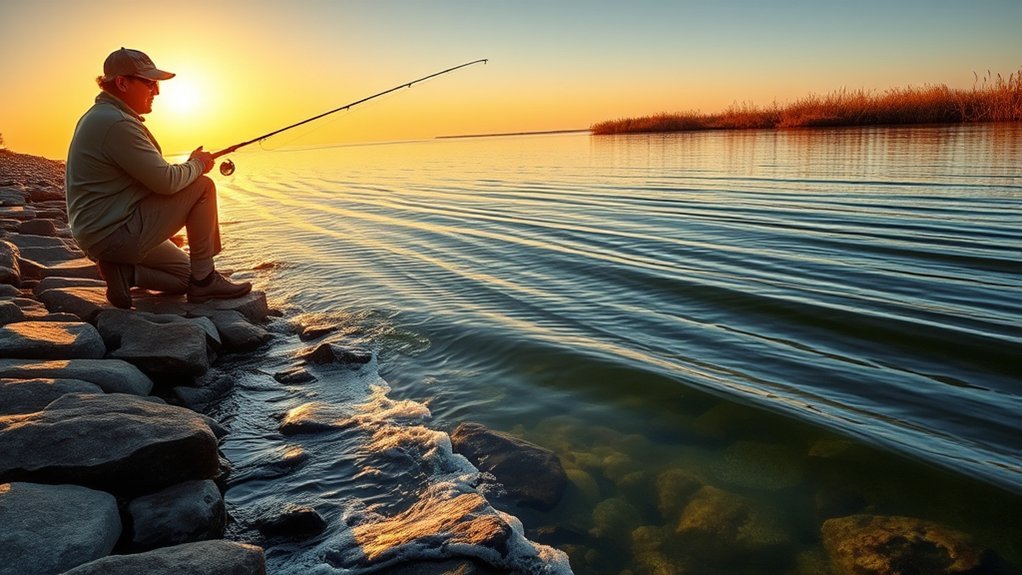
Start by noting three key elements: sun angle, wind, and water clarity. Each one shapes how fish see, move, and feed.
When evaluating light, check sun angle for harsh shadows that can spook fish. Low light in the early morning, evening, or under cloud cover often expands feeding windows and lets trout move into shallower water.
Keep evaluating light, wind direction, and water clarity as linked signals. Wind can create riffles that concentrate food, break the surface, and hide your approach. Clarity dictates how cautious your presentation must be.
Treat light, wind, and water clarity as linked clues. Wind makes riffles that gather food, while clear water demands stealth and cleaner drifts.
- Note sun height: High sun raises visibility, so cast shadows wisely and approach from behind cover when possible.
- Watch wind direction: Cast with or across it to manage presentation and reduce drag.
- Read surface texture: Riffles and chop often mean active fish feel safer feeding.
- Gauge clarity: Clear water needs stealthier flies, smaller lures, lighter line, and softer casts.
- Time of day: Early and late low light can open broader feeding windows.
You’ll use these observations to free your approach. Move, cast, and choose gear with intent.
Stay observant, adapt quickly, and let conditions guide your strategy.
Matching Presentation to Water Features
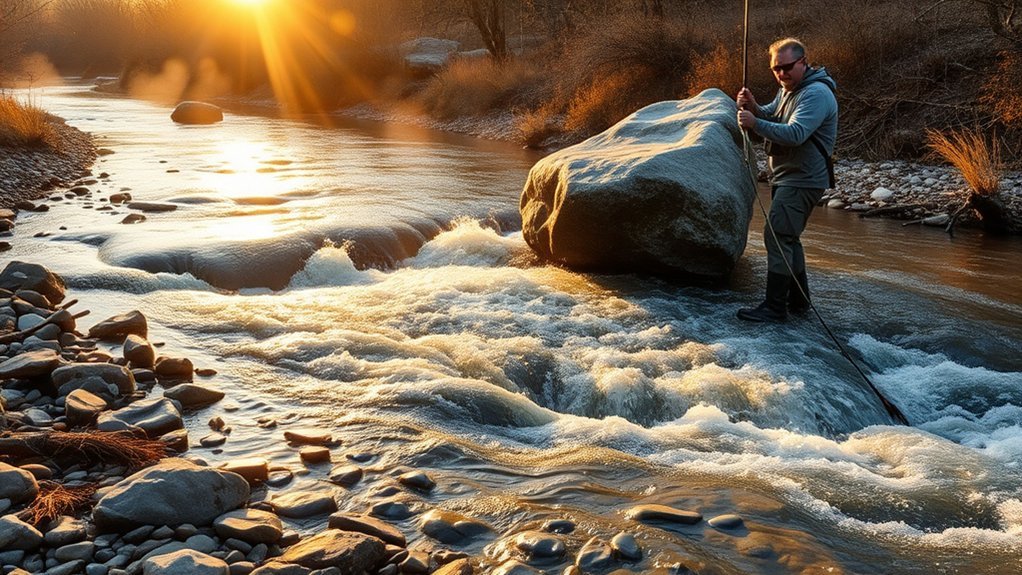
When you match presentation to the water feature, you let current and depth dictate your fly, bait, lure, weight, and retrieve. That helps fish see a natural offering instead of something dragging sideways across the current.
In riffles, pick nymphs, small dries, soft-hackles, tiny spinners, or bait that mimics insects trapped in the surge. Cast slightly upstream and let the offering drift naturally.
Runs demand nymph rigs or streamers with enough weight or retrieve control to probe varying depths as fish move between feeding and rest. Spin anglers can use small spoons or spinners, but they should still work the seam instead of blasting through the center.
Pools reward dry flies or emergers at dawn and dusk when surface activity appears. When surface activity fades, switch to weighted nymphs, streamers, bait, or slower deep presentations.
In eddies and seams, cast upstream so your fly, lure, or bait drifts into calmer water where strikes concentrate. Watch for drag because mixed currents can pull your line faster than your offering.
Watch water meets, the junctions where currents collide. Place your offering so it enters the seam naturally rather than landing directly on top of a holding fish.
Adjust subtly for clarity. Tone down flash in gin-clear water and consider brighter or larger profiles in murk. In low, clear water, softer landings and longer leaders matter. In faster or stained water, fish may tolerate a closer approach.
If you’re serious about fly fishing or any form of trout fishing, keep learning to read the water and let it free your choices.
Presentation Cheat Sheet by Water Type
| Water Feature | Where Trout Hold | Best First Presentation |
| Riffle | Soft edges, pockets, and tailout | Upstream nymph drift, small dry, bait drift, or small spinner through the seam |
| Run | Current tongue, side seams, and deeper slot | Weighted nymph, streamer, spoon, or controlled bait drift |
| Pool | Head, depth change, shade, structure, and tail | Deep nymph or bait drift, streamer near cover, or dry fly during rises |
| Eddy | Inside swirl, back edge, and seam where current re-enters | Short upstream cast with a slow drift into the pocket |
| Seam | Slow side of the fast current | Natural drift that rides the bubble or foam line as long as possible |
Common Water-Reading Mistakes
Most water-reading mistakes come from moving too fast. You see good-looking water, cast once, and leave before you understand the current.
- Wading before looking: The best seam may be beside the bank, not across the river.
- Only fishing the deepest water: Deep pools hold fish, but feeding trout often move to edges, heads, tails, and seams.
- Ignoring drag: A fly or bait that moves faster than the bubbles looks wrong.
- Using one depth all day: Trout may feed shallow in riffles and deep in pools, even on the same stretch.
- Standing too close: Clear, shallow water requires longer casts, lower profiles, and softer steps.
- Skipping ugly water: Small pockets, bank edges, and broken runs often hold fish that other anglers miss.
Fix these mistakes by slowing down. Make fewer random casts and more thoughtful presentations to specific lanes.
Seasonal and Flow Changes
A river does not read the same every month. Flow, temperature, insect activity, and fishing pressure all change where trout sit.
In cold water, trout often prefer slower, deeper holding areas where they can save energy. In mild conditions, they may feed in riffles, seams, and pool tails. In warm weather, they often need cooler, well-oxygenated water near springs, shaded banks, faster riffles, or deeper runs.
High water pushes trout toward banks, soft inside seams, flooded edges, and structure that breaks the current. Low water can make trout cautious, so you may need smaller offerings, longer casts, and a quieter approach.
After a rain, lightly stained water can make fish more comfortable, but muddy water may limit visibility. During very clear, low flows, focus on shade, depth, broken surface water, and careful presentations.
Warning: Warm water can stress trout, especially when oxygen levels drop. If the water feels unusually warm, consider fishing colder tributaries, higher elevations, or another species instead of overplaying trout.
Frequently Asked Questions
How do you read water for fishing?
You read water by scanning seams, pools, riffles, runs, eddies, cover, bubbles, and depth changes. Look for places where current delivers food while trout can hold in slower water. Then match your presentation to the current speed, depth, clarity, and available cover.
How do you read rivers for fishing?
You read rivers by breaking each stretch into riffles, runs, pools, seams, eddies, banks, and structure. Match fish behavior to water clarity and flow. Focus on deep slow pockets, oxygenated seams, shaded cover, and feeding lanes at dawn, dusk, or during insect activity.
How do you read river currents for fishing?
Think of the river as a moving map. Watch current patterns, foam lines, bubbles, slicks, and swirls to see how food travels. Then cast into seams, behind rocks, near riffles, along undercut banks, and at pool heads or tails where trout can feed efficiently.
How do you check water for fishing?
Check surface bubbles, seams, cover, level breaks, water clarity, temperature, and flow speed. Watch for seasonal patterns and feeding shifts. Adjust your tactics until your offering moves naturally through the target lane instead of dragging across the current.
Where do trout sit in fast water?
Trout usually sit beside fast water, not in the hardest push. Check soft pockets behind rocks, riffle edges, seams, undercut banks, and the slower water just below fast chutes. These spots let trout grab food without wasting energy.
Are foam lines always good fishing spots?
Foam lines are often good because they show where current gathers drifting food. They are not automatic, though. The best foam lines also have nearby depth, cover, shade, or slower holding water where trout can sit comfortably.
Should you fish upstream or downstream when reading water?
Upstream or quartering-upstream presentations usually create the most natural drift for trout. They also keep you behind fish in many situations. Downstream swings can work well with streamers, wet flies, and some lures, especially across seams and pool tails.
Conclusion
You’ve learned to read the river like a map: riffles fizzing with bubbles, runs carving steady lanes, pools lying like quiet bowls, and seams and eddies stitching the edges. Picture your fly, lure, or bait slipping into a trout’s living room. Let it drift through oxygen-rich foam, past shadowed cover, and along the soft side of the current.
Stay observant, match your presentation to what the water is saying, and you’ll consistently find the spots where fish are waiting. Keep patient, keep adjusting, and keep casting with purpose.