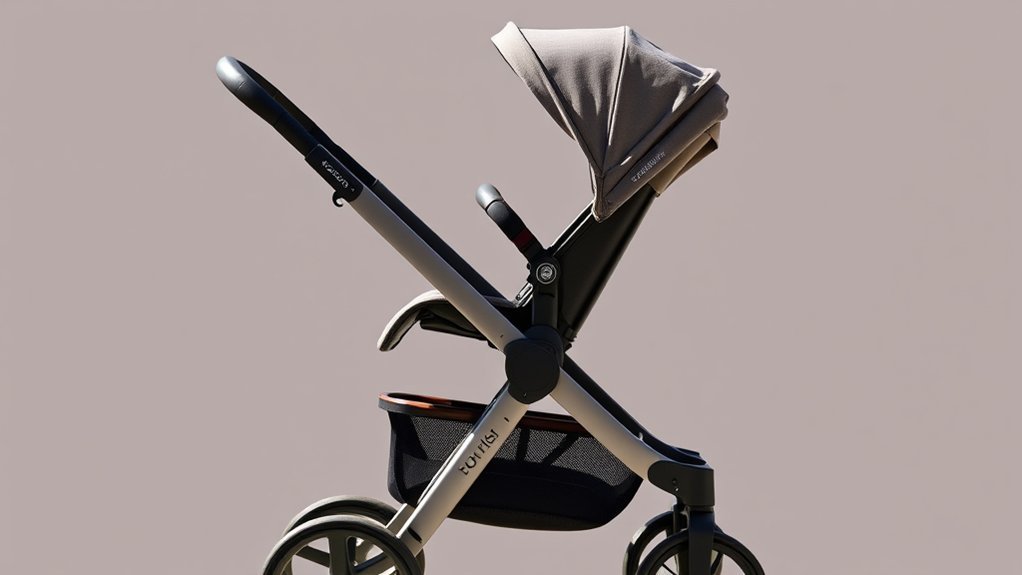
When you think about a baby stroller, it helps to see it as a small safety system on wheels. The frame supports your child, the seat keeps them positioned, the harness holds them in place, and the wheels, brakes, and suspension control how the stroller moves and stops. Once you understand how these parts work together, you can choose, use, and maintain a stroller with more confidence.
Quick Answer
A baby stroller works by combining a strong frame, supportive seat, wheels, steering parts, brakes, suspension, and a harness system. These parts help you push, turn, stop, fold, and secure the stroller while keeping your child comfortable and stable during everyday walks, travel, errands, or rougher outdoor use.
Key Takeaways
- A stroller’s frame, seat, wheels, brakes, and harness all work together to support safe movement.
- Large wheels and suspension help on rougher surfaces, while smaller swivel wheels work better in tight spaces.
- The safest stroller is one that fits your child’s age, weight, height, and the way you plan to use it.
- Regular cleaning, brake checks, wheel checks, and recall checks help keep your stroller reliable over time.
Understanding the Structure of a Baby Stroller
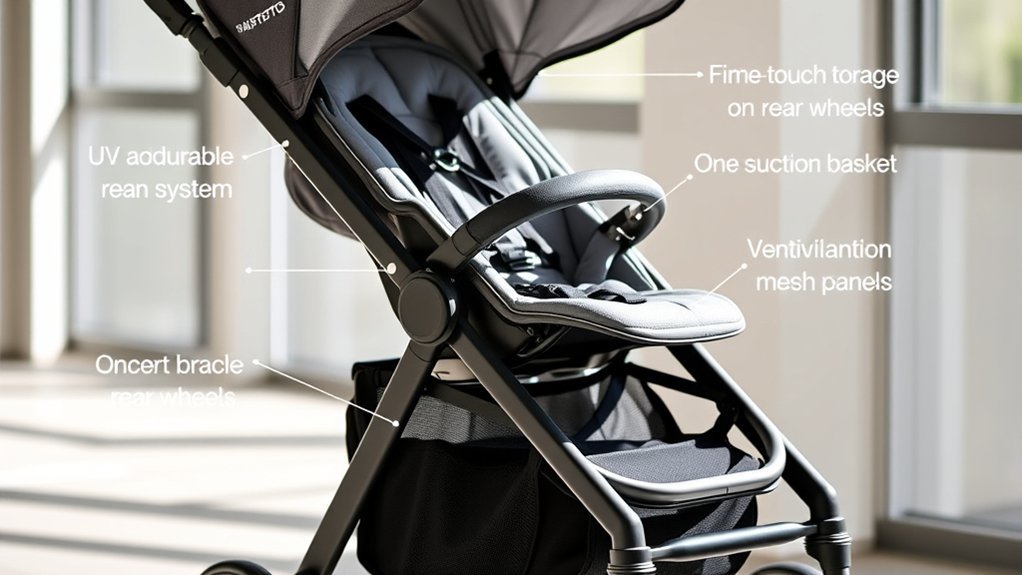
When you look at a baby stroller, you’ll notice it has several essential components that work together to support your child’s safety and comfort. The frame forms the main structure. Most modern stroller frames use lightweight metal or strong plastic parts to balance durability, portability, and stability.
The seat supports your child’s body and usually includes padding, a recline feature, and a footrest. Many strollers also include a canopy to help block sun, wind, and light rain. For newborns, some models use a bassinet, a fully reclining seat, or an infant car seat attachment so the baby can rest in a safer, flatter position.
Wheels vary in size and type, which affects how well the stroller moves across sidewalks, store aisles, parks, gravel paths, and uneven ground. A reliable harness system keeps your child secure, while brakes help prevent the stroller from rolling when parked. By understanding these parts, you can see how thoughtful design turns a stroller into a practical tool for daily parenting.
Main Parts of a Baby Stroller and What They Do
Every stroller design is different, but most models share the same basic parts. Knowing what each part does makes it easier to compare strollers and spot safety issues before they become a problem.
| Frame | Supports the stroller and carries the weight of the seat, child, basket, wheels, and handlebar. |
| Seat or Bassinet | Holds your child in a sitting, reclined, or flat resting position, depending on age and stroller design. |
| Harness | Helps keep your child from sliding, standing, leaning too far, or falling out during movement. |
| Wheels | Control rolling, turning, traction, and how smoothly the stroller moves on different surfaces. |
| Brakes | Hold the stroller in place when stopped, parked, or loading your child in and out. |
| Handlebar | Gives you control for pushing, steering, turning, and lifting the front wheels over small obstacles. |
| Folding Mechanism | Lets the stroller collapse for storage, car trunks, public transport, or travel. |
The Mechanics of Stroller Movement
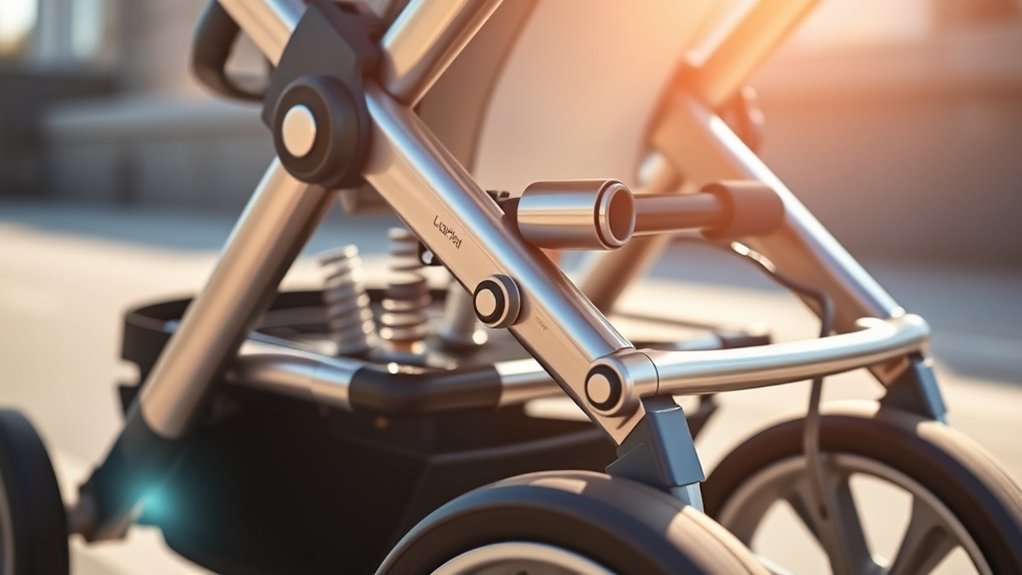
When you push a stroller, the wheels, handlebar, frame, and suspension all work together. The force from your hands moves through the handlebar and frame, then transfers to the wheels. The front wheels help guide the stroller, while the rear wheels provide support and stability.
Good stroller movement depends on balance. A stroller should turn easily without feeling loose, stop firmly without sliding, and roll smoothly without shaking your child too much. The design of the wheels and suspension affects all of these things.
Wheel Types and Functionality
Understanding how wheel types and their functionality impact stroller movement is essential for choosing the right model for your needs. Strollers typically have four wheels, with front wheels designed to swivel for enhanced maneuverability, especially in tight spaces. Wheel sizes play a critical role; larger wheels work better on uneven terrain, while smaller wheels are ideal for smooth indoor surfaces and sidewalks.
The materials used, such as rubber, foam-filled tires, air-filled tires, or hard plastic, also affect durability, grip, and ride comfort. Air-filled tires may feel smoother outdoors, but they can need more maintenance. Hard plastic wheels are easier to maintain, but they may feel bumpier on rough paths.
| Wheel Size | Wheel Material | Functionality |
|---|---|---|
| Large | Rubber | Better for uneven terrain |
| Small | Hard Plastic | Suited for smooth surfaces |
| Swivel | Rubber/Plastic | Enhanced maneuverability |
| Locking | Rubber | Stability when stationary |
| Non-locking | Hard Plastic | Improved mobility |
Suspension Systems Explained
While maneuvering various terrains, a stroller’s suspension system plays an essential role in creating a smooth ride for your baby. These systems typically include springs, flexible joints, or shock-absorbing parts that reduce the impact of bumps.
You’ll find different suspension types designed for terrain adaptability. Some strollers use basic rear-wheel suspension for everyday sidewalks. Others use all-wheel suspension for rougher paths, parks, and longer walks. Some higher-end models include adjustable suspension for off-road or urban settings.
Keep in mind that the stroller’s weight, wheel size, and suspension design all affect maneuverability. A heavy stroller with great suspension may feel comfortable, but it can be harder to lift into a car. A lightweight stroller may be easier to carry, but it may feel less smooth over cracks, gravel, or grass. Regular maintenance, including checks for wear and tear, helps preserve safety and performance.
Steering Mechanisms Overview
Effective steering mechanisms are essential for moving a stroller smoothly through tight spaces and varied terrains. Strollers typically feature different steering types, including a front wheel swivel system that makes tight turns easier in stores, elevators, sidewalks, and crowded areas.
Many models offer a locking front wheel option for added stability on uneven surfaces or during jogging. The rear wheels usually come with a foot pedal brake system, allowing you to stop the stroller safely when needed. Some designs even include one-handed steering, so you can navigate while carrying a bag, holding a toddler’s hand, or opening a door.
Pro Tip: Test the stroller with one hand before buying if you often shop, travel, or walk in crowded places. A stroller that feels smooth in an open aisle may feel very different in a narrow doorway.
Safety Features in Baby Strollers
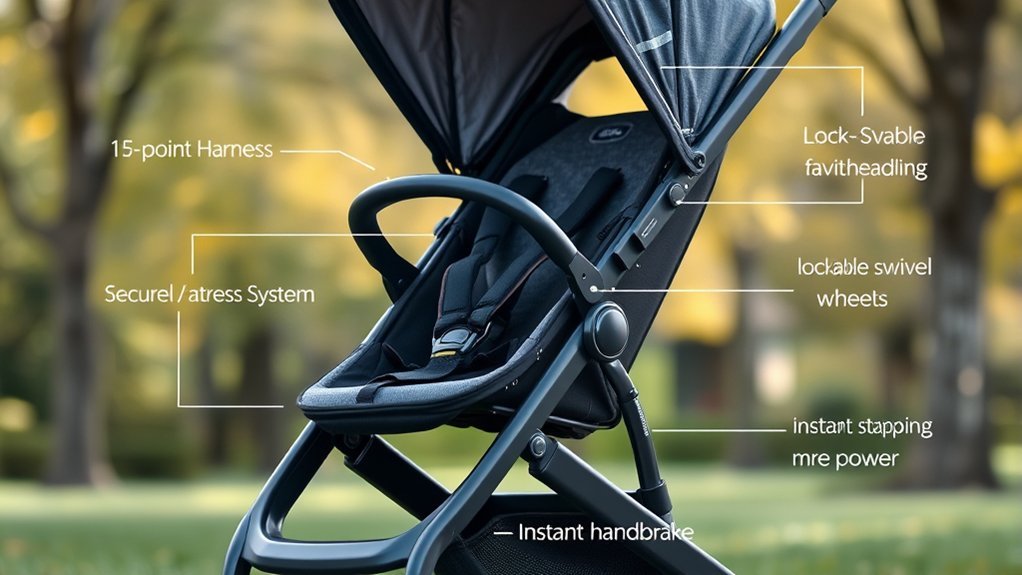
When choosing a baby stroller, one of the most critical aspects to examine is its safety features. Look for a stroller equipped with a five-point harness system that helps secure your baby at the shoulders, waist, and between the legs. This lowers the risk of your child sliding forward or climbing out during outings.
Also consider brake effectiveness. A one-step brake system lets you engage or disengage the brakes with your foot, keeping the stroller stationary when needed. Always test the brakes before placing your child in the stroller, especially on slopes or uneven ground.
Many strollers also include a safety wrist strap that attaches to your wrist, providing extra protection against unintentional rolling. Some models feature a removable safety bar or bumper, which gives your child a place to rest their hands, but it should never replace the harness.
It’s crucial to choose strollers that comply with safety standards set by recognized organizations and regulators. In the United States, stroller safety is connected to CPSC rules and the ASTM F833 stroller standard. Your child’s safety should always come first, so read the manual, follow weight limits, and check for recalls before long-term use.
Warning: Never hang heavy bags from the handlebar unless the manufacturer says it is safe. Extra weight on the handle can make some strollers tip backward.
How the Harness and Brakes Work
The harness and brakes are two of the most important stroller safety systems. The harness secures your child while the stroller moves. The brakes hold the stroller still when you stop.
A five-point harness has two shoulder straps, two waist straps, and one crotch strap. Together, these straps help keep your child centered in the seat. For the best fit, the straps should lie flat and snug without pressing too hard. You should also adjust the harness as your child grows or when clothing thickness changes.
Stroller brakes usually work by locking one or more wheels. Some models use linked brakes, which let one pedal lock both rear wheels at once. Others use separate wheel brakes that you must press on each side. Before each outing, press the brake, gently push the stroller, and make sure it does not roll.
Types of Strollers and Their Uses
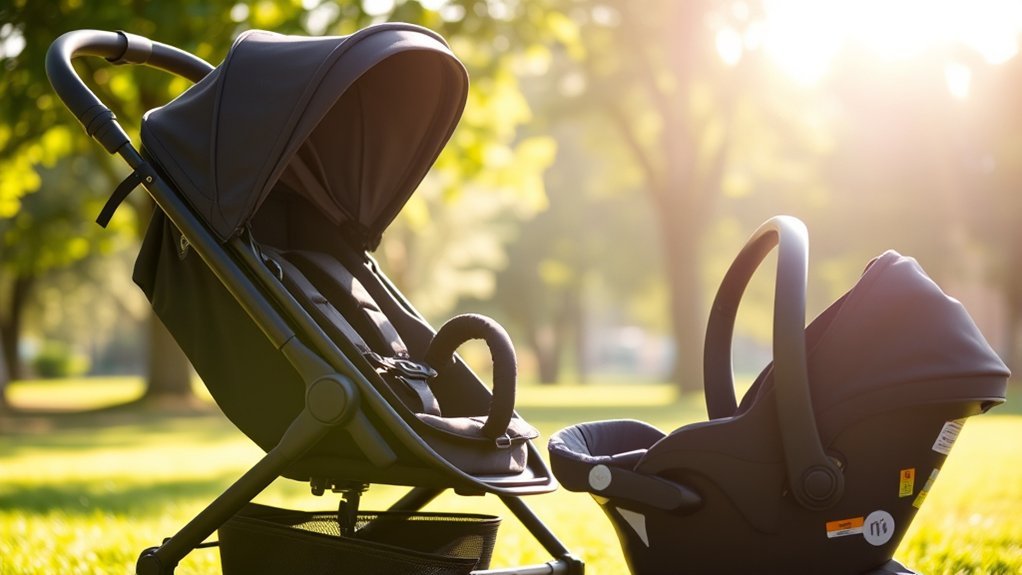
Choosing the right stroller can greatly improve your parenting experience by matching your specific needs and lifestyle. Different stroller types work better for different families, so it helps to think about where you walk, how often you travel, how much storage you need, and your child’s age.
Lightweight strollers, often around 15 pounds, are useful for travel, errands, and quick outings because they are easier to fold, lift, and store. If you’re frequently on the go, a travel system stroller allows you to shift from car to stroller more smoothly, often without waking your baby.
For active parents, jogging strollers feature larger wheels and usually have a fixed or lockable front wheel for stability while moving at faster speeds. If you have two children, double strollers, available in side-by-side or tandem configurations, can accommodate them more comfortably. Regardless of your choice, follow stroller safety guidelines and use stroller maintenance tips to support longevity and safety.
[Amazon Products Picked for You]

3 strollers in 1: Infant Car Seat Carrier, Infant Pramette, and Toddler Stroller to stroll from infant to toddler

Versatile 3-in-1 Stroller: Transforms from an Infant Car Seat Carrier to Infant Pramette and then to Toddler Stroller

3 strollers in 1: Infant Car Seat Carrier, Infant Pramette, and Toddler Stroller to stroll from infant to toddler
Common Stroller Types Compared
| Full-Size Stroller | Best for daily use, storage, comfort, and long walks. It may be heavier than travel models. |
| Lightweight Stroller | Best for errands, travel, public transport, and parents who need easy lifting. |
| Jogging Stroller | Best for running, long outdoor walks, and rougher paths when used according to the manual. |
| Travel System | Best for infants because it pairs a stroller with a compatible infant car seat. |
| Double Stroller | Best for twins or two young children, with side-by-side or tandem seating options. |
Travel Systems Explained
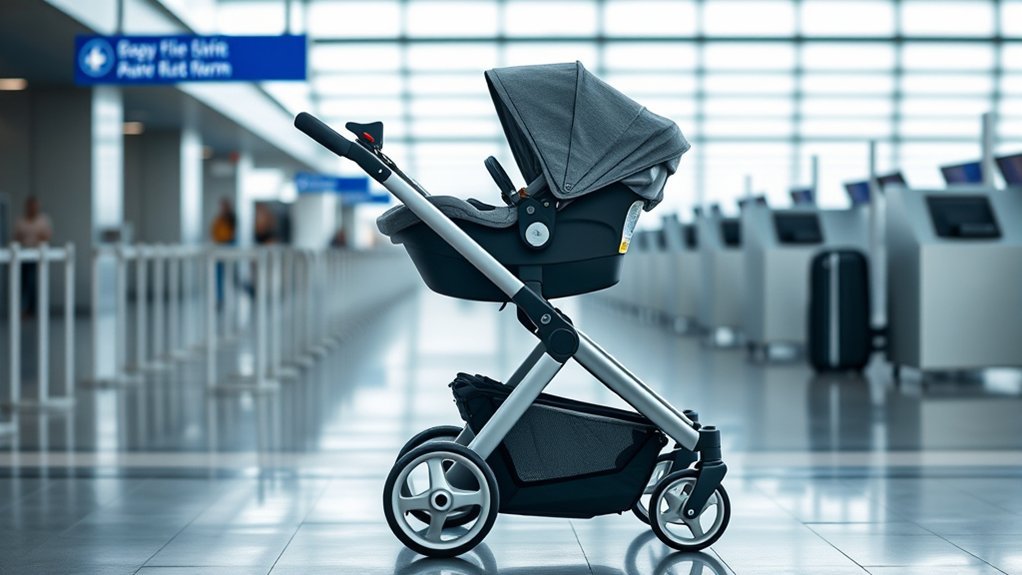
Travel systems provide a practical solution for parents looking for an efficient way to transport their infants. By combining an infant car seat with a stroller, these systems allow for smoother shifts from car to stroller without waking your baby.
One of the key travel system benefits is the compatibility between the stroller and the car seat. A properly matched system lets the car seat click securely into the stroller frame or seat area. This can make doctor visits, errands, and short trips easier during the early months.
Most strollers designed for travel systems have specific car seat limits based on weight and height, so always follow the manual for both the car seat and stroller. Even if a stroller is not sold as a complete travel system, many models can still function with infant car seats when you use the correct adapter. Some strollers are also compatible with newborns without extra accessories because they offer a flat or near-flat position that supports safer positioning.
Note: A stroller seat and an infant car seat are not the same thing. Always use each product only as the manufacturer directs, and avoid using a car seat for long, unsupervised sleep outside the car.
[Amazon Products Picked for You]

3 strollers in 1: Infant Car Seat Carrier, Infant Stroller, and Toddler Stroller to stroll from infant to toddler

3 Wheel Stroller for easy turning / mobility

Versatile Design: 3-wheel stroller design provides superior maneuverability and easy turning for seamless navigation through crowded spaces.
Features to Consider When Choosing a Stroller
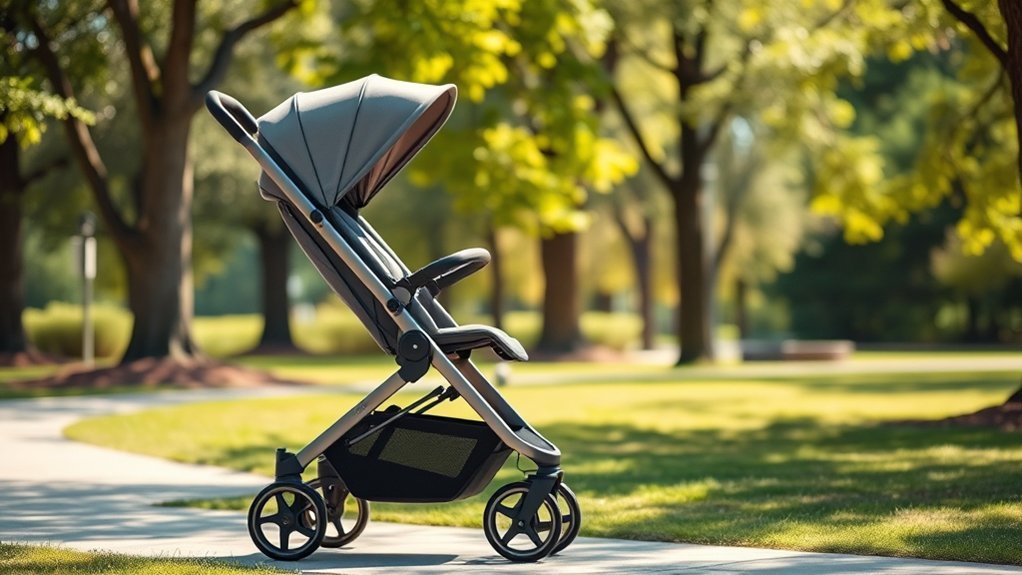
When choosing a stroller, it’s essential to prioritize safety features, as they directly affect your baby’s well-being. You’ll also want to consider the weight and portability of the model, especially if you plan to transport it frequently. Finally, look for adjustable recline options that provide comfort and support for your little one.
[Amazon Products Picked for You]
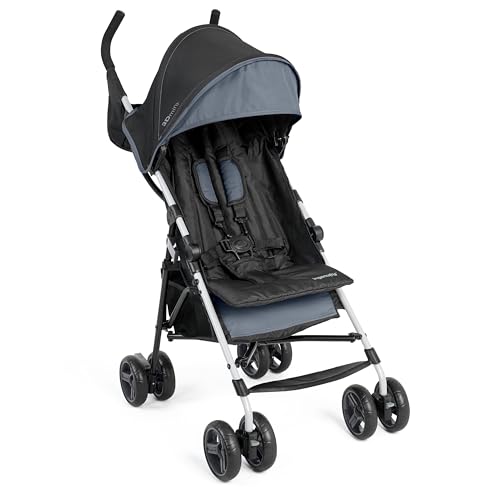
LIGHTWEIGHT - A lightweight stroller makes any outing a little easier; The Ingenuity 3D Mini Convenience Stroller has a durable steel frame that weighs 11 pounds and has a full-sized seat, plus auto-lock, anti-shock front wheels and lockable rear wheels

Five-Point Safety Design, Flexible Conversion: using a convenient five-point safety belt, all-round protection of the baby's safety, to prevent slipping or turning out; can easily remove the two straps, the second into a three-point safety belt, to meet the needs of different scenarios, the use of more flexible.

Versatile 3 or 5-Point Harness Options: Adaptable to your baby’s growth! This harness offers two options: a secure 5-point harness that can be easily converted to a 3-point harness by removing the two detachable shoulder straps. Perfect for all stages of your baby’s development
Safety Features Importance
While exploring the world of baby strollers, understanding the importance of safety features is essential for protecting your child. Here are key features to consider:
- Harness System: A reliable 5-point harness keeps your baby securely in place during rides.
- Brake Stability: Look for strollers with a sturdy brake system, ideally one that can be engaged with a single foot to prevent rolling.
- Wide Base: A stroller with a wide base and low center of gravity can improve stability and reduce tipping risk.
- Safety Compliance: Check that the stroller meets recognized stroller safety standards and current recall guidance.
Weight and Portability
Choosing the right stroller often depends on its weight and portability, which can greatly affect your daily routine. Heavier models may offer more features, but they can be harder to lift, fold, and carry. Lightweight options, like the Travel LX at 15 pounds, are easier to maneuver and transport.
A stroller’s portability features, such as compact folding mechanisms, carry straps, and self-standing folds, make it more convenient for car trunks or tight spaces.
| Stroller Model | Weight (lbs) |
|---|---|
| Uppa Baby Vista | 29 |
| Nuna Mix Next | 30 |
| Travel LX | 15 |
| Cruise | 29 |
When selecting a stroller, balance weight with function. A lighter stroller may fit travel better, while a heavier stroller may offer more storage, stronger suspension, or extra seat options.
Recline and Comfort Options
As you explore your stroller options, understanding the recline and comfort features is essential for creating a better experience for both you and your baby. Here are key aspects to consider:
- Recline Mechanisms: Look for models with adjustable recline options, including fully flat or near-flat positions for newborn use when approved by the manufacturer.
- Tilt-in-Space Designs: Some strollers, like the Uppa Baby Vista V2, offer tilt-in-space recline, which changes the seat angle while supporting the child’s posture.
- Comfort Enhancements: Accessories, such as infant snug seats, can provide additional support for newborns when compatible with the stroller.
- Overnight Bassinet Certification: Certain bassinets are approved for overnight sleep, but only when the manufacturer clearly states that use.
These features help your stroller meet your baby’s needs for comfort, positioning, and age-appropriate support.
Accessories That Enhance Stroller Functionality
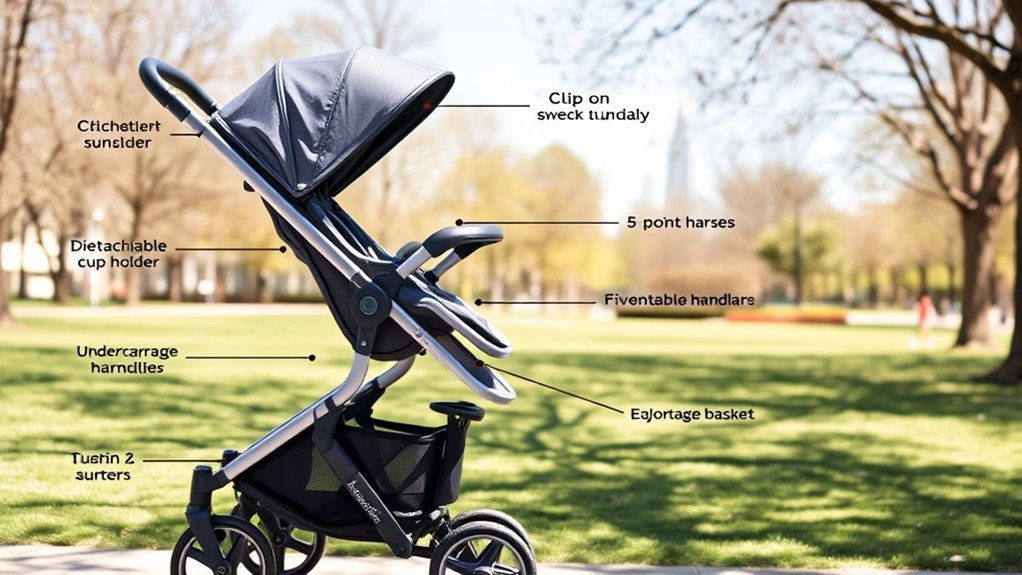
When you equip your stroller with the right accessories, you can improve its functionality and make outings more enjoyable for both you and your baby. Consider adding an infant snug seat if your stroller supports one. It can provide a more secure fit for newborns and smaller babies.
A bassinet is another helpful option for some families. It allows your little one to lie flat and may support newborn use from day one when approved by the manufacturer. Some bassinets are also approved for overnight sleep, but not all are, so check the instructions before relying on that feature.
Don’t forget about weather protection. Rain covers and sunshades help shield your baby from harsh elements, keeping outings more comfortable. Practical accessories like cup holders, parent consoles, snack trays, and storage baskets can also make your walks smoother.
Finally, adapters for car seats let you shift from the car to the stroller more easily. Always use the exact adapter recommended for your stroller and car seat combination, since a poor fit can create a safety risk.
Weight and Portability Considerations
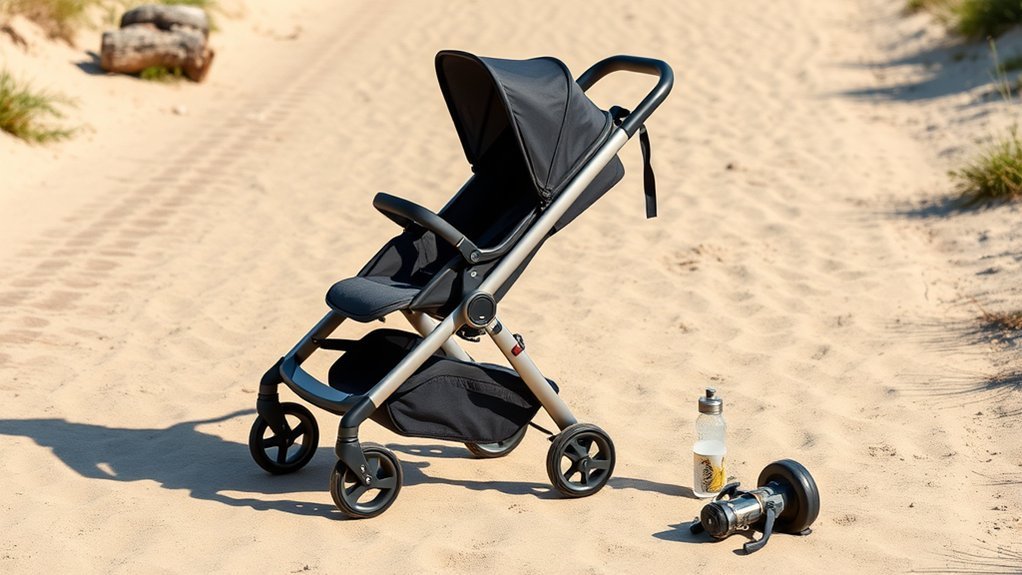
Selecting the right stroller involves not just thinking about accessories but also evaluating weight and portability. Stroller weight can greatly affect your day-to-day life, especially when you are loading the stroller into a vehicle, carrying it upstairs, or using public transport.
- Stroller Weight: Lightweight models, like the Travel LX, weigh around 15 pounds, making them easier to handle.
- Portable Design: Make sure the stroller folds easily for convenient storage and transport.
- Combination Use: Many parents use a lightweight travel stroller for outings alongside a sturdier model for daily walks.
- Maneuverability: A lighter stroller is generally easier to navigate through public transport, narrow aisles, or tight spaces.
Portability also includes how the stroller folds. Some models fold with one hand, while others need two hands and extra steps. Before choosing one, practice folding and unfolding it the way you would in real life, such as while holding a diaper bag or standing beside your car.
Price Range and Warranty Information
When considering a baby stroller, you’ll find a wide price range. Some premium options, like the Uppa Baby Vista version 3, may be listed around $900 depending on the retailer, bundle, and sale timing. Budget and mid-range strollers can cost much less, but they may include fewer accessories or less flexible seating.
It’s also important to compare warranty durations. Some brands offer shorter warranties, while others provide longer coverage. Warranty terms can change, so check the manufacturer’s current policy before buying.
Stroller Price Variability
Stroller prices can differ widely, making it essential for you to understand the range before making a purchase. Here’s a general breakdown of what you might find:
- Premium Models: Uppa Baby Vista version 3 at around $900.
- Mid-Range Options: Uppa Baby Cruise retails for about $699.
- Budget-Friendly Choices: Lightweight strollers like the Travel LX priced between $200-$300.
- Car Seats: Compatible car seats typically start around $299, increasing your total investment.
Understanding stroller brand differences helps you find the right fit for your needs, whether you’re looking for luxury, everyday value, or a travel-friendly option. Consider your lifestyle and how much you’re willing to invest in safety, comfort, durability, and convenience.
Warranty Duration Comparison
How do you know whether you’re making a wise investment in a stroller? One key factor is understanding warranty duration and benefits. A warranty comparison can show how manufacturers stand behind their products. For instance, Nuna offers a 2-year warranty on many stroller products, while Peg Perego has offered a longer warranty on some products. Always confirm the current terms for your exact model.
| Stroller Model | Price | Warranty Duration |
|---|---|---|
| Uppa Baby Vista V3 | $900 | 3 years |
| Uppa Baby Vista V2 | $799 | 3 years |
| Uppa Baby Cruise | $699 | 3 years |
| Peg Perego Vach | $499 | 5 years |
Choosing wisely means considering both price and warranty benefits. A cheaper stroller is not always the best value if it wears out quickly, feels hard to use, or lacks the features your family needs most.
Proper Maintenance and Care for Your Stroller
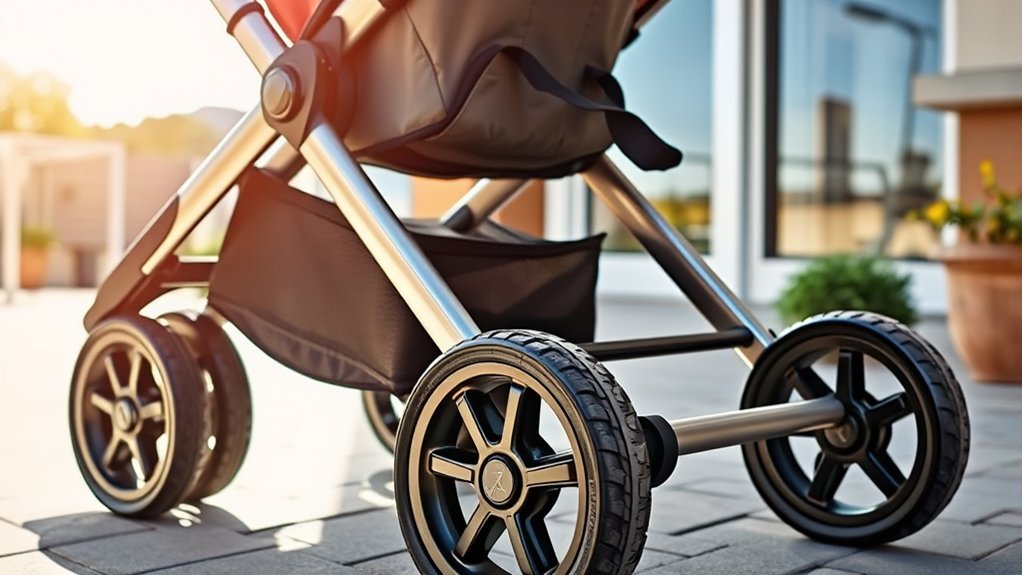
To keep your stroller in top condition, it’s essential to perform regular maintenance and care. Small checks can help your stroller remain safe, smooth, and functional for your child.
Regular maintenance is key to ensuring your stroller stays safe and functional for your child.
- Inspect and Tighten: Regularly check screws, bolts, hinges, and locking points, tightening parts only as the manual allows.
- Cleaning Techniques: Use mild soap and water to clean the stroller fabric and frame. Avoid harsh chemicals that can damage materials.
- Wheel Maintenance: Inspect wheels for debris and make sure they spin freely. Lubricate them when the manual recommends it.
- Proper Storage: Store your stroller in a dry place to help prevent rust, mold, and fabric damage, especially after exposure to moisture.
Always refer to the manufacturer’s guidelines for specific maintenance schedules. If the stroller has been in a crash, dropped hard, damaged during travel, or exposed to flooding, contact the manufacturer before using it again.
Common Stroller Problems and How to Fix Them
Even a good stroller can develop small problems over time. Most issues come from dirt, loose parts, worn wheels, or incorrect folding. Here are common problems to watch for:
- Stroller pulls to one side: Check the wheels for trapped debris, uneven wear, or a front wheel that is not locked correctly.
- Brakes feel weak: Clean around the brake area and make sure the brake fully engages. Stop using the stroller if the brake still slips.
- Fold feels stuck: Look for fabric, straps, or basket items blocking the folding joints. Never force a stuck fold.
- Harness twists often: Flatten each strap before buckling and adjust the fit as your child grows.
- Wheels squeak: Remove hair, sand, and small stones. Use only the lubricant recommended in the manual.
If you notice cracks, bent frame parts, broken locks, or a harness that will not buckle, stop using the stroller until the issue is repaired or the manufacturer confirms it is safe.
Stroller Safety Check Before Each Use
A quick safety check can prevent many stroller problems. Before placing your child in the stroller, make sure the frame is fully open and locked. Check that the seat is attached correctly, the harness buckles securely, and the brakes hold the stroller still.
Look at the wheels and remove any stones, hair, string, or dirt that could affect movement. Make sure the canopy, basket, tray, and adapters are attached correctly. If you use a car seat with the stroller, listen for the click and gently lift to confirm it is locked in place.
Finally, check your child’s position. Your baby should not slump forward, slide under the harness, or lean against loose blankets. Keep blankets, toys, and straps away from your baby’s face, especially with younger infants.
Related Guides
Frequently Asked Questions
Can strollers be used for children over three years old?
Yes, strollers can be used for children over three years old if the stroller’s weight and height limits accommodate your child. Check the stroller’s age recommendations, harness fit, and seat size to make sure it still supports your child safely.
How do I clean my baby stroller effectively?
To clean your baby stroller effectively, remove loose crumbs and debris first. Then use mild soap, warm water, and a soft cloth on the frame and approved fabric areas. Let all parts dry fully before folding or storing the stroller.
What is the lifespan of a typical baby stroller?
A baby stroller’s lifespan often ranges from three to ten years, depending on build quality, use, storage, maintenance, and wear. Stop using a stroller if the frame, brakes, harness, wheels, or locking parts become damaged.
Are there any stroller safety recalls I should know about?
Yes, stroller recalls can happen. Check the Consumer Product Safety Commission recall database regularly, especially before buying a used stroller or using an older model that has been in storage.
Can I use a stroller in rough terrain like hiking trails?
Yes, you can use a stroller on some rough terrain, but choose one designed for that purpose. Look for sturdy wheels, strong suspension, a secure harness, and a stable frame. Avoid trails that are too steep, rocky, narrow, or unsafe for stroller use.
How do stroller brakes work?
Stroller brakes work by locking one or more wheels so the stroller does not roll when parked. Some strollers use one linked pedal for both rear wheels, while others use separate brake pedals. Test the brake before every outing.
What makes a stroller easy to steer?
A stroller is easier to steer when it has smooth swivel wheels, a balanced frame, a comfortable handlebar, and wheel sizes that match the surface. Lockable front wheels can improve control on rougher ground.
Conclusion
Understanding how a baby stroller works can make everyday outings easier and safer. The frame supports the structure, the wheels control movement, the suspension softens bumps, the brakes stop rolling, and the harness keeps your child secure.
The right stroller depends on your child’s age, your daily routine, your storage space, and the surfaces you use most. Once you know how each part works, you can compare models with confidence instead of relying only on price, style, or brand name.
With smart use and proper maintenance, your stroller can become one of your most useful parenting tools. Check the brakes, clean the wheels, adjust the harness, follow the manual, and keep an eye on recalls so every walk starts with better peace of mind.
Sources
- U.S. Consumer Product Safety Commission Stroller Safety — stroller safety and recall awareness.
- CPSC Recalls Database — checking stroller and child product recalls.
- ASTM F833 Standard Consumer Safety Performance Specification for Carriages and Strollers — stroller safety standard reference.
- HealthyChildren.org Stroller Safety Guidance — pediatric safety tips for choosing and using strollers.
