
Cleaning a stroller does not need to feel like a huge chore. With the right supplies, a clear order, and your stroller manual nearby, you can remove crumbs, stains, sticky spots, and grime without damaging the fabric or frame. This guide walks you through each step so your stroller stays clean, safe, and ready for everyday use.
Quick Answer
To clean a stroller, check the manual first, vacuum crumbs and dirt, spot-clean stains with mild soap, wash removable fabric only if the label allows it, wipe the frame and wheels, then let every part air-dry fully before reassembling.
Key Takeaways
- Always read your stroller manual before removing fabric, washing parts, or lubricating wheels.
- Use mild, child-safe cleaners instead of bleach, harsh sprays, or strong fragrance products.
- Vacuum first so crumbs and grit do not turn into muddy residue during wet cleaning.
- Air-dry every part completely before reassembly to help prevent mildew, rust, and odors.
At a Glance
| Time Required | 20–30 minutes for light cleaning; 1–2 hours for a deeper clean, plus drying time. |
| Difficulty | Easy to moderate, depending on how much fabric you remove. |
| Tools Needed | Stroller manual, vacuum, microfiber cloths, soft brush, mild soap, stain remover, disinfectant wipes, and laundry detergent if fabric is machine-washable. |
| Cost | Usually low if you already have basic household cleaning supplies. |
What You Need

Before you start cleaning your stroller, gather all the supplies in one place. First, grab the stroller manual. It explains which parts can come off, which fabrics are machine-washable, and which cleaners your stroller brand recommends.
You’ll also need a handheld or upright vacuum to remove crumbs, sand, dust, and dirt from the seat, seams, storage basket, and cup holders. A small brush, toothbrush, or soft detailing brush helps loosen grime from buckles, wheel joints, and tight corners.
For cleaning products, use a baby-friendly stain remover, mild dish soap, or a gentle laundry detergent for washable fabric parts. Keep disinfectant wipes or an all-purpose spray nearby for the frame, tray, handlebar, and plastic pieces.
Microfiber cloths work well because they clean without scratching. You may also want a bowl of warm water, a towel for drying, and a small container to hold screws, caps, or loose parts if your stroller requires partial disassembly.
Regular cleaning is key to keeping your stroller accessories in good condition. With these tools ready, you can move through each step without stopping to search for supplies.
Warning: Do not use bleach, ammonia, harsh solvents, or strong degreasers on stroller fabric unless your manual specifically says they are safe. These products can weaken fabric, fade color, irritate skin, or damage plastic and rubber parts.
How Long Will This Take to Clean?
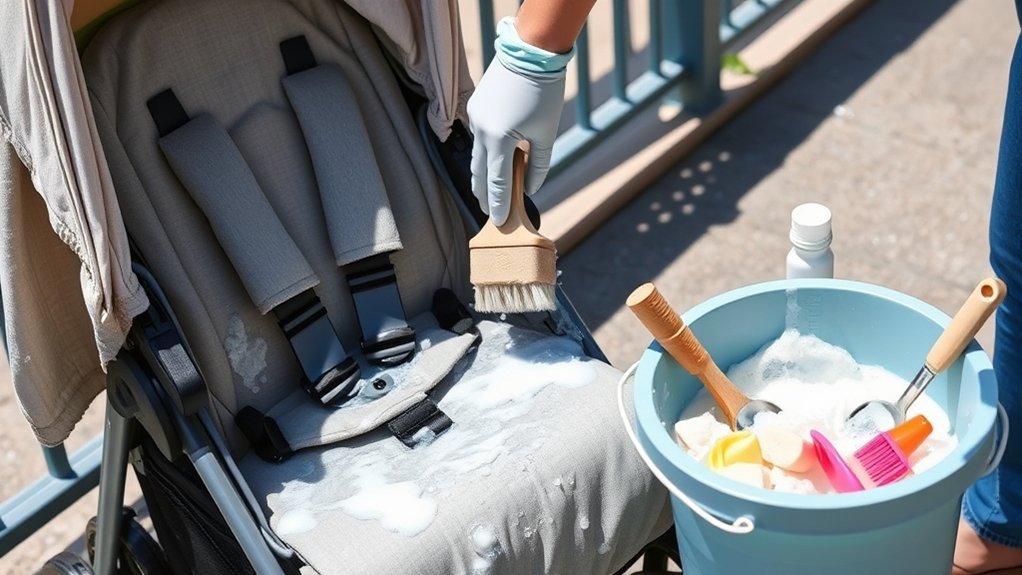
Cleaning your stroller does not have to take all day, especially when you match the cleaning level to the mess. For light cleaning, such as vacuuming, wiping the handlebar, and spot-cleaning small stains, plan on about 20 to 30 minutes.
A deeper clean takes longer because you may need to remove fabric, scrub wheels, clean the storage basket, and disinfect high-touch areas. Set aside 1 to 2 hours for this type of cleaning.
If you wash machine-safe fabrics, remember that drying can take much longer than the actual cleaning. Some stroller fabrics may need several hours or even a full day to air-dry before you reattach them.
How often you clean depends on how often you use the stroller. A stroller used daily, taken to parks, or used during meals may need a quick clean every week and a deeper clean every few weeks. If your stroller only gets light use, a monthly cleaning may be enough.
Any bodily fluid incidents, food spills, milk leaks, or diaper leaks should be cleaned right away. Fast cleaning helps prevent stains, odors, and bacteria buildup.
Read Your Stroller Instructions
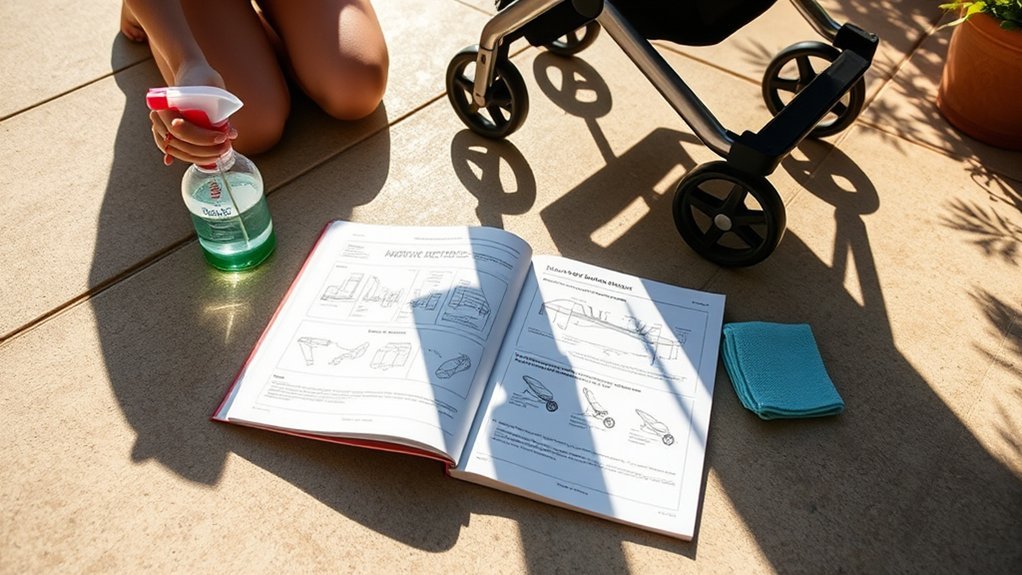
Before you start cleaning, read your stroller’s manual and check for model-specific care instructions. The manual should explain how to remove fabric, how to clean the harness, and whether any parts can go in the washing machine.
If you cannot find the paper manual, check the stroller brand’s website. Many brands provide digital manuals by model name or serial number. You can usually find the model information on a label near the frame, seat, or rear wheels.
Check Fabric Care Instructions
Consulting your stroller’s manual is essential because fabric rules vary by brand and model. Some seat pads can go in the washing machine, while others require spot-cleaning only.
Look for care symbols on fabric labels before using water, detergent, or heat. These symbols tell you whether the fabric can be machine-washed, hand-washed, air-dried, or cleaned only with a damp cloth.
Pay close attention to the harness straps. Many stroller harness straps should not be soaked, machine-washed, ironed, or treated with harsh cleaners because damage to the fibers can affect strength and safety.
Use mild cleaning products when possible. Avoid bleach, fabric softener, strong fragrance sprays, and abrasive scrubbers on delicate fabric. A small spot test on a hidden area can help you check for color bleeding or fabric damage before cleaning a larger area.
Disassembly Guidelines for Cleaning
To effectively disassemble your stroller for cleaning, start by reviewing the manual for instructions specific to your model. Every stroller has different buttons, tabs, snaps, clips, and fabric channels.
Some strollers allow you to remove the seat fabric for machine washing. Others only allow the canopy, basket, or seat liner to come off. Never pull hard on fabric or frame pieces if they do not release easily.
As you take parts off, note how each piece fits. Take photos with your phone before removing straps, pads, or buckles. This makes reassembly easier and helps you avoid twisting the harness or missing a connection point.
Keep small parts in a cup, bowl, or zip bag while you clean. If your stroller has removable wheels, check the manual before taking them off, then inspect each wheel for hair, thread, mud, or small stones.
Online Resources for Assistance
Finding the right resources can make a big difference when it comes to cleaning your stroller effectively. Start with your stroller’s manual, then use brand support pages or videos if you need a clearer visual guide.
- Digital Copies: Search the stroller brand’s website for your model manual and cleaning instructions.
- Online Tutorials: Look for official brand videos that show how to remove and reattach stroller fabric.
- Cleaning Forums: Read parent discussions for practical tips, but always compare advice with your manual before using any cleaner or method.
These resources help you choose the right cleaning products and techniques, which can protect your stroller’s fabric, frame, wheels, and safety features.
Note: If a cleaning tip from another parent conflicts with your stroller manual, follow the manual. Stroller fabrics, coatings, harness materials, and wheel systems are not all the same.
Machine-Wash
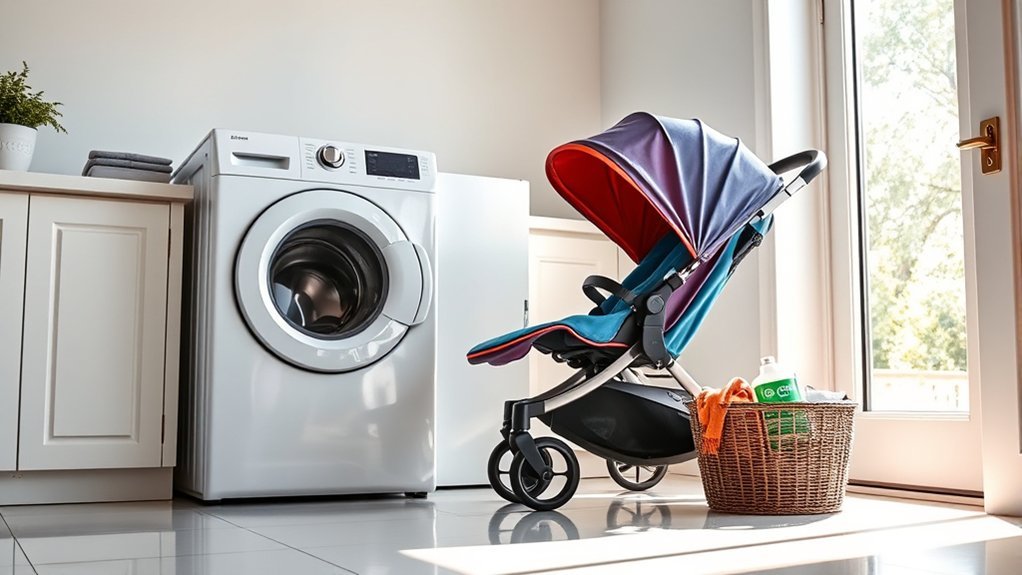
Before you toss fabric components into the washing machine, check the fabric care labels to confirm they are machine-washable. A removable pad may look washable, but the label or manual may still require hand-cleaning.
If machine washing is allowed, use cold water, a gentle cycle, and mild detergent. These settings help protect fabric shape, stitching, padding, and color.
Check Fabric Care Labels
When it comes to cleaning your stroller, checking the fabric care labels helps you avoid accidental damage. Follow these steps before washing:
- Identify fabric types: Look for labels that show whether the fabric is machine-washable, hand-wash only, or spot-clean only.
- Choose gentle cleaning solutions: For machine-washable fabrics, use mild detergent and cold water unless the manual says otherwise. For hand-wash-only fabric, use a small amount of mild dish soap in warm water.
- Remove components correctly: Detach fabric parts according to the stroller manual so you do not tear seams, bend clips, or damage the frame.
If a label is missing or unreadable, take the safer route and spot-clean the fabric instead of machine-washing it.
Machine-Wash Settings Recommended
Once you have confirmed the fabric components are machine-washable, set your washing machine to a gentle cycle with cold water. This reduces agitation and helps the fabric keep its shape.
Use a mild detergent that does not contain bleach or heavy fragrance. Skip bleach and fabric softeners, since they can damage fabric coatings and may irritate your child’s skin.
Wash stroller fabric separately from muddy clothes, towels, or rough items with zippers. If small pads or covers are washable, place them in a mesh laundry bag to reduce snagging.
After washing, air-dry the fabric on a flat surface or on the stroller frame if the manual allows it. Avoid dryers and direct heat unless your manual clearly says they are safe. Heat can shrink fabric, warp padding, or weaken elastic areas.
Vacuum

Start by grabbing your vacuum. A handheld vacuum works well for quick cleanups, while an upright vacuum with a hose attachment can help with deeper cleaning. Stroller vacuuming is crucial for effective dirt removal because dry crumbs and grit are easier to remove before you add water or cleaner.
- Remove Loose Debris: Start with the seat, footrest, canopy folds, storage basket, and cup holders. Vacuuming these spots removes crumbs, dirt, leaves, sand, and pet hair.
- Focus on Hard-to-Reach Spots: Use a toothbrush, soft brush, or crevice tool to loosen dirt from seams, buckles, snack trays, and hinge areas.
- Vacuum Removable Covers: If your stroller’s fabric cover can be removed, lay it flat and vacuum both sides before washing or spot-cleaning.
Make a habit of vacuuming your stroller every few weeks or after messy outings. Don’t forget cup holders and storage compartments, since they often hide sticky crumbs, snack pieces, wrappers, and dirt.
Pro Tip: Vacuum before using any wet cleaner. If you wet crumbs, sand, or dust first, they can turn into paste and become harder to remove from seams and fabric texture.
Spot-Clean
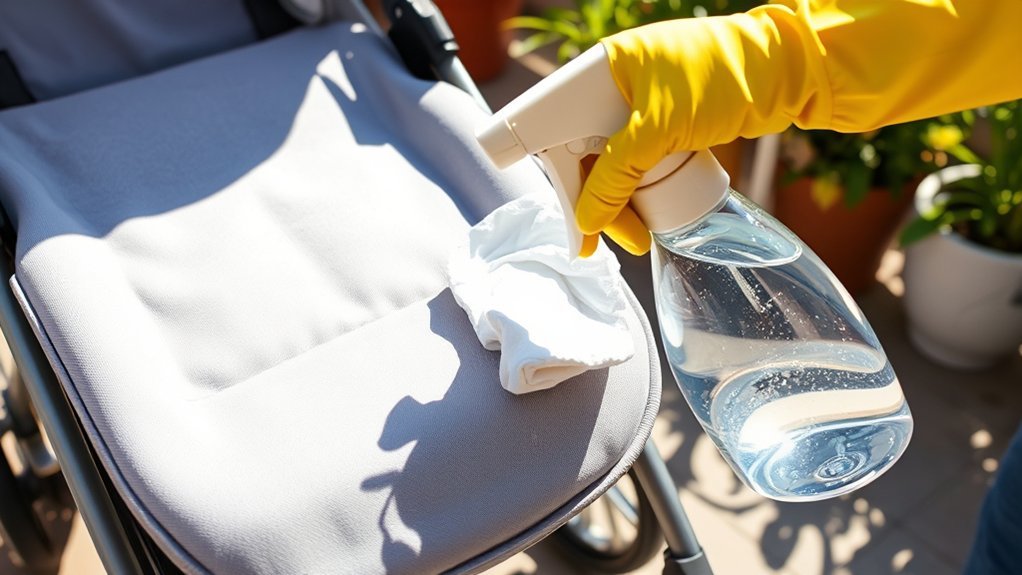
Spot-cleaning is an essential part of stroller maintenance because it lets you treat stains before they set. This step works well for snack spills, juice marks, mud spots, sunscreen smears, and everyday grime.
Spray a baby-friendly stain remover onto a microfiber cloth, not directly onto the stroller, unless the product directions say otherwise. You can also use a small amount of mild dish soap mixed with warm water.
Gently blot and rub the affected area from the outside of the stain toward the center. This helps stop the stain from spreading. For tougher marks, let the cleaner sit for a few minutes, then use a soft brush or toothbrush to loosen residue.
Always test any cleaning solution on a small, hidden area first. This helps you check for fading, color transfer, or fabric texture changes.
After spot-cleaning, wipe away leftover soap with a damp cloth. Then let the area air dry completely before using the stroller again. Regular spot-cleaning after messy outings helps prevent stains and odors from becoming harder to remove later.
Clean the Frame and Wheels
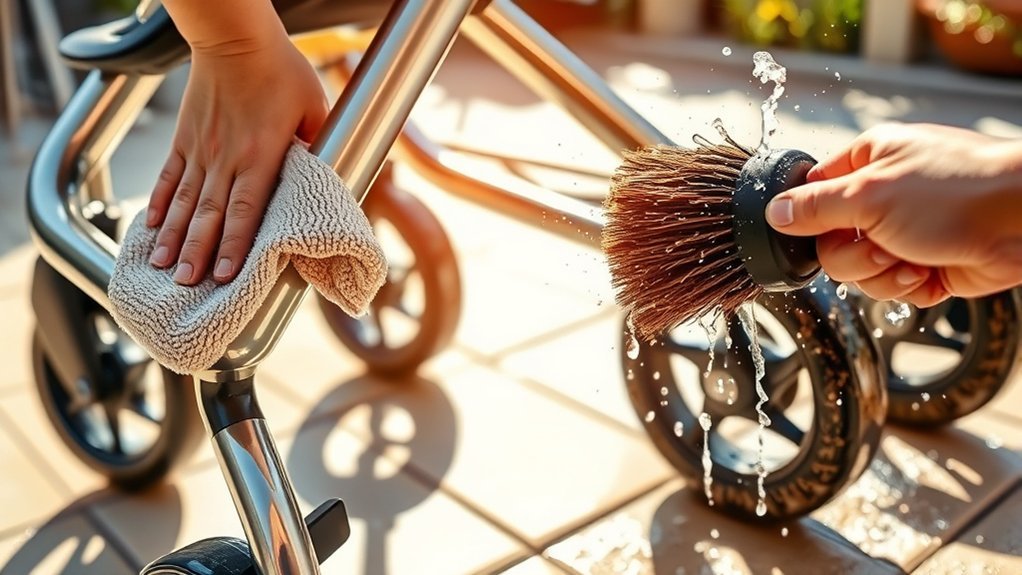
Now that you have handled the fabric, it is time to clean the frame and wheels. These areas collect dust, mud, food residue, sunscreen, hand oils, and germs from regular use.
Use disinfectant wipes or a mild all-purpose spray on a cloth to wipe down the handlebar, tray, cup holder, folding joints, footrest, and plastic frame parts. Avoid spraying cleaner directly into hinges, brakes, bearings, or locking mechanisms.
For muddy wheels, wipe away loose dirt first. Then use warm soapy water and a cloth or brush to clean the tire surface and wheel rims. Dry the wheels well before storing the stroller.
Cleaning Wheel Maintenance Tips
Cleaning your stroller wheels and frame is essential for smooth rides and longer stroller life. To maintain your stroller effectively, follow this simple maintenance schedule for better wheel care:
- Wipe Down Regularly: Use a damp cloth to remove dirt, dust, and debris from the wheels. This helps prevent buildup that can affect movement.
- Lubricate Axles Carefully: If your manual recommends lubrication, use the product type it suggests. A silicone-based spray may work for some strollers, but avoid over-spraying and keep lubricant away from fabric and brakes.
- Inspect and Remove Wheels: If your stroller has removable wheels, take them off for a deeper clean. Check for hair, string, pebbles, or damage before reattaching them.
Avoid using WD-40 as a general stroller cleaner. It can leave residue and attract more dirt in areas where your manual does not recommend it.
Frame Disinfecting Methods
After ensuring your stroller wheels are in good shape, focus on disinfecting the frame and wheels. Start with high-contact areas like the handle, tray table, cup holder, brake pedal, fold button, and bumper bar.
Use disinfectant wipes or an all-purpose spray applied to a cloth. Keep moisture away from mechanical joints, brake assemblies, and any electronic accessories.
For a deeper clean, remove the wheels if the manual allows it. Scrub the wheels separately to remove dried mud, sticky residue, or small debris. Let all surfaces air-dry completely before folding or storing the stroller.
Aim for regular cleaning every few weeks, or more often after trips through mud, sand, rain, snow, or food-heavy outings. This keeps the stroller cleaner and helps moving parts work properly.
Reassemble and Air-Dry

Once your stroller’s components are thoroughly dry, it is time to reassemble them carefully. Do not rush this step. Damp fabric, wet straps, or moisture in frame joints can lead to odors, mildew, rust, or sticky movement.
- Refer to the Manual: Use the manual for specific reassembly instructions so each fabric panel, strap, buckle, and wheel goes back correctly.
- Check Upholstery Fit: If your manual allows reattaching fabric while slightly damp, smooth it into place so it dries in the correct shape. If not, wait until it is fully dry.
- Do Final Safety Checks: After assembly, check for damp spots, twisted straps, loose snaps, unlatched clips, and wheels that do not lock into place.
Good air drying techniques can take several hours, especially for padded areas. Dry the stroller in a well-ventilated space and avoid direct heat sources. Hair dryers, radiators, heaters, and strong sunlight may shrink fabric, warp plastic, or weaken materials.
Before your next outing, fold and unfold the stroller once, lock the brakes, roll it forward and backward, and buckle the harness. These quick checks help confirm everything is back in place.
When to Turn to a Professional Cleaner
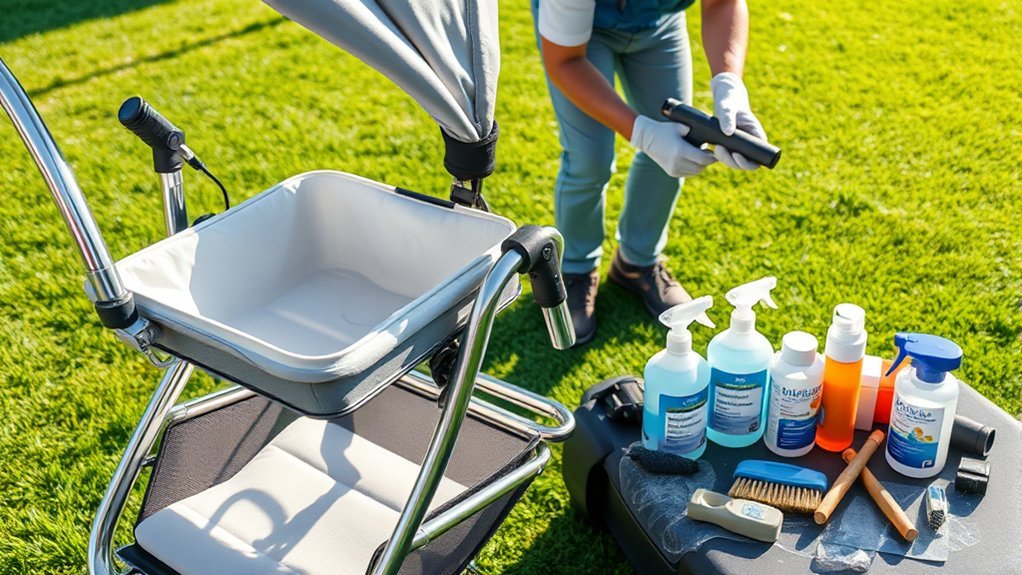
Even with careful cleaning and reassembly, some stroller issues may need tools, products, or experience you do not have at home. In these situations, turning to a professional cleaner can be the safest choice.
| Issue | Reason for Professional Cleaning | Key Considerations |
|---|---|---|
| Bodily fluid incidents | Helps support thorough sanitation for your child | Verify child-safe products are used |
| Mildew or mold | May require specialized cleaning methods | Check the cleaner’s experience with stroller fabric and frames |
| Deep cleaning needs | Heavy buildup may exceed normal home cleaning | Ask about drying methods and product safety |
| Stroller disassembly | Professional handling can reduce the risk of damage | Look for services that clean baby gear specifically |
| Long-term storage issues | Can help restore a stroller after dust, odor, or moisture exposure | Ask what methods they use before approving service |
If mold covers a large area, keeps coming back, or sits near padding and harness parts, consider contacting the stroller manufacturer before cleaning. Some damage may affect whether the stroller is still safe to use.
Final Thoughts on Stroller Cleaning & Maintenance
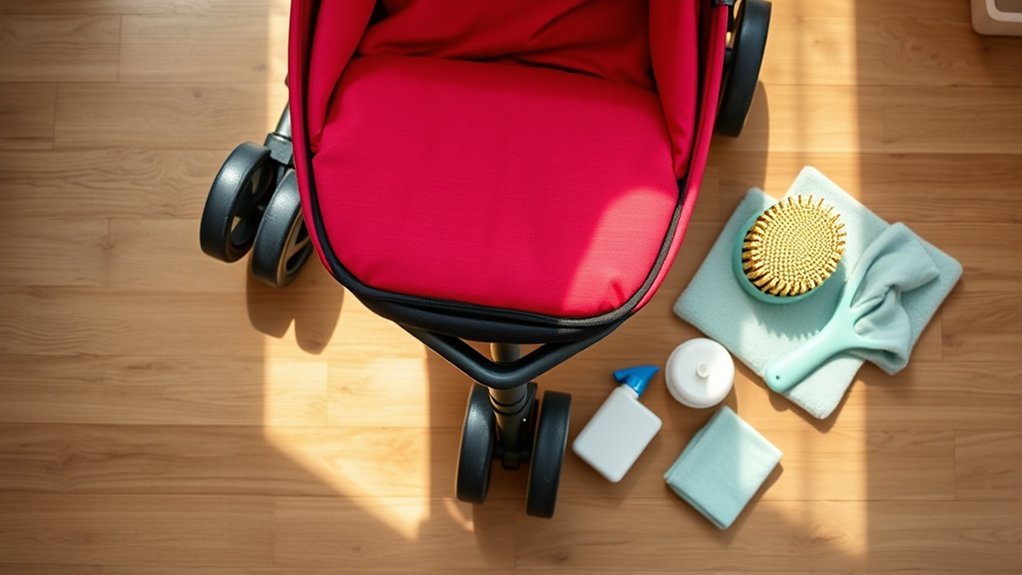
As you handle the daily messes of parenthood, keeping your stroller clean and well-maintained helps protect your child’s comfort and your stroller’s lifespan. Dirt, food crumbs, sticky spills, and moisture can build up quickly, especially when you use the stroller often.
- Cleaning Frequency: Adjust your schedule based on use. A heavily used stroller needs more frequent cleaning than one used only occasionally.
- Immediate Attention: Clean spills and stains right away to reduce odor, discoloration, and fabric damage.
- Eco-Friendly Products: Choose mild, child-safe cleaning products when possible, especially on surfaces your child touches often.
Using the right cleaning tools and stroller accessories can make the process faster. A small vacuum, microfiber cloth, and soft brush can handle most routine messes before they become bigger problems.
By staying proactive about maintenance, you keep your stroller more hygienic, easier to use, and ready for future walks, errands, park trips, and travel days.
Frequently Asked Questions
Can I use bleach to clean my stroller?
No, you should not use bleach on your stroller unless the manual specifically says it is safe. Bleach can fade fabric, weaken fibers, irritate skin, and damage plastic or rubber parts. Use mild soap, warm water, or a baby-friendly cleaner instead.
How often should I clean my stroller?
Clean your stroller every few weeks if you use it often. Vacuum and spot-clean sooner after messy outings, snack spills, rain, mud, or diaper leaks. A quick wipe after regular use can make deep cleaning easier later.
Are there natural cleaning solutions for strollers?
Yes, mild soap and warm water are often enough for routine stroller cleaning. Diluted white vinegar may help with light odors on some fabrics, but always spot-test first and check your manual before using it on seat fabric, straps, or coated materials.
Is it safe to clean stroller fabric with vinegar?
Diluted vinegar can be safe for some stroller fabrics, but it is not right for every material. Check the care label, test a hidden area, and avoid soaking padding or harness straps. Wipe the area with clean water afterward and let it air-dry fully.
What should I do if my stroller has mold?
If your stroller has mold, stop using it until you clean and dry it properly. For small surface spots, check the manual and clean with a mild solution that is safe for the fabric. If mold is widespread, deep in padding, or near straps, contact the manufacturer or a professional baby-gear cleaner.
Can I put stroller fabric in the dryer?
Only use a dryer if your stroller manual or fabric label says it is safe. Many stroller fabrics should air-dry because heat can shrink fabric, damage padding, weaken elastic, or affect the fit.
How do I remove crumbs from stroller buckles and seams?
Use a vacuum crevice tool first, then loosen stuck crumbs with a dry toothbrush or soft detailing brush. Avoid forcing sharp tools into buckles because they can damage the locking parts.
Conclusion
Keeping your stroller clean is like caring for any everyday baby item. It works best when you give it regular attention and care. Start with the manual, vacuum loose debris, treat stains early, wash only approved fabric parts, and wipe down the frame and wheels.
Most stroller messes are easy to handle when you clean them quickly. The most important step is drying everything fully before reassembly, since trapped moisture can lead to odor, mildew, or rust.
With a simple routine, you can extend your stroller’s life, keep it more comfortable for your child, and make each walk feel fresher. Happy strolling!
