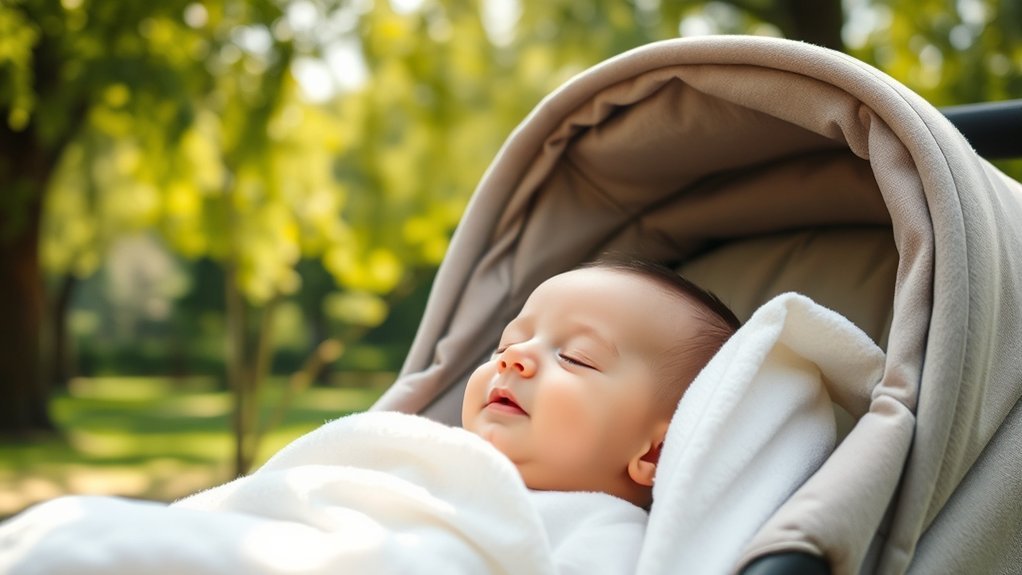
As a parent, you may wonder whether it is safe for your baby to sleep in a stroller during walks, errands, or travel. A short stroller nap can be safe when the stroller supports your baby’s age, size, and position, but it should not replace a firm, flat, supervised sleep space for regular naps or overnight sleep. The safest choice depends on your stroller design, your baby’s age, airflow, harness fit, and how closely you monitor them.
Quick Answer
Yes, a baby can take a short, supervised nap in a stroller when the seat is age-appropriate, reclined correctly, well-ventilated, and free of loose blankets, toys, or straps near the face. For newborns, a flat bassinet-style stroller is safer than an upright seat or car seat-style position.
Key Takeaways
- Short stroller naps can be practical, but they should stay supervised and age-appropriate.
- Newborns sleep best in a flat bassinet-style stroller or newborn nest mode that supports a natural position.
- Avoid loose blankets, pillows, toys, covered openings, and any setup that limits airflow.
- Stroller naps are often shorter than crib or bassinet naps and may disrupt a consistent routine.
- A stroller should not be used as a regular overnight sleep space unless the manufacturer clearly approves that use.
The Short Answer? Yes, With the Right Setup

While you might worry about your baby’s sleep environment, it can be safe for babies to take short naps in strollers designed for their age and size. Stroller safety is especially important when using bassinet-style strollers, newborn nest modes, or fully reclining seats.
These models can provide a more secure sleeping environment than an upright stroller seat because they help your baby rest in a flatter, more natural position. This matters most for newborns and young infants who do not yet have strong head and neck control.
Warning: Never leave your baby sleeping in a stroller unattended. Check their breathing, head position, temperature, straps, and airflow often, especially if they are a newborn or younger infant.
However, stroller naps often result in shorter sleep, sometimes called cat naps. These quick naps can be useful during errands or walks, but they may not give your baby the same restorative rest as a longer nap in a crib or bassinet.
Balancing the convenience of stroller napping with your baby’s established nap schedule is essential for their development, mood, and overall well-being.
[Amazon Products Picked for You]

Room to Grow: Use from birth as a newborn stroller with easy conversion to infant pramette mode, allowing your baby to sleep comfortably on the go. This stroller adapts as your child grows, providing a secure ride from newborn to toddler stages. Compatible with Maxi-Cosi and Nuna car seats (car seat adapter sold separately).

Room to Grow: Use from birth as a newborn stroller with easy conversion to infant pramette mode, allowing your baby to sleep comfortably on the go. This stroller adapts as your child grows, providing a secure ride from newborn to toddler stages. Compatible with Maxi-Cosi and Nuna car seats (car seat adapter sold separately).

Room to Grow: Use from birth as a newborn stroller with easy conversion to infant pramette mode, allowing your baby to sleep comfortably on the go. This stroller adapts as your child grows, providing a secure ride from newborn to toddler stages. Compatible with Maxi-Cosi and Nuna car seats (car seat adapter sold separately).
Understanding Stroller Features for Newborns
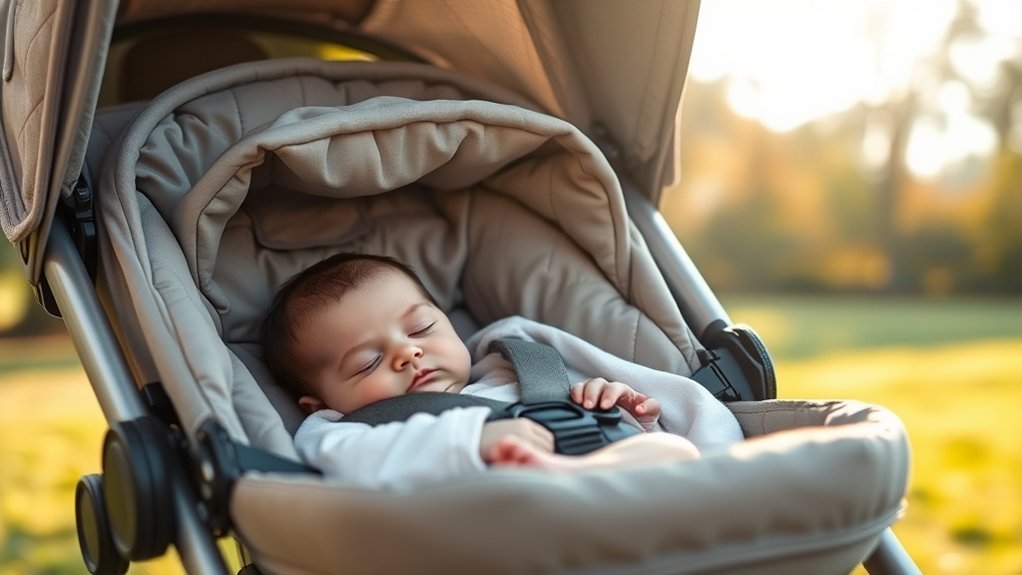
When choosing a stroller for your newborn, it’s essential to understand features like newborn nest mode, full recline, proper harness support, and bassinet-style options.
These designs help create a flatter, safer sleeping surface, so your little one stays more comfortable while you are out and about.
Compact stroller options can also make busy spaces easier to navigate without compromising your baby’s basic sleep and safety needs.
[Amazon Products Picked for You]

🚩2 in 1 Convertible Stroller: This versatile baby stroller doubles as a moving baby bassinet. With adjustable backrest and footrest, it easily converts from a seat to a bassinet, providing a comfortable reclining or sleeping position for your newborn. The bassinet can also be detached and reversed, allowing your toddler to face forward or towards you while you stroll.

FOLDABLE INFANT STROLLER & REVERSIBLE BASSINET PRAM:In order to meet the different use needs, this stroller has special 2-in-1 design. As a landscape design toddler stroller, your baby can enjoy the outside scenery and also free from automobile exhaust pollution. As a bassinet pram, baby can immediately have a comfortable space. And our stroller is also reversible in both directions to meet your different needs.

3-in-1 Design: Transitions from Car Seat Carrier to Infant Pramette to Toddler Stroller
Newborn Nest Mode
Newborn nest mode is an important feature in many modern strollers, designed specifically for the comfort and safety of young infants.
This mode helps convert the stroller into a bassinet-style setup or deeply reclined position, giving your baby a flat surface that supports safer supervised sleeping. Here are three key benefits:
- Natural posture: It helps your newborn rest in a flatter position, which supports breathing, comfort, and healthy body alignment.
- Convenient transition: You can often switch from stroller mode to bassinet-style mode without fully waking your baby, making outings smoother.
- Consistent sleep environment: Using the same safe setup during short outings can help your baby settle more easily outside the home.
With newborn nest mode, you can prioritize your baby’s comfort and well-being while still enjoying freedom of movement.
Bassinet Style Strollers
Choosing the right stroller can greatly affect your newborn’s sleep quality and overall comfort. Bassinet-style strollers are designed to provide a flat sleeping surface, which is especially helpful for newborns who cannot safely sit upright yet.
Many modern options, including travel stroller systems and full-size strollers, convert to a bassinet mode. This gives your baby a cozier environment during outings and reduces the risk of their chin dropping toward their chest in a way that can affect breathing.
These stroller features allow for smoother transitions, making it easier for you to adapt to your baby’s needs without constantly moving them from one sleep space to another.
Compact Stroller Options
Many parents find that compact strollers offer the right blend of convenience and comfort for their little ones.
Designed with urban settings in mind, these strollers can help your newborn nap safely and soundly while you navigate sidewalks, stores, parks, or public transportation.
Here are some compact stroller benefits to evaluate:
- Newborn-ready design: Some models offer a bassinet-style setup or deep recline so your baby can lie flatter for better rest.
- Newborn nest mode: This feature provides extra support for infants and can reduce sliding or slumping during short naps.
- Enhanced airflow: Mesh panels, adjustable canopies, and breathable fabrics can improve comfort and reduce overheating risks.
With these urban stroller features, you can confidently explore the world while keeping your little one cozy and supported.
Pros to Stroller Sleeping
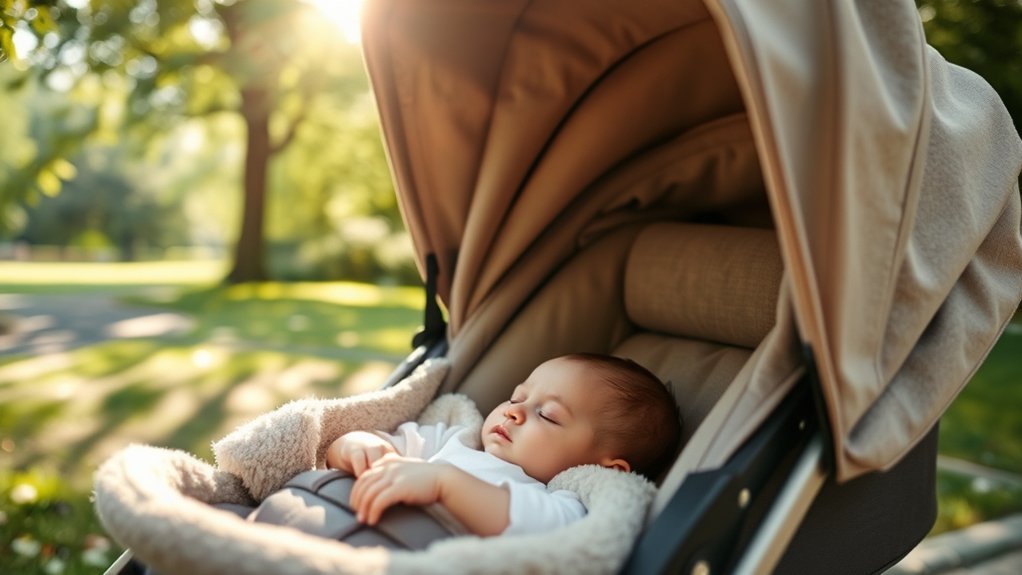
Although some parents worry about their baby sleeping in a stroller, there are several advantages that make it a practical choice for short, supervised naps.
First, stroller naps allow you to run errands, walk outside, attend appointments, or care for older children without completely disrupting your baby’s nap time. This gives you meaningful flexibility benefits during busy days.
Babies can also learn to sleep in different environments, which may make travel, family visits, and daily outings easier. This flexibility can help you enjoy longer outings without rushing home every time your baby gets tired.
Stroller naps also offer outdoor advantages. A calm walk, fresh air, and gentle motion may help some babies settle when they are overtired or fussy.
Ultimately, the convenience of stroller sleeping can support your physical and mental health by helping you balance responsibilities while still respecting your baby’s need for rest.
Pro Tip: Use stroller naps as a backup option, not the main sleep plan. When possible, save the longest nap of the day for a crib, bassinet, or other safe sleep space at home.
Cons to Stroller Sleeping
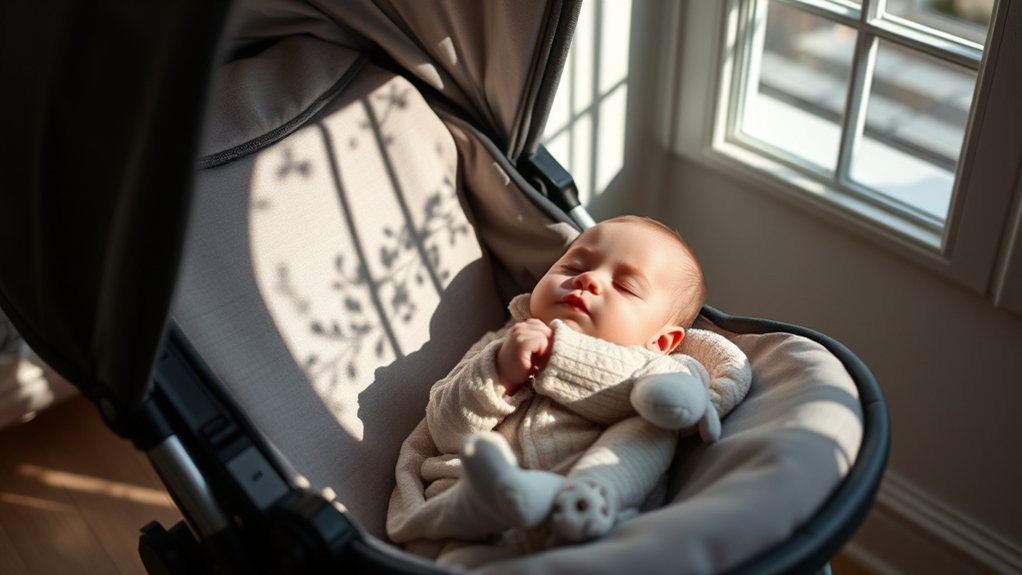
While stroller sleeping can be convenient, it can also disrupt your baby’s established naptime schedule, making consistency more difficult.
You might notice that stroller naps tend to be shorter, lighter, or easier to interrupt. Your baby may wake when the stroller stops moving, when the environment gets noisy, or when bright light changes around them.
This reliance on motion for sleep can also make it harder for some babies to self-soothe, especially if stroller naps become the main way they fall asleep.
Schedule Disruption Risks
When you let your baby nap in a stroller often, it can accidentally disrupt their established sleep schedule.
While stroller naps may seem convenient, they can create challenges when you are trying to maintain schedule consistency.
Here are three key risks to consider:
- Cat nap challenges: Stroller naps often become short, light sleep sessions lasting only 20 to 30 minutes.
- Self-soothing delays: Babies may struggle to develop self-soothing skills if they always rely on stroller movement to fall asleep.
- Routine inconsistency: Frequent stroller napping can make the daily sleep routine unpredictable, which may affect bedtime and overnight sleep.
While it is tempting to use the stroller for every nap, it is worth thinking about the long-term effect on your baby’s sleep development.
Short Nap Duration
Many parents rely on stroller naps, but these brief sleep sessions can come with real drawbacks. They often last only 20 to 30 minutes, which may reduce nap quality and interrupt your baby’s natural sleep cycles. This can lead to more fussiness and irritability when your baby misses deeper, more restorative sleep.
| Drawback | Impact on Baby | Long-term Consequence |
|---|---|---|
| Short nap duration | Poor sleep quality | Difficulty self-soothing |
| Disrupted sleep cycles | Increased irritability | Trouble shifting to routine |
| Dependency on motion | Reliance on stroller | Delayed independent sleep skills |
| Limited deep sleep | Restlessness | Less restorative daytime rest |
Transitioning from frequent stroller naps to a consistent sleep routine is important for your baby’s overall development and daily mood.
Creating the Ideal Sleep Environment
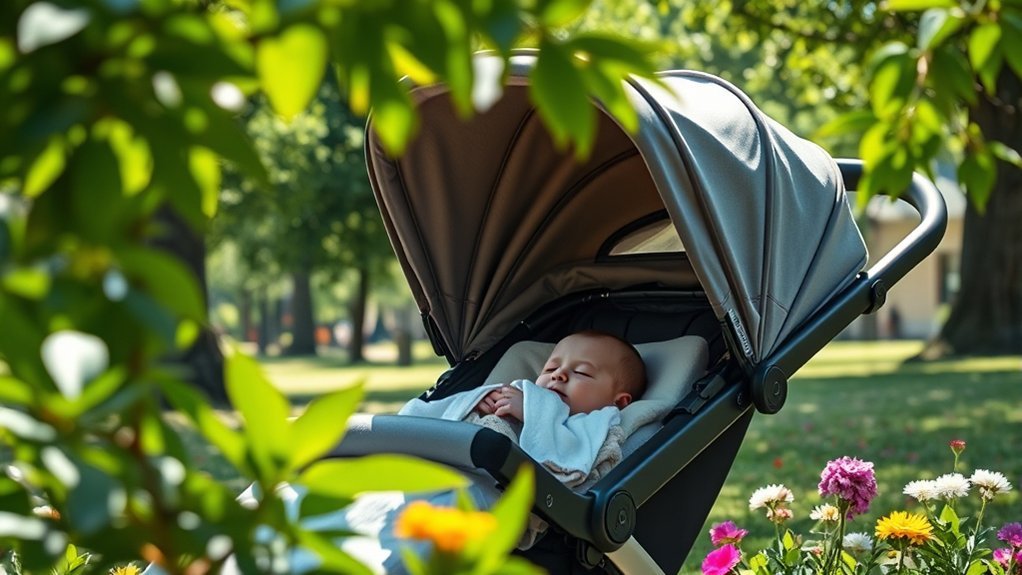
Creating the ideal sleep environment for your baby in a stroller involves several key considerations that can greatly improve their comfort and rest.
Focusing on sleep hygiene is essential, so here are three tips to optimize their stroller experience:
- Use a bassinet-style stroller for newborns so they can sleep flat, which supports breathing and overall comfort.
- Use stroller accessories wisely, such as a canopy to block harsh light, while keeping airflow open and never fully covering the stroller with a thick blanket.
- Establish a consistent napping routine to help your baby adapt to different environments and reduce disruptions to their sleep schedule.
Note: Shade is helpful, but airflow matters too. Avoid draping heavy blankets over the stroller opening because heat can build up quickly inside the stroller.
[Amazon Products Picked for You]

Quality Material: Made of cationic fabric, thick fabric, good shading effect. Stroller widen sun shade: This shade waterproof and UPF50+ for stroller can protect children from wind, dustproof, anti-pollen, sun rays and rain

2-IN-1 SINGLE-LAYER CANOPY — Replaces cumbersome double-layer covers. Combines UPF 50+ UV blocking fabric and 380+ mesh/sq in insect protection into one canopy, keeping baby cool and shielded from sun rays and bugs without heat trap.

Quality Material: Made of cationic fabric, thick fabric, good shading effect. Stroller widen sun shade: This shade waterproof and UPF50+ for stroller can protect children from wind, dustproof, anti-pollen, sun rays and rain
Transitioning From Stroller to Bassinet
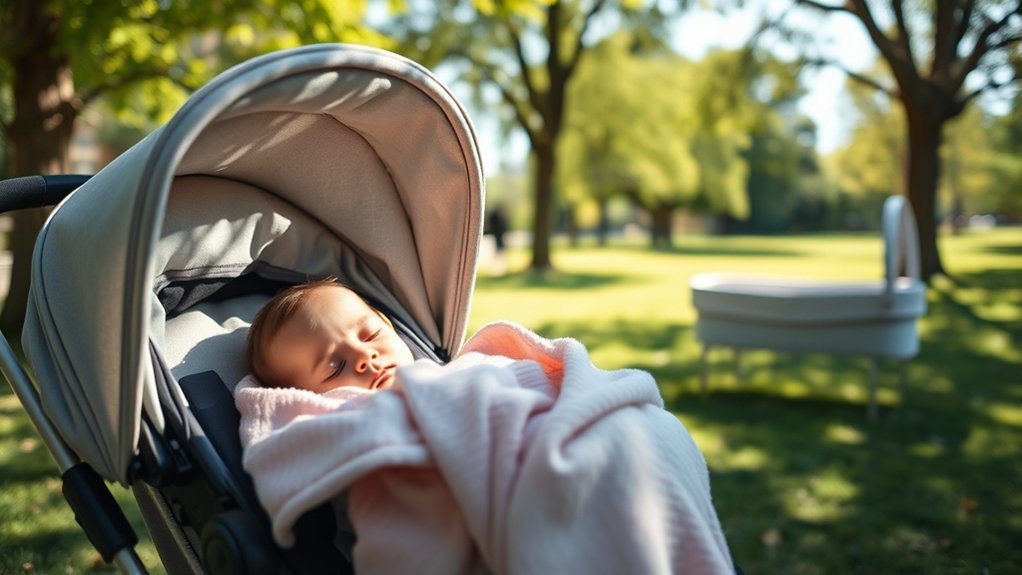
As your baby grows and their sleep needs evolve, knowing how to shift from stroller to bassinet mode can make outings smoother.
Many strollers offer a newborn nest mode or bassinet attachment that creates a flat sleeping surface. This setup can prioritize comfort and stroller safety during short naps outside the home.
This transition usually requires minimal effort, helping your little one rest in a natural horizontal position without being disturbed too much.
Using bassinet positioning supports your baby’s sleep needs while allowing you to enjoy longer outings without fully interrupting their rest.
Maintaining Established Nap Schedules

While stroller naps can seem like a convenient solution during outings, they may disrupt your baby’s established nap schedule if they happen too often. To maintain nap consistency and promote good sleep hygiene, consider these tips:
- Stick to a routine: Try to align stroller naps with your baby’s normal sleep schedule to reduce disruptions.
- Limit stroller napping: Reserve stroller naps for short outings, and let longer, restorative sleep happen in a more restful environment.
- Observe nap lengths: Watch for signs of cat naps, which often last only 20 to 30 minutes, and adjust your outing times when needed.
If your baby seems crankier after stroller naps, they may need a quieter, darker, and more predictable sleep space for at least one main nap each day.
Encouraging Self-Soothing Techniques

When your baby learns to self-soothe, it can make a significant difference in their sleep patterns and overall well-being. Encouraging self-soothing techniques helps your little one develop independent sleep skills, which can lead to longer and more restorative sleep cycles.
Start by gradually reducing reliance on stroller movement during naps, allowing your baby to adapt to other sleeping environments. Establish a consistent nap routine, even when using the stroller, so they can recognize familiar sleep cues.
You can also use soothing practices like gentle patting, quiet humming, or soft singing while they are in the stroller. This helps ease them into sleep without depending only on movement.
As your baby transitions to independent sleep spaces, they can gain confidence in their ability to fall asleep on their own.
Balancing Convenience and Baby’s Needs
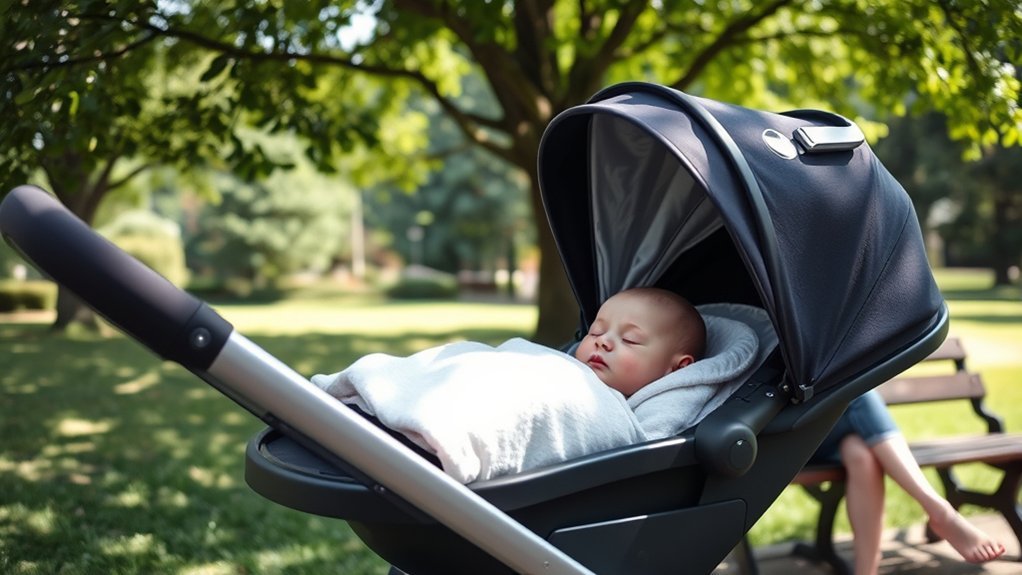
Finding the right balance between convenience and your baby’s needs can be challenging, especially when it comes to stroller naps. While it is tempting to let your little one snooze in the stroller during errands, consider these factors for better stroller safety and sleep routines:
- Environment: Create a calm, shaded, well-ventilated stroller space to support better sleep.
- Position: Choose a bassinet-style stroller for newborns, ensuring a flat sleeping position for comfort and safety.
- Routine: Use stroller naps without replacing established sleep routines, allowing your baby to keep building healthy sleep habits.
Convenience matters, but your baby’s breathing, temperature, positioning, and supervision should always come first.
When Stroller Sleep Is Not a Good Idea
Stroller naps are not always the best choice. Avoid letting your baby sleep in a stroller if the seat does not recline enough for their age, the stroller is parked in direct sun, the harness does not fit correctly, or your baby’s head keeps falling forward.
You should also avoid stroller sleep if your baby is premature, has breathing concerns, has reflux that requires medical guidance, or has been given specific sleep instructions by a pediatrician. In those cases, follow your doctor’s advice first.
A stroller is also not a safe replacement for overnight sleep unless the manufacturer clearly states that the specific bassinet or sleep attachment is approved for that purpose.
Related Guides
Frequently Asked Questions
How long can babies safely sleep in a stroller?
Babies can usually take a short supervised nap in a stroller, often around 30 minutes to two hours, depending on age, position, and comfort. Check your baby often and move them to a crib or bassinet for longer, deeper sleep when possible.
Can I use a car seat in a stroller for sleeping?
A baby may fall asleep in a car seat attached to a stroller, but it is best for short, supervised periods only. Make sure the car seat is clicked in correctly, the harness is snug, and your baby’s head and airway stay in a safe position.
What should I avoid while my baby sleeps in a stroller?
Avoid loose blankets, pillows, stuffed animals, toys, unbuckled straps, direct sunlight, and thick covers over the stroller opening. Keep the sleep area flat, shaded, breathable, and supervised.
Are there any age restrictions for stroller sleeping?
There are no universal age rules for all stroller naps, but newborns need a flatter, more supportive setup than older babies. Always follow the stroller manufacturer’s age, weight, recline, and bassinet-use instructions.
How can I tell if my baby is comfortable in the stroller?
Soft limbs, a relaxed face, steady breathing, and normal skin color are good signs. Also check that the straps fit properly, your baby is not too hot or cold, and their head is not slumped forward.
Is a bassinet stroller better than a regular stroller seat for newborn naps?
Yes, a bassinet stroller is usually better for newborn naps because it allows a flatter sleeping position. A regular stroller seat may be better for older babies who have stronger head and neck control and can sit safely with support.
Conclusion
In the grand journey of parenthood, finding the balance between convenience and your baby’s needs is key. While stroller naps can be a lifesaver during errands, walks, and travel, they work best as short, supervised naps rather than a full replacement for a safe crib or bassinet routine.
A restful sleep environment, proper stroller recline, open airflow, and close supervision all help your baby nap more safely. Like a gentle breeze guiding a sailboat, nurturing self-soothing skills and maintaining routines will help your little one navigate their sleep journey. With thoughtful choices, you can turn quick stroller naps into calmer, safer moments of rest.
Sources
- American Academy of Pediatrics Safe Sleep Guidance — supports safe sleep basics, including firm, flat sleep surfaces and avoiding loose items.
- HealthyChildren.org Safe Sleep Guide — parent-focused safe sleep recommendations from the American Academy of Pediatrics.
- U.S. Consumer Product Safety Commission Safe Sleep — safety guidance on infant sleep products and reducing hazards in sleep spaces.
