Traveling with a baby or toddler is easier when you know whether your stroller can come into the cabin, be gate-checked, or must be checked at the ticket counter. Airline stroller rules vary, but the safest plan is to bring a compact, foldable stroller, confirm your airline’s size limits before departure, and keep a backup plan for gate-checking if it does not fit onboard.
Quick Answer
You can bring some compact, foldable strollers as carry-on items if they meet your airline’s cabin baggage size rules. Larger strollers usually need to be gate-checked or checked at the ticket counter. Always confirm your airline’s policy before flying because stroller size, weight, and boarding rules differ by carrier.
Key Takeaways
- Compact travel strollers are the best choice if you want a chance of bringing one onboard.
- Most full-size strollers are better suited for gate-checking or ticket-counter check-in.
- Airline rules vary, so check size limits, stroller policies, and family boarding rules before your trip.
- Remove loose accessories, fold the stroller quickly, and label it clearly before boarding.
- A baby carrier, travel system, or stroller rental can be a useful backup if cabin space is limited.
Benefits of Traveling With a Stroller
Traveling with a stroller can make your airport day much smoother, especially when you are moving through crowded terminals, long security lines, and busy boarding areas.
A stroller gives your child a familiar place to rest while you handle tickets, bags, snacks, and boarding documents. That familiar seat can reduce fussiness and help your child stay comfortable during a long travel day.
Lightweight strollers are especially useful because they are easier to fold, lift, carry, and store. They can also help once you reach your destination, where you may need to walk through hotels, parks, city streets, or public transportation areas.
Using your own stroller also avoids some common rental problems, such as limited availability, long wait times, unfamiliar features, and uncertainty about cleanliness. With your own stroller, you already know how it folds, how the brakes work, and how your child fits in it.
Pro Tip: Practice folding your stroller with one hand before your trip. Airport staff may ask you to fold it quickly during security screening, boarding, or gate-checking.
Airline Regulations for Carry-On Strollers
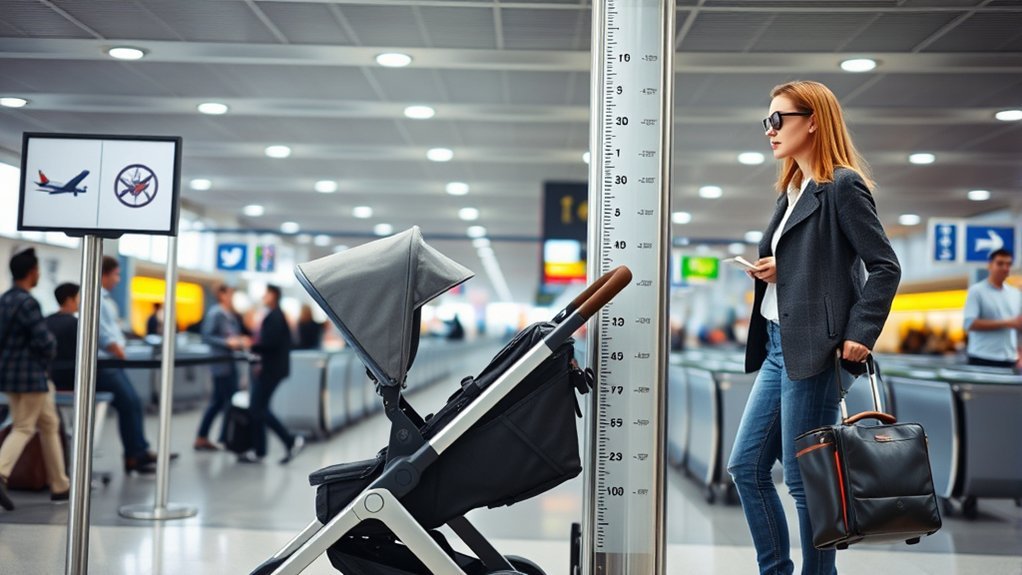
When you are flying with a stroller, the most important thing to understand is that airline rules are not identical. Some airlines allow very compact strollers in the cabin, while others require strollers to be checked at the gate or counter.
The rules usually depend on three things: folded size, stroller weight, and available cabin space. Even if your stroller meets the size limit, the crew may still ask you to gate-check it if overhead bin space is full.
Knowing the basic regulations before you arrive at the airport helps you avoid last-minute stress. It also helps you choose whether to bring a compact travel stroller, a full-size stroller, a baby carrier, or a stroller bag.
Size Restrictions for Strollers
Before you head to the airport, check the folded dimensions of your stroller and compare them with your airline’s carry-on size rules. Strollers that exceed the cabin limit usually need to be checked instead.
| Airline | Maximum Dimensions (inches) |
|---|---|
| Airline A | 22 x 14 x 9 |
| Airline B | 26 x 18 x 10 |
| Airline C | 24 x 16 x 8 |
| Airline D | 20 x 15 x 10 |
These examples show why it is risky to assume that one stroller will work for every airline. A stroller that fits one airline’s cabin limit may be too large for another. Always verify stroller compatibility with your airline before you travel.
Note: Measure your stroller after it is fully folded, including wheels, handles, trays, cup holders, and any attached bumper bar.
Airline-Specific Policies
Airline-specific stroller policies can make a big difference in your travel experience. Alaska Airlines and Delta may allow small, collapsible strollers onboard when they meet carry-on requirements, while larger models usually need to be checked.
American Airlines also allows some smaller strollers, but larger strollers may need to be checked at the ticket counter. Frontier Airlines does not generally treat strollers as standard carry-on items and may require them to be checked at the gate.
United Airlines may allow small, foldable strollers in the cabin, but larger strollers must usually be checked. These policies can change, and airport staff may make the final decision based on aircraft size and storage space.
Before leaving for the airport, check your airline’s current stroller policy, carry-on limit, and family boarding rules. This simple step can save you from repacking bags or separating from your stroller earlier than expected.
Boarding Process Guidelines
Once you know your airline’s stroller policy, plan how you will handle the stroller during boarding. A smooth process starts before you reach the gate.
- Check size limits: Compare your stroller’s folded dimensions with the airline’s carry-on rules.
- Ask about family boarding: Some airlines allow families with young children to board early or during a special boarding group.
- Use a luggage tag: Add your name, phone number, and email to the stroller in case it is gate-checked.
- Remove loose items: Take off toys, snack trays, cup holders, hooks, and bags before boarding.
- Fold it before the line backs up: Know how to fold the stroller quickly so you do not delay boarding.
These steps help you move through the gate area faster and reduce the chance of damage, confusion, or delays.
Types of Strollers Approved for Carry-On
If you want to bring a stroller into the cabin, compact options are usually your best bet. Look for a stroller that folds small, locks closed, and is easy to carry through the airport.
Many travel strollers are designed to fit near common carry-on dimensions, such as 22 x 14 x 9 inches, but you still need to compare the exact folded size with your airline’s rules.
Popular compact travel stroller styles include lightweight strollers, umbrella strollers, and small collapsible models. Brands such as Babyzen YOYO and GB Pockit are often discussed by traveling parents because they fold down very small, but you should still confirm your airline’s policy before relying on cabin storage.
[Amazon Products Picked for You]

TRAVEL STROLLER FOR AIRPLANE OR CAR: Weighing only 10.4 lbs, the Pockit Air All-Terrain baby stroller is the perfect travel companion, whether it's the vacation of a lifetime or a quick city break

Automatically folds to a compact size with one-hand activation for multi-tasking families

3‑In‑1 Stroller, Ride, And Scooter - Baby Safety Alliance certified and ASTM-tested across all 3 modes, the Coast Rider converts from a full travel stroller to Ride and Scooter modes, giving your child more ways to ride as they grow. A versatile toddler stroller for family outings.
Compact Stroller Options
If you are traveling with a little one, choosing the right compact stroller can make your airport experience easier from check-in to arrival.
- Umbrella strollers: These are usually lightweight, simple, and easy to fold. Some may be compact enough for travel, though not all fit overhead bins.
- Collapsible travel strollers: These models are designed to fold small and may fit in overhead compartments or under seats on some aircraft.
- Travel system strollers: Some stroller-and-car-seat combinations are helpful for infants, but many are too bulky for cabin storage.
- Very compact cabin strollers: These are made for air travel and are usually the strongest option if you want a stroller that may qualify as carry-on.
Before buying or packing a stroller for a flight, check the folded size, weight, locking mechanism, and carrying strap or bag.
Folding Mechanism Requirements
The folding mechanism matters because airport travel often requires quick transitions. You may need to fold the stroller at security, at the gate, on the jet bridge, or beside the aircraft door.
Most airlines prefer strollers that fold into a compact shape and can be stored safely without blocking aisles, exits, or overhead bins. One-hand folding mechanisms are especially helpful when you are holding a child or managing a diaper bag.
| Stroller Type | Folding Mechanism |
|---|---|
| Lightweight Stroller | One-Hand Folding |
| Umbrella Stroller | Compact Design |
| Travel System Stroller | Collapsible & Lightweight |
Choose a stroller that folds securely and stays locked while carried. If it pops open easily, it may be harder to move through the airport or store safely.
Preparing Your Stroller for Travel

Preparing your stroller before you leave home can prevent problems at check-in, security, and boarding. A stroller that is clean, labeled, and easy to fold is much easier to manage during a busy travel day.
Preparing your stroller before travel is one of the simplest ways to make your airport experience smoother.
- Check airline regulations: Confirm carry-on stroller size limits, gate-check rules, and family boarding policies.
- Remove unnecessary attachments: Take off toys, bags, stroller fans, trays, hooks, and loose accessories.
- Choose lightweight when possible: A lighter stroller is easier to lift onto a belt, carry down a jet bridge, or place in a travel bag.
- Practice the fold: Fold and unfold the stroller several times before the trip so you can do it quickly.
- Clean the stroller: Wipe the frame, wheels, handles, and snack areas before travel.
- Label it clearly: Add your contact details in case the stroller is gate-checked or separated from you.
Warning: Do not leave phones, passports, wallets, medication, boarding passes, or valuables in the stroller basket before gate-checking. Keep essential items in your personal bag.
[Amazon Products Picked for You]

Lightweight & Travel-Friendly Design - Weighing just 7.2 pounds, the Dream On Me Aero Travel Light Stroller makes traveling with your little one easier. Ideal for families on the go — great for vacations, city strolls, and quick errands.

LIGHTWEIGHT - A lightweight stroller makes any outing a little easier; The Ingenuity 3D Mini Convenience Stroller has a durable steel frame that weighs 11 pounds and has a full-sized seat, plus auto-lock, anti-shock front wheels and lockable rear wheels

LIGHTWEIGHT - A lightweight stroller makes any outing a little easier; The Ingenuity 3D Mini Convenience Stroller has a durable steel frame that weighs 11 pounds and has a full-sized seat, plus auto-lock, anti-shock front wheels and lockable rear wheels
Checking Your Stroller at the Gate
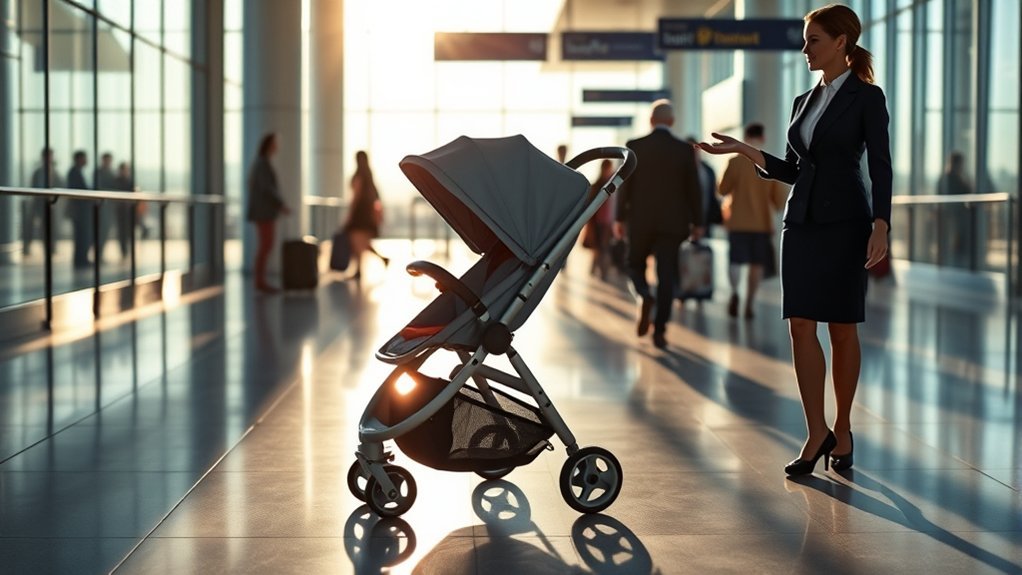
Gate-checking your stroller can be a good compromise when it is too large for the cabin but still useful inside the airport. Many airlines allow parents to use the stroller through the terminal and hand it over near the aircraft door.
In many cases, the stroller is returned at the aircraft door, jet bridge, or baggage area after landing. The exact return point depends on the airline, airport, and aircraft type, so ask the gate agent before boarding.
To make gate-checking easier, fold the stroller before handing it over, remove loose accessories, and attach a gate-check tag securely. A protective travel bag can also help reduce scratches, dirt, and fabric damage.
Larger strollers may need to be checked at the ticket counter instead of the gate. If your stroller is heavy, wide, or part of a travel system, ask the airline which check-in option is allowed.
Traveling With a Stroller: Tips for Smooth Navigation
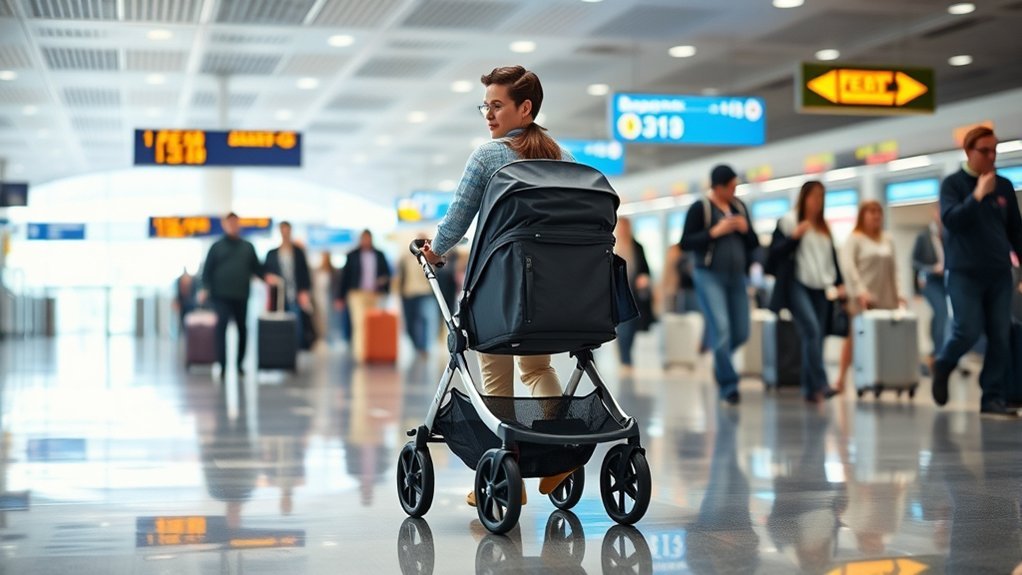
Moving through an airport with a stroller can be simple when you plan your route and keep your setup light. The goal is to avoid juggling too many loose items while still keeping your child comfortable.
Smart stroller planning helps you move through the airport with less stress, fewer delays, and better control of your bags and child.
- Check airline policies: Confirm size limits and stroller check-in rules before your travel day.
- Use a travel system when helpful: A car seat and stroller combo can simplify movement with an infant, but it may not be compact enough for carry-on.
- Gate-check larger strollers: If your stroller will not fit overhead, plan to gate-check it instead of arguing at boarding.
- Minimize accessories: Remove cup holders, trays, toy clips, and loose storage bags before security.
- Use a backpack diaper bag: A backpack keeps your hands free while pushing, folding, or carrying the stroller.
- Arrive early: Extra time helps if the stroller needs tagging, measuring, or special handling.
With these steps, you can move through check-in, security, boarding, and arrival with fewer surprises.
What to Do If Your Stroller Doesn’t Fit
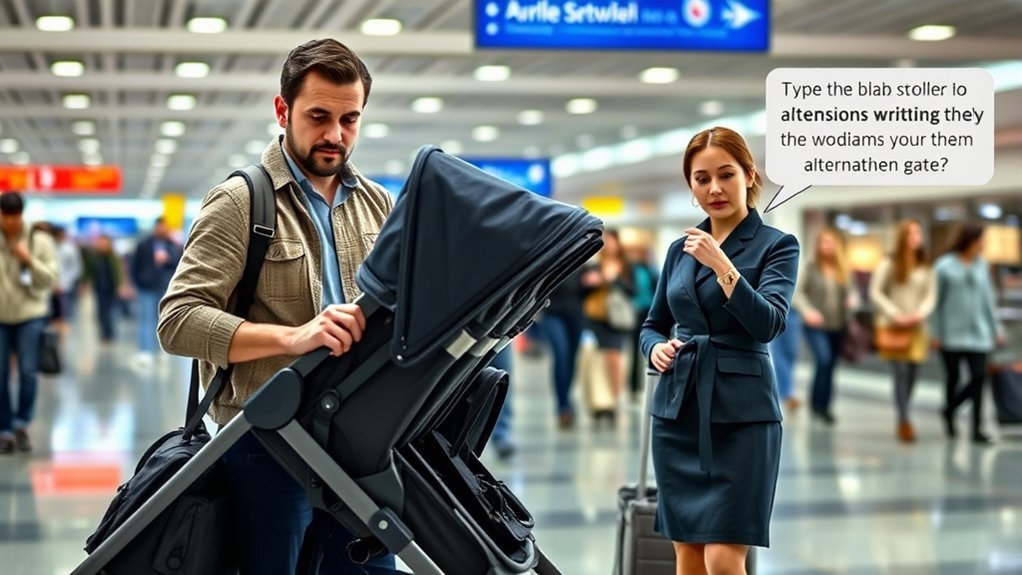
If you arrive at the airport and your stroller does not fit in the overhead bin or under the seat, stay calm. You still have options.
First, ask the gate agent whether you can gate-check it. In many cases, you can use the stroller until boarding and pick it up after landing. If the airline requires ticket-counter check-in instead, ask where the stroller will be returned at your destination.
If your stroller is larger than allowed, remove accessories, fold it fully, and place it in a stroller travel bag if you have one. Make sure the stroller tag is secure and your contact information is attached.
For future trips, consider a lightweight stroller designed specifically for travel. These models are usually easier to fold, carry, and store, making them more likely to meet carry-on size limits.
Note: Even a stroller that fits the published dimensions may still be gate-checked if the aircraft is small or overhead bin space is limited.
Airline-Specific Policies on Stroller Carry-Ons
Understanding airline-specific stroller carry-on policies is essential for a smooth travel experience. Different airlines have different rules about stroller types, folded dimensions, and where the stroller must be checked.
Here is a simple overview based on the common policy patterns discussed in this article:
- Alaska Airlines: Small, collapsible strollers may be allowed when they meet cabin requirements; larger strollers are usually checked.
- American Airlines: Smaller strollers may be allowed onboard, while larger ones may need to be checked at the counter.
- Delta Airlines: Small strollers may be accepted onboard when they meet size rules, and larger strollers may be checked for free at the curb, counter, or gate.
- Frontier Airlines: Strollers are generally not treated as regular carry-on items and may need to be checked at the gate.
- United Airlines: Small, foldable strollers may be accepted in the cabin when they fit, while larger strollers are usually checked.
Because airline policies can change, always check directly with your airline before your trip. If you are flying on a partner airline or a smaller regional aircraft, confirm the stroller rules for each flight segment.
Experiences of Other Parents Traveling With Strollers

Parents often say that a stroller can be one of the most helpful travel tools in a busy airport. Lightweight, compact strollers are easier to push through terminals, fold at security, and manage during boarding.
Some parents prefer travel systems because the car seat can move from car to stroller without waking the baby. Others prefer a small umbrella stroller because it is lighter and easier to gate-check.
The biggest lesson from other parents is simple: do not assume the stroller will be accepted onboard just because it is small. Confirm the folded size, airline policy, and gate-check process before you leave home.
| Parent Testimonials | Travel Anecdotes | Tips for Smooth Travel |
|---|---|---|
| “Compact strollers were lifesavers!” | “Gate-checking made boarding stress-free.” | “Always confirm airline policies!” |
| “Travel systems worked wonders.” | “Navigating was so much easier.” | “Check dimensions before flying!” |
| “Lightweight strollers rock!” | “Less hassle, more fun!” | “Pack essentials in stroller storage!” |
| “Great for quick trips!” | “No more juggling kids and bags!” | “Use a backpack for added ease!” |
| “Stroller made changes smooth.” | “A must for family travel!” | “Arrive early for gate-check!” |
Alternatives to Bringing a Stroller on Board
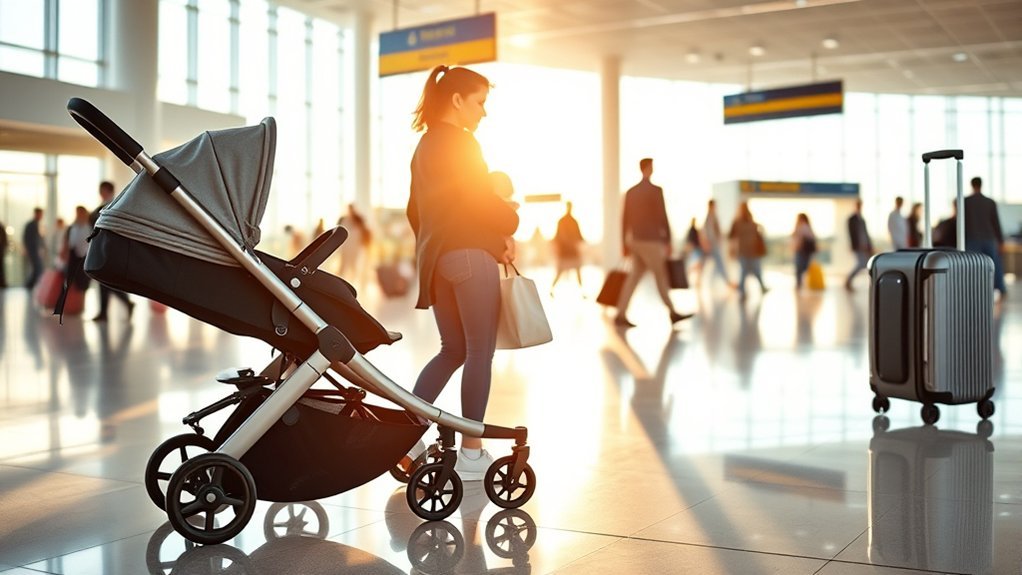
If you want to simplify your travel setup, there are several alternatives to bringing a stroller onboard. These options can help when cabin space is limited or when your stroller is too large for carry-on rules.
- Baby carriers: A soft carrier keeps your hands free and can be easier than pushing a stroller through crowded spaces.
- Backpack diaper bags: A backpack helps you carry essentials without attaching heavy bags to the stroller handle.
- Stroller rentals: Some airports, hotels, resorts, and theme parks offer rentals, letting you avoid bringing a stroller from home.
- Travel systems: A car seat and stroller combination can be convenient for infants, especially if you need the car seat at your destination.
- Gate-checking instead of carry-on: If your stroller is useful in the airport but too large for the cabin, gate-checking may be the easiest option.
These alternatives can help you move through the airport with less bulk while keeping your child secure and comfortable.
Navigating the airport becomes easier when your stroller plan matches your child’s needs, your airline’s rules, and the amount of gear you can realistically carry.
[Amazon Products Picked for You]

【ULTIMATE COMFORT FOR PARENTS & KIDS】Experience effortless outings with the Wipha Baby Backpack Carrier, designed to evenly distribute your child's weight and reduce neck and shoulder strain. This ergonomic toddler carrier backpack allows parents to enjoy longer walks, travel, and outdoor adventures while keeping their little one secure and comfortable. Perfect as a baby carrier backpack for daily outings or family trips

★ CARRY YOUR KIDS SAFELY AND COMFORTABLY: Your child will be carried safely in his padded cocoon with safety straps and stirrups. This Baby Hiking Backpack Carrier also has a removable sun visor that shields your little one from the elements
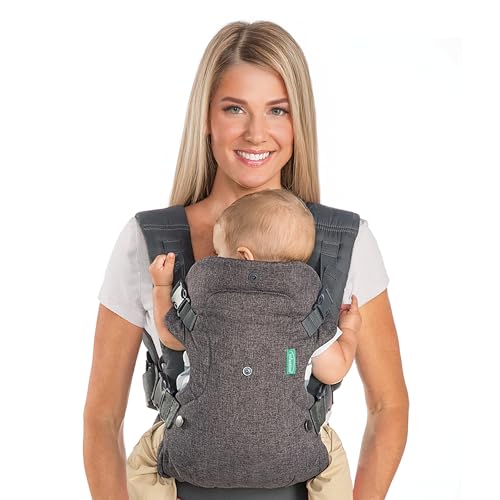
CLOSE FOR THE MOMENTS THAT MATTER: From coffee runs and grocery trips to neighborhood walks, this baby carrier keeps your little one close while keeping your hands free
Frequently Asked Questions
Can I bring a stroller if I have a lap infant ticket?
Yes, most airlines allow you to bring a stroller when traveling with a lap infant. Depending on the stroller size and airline policy, you may be able to bring it onboard, gate-check it, or check it at the ticket counter.
What happens if my stroller is damaged during travel?
Report the damage to the airline before leaving the airport, if possible. Take photos, keep your baggage or gate-check tag, and ask the airline about its stroller damage claim process. A padded stroller travel bag may help reduce wear during future trips.
Are there weight restrictions for carry-on strollers?
Some airlines may consider both size and weight when deciding whether a stroller can come into the cabin. Lightweight strollers are easier to carry, fold, and store, but you still need to confirm your airline’s specific carry-on rules.
Can I use my stroller in the airport?
Yes, in most cases you can use your stroller throughout the airport until boarding. If it cannot come onboard, the airline may let you gate-check it near the aircraft door. Ask the gate agent where it will be returned after landing.
How do I clean my stroller before traveling?
Remove crumbs and loose debris, wipe the frame and wheels, clean snack trays and handles with mild detergent, and let fabric areas air dry. Avoid soaking parts unless the manufacturer’s instructions say it is safe.
Is it better to gate-check a stroller or bring it as a carry-on?
Bring it as a carry-on only if it folds small enough and your airline allows it. Gate-checking is usually better for full-size strollers because you can use the stroller in the airport without needing overhead bin space.
Should I use a stroller travel bag?
A stroller travel bag is helpful if you plan to gate-check or counter-check the stroller. It can protect the frame, fabric, wheels, and handles from dirt and scratches during handling.
Conclusion
Traveling with a stroller is much easier when you prepare before arriving at the airport. A compact, foldable stroller gives you the best chance of bringing it onboard, while larger strollers are usually better for gate-checking or counter check-in.
Check your airline’s stroller policy, measure your stroller after folding, remove loose accessories, and label it clearly. With the right plan, you can move through the airport with less stress and keep your child comfortable from check-in to arrival.
