
When considering stroller rain covers, safety should come before convenience. A good cover can keep your child dry during rain, wind, and light snow, but it also needs proper ventilation, a secure fit, and child-safe materials. It is not just about blocking bad weather; trapped heat, poor airflow, and loose plastic can create real risks. Knowing what to check before each use helps you choose and use a rain cover with more confidence.
Quick Answer
Stroller rain covers can be safe when they fit securely, include ventilation openings, and are used for short periods with regular child checks. Avoid using a rain cover in hot weather, direct sun, or for long stretches without airflow because heat and moisture can build up inside.
Key Takeaways
- Choose a stroller rain cover with clear ventilation panels, air holes, or mesh sections.
- Use non-toxic, BPA-free, PVC-free, or manufacturer-approved materials when possible.
- Check your child often for sweating, flushed skin, fussiness, or breathing discomfort.
- A snug fit is safer than a loose cover that can flap, sag, or sit too close to your child’s face.
- Rain covers are best for short weather protection, not long-term enclosure in warm or humid conditions.
Understanding Stroller Rain Covers
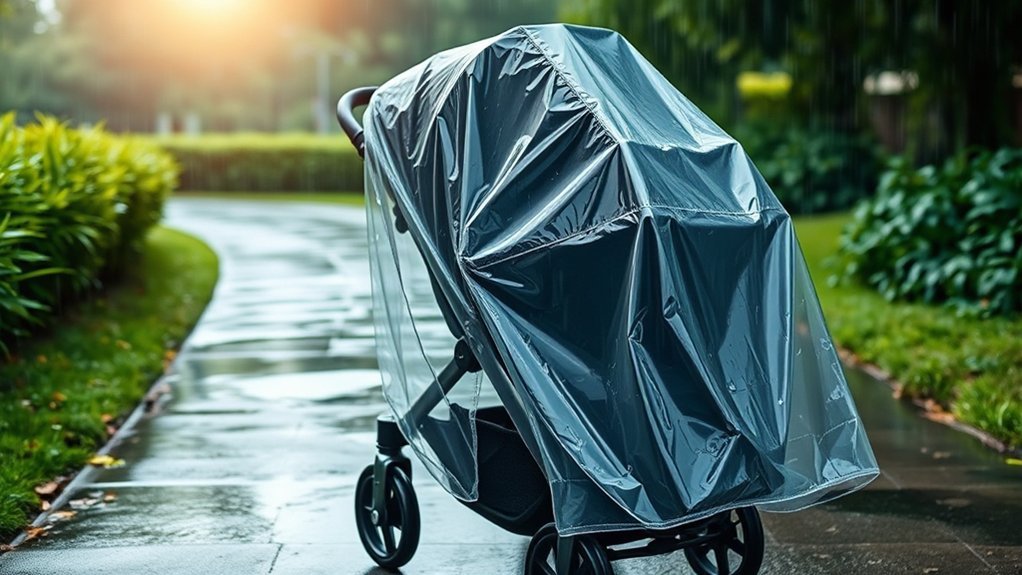
When you’re out with your child, understanding stroller rain covers is vital for helping them stay comfortable and safe during unpredictable weather. These covers are usually made from clear plastic or similar weather-resistant material, allowing you to monitor your little one while protecting them from rain, wind, and light snow.
When choosing a rain cover, consider the different material types available. Look for lightweight options that are easy to fold, store, and carry. A cover that is too stiff or bulky may be harder to attach quickly when a sudden shower starts. Installation also matters. Most covers use simple elastic edges, hook-and-loop straps, snaps, or stroller-specific fastening points, making them easier to put on and remove.
Ventilation is one of the most important safety features. Many models include ventilation openings, side vents, or mesh panels to promote air circulation and reduce the chance of overheating. This balance of protection and comfort helps your child stay dry without turning the stroller into a sealed plastic space.
It is also smart to check whether the cover is universal or designed for a specific stroller model. Universal covers can work well, but they may not fit every stroller shape. A brand-specific or custom-fit cover often gives better coverage and may be less likely to slip, bunch, or leave gaps around the seat area.
Rain Cover Safety Concerns

While stroller rain covers provide useful protection from the elements, they also come with safety concerns that every parent should be aware of. The biggest risks are poor airflow, heat build-up, loose plastic near the child’s face, and chemical concerns from low-quality materials.
- Ventilation Importance: Verify your cover has air circulation openings to help prevent overheating, especially on mild, humid, or sunny days.
- Material Safety: Choose covers made from non-toxic, BPA-free, and preferably PVC-free materials to reduce exposure to harmful chemicals.
- Fit and Monitoring: A well-fitting cover helps minimize loose plastic and reduces the risk of the cover shifting into an unsafe position. Regularly inspect it for wear and tear.
- Short-term Use: Use rain covers for brief periods during active rain, then remove or open the cover when you reach shelter or when rain stops.
Warning: Do not treat a stroller rain cover like a sealed weather bubble. If the cover has poor ventilation or the weather is warm, heat and moisture can build up quickly. Remove the cover or seek shelter if your child looks sweaty, flushed, unusually sleepy, restless, or uncomfortable.
Never leave a child unattended under a rain cover. Even a high-quality cover needs active supervision because stroller angle, wind direction, temperature, and your child’s movement can all affect safety.
What Should You Consider When Using a Rain Cover?
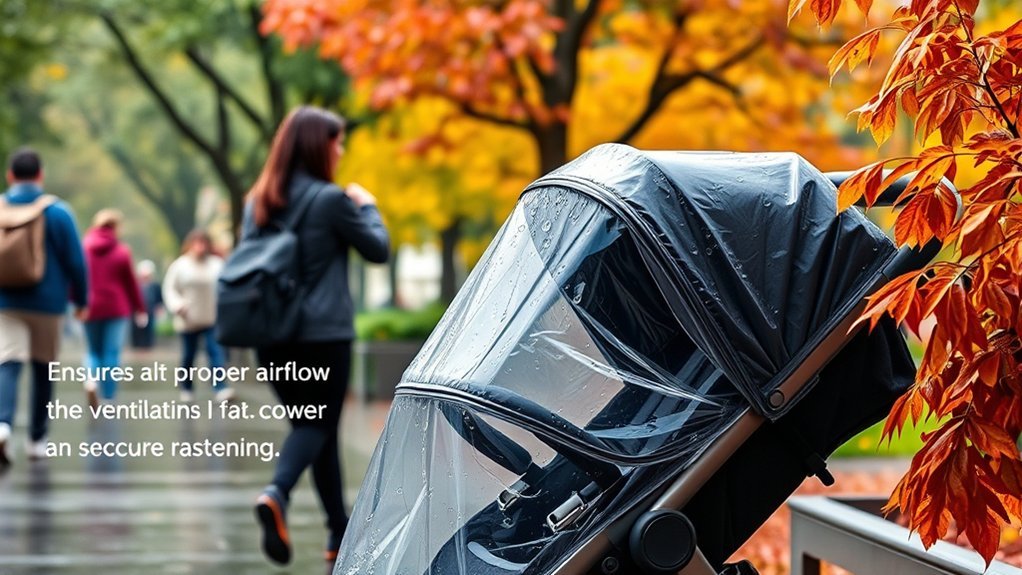
Before using a rain cover, verify that it fits your stroller properly. A secure fit helps reduce slipping, flapping, and loose plastic around your child. The cover should attach firmly without blocking the stroller’s brakes, wheels, handlebar, harness access, or viewing window.
Choose rain cover materials that are non-toxic and BPA-free to help shield your child from unnecessary chemical exposure. If the cover has a strong plastic smell when new, air it out before first use according to the manufacturer’s instructions. Avoid using damaged, cloudy, cracked, or sticky plastic because it may be harder to see through and less reliable in bad weather.
Pay close attention to ventilation features, such as openings, side vents, or mesh panels, which help prevent overheating and support proper air circulation. During use, monitor your child for signs of discomfort or distress, especially during prolonged periods. Touch the inside air near the child’s seat area occasionally to check whether it feels too warm or damp.
At a Glance
| Best Use | Short trips in rain, wind, or light snow |
| Main Safety Check | Ventilation, secure fit, and frequent child monitoring |
| Avoid Using In | Hot weather, direct sun, poor airflow, or long unattended periods |
| Helpful Features | Mesh vents, clear viewing window, easy-access front opening, and stroller-specific fit |
By considering these factors, you empower yourself to make informed choices that prioritize your child’s safety while maneuvering through rain-soaked adventures.
Benefits of Using Stroller Rain Covers
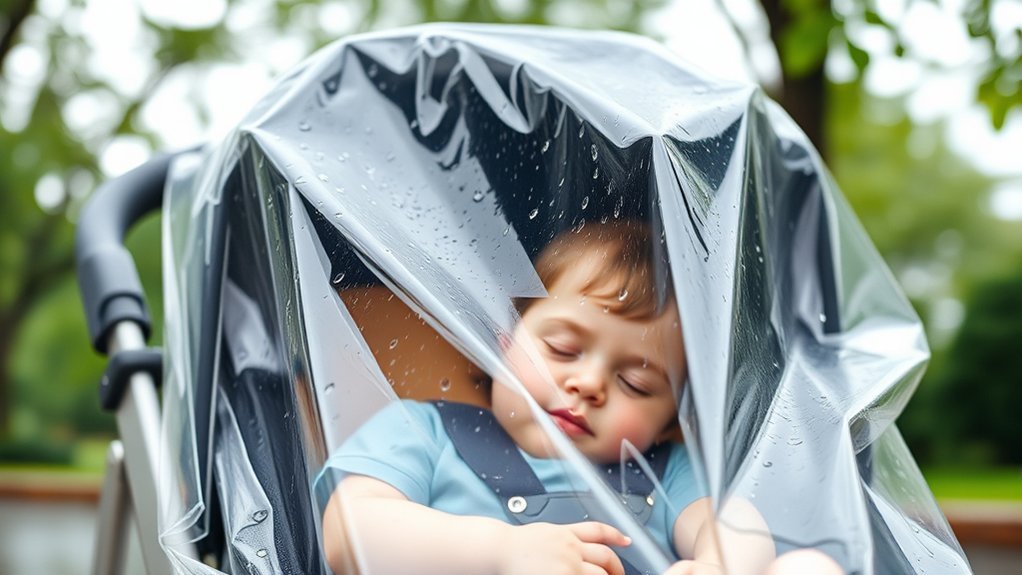
Using a stroller rain cover offers numerous advantages that enhance your child’s outdoor experience. These covers not only protect against the elements but also contribute to your child’s comfort when used correctly.
A stroller rain cover is safest when it protects from weather without trapping heat, blocking airflow, or limiting your view of your child.
- Weather Protection: They shield your child from rain, wind, and light snow, helping them stay dry and cozy.
- Insect Barrier: Rain covers can help keep bugs away during warmer months, protecting your little one from bites.
- Napping Zone: Creating a cozy, enclosed space can help reduce distractions, promoting restful naps during outings.
- UV Protection: Some covers may provide limited sun protection, but they should not replace a stroller canopy, shade, or sunscreen guidance from your child’s healthcare provider.
Rain covers can also protect the stroller itself. Keeping the seat fabric, storage basket, and frame drier may help reduce stains, mildew risk, and long-term wear. This is especially useful if you walk often, commute with a stroller, or live in a rainy climate.
Are Rain Covers Worth It?
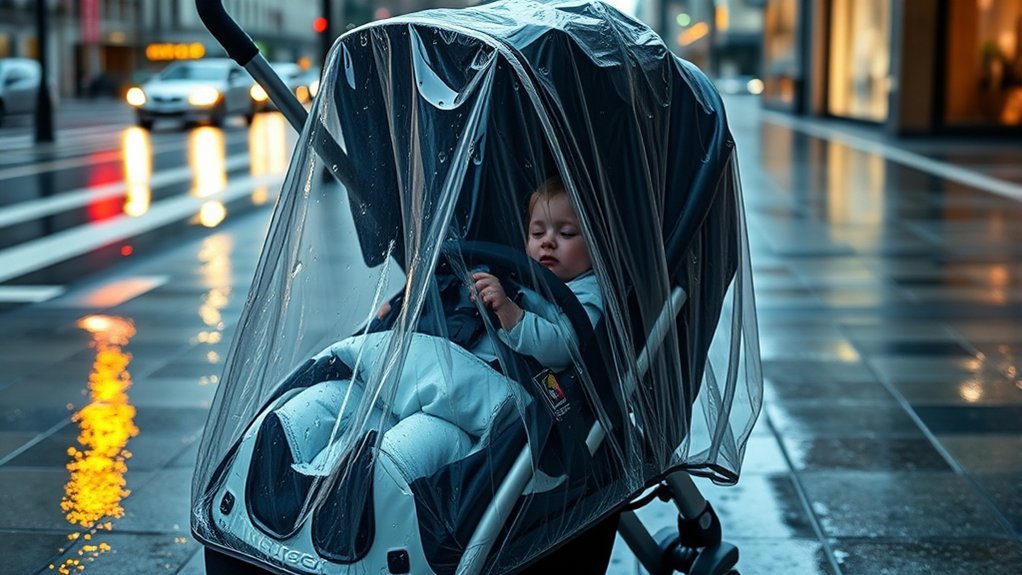
When considering a stroller rain cover, think about the weather protection it offers against sudden downpours and chilly winds. Not only does it keep your child dry and more comfortable, but it also helps you maintain visual contact if the cover is clear and properly fitted. With its versatility for different weather scenarios, investing in a quality rain cover can be worthwhile for many families.
Weather Protection Benefits
While unpredictable weather can often disrupt outdoor plans, stroller rain covers offer a reliable solution to keep your child dry and comfortable. Their weather adaptability makes them useful for seasonal outings, providing protection across several conditions. Here are four key benefits:
- Rain and Snow Protection: Keeps your child dry during rain or light snow, supporting comfort during short trips.
- Insect Barrier: Acts as a barrier against insects, improving outdoor experiences in warmer months.
- Warmth Maintenance: Helps block chilly wind during colder weather, but it should not be used as a substitute for proper clothing layers.
- Stroller Protection: Shields stroller fabric and parts from direct water exposure, which can help extend the stroller’s lifespan.
Investing in a quality rain cover allows you to enjoy outdoor adventures without quickly canceling plans when the weather changes. The value is highest if you walk frequently, use public transportation, or need reliable protection between the car, daycare, errands, and home.
Comfort and Safety
Stroller rain covers are more than just a convenience; they play an essential role in supporting your child’s comfort and safety during outdoor excursions. These covers protect against rain, wind, and light snow while helping your little one stay cozy. However, it’s vital to choose models with proper ventilation features, like air circulation openings or mesh panels, to reduce overheating risk on sunny, humid, or mild days.
Regularly check on your child’s comfort, especially during extended use. Look for signs such as sweating, red cheeks, damp hair, fussiness, fast breathing, or trying to push the cover away. Additionally, investing in reputable brands improves confidence in material safety, as better covers often use non-toxic and BPA-free materials. Many parents appreciate how rain covers allow visibility and peace of mind, making outings easier regardless of the weather.
Note: A rain cover should never block your child’s nose or mouth area, interfere with the harness, or prevent you from seeing your child clearly.
Ultimately, a rain cover is a practical choice for safeguarding your child’s well-being when it is used with supervision and common sense.
Versatile Usage Scenarios
Rain covers offer remarkable versatility, making them a worthwhile investment for parents. They work across many stroller types when properly fitted and can improve your outdoor activities by helping your child stay comfortable in changing weather. Here are some scenarios where rain covers shine:
- Unexpected Rain: Keep your child dry during sudden downpours and reduce the need to rush home immediately.
- Outdoor Adventures: Protect against insects during summer outings, allowing peaceful exploration when ventilation is adequate.
- Naptime: Create a cozy, distraction-reduced environment for short stroller naps.
- Stroller Protection: Shield your stroller from water damage and dirt splashes, helping preserve the fabric and frame.
With these benefits in mind, investing in a rain cover is not just practical; it can enhance your family’s outdoor experiences when the product fits correctly and weather conditions are appropriate.
Alternative Rain Protection Options
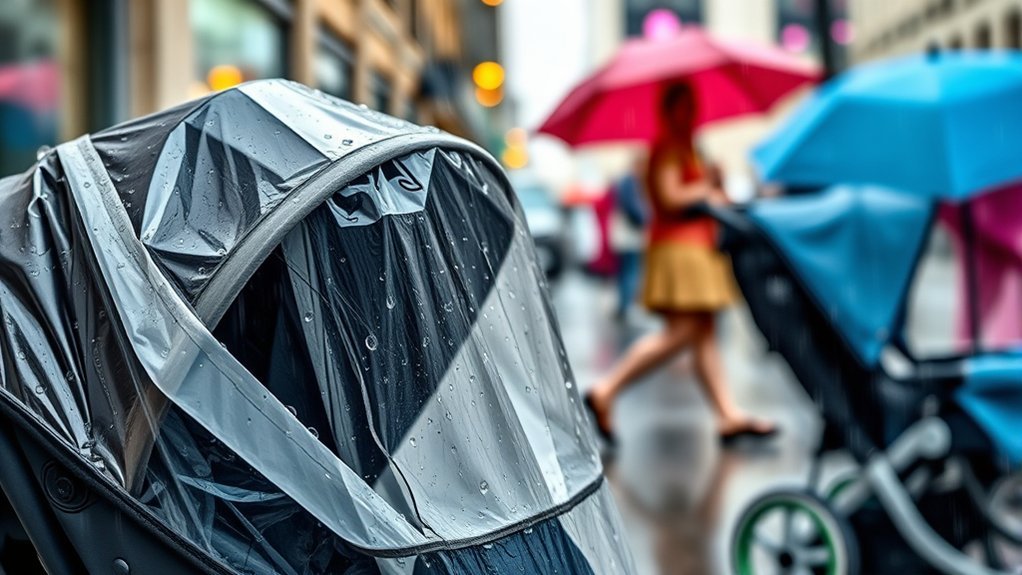
When unexpected showers hit, having alternative rain protection options can make all the difference for you and your child. Consider using ponchos, which have significant poncho advantages like increased mobility and ventilation, allowing your child to move more freely and stay comfortable. Umbrellas can also provide effective shielding for both your child and the stroller, keeping everyone dry without sealing the stroller space.
Combining stroller rain covers with these alternatives can enhance overall protection during downpours. It’s wise to avoid solely relying on stroller rain covers for long durations, especially in heavy rain, as this can lead to overheating or trapped moisture. Seek undercover spaces for immediate shelter when necessary, reducing the need for prolonged cover use.
Other practical options include a stroller canopy extension, a parent rain jacket, a waterproof stroller blanket, or planning routes with indoor stops. Finally, always carry extra rain gear and stay alert to weather forecasts, ensuring you’re prepared for sudden changes while out with your little one.
Personal Experiences With Rain Covers
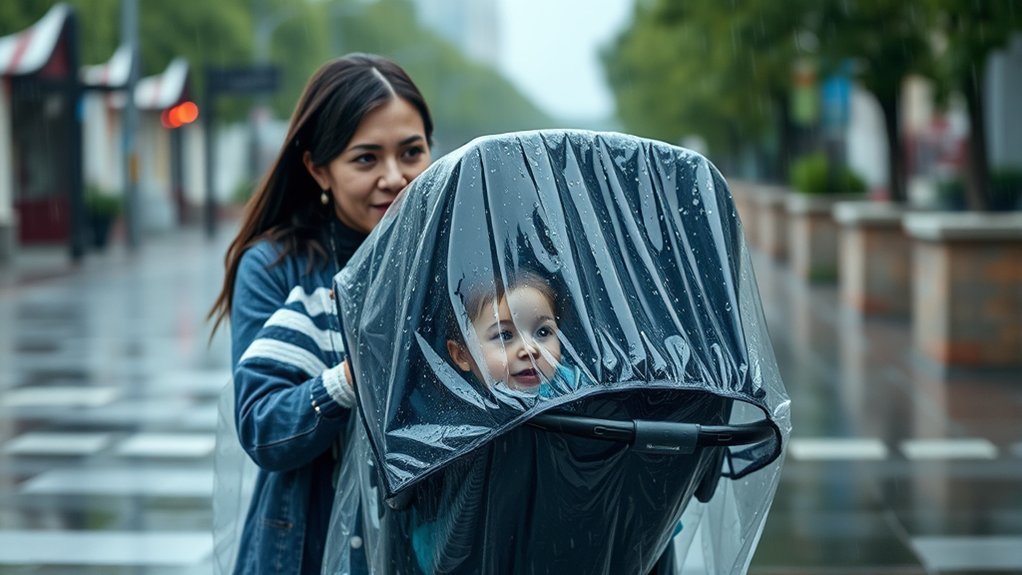
Many parents have shared mixed feelings about using rain covers for their strollers. Your user experiences might echo some of these sentiments:
- Heat Issues: One parent reported overheating concerns, leading them to seek shelter instead of using the cover during downpours.
- Storage Concerns: Another user found the rain cover bulky and inconvenient to store when not in use.
- Monitoring Comfort: Many parents mention the importance of checking on a child’s comfort, especially regarding ventilation and heat build-up.
- Practicality: Some parents, despite initial hesitations, appreciated how easy it was to attach the cover during unpredictable weather.
User feedback varies, with some praising the cover’s effectiveness in keeping kids dry and comfortable, while others faced challenges related to overheating, storage, or stroller compatibility. It’s essential to weigh these experiences when deciding whether a rain cover suits your needs.
For occasional use, a universal rain cover may be enough. For frequent walks in wet weather, a fitted model may feel more secure and less frustrating. Parents who use compact travel strollers may prioritize foldability and storage, while parents using full-size strollers may care more about coverage, durability, and ventilation.
General Tips for Rainy Days
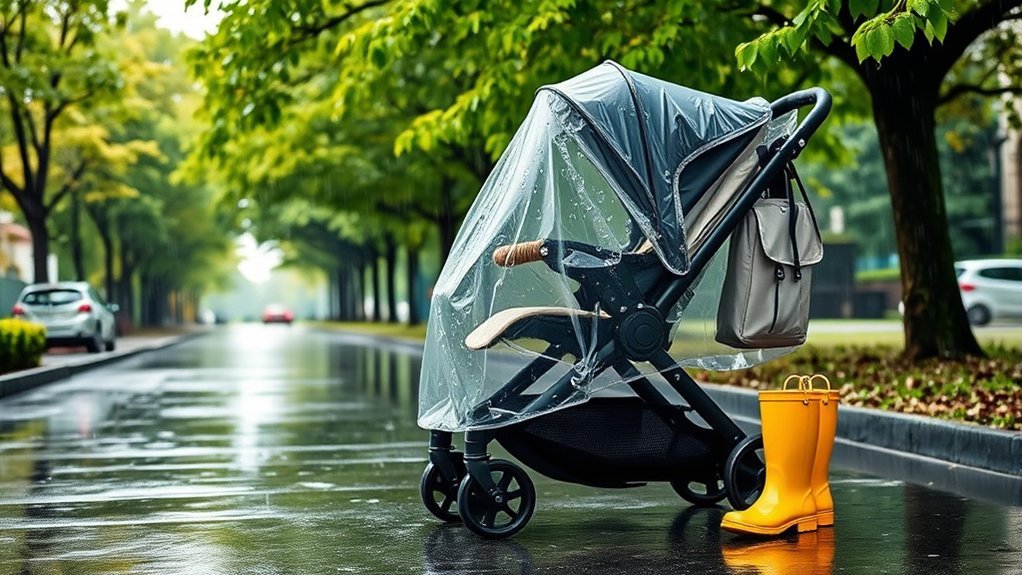
As you prepare for outings with your child, it’s important to consider how to handle unpredictable weather, especially on rainy days. Start by checking the weather forecast to make sure you’re ready for unexpected rain. Carry extra rain gear, like ponchos or umbrellas, so you can quickly shield your child and stroller from sudden downpours.
If the rain becomes heavy, don’t hesitate to utilize park facilities like shelters, covered walkways, shops, libraries, or indoor areas to wait it out, rather than relying solely on a rain cover. Make sure your stroller rain cover has adequate ventilation to help prevent overheating, and regularly check on your child’s comfort.
Pro Tip: Pack the rain cover in an easy-reach stroller pocket or top basket area. If it is buried under bags, you may not attach it quickly enough during a sudden shower.
Finally, consider planning shorter outdoor excursions during rainy weather to minimize time spent in potentially uncomfortable conditions. With these tips, you can improve your weather preparedness and enjoy your time together, even when the skies are gray.
Community Engagement and Shared Experiences
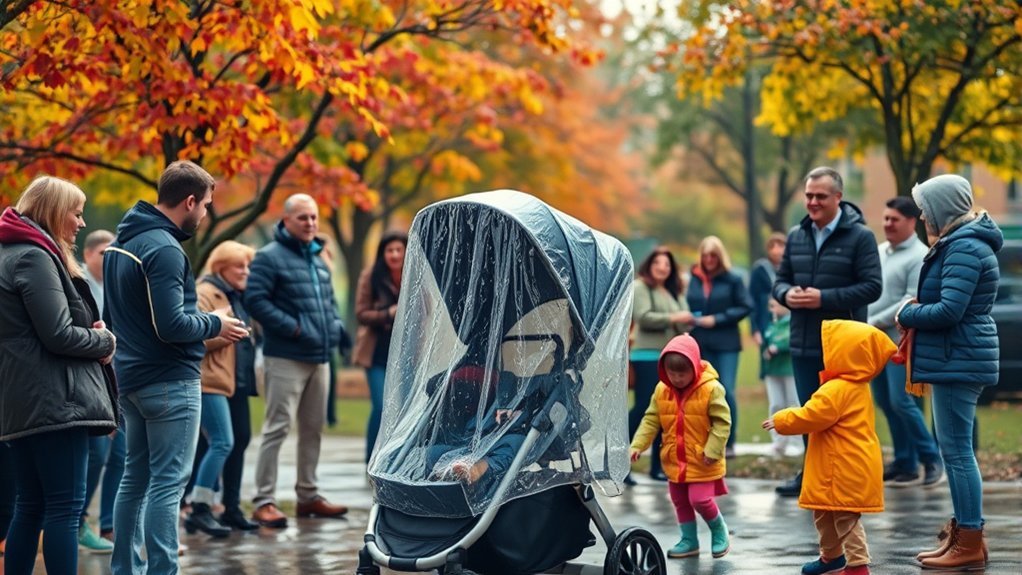
While maneuvering through the challenges of using stroller rain covers, engaging with your community can provide valuable insights. Experience sharing often highlights both the benefits and drawbacks of these products. Here are some key pieces of community advice:
- Ensure proper ventilation to help prevent overheating and keep your child safer.
- Monitor your child closely for signs of discomfort, especially during extended use.
- Consider seeking shelter during heavy rain instead of relying solely on rain covers for protection.
- Participate in open discussions to learn from others’ experiences and improve your understanding of safety.
Parent groups, stroller brand communities, and local caregiver forums can also help you learn which covers fit specific stroller models. This is useful because a cover that works well on one stroller may sag, stretch, or leave gaps on another.
Product Details and Customer Reviews
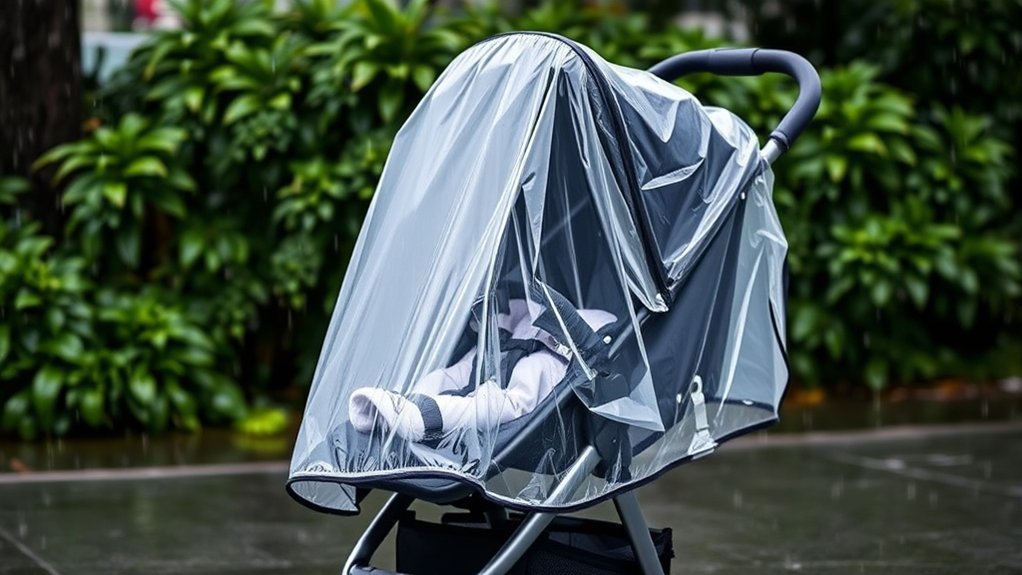
Engaging with fellow parents has provided valuable insights into the practicalities of stroller rain covers, but understanding the specific product details and customer feedback is equally important. The custom-fitted rain cover you’re considering protects your child from rain and is compatible with both single and single-to-double strollers, including bassinets. Its ventilated design promotes airflow, addressing safety concerns about overheating.
Customer feedback is overwhelmingly positive, with an impressive 4.9 out of 5.0 stars from 167 reviews, praising its excellent rain protection and comfort. Parents appreciate how quickly and easily it attaches during unexpected weather, making it user-friendly for busy families. However, some users have mentioned that it can be bulky for storage in the stroller’s basket.
Before buying, review the stroller compatibility list, return policy, ventilation design, cleaning instructions, and whether the cover works with bassinets, toddler seats, or double configurations. Balancing convenience and functionality is key, and this product appears to meet those needs effectively while keeping your little one safe and dry.
Related Guides
Frequently Asked Questions
Can I Use a Rain Cover on All Stroller Types?
You can use a rain cover on many stroller types, but you should always check stroller compatibility first. Different cover materials and shapes offer different protection levels. Choose a cover that fits securely without blocking ventilation, the harness, the brakes, or your view of your child.
How Do I Clean and Maintain a Stroller Rain Cover?
To clean and maintain your stroller rain cover, use mild soap and warm water for gentle cleaning unless the manufacturer gives different instructions. Avoid harsh chemicals, bleach, and abrasive scrubbing. Let the cover dry fully before folding it, and regularly inspect it for tears, cracks, cloudy plastic, or worn fasteners.
Are There Specific Age Restrictions for Using Rain Covers?
There usually are not strict universal age restrictions for stroller rain covers, but you should follow the manufacturer’s age and stroller-use recommendations. Babies and young children need extra monitoring because they may not be able to adjust the cover, communicate discomfort, or manage heat as easily.
Will a Rain Cover Fit My Stroller if It’s Not the Same Brand?
A rain cover may fit your stroller even if it is not the same brand, but it is not guaranteed. Check the cover dimensions against your stroller’s specifications. A snug, stable fit helps keep your child dry and reduces the chance of loose plastic shifting during wind or movement.
Can I Use a Rain Cover in Hot Weather Conditions?
You should avoid using a rain cover in hot weather unless there is excellent airflow and a clear safety need. Rain covers can trap heat and humidity, making your child uncomfortable or unsafe. In warm conditions, prioritize shade, ventilation, and frequent checks.
How Long Can a Child Stay Under a Stroller Rain Cover?
A stroller rain cover is best used for short periods during active rain or wind. There is no single safe time limit for every situation because temperature, humidity, ventilation, and your child’s comfort all matter. Check your child often and remove or open the cover when you reach shelter.
What Features Make a Stroller Rain Cover Safer?
Safer stroller rain cover features include ventilation openings, mesh panels, a clear viewing window, secure fasteners, non-toxic materials, and a stroller-specific fit. Easy access to your child is also important so you can adjust clothing, check comfort, or remove the cover quickly.
Conclusion
To sum up, stroller rain covers can be a safe and practical choice when you prioritize proper design, ventilation, and supervision. Are you ready to protect your little one from the elements while keeping their comfort in mind? By choosing non-toxic materials, ensuring a secure fit, and checking your child often, you can enjoy the benefits of a rain cover without compromising safety. Just remember to inspect the cover regularly, avoid hot-weather use, and remove it when airflow or comfort becomes a concern.
