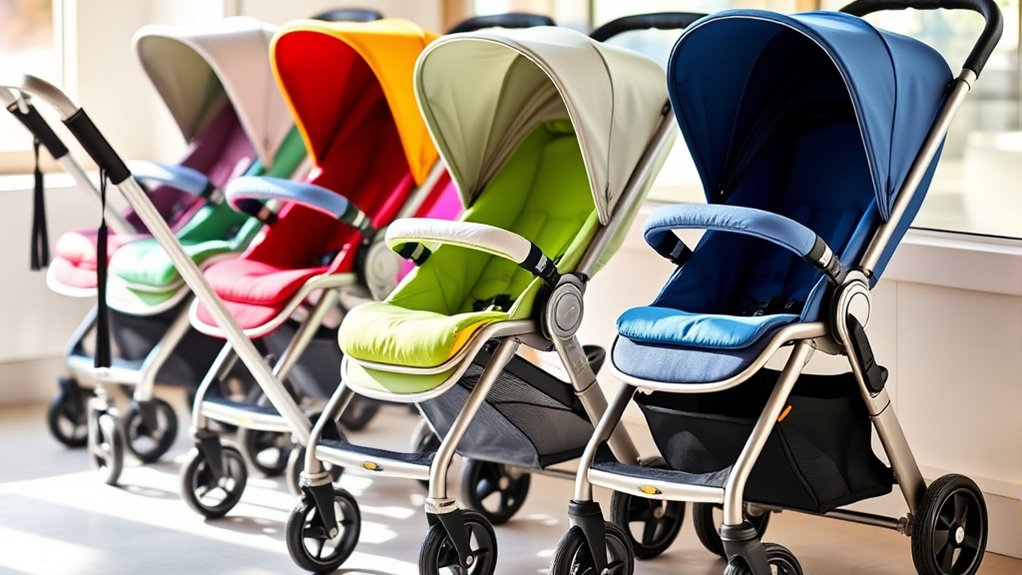
When you look at what baby strollers are made of, you’ll see a mix of materials chosen for safety, comfort, weight, durability, and daily convenience. The frame affects how sturdy and portable the stroller feels, while the seat fabrics, canopy, wheels, handles, padding, and storage areas shape your baby’s comfort and your ease of use. Understanding these materials helps you compare strollers with more confidence and choose one that fits your lifestyle, climate, cleaning routine, and budget.
Quick Answer
Most baby strollers use aluminum, steel, plastic, polyester, nylon, cotton, mesh, rubber, foam, and synthetic padding. Lightweight strollers often use aluminum frames and polyester fabric, while sturdier models may include steel parts, rubber tires, thicker padding, and reinforced stitching for better durability and comfort.
Key Takeaways
- Stroller frames usually use aluminum, steel, plastic, or a mix of these materials.
- Seat fabrics often include polyester, nylon, cotton, fleece, mesh, or blended fabrics.
- Rubber, foam, and plastic wheels affect ride smoothness, maintenance, and all-terrain performance.
- Sustainable options may include recycled polyester, recycled aluminum, organic cotton, bamboo fabric, and natural rubber.
- The best material choice depends on your climate, storage space, cleaning needs, budget, and how often you use the stroller.
Common Stroller Materials
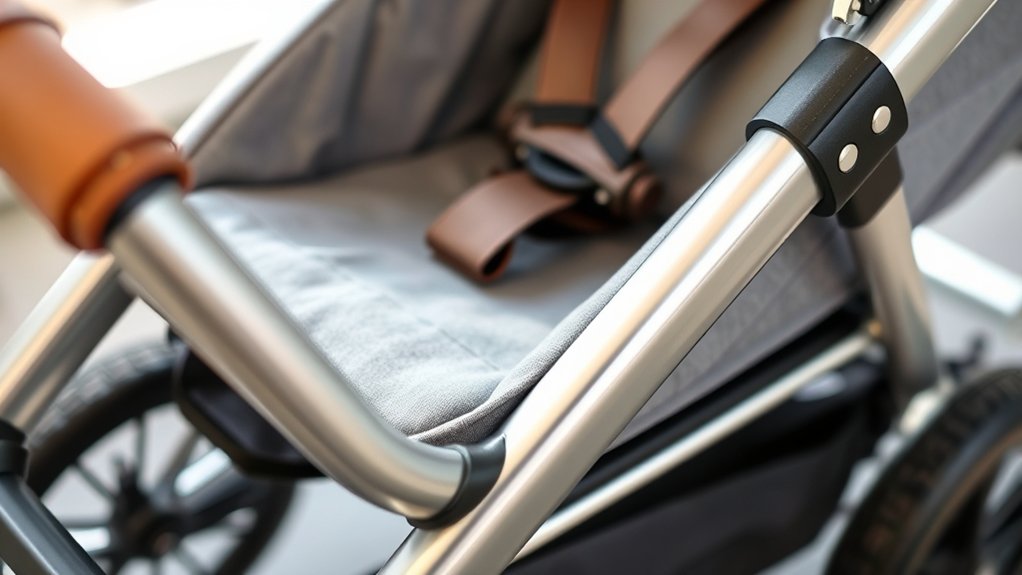
When choosing a baby stroller, it’s essential to understand the materials that make up its construction. Stroller innovations have led to the use of lightweight yet durable materials like aluminum and steel for frames, helping improve stability, handling, and long-term use. You might notice the seat and hood are often made from synthetic fabrics like polyester or nylon, valued for their ease of cleaning, water resistance, and everyday durability.
Material comparisons reveal that wheel construction varies; rubber and foam can improve shock absorption, allowing for a smoother ride on different surfaces. Plastic wheels are common on lightweight and budget strollers, while air-filled rubber tires are more common on jogging or all-terrain models. If you’re eco-conscious, some brands now offer strollers crafted from organic cotton, recycled polyester, recycled plastics, or recycled aluminum, reducing environmental impact while still focusing on safety and usability.
Additionally, elements such as handles, buckles, snack trays, folding joints, rain covers, and storage baskets often combine plastic, fabric, foam, metal, and rubber. Each part has a job. The frame supports weight, the wheels absorb movement, the fabric protects your baby, and the padding adds comfort. Understanding these materials empowers you to choose a stroller that aligns with your values and needs.
Frame Materials: Aluminum, Steel, and Plastic
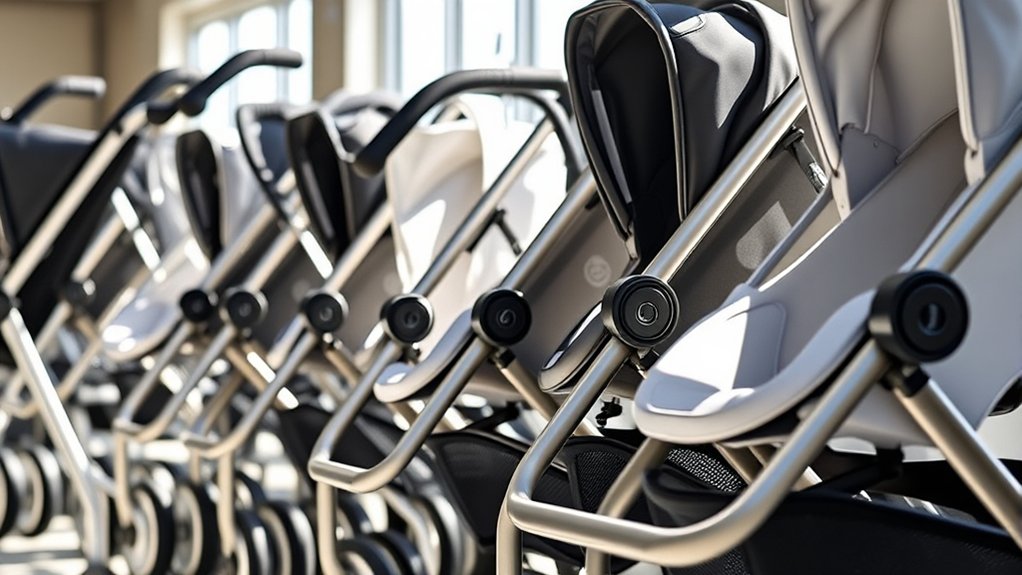
The choice of frame material is essential in determining a stroller’s performance and usability. You’ll want to reflect on how frame durability, material weight, folding design, and daily handling affect your experience. Here’s a breakdown of the three primary materials used:
- Aluminum: Lightweight and strong, perfect for easy maneuverability while ensuring durability. Aluminum frames are common in travel strollers, full-size strollers, and premium models because they balance strength with portability.
- Steel: Robust and affordable, offering a sturdy base but tending to be heavier than aluminum. Steel may appear in lower-cost strollers or in reinforced areas that need extra strength.
- Plastic: Cost-effective and lightweight, allowing for versatile designs, though it may lack the durability of metal frames when used as a main support structure. Plastic works best for trays, wheel housings, hinges, buckles, and trim pieces.
- Combination Materials: Many modern strollers blend aluminum, steel, and plastic to optimize weight, strength, folding function, and cost.
- Consumer Preference: Your choice will greatly influence the stroller’s overall weight and ease of handling, shaping your decision based on personal needs.
Note: A lighter frame is easier to lift into a car trunk, but weight should not be your only priority. Also check the stroller’s weight limit, folding lock, wheel quality, brake design, and overall stability.
| Frame Material | Best For | Main Trade-Off |
| Aluminum | Travel, everyday use, lightweight handling | Often costs more than steel or plastic-heavy designs |
| Steel | Sturdy budget models and reinforced parts | Heavier to lift, carry, and push for long periods |
| Plastic | Trays, housings, buckles, trim, lightweight parts | Less durable when used for high-stress structural areas |
Pram Materials: Comfort and Safety
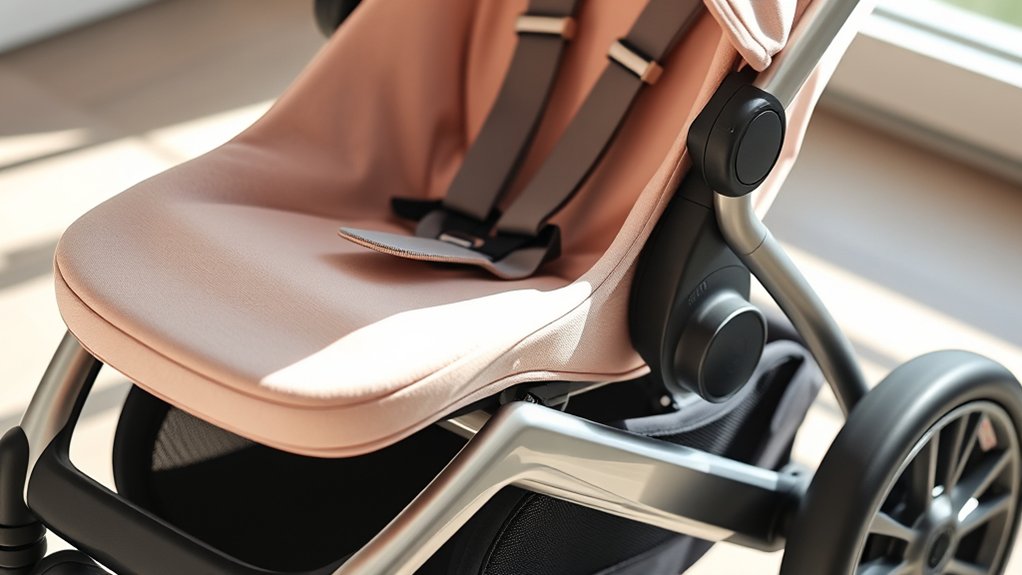
When choosing a pram, you’ll want to evaluate the breathable fabric options that protect your newborn’s sensitive skin while providing comfort. It’s also essential to check for compliance with safety standards, as reinforced stitching, a stable frame, reliable brakes, and a secure harness system play important roles in keeping your infant safe during rides.
Prams and stroller bassinets often use softer interior linings than standard stroller seats. These materials may include cotton, cotton blends, bamboo-derived fabrics, polyester padding, and breathable mesh panels. The goal is to create a soft, supportive space while still allowing airflow and easy cleaning.
Breathable Fabric Options
While choosing a pram for your newborn, considering breathable fabric options is essential for ensuring both comfort and safety. You’ll want to explore various breathable options through fabric comparisons to identify what works best for your little one. Here are some top choices:
- Organic Cotton: Soft and often chosen by parents who prefer natural fibers. It can be gentle for sensitive skin when properly cleaned and maintained.
- Bamboo Fabric: Known for a soft feel and breathable structure, making it useful for liners and padding in varying climates.
- Cotton Lining: Soft and cozy, commonly used in bassinet interiors or removable inserts.
- Fleece: Provides warmth while still being gentle against the skin, though it works best in cooler weather.
- Mesh Fabric: Promotes airflow, helping your baby stay cooler during warm outings.
Choosing the right breathable fabric can greatly enhance your baby’s comfort and protect their delicate skin, making your pram selection a thoughtful process.
Safety Standards Compliance
Ensuring your pram meets safety standards is essential, as these regulations directly impact your child’s well-being. In the United States, many stroller safety discussions refer to ASTM F833 for carriages and strollers. In Europe, EN 1888 applies to wheeled child conveyances. You may also see JPMA certification on some products, which signals that the stroller has been tested against applicable safety standards.
You’ll want to prioritize prams that clearly describe their safety testing, age and weight limits, brake system, folding lock, harness design, and material details. Avoid assuming that a soft fabric or premium price automatically means a stroller is safer.
| Material Type | Compliance Features |
|---|---|
| Bassinet Lining | Organic cotton, bamboo, cotton blends, breathable padding |
| Structural Frame | Aluminum, steel, reinforced joints, secure folding locks |
| Fabrics | Breathable, easy to clean, securely attached, free from loose parts |
| Safety Features | Secure harnesses, sturdy frames, reliable brakes, stable wheelbase |
Warning: Never use a stroller, pram, or bassinet attachment beyond the manufacturer’s stated age, weight, or developmental limits. Material quality matters, but correct use matters just as much.
Fabrics Used in Stroller Design
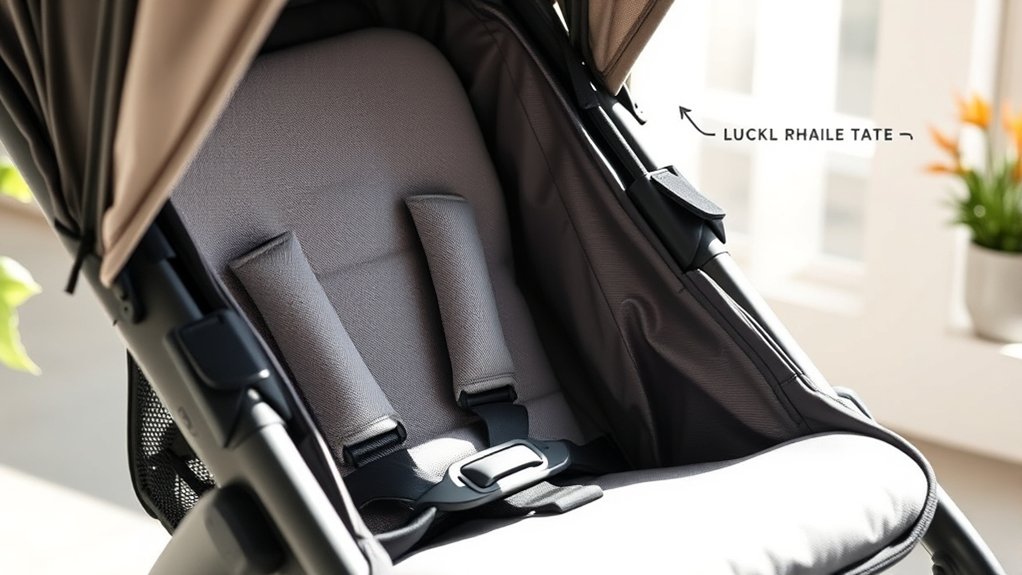
When selecting a stroller, the type of fabric used can greatly influence both comfort and durability. You’ll find materials like polyester, nylon, cotton, fleece, and mesh, each bringing distinct advantages to stroller design. These fabric choices impact your baby’s experience, the stroller’s longevity, and the amount of cleaning you need to do after spills, snacks, sweat, rain, or muddy outings.
Fabric Types Overview
Fabric selection plays an essential role in stroller design, impacting both functionality and comfort for your baby. Understanding the various fabric types can help you make informed choices regarding fabric durability, breathability, stain resistance, and color options. Here’s an overview of common fabrics used in stroller design:
- Polyester: Lightweight, water-resistant, and easy to clean, making it practical for active lifestyles.
- Nylon: Strong, smooth, and often used in canopies, straps, rain covers, and outer fabric panels.
- Cotton: Natural softness and breathability, often preferred for liners, padding, or inserts that touch your baby’s skin.
- Fleece: Provides warmth and coziness while being lightweight for cooler weather use.
- Mesh: Maximizes airflow, keeps babies cooler, and dries quickly for better hygiene.
- Blended Fabrics: Combine polyester with cotton, rayon, or other fibers, offering a softer feel with improved durability.
Each fabric serves a purpose, helping you create a stroller that meets your needs and preferences.
Benefits of Stroller Fabrics
The choice of stroller fabrics considerably impacts your baby’s comfort and safety, as well as your ease of use. Understanding the benefits of different materials can empower you to make the right choice. Here’s a breakdown:
| Fabric Type | Benefits |
|---|---|
| Polyester | High durability, quick-drying, stain-resistant, easy to clean |
| Nylon | Strong, smooth, lightweight, useful for canopies and straps |
| Cotton | Soft, breathable, comfortable for liners and inserts |
| Fleece | Warm, lightweight, cozy, easy care |
| Mesh | Maximizes airflow, quick-drying, helpful in warm weather |
| Blended | Soft feel with durability, structure, and easier maintenance |
These fabrics offer various color options, allowing you to express personal style while ensuring that durability meets your active lifestyle. Each fabric’s unique properties cater to different needs, helping you create a safe, comfortable environment for your baby.
Benefits of Polyester and Cotton
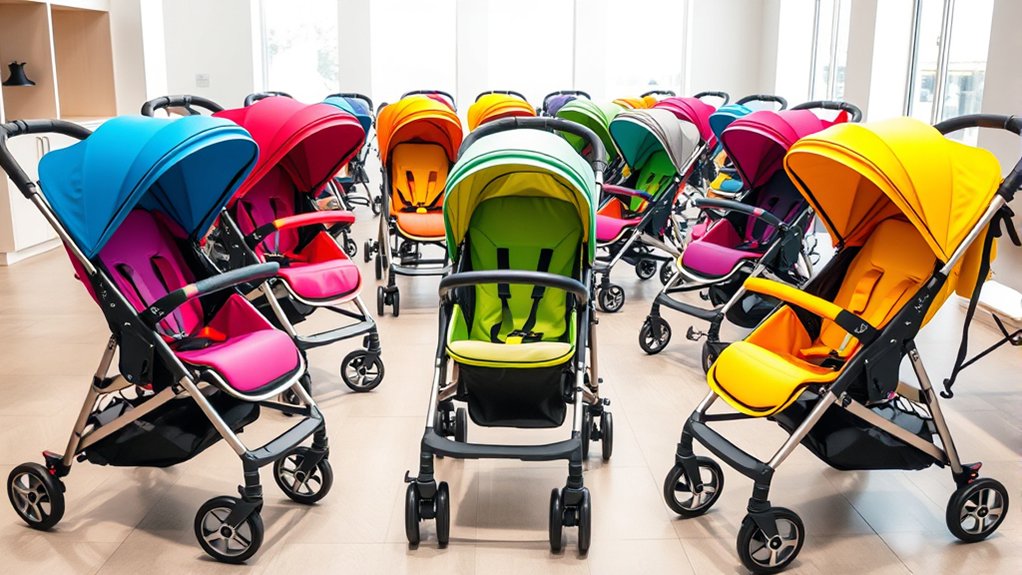
While selecting materials for baby strollers, you’ll find that both polyester and cotton offer unique advantages that cater to different needs. Understanding these benefits helps you make an informed choice.
When choosing baby stroller materials, compare polyester for durability and easy cleaning with cotton for softness and breathability.
Polyester Advantages:
- Lightweight and quick-drying, perfect for active lifestyles.
- Durable, resisting wear and tear while maintaining shape and color.
- More resistant to stains and moisture than many natural fabrics.
- Often easier to wipe clean after snacks, spills, and outdoor use.
Cotton Benefits:
- Natural and soft, making it comfortable for your baby’s delicate skin.
- Breathable fabric, promoting comfort in various weather conditions.
- Wide range of designs and colors for aesthetic customization.
- Useful for removable liners, padding, blankets, and inserts.
Blending polyester with cotton can enhance overall fabric properties, combining the strength of polyester with the softness of cotton. This fusion is particularly beneficial in stroller designs, offering improved comfort and durability. By considering these factors, you can choose a stroller that not only suits your needs but also prioritizes your child’s well-being.
Pro Tip: If your baby has sensitive skin, look for removable, washable seat liners. They let you keep a durable stroller while giving your baby a softer surface.
Advantages of Fleece and Mesh
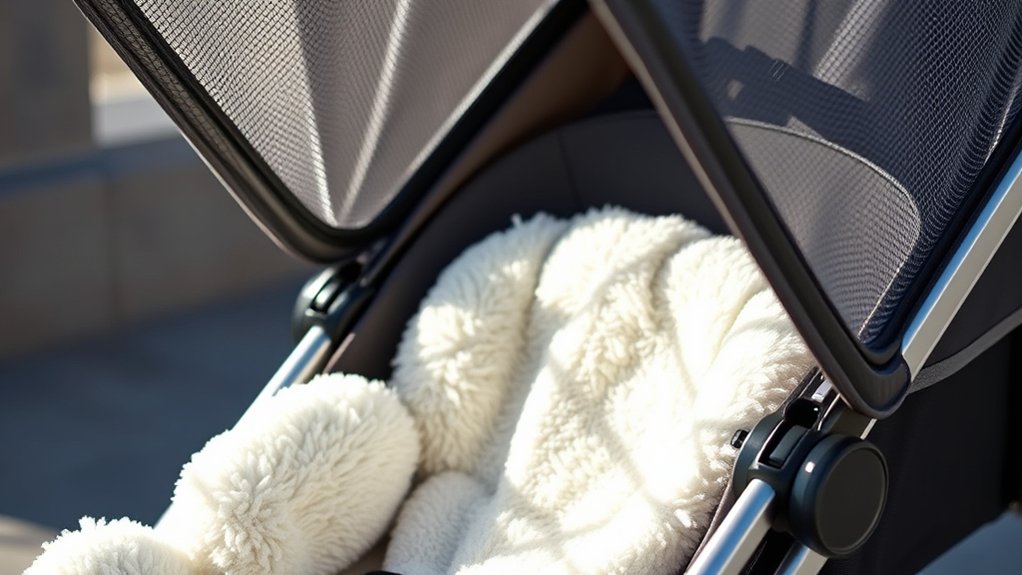
When considering materials for baby strollers, it’s vital to recognize the unique benefits of fleece and mesh, especially as they cater to different environmental conditions. Fleece benefits include its lightweight nature and excellent insulation, helping your baby stay warm in colder climates while remaining soft and comfortable. The gentle texture of fleece enhances overall coziness, making stroller rides more enjoyable for your little one.
On the other hand, mesh advantages lie in its ability to maximize airflow. This feature keeps your baby cooler during hot weather, which is essential for outdoor activities. Additionally, mesh is lightweight, quick-drying, and easy to clean, simplifying hygiene maintenance. Mesh panels are also common in peekaboo windows, seat backs, storage baskets, and ventilation zones.
With both fleece and mesh being easy to maintain, you can focus on enjoying time with your baby rather than worrying about the stroller’s upkeep. By choosing these materials carefully, you’re ensuring a comfortable and convenient experience for both you and your child.
Wheel and Handle Materials
Stroller materials are not limited to frames and fabrics. Wheels and handles also shape how the stroller feels during daily use. If you push your stroller on smooth sidewalks, lightweight plastic or foam wheels may work well. If you often walk on gravel, grass, cracked pavement, or park trails, larger rubber tires may provide a smoother ride.
- Plastic wheels: Common on lightweight and budget strollers. They are low-maintenance but may feel bumpier on rough surfaces.
- Foam-filled wheels: Lightweight and puncture-resistant. They offer better cushioning than basic plastic wheels.
- Rubber tires: Often smoother and more durable, especially on all-terrain or jogging strollers.
- Air-filled tires: Provide strong shock absorption but need pressure checks and may puncture.
- Foam handles: Comfortable and lightweight, though they can wear down with heavy use.
- Rubberized handles: Grippy, durable, and easier to wipe clean.
- Leatherette handles: Common on premium strollers and chosen for comfort and style.
Padding, Harness, and Buckle Materials
The padding, harness, and buckle system help keep your baby secure and comfortable. These parts usually combine synthetic webbing, foam padding, plastic buckles, metal hardware, and fabric covers. While they may seem like small details, they affect daily safety and convenience.
Harness straps are often made from strong woven polyester or nylon because these materials resist stretching and wear. Buckles are usually molded plastic because they are lightweight, smooth, and easy to shape into secure locking designs. Padding may use foam covered with polyester, cotton blends, or mesh for comfort.
Warning: Do not add thick aftermarket padding, strap covers, or inserts unless the stroller manufacturer allows them. Extra padding can affect harness fit and reduce safety.
Sustainable Materials in Stroller Manufacturing
As parents increasingly prioritize eco-friendly choices, many stroller manufacturers are turning to sustainable materials that benefit both babies and the environment. By choosing these innovative materials, you can make a positive impact on your child’s future. Here are some key sustainable materials in stroller manufacturing:
As eco-conscious parents, selecting strollers made with responsibly sourced or recycled materials can support a more sustainable approach to baby gear.
- Organic Cotton: Grown without synthetic pesticides, it is often chosen for soft liners and baby-facing fabric areas.
- Recycled Polyester: Made from repurposed plastic waste, it can reduce the need for virgin synthetic fibers.
- Bamboo Fabric: Known for fast-growing raw material sources and a soft feel, it offers a breathable option for padding and liners.
- Recycled Aluminum: Lightweight and strong, commonly used in frames where brands focus on reducing new material use.
- Natural Rubber: Used in some wheels and handles, it may appeal to parents looking for alternatives to fully synthetic materials.
Choosing strollers made from these materials aligns with a commitment to sustainability, ensuring a healthier planet for future generations. Still, sustainability should not replace safety. Always compare eco-friendly claims with practical details such as weight capacity, testing, replacement parts, warranty coverage, and cleaning instructions.
Factors Affecting Stroller Price
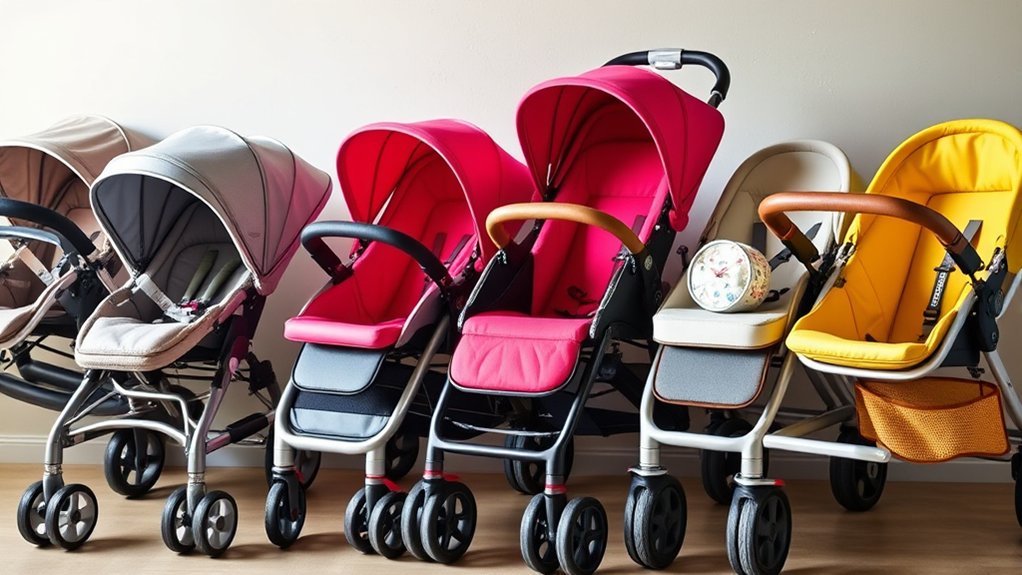
Understanding the factors that influence stroller prices can help you make an informed choice when shopping for your baby. One key aspect is brand reputation impact; established brands often charge more due to their trustworthiness, design quality, warranty support, and perceived reliability. Safety features, like advanced harness systems, robust brakes, stable frames, and smoother folding mechanisms, can also elevate costs, as they require careful design and testing.
Additionally, the quality of materials plays a significant role. High-performance fabrics, durable frames, better suspension, stronger wheels, and premium handle materials contribute to the overall price. Unique designs and ergonomic features add value, leading to higher price points for certain models.
Stroller pricing strategies often reflect these factors, showcasing varying price ranges based on functionality and additional features, such as storage options, travel compatibility, reversible seats, car seat adapters, bassinet compatibility, compact folds, and all-terrain performance. Understanding these elements empowers you to choose a stroller that balances safety, quality, and budget effectively.
Choosing the Right Material for Your Lifestyle
The best stroller material depends on how and where you plan to use it. A parent who takes public transit may value a lightweight aluminum frame and compact polyester seat. A parent who walks daily on rough sidewalks may prefer rubber tires, stronger suspension, and more durable fabric. A parent in a hot climate may prioritize mesh panels and breathable liners.
- For city use: Choose a lightweight frame, easy-clean fabric, lockable swivel wheels, and a compact fold.
- For travel: Look for aluminum, polyester, nylon, foam wheels, and a carry-friendly fold.
- For rough paths: Consider rubber tires, stronger suspension, reinforced fabric, and a sturdier frame.
- For hot weather: Prioritize mesh ventilation, breathable liners, and a large canopy.
- For cold weather: Fleece accessories, thicker padding, and wind-resistant fabric can improve comfort.
- For easy cleaning: Polyester, nylon, removable liners, and wipeable parts are practical choices.
Cleaning and Maintaining Stroller Fabrics

The quality of materials in a stroller not only affects its price but also its maintenance needs. Proper care of stroller fabrics helps support longevity and hygiene, especially with various fabric types in play. Here’s how you can effectively maintain your stroller:
The materials used in a stroller influence both its cost and the level of care required for upkeep.
- Spot clean immediately: Address spills and stains right away to preserve fabric integrity.
- Check labels: Always consult the manufacturer’s instructions for recommended cleaning methods.
- Hand wash removable fabrics: Use mild detergent to prevent damage; machine wash only if labeled safe.
- Understand fabric types: Different materials like cotton, polyester, nylon, fleece, and mesh require specific care techniques.
- Regular cleaning: Enhances hygiene and prolongs the life of synthetic fabrics.
- Air dry completely: Let fabric dry fully before folding the stroller to reduce odor and mildew risk.
- Inspect stress points: Check seams, harness straps, buckles, brakes, and folding joints during cleaning.
Pro Tip: Keep a small brush, mild soap, and microfiber cloth near your stroller storage area. Quick cleaning after messy trips prevents stains from setting into the fabric.
Related Guides
Frequently Asked Questions
Are stroller materials safe for babies with allergies?
Yes, many stroller materials can work well for babies with sensitivities, especially when they are washable, breathable, and free from strong odors. Look for soft liners, removable fabrics, and clear material details. If your baby has known allergies or skin reactions, ask your pediatrician before choosing specific fabrics.
How do stroller materials impact weight and portability?
Stroller materials greatly affect weight and portability. Aluminum, plastic, polyester, nylon, and foam wheels usually keep a stroller lighter. Steel frames, rubber tires, thicker padding, and larger wheels can add weight but may improve stability, comfort, and durability.
Can stroller materials withstand extreme weather conditions?
Some stroller materials handle weather better than others. Polyester and nylon often resist light moisture and dry quickly. Mesh helps with airflow in heat, while fleece adds warmth in cold weather. For rain, sun, snow, or high heat, always follow the manufacturer’s guidance and use approved accessories.
What certifications should stroller materials have for safety?
Look for strollers that state compliance with recognized stroller safety standards for your region, such as ASTM F833 in the United States or EN 1888 in Europe. JPMA certification may also appear on some products. Certifications should support the whole stroller design, not just one fabric or frame material.
How do different materials affect stroller longevity?
High-quality materials usually help a stroller last longer. Aluminum frames, reinforced stitching, durable polyester, rubber tires, and replaceable parts can improve longevity. Poor maintenance, overloading, rough storage, and ignoring cleaning instructions can shorten the life of any stroller, even one made with strong materials.
Is aluminum or steel better for a stroller frame?
Aluminum is usually better if you want a lighter stroller that is easier to lift and carry. Steel may feel sturdier and can be more affordable, but it adds weight. Many strollers use a combination of both materials to balance strength, cost, and portability.
Are recycled stroller materials as durable as regular materials?
They can be, depending on the brand, design, and testing. Recycled polyester and recycled aluminum can perform well when manufactured properly. Instead of judging only by the word “recycled,” compare the stroller’s safety testing, warranty, weight limit, fabric care instructions, and user reviews.
Conclusion
Baby strollers are made from a careful mix of materials, and each one affects how the stroller performs. Aluminum can keep the frame light, steel can add strength, plastic can reduce cost and weight, and fabrics like polyester, cotton, fleece, mesh, and nylon shape comfort and cleaning needs. Wheels, handles, harnesses, padding, and storage baskets also matter because they affect safety, convenience, and long-term use.
As you select your stroller, focus on the way you’ll actually use it. A travel stroller needs light materials and an easy fold. An everyday stroller needs durable fabric and reliable wheels. A pram for a newborn needs soft, breathable materials and strong safety features. Sustainable materials can also be a smart choice when they come with clear safety details and practical durability.
In the end, you’re not just choosing a stroller based on looks. You’re choosing the frame, fabric, wheels, padding, and safety components that will carry your baby through daily routines, errands, walks, trips, and countless small adventures.

