
Traveling with a little one requires extra planning, and handling your stroller is often the biggest logistical hurdle. Whether you gate-check it at the aircraft door or check it at the ticket counter, the smoother choice depends on your child’s age, stroller size, airline rules, and how much gear you want to carry through the airport.
Quick Answer
You can usually check a stroller for free at the gate or ticket counter. Gate checking lets you use it through the terminal, while counter checking means less gear at security and the gate. For most parents, gate checking is easier unless the stroller is bulky, heavy, or wagon-style.
Key Takeaways
- Gate checking lets you use the stroller until boarding, then pick it up near the aircraft or jet bridge after landing.
- Counter checking frees your hands early but means you need another way to carry or guide your child through the airport.
- Most airlines allow one stroller and one car seat per child for free, though size and weight rules can vary.
- A padded stroller travel bag helps protect fabric, wheels, straps, and loose parts from dirt and damage.
- Large joggers, double strollers, and wagons may need to go to the ticket counter or oversize baggage area instead of the gate.
At a Glance
| Best Option for Most Parents | Gate check the stroller so you can use it through security, boarding, and long airport walks. |
| Time Required | About 5 minutes to tag and fold the stroller, plus 5–10 minutes to retrieve it after landing. |
| Difficulty | Easy if you practice folding the stroller before the trip. |
| Tools Needed | Stroller travel bag, luggage tag, gate-check tag, and a baby carrier if you plan to counter check. |
| Cost | Usually free for one stroller per child, but confirm your airline’s current size and weight rules before flying. |
Understanding the Gate Check Process

Gate checking means you keep your stroller with you through check-in, security, and most of the terminal. Just before you board, airline staff tag the stroller and place it in the aircraft hold. After landing, the stroller is usually returned near the jet bridge, at the aircraft door, or in a nearby stroller pickup area.
This method is popular because it keeps your child contained during long walks, delays, and boarding lines. It is especially helpful when traveling with toddlers, connecting flights, or carry-on bags.
How Gate Checking Usually Works
- Bring your stroller through the airport as usual.
- At security, fold it if staff ask you to place it through the screening machine.
- At the gate, ask the gate agent for a stroller gate-check tag.
- Write your name, flight number, and destination if the tag has blank fields.
- Fold and latch the stroller before boarding.
- Leave it at the bottom of the jet bridge or in the marked stroller area.
- After landing, wait where the crew tells you to collect it.
Pro Tip: Take a quick photo of your stroller and gate-check tag before boarding. If the stroller is delayed or sent to baggage claim, the photo makes it easier to describe and track.
Preparing Your Stroller for Check-In

Before heading to the airport, a few simple packing steps can prevent damage, missing parts, and delays. Airline conveyor belts, cargo holds, and jet bridge areas can be rough on fabric, wheels, cupholders, and clips, so preparation matters.
- Clean your stroller: Remove crumbs, dirt, and sticky spills so security or airline staff can inspect it easily if needed.
- Remove accessories: Take off cupholders, snack trays, toys, rain covers, fans, and loose hooks. These can snag, crack, or get lost.
- Empty every pocket: Check under-seat baskets, canopy pockets, and side pouches for passports, toys, bottles, chargers, or medicine.
- Practice folding: You should be able to fold and latch the stroller quickly with one hand if you are holding your child.
- Lock the frame: Make sure the stroller stays folded and does not spring open during handling.
- Tag your gear: Attach an ID tag with your name, phone number, and email to the stroller frame, not only the travel bag.
- Use a protective bag: A padded bag gives better protection, but even a basic stroller bag helps keep straps contained.
Warning: Do not leave valuables, passports, medication, formula, electronics, or car seat installation parts inside a stroller that will be checked. Keep those items in your personal bag.
Airline Policies on Stroller Check-In
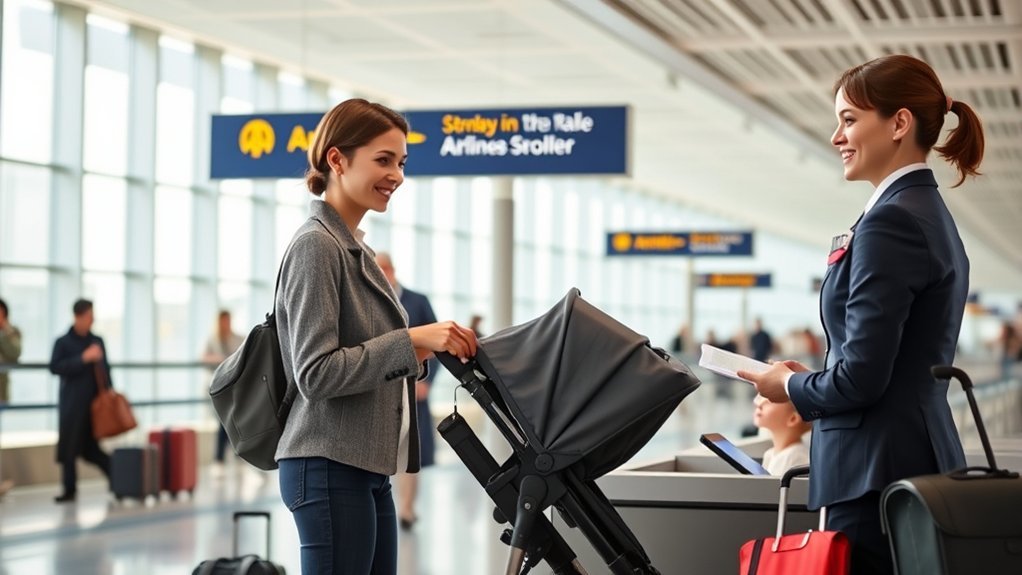
Each airline sets its own rules for stroller size, weight, gate-check approval, and pickup location. While the TSA screens strollers at U.S. airport security, your airline decides how the stroller is accepted and returned.
Airline-Specific Guidelines
Rules differ by carrier, aircraft, airport, and stroller type. Always check your airline’s current family travel page before leaving for the airport, especially if you have a double stroller, jogging stroller, stroller wagon, or travel system.
- Fees: Most major airlines check strollers for free, often in addition to your standard baggage allowance.
- Weight limits: Standard strollers are usually accepted, but very heavy joggers, wagons, or double models may be treated differently.
- Gate-check limits: Smaller folding strollers are more likely to be accepted at the gate than bulky stroller wagons.
- Oversize handling: A large stroller may need to be dropped at the oversize baggage counter.
- Return location: Some strollers return at the jet bridge, while others may go to baggage claim or oversize baggage.
Handling Procedures at the Gate
When gate-checking, ask for a tag as soon as you reach the gate. Do not wait until your boarding group is called. Fold the stroller, secure the latch, and place it where the gate agent or flight crew directs you. On arrival, ask the crew whether the stroller will come to the jet bridge or baggage claim, because this can vary by airport.
Note: If you have a tight connection, gate checking may save time only if the stroller is returned at the aircraft door. If it is sent to baggage claim, it will not help during your connection.
Gate Check vs Counter Check: Which Is Better?
The best choice depends on your child, your route, and your stroller. Gate checking is usually better for babies and toddlers who need help moving through the airport. Counter checking is better when you want fewer items at security or when your stroller is too large for gate handling.
| Gate Check | Best when you need the stroller through the terminal, during layovers, or while waiting at the gate. |
| Counter Check | Best when the stroller is bulky, you have a baby carrier, or you want fewer items at the gate. |
| Biggest Risk | Gate-checked strollers may be delayed at the jet bridge. Counter-checked strollers may face rougher baggage handling. |
| Best Backup | Bring a soft baby carrier or compact travel stroller plan in case your stroller must be checked earlier than expected. |
Benefits of Checking Your Stroller

Checking your stroller at the main ticket counter, rather than the gate, can make the airport feel less crowded and easier to manage. You can move through security without folding and unfolding the stroller, and you have fewer items to watch at the gate.
Reducing Wear and Tear
Checking your stroller properly can protect it when you use the right gear and prepare it before handoff.
- Designated storage: Counter-checked items may be routed through oversize baggage areas instead of being squeezed into crowded gate-handling carts.
- Protective gear: A padded travel bag shields fabric, wheels, buckles, and canopies from grease, dirt, and tears.
- Cost-effective travel: Since stroller check-in is usually free, you often avoid using regular baggage allowance for baby gear.
- Less terminal stress: If your child is comfortable in a baby carrier, counter checking can make bathroom stops, food runs, and boarding easier.
For most families, the safest stroller check-in plan is simple: remove loose parts, tag the frame, use a travel bag, and confirm the pickup location before you board.
Navigating the Airport Without Your Stroller
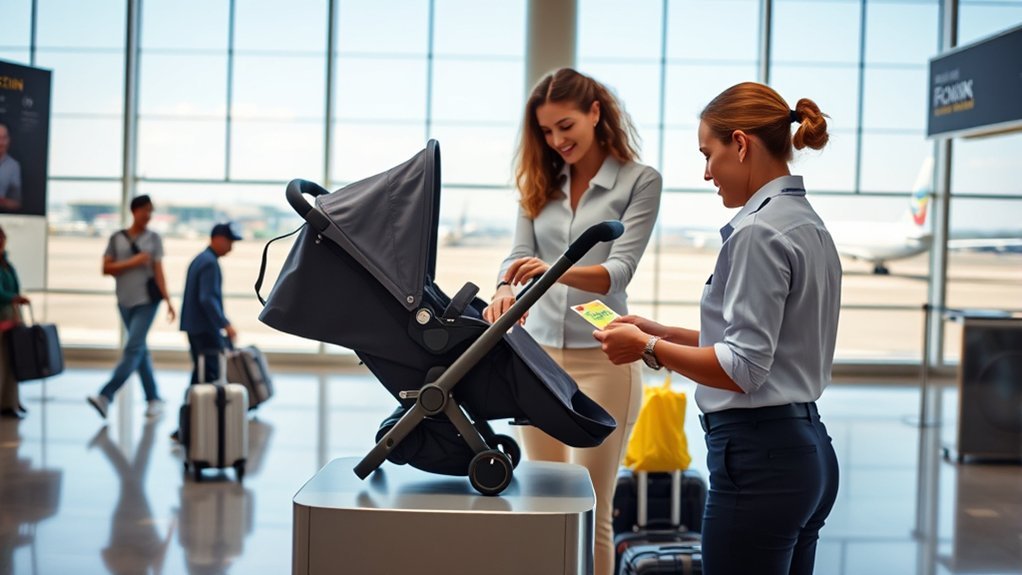
If you check your stroller at the counter, you need a clear plan for moving through the airport. A baby carrier or sling is often the easiest backup because it keeps your hands free for passports, boarding passes, and carry-on bags.
For toddlers, consider a small backpack leash, a rolling carry-on they can hold, or planned breaks near family restrooms and play areas. Some airports may offer courtesy strollers, but you should not depend on them unless you have confirmed availability in advance.
What to Keep With You
- Diapers, wipes, and a change of clothes
- Snacks, formula, bottles, or breastfeeding supplies
- Medication and comfort items
- Travel documents and boarding passes
- A baby carrier or toddler hand strap
- A small blanket for naps or cold aircraft cabins
Retrieving Your Stroller Upon Arrival
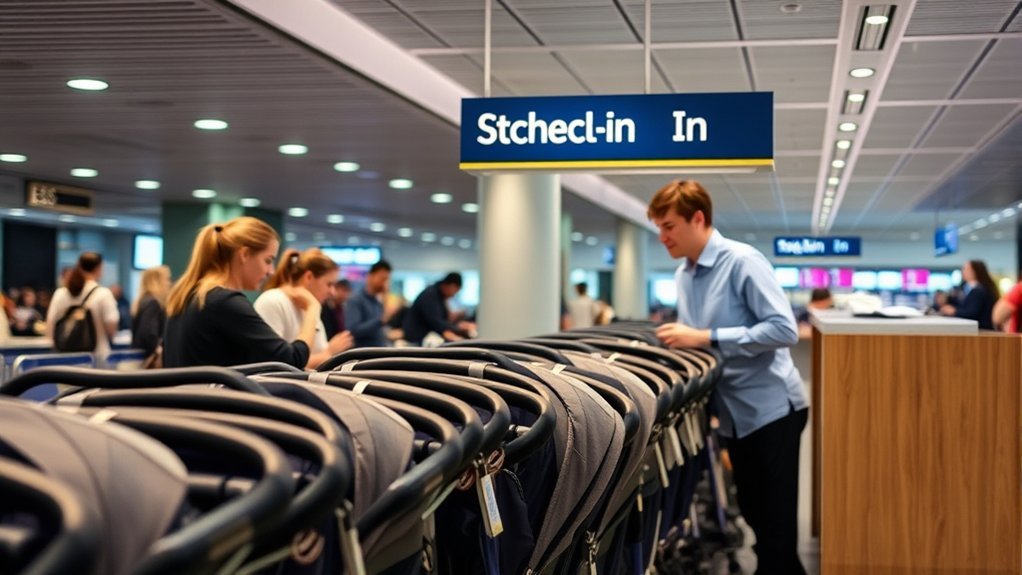
The retrieval process depends on how you checked the item and how the arrival airport handles baby gear. Before leaving the aircraft, ask a flight attendant where gate-checked strollers are being returned.
- Gate checked: Wait on the jet bridge, at the aircraft door, or in the marked stroller pickup area. It often takes 5–10 minutes for ground crew to bring strollers up.
- Counter checked: Proceed to baggage claim. Strollers often arrive at the oversize belt instead of the regular carousel.
- Connecting flight: Confirm whether your stroller is returned during the connection or checked through to your final destination.
- Delayed stroller: Visit the airline baggage service desk before leaving the airport and show your claim tag or gate-check tag.
Note: If your stroller does not appear where expected, check both the jet bridge and oversize baggage area before filing a report.
Quick Tips for Stroller Safety
| Traveling Tip | Why it Matters | Safety Benefit |
|---|---|---|
| Use a travel bag | Contains loose straps | Prevents snagging and tearing |
| Gate check tags | Identify destination | Ensures correct routing |
| Arrive early | Reduces rushing | Allows time for proper packing |
| Remove attachments | Prevents broken accessories | Keeps small parts from getting lost |
| Check pickup location | Avoids waiting in the wrong place | Helps you leave the airport faster |
Extra Safety Tips Before You Fly
- Do not hang heavy bags from the stroller handle because it can tip backward.
- Use the stroller brake when waiting at check-in, security, or the gate.
- Keep your child out of the stroller while folding or unfolding it.
- Inspect wheels, brakes, and frame locks after pickup before placing your child back inside.
- Report stroller damage to the airline before leaving the airport.
Related Guides
Frequently Asked Questions
Can I use my stroller until I board the plane?
Yes, if you choose to gate check. Ask the gate agent for a tag, keep your child in the stroller through the terminal, and fold it just before stepping onto the plane. The stroller is usually returned near the aircraft or jet bridge after landing.
What types of strollers can I check?
You can usually check umbrella strollers, compact travel strollers, full-size strollers, and many travel systems. Very large jogging strollers, double strollers, and stroller wagons may need to be checked at the ticket counter or oversize baggage area instead of the gate.
Will my stroller get damaged?
There is always a small risk when any item is checked. You can lower that risk by removing accessories, folding and latching the frame, using a padded travel bag, and keeping proof of the stroller’s condition before you hand it over.
Is there a weight limit for checked strollers?
Many airlines accept standard strollers without a problem, but limits can vary. Heavy double strollers, joggers, and wagon hybrids may face different handling rules. Check your airline’s current stroller policy before travel.
Is it free to check a stroller?
In most cases, yes. Many airlines allow one stroller and one car seat per child at no extra charge. Budget airlines and international carriers may have stricter size or weight rules, so confirm before flying.
Should I gate check or counter check my stroller?
Gate check if you need the stroller in the terminal, during delays, or for a connection. Counter check if your stroller is bulky, your child can use a carrier, or you want fewer items to handle at security and the gate.
Do I need a stroller travel bag?
A travel bag is not always required, but it is strongly recommended. It keeps straps contained, helps protect the fabric, and makes the stroller easier to identify. A padded bag offers more protection than a thin plastic cover.
Sources
- Transportation Security Administration: Traveling with Children — backs up stroller and child-related airport screening guidance.
- Delta Air Lines: Children & Infant Items — supports common stroller and car seat check-in practices.
- United Airlines: Traveling with Children — supports airline-specific baby gear handling guidance.
- Southwest Airlines: Flying with Infants — supports family travel and infant-item policy guidance.
