Is a gate-check bag worth it for a stroller? Usually yes if the stroller is expensive, light-colored, difficult to replace, or traveling on multiple flight segments. A basic bag mainly protects against dirt, rain, scuffs, and loose parts. A padded travel bag adds more cushioning, although no soft bag can make a stroller immune to crushing or rough handling. If you are flying once with a low-cost travel stroller and do not mind cosmetic wear, you may reasonably skip the bag.
How this guide was checked: We reviewed current published stroller guidance from major U.S. airlines plus U.S. Department of Transportation baggage guidance. Airline rules can change by carrier, airport, aircraft, and route, so confirm your operating airline before departure.
Quick Answer
A gate-check bag is worth it when keeping your stroller clean and protecting it from minor handling wear matters more than carrying one extra item. Use a basic bag for dirt, moisture, and scuffs; consider a padded bag for a premium stroller or a trip with several flights. The bag is optional protection, not a guarantee against structural damage.
Key Takeaways
- A gate-check bag helps protect your stroller from dirt, scratches, grease, rain, and loose airport handling.
- It does not guarantee protection from bent frames, cracked wheels, crushing, or structural damage.
- A basic unpadded bag is mainly surface protection; a padded travel bag adds cushioning for higher-value strollers.
- Gate checking describes where you hand over the stroller, not necessarily where it will be returned. Ask whether pickup is at the jet bridge or baggage claim.
- Always check your airline’s current stroller rules because allowable stroller type, check-in point, and pickup process can vary.
At a Glance
| Best For | Families flying with expensive, full-size, light-colored, or daily-use strollers |
| Skip the Bag When | You use a low-cost stroller, take a short direct trip, or accept normal dirt and cosmetic wear |
| Basic Bag | Best for dirt, moisture, scuffs, and keeping detached parts together |
| Padded Bag | Better choice for premium strollers, repeated flights, or extra cushioning during handling |
| Protection Limit | Soft bags cannot guarantee protection from crushing, bent frames, or broken components |
Is a Gate-Check Bag Required for a Stroller?
A protective bag is generally an optional accessory rather than the thing that determines whether a stroller can be gate checked. The airline’s stroller policy is what controls whether your particular stroller can be taken to the gate, must be checked at the ticket counter, or may fit in the cabin.
The major U.S. airline policies reviewed for this guide describe how strollers can be checked without making a stroller travel bag a general requirement. However, the details differ by carrier. Large, non-collapsible, wagon-style, or unusually heavy strollers may face different rules from compact folding models.
Important: “Gate checked” tells you where the stroller is handed to the airline. It does not guarantee that the stroller will be returned at the aircraft door. Confirm the pickup location with the gate agent.
Pros of Using a Gate-Check Bag for Strollers
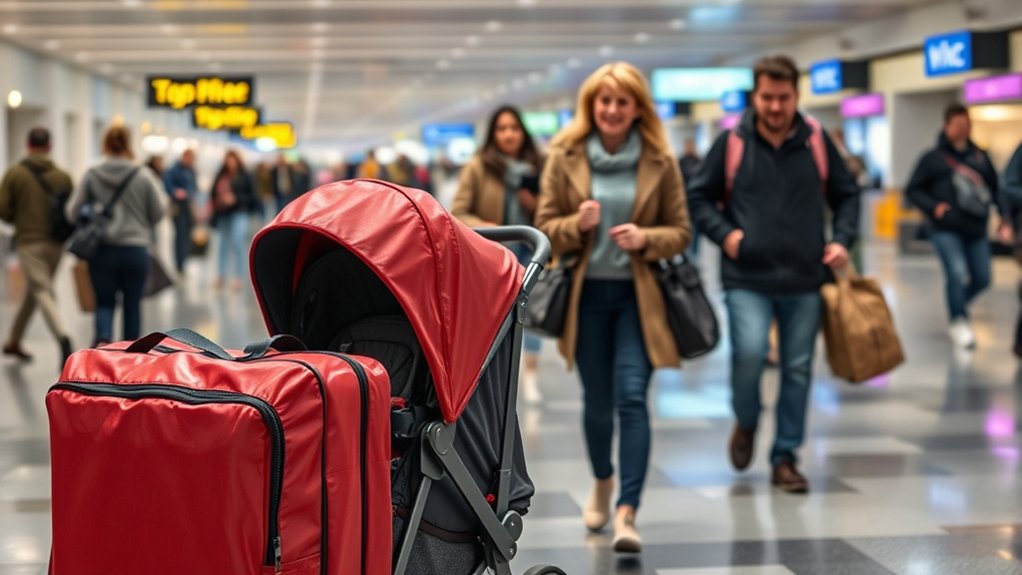
When you’re traveling with your little one, the last thing you want is a stroller that comes back scratched, dirty, or damp before the trip even begins. A gate-check bag gives your stroller a protective outer layer while airline staff move it between the boarding area and aircraft hold.
The biggest benefit is surface protection. Airport equipment, wet pavement, cargo areas, and other luggage can leave marks on fabric, wheels, and frames. A bag cannot stop every type of damage, but it can reduce common scuffs, grime, and moisture exposure.
A stroller travel bag can also keep loose or removed parts together. If your stroller has a parent cup holder, snack tray, rain cover, or detachable bumper bar, keeping those pieces secured reduces the chance of something disappearing during handling. A distinctive bag also makes the stroller easier to identify.
Pro Tip: Remove loose accessories before boarding. If you place them inside the stroller bag, make sure they cannot press against or damage the stroller frame during handling.
Limitations of Gate-Check Bags for Strollers
While gate-check bags can be useful, they are not perfect. They add one more item to carry, unfold, close, store, and manage while you are already handling boarding passes, bags, snacks, and a child.
The protection also has limits. A thin nylon or polyester bag mainly protects against dirt, moisture, and abrasion. It will not reliably prevent a bent wheel axle, cracked plastic part, crushed frame, or damaged folding mechanism. A padded travel bag adds cushioning, but even padded fabric cannot make rough handling risk-free.
Extra Item to Manage
Managing a gate-check bag can feel like one more task during an already busy travel day. You need to collapse the stroller, place it inside the bag, close the bag, keep the check tag visible, and manage your child at the same time.
If you are traveling alone with a baby, that extra step may feel frustrating. Some parents choose to gate check a basic travel stroller without a bag because speed and simplicity matter more than cosmetic protection.
If you have invested in a high-value stroller, though, the extra effort may be worth it. The right choice depends on replacement cost, trip complexity, how essential the stroller is at your destination, and how much airport juggling you can comfortably handle.
No Guaranteed Protection
Even with a gate-check bag, you should not assume your stroller is fully protected from damage. A bag can guard against scratches, dust, and moisture, but it cannot fully protect against impact, crushing, or careless handling.
This matters most for strollers with delicate wheels, exposed brakes, leatherette handlebars, or premium frames. If your stroller is essential at your destination, inspect it as soon as it is returned. Check the wheels, brakes, folding mechanism, canopy, handlebar, and seat recline before leaving the airport.
Warning: A gate-check bag does not replace careful inspection. Photograph the stroller before handoff, keep your tag receipt, and report visible damage to the airline as soon as possible.
How Gate-Checking Works for Strollers
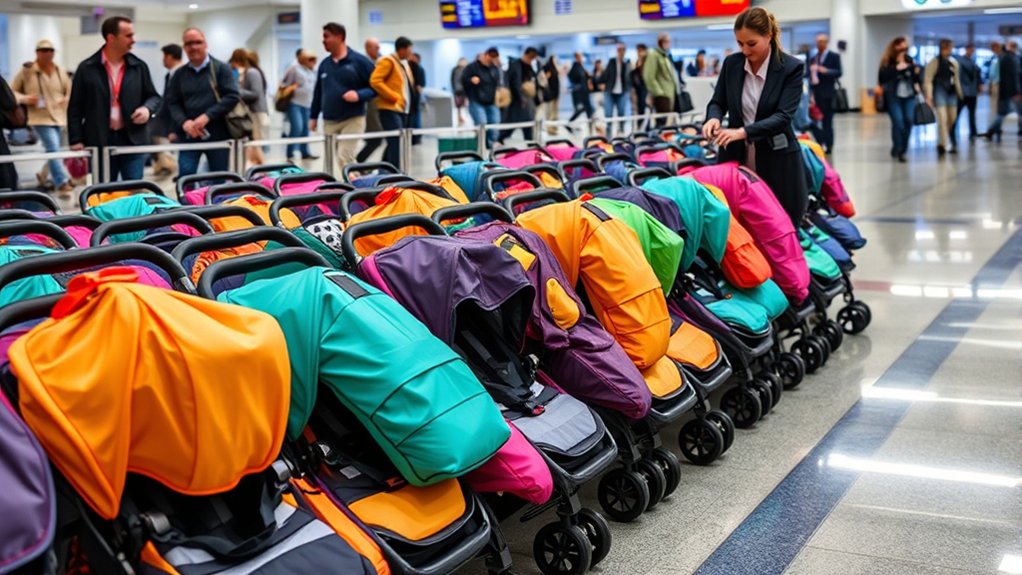
Gate-checking your stroller lets you keep using it through most of the airport instead of surrendering it at the ticket counter. The exact handoff and return process varies, so treat the gate agent’s instructions as the final word for your flight.
Gate checking usually lets you use your stroller until boarding, but the airline may return it at the aircraft door, jet bridge, oversized-baggage area, or regular baggage claim.
- Use it through the airport: Push your stroller through the terminal and toward the boarding gate. Security staff may ask you to fold it for screening.
- Ask for a gate-check tag: At the gate counter, tell the agent you want to gate check your stroller and ask where it will be returned.
- Remove loose items: Empty the basket and remove accessories that can snap off or disappear.
- Photograph the stroller: Take a quick picture showing its condition and the gate-check tag before you hand it over.
- Collapse and bag it: Fold the stroller fully and place it inside the gate-check bag if you are using one.
- Follow the handoff instructions: Leave the stroller at the jet bridge, aircraft door, or other location identified by airline staff.
- Retrieve and inspect it: Collect it at the stated pickup point and check the wheels, frame, brakes, folding mechanism, and accessories before leaving the airport.
While a gate-check bag is not always required, it can add a useful layer of protection during this handling process.
Airline Policies on Stroller Gate Checking
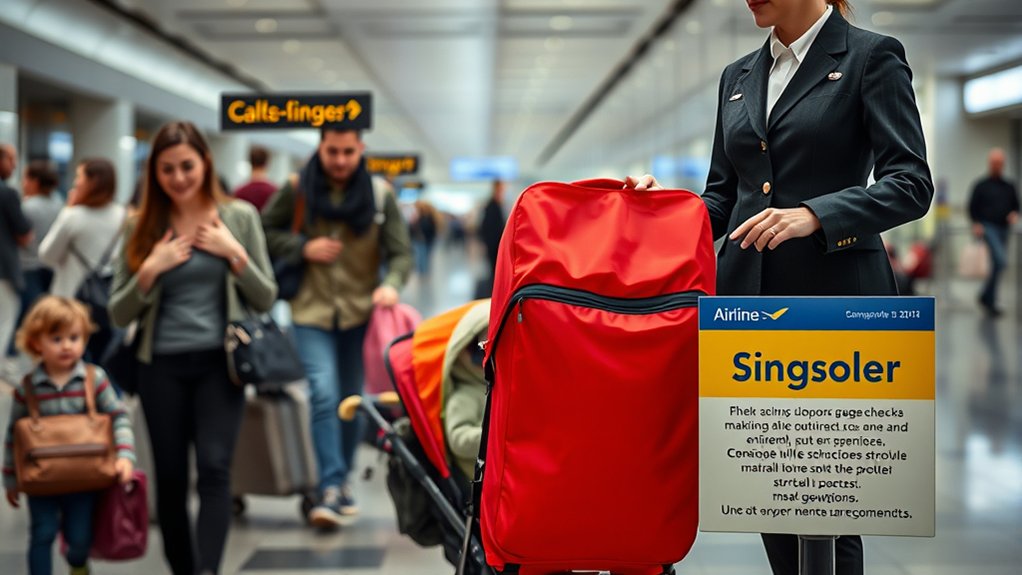
Airline stroller gate-check policies are not identical. A stroller that can be taken to the gate on one itinerary may need to be checked earlier on another because of its size, design, aircraft type, or the carrier’s rules.
| Airline | Current Published Guidance |
|---|---|
| American Airlines | Allows one stroller and one car seat to be checked free when traveling with a child or for adoption. Its published guidance distinguishes between items that may be checked at the gate and stroller types that must be checked at the ticket counter. |
| Delta Air Lines | Does not charge a fee for strollers or child-restraint seats and says they may be checked before security or at the gate. |
| Southwest Airlines | Allows one stroller and one car seat per ticketed customer free. Its policy says gate-checked child items normally go to baggage claim at the final destination; ask the agent if you want jet-bridge return. |
| Alaska Airlines | Transports a child’s car seat and stroller free of charge as checked baggage and says they may be checked with other baggage or at the gate. Published limits apply to stroller-wagons. |
These examples show why you should check the operating airline, not rely on a general rule from another trip. Codeshare flights may also use the operating carrier’s baggage procedures.
Airline Guidelines Overview
Use this checklist before departure:
- Check your airline before departure: Look for stroller size, weight, folding, wagon, and gate-check rules on the airline’s official website.
- Measure larger strollers: Full-size, jogging, wagon-style, and double strollers are more likely to face restrictions than compact models.
- Ask where pickup happens: Do not assume a gate-checked stroller automatically returns at the jet bridge.
- Keep the tag receipt: Hold onto the gate-check tag stub until the stroller has been returned and inspected.
Variations Between Airlines
Policies can vary by airline, airport, aircraft size, and route. One airline may let you take a compact stroller to the gate, while another may require a larger stroller to be checked earlier. International flights and codeshare itineraries can introduce additional differences.
If you are traveling with a stroller wagon, check the rules especially carefully because airlines may treat wagons differently from conventional folding strollers.
Note: If your stroller is large, heavy, non-collapsible, or wagon-style, contact or check the airline before your trip. These models are more likely to face additional restrictions.
Benefits of Protecting Your Stroller With a Bag
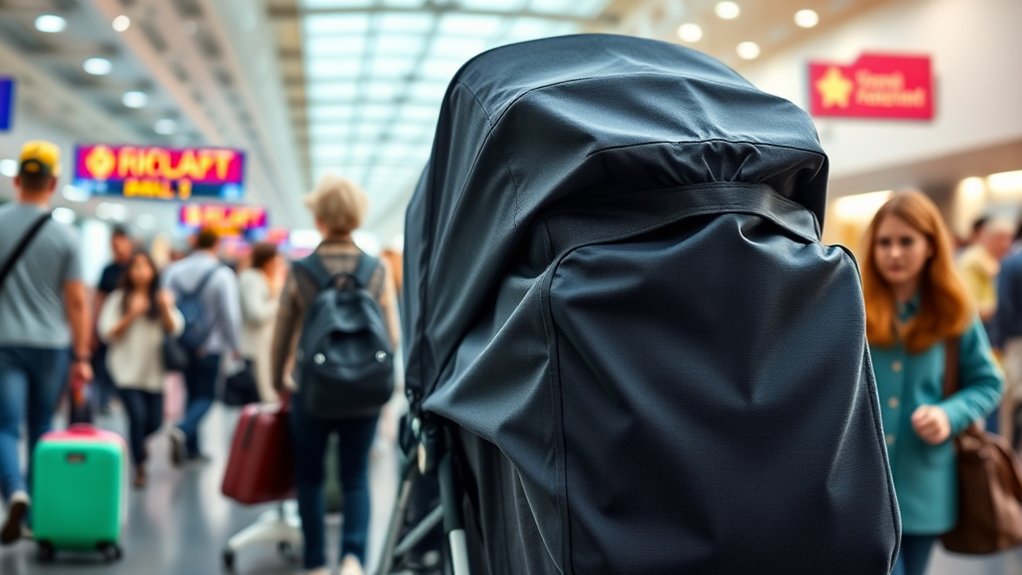
A stroller bag is most useful as a barrier between your stroller and dirty or wet handling surfaces. Think of a basic bag as surface protection, not structural armor.
- Protection from surface damage: A bag reduces direct contact between fabric, wheels, frames, and rough or dirty surfaces.
- Cleaner stroller fabric: It keeps the seat, canopy, and handlebar away from some cargo-area grime and wet pavement.
- Better organization: Properly secured detached accessories can stay with the stroller instead of traveling as separate loose pieces.
- Easy identification: Bright-colored or clearly labeled bags can make the stroller easier to spot.
- Better cosmetic condition: Reducing stains and scuffs can matter if you plan to reuse or resell the stroller later.
A padded bag adds another layer between the frame and minor bumps, but the bag design, fit, closures, and padding level determine how much additional protection you actually get.
Tips for Choosing the Right Travel Bag for Your Stroller
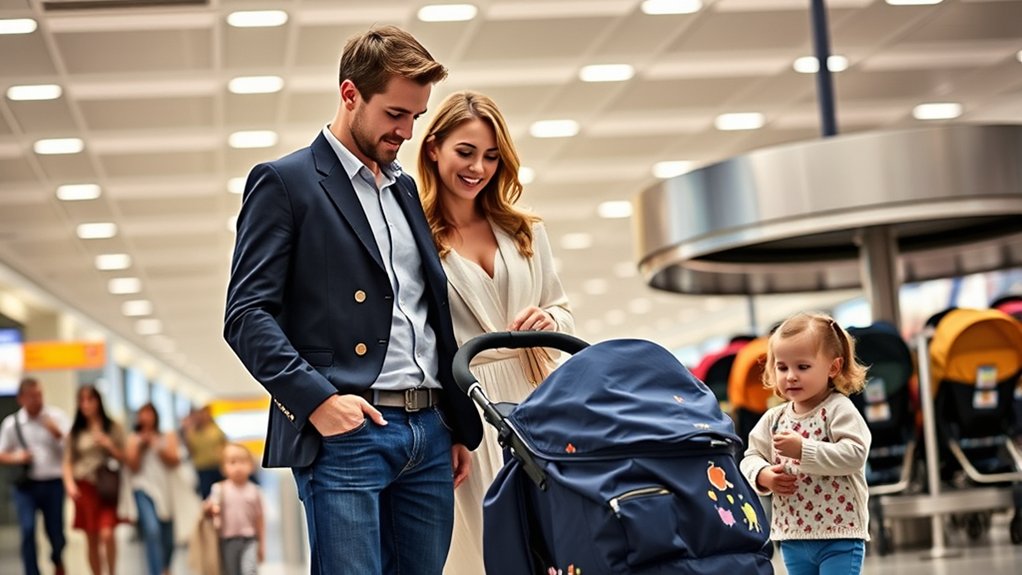
Choosing the right travel bag for your stroller starts with fit. Measure the stroller when folded, including the wheels and handlebar, and compare those measurements with the bag’s listed internal dimensions. Do not assume that a bag labeled “universal” will fit every stroller.
Then choose the protection level that matches the stroller’s value and your trip:
- No bag: Reasonable for a low-cost stroller when speed and simplicity matter most.
- Basic unpadded bag: Best when your main concerns are dirt, rain, scratches, and keeping the folded stroller contained.
- Padded travel bag: Better for premium strollers, repeated flights, or travelers who want more cushioning and stronger carrying features.
Useful design features include:
- Clear label area: Helps airline staff and other travelers identify your stroller.
- Carry handles or backpack straps: Makes the folded stroller easier to move.
- Strong zipper, drawstring, or buckle closure: Reduces the chance of the bag opening during handling.
- Water-resistant fabric: Helps protect against rain, spills, and dirty surfaces.
- Reinforced bottom: Useful because stroller wheels and frames can wear through thin fabric.
If you use reviews to judge fit, prioritize comments from travelers using the same stroller model or similar folded dimensions.
Common Trade-Offs Parents Should Expect
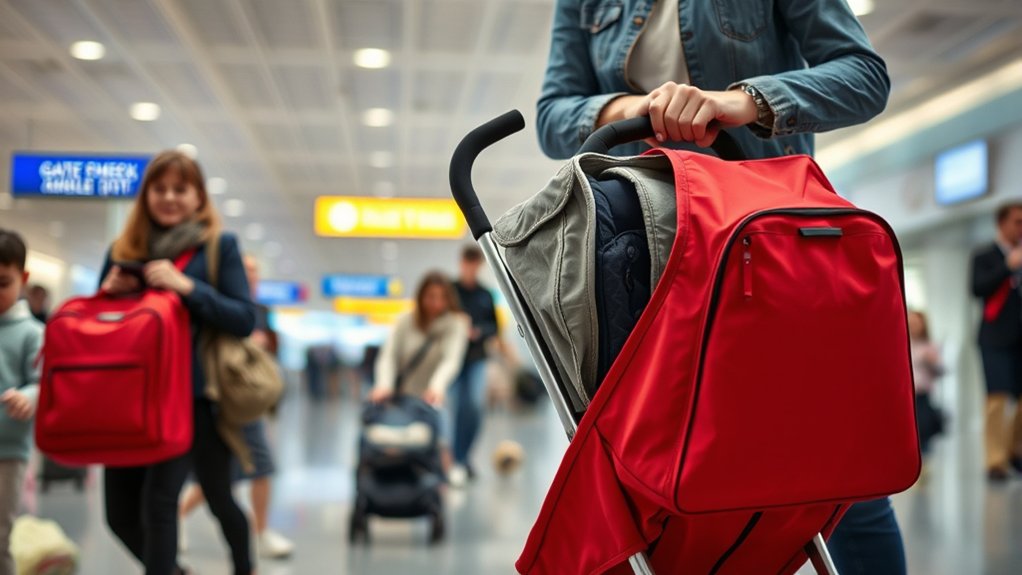
The decision is less about whether a bag is universally “necessary” and more about which inconvenience you would rather accept: carrying and packing the bag, or accepting more exposure to dirt and handling wear.
- Cleaner stroller vs. one more task: The bag creates a barrier, but you need time to pack it before handoff.
- Premium stroller vs. cheap travel stroller: The replacement cost changes how worthwhile extra protection feels.
- Direct flight vs. several segments: More handoffs mean more occasions when the stroller is moved and loaded.
- Solo travel vs. two adults: Folding and bagging a stroller is harder when one adult is also holding a child and carry-on items.
- Gate return vs. baggage claim: A close connection becomes harder if the stroller is not returned where you expected.
For many families, a lightweight basic bag is the middle-ground choice: it adds little bulk while providing meaningful cleanliness and surface protection.
Alternatives to Using a Gate-Check Bag
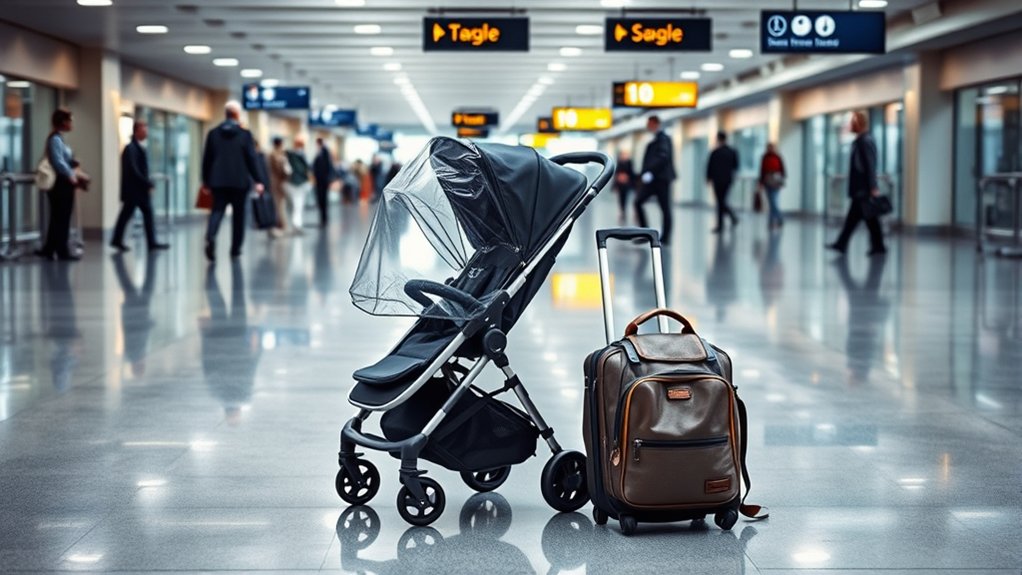
A dedicated gate-check bag is not the only option. Depending on your stroller and trip, one of these alternatives may work better:
- Use a basic protective cover: A simple disposable cover can reduce dirt exposure, though it offers little durability or padding.
- Secure the folded stroller with a suitable strap: This may help prevent the stroller from unfolding during handling, provided it does not interfere with the stroller’s mechanism.
- Use a compact overhead-bin stroller: Some travel strollers may fit in the cabin when both the stroller and airline rules permit it.
- Rent a stroller at your destination: This can reduce airport stress, especially for resort, theme-park, or city trips.
- Travel with a cheaper stroller: Some families reserve an inexpensive lightweight stroller for flights and leave the premium stroller at home.
- Check the stroller at the ticket counter: This removes one task from boarding, but you lose stroller access inside the airport.
If your child can comfortably walk through the airport or use a carrier, skipping the stroller until arrival may be easier. If the stroller is important for naps, long terminals, or layovers, keeping it until boarding may be more useful.
When a Gate-Check Bag Is Most Worth It
A stroller gate-check bag is most worth it when replacing or cleaning the stroller during the trip would create a bigger problem than carrying the bag.
Consider using a bag if:
- Your stroller costs more than you would comfortably replace.
- You are flying with a full-size, double, jogging, or premium stroller that the airline permits you to gate check.
- Your stroller has light fabric, leatherette handles, exposed wheels, or parts that mark easily.
- You need the stroller immediately after arrival.
- You are taking more than one flight or have a connection.
- You plan to reuse the stroller for another child or resell it later.
You may be comfortable without one if you are traveling with a low-cost umbrella stroller, taking a short direct flight, or using a stroller that already has visible wear.
How to Pack Your Stroller Before Gate-Checking
Packing and documenting the stroller correctly can matter as much as the bag itself. Use this checklist before handoff:
- Empty the stroller basket: Remove toys, snacks, blankets, cups, documents, and personal items.
- Remove loose accessories: Take off cup holders, snack trays, stroller fans, hooks, organizers, and other detachable pieces.
- Check the stroller manual: Follow the manufacturer’s instructions for folding, wheel position, and any transport locks.
- Fold the stroller fully: Make sure the frame is locked in its folded position.
- Photograph its condition: Take quick pictures of the folded stroller, wheels, frame, and gate-check tag before handoff.
- Use a suitable securing strap if needed: Only use one that does not damage or interfere with the stroller mechanism.
- Place it in the bag: Follow the bag manufacturer’s loading instructions and close every zipper, drawstring, or buckle completely.
- Add contact details: Attach a luggage tag with current contact information.
- Keep the claim stub: Do not discard the gate-check receipt until the stroller has been returned and inspected.
What Should You Do If the Airline Damages Your Stroller?
Inspect the stroller as soon as it is returned. Test the wheels, brakes, folding mechanism, frame, handlebar, seat, and any moving parts before leaving the airport.
If you find damage, photograph it and contact the airline’s baggage service or other designated representative as soon as possible. The U.S. Department of Transportation advises passengers to file damaged-baggage claims with the airline promptly. Coverage and exclusions can depend on the itinerary and the airline’s contract of carriage, so keep the check tag, photos, purchase documentation if available, and any written claim information.
Final Thoughts on Gate-Checking Your Stroller
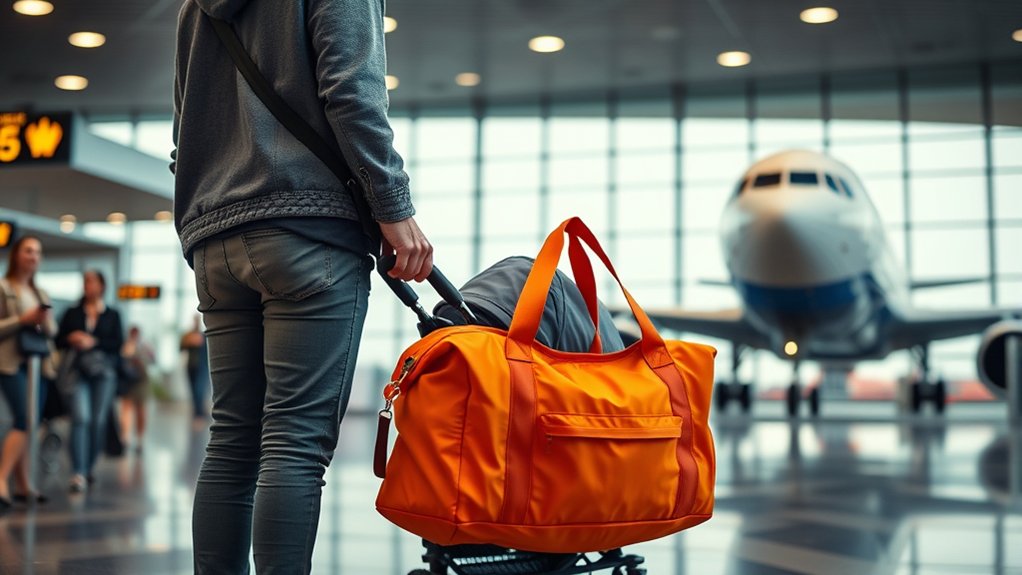
Gate-checking your stroller can make airport travel easier because you can often keep using the stroller until shortly before boarding. A protective bag adds surface protection without changing the basic gate-check process.
The bag makes the most sense when your stroller is valuable, difficult to clean, or essential at your destination. If you mainly want protection from dirt and scuffs, a lightweight bag may be enough. If you are protecting a premium stroller through repeated flight segments, a padded bag is the stronger option.
- Stroller value: Higher replacement cost makes additional protection easier to justify.
- Travel convenience: Gate checking can keep the stroller available inside the airport.
- Airline rules: Confirm where and how your stroller can be checked and returned.
- Protection limits: Even a padded soft bag cannot prevent every type of impact damage.
Frequently Asked Questions
Is a gate-check bag required for a stroller?
A stroller bag is generally optional protection rather than a universal airline requirement. The stroller itself must still meet the airline’s rules for gate checking, size, folding, and handling. Check the operating airline before departure.
Can I gate check a stroller without a bag?
Yes, many strollers are gate checked without a protective bag when the airline allows the stroller at the gate. Without a bag, the stroller is more exposed to dirt, rain, scuffs, and loose handling marks.
Will a gate-checked stroller always come back at the jet bridge?
No. Gate checking tells you where the stroller is handed over, not necessarily where it will be returned. Depending on the airline and airport, pickup may be at the aircraft door, jet bridge, oversized-baggage area, or regular baggage claim. Ask the gate agent before boarding.
Should I use a padded stroller bag or a basic gate-check bag?
Choose a padded stroller bag for a premium stroller, repeated flights, or when you want more cushioning. Choose a basic gate-check bag if your main goals are protection from dirt, moisture, and light scratches. Neither type guarantees protection from crushing or structural damage.
Can I use a gate-check bag for other baby gear?
Only use the bag for other baby gear if the bag manufacturer says the item fits and can be carried safely. A stroller bag may not fit or protect a car seat correctly, so a purpose-made car-seat bag can be the better choice.
How do I clean a gate-check bag for my stroller?
Follow the bag manufacturer’s care instructions. For bags that permit spot cleaning, remove loose dirt first, use the recommended cleaner, and let the bag dry completely before storing it. Do not store the bag while damp.
Are gate-check bags universal for all stroller types?
No. Strollers fold into different shapes and sizes. Measure your stroller when folded and compare those dimensions with the bag manufacturer’s fit information. Double strollers, jogging strollers, travel systems, and stroller wagons may require larger or model-specific bags.
Where can I purchase a gate-check bag for strollers?
Stroller gate-check bags are sold by stroller manufacturers, baby-gear retailers, department stores, and major online retailers. Compare folded-stroller dimensions with the bag’s fit information before buying.
Do gate-check bags come with a warranty or guarantee?
Warranty coverage depends on the bag manufacturer. A product warranty on the bag is separate from any airline baggage-damage policy, so review both sets of terms if protection coverage matters to you.
Conclusion
A gate-check bag is worth it for many families because it provides inexpensive protection against dirt, moisture, scuffs, and minor handling wear. It is especially useful when the stroller is valuable, difficult to replace, or needed immediately after arrival.
If you have a cheap travel stroller and want the simplest possible airport routine, skipping the bag can also be reasonable. Whichever option you choose, remove loose accessories, document the stroller’s condition, keep the gate-check receipt, confirm the pickup location, and inspect the stroller when it is returned.
Sources
- TSA — Strollers — airport screening reference for traveling with strollers.
- American Airlines — Traveling with children — current stroller and child-item checking guidance.
- Delta Air Lines — Children and infant items — current stroller and child-restraint baggage guidance.
- United Airlines — Traveling with children — airline-specific family travel guidance.
- Southwest Airlines — Stroller and child items policy — current stroller checking and return-location guidance.
- Alaska Airlines — Child equipment baggage guidance — current stroller, car-seat, and stroller-wagon checking guidance.
- U.S. Department of Transportation — Lost, delayed, or damaged baggage — baggage damage reporting and airline-liability guidance.

