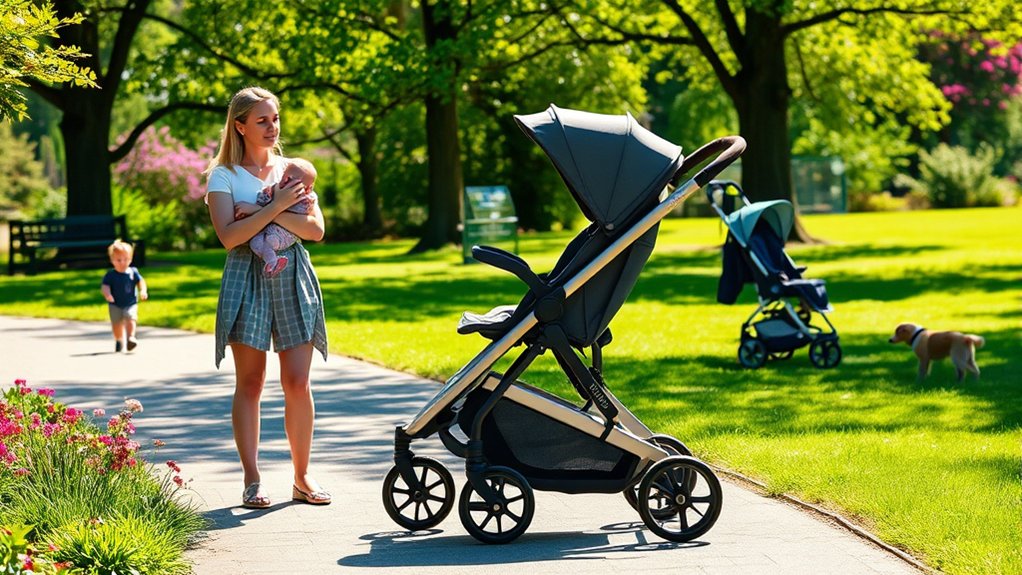
You probably need a double stroller if both children regularly need to ride at the same time, especially when one adult handles long walks, errands, travel days, or crowded outings. You may not need one if your older child reliably walks through your normal trips and only needs an occasional break. Age gap matters, but your real deciding factors are two-seat demand, your older child’s stamina and safety habits, stroller fit, and how often you go out with both children.
Last updated: September 11, 2026 — refreshed with current pricing, U.S. stroller-safety guidance, and a clearer two-seat decision framework.
Quick Answer
Choose a double stroller when you frequently need two usable riding positions at once. If the second child only rides occasionally, a single stroller plus a baby carrier or compatible ride-on board can be lighter, cheaper, and easier to store. Before buying, compare the stroller’s open and folded dimensions with your doorway, elevator, trunk, and home storage.
Key Takeaways
- Age gap is only a clue. The stronger test is whether both children still need to ride during the same outing.
- A double stroller is more useful when you often go out alone with both children or do long walks, airports, zoos, parks, and full-day errands.
- Measure your trunk, doorway, elevator, and storage space before buying; open width and folded size vary a lot by model.
- Tandem strollers are generally narrower; side-by-side strollers give both children a similar seating position. Actual maneuverability depends on the model, wheelbase, and load.
- If you buy used, confirm the exact model, inspect the frame and restraints, and check the CPSC recall database before use.
Two-Seat Decision Test
| Strong Yes | Both children regularly need to ride, you often manage them alone, or the older child still tires, naps, runs off, or cannot safely keep pace on your normal outings. |
| Maybe | Your older child walks most of the time but still needs a ride on long days. Compare a double stroller with a single stroller plus carrier or compatible ride-on board. |
| Probably No | Your older child reliably walks through your usual trips, you rarely need two seats at once, and a second seat would mostly add weight and storage bulk. |
| Fit Check | Measure open width, folded length/width/height, stroller weight, trunk opening, doorway, elevator, and home storage before you commit. |
Does the Age Gap Mean You Need a Double Stroller?
Age gap should not be your only rule. A smaller gap often means both children still need a riding position, but the practical question is whether they need those positions at the same time. Twins and two children who are both too young to walk reliably create the clearest case for a double stroller.
With a newborn and an older toddler or preschooler, look at real behavior instead of the birthday alone. Does the older child still nap during outings, ask to be carried, tire before the trip ends, run ahead, or struggle to stay beside you in parking lots and crowds? If yes, a second seat can be useful. If your older child walks safely and happily through most trips, a single stroller plus a carrier or stroller board may cover the occasional break.
If your older child is around three, the need can go either way. Our guide to whether a 3-year-old still needs a stroller uses the same factors: stamina, safety awareness, outing length, naps, and how often the child actually rides.
Note: Treat your longest normal outing as the test. If the older child regularly needs a ride before that outing ends, plan for a second riding option rather than relying on age alone.
Will Your Daily Routine Make a Double Stroller Worth It?
Your routine is often a better predictor than age gap. A double stroller earns its space when you regularly do long walks, daycare or school runs, shopping trips, appointments, airports, zoos, parks, or full-day outings with both children. It lets you keep both riders together instead of carrying a tired child while also managing the baby and your bags.
Ask how often one adult takes both children out. If that happens rarely, a single stroller plus a backup option may be enough. If it is part of your normal week, two secure riding positions can simplify transitions, parking lots, crowded sidewalks, and the point in an outing when the older child runs out of energy.
Your living environment changes the best layout. Tandem strollers are generally narrower, which can help with tight doorways, aisles, and elevators. Side-by-side strollers give both children a similar seating position and can feel more balanced on open paths, but width varies by model. For grass, gravel, rough sidewalks, or park trails, wheel design, tire type, suspension, and loaded steering may matter more than seating layout.
Use your actual route as a test: the narrowest doorway, the roughest path, the longest walk, and the place where you usually fold and lift the stroller. Those real constraints are more useful than choosing by category name alone.
Which Type of Double Stroller Fits Your Routine?
Each double-stroller layout solves a different problem. Compare the seating arrangement with your children’s ages, how often both need to sit, your narrowest spaces, and how much stroller you are willing to lift and store.
- Side-by-side double stroller: Both children sit next to each other, usually with similar views and seat access. The trade-off is width, so compare exact measurements with your regular doorways and aisles. See our side-by-side double stroller guide for model-specific comparisons.
- Tandem double stroller: One child rides in front of or behind the other. These models are generally narrower than side-by-side designs, but total length, turning feel, basket access, and seat equality vary widely. See our tandem double stroller guide.
- Convertible single-to-double stroller: This starts as a single and adds a second approved seat, bassinet, infant car-seat position, or other manufacturer-supported configuration. It is useful when you want one frame to change with your family. See our single-to-double stroller guide.
- Sit-and-stand stroller: The younger child uses the main seat while an older child uses a rear bench or standing platform. It can reduce bulk when the older child only needs short breaks, but you still need to follow the model’s age, weight, and riding-position limits.
- Double jogging stroller: Larger wheels and running-oriented frames can work well on outdoor routes. Do not assume every “all-terrain” double is approved for jogging; follow the manufacturer’s minimum-age, seating, and activity guidance for the exact model.
Pro Tip: Compare exact model dimensions, not just “tandem” versus “side-by-side.” Measure your narrowest doorway and elevator, then compare the folded stroller with your trunk opening and usable cargo space.
Will the Double Stroller Fit Your Car and Home?
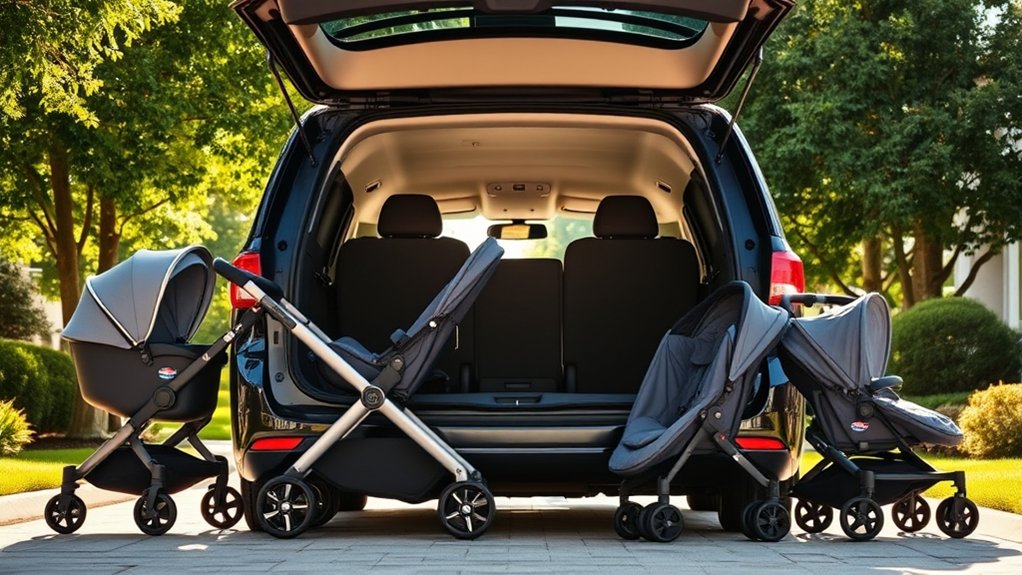
Fit is a pass-or-fail issue. Before committing to a double stroller, compare its folded length, width, and height with your vehicle’s trunk opening and usable cargo space. Do the same with your closet, entryway, garage, apartment storage area, and any elevator you use regularly.
Also check stroller weight and how the fold works. A stroller that pushes smoothly can still be a poor fit if you must remove seats before folding, lift a heavy frame up stairs, or give up most of your trunk space. If possible, test the fold and lift with the same seating configuration you expect to use.
Do not assume one layout always has more basket space or folds smaller. Storage volume, basket access, seat-removal requirements, and folded dimensions vary by model. Compare the manufacturer’s measurements and weight limits for the exact configuration you plan to buy.
A practical fit check should leave room for the rest of your real load too, including diaper bags, groceries, travel luggage, or sports gear.
Warning: Do not guess on fit. Measure the folded stroller size against your trunk and home storage space before purchasing, especially if you drive a compact car or live in a small apartment.
What Safety and Comfort Features Matter Most?
Start with the exact model’s age, weight, seating-position, and accessory rules. For a newborn, use only a configuration the manufacturer approves from birth, such as an approved bassinet, infant car-seat setup, or stroller seat specifically rated for newborn use. Our newborn stroller safety guide explains the setup questions to check.
The American Academy of Pediatrics recommends features such as an easy-to-operate brake, a stable base, and a five-point harness, and it warns against hanging bags from stroller handles because extra weight can contribute to tipping. The U.S. Consumer Product Safety Commission’s stroller standard addresses hazards involving stability, brakes, restraints, latches and folding mechanisms, structural integrity, wheels, and related components. See the AAP stroller-safety guidance and CPSC stroller requirements.
Comfort still matters for long outings: compare canopy coverage, independent recline, foot space, ventilation, basket access, washable fabrics, handlebar comfort, and whether both seats remain usable in your planned configuration. Features differ by model, so check the manual rather than assuming both seats have the same limits or recline.
Before buying, test the stroller if possible. Load both seating positions safely, push and turn it, apply the brake, fold it, lift it, and check whether you can access the basket and children without awkward steps. A stroller can look compact online but feel heavy or unwieldy when fully configured.
How Much Should You Budget for a Double Stroller?
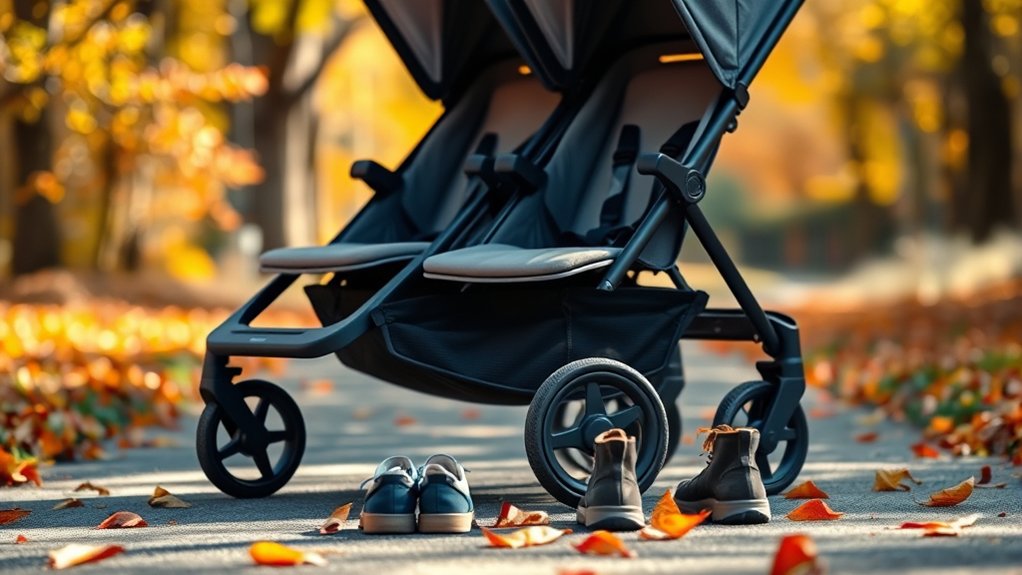
Double-stroller prices vary widely by brand and configuration. At the time of this September 11, 2026 update, Babylist’s double-stroller category showed mainstream new models at roughly $300 to $1,100, with exact prices changing by model, accessories, sales, and seating setup. Treat any price range as a snapshot, not a permanent specification.
Set your budget around the features you will use: two appropriate seating positions, manageable weight, a fold that fits your vehicle, wheels suited to your route, and any required second seat, bassinet, infant car-seat adapter, or ride-on board. A lower-priced stroller can be the better value if it solves your actual route and fit needs without extra accessories.
If buying used, identify the exact model and model number, inspect the frame, wheels, brakes, harness, fold and locking mechanisms, and confirm that required parts are present. Then check the CPSC stroller recall listings before use. Skip a stroller with structural damage, unreliable brakes or locks, missing restraint parts, or unclear compatibility with your children.
Resale value can help, but it should not be the main reason to spend more. The better value is the least expensive setup that safely fits both children, your route, your storage space, and the period when you truly need two riding positions.
Will You Use the Double Stroller Long Enough to Justify It?
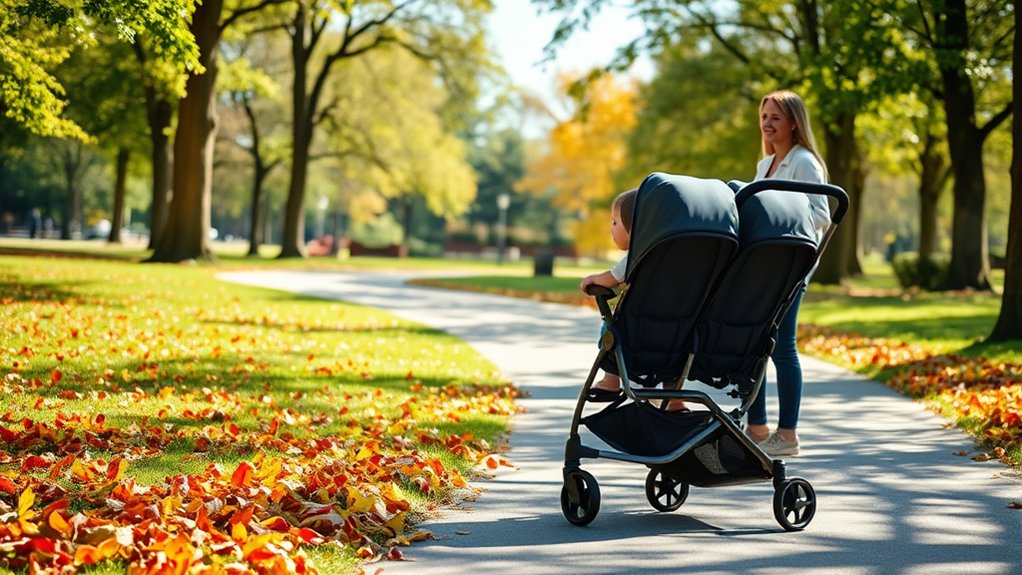
Long-term value depends on how long you will truly need two riding positions. If the baby will use the stroller for years and the older child still rides regularly, a double can earn its space quickly. If the older child is already transitioning out of stroller use, a full double may solve only a short phase.
Convertible single-to-double strollers can extend usefulness when the frame supports different manufacturer-approved configurations. Compare the limits of each seating position, not just the stroller’s headline capacity; second seats, bassinets, infant car-seat adapters, and ride-on boards can have different age, weight, and configuration rules.
If you may have another child later, flexibility can be valuable. But do not pay for future configurations you are unlikely to use. A stroller board, sit-and-stand layout, carrier, rental for travel, or carefully checked used double can make more sense when the need is occasional or short-lived.
A simple value test is to ask: “How many of our normal weekly outings genuinely need two seats?” The more often the answer is “most of them,” the easier it is to justify the cost and bulk.
When Can You Skip a Double Stroller?
A double stroller is not automatically necessary just because you have two children. You may be able to skip it if your older child walks reliably through your normal trips, you rarely need two seats at the same time, or a carrier or compatible ride-on board handles the occasional tired-child moment with less bulk.
You may not need a full double stroller if:
- Your older child walks safely beside you for the length of your usual outings.
- You mostly take short, car-based errands and rarely need both children seated at once.
- You have limited trunk, elevator, stair, or home-storage space.
- A baby carrier or manufacturer-compatible stroller board solves the same problem.
- You only need a second riding position for occasional travel or special events, where borrowing or renting may be more practical.
Choose the smallest setup that safely handles your hardest normal outing. If that is one stroller seat plus a carrier or board, a full double may create more lifting and storage work than it solves.
Related Guides
Frequently Asked Questions
Do I need a double stroller for a 2-year-old and a newborn?
Often, yes—especially if the 2-year-old still naps on outings, tires quickly, runs off, or you regularly take both children out alone. If the older child walks well and your trips are short, a single stroller plus a baby carrier or compatible stroller board may be enough.
Do I need a double stroller for a 3-year-old and a newborn?
Maybe. A 3-year-old who reliably walks through your normal outings may not use a second seat enough to justify the extra size. A double stroller can still be worthwhile for long walking days, naps, crowded places, travel, or a child who tires or needs closer containment.
Are double strollers worth it?
They are worth it when you regularly need two riding positions at the same time. If the second seat would be used only occasionally, a lighter single stroller plus a carrier or stroller board may deliver better value and take up less space.
Is a tandem or side-by-side double stroller better?
Neither layout is always better. Tandem strollers are generally narrower, while side-by-side strollers give both children a similar seating position. Compare the exact model’s open width, folded size, loaded steering, seat limits, and basket access against the spaces and routes you use most.
Can a stroller board replace a double stroller?
Sometimes. A compatible stroller board can work well for an older child who walks most of the time but needs short riding breaks. It is less suitable when the older child still needs naps, a full seat, or frequent rides. Confirm that the board is approved for your stroller and follow its age and weight limits.
Can I convert a single stroller to a double later?
Only some models can. Convertible strollers may accept a manufacturer-approved second seat, bassinet, infant car-seat adapter, or ride-on board. Check the exact model and configuration before buying because seat limits and required accessories vary.
Conclusion
You need a double stroller when two children genuinely need to ride during the same outings often enough to justify the extra size, weight, and cost. If the second riding position would be rare, a single stroller plus a carrier or compatible stroller board may be the more practical setup.
Before you buy, run the two-seat test, measure your real spaces, check the exact seat and newborn-use rules, and test the fold and lift if possible. Then choose the smallest setup that safely handles your hardest normal outing—not the biggest stroller your budget allows.

