Last updated: September 22, 2026.
No, the Doona stroller does not need a base in stroller mode. In car-seat mode, current U.S. Doona+ and Doona X models can be installed rear-facing with their matching base or without the base using the approved vehicle-seat-belt method. The base is mainly a convenience tool for a vehicle you use often; baseless installation is useful for taxis, ride shares, rental cars, and other vehicles where you do not have your base. Always follow the U.S. user guide for your exact Doona model because belt routing, handle position, angle indicators, and base instructions can differ by model.
Quick Answer
The Doona does not require a base for every car ride. Current U.S. Doona+ and Doona X models support an approved no-base vehicle-seat-belt installation. The matching base is usually the easier setup for a main vehicle because it can remain installed. The base is not used at all when the Doona is in stroller mode.
Key Takeaways
- Current U.S. Doona+ and Doona X models can be used in a vehicle with their matching base or with the approved no-base seat-belt installation.
- The base is only for vehicle installation; you do not use it in stroller mode.
- The base is usually more convenient for a car you use every day, while no-base installation is useful for travel and vehicle switching.
- Doona+ and Doona X have different specifications and model-specific instructions, so use the manual that matches your exact seat.
- NHTSA says a properly installed car seat should not move more than 1 inch side to side or front to back when checked at the belt path.
At a Glance
| Stroller Mode | No base is used. Deploy the wheels and use the stroller according to your model’s instructions. |
| Car Mode | Use the matching Doona base or the approved no-base vehicle-seat-belt method for your exact model. |
| Current U.S. Doona+ | 17.2 lb; listed for infants 4–30 lb and up to 32 in. A matching LATCH base is included with the current U.S. product. |
| Current U.S. Doona X | 19.6 lb; listed for infants up to 30 lb and 17–32 in. A Doona X LATCH Base is included with the current U.S. product. |
| Safety Check | Check installation at the belt path. NHTSA says the car seat should not move more than 1 inch side to side or front to back. |
Does the Doona Stroller Need a Base in Car Mode?
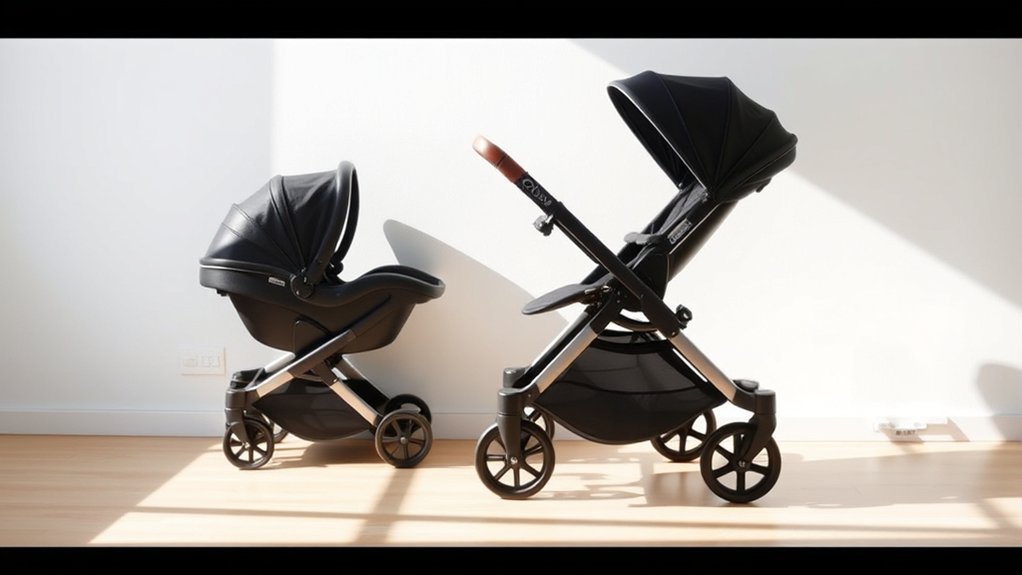
No. Current U.S. Doona+ and Doona X car seats can be installed without the base when you use the vehicle-seat-belt installation approved for that model. The matching base is an alternative installation method that is especially convenient when it stays secured in a vehicle you use frequently.
For current U.S. listings, Doona includes a matching LATCH base with both the Doona+ and Doona X. That does not mean you must transport the base everywhere. If you travel without it, use the no-base instructions in the user guide for your exact model rather than trying to copy a belt path or handle position from another Doona version.
The distinction also matters because “Doona” now refers to more than one current model. The Doona+ and Doona X differ in weight, child-fit specifications, base design, and some operating details. Treat the model label and manual on your own seat as the controlling instructions.
Warning: Never improvise a car-seat installation. If the seat is loose, the belt path is unclear, the level indicator is incorrect, or you are unsure about the required handle position, stop and check the manual for your exact Doona model before driving.
Installation Options: Base vs. No Base
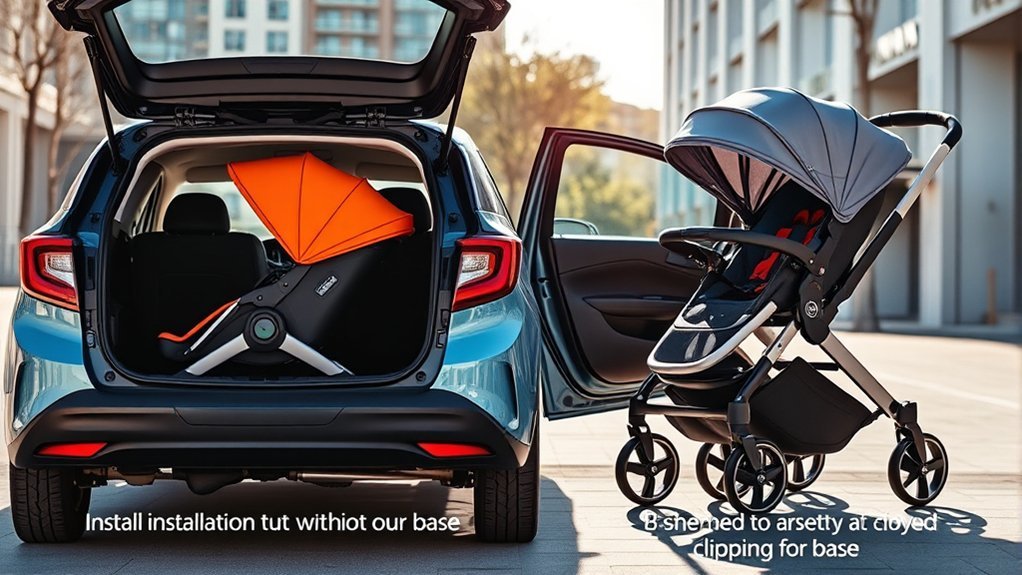
The two practical choices in car mode are a correctly installed matching base or the approved no-base vehicle-seat-belt method. Both are manufacturer-supported options for current U.S. Doona models when used exactly as instructed.
A stay-in-car base makes the most sense for a vehicle you use repeatedly. Once it is installed correctly, you can attach and remove the Doona without performing the full baseless belt installation for every trip. The base also provides model-specific indicators and installation features designed to help confirm setup.
The no-base method is more portable because you do not need to carry a separate base. That makes it useful for taxis, ride shares, rental cars, and occasional caregiver vehicles. The trade-off is that you must correctly route, tighten, lock, and check the vehicle belt for every installation according to the manual.
| Option | Best For | Main Trade-Off |
|---|---|---|
| With Matching Base | Repeated use in a main vehicle | The base is another piece of equipment and must match the Doona model. |
| Without Base | Travel, taxis, ride shares, rental cars, and occasional vehicles | You must complete and check the approved vehicle-belt installation each time. |
[Amazon Products Picked for You]

4-position adjustable base helps ensure an accurate install and helps keep baby comfortable as he or she grows

Compatible EZ-Lift Plus base designed for secure click-in attachment

SnugLock Technology: Installs in less than one minute using vehicle seat belt or LATCH
Benefits of Using the Doona Without a Base
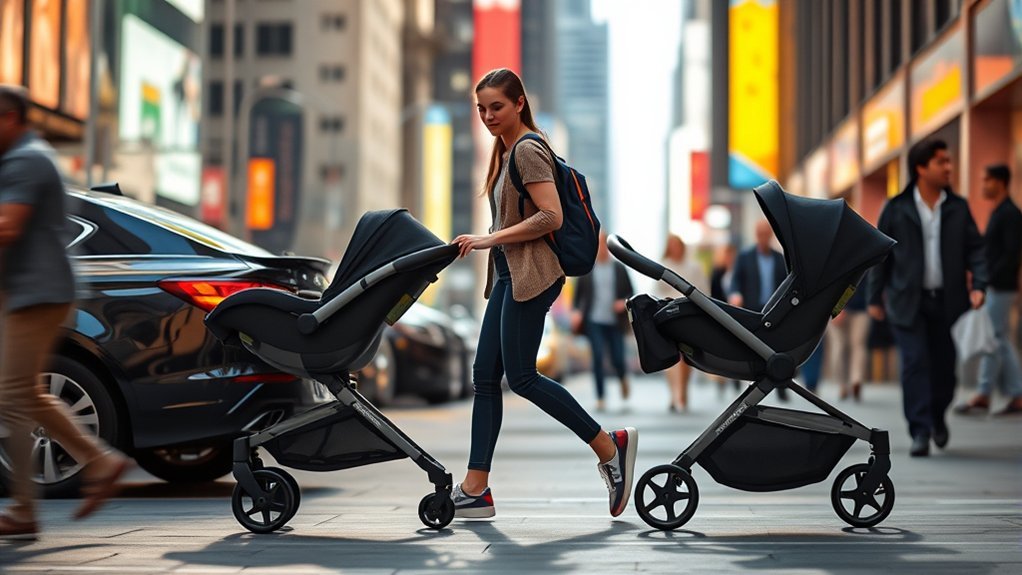
The main benefit of baseless installation is portability. You can move the Doona between compatible vehicles without carrying or installing a separate base. That is particularly useful when your trip includes taxis, ride shares, rental cars, airport transfers, or a second vehicle used only occasionally.
The integrated wheels also mean you do not need a separate stroller frame after leaving the vehicle. The benefit is fewer separate pieces, not unusually low weight: the current U.S. Doona+ weighs 17.2 lb and the Doona X weighs 19.6 lb before the child is added.
Portable, but Not Especially Lightweight
The Doona earns its portability from integration rather than low weight. The car seat, wheels, and stroller mechanism stay together, so you can roll the unit for much of the trip instead of carrying a separate infant seat and stroller frame.
That distinction matters if you regularly climb stairs or lift the seat into taller vehicles. A 17.2-lb Doona+ or 19.6-lb Doona X becomes substantially heavier once a baby is inside. Test whether you can safely lift and position your own setup before relying on it for frequent vehicle changes.
| Feature | Practical Effect |
|---|---|
| Integrated Wheels | No separate stroller frame is needed for short trips |
| No-Base Installation | Allows approved vehicle-belt installation without carrying the base |
| Doona+ Weight | 17.2 lb before the child |
| Doona X Weight | 19.6 lb before the child |
| Vehicle Fit | Must be checked in the actual seating position you plan to use |
Quick Vehicle Transitions
The integrated design reduces the number of separate pieces you have to unload. After a correctly installed car ride, you can remove the Doona, deploy the wheels according to the manual, and continue in stroller mode without transferring the baby to another stroller seat.
That can be useful during short errands, airport transfers, or bad weather. It does not remove the need to perform a complete safety check each time the Doona is reinstalled in a vehicle without its base.
Simplified Ride Share Use
Current Doona models support no-base vehicle-belt installation, which makes the design practical for compatible taxis and ride-share vehicles. You can arrive with the seat in stroller mode, convert it to car-seat mode, install it using the approved belt method, and convert it back after the ride.
Practice matters because curbside installation can be distracting. Before using the seat this way, practice in a parked vehicle until you understand your model’s belt path, belt-locking procedure, level or recline indicator, handle position, and final tightness check.
Product compatibility does not replace local law. Child-restraint requirements, taxi exemptions, and ride-share policies vary by jurisdiction, so check the rules that apply where you are traveling.
| Stage | What to Check |
|---|---|
| Before the Trip | Know the approved no-base method for your exact Doona model |
| During Installation | Use the correct belt path, locking method, angle, and handle position |
| Before Driving | Check harness fit and confirm less than 1 inch of movement at the belt path |
The practical advantage is carrying fewer separate pieces while still having an approved vehicle installation method available when your base is not with you.
Pro Tip: Practice the baseless installation several times in a parked vehicle before your first taxi, ride-share, or airport transfer. Accuracy matters more than speed.
Challenges of Base-less Installation
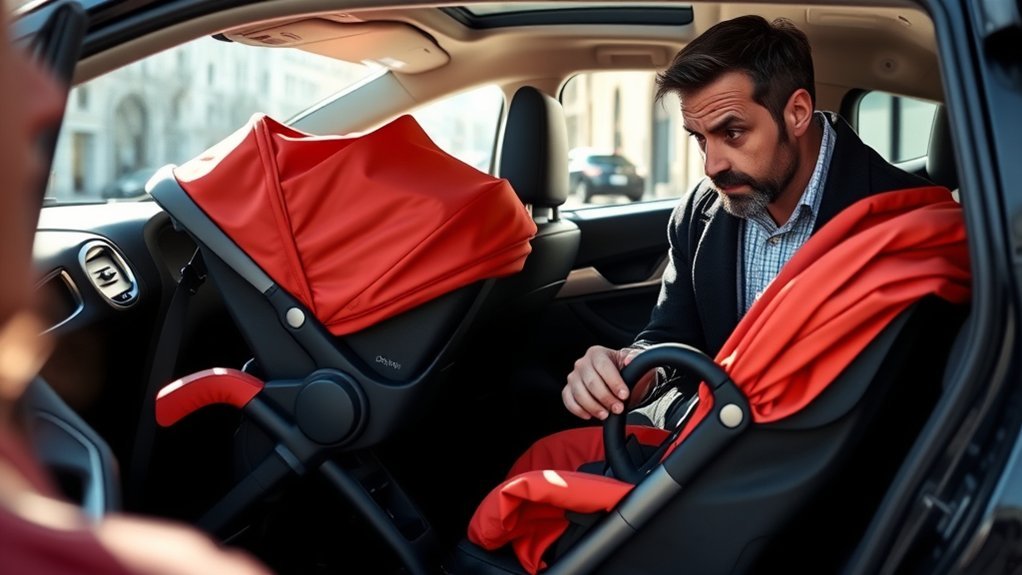
The main disadvantage of no-base installation is repetition. Every new vehicle requires you to position the seat, route and secure the belt using the approved method, check the required angle or indicator, set the handle as instructed, and verify the installation before driving.
Vehicle geometry can also change the experience. Seat-belt length, buckle position, seat contour, available rear-seat space, and the way the vehicle belt locks can make one seating position easier than another. If you cannot achieve a secure installation in one approved location, consult both manuals and try another approved seating position rather than accepting a loose fit.
Lifting is another practical issue. The current U.S. Doona+ weighs 17.2 lb and the Doona X weighs 19.6 lb before the baby’s weight is added. Caregivers who frequently lift the unit into high vehicles or carry it on stairs should factor that combined weight into the decision.
Safety Considerations for Car Mode
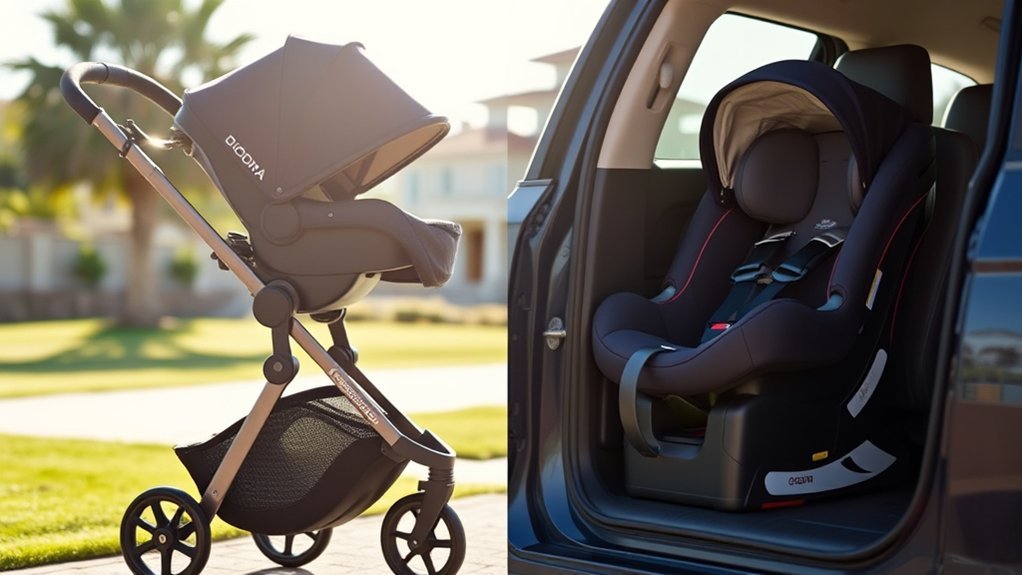
A correctly installed base and a correctly completed no-base installation are both approved ways to use current U.S. Doona models. The critical point is following the instructions for your exact car seat, base, vehicle seating position, and seat-belt system.
NHTSA recommends reading both the car-seat manual and vehicle owner’s manual. It also says a correctly secured car seat should not move more than 1 inch side to side or front to back when tested at the belt path.
Before driving, check these points:
- Install the Doona rear-facing and within the height and weight limits printed for your exact model.
- Use the correct belt path or matching base method specified by the manufacturer.
- Check the seat’s required recline or level indicator after tightening the installation.
- Use the handle position required for your exact Doona model and installation method.
- Test movement at the belt path; it should not exceed about 1 inch side to side or front to back.
- For rear-facing use, place the harness straps at or below the child’s shoulders unless your model instructions specify otherwise.
- Make sure the harness lies flat and is snug enough that you cannot pinch excess webbing at the shoulder.
- Position the chest clip at armpit level on U.S. models that use one.
- Do not put bulky coats or thick clothing under the harness; secure the child first and add warmth over the harness instead.
- Never place a rear-facing Doona in front of an active frontal air bag.
Note: If you cannot obtain a secure installation, do not guess. Check the current Doona user guide and your vehicle manual. In the U.S., a certified Child Passenger Safety Technician can also help inspect the installation.
Transitioning Between Car Seat and Stroller Modes
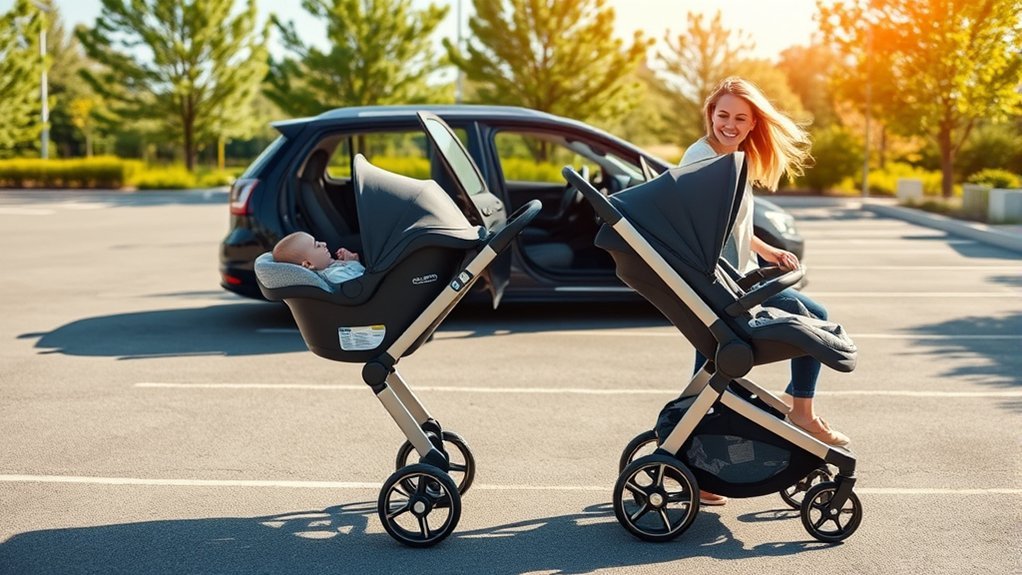
The base plays no role in stroller mode. Once you remove the Doona from the vehicle, follow the model’s instructions to deploy and lock the wheels before strolling. Before returning to the car, convert it fully back to car-seat mode before beginning the approved base or no-base installation.
This is another reason to identify your exact model. The Doona X adds stroller recline positions that the Doona+ does not have, and Doona’s current U.S. product information specifically states that the Doona X cannot be reclined while it is in car-seat mode.
Do not rush the transition simply because the integrated design is fast. Confirm that the stroller mechanism is fully deployed for walking and that the seat is fully configured and secured for vehicle use before the vehicle moves.
What Independent Reviews Say About No-Base Use

Independent reviews reinforce the main trade-off rather than showing that one installation method is universally better. BabyGearLab’s Doona review found the no-base installation comparatively workable and useful for urban travel, while also noting that the carrier’s size can make belt routing or handling more awkward in some vehicles. Babylist likewise highlights the ability to use the Doona without a base in taxis and ride shares.
Those observations are useful because convenience depends on your actual vehicle and routine. A method that feels easy in one back seat may be awkward in another, and frequent lifting can feel very different once your baby’s weight is added to the seat.
Ease of Installation
The base removes the need to repeat a full baseless belt installation before every ride in your main vehicle. That is its strongest everyday advantage. Baseless installation trades that repeatability for portability.
Whichever method you expect to use most, practice before you depend on it. If you regularly use more than one vehicle, learn both approved methods for your exact model instead of assuming that the base will always be available.
Versatility in Usage
The Doona’s strongest practical advantage is integration: the infant car seat and stroller wheels stay in one unit. A correctly performed no-base installation extends that flexibility to vehicles where you have not installed the matching base.
The limitation is that this convenience remains tied to infant-seat fit limits. The current U.S. Doona+ is listed for 4–30 lb and up to 32 in, while the current U.S. Doona X is listed for up to 30 lb and 17–32 in. Stop using the seat when your child reaches an applicable limit or another stop-use condition in the model’s manual.
Tips for Optimal Usage and Installation
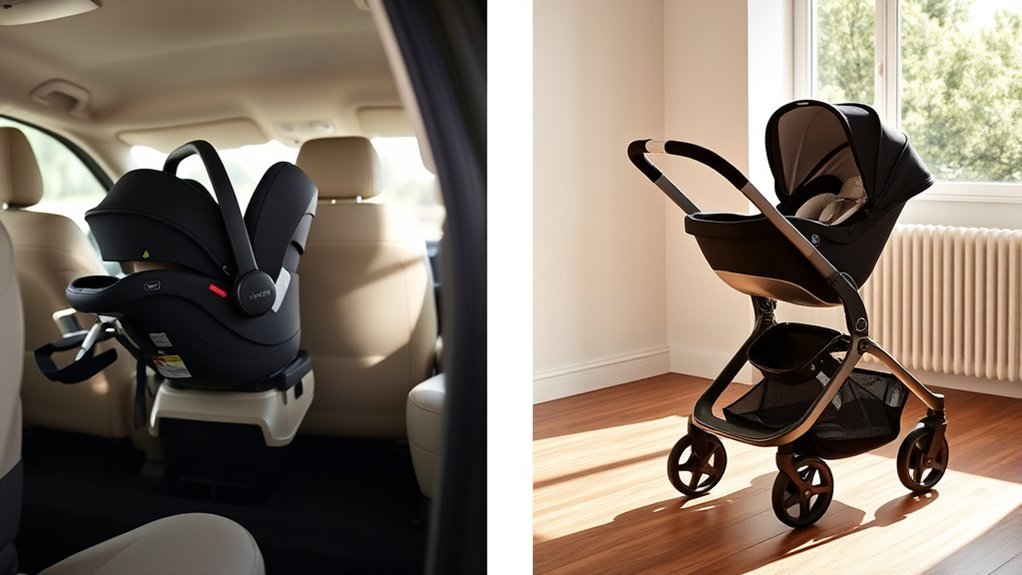
Use these checks to make daily Doona use more consistent:
- Identify the exact model: Confirm whether you have a Doona+, Doona X, or another regional version before following installation instructions.
- Use one approved installation method: Follow the manual for either the matching base or approved vehicle-belt installation rather than combining methods.
- Check movement at the belt path: The installed seat should not move more than about 1 inch side to side or front to back.
- Check the required angle: Use the level or recline guidance provided for your exact model and installation method.
- Confirm the handle position: Do not assume the same position applies to every Doona model or base configuration.
- Check the harness every ride: Keep straps flat, correctly positioned, and snug.
- Avoid bulky clothing under the harness: Place coats or blankets over the secured harness instead.
- Practice before travel: Complete several no-base installations in a parked vehicle before relying on the method at an airport or curb.
- Keep the current manual accessible: Save the correct U.S. user guide on your phone so you can check it away from home.
If an installation does not pass the movement, belt-path, angle, or model-specific checks, correct it before driving rather than treating “close enough” as acceptable.
When Should You Use the Base?
Use the matching Doona base when you want the simplest repeated routine in a vehicle you use often. Current U.S. Doona+ and Doona X packages include their matching bases, so most owners can leave the appropriate base installed in the main family vehicle and use the click-in/click-out system for routine trips.
A base can also be helpful when another caregiver regularly uses the same car and you want to reduce the number of installation steps repeated before each trip. It still must be installed and checked according to its own manual, and a base designed for one Doona model should not be assumed to fit another model.
[Amazon Products Picked for You]

LITEMAX ACCESSORY BASE: To be used ONLY with LiteMax Infant Car Seats

Anti-Rebound Bar provides an additional layer of rear-facing safety

For use with the Safety 1st onBoard35 LT infant car seat
When Is Baseless Installation Better?
Baseless installation is most useful when portability matters: taxis, ride shares, rental cars, airport transfers, occasional caregiver vehicles, or families that do not own a car. It lets you use the approved vehicle-belt method instead of transporting a separate base.
The trade-off is repetition. Every installation must be completed correctly in the vehicle you are using. If you expect to depend on baseless installation regularly, learn the exact belt path, belt-locking instructions, angle check, handle position, and final movement test for your model before your first trip.
For current U.S. Doona models, both the matching-base method and the approved no-base method can be used when completed exactly as instructed. Choose the setup that fits your vehicle and routine, then verify the installation every time it is changed.
[Amazon Products Picked for You]

TRAVEL WITH LESS WORRY - This fully padded bag protects your infant car seat from airport dirt & handling, making family travel more manageable. Use to gate check or check as luggage.

Infant car seat helps protect rear-facing infants 4-30 lb and up to 32"

Size Compatibility: This upgraded infant car seat travel bag measures 21 x 15 x 22.5 inches. This bag has ample space inside and is compatible with most popular infant car seat brands, such as Chicco Keyfit 35 Zip ClearTex + base, Graco SnugRide 35 or SnugFit 35 all-model + base, Nuna Pipa all-model + base, etc. For other infant car seats, please measure the size before purchase.
Related Guides
Frequently Asked Questions
Does the Doona stroller need a base?
No. The base is not used in stroller mode. In car-seat mode, current U.S. Doona+ and Doona X models can be installed with their matching base or without the base using the approved vehicle-seat-belt method for that model.
Is the Doona safe without the base?
A no-base installation is an approved method for current Doona models when it is completed exactly as instructed. Use the correct belt path, angle or level indicator, handle position, belt-locking method, and harness setup for your exact model. The seat should not move more than about 1 inch at the belt path.
Is a base included with the Doona?
Current U.S. listings include a matching LATCH base with both the Doona+ and Doona X. Product packages can differ by country or future model revision, so confirm the contents of the exact product you are buying.
Can I use a Doona in a taxi or ride share without the base?
Yes, the approved no-base vehicle-seat-belt method makes the Doona useful in compatible taxis and ride-share vehicles. Practice before travel and check local child-restraint laws and ride-share policies because legal requirements can vary by location.
How much do current U.S. Doona models weigh?
The current U.S. Doona+ is listed at 17.2 lb, while the Doona X is listed at 19.6 lb. Those figures are for the product itself, before adding the child’s weight.
What are the current U.S. Doona height and weight limits?
Doona currently lists the U.S. Doona+ for infants 4–30 lb and up to 32 in. The U.S. Doona X is listed for infants up to 30 lb and 17–32 in. Always follow the limits printed on your own seat and in its current manual because models and regional versions can differ.
How do I know if a baseless Doona installation is tight enough?
After completing the approved installation, grasp the seat at the belt path and check movement. NHTSA says a properly installed car seat should not move more than 1 inch side to side or front to back at that point. Also confirm the model-specific angle, belt routing, belt locking, handle position, and harness setup.
Conclusion
The Doona does not require a base in stroller mode, and current U.S. Doona+ and Doona X models also support approved car installation without a base. The matching base is usually the more convenient choice for a main vehicle because it can remain installed, while the no-base seat-belt method gives you flexibility for taxis, ride shares, rental cars, and travel.
The important distinction is that Doona+ and Doona X are not one identical product. Use the manual and base designed for your exact model, confirm the child is within that model’s limits, and check the installation before every drive. If you cannot obtain a secure installation, use another approved setup or ask a certified Child Passenger Safety Technician for help.
Sources
- NHTSA Car Seat Installation Tips — belt-path movement, rear-facing angle, harness fit, and installation guidance.
- Doona+ Car Seat & Stroller — U.S. — current Doona+ weight, infant size limits, included base, and product specifications.
- Doona X Car Seat & Stroller — U.S. — current Doona X weight, infant size limits, included base, and product specifications.
- Doona U.S. User Guides — model-specific car-seat and base instructions.
- Doona Safety Features — manufacturer safety and anti-rebound information.
- BabyGearLab Doona Review — independent observations about installation without the base and handling.
- Babylist Doona Review — independent discussion of travel, taxi, and ride-share use.
