
Traveling with a stroller in 2025 can be easier when you know the basic airline rules, how gate-checking works, and what gear to bring through the airport. Most airlines let you check a stroller and car seat for free, but carry-on size, weight limits, family boarding, and car seat rules can vary by carrier. Use this guide to plan ahead, protect your stroller, and move through the airport with less stress.
Quick Answer
Most airlines allow one stroller and one car seat per child to be checked for free. Small, lightweight strollers may qualify for cabin storage, while larger models usually need to be gate-checked or checked at the ticket counter. Always confirm your airline’s current stroller policy before flying.
Key Takeaways
- Most airlines allow a stroller and car seat to be checked free for each child, but exact rules vary.
- Compact strollers are easiest for airports because they fold quickly and may fit tighter airline limits.
- Gate-checking lets you use your stroller until boarding, but you should still use a protective travel bag.
- FAA-approved car seats are usually installed in window seats when used on board.
- A baby carrier, snacks, small toys, and a change of clothes can save the day during delays.
At a Glance
| Best Stroller Type | Lightweight, compact, quick-fold travel stroller |
| Common Cabin Size Target | About 22 x 14 x 9 inches, depending on airline |
| Common Weight Target | Under 20 pounds is easier to carry, fold, and gate-check |
| Best Backup Gear | Baby carrier, stroller bag, snacks, toys, wipes, and extra clothes |
Common Challenges When Flying With Strollers
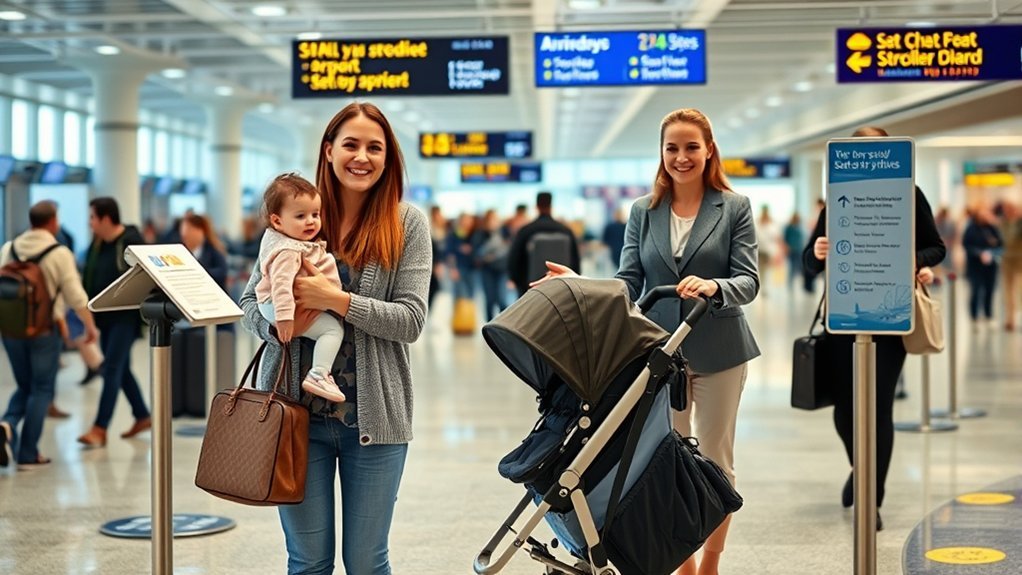
When you’re preparing to fly with your stroller, one of the biggest challenges is dealing with different airline policies. One airline may allow a compact stroller in the cabin, while another may require the same stroller to be gate-checked. That is why it helps to measure your stroller while it is folded, check the weight, and read your airline’s family travel rules before you leave home.
Many families also run into confusion over stroller storage guidelines, especially with size and weight restrictions. A common carry-on target is around 22 x 14 x 9 inches, and many travel strollers are built close to that size. However, airlines set their own limits, and overhead bin space is never guaranteed. If you have a larger stroller, it will usually need to be gate-checked or checked at the ticket counter.
Most airlines permit one stroller and one car seat per child free of charge, which is helpful for families traveling with extra gear. Gate-checking is especially useful because it lets you use your stroller until boarding, then collect it after the flight. Still, you should attach a luggage tag, use a stroller travel bag, and take photos before handing it over in case you need to report damage later.
Note: Airline stroller rules can change and may differ by route, aircraft, and airport. Check your airline’s current policy after booking and again before your travel day.
Essential Travel Gear
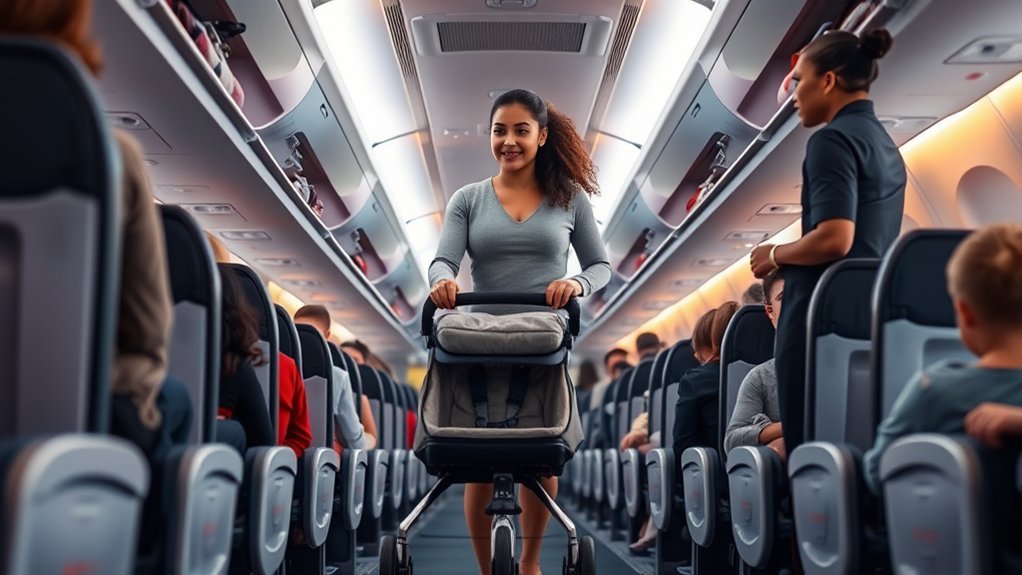
When traveling with kids, the right gear can make the airport feel much more manageable. Look for lightweight strollers that fold quickly, stand on their own if possible, and fit your airline’s size restrictions. A backup carrier, such as a baby sling or soft-structured carrier, can also help when your stroller is checked, delayed, or temporarily unavailable.
[Amazon Products Picked for You]

Automatically folds to a compact size with one-hand activation for multi-tasking families

One-hand fold: Our travel stroller features a one-hand fold mechanism, allowing parents to quickly and effortlessly collapse the stroller. This convenient feature is perfect for when you have your hands full, making it easy to store or transport this toddler stroller without hassle.

Lightweight & Travel-Friendly Design - Weighing just 7.2 pounds, the Dream On Me Aero Travel Light Stroller makes traveling with your little one easier. Ideal for families on the go — great for vacations, city strolls, and quick errands.
Lightweight Stroller Recommendations
Traveling with little ones can be much smoother with the right lightweight stroller. A good travel stroller should be easy to fold with one hand, simple to steer through crowds, and light enough to lift onto a shuttle, escalator, or security belt. These stroller examples are often chosen for travel-friendly features:
- Mompush Lithe V2 – A lightweight option that is easy to fold and practical for airport movement.
- Summer Infant 3Dlite – A popular compact stroller with a slim fold for families who want a lighter setup.
- Baby Jogger City Tour 2 – Designed for travel with a quick folding mechanism and easy maneuverability.
- Chicco Bravo Quick-Fold – A car seat and stroller system option that can simplify transitions from car to airport.
Before choosing any travel stroller, compare its folded size with your airline’s carry-on and gate-check rules. Also consider the stroller’s basket size, recline, canopy coverage, brake placement, and whether it includes a travel bag.
Backup Carrying Options
Even with the best lightweight stroller in tow, having backup carrying options can make your trip smoother. Baby slings, soft-structured carriers, ring slings, and wrap carriers offer hands-free solutions, letting you manage unexpected delays while keeping your little one close.
These carriers are lightweight and compact, so they can usually fit in a diaper bag, overhead bin, or under-seat personal item. They also help you move through crowded airport terminals and security checkpoints without pushing a stroller through every line. The babywearing benefits include better mobility, comfort during long waits, and easier boarding when your hands are full.
Pro Tip: Practice folding your stroller and adjusting your carrier before travel day. A few test runs at home can prevent stress at security or the boarding gate.
General Airline Policies for Strollers and Car Seats
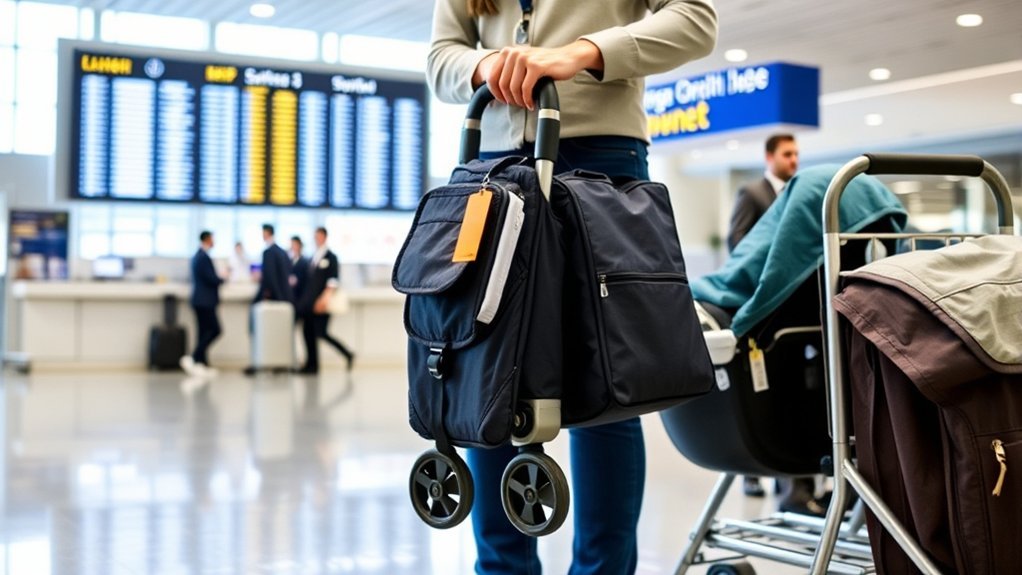
When traveling with kids, it’s important to know that most airlines let you check one stroller and one car seat for free. These items usually do not count against your regular baggage allowance. However, the exact process can vary depending on whether you check them at the curb, ticket counter, gate, or aircraft door.
For the smoothest experience, decide before your trip whether you want to use the stroller through the airport or check it earlier. If you need the stroller during layovers, gate-checking is often the better choice. If your stroller is large, bulky, or part of a heavy travel system, checking it at the ticket counter may be easier.
Free Check-In Policies
Many families are relieved to learn that most airlines allow you to check one stroller and one car seat per child at no extra cost. Here are a few things to keep in mind during the check-in process:
- Flexibility: Many airlines let you check your stroller at the curb, ticket counter, or gate.
- Stroller dimensions: Verify your stroller’s folded size before travel, especially if you want to carry it on board.
- Weight limit: A stroller under 20 pounds is easier to handle and more convenient for gate-checking.
- Policy check: Confirm your airline’s current rules because limits can vary by carrier and aircraft.
- Damage protection: Use a stroller bag and remove loose accessories before handing it over.
With these steps, you can travel lighter, avoid last-minute confusion, and focus more on your child than your luggage.
Size and Weight Limits
Understanding size and weight limits for strollers and car seats is essential for smooth air travel. Most airlines allow one stroller and one car seat per child, checked free of charge, without counting toward your baggage allowance. Smaller travel strollers may be allowed in the cabin if they meet the airline’s carry-on size rules and if there is available bin space.
Standard stroller carry-on targets are often close to 22 x 14 x 9 inches, and many families aim for a stroller under 20 pounds for easier handling. Larger strollers, jogging strollers, double strollers, and full-size travel systems usually need to be checked. Car seats used on board should be FAA-approved and should fit safely in the aircraft seat, commonly in a window seat so they do not block another passenger’s exit path.
Size and Weight Considerations
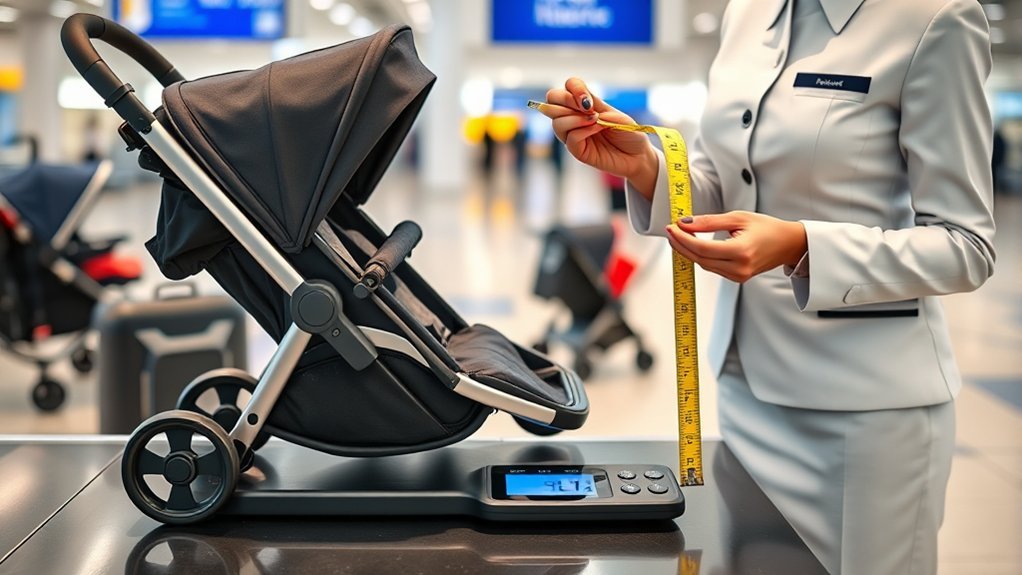
Choosing the right stroller for air travel is important because airlines have specific size and weight restrictions. A compact, lightweight stroller can help you move faster through security, fit into smaller spaces, and avoid extra handling problems at the gate.
- Folded dimensions: Aim for a stroller that folds close to standard carry-on dimensions when possible.
- Weight restrictions: A stroller under 20 pounds is easier to lift, carry, and gate-check.
- Gate-check vs. ticket counter: Larger strollers may need to be checked earlier, which can create delays if you still need them in the airport.
- Verification: Always check your airline’s specific guidelines before traveling, as they can vary significantly.
- Accessories: Remove cup holders, snack trays, toys, hooks, and loose organizers before checking the stroller.
A compact, lightweight stroller can reduce unnecessary stress at the airport. It also makes it easier to board, manage tight jet bridges, and handle unexpected gate changes.
Gate-Checking a Stroller
Gate-checking lets you keep your stroller until you are close to boarding. At the gate, airline staff usually tag the stroller, tell you where to leave it, and return it either at the aircraft door or baggage claim after landing. This is often the most convenient choice for parents with babies, toddlers, or long layovers.
Before gate-checking, fold the stroller fully, lock the frame if possible, and place it in a protective bag. Keep small accessories in your carry-on because loose parts can fall off during handling. Also make sure your child is out of the stroller before you reach the aircraft door, since you may need to fold it quickly while other passengers are boarding.
Warning: Do not leave phones, passports, medicine, wallets, bottles, or comfort items in a stroller you plan to check. Keep essentials in your personal bag so you have them during the flight.
[Amazon Products Picked for You]

Expands to Fit More Compact Strollers: Measures 20.5"L × 7"W × 24"H, expands to 11"W for larger models; fits Nuna Trvl, UPPAbaby Minu, Bugaboo Butterfly, Graco Ready2Jet and more compact travel strollers; one stroller backpack that works across every stroller your family owns
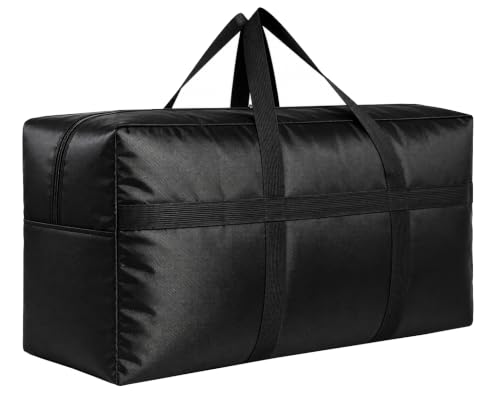
CHOOSE THE RIGHT SIZE: Sizes 60L, 80L, 100L and 130L are ideal for daily outings, road trips, and Travel storage. Sizes 170L and above are better suited for bulky items like tents, folding tables and chairs, inflatable kayaks, bounce houses, and Christmas trees.Compare your item’s actual packed dimensions with the bag dimensions before ordering.

TRAVEL WITH LESS WORRY - Protects your stroller from airport dirt and handling while making family travel a little more manageable. Use to gate check when boarding the airplane.
Bringing Car Seats on Board: What You Need to Know
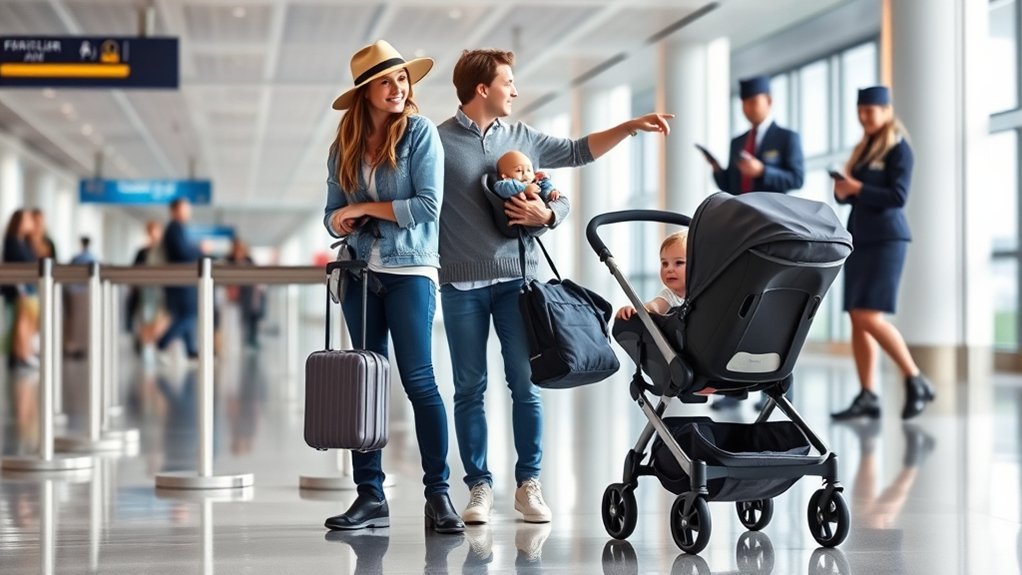
How can you help your child travel more safely and comfortably on a plane? One option is to bring an FAA-approved car seat if you have purchased a separate seat for your child. A car seat can provide added support during takeoff, landing, and turbulence, especially for younger children who are used to riding in one.
Check the label on your car seat before travel. It should state that it is certified for use in motor vehicles and aircraft. Many airplane seats are narrower than car seats at home, so check your car seat width and your airline’s guidance before flying. For safety and access, car seats are usually installed in a window seat so they do not block other passengers from reaching the aisle.
Before you fly, check your airline’s specific regulations regarding car seat dimensions and installation procedures. Most airlines also allow you to check the car seat for free at the gate or ticket counter if you decide not to use it on board.
[Amazon Products Picked for You]

MADE TO BE WITH YOU FOR YEARS The Safety 1st Ellaris Convertible Car Seat is a 3 in 1 car seat that adapts to your growing little one with 3 modes of use, making Ellaris car seats a key piece of your family for years to come

MADE TO BE WITH YOU FOR YEARS The Safety 1st Ellaris Convertible Car Seat is a 3 in 1 car seat that adapts to your growing little one with 3 modes of use, making Ellaris car seats a key piece of your family for years to come

✈Usage Instructions: In addition to the car seat cart, two straps and two ratchet straps are included. It is recommended to use all of them to secure the car seat. Use one ratchet strap to fasten around the base, and the other to secure the backrest. If the backrest of the car seat is reclined or slanted, lift the latch, rotate the tow bar, and then fasten the strap
Family Boarding Options: Making Travel Easier With Young Children
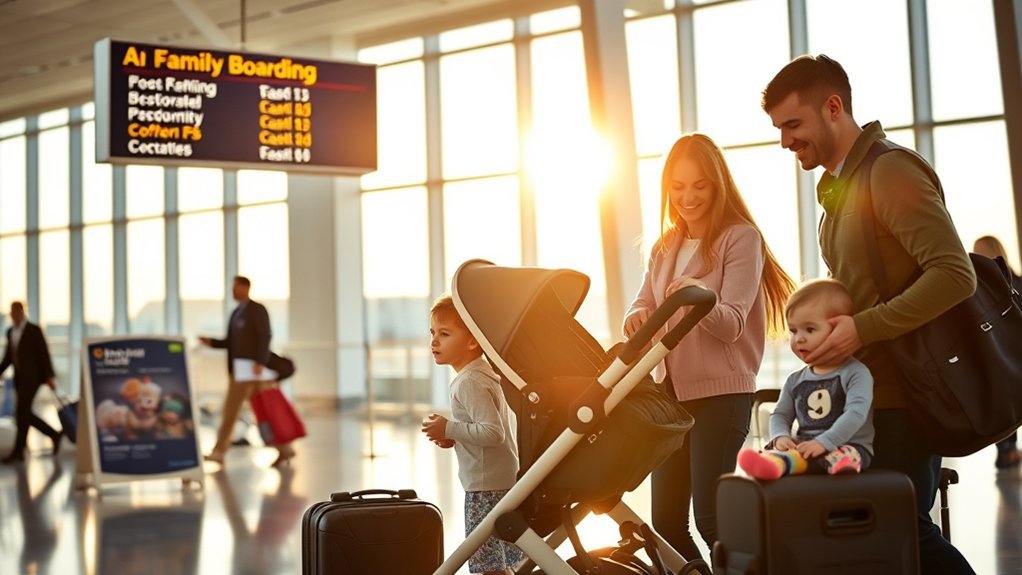
When traveling with young children, using family boarding options can make your journey smoother and less stressful. Early boarding gives you more time to fold the stroller, install a car seat, store diaper bags, and settle your child before the aisle gets crowded.
- Arrive early: Get to the gate with enough time to ask about family boarding and stroller tagging.
- Request privileges: Ask at check-in or at the gate if your family qualifies for early boarding.
- Stay alert: Listen for announcements so you do not miss your boarding group.
- Choose the right airline: Some airlines, including Southwest and United, offer family boarding or preboarding options for families with young children.
- Prepare before boarding: Collapse the stroller, separate your boarding passes, and keep snacks or comfort items within reach.
Using these tips can ease the boarding process and help you focus on your little one instead of rushing through a crowded gate area.
Backup Options During Travel Delays: Keeping Your Child Comfortable
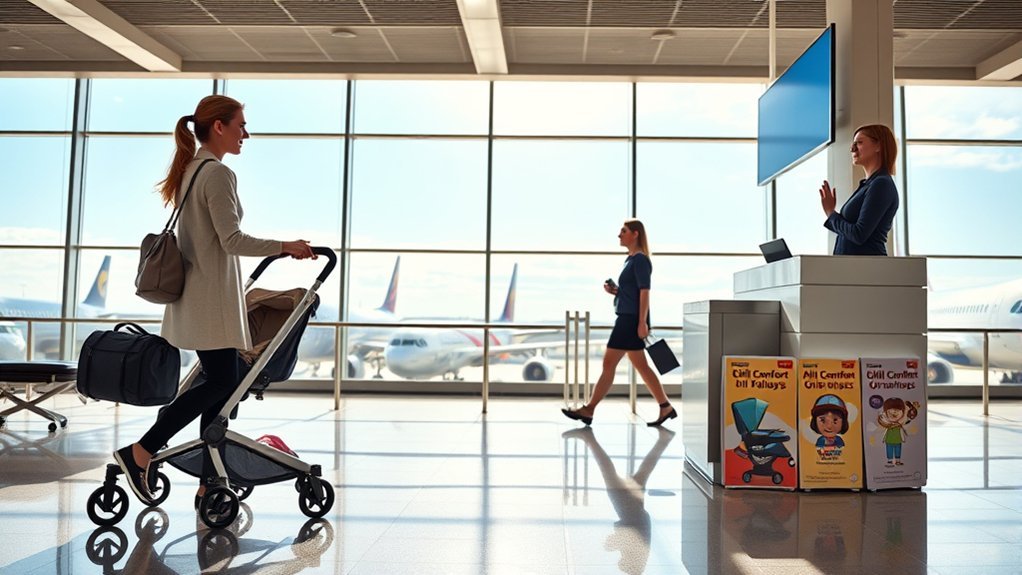
While unexpected travel delays can be stressful, having backup options ready can keep your child comfortable and entertained. Consider using baby slings or soft-structured carriers so you can keep your little one close while keeping your hands free.
Pack snacks, small toys, wipes, diapers, and a change of clothes in your hand luggage. Familiar items, such as a blanket, pacifier, small stuffed animal, or favorite book, can ease anxiety and reduce irritability during long waits. A portable, lightweight stroller is also helpful when delays stretch longer than expected, especially if your child needs a nap.
If you use a travel system that combines a car seat and stroller, plan how you will manage each piece during check-in, security, boarding, and arrival. Keeping your system simple will make travel easier when plans change.
Examples of Airline Policies Regarding Strollers and Car Seats
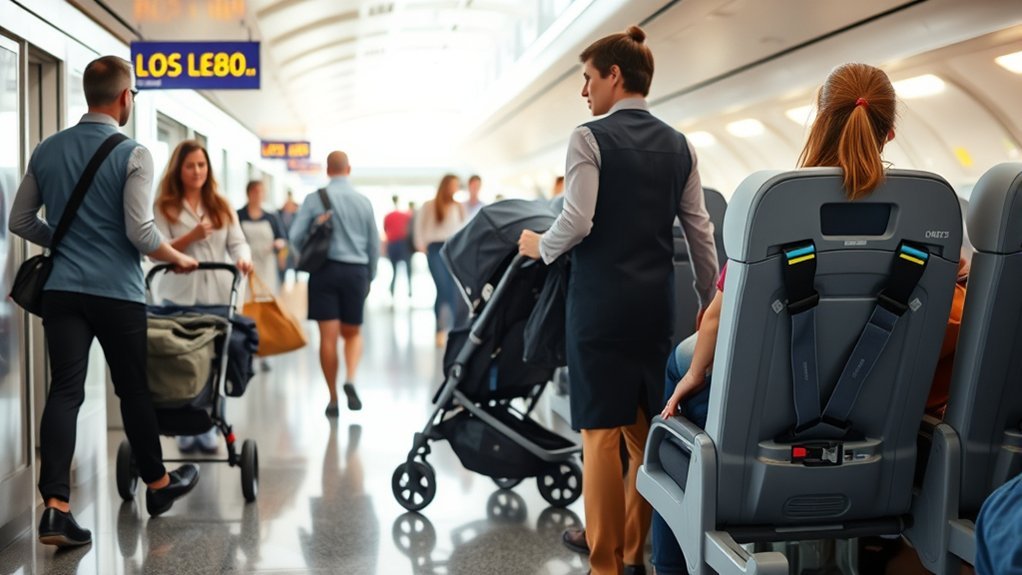
Maneuvering airline policies regarding strollers and car seats can be challenging, but understanding each airline’s basic rules makes your trip easier. Always confirm the details directly with your airline because policies may change by fare, aircraft, route, or airport.
- Delta Air Lines: Many families can check one stroller and one car seat for free, and small strollers may be accepted at the gate.
- Alaska Airlines: Families can often check child travel gear without extra baggage fees, and compact strollers may be easier to manage through the airport.
- Southwest Airlines: Strollers and car seats are commonly accepted as free child travel items, and family boarding can help parents settle young children sooner.
- United Airlines: Families may check a stroller or car seat at no cost, with boarding support available for families traveling with young children.
Knowing these policy examples helps you plan, but the safest step is still to check your exact airline before every trip.
TSA and Security Screening With a Stroller
Security screening is easier when your stroller is already organized. Remove loose bags, toys, blankets, snack cups, and electronics before you reach the scanner. Small strollers may need to go through the X-ray machine if they fit. Larger strollers may be inspected separately by security staff.
Keep your child’s essentials together in one easy-access bag. Liquids for infants and toddlers, such as formula, breast milk, and baby food, may be allowed in reasonable quantities, but you should tell the officer before screening begins. Give yourself extra time because stroller screening can take longer during busy travel periods.
Tips for Smooth Airport Navigation With a Stroller
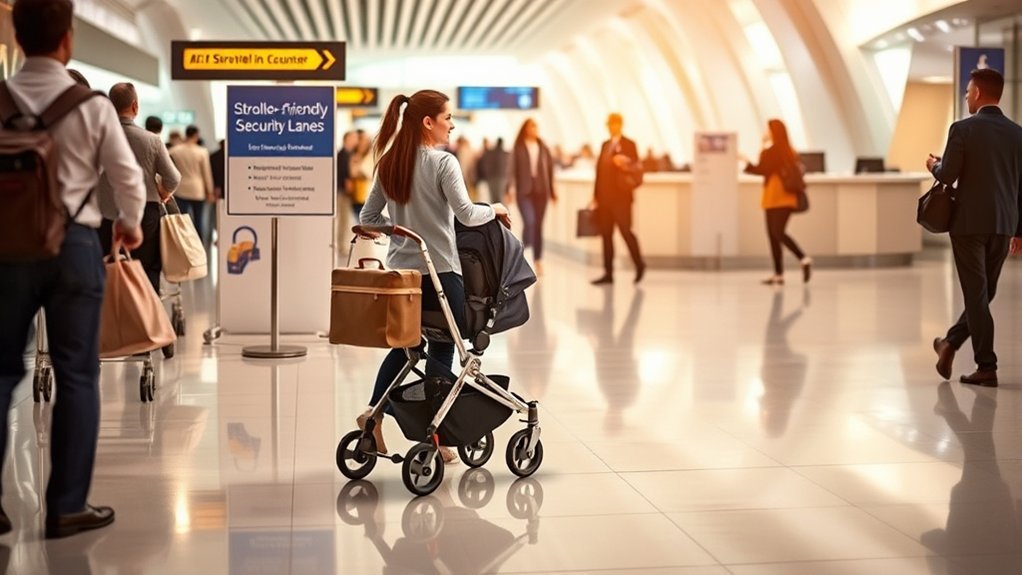
How can you make airport navigation with a stroller easier? Start by arriving early to give yourself plenty of time for check-in, stroller tagging, and security screening. Extra time supports stroller safety and keeps you from rushing through crowded areas.
Take advantage of family boarding options when available. If you are using a stroller and car seat combination, separate the items before boarding so you know what will be checked and what will go on the plane. Familiarize yourself with your airline’s stroller policy to avoid surprises. Finally, use gate-checking options when you need your stroller until the last moment.
- Measure and weigh your stroller before the trip.
- Label the stroller with your name, phone number, and flight details.
- Use a bright stroller bag or tag so it is easier to identify.
- Remove detachable accessories before checking it.
- Keep your child’s must-have items in your personal bag, not the stroller basket.
With the right preparation, you can move through busy terminals with more confidence and less stress.
Frequently Asked Questions
Can I bring a stroller without a child on board?
Yes, you may be able to bring a stroller without a child, but it will usually be treated as regular luggage instead of a free child travel item. Check your airline’s policy first, especially if you are transporting the stroller as a gift or for use after arrival.
What should I do if my stroller gets damaged?
If your stroller gets damaged, document the damage with photos before leaving the airport. Report it to the airline’s baggage service desk right away and ask how to file a damage claim. If you purchased travel insurance or stroller insurance, contact that provider too.
Are there fees for checking in a stroller?
Most airlines do not charge a fee to check one stroller for a child, but rules can depend on the airline, stroller size, and whether a child is traveling. Confirm the policy before travel so you are not surprised at the airport.
Can I use my stroller during layovers?
Yes, you can usually use your stroller during layovers if it is returned to you after the first flight. If your stroller is checked through to the final destination, you may not have access to it during the layover. Ask the gate agent before boarding.
How do I find my stroller after the flight?
After your flight, check the aircraft door area, jet bridge, oversized baggage area, or regular baggage claim. The return location depends on how the stroller was tagged. If you cannot find it, ask airline staff before leaving the airport.
Should I use a stroller travel bag?
Yes, a stroller travel bag is a smart choice, especially for gate-checking or ticket-counter checking. It helps protect the fabric, wheels, frame, and loose parts from dirt and rough handling.
Can a stroller fit in the overhead bin?
Some compact travel strollers may fit in an overhead bin, but only if they meet the airline’s carry-on size limits and there is enough space on board. Full-size, jogging, and double strollers usually need to be checked.
Conclusion
Flying with a stroller doesn’t have to be stressful when you plan ahead. The most important steps are to check your airline’s stroller policy, measure your folded stroller, pack a backup carrier, and decide whether gate-checking or ticket-counter checking works better for your family.
A lightweight, compact stroller can make traveling with a stroller much easier, especially in crowded terminals and during long layovers. Arriving early, using family boarding options, and keeping essentials in your carry-on will help create a smoother, more comfortable airport experience for you and your little one.
