You want a welder that helps you learn without limiting future projects. Multi-process machines give you flexibility to try MIG, TIG, stick and flux-core welding without buying several separate units, which saves space and money as you build skills.
In this guide you’ll find beginner-friendly options for different budgets, power setups and learning goals. Focus on the welding processes you plan to use, the outlet you have, and the material thickness you expect to weld, and you’ll spend less time guessing and more time practicing safely.
This roundup is reader-supported. When you click through Amazon links, we may earn a referral commission on qualifying purchases.
Quick Verdict
Best budget starter: YESWELDER YWM-160 if you want MIG, flux-core, stick and lift TIG flexibility without spending on a premium machine.
Best value compact pick: YESWELDER MIG-165DS PRO if you want a slightly stronger compact dual-voltage unit with easier setup controls.
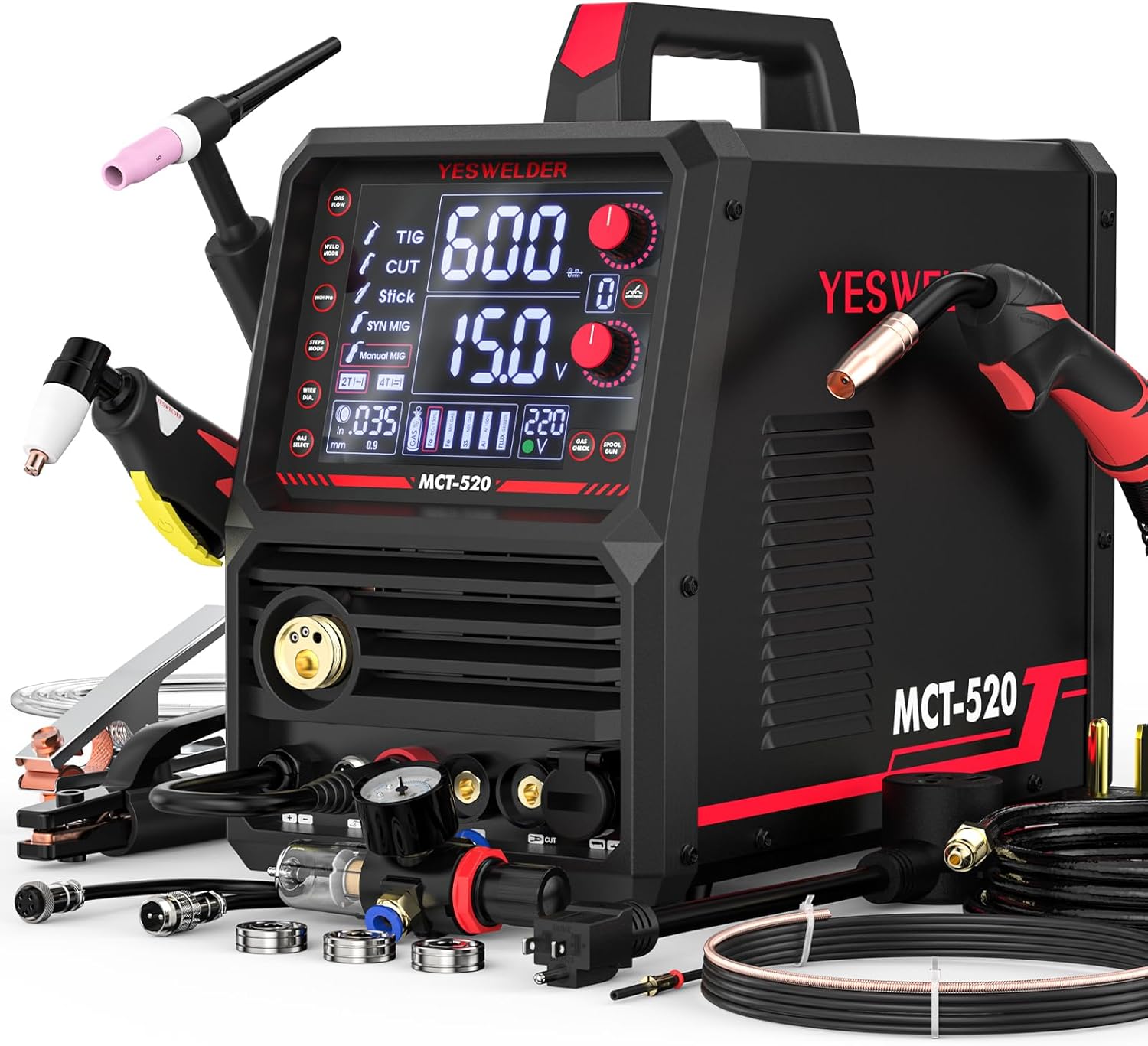
Most versatile combo: YESWELDER MCT-520 if you also want plasma-cutting capability for metal prep and repair work.
Best premium choice: Miller Multimatic 220 AC/DC if you want a higher-end machine with AC/DC TIG capability and smoother process switching.
3-in-1 Multi Process Welder: Designed to handle Gasless MIG welder, MMA, and Lift TIG perfectly, this 110V welding machine is a garage essential for home DIY and fast farm repairs.(Lift TIG Torch NOT included)
【4-in-1 Multifunctionality & Superior Welding Performance】The BESTMIG MIG145 supports dual voltage of 110/220V and combines Gas/Gasless MIG,Stick and Lift TIG in one unit.Compatible with solid steel wire and stainless steel wire from .030"~0.03" diameter (MIG welding,“GMAW”), with .030"~.040" flux-cored wire and with .030"~.040" Silicon. Offering a 30% increase in work efficiency compared to traditional MIG welders.Featuring a smooth arc, excellent penetration, and minimal spatter, easily handles stainless steel, carbon steel, and mild steel up to 3mm (2/5") thick, meeting diverse welding needs.
Selection Criteria
When choosing welders for beginners, focus on practical factors: supported processes, ease of setup, power input, duty cycle, output range, portability, included accessories, consumables, warranty support, and how forgiving the machine feels while you learn. I also considered whether each option makes sense for common beginner projects such as sheet-metal repair, hobby fabrication, trailer fixes, fence work, farm maintenance, and light automotive tasks.
Powerful 6-in-1 Welding Machine: The multi-process 110V/220V dual-voltage MIG welder offers 6 functions: Gas MIG, Gasless Flux Core MIG, Spool Gun MIG, Lift TIG, Stick, and Spot Welding (TIG gun and spool gun not included). With up to a 250 Amp output, it can weld up to a 3/8" plate, making it suitable for a variety of welding tasks. It supports .023"/.030"/.035"/.040" solid/flux wire and .035" /.045" aluminum wire for MIG welding.
6-in-1 Versatile Functionality:This welding machine features dual voltage 110V/220V support and digital displays for combining Gas MIG, Flux Core MIG, Plasma Cutting, HF TIG, Stick and Spool Gun Compatible welding functions all in one machine(Spool Gun not included).TIG, MMA, CUT processes at both 220V (MIG200A) and 110V (MIG146A), allowing for a wide range of welding capabilities including cellulose electrodes 6011/6013/7018.
【Effortless Aluminum Welding】Enjoy smooth aluminum MIG welding without a Teflon liner or spool gun. Stable wire feeding and clean welds make aluminum welding easier than ever
Before You Buy
Check your outlet first: 120V machines are convenient, while 240V power usually gives better output for thicker steel and longer welds.
Match the process to the work: flux-core is simple outdoors, MIG is easier for clean steel, stick is useful for repair work, and TIG takes more practice.
Look at accessories: some lift TIG setups require a separate TIG torch, and aluminum work may need spool-gun compatibility.
Plan for upgrades: better ground clamps, quality wire, extra contact tips, and proper PPE can make a beginner machine feel much easier to use.
Respect duty cycle: small welders need cool-down time during longer runs. Do not push a compact machine like a production welder.
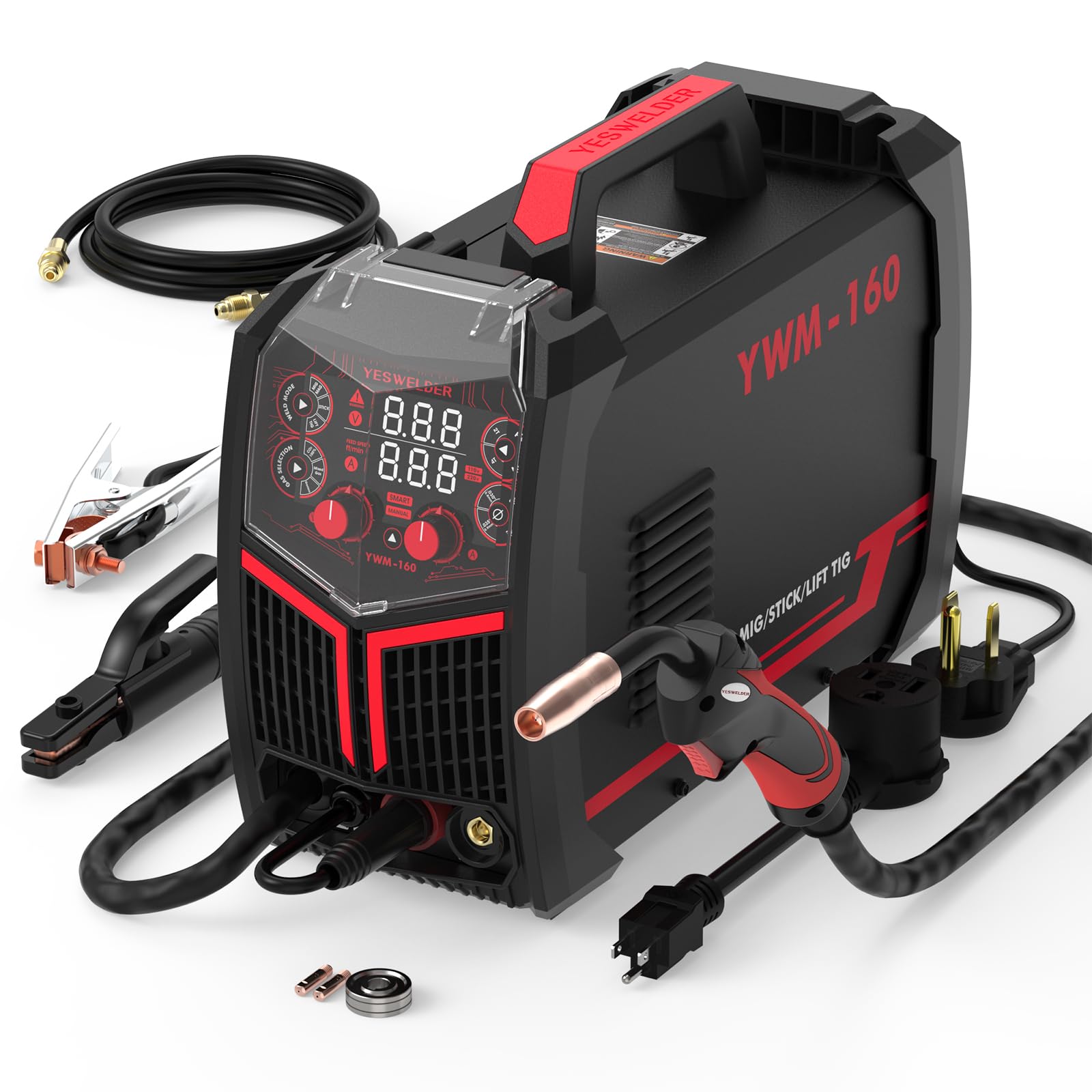
YESWELDER YWM-160
4-in-1 multiprocess welder (Flux Core/MIG/Lift TIG/Stick) with 160A output, synergic control, LED display and 110V/220V dual voltage for portable use.
If you’re getting into welding and want something that covers the basics without buying separate gear, the YESWELDER YWM-160 is one of the easiest picks to understand. It gives you flux-core MIG, gas MIG, stick and lift TIG support, although TIG use may require extra accessories depending on the package. The synergic control helps you get close to a usable starting point when you are still learning how wire speed and voltage work together.
It runs on 110V for quick garage jobs and 220V when you need more stable output, so it suits hobby projects, light automotive repairs, fence fixes and small fabrication work. The LED display and manual adjustment options are helpful once you move beyond preset-style settings.
What People Say
Buyer feedback often highlights the versatility, compact size and beginner-friendly controls. Common concerns include basic included accessories, the fixed MIG gun connection and the need to use good wire and proper setup to get the best results.
Overall Sentiment: Positive
Safety and Setup Notes
The machine lists protections for over-current, overload and overheating. Still, you should wear a proper welding helmet, gloves and flame-resistant clothing, keep the work area ventilated, and confirm polarity and grounding before welding.
Build and Limitations
The metal case is a plus for garage use, but the stock accessories may not satisfy heavier users. If you weld often, plan to inspect connectors and upgrade clamps, tips or wire as needed.
Key Benefits
Multiprocess flexibility for MIG, flux-core, stick and lift TIG
Synergic mode helps beginners find a starting point faster
110V/220V dual voltage for garage or workshop use
LED display with manual adjustments for tuning
Good fit for hobby projects and light repair work
Who Should Buy This
Choose it if you want an affordable first welder that lets you practice several processes before investing in a higher-end machine.
Who Should Avoid This
Skip it if you need refined TIG control, heavy production performance, or fully serviceable industrial-style torch connections.
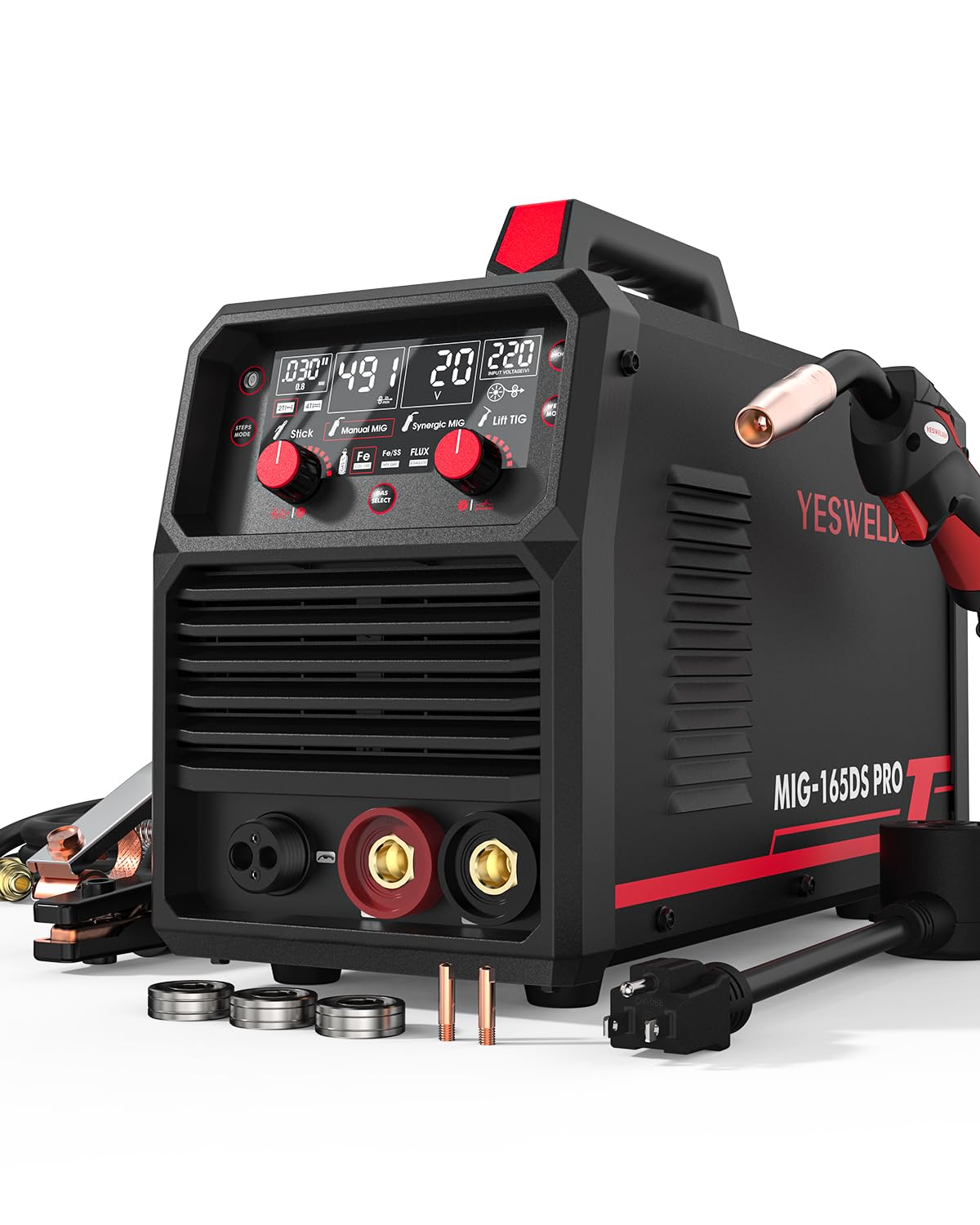
The YESWELDER MIG-165DS PRO is a strong fit if you want a compact machine that still gives you several learning paths. You can work with gasless flux-core MIG, gas MIG, stick and lift TIG, with the usual note that TIG accessories may vary by package. The synergic mode helps beginners set wire feed and voltage more confidently, while manual controls let you fine-tune as you improve.
The dual-voltage design makes it useful for household outlets and shop power. That gives you room to start with lighter work and then move into more demanding projects when you have the right circuit and accessories.
What People Say
Buyer feedback commonly praises the size, process flexibility, LED display and detachable torch design. The main cautions involve basic clamps, connectors or wire-feed setup, so careful assembly and better consumables can make a noticeable difference.
Overall Sentiment: Positive
Safety and Setup Notes
The unit lists protection against over-current, overload and overheating. For safe use, confirm input voltage, polarity, wire type and gas flow before welding, and avoid long runs that exceed the machine’s duty cycle.
Build and Limitations
The compact metal chassis is well suited to hobby use. For long-term reliability, check cable connections often and consider upgrading low-cost accessories if you weld frequently.
Key Benefits
Flux-core MIG, gas MIG, lift TIG and stick capability
Synergic control helps reduce setup guesswork
110V/220V input for home or shop use
LED digital display with manual tuning options
Detachable torch design is easier to manage than many fixed setups
Who Should Buy This
Choose it if you want a compact dual-voltage welder with enough flexibility for garage repairs, small fabrication and welding practice.
Who Should Avoid This
Skip it if you want a premium TIG-focused machine or if you do heavy continuous welding that requires a larger-duty-cycle unit.
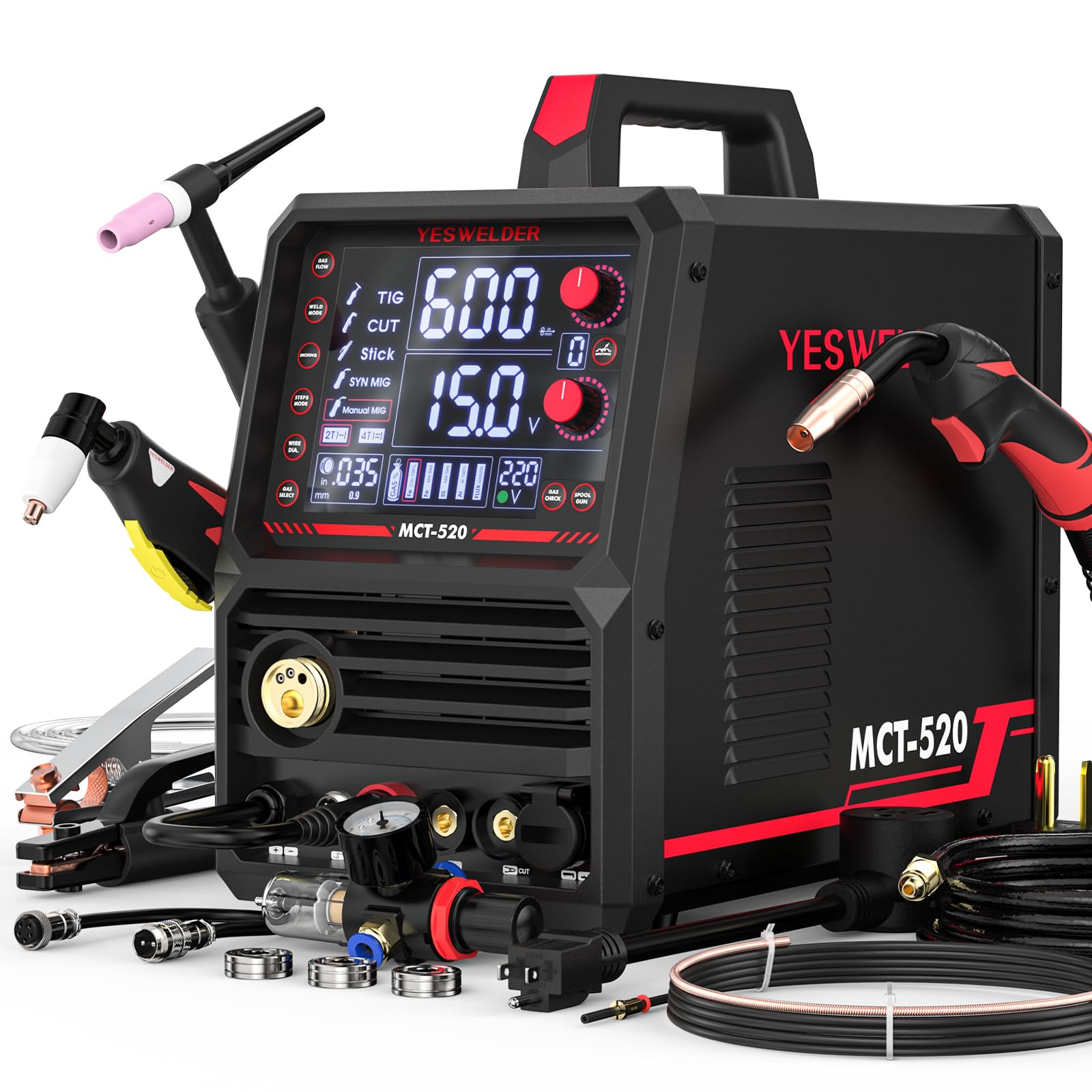
The YESWELDER MCT-520 makes sense if you want one unit for both welding and cutting. It combines MIG, flux-core, TIG, stick and plasma cutting functions, so it is useful for repair work where you need to cut, prep and join metal without pulling out multiple machines.
For beginners, the attraction is versatility. The smart MIG setting and digital display help with setup, while the cutter adds value for panel work, brackets, farm repairs and fabrication prep. It is more machine than a basic starter welder, so take time to learn each mode instead of trying to master everything at once.
What People Say
Buyer feedback often focuses on the broad feature set, easy mode changes and the usefulness of having plasma cutting in the same unit. Common cautions include cheaper-feeling leads or clamps and occasional setup issues, so inspect accessories before your first project.
Overall Sentiment: Positive
Safety and Setup Notes
Because this unit includes a plasma cutter, safety matters even more. Use eye and skin protection, keep flammables away, maintain ventilation and confirm air, ground and torch setup before cutting or welding.
Build and Limitations
The metal chassis suits hobby and light shop use, but the extra functions mean more setup details to learn. If you only need simple MIG practice, a smaller welder may feel less intimidating.
Key Benefits
Combines welding and plasma cutting in one machine
MIG, flux-core, TIG and stick options for broad practice
Smart MIG mode helps reduce early setup mistakes
Digital display makes mode changes easier to follow
Useful for repair work that includes cutting and metal prep
Who Should Buy This
Choose it if you want a garage or small-shop unit that can weld and cut, especially for repair and fabrication projects.
Who Should Avoid This
Skip it if you want the simplest possible first welder or do not need plasma cutting.
3-in-1 welder: FLUX MIG, Lift TIG and ARC. 110V operation with large LCD screen, synergic control and built-in protections; portable for DIY and light repairs.
The GZ GUOZHI 145A is a practical budget pick if you want to start with small repairs on a standard 110V outlet. It supports flux MIG, lift TIG and ARC/stick work, so you can practice common repair processes without a large shop setup.
The large LCD and synergic control are useful for beginners who want clearer settings. It is best treated as a light-duty DIY machine for small fabrication, mower repairs, gates, brackets and thin steel practice, not as a heavy production welder.
What People Say
Buyer feedback tends to highlight portability, simple controls and household-outlet convenience. The main cautions are that TIG accessories may not be included and the manual or setup guidance may require patience.
Overall Sentiment: Positive
Safety and Setup Notes
The unit lists protections for overheating, over-current, over-voltage and overload. Start on scrap metal, use proper PPE and avoid pushing a 110V compact welder beyond short repair work.
Build and Limitations
This is a compact hobby machine. Stock leads, clamps and consumables may be basic, so upgrading small accessories can improve the user experience.
Key Benefits
3-in-1 flexibility for flux MIG, lift TIG and ARC/stick
Runs from a standard 110V outlet
Large LCD makes settings easier to read
Synergic control helps beginners start faster
Portable size for home repairs and practice
Who Should Buy This
Choose it if you want a low-cost starter welder for small household, garage and repair tasks.
Who Should Avoid This
Skip it if you expect long welds on thick steel, refined TIG work or premium accessories out of the box.
The S7 200A 4-in-1 gives beginners a wide process range in a compact package. You can practice gas MIG, gasless flux-core MIG, stick and lift TIG, with dual 120/240V input for more flexibility than a 120V-only unit.
The digital readout and synergic/manual controls help you move from guided setup to manual tuning. It is a good fit for auto-body touch-ups, trailer repairs, farm fixes and smaller fabrication jobs when matched to the right input power and duty cycle.
What People Say
Buyer feedback often points to the broad feature set, compact size and convenient power options. Common cautions include limited instructions, setup learning curve and occasional quality-control concerns, so inspect the unit and test it on scrap before starting a real project.
Overall Sentiment: Positive
Safety and Setup Notes
The machine lists protections for over-current, over-voltage and overheating. Keep the machine clean, avoid metal shavings near internal components, and use the correct wire, polarity and gas setup for each process.
Build and Limitations
The compact build is convenient, but it should still be treated as a hobby or light-shop unit. Heavier leads and clamps may be worth considering if you weld often.
Key Benefits
Gas MIG, gasless flux-core MIG, stick and lift TIG support
Dual 120V/240V input for home and shop flexibility
Digital readout with synergic and manual control options
Accepts common wire sizes for beginner practice
Portable size for garage and mobile repair work
Who Should Buy This
Choose it if you want a compact dual-voltage machine that gives you several welding processes to learn.
Who Should Avoid This
Skip it if you need detailed beginner documentation, premium accessories or proven heavy-duty shop performance.
Buyer feedback often highlights process flexibility, portability, included torches and Eastwood support. Some users mention that fine TIG control may not feel like a dedicated TIG machine, so it is best viewed as a versatile garage welder.
Overall Sentiment: Positive
Safety and Setup Notes
Follow Eastwood’s manual closely, especially around high voltage, hot metal, shielding gas and ventilation. Use a welding helmet, gloves, protective clothing and safe grounding practices every time.
Build and Limitations
The build is suited to serious DIY and light-shop use. If your main goal is delicate TIG work, a dedicated TIG machine may offer more refined control.
Key Benefits
MIG, TIG and stick in one garage-friendly unit
IGBT inverter design for compact output
Built-in spot-weld timer for panel work
Good fit for home garages and auto-body projects
Backed by a recognizable welding and automotive tool brand
Who Should Buy This
Choose it if you want a more serious DIY welder for automotive, garage and hobby fabrication projects.
Who Should Avoid This
Skip it if you only need a low-cost flux-core starter machine or want the precision of a dedicated TIG setup.
200-amp AC/DC multi-process welder with MIG, TIG and Stick capability, high-frequency TIG start, rocker foot pedal, dual 120/240V operation, included torches and active cooling.
This Eastwood 200 Amp AC/DC MP200i is the better fit if you want a more advanced Eastwood option with AC/DC TIG capability along with MIG and stick. That matters if you plan to grow into aluminum TIG or more controlled TIG practice later, while still keeping MIG available for faster garage work.
It is a bigger commitment than a basic beginner welder, so it makes the most sense for serious DIY users, hobby fabricators and small-shop buyers who want to learn on a machine they will not outgrow quickly.
What People Say
Buyer feedback often points to the TIG features, included accessories and broad process support. Common cautions include the learning curve, the higher cost compared with budget imports and occasional setup or package concerns that should be checked on arrival.
Overall Sentiment: Positive
Safety and Setup Notes
Use proper PPE, keep strong ventilation, confirm input power and read the manual before using high-frequency TIG start or switching processes. AC/DC TIG adds capability, but it also adds more setup variables for a beginner.
Build and Limitations
This is a more serious garage or light-shop option. It may be more machine than a first-time user needs if the goal is only occasional flux-core repair work.
Key Benefits
MIG, TIG and stick capability in one unit
AC/DC TIG support for more advanced welding goals
High-frequency TIG start and foot pedal for better control
Dual 120V/240V operation for garage and shop flexibility
Good fit for serious DIY users who want room to grow
Who Should Buy This
Choose it if you want an Eastwood machine with more advanced TIG potential and enough flexibility for long-term garage use.
Who Should Avoid This
Skip it if your budget is tight or if you only need a small welder for occasional basic repairs.
Buyer feedback often highlights portability, beginner-friendly use and suitability for home garage projects. The main limitations are lighter-duty output and less refined TIG control than a dedicated TIG machine.
Overall Sentiment: Positive
Safety and Setup Notes
Use a proper welding helmet, gloves, protective clothing and ventilation. Since this is a compact 110V unit, pay attention to duty cycle and avoid forcing it into work better suited to a larger welder.
Build and Limitations
The MP140i is best for lighter garage projects. If you expect frequent thick-steel work, a dual-voltage or higher-output machine is a better match.
Key Benefits
MIG, TIG, flux-core and stick capability
110V input works well for typical home garages
Portable design for small shop spaces
Spot-weld timer is helpful for auto-body panels
Good fit for sheet metal and light fabrication practice
Who Should Buy This
Choose it if you want a portable Eastwood welder for light garage work and sheet-metal practice.
Who Should Avoid This
Skip it if you need 240V output, heavy-duty performance or advanced TIG features.
Portable multiprocess welder for MIG, Flux-Cored, Stick and TIG (AC/DC) with MIG gun, TIG torch, Auto-Set features and Multi-Voltage Plug for 120V and 240V.
The Miller Multimatic 220 AC/DC is the premium option for beginners who want to buy once and grow into more serious work. It supports MIG, flux-cored, stick and AC/DC TIG, which gives it a much wider skill path than basic budget welders.
Features like Auto-Set, QuickTech and the Multi-Voltage Plug are designed to reduce setup friction. This is especially helpful when you switch between processes and want the machine to guide your starting settings. It is a bigger investment, but it makes sense for home shops, farm maintenance, light industrial work and users who plan to weld long term.
What People Say
Buyer feedback often highlights smooth process switching, helpful setup features and strong arc quality. Cautions include the higher price, heavier build and the need to confirm exact included accessories before buying.
Overall Sentiment: Positive
Safety and Setup Notes
Use proper PPE, maintain ventilation and follow the manual for grounding, polarity, shielding gas and input power. AC/DC TIG and multi-voltage operation are powerful features, but they require careful setup.
Build and Limitations
This is the most premium option in the list. It is overkill for someone who only needs occasional flux-core repair work, but it is appealing if you want a long-term shop machine.
Key Benefits
MIG, flux-cored, stick and AC/DC TIG capability
Auto-Set and QuickTech simplify process changes
Multi-Voltage Plug supports 120V and 240V use
Includes MIG and TIG gear in many packages, but confirm the current listing
Strong long-term option for serious home shops
Who Should Buy This
Choose it if you want a premium multiprocess welder with AC/DC TIG capability and enough room to support advanced skills.
Who Should Avoid This
Skip it if you are on a tight budget or only need a small welder for occasional household repairs.
The Forney Easy Weld 140 MP is a good starter option if you want simple controls from a recognizable brand. It supports MIG, DC TIG and stick, and it runs from standard 120V power, making it practical for home garages, light repairs, hobby projects and farm tasks.
The control layout is straightforward, with a process switch plus voltage and wire-feed adjustments. That keeps the learning curve manageable while still giving you enough flexibility to practice different welding processes.
What People Say
Buyer feedback often highlights ease of use, a rugged case and solid performance for everyday repairs. Common cautions include the limits of 120V output, basic stock accessories and the need to upgrade parts if you push it into frequent heavier use.
Overall Sentiment: Positive
Safety and Setup Notes
Use a welding helmet, gloves, protective clothing and ventilation. Check grounding and polarity before switching processes, and remember that a 120V machine has output and duty-cycle limits.
Build and Limitations
The all-metal case is a plus for garage and farm use. It is still not a replacement for a larger 240V machine if you regularly weld thicker steel.
Key Benefits
MIG, DC TIG and stick capability
Simple controls for beginners
Runs on standard 120V power
Compact, portable and easy to store
Good fit for basic repairs and hobby projects
Who Should Buy This
Choose it if you want a straightforward starter welder with a simple control layout and enough versatility for common repair work.
Who Should Avoid This
Skip it if you need dual-voltage power, advanced TIG features or heavy-duty output.
How Do I Choose The Right Multi-Process Welder As A Beginner?
Start by matching the welder to the work you will actually do. Think about the metals and thicknesses you plan to weld, whether you need portability, and whether you have 120V household power or 240V shop power. Look for beginner-friendly features like synergic settings, clear digital displays, simple process switches and easy access to replacement consumables.
A dual-voltage machine is a smart choice if you want flexibility. You can practice lighter work on 110/120V and use 220/240V for better output on more demanding jobs. Also check whether TIG torches, spool guns, gas hoses, clamps and adapters are included, because accessory costs can change the real value of a welder.
Can A Multi-Process Welder Handle All Welding Tasks For Hobby And Light Shop Work?
A multi-process welder can handle many hobby and light-shop tasks, but no single beginner machine is perfect at every process. MIG and flux-core are usually easier to learn, stick is helpful for repairs, and TIG takes more patience and cleaner material prep.
If you plan to weld aluminum often, confirm AC TIG support or spool-gun compatibility. If you plan long welds on thicker steel, pay close attention to duty cycle and input voltage. A compact welder can be very useful, but it still has limits.
What Safety, Power, Consumables, And Maintenance Tips Should I Know Before I Start Welding?
Use a proper welding helmet, gloves, flame-resistant clothing, closed-toe footwear and good ventilation. Check your circuit, extension cord rating, work clamp, polarity and gas flow before welding. Be mindful that 110/120V machines usually have less continuous output than 220/240V machines.
Consumables matter. Use the correct wire size and type, keep contact tips and nozzles clean, avoid rusty wire, and test settings on scrap before welding a real project. If wire feed feels inconsistent, check drive tension, liner path, spool drag and tip condition.
For maintenance, clean vents and fans, inspect cables and connectors, replace worn tips, and store the machine away from grinding dust and moisture. These small habits help a beginner welder perform more consistently.
Is Lift TIG Good Enough For Beginners?
Lift TIG is useful for learning the basics of TIG-style welding, but it is not as refined as a dedicated TIG machine with advanced controls. It is best for occasional practice and cleaner welds on suitable material. If TIG is your main goal, especially aluminum TIG, look at AC/DC TIG capability and foot-pedal support.
Should I Choose 120V Or 240V For My First Welder?
Choose 120V if convenience matters most and you mainly plan light repairs or thin steel. Choose dual-voltage or 240V if you want more headroom for thicker material, longer welds and better performance as your skills improve. Always confirm your outlet, breaker and plug style before buying.
What Buyers Prefer
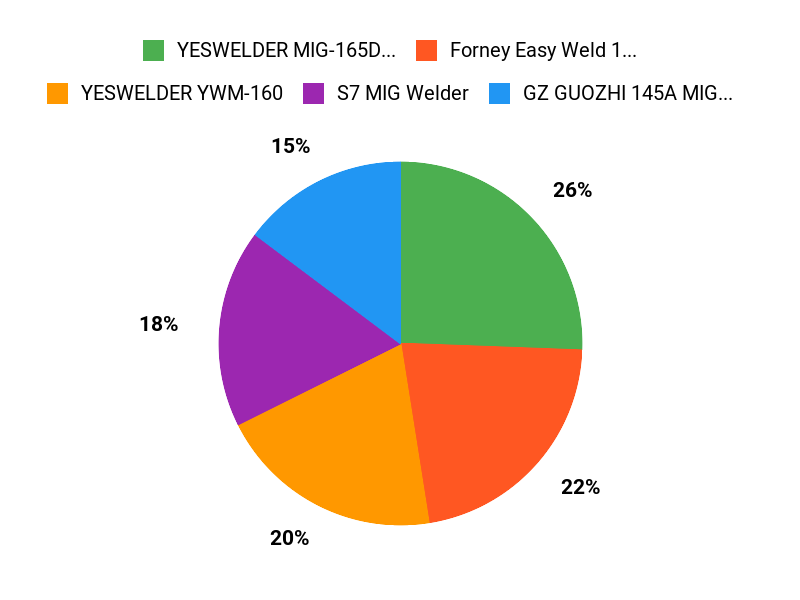
When choosing between beginner multi-process welders, most buyers compare versatility, power input, setup simplicity, portability, accessories and long-term support. Budget-focused buyers often prefer compact YESWELDER, GZ, S7 or Forney options. Buyers who want more polished support or long-term capability may lean toward Eastwood or Miller.
Wrapping Up
You’re starting in a practical, hands-on field where the right multi-process welder can shorten the learning curve and widen the projects you can handle. Match the welder to your power supply and the processes you’ll use most. A compact dual-voltage unit like the YESWELDER models is useful if you need flexibility on a budget, the MCT-520 makes sense if you also want a plasma cutter, and premium machines like the Miller Multimatic or Eastwood AC/DC units are better if you plan to weld long term.
Start with manageable projects, practice safety and technique, and upgrade accessories such as clamps, quality wire, contact tips and TIG gear as your skills grow.
4 IN 1 MULTIFUNCTIONAL: Enjoy the convenience of a 4-in-1 welding machine that masterfully handles Gasless Flux Core MIG/Gas MIG/Stick/Lift TIG (additional lift TIG torch required). This unit suits a wide range of welding applications and meets your various welding needs.
MULTIFUNCTIONAL: A 4-in-1 welder, capable of Flux Core MIG/Gas MIG/ Stick/Lift TIG (need to purchase extra tig lift torch). This unit caters to a wide range of welding applications and meets your various welding needs.
5 IN 1 MULTIFUNCTIONAL: The MIG-205DS PRO is capable of Gas MIG/Flux Core MIG/Spool Gun Aluminum MIG/Lift TIG/Stick. (additional lift TIG torch required and spool gun required). This unit caters to a wide range of welding applications and meets your various welding needs.
Tony B. Hensel is the founder and lead author of GoMyReview.com, a trusted source for honest, hands-on product reviews and buyer’s guides. With over 10 years of experience in consumer research and a background in journalism, Tony combines clarity, accuracy, and real-world testing to help readers make smarter buying decisions.
Before starting GoMyReview.com, Tony worked as a freelance tech writer, contributing to online publications and staying current with trends in home gadgets and electronics. Today, he leads a small team of reviewers, ensuring every article is practical, unbiased, and easy to follow.
When he’s not writing, Tony enjoys home cooking, photography, and DIY projects. Based in the Midwest, he brings personal passion and professional integrity to every review—so readers can shop with confidence.