
You work on sheet metal, tight spaces, and repeated cuts, so the right plasma cutter can make HVAC fabrication and repair faster and easier to control. This guide focuses on machines suited to duct work: cutters for thin- and medium-gauge conductive metal, models with pilot-arc or contact-start options, and units practical enough to move between shop and job-site work.
Picking the right tool can mean faster, cleaner cuts and less edge cleanup. The best choice depends on your available voltage, compressor capacity, material condition, cutting thickness, portability needs, and whether you want high-frequency pilot arc, non-HF blowback starting, or a simpler contact-start torch.
Affiliate disclosure: This roundup is reader-supported. When you click through links, we may earn a referral commission on qualifying purchases.
Quick Verdict
Best overall: ARCCAPTAIN iControl CUT55 Pro if you want the most complete mix of pilot arc, dual voltage, app control, and cutting capacity.
Best value: bestarc BTC500DP 8GEN if you want strong pilot-arc performance, a helpful LED display, and good duct-work flexibility without moving into premium pricing.
Best for non-HF starts: YESWELDER CUT-55DS PRO if you want blow-back style starting that avoids the high-frequency ignition used by some plasma cutters and may be preferable around sensitive electronics.
Best for thin sheet detail: bestarc CUT35A if most of your work is light-gauge duct metal on 110V power and you do not need pilot arc.
Top Picks
|
Category |
Product |
Best For |
|---|---|---|
|
🏆 Best Overall |
Mixed shop and job-site HVAC work |
|
|
💰 Best Value |
Value-focused repeated duct cuts |
|
|
🎯 Best Non-HF Pick |
Non-HF cutting near sensitive electronics |
|
|
⭐ Best for Portability |
Portable routine duct work |
|
|
🔰 Best for Pilot Arc Work |
Pilot-arc starts on rough or coated metal |
|
|
🔧 Most Versatile |
Versatile non-HF duct cutting |
|
|
⚡ Best Budget |
Budget and occasional repair work |
|
|
🔍 Best for Beginners |
Beginner-friendly pilot-arc setup |
|
|
🎨 Best for Thin Sheet Detail |
Clean thin sheet on 110V power |
How We Picked These For HVAC Work
You need cutters that match the realities of HVAC duct work: thin and medium-gauge sheet metal, occasional painted or rusty sections, galvanized duct panels, access openings, collars, flanges, and frequent on-site movement. We compared cutting approach, start type, dual-voltage flexibility, compressor requirements, portability, consumable availability, setup features, and overall suitability for routine duct fabrication and repair.
This is a specification- and use-case-based comparison, not a claim that every model was hands-on tested. You should prioritize a machine that fits your compressor capacity and power access. A high-output cutter is only useful if your air supply, circuit, and duty cycle can keep up.
Before You Buy
- Check your air supply: Plasma cutters need dry, steady compressed air. Many HVAC users do best with a compressor that can maintain the required PSI and CFM for the length of cut they make.
- Match voltage to the job: 110V or 120V is convenient, but 220V or 240V usually unlocks better cutting power and duty cycle.
- Choose the right start type: Pilot arc helps on painted, rusty, expanded, or perforated metal. Contact-start torches can still work well for clean, thin sheet metal.
- Plan for consumables: Keep spare tips, electrodes, swirl rings, and shields on hand so a worn part does not stop a job.
- Cut galvanized ductwork safely: Galvanized steel has a zinc coating, and hot cutting can create hazardous metal fumes. Use effective ventilation or local exhaust as required, wear appropriate eye, skin, and hearing protection, and follow your workplace respiratory-protection rules and the cutter manual.
Safety note: Plasma cutting is hot work. For galvanized duct, zinc-bearing coatings can produce hazardous fumes when cut. Indoor or confined-space work may require mechanical or local exhaust and a formal respiratory-protection approach under applicable workplace rules. Follow the machine manual and site safety requirements before cutting.
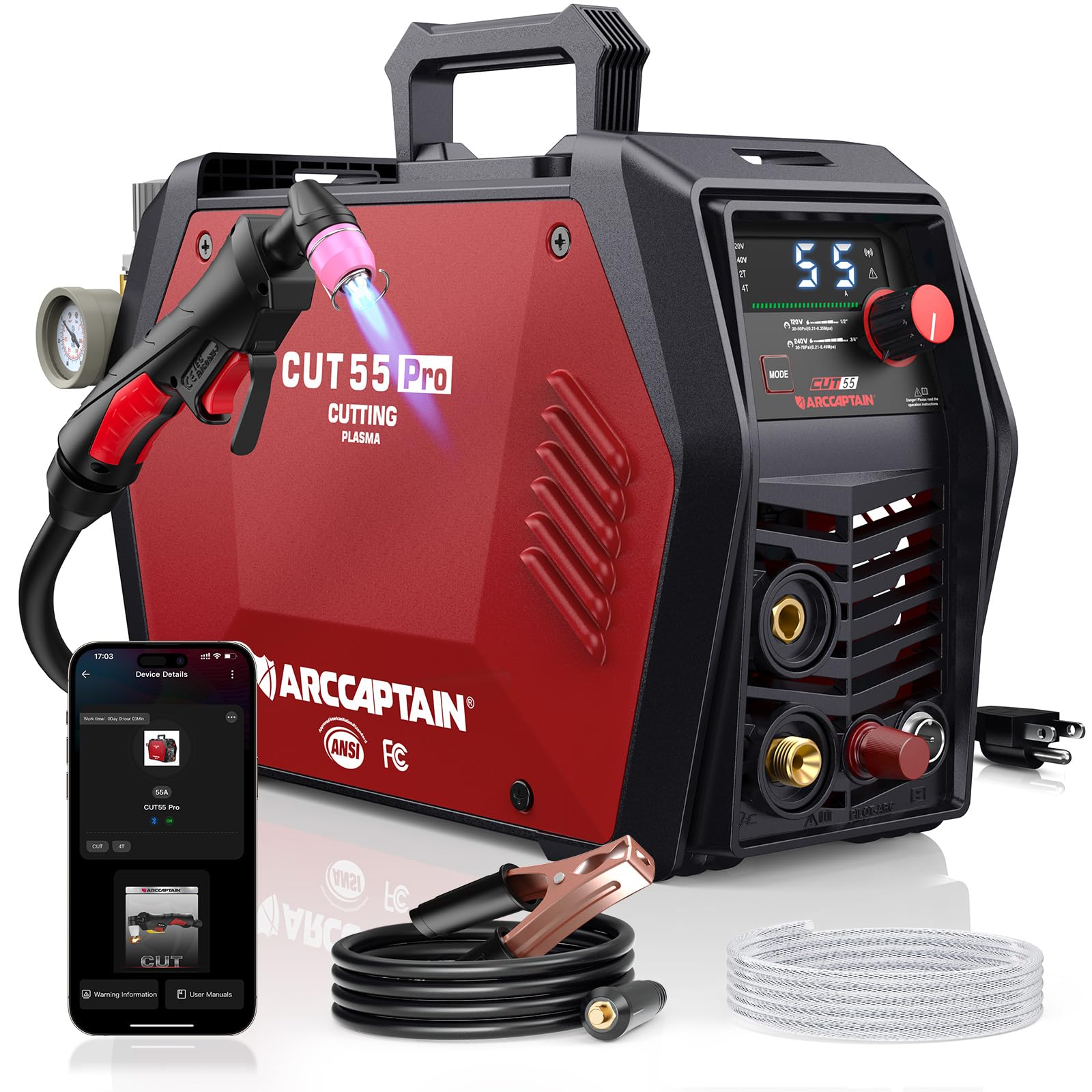
The iControl CUT55 Pro is the most feature-rich pick in this lineup. It is a strong fit if you want pilot-arc starting, dual-voltage flexibility, and easier setting changes through the large display and app control. For HVAC work, it makes sense for larger service openings, trimming flanges, and mixed sheet-metal tasks when you want more control than a basic budget cutter gives you.
It is not the lightest option here, and you should still pair it with a steady, dry air source. If you want one cutter for shop use, powered job sites, and more demanding duct modifications, this is the most rounded choice.
Buyer Feedback Snapshot
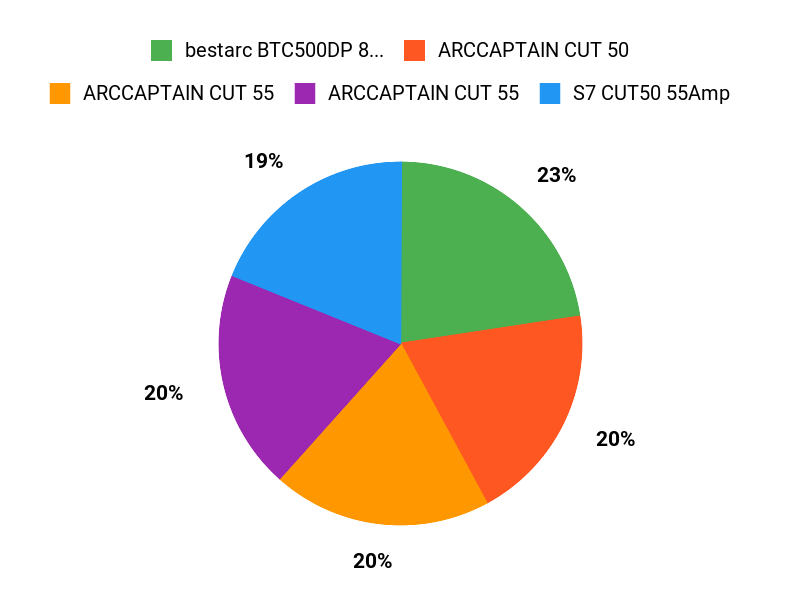
Available buyer feedback commonly mentions the pilot-arc start, regulator/filter setup, compact cutting performance, and app-enabled controls. Recurring cautions include air-fitting preferences, compressor demand, and setup or support frustrations.
Review note: Treat the sentiment chart below as a directional summary, and read current buyer reviews for the latest product-specific feedback.

Ease Of Use
|
Feature |
Ease Level |
|---|---|
|
Setup |
Easy |
|
Controls / App |
Easy |
|
Portability |
Moderate |
|
Torch Handling |
Moderate |
|
Air Connection |
Moderate |
Safety Features
You get cooling and post-blow timing to protect the torch and consumables, plus built-in protections for overcurrent, overvoltage, overload, and overheating. The LED readout and fault alarms can help you diagnose issues faster. Still, always use proper PPE, keep strong ventilation in confined spaces, and wait for the fan cycle to finish before maintenance or voltage changes.
Key Benefits
- Non-touch pilot arc for painted, rusty, or dirty duct surfaces
- Dual-voltage 120V/240V flexibility for garage and job-site work
- App control and large LED display for easier setup and monitoring
- Included regulator and filter help speed installation
- 2T/4T modes and post-blow timing help reduce hand fatigue and consumable wear
Who Should Buy This
Choose this if you want the most complete cutter here for mixed HVAC repair, fabrication, and occasional thicker metal work.
Who Should Avoid This
Skip it if you only cut thin duct sheet on 110V and want the smallest, simplest tool possible.
Check Product Details on Amazon
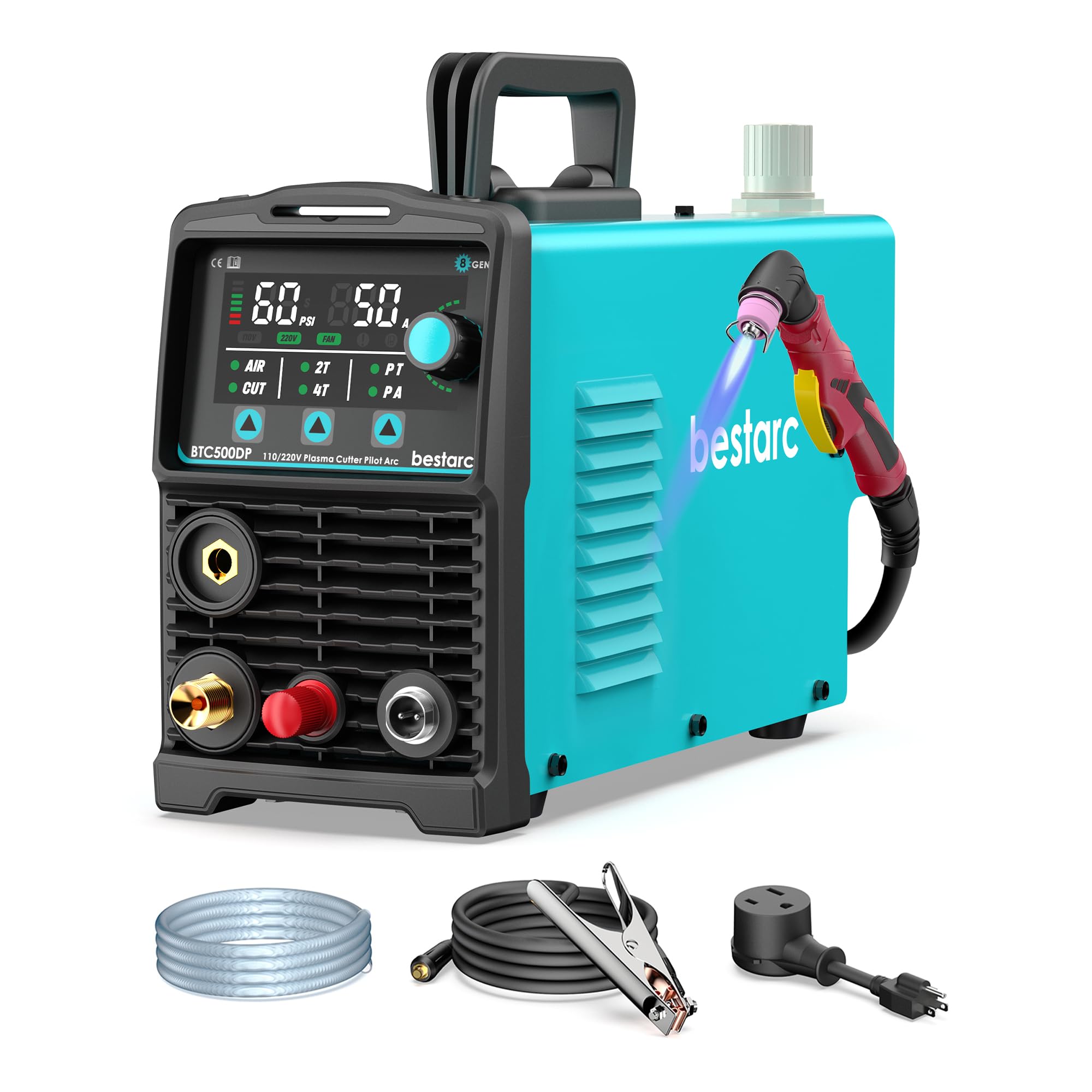
If you work on ducting, this bestarc unit is built for the kind of cuts you actually do on the job: collars, access holes, louvers, and trimmed flanges. It runs on 110V or 220V, and the pilot-arc non-touch start makes short work of painted or slightly rusty duct panels.
The big LED panel and built-in air sensor help you watch pressure, current, and error codes while you tune your setup. It is portable enough for attics, roofs, and job sites, but you will get the best results with a reliable compressor and dry air.
Buyer Feedback Snapshot
Available buyer feedback commonly mentions the pilot arc, LED readout, and straightforward setup. Recurring cautions involve air supply, fittings, and support expectations. Higher-voltage operation also gives this model access to its stronger rated output.
Review note: Treat the sentiment chart below as a directional summary, and read current buyer reviews for the latest product-specific feedback.

Ease Of Use
|
Feature |
Ease Level |
|---|---|
|
Setup |
Easy |
|
Controls / Display |
Easy |
|
Portability |
Moderate |
|
Torch Handling |
Moderate |
|
Air Connection |
Moderate |
Safety Features
Front-panel error codes help identify electrical or pressure problems. Post-flow timing cools the torch, and the air filter/regulator setup helps stabilize supply pressure. As with any plasma cutter, use shaded eye protection, gloves, protective clothing, and ventilation when cutting galvanized ductwork.
Key Benefits
- 110V/220V dual-voltage flexibility
- Pilot arc handles painted, rusty, or expanded metal without constant tip contact
- Large LED display plus air sensor for easier tuning
- Built-in air filter and quick-connect regulator
- Post-flow, PA/PT, and 2T/4T settings for longer cuts and better consumable control
Who Should Buy This
Choose this if you want a strong value pick for repeated duct cuts, patch panels, and general shop or job-site metalwork.
Who Should Avoid This
Skip it if you need the most advanced controls or prefer a non-HF blowback machine for sensitive electronics or CNC use.
Check Current Amazon Availability

You get a capable plasma cutter in a package that is easy to move around the job. The CUT-55DS PRO runs on 110V or 220V, and its non-high-frequency blow-back start avoids the HF ignition pulse used by some competing cutters, which can be useful when electrical-interference concerns matter.
For HVAC work, it is handy for service openings, trimming flanges and collars, and patching panels. The digital display supports easier setup and status checks, while the non-touch pilot arc helps start cuts on painted or lightly rusty conductive metal.
Buyer Feedback Snapshot
Available buyer feedback commonly mentions the non-touch pilot arc, digital display, and dual-voltage setup. Common cautions include keeping the air supply dry, matching fittings to your shop setup, and confirming the current listing details before ordering.
Review note: Treat the sentiment chart below as a directional summary, and read current buyer reviews for the latest product-specific feedback.

Ease Of Use
|
Feature |
Ease Level |
|---|---|
|
Setup |
Easy |
|
Controls / Display |
Easy |
|
Portability |
Easy |
|
Torch Handling |
Moderate |
|
Air Connection |
Moderate |
Safety Features
Built-in protections help guard against over-voltage, over-current, overload, and overheating. The digital fault codes can help you diagnose issues quickly. Always use proper PPE, ventilate confined duct areas, and let the fan finish its cooling cycle before changing consumables.
Key Benefits
- Non-high-frequency blow-back start reduces electrical interference
- Non-touch pilot arc cuts painted and rusty surfaces without frequent tip contact
- Dual-voltage 110V/220V flexibility
- Large digital LED display for easier setup and status checks
- Included regulator/filter parts help protect consumables when set up correctly
Who Should Buy This
Choose this if you want a non-HF pilot-arc cutter for precise duct work and a cleaner setup around electronics or CNC-style workflows.
Who Should Avoid This
Skip it if you want the lightest possible cutter for attic work or prefer a different torch and consumable ecosystem.
Check Product Details on Amazon

You’ll appreciate how this cutter balances power and portability. It runs on 110V or 220V, so you can use it around the house or on job sites, and the LED display makes adjusting amps and spotting error codes easier.
For HVAC duct work, it is especially handy when you need a light, easy-to-carry unit for trimming, patching, and cutting sheet-metal openings. Plan for a decent air supply and practice on scrap first so you can tune amperage, air pressure, and travel speed.
Buyer Feedback Snapshot
Available buyer feedback commonly mentions portability, straightforward setup, and the clear display. Common cautions involve air consumption, hose or fitting preferences, and the need for clean, dry compressed air.
Review note: Treat the sentiment chart below as a directional summary, and read current buyer reviews for the latest product-specific feedback.

Ease Of Use
|
Feature |
Ease Level |
|---|---|
|
Setup |
Easy |
|
Controls / Display |
Easy |
|
Portability |
Easy |
|
Torch Handling |
Moderate |
|
Air Management |
Moderate |
Safety Features
You get post-flow cooling to protect consumables, an LED error-code system, and a built-in regulator with gauge. Use the usual PPE, keep good ventilation, ground the workpiece properly, and avoid cutting galvanized material in enclosed spaces without fume control.
Key Benefits
- Dual-voltage flexibility for home and job-site work
- Portable body with shoulder strap
- Large LED display with error codes
- Built-in air regulator and gauge
- Good match for common duct layout, patching, and on-site trimming
Who Should Buy This
Choose this if portability matters more than advanced controls and you want an easy cutter for general HVAC sheet-metal work.
Who Should Avoid This
Skip it if you need non-HF blowback start or a higher-output unit for frequent thicker material.
Check Product Details on Amazon
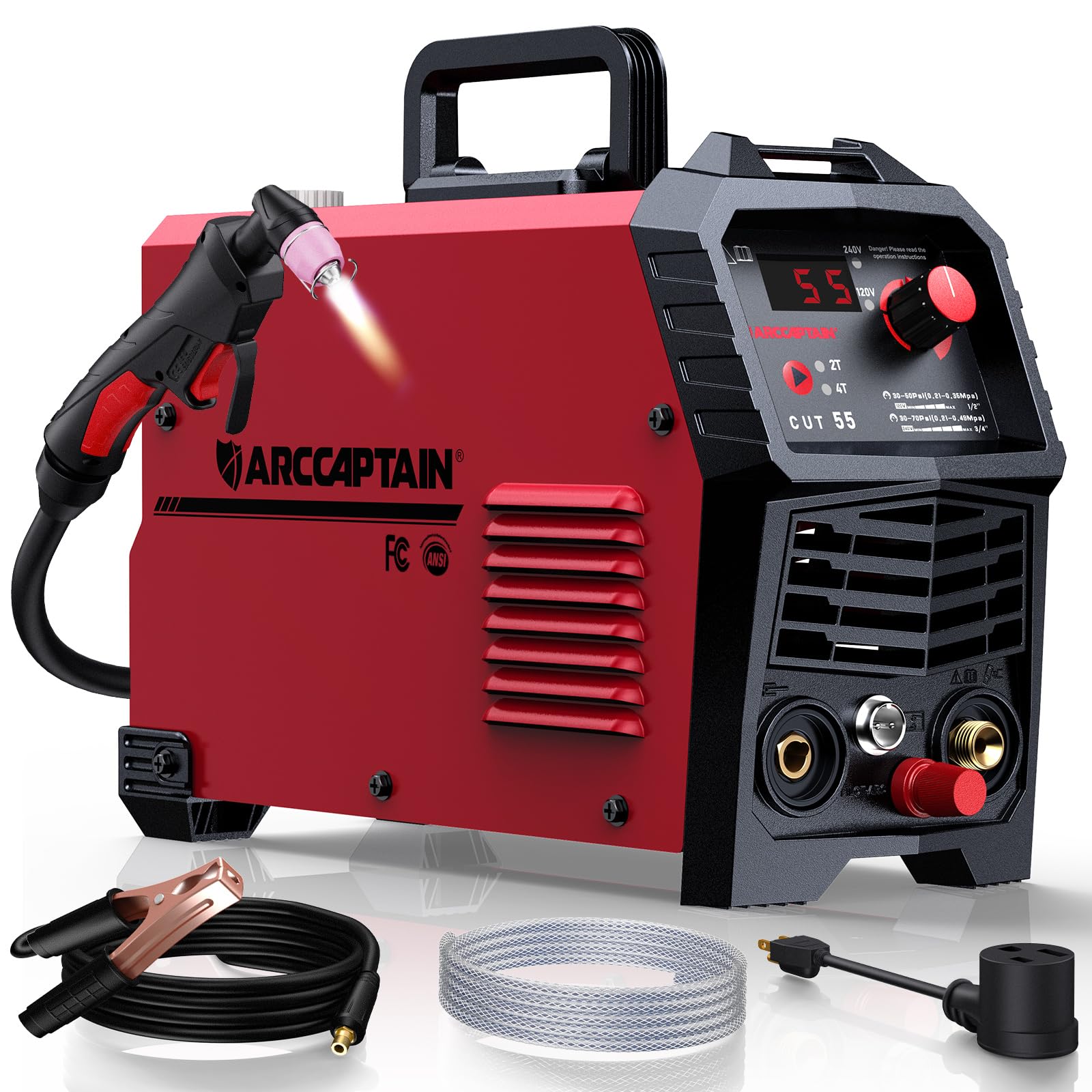
The CUT 55 Pilot Arc feels like a pro-style tool in a still-manageable size. It runs on 120V or 240V, and the pilot-arc start means you do not have to drag the torch across thin sheet metal to get a clean strike.
For HVAC work, it is useful for layout, trimming, and patching duct panels. It also makes sense if you often cut painted or slightly rusty metal and want easier starts than a basic contact-start machine provides.
Buyer Feedback Snapshot
Available buyer feedback commonly mentions portability, simple setup, pilot-arc performance, and cutting power. Common cautions include air consumption, hose quality, and the need to confirm voltage and air setup before cutting.
Review note: Treat the sentiment chart below as a directional summary, and read current buyer reviews for the latest product-specific feedback.

Ease Of Use
|
Feature |
Ease Level |
|---|---|
|
Setup |
Easy |
|
Controls / Display |
Easy |
|
Portability |
Easy |
|
Torch Handling |
Moderate |
|
Air Management |
Moderate |
Safety Features
Includes post-flow cooling, an air regulator/filter setup, and protections intended to help protect the cutter and consumables. Use eye protection rated for plasma cutting, gloves, long sleeves, and ventilation, especially when cutting coated or galvanized ductwork.
Key Benefits
- Non-touch pilot arc reduces tip contact on painted or rough duct surfaces
- Dual 120V/240V operation
- Included regulator and filter speed setup
- 2T/4T modes help during longer or repetitive cuts
- Useful for access holes, collars, flanges, and patch panels
Who Should Buy This
Choose this if you want a pilot-arc cutter for common duct tasks and you often work on painted, dirty, or rough sheet metal.
Who Should Avoid This
Skip it if you specifically need a non-HF blowback start for sensitive electronics or CNC-style work.
Check Current Amazon Availability
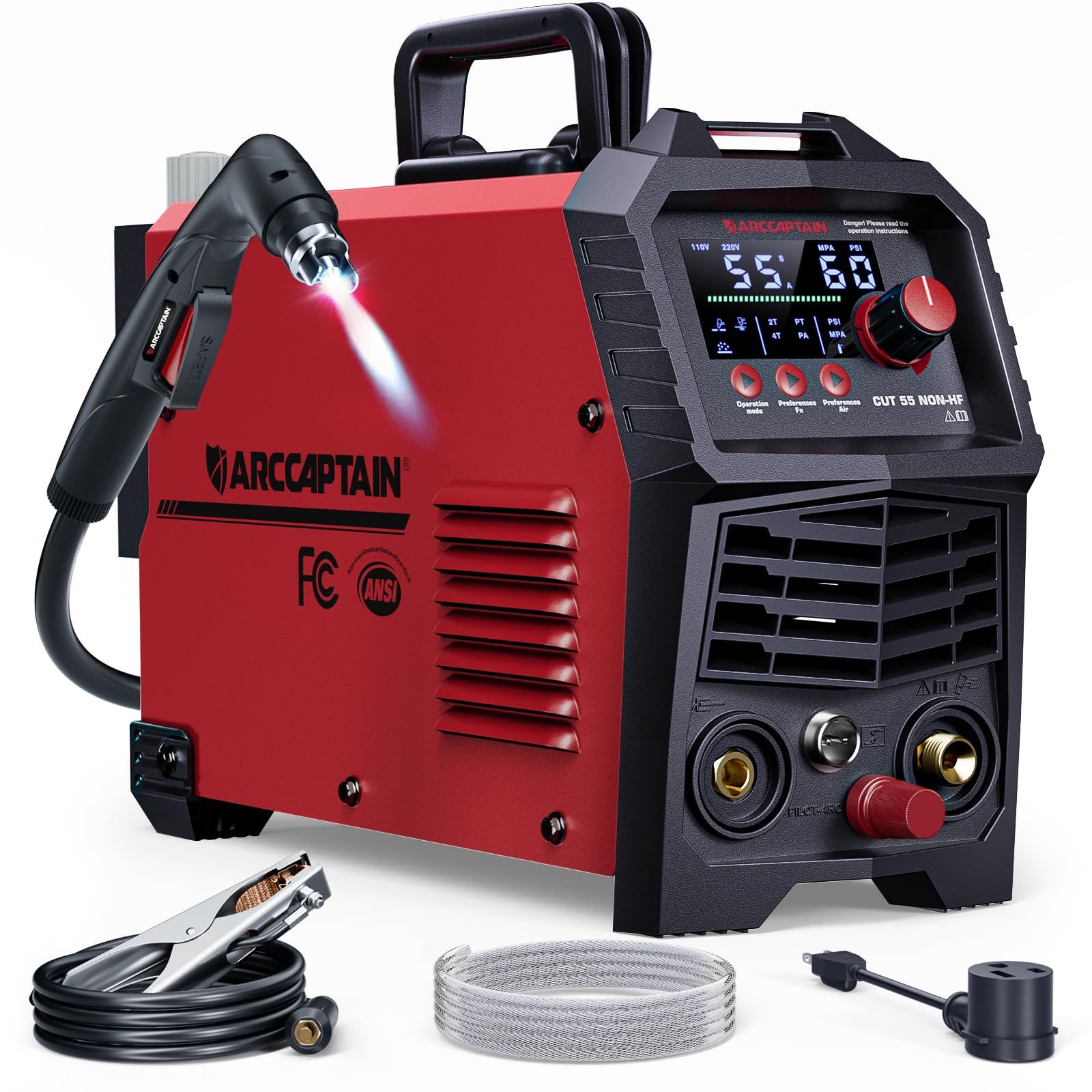
This ARCCAPTAIN model is built for buyers who want non-HF blowback starting plus several extra modes for varied work. The IPT60 torch and non-touch pilot arc help when cutting painted, dirty, or expanded metal without constantly touching the tip.
The large LED display, air-pressure check, PA/PT timing, and 2T/4T modes make it practical for repetitive duct cuts. It is a strong fit if you want more control than a basic CUT50 and do not mind a slightly larger unit.
Buyer Feedback Snapshot
Available buyer feedback commonly mentions useful non-touch starts, strong cutting for the machine size, and helpful display controls. Common cautions include compressor demand, hose or fitting preferences, and occasional quality-control concerns.
Review note: Treat the sentiment chart below as a directional summary, and read current buyer reviews for the latest product-specific feedback.

Ease Of Use
|
Feature |
Ease Level |
|---|---|
|
Setup |
Easy |
|
Controls / Display |
Easy |
|
Portability |
Moderate |
|
Torch Handling |
Moderate |
|
Air Connection |
Moderate |
Safety Features
Offers IP21 splash resistance plus protections for overload, overcurrent, and overheating with readable error codes. Built-in air-pressure check and post-blow timing help protect the torch and consumables. Keep air dry and regulated to avoid unstable arcs.
Key Benefits
- 110V/220V dual-voltage flexibility
- Blowback non-HF pilot arc for reduced electrical interference
- Mesh cutting and rust-clean modes for duct panels and prep work
- Built-in air filter and front panel pressure readout
- PA/PT and 2T/4T timing for repetitive cutting and consumable control
Who Should Buy This
Choose this if you want a versatile non-HF cutter for duct panels, mesh, rusty surfaces, and repeated cuts.
Who Should Avoid This
Skip it if you only need a small budget cutter for occasional thin sheet-metal work.
Check Product Details on Amazon

If you do occasional HVAC duct work, this S7 cutter is a practical budget option for collars, access holes, and trimming flanges. It is not as feature-rich as the premium picks, but it gives you a simple path into plasma cutting without paying for advanced controls.
The PT31 torch and common consumables make it approachable for light fabrication. Just remember that budget cutters depend heavily on stable air, careful setup, and realistic expectations.
Buyer Feedback Snapshot
Available buyer feedback commonly mentions easy setup, portability, and faster cutting than many manual methods on thin steel. Common cautions include short leads, basic accessories, occasional reliability concerns, and fitting issues.
Review note: Treat the sentiment chart below as a directional summary, and read current buyer reviews for the latest product-specific feedback.

Ease Of Use
|
Feature |
Ease Level |
|---|---|
|
Setup |
Easy |
|
Controls / Tuning |
Moderate |
|
Torch Handling |
Moderate |
|
Portability |
Easy |
|
Maintenance / Consumables |
Moderate |
Safety Features
Use the air pressure sensor, regulator connection, and fault indicators as setup aids, and do not operate with leaking air fittings. Wear PPE, ventilate well, and keep compressor air dry and regulated.
Key Benefits
- Budget-friendly entry into plasma cutting
- 110V/220V dual-voltage flexibility
- PT31 torch with common consumables
- Compact enough for garage and light job-site use
- Useful for routine duct repairs and light sheet-metal cuts
Who Should Buy This
Choose this if you need an affordable cutter for occasional HVAC work, DIY duct repairs, and light fabrication.
Who Should Avoid This
Skip it if you need professional daily-duty performance, premium support, or the cleanest pilot-arc experience.
Check Current Amazon Availability
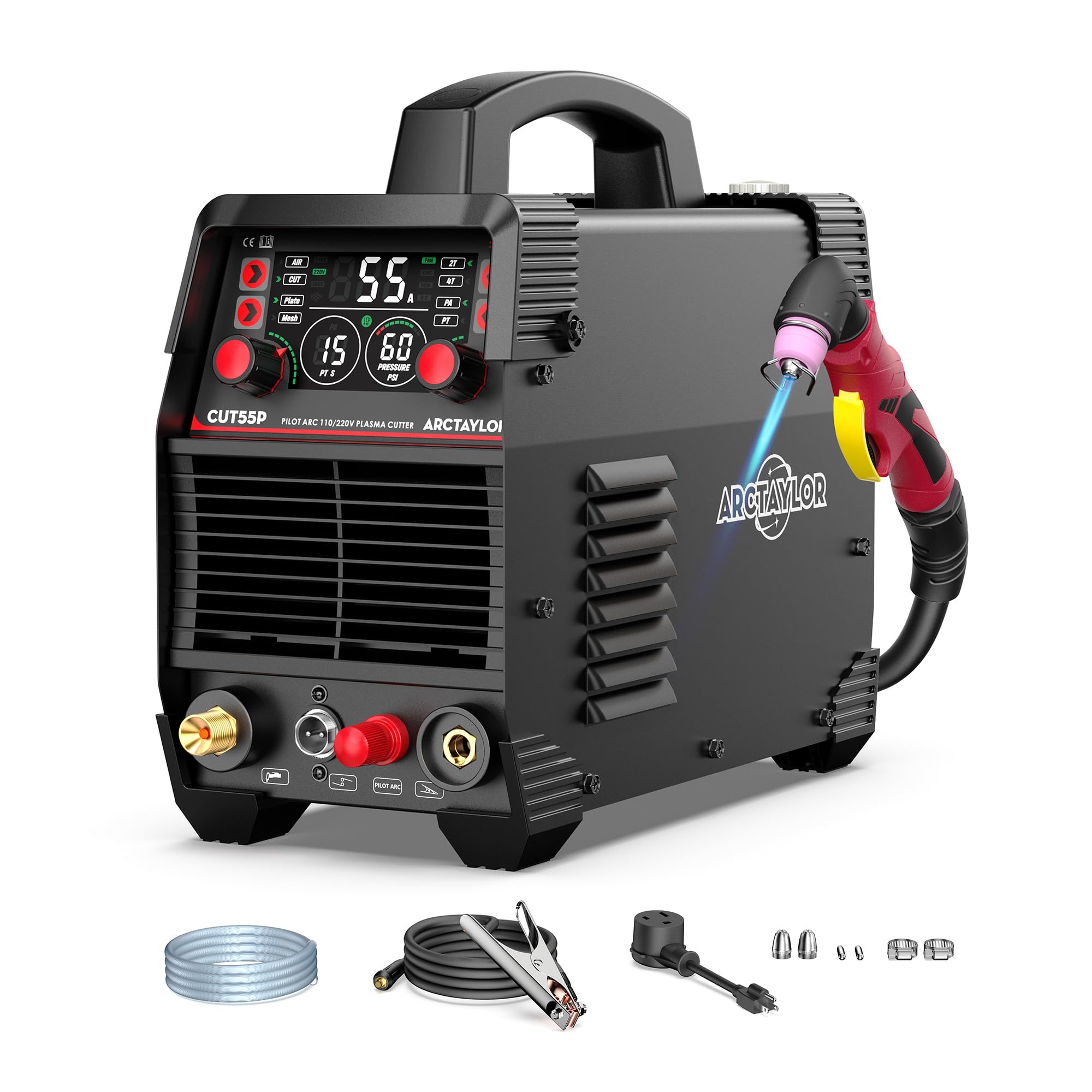
If you work on HVAC ducts and want a beginner-friendly setup, this CUT55P is positioned as a pilot-arc, dual-voltage machine with a front display. That combination can suit collars, access holes, louvers, and flange trimming when paired with the correct compressor and circuit.
Because independent manufacturer documentation is limited compared with the better-established brands in this roundup, verify the current Amazon listing, manual, included accessories, and air requirements before buying.
Buyer Feedback Snapshot
Available feedback around this model points to straightforward setup and useful dual-voltage flexibility, but documentation is thinner than for the better-established brands above. Treat performance and accessory claims as listing-dependent and confirm them before purchase.
Review note: Treat the sentiment chart below as a directional summary, and read current buyer reviews for the latest product-specific feedback.

Ease Of Use
|
Feature |
Ease Level |
|---|---|
|
Setup |
Easy |
|
Controls / Tuning |
Moderate |
|
Torch Handling |
Moderate |
|
Portability |
Easy |
|
Maintenance / Consumables |
Moderate |
Safety Features
The listing describes electrical and temperature protection plus air-pressure monitoring and post-flow cooling. Confirm the manual for the exact protection set on the unit you receive. Secure air fittings before use and wear appropriate eye, skin, hearing, and respiratory protection for the job.
Key Benefits
- Dual 110V/220V operation
- Non-touch pilot arc for painted or rough surfaces
- Large digital display and air-pressure monitoring listed by the seller
- Regulator and air connection hardware listed with the package
- Torch, ground clamp, and starter consumables listed as included
Who Should Buy This
Choose this if you are newer to plasma cutting, want a pilot-arc machine with a helpful display for light HVAC and repair work, and are comfortable verifying the current listing and manual before purchase.
Who Should Avoid This
Skip it if you need proven heavy-duty shop performance or highly detailed manufacturer documentation.
Check Current Amazon Availability
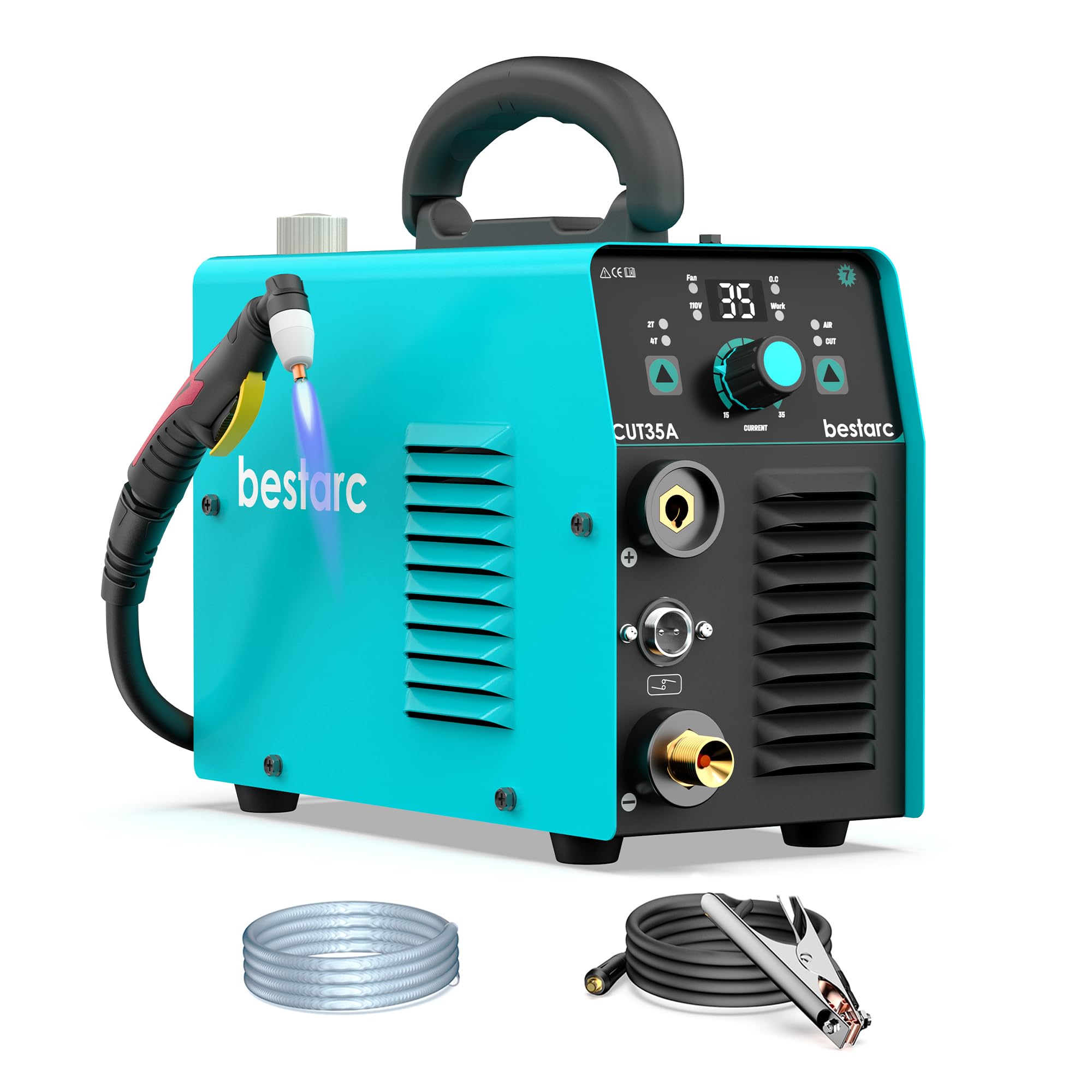
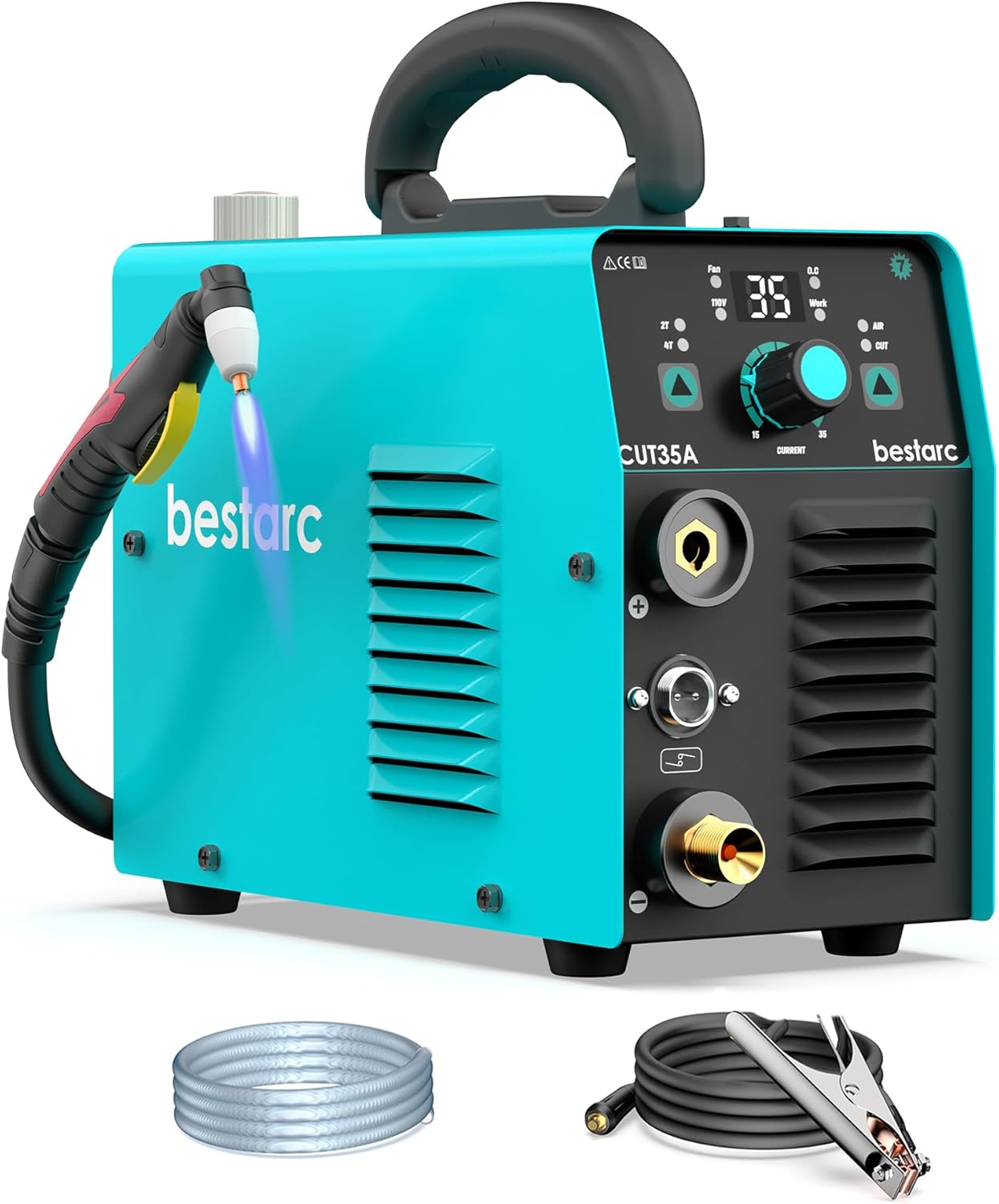
If your HVAC work is mostly thin sheet metal, this CUT35A is the compact machine to consider. It runs on 110V and uses a contact-start PT31 torch, so you touch the tip to the metal to begin cutting. That is simple and intuitive for clean duct panels, patch pieces, and detail trimming.
It is not the right choice if you need pilot arc for painted, rusty, or expanded metal. But for routine thin-gauge duct work and light shop use, it keeps the setup small and affordable.
Buyer Feedback Snapshot
Available buyer feedback commonly mentions portability, quick setup, and clean cuts on thin metal. Common cautions include occasional quality-control issues, short cords, and the need to fine-tune air pressure.
Review note: Treat the sentiment chart below as a directional summary, and read current buyer reviews for the latest product-specific feedback.

Ease Of Use
|
Feature |
Ease Level |
|---|---|
|
Setup |
Easy |
|
Controls / Tuning |
Moderate |
|
Torch Handling |
Moderate |
|
Portability |
Easy |
|
Maintenance / Consumables |
Moderate |
Safety Features
The unit includes standard protections such as over-current and temperature sensing, an air pressure sensor, and post-flow cooling. When cutting ducts, use ventilation, shaded eye protection, gloves, and protective clothing, and secure air fittings before starting.
Key Benefits
- Compact 110V setup for light-duty work
- Contact-start PT31 torch is simple for clean sheet metal
- Built-in air regulator and quick-connect
- 2T/4T modes and post-flow to support longer cuts
- Good choice for thin sheet detail, patch panels, and DIY duct tasks
Who Should Buy This
Choose this if most of your cuts are clean, thin sheet metal and you want a compact 110V cutter.
Who Should Avoid This
Skip it if you need pilot arc, dual voltage, or stronger performance on rough, painted, or rusty ductwork.
Check Product Details on Amazon
FAQ
Are These Plasma Cutters Suitable For HVAC Duct Work?
They can be suitable for HVAC duct work when the material is electrically conductive and the cutter is matched to the metal thickness, available power, air supply, and job-site safety requirements. Pilot-arc and non-touch models are especially convenient on painted, dirty, rusty, or perforated conductive material.
Expect to deburr finished edges and practice travel speed, torch angle, amperage, and air pressure on scrap before making production cuts.
What Should You Consider When Buying One For Duct Fabrication?
Focus on power, start type, air requirements, and portability. Choose dual voltage if you sometimes have 220V or 240V access. Verify the cutter’s required PSI and CFM before buying, and make sure your compressor can maintain stable dry air. Look for readily available consumables, practical torch length, a usable ground clamp, and clear controls.
Is Pilot Arc Worth It For HVAC Work?
Often, yes. Pilot arc can make starts easier on painted, rusty, expanded, perforated, or uneven conductive metal because the torch does not need constant tip contact. If you mostly cut clean, thin duct sheet in a shop, a contact-start cutter can still work well and may cost less.
How Do You Set Up And Use A Plasma Cutter Safely For Duct Work?
Wear eye protection suitable for plasma cutting, gloves, protective clothing, and hearing protection. Use effective ventilation or local exhaust, especially when cutting zinc-coated galvanized material, and follow applicable respiratory-protection requirements. Attach the work clamp as directed by the manufacturer, use clean dry filtered air, check pressure, and keep the torch and consumables in good condition.
For better cuts, practice on scrap, start at an edge when possible, use a straight edge or roller guide for long seams, and keep spare tips and electrodes nearby.
What Compressor Size Do You Need?
There is no single compressor size that fits every plasma cutter. Check the current listing and manual for the required PSI and CFM. For short cuts, a smaller compressor may work, but long continuous duct cuts need a compressor that can keep air pressure steady without frequent recovery pauses.
What To Prioritize
When comparing a plasma cutter for HVAC duct work, prioritize clean starts, easy setup, portability, consumable availability, and an air requirement your compressor can maintain. Lightweight models are easier to move through attics or onto roofs, while dual-voltage pilot-arc models offer more flexibility across shop and job-site work.
Wrapping Up
When you choose a plasma cutter for duct work, you want a balance of clean, repeatable cuts, portability, realistic air demands, and safe setup. If you want the most complete pick, the ARCCAPTAIN iControl CUT55 Pro stands out for its control features, pilot arc, and dual-voltage flexibility.
If you want strong value, the bestarc BTC500DP 8GEN is a practical choice for repeated duct cuts. If you want non-HF blowback starting, the YESWELDER CUT-55DS PRO and ARCCAPTAIN CUT 55 Non-HF are the better fits. For basic thin sheet work, the bestarc CUT35A keeps the setup simple. Whatever you choose, match the cutter to your compressor, voltage, consumables, and safety setup before you cut.
| Product | Image | Best For | Start Type | Voltage | Amazon Details |
|---|---|---|---|---|---|
| ARCCAPTAIN iControl CUT55 Pro |
 |
Best overall control and versatility | Non-touch pilot arc | 120V/240V | Check Product Details on Amazon |
| bestarc BTC500DP 8GEN |
 |
Best value for repeated duct cuts | HF non-touch pilot arc | 110V/220V | Check Product Details on Amazon |
| YESWELDER CUT-55DS PRO |
 |
Non-HF starts near electronics | Non-HF non-touch pilot arc | 110V/220V | Check Product Details on Amazon |
| ARCCAPTAIN CUT50 |
 |
Portable routine duct work | HF contact start / PT31 torch | 110V/220V | Check Product Details on Amazon |
| ARCCAPTAIN CUT 55 Pilot Arc |
 |
Pilot arc on rough duct metal | High-frequency pilot arc | 120V/240V | Check Product Details on Amazon |
| ARCCAPTAIN CUT 55 Non-HF |
 |
Versatile non-HF duct cutting | Blowback non-HF pilot arc | 110V/220V | Check Product Details on Amazon |
| S7 50A Plasma Cutter |
 |
Budget garage and repair work | PT31 contact-start torch | 110V/220V | Check Product Details on Amazon |
| ARCTAYLOR CUT55P 55Amp |
 |
Beginner-friendly pilot arc | Non-touch pilot arc (listing claim) | 110V/220V | Check Product Details on Amazon |
| bestarc CUT35A |
 |
Thin sheet detail on 110V | Contact start | 110V | Check Product Details on Amazon |
This roundup is reader-supported. When you click through links, we may earn a referral commission on qualifying purchases.
