
Affiliate disclosure: This roundup is reader-supported. When you click through Amazon links, we may earn a referral commission on qualifying purchases.
You want clean, repeatable cuts when working on stainless steel kitchen projects, from trimming backsplash panels and countertop edges to making brackets, racks, or decorative range-hood parts. The right plasma cutter helps you control cut quality, reduce dross, and spend less time grinding. In this guide you will find portable 50A to 65A air plasma cutters plus one all-in-one cutter/welder for readers who also need basic welding functions. Focus on clean-cut capacity, pilot-arc or non-HF starting, dry compressed air, voltage support, consumable availability, and the difference between a clean-cut rating and a maximum-cut claim before you buy.
Quick Verdict
Best overall: ARCCAPTAIN Cut 50 is the easiest all-around pick for most DIY stainless kitchen projects.
Best for non-touch starts: ARCCAPTAIN Cut 55 is a strong fit when piercing or starting on painted, rusty, or imperfect metal matters.
Best beginner pick: bestarc 9GEN gives useful display and air-sensor feedback while you learn settings.
Best basic CUT50 pick: S7 CUT50 is a straightforward option for occasional work; compare the current price and inspect leads, fittings, and consumables before use.
Best all-in-one: PUWU CT-418 Pro makes sense only if you also need MIG, TIG, or stick welding in the same machine.
Top Picks
|
Category |
Product |
Decision Shortcut |
|---|---|---|
|
🏆 Best Overall |
Balanced 50A pick |
|
|
🎯 Best for Piercing |
Non-touch starts |
|
|
⭐ Best App-Controlled |
App-based controls |
|
|
🔰 Best Beginner-Friendly |
Beginner setup feedback |
|
|
⚡ Best Non-HF Portable Pick |
Portable non-HF setup |
|
|
🚀 Best for More Amperage Headroom |
More amperage headroom |
|
|
🎨 Best for Panel Work |
Panel-work setup |
|
|
🛠️ Best Extra Modes |
Extra non-HF modes |
|
|
💰 Best Basic CUT50 Pick |
Basic CUT50 option |
|
|
💼 Best All-in-One |
Cutting plus welding |
How We Picked These Plasma Cutters
You need a cutter that fits the stainless thickness, finish quality, and workspace you actually have. We reviewed the article against buyer intent for stainless steel kitchen work and focused on clean-cut capacity, amperage, pilot-arc or non-touch starting, non-HF starting where relevant, voltage flexibility, air setup, portability, included accessories, consumable availability, and common buyer setup concerns.
Because exact Amazon ratings, review counts, prices, and availability change often, this updated version avoids treating those numbers as fixed facts. Manufacturer thickness claims are also best treated as reference points rather than guarantees for every stainless alloy and setup. Actual results depend on input voltage, amperage, air pressure and flow, travel speed, consumable condition, and material thickness. Use the Amazon buttons and the current product manual to confirm details before buying.
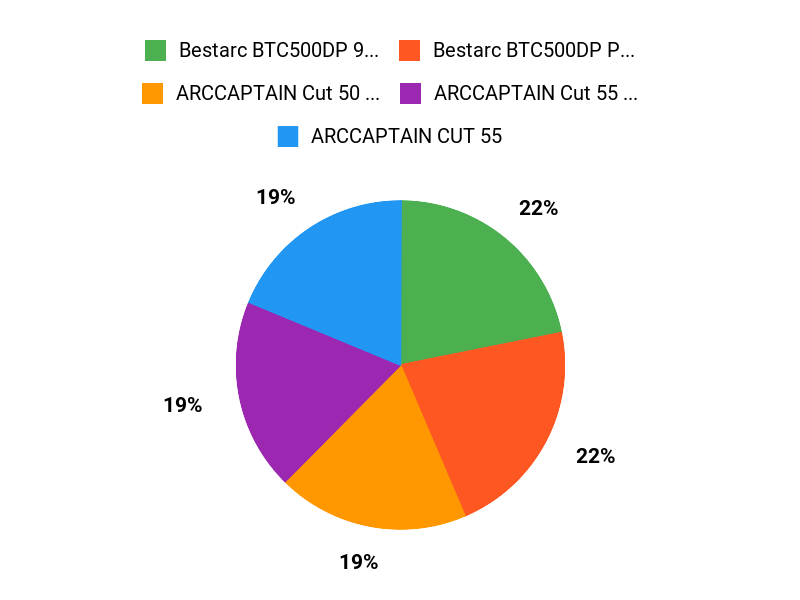
Review-data note: The sentiment-chart images below are retained from the source article as historical visual assets. They are not live Amazon ratings or current review counts, so confirm current buyer feedback on the product listing.
Before You Buy
- Air supply matters: Plasma cutters need clean, dry compressed air. Moisture or oil can shorten consumable life and make cuts rough.
- Voltage affects performance: 110V or 120V can work for lighter sheet on compatible machines, but thicker stainless usually benefits from the cutter’s specified 220V or 240V input. Follow the manual and use a properly rated circuit.
- Pilot arc helps: Non-touch pilot arc is useful for piercing, cutting painted or slightly dirty material, and reducing tip dragging.
- Finish work is still required: For kitchen surfaces, plan to deburr, grind, clean heat tint, and follow proper stainless finishing or passivation steps when the surface may contact food.
- Safety is not optional: Use appropriate eye, hand, skin, hearing, and respiratory protection for the task. Stainless hot work can create hazardous airborne contaminants, so use suitable ventilation or local fume extraction and follow applicable workplace-safety requirements.

Best for: DIYers and small shops that want a simple portable cutter for thin to medium stainless panels.
Why you’ll like it: You get the core features most kitchen metal projects need without a fussy setup. The display and built-in regulator help you tune cuts faster, while dual voltage gives you room to move from light garage work to stronger shop power.
Setup and Buying Notes
Check the air fitting, ground clamp, torch consumables, and regulator setup before your first finished cut. Run a short scrap test to dial in amperage and travel speed.

Limits to Know
Skip it if you cut thick stainless plate all day or need CNC-ready industrial controls.
Key Benefits
- Good fit for compact panels, brackets, racks, and trim.
- Dual-voltage support adds flexibility across garage and shop power setups.
- Best results still depend on dry air, correct amperage, good ground contact, and fresh consumables.
Check Product Details on Amazon
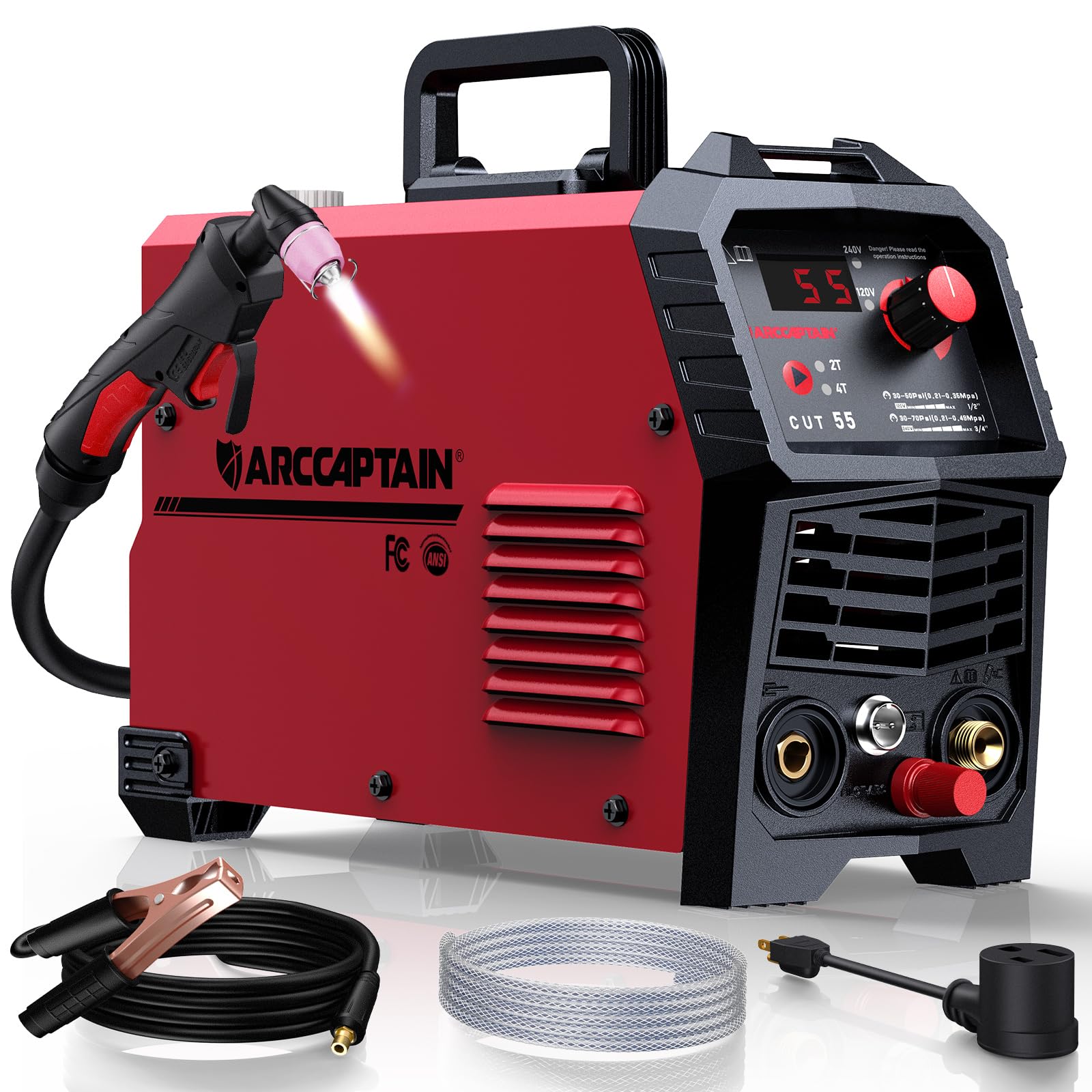
Best for: Easier starts on stainless sheet, painted edges, or slightly rough surfaces.
Why you’ll like it: The non-touch pilot arc helps you start cuts without dragging the tip across the workpiece. That is useful for appliance panels, brackets, range-hood parts, and pierces.
Setup and Buying Notes
Confirm the current torch consumables and air-fitting setup, then test the non-touch start on scrap before piercing a finished stainless panel.

Limits to Know
Avoid it if your main goal is maximum cut depth on heavy plate.
Key Benefits
- Pilot arc helps with piercing and imperfect surfaces.
- Compact form makes it useful for garage and on-site work.
- Dry air and correct setup are still needed for clean stainless cuts.
Check Product Details on Amazon
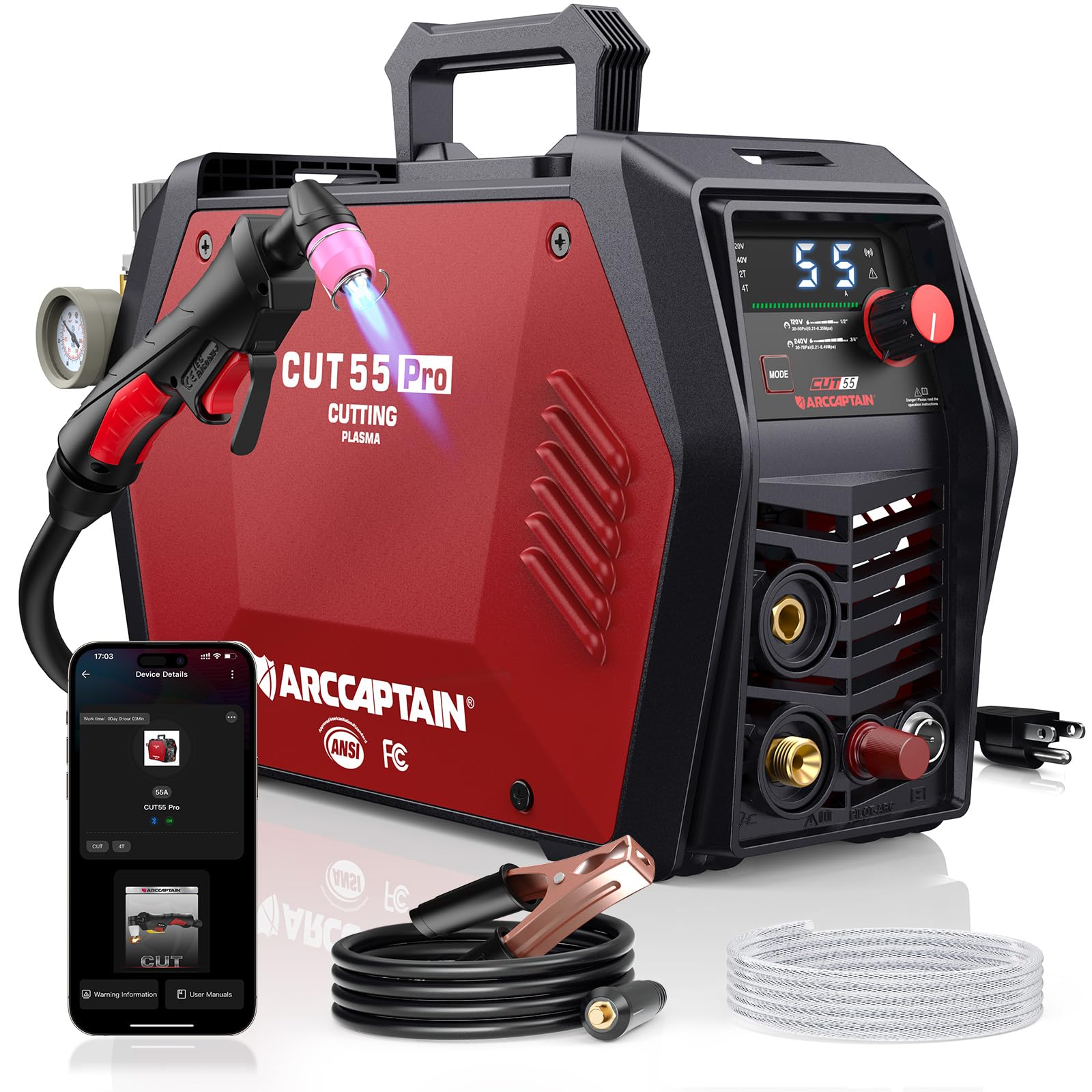
Best for: Users who like digital controls, presets, and easier adjustment around a bench or fixture.
Why you’ll like it: App control and the large screen help you adjust settings with less guesswork. That helps when you need repeatable stainless trim, backsplash, or rack cuts.
Setup and Buying Notes
Use the app only if it improves your workflow; otherwise the machine’s local controls still need to be set correctly. Verify fittings and run scrap tests before repeat cuts.

Limits to Know
Skip it if you want the simplest knob-and-switch machine.
Key Benefits
- App and LED controls help repeat settings.
- Pilot arc helps with clean starts.
- Best for buyers who will actually use the digital features.
Check Product Details on Amazon
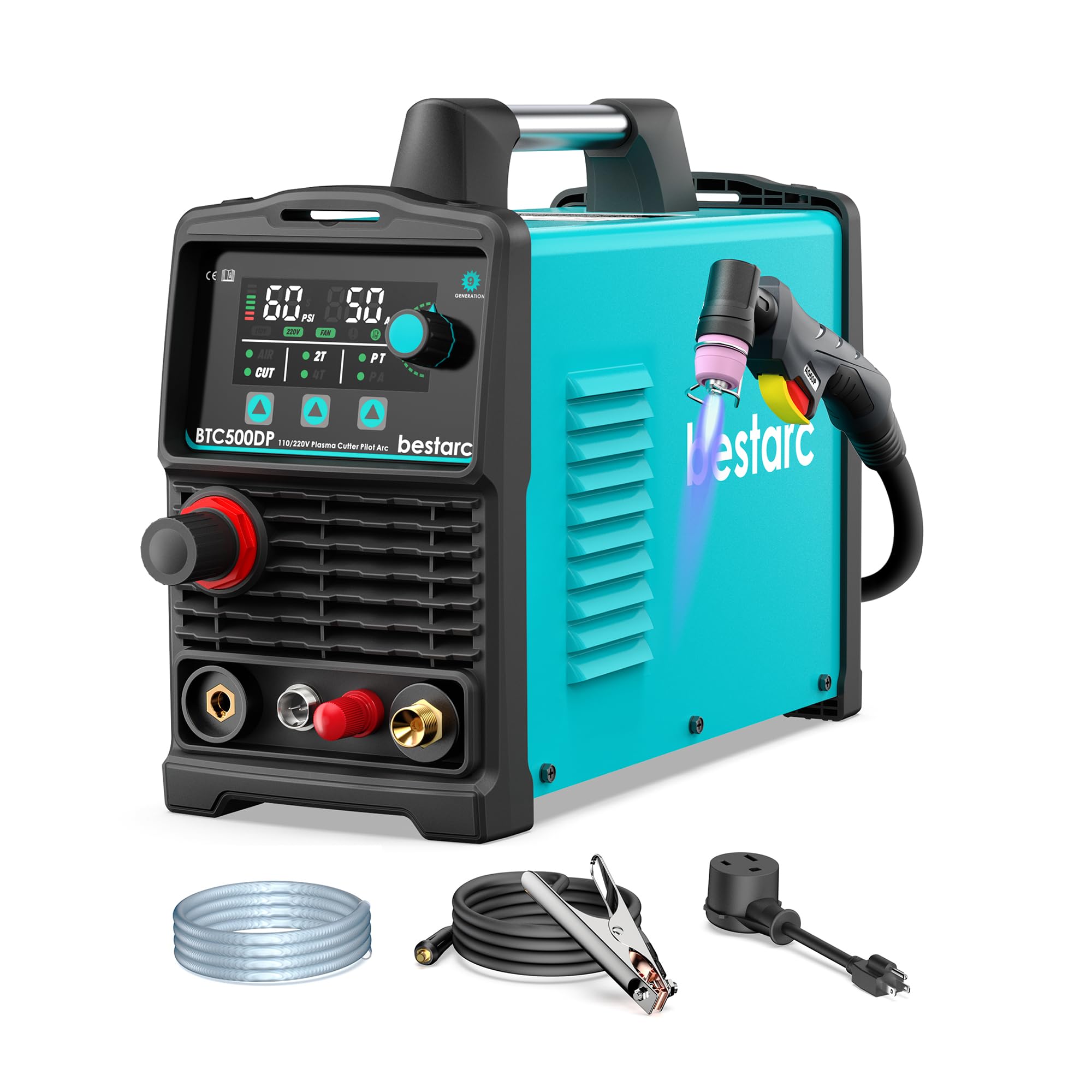
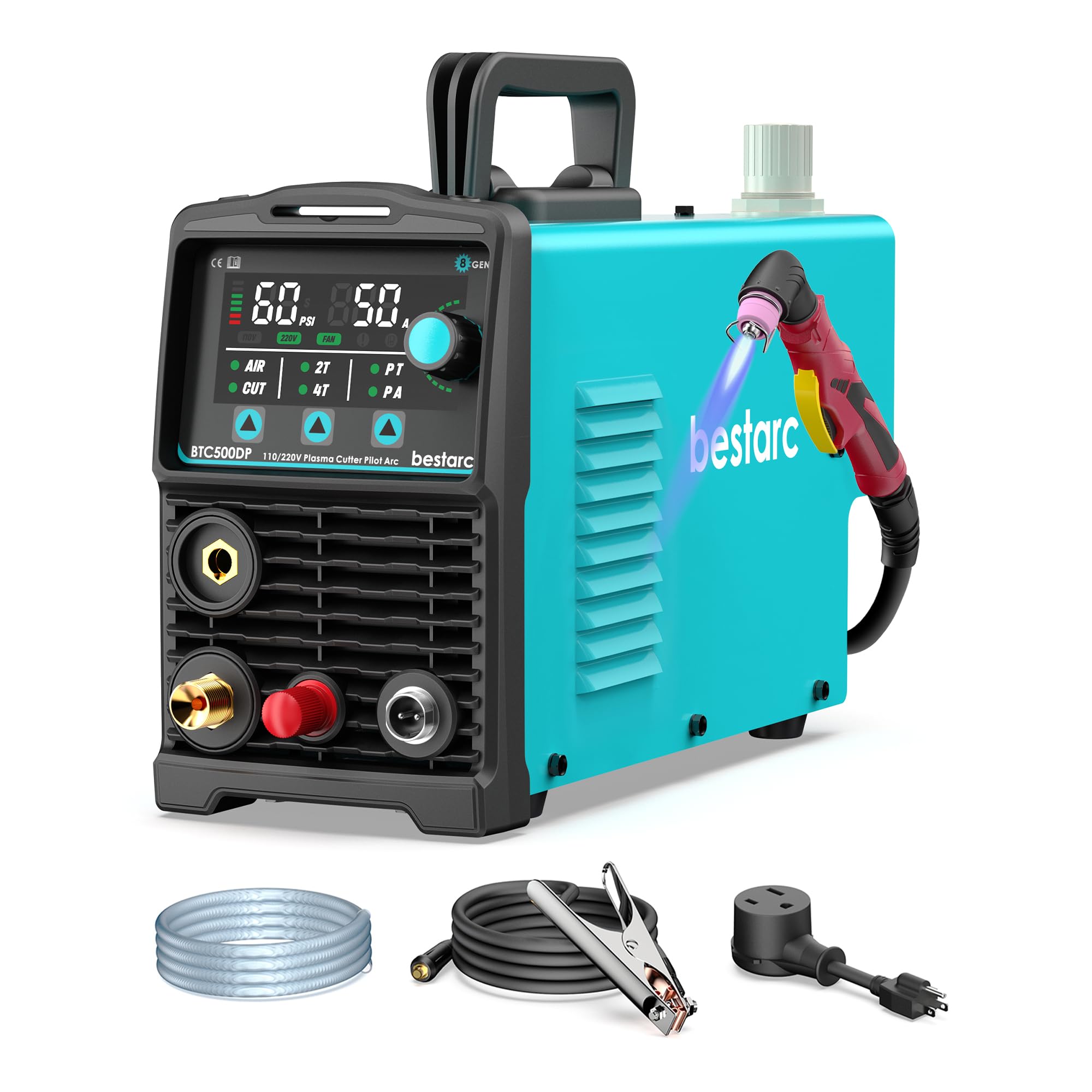
Best for: Beginners who want more setup feedback from the display and air-sensing features.
Why you’ll like it: The display can show pressure, current, and error information, which helps you learn how air pressure, amperage, travel speed, and stainless thickness work together.
Setup and Buying Notes
Use the display and air-sensor feedback as setup aids, not substitutes for the manual. Confirm regulator connections and test pressure, amperage, and travel speed on scrap.

Limits to Know
Do not choose it for heavy production work where industrial duty cycle matters most.
Key Benefits
- Good visibility into air and current settings.
- Helpful for learning on stainless scrap before final panels.
- Useful for repeated garage and small-shop projects.
Check Product Details on Amazon

Best for: Small shops that want a non-HF machine with strong portable features and clear digital feedback.
Why you’ll like it: The non-HF start can be helpful around electronics or future table use. You also get pilot-arc starts, a readable display, and dual-voltage flexibility.
Setup and Buying Notes
Confirm the non-HF start mode, air-hose connections, and consumable type before use. Dry air and a solid work clamp are still essential for consistent cuts.

Limits to Know
Skip it if you need a complete CNC package out of the box.
Key Benefits
- Non-HF start may reduce interference concerns.
- Digital feedback helps setup and troubleshooting.
- Good portable choice for trim, repair, and fixture work.
Check Product Details on Amazon
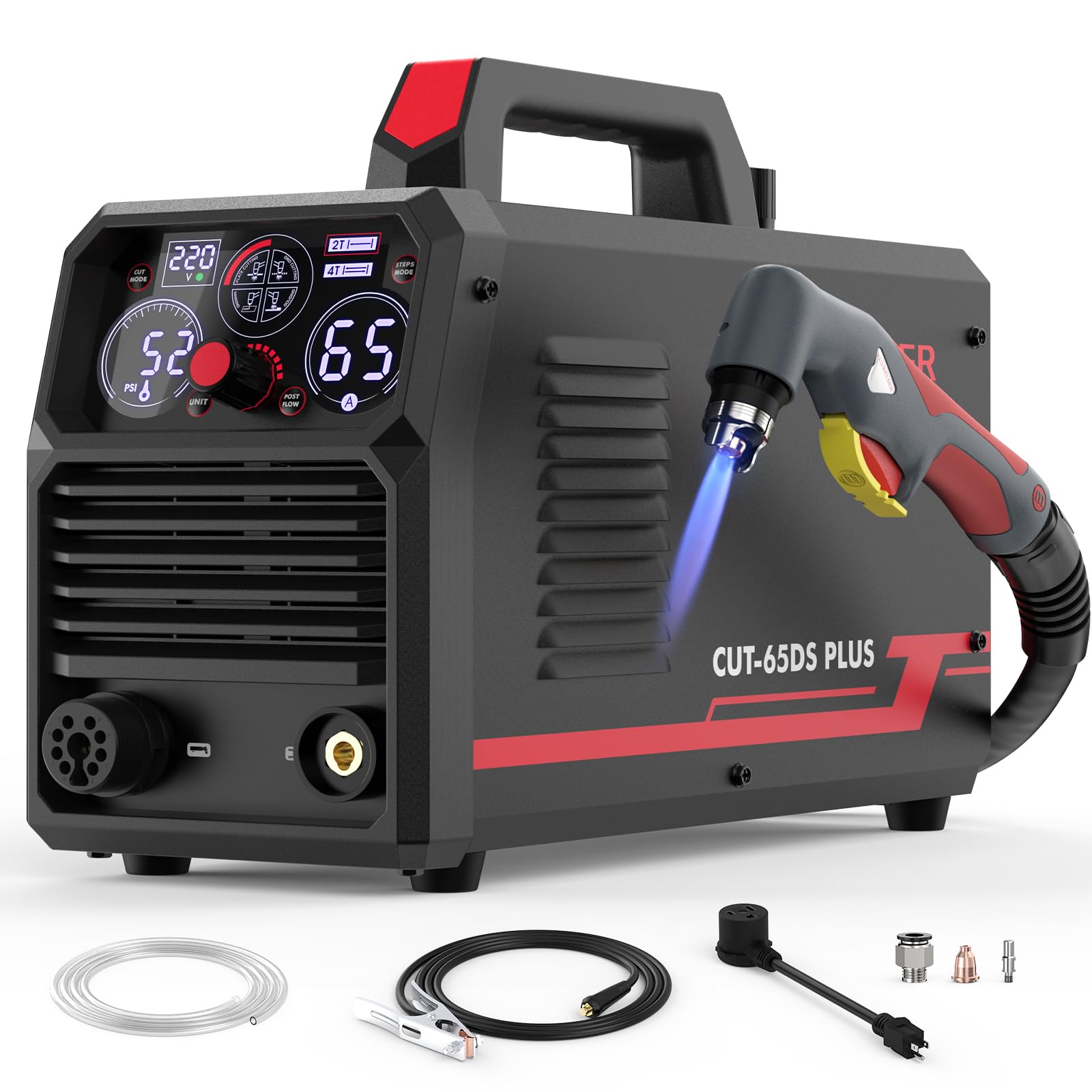
Best for: Users who want more amperage headroom for thicker stainless parts and heavier shop projects.
Why you’ll like it: The 65A output gives you more headroom when you move beyond thin trim into heavier brackets, racks, or hood components. The digital display helps during tuning.
Setup and Buying Notes
Give the machine a careful arrival inspection, verify the required input circuit and compressor capacity, and test the higher-output settings on scrap before thicker stainless work.

Limits to Know
Avoid it if you only cut thin sheet and want the lightest setup.
Key Benefits
- More amperage headroom than 50A picks.
- Useful for thicker brackets, racks, and heavier hood parts.
- Needs proper power and dry air to perform well.
Check Product Details on Amazon
Best for: DIYers who want a clear display and stable output for neat stainless panel work.
Why you’ll like it: It fits visible trim, splashback, and panel cuts where controlled movement matters more than maximum amperage. It is also approachable for garage users.
Setup and Buying Notes
Confirm regulator setup, consumable availability, and input-voltage requirements before cutting finished stainless. A scrap test is especially useful for visible panel edges.

Limits to Know
Skip it if the newer 9GEN is available at a similar cost and you want the newest Bestarc feature set.
Key Benefits
- Helpful display for setup and monitoring.
- Good fit for visible panel edges and trim cuts.
- Works best when you test settings on scrap first.
Check Product Details on Amazon
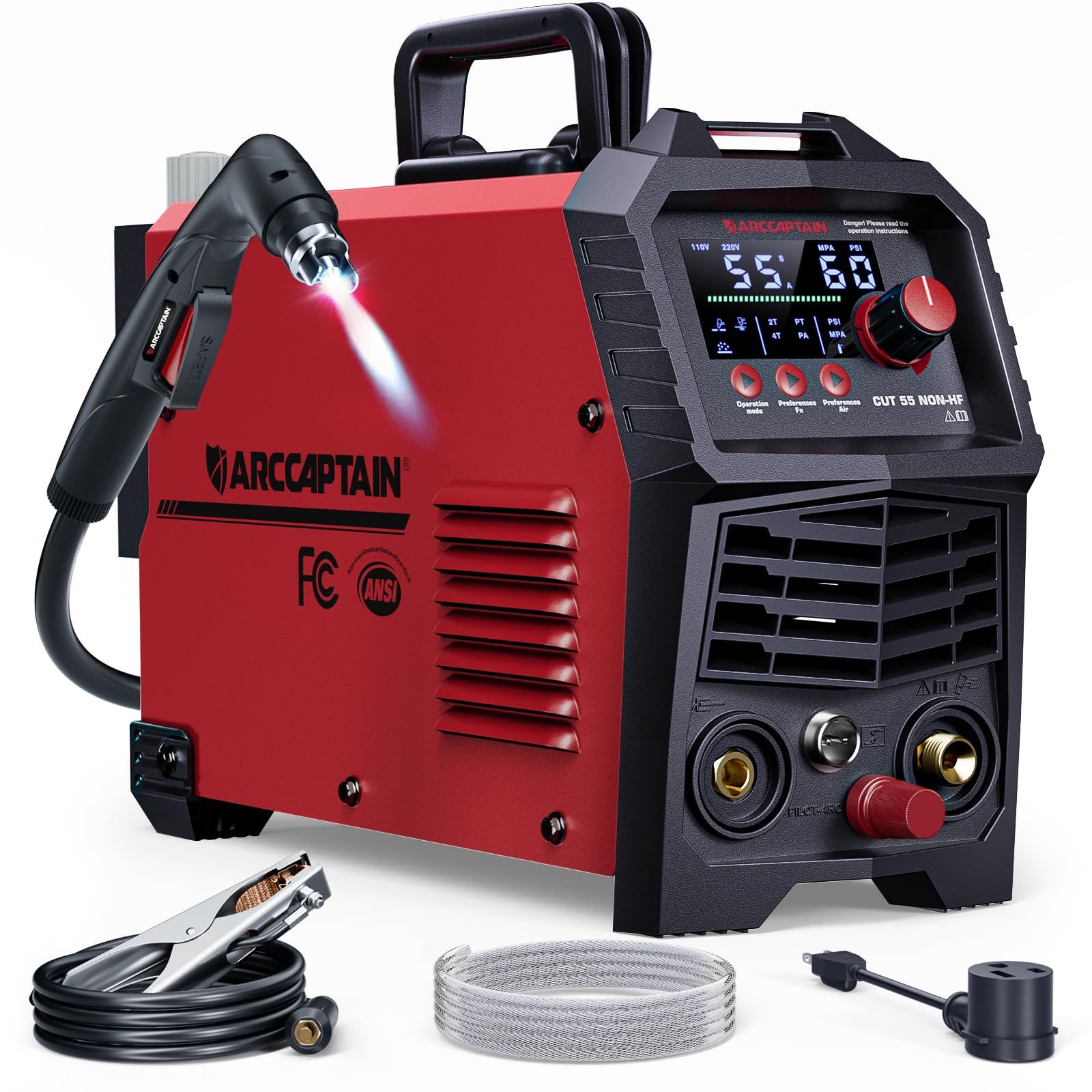
Best for: Users who want non-HF starting plus extra prep modes for small-shop stainless fabrication.
Why you’ll like it: It stands out because it adds mesh cutting and rust-cleaning modes. That can help with expanded metal, older stainless pieces, or prep work before welding.
Setup and Buying Notes
Confirm the current manual for mesh, rust-cleaning, and post-flow settings. Use a capable compressor and verify air connections before relying on the extra modes.

Limits to Know
Skip it if you only need basic straight cuts and prefer fewer modes.
Key Benefits
- Non-HF start is useful for electronics-conscious setups.
- Mesh cutting and rust-cleaning modes add flexibility.
- Good pick for prep-heavy small-shop stainless work.
Check Product Details on Amazon
Best for: Budget-focused buyers who want an affordable cutter for occasional stainless kitchen projects.
Why you’ll like it: The S7 keeps the control set simple for stainless trim, small brackets, or backsplash panels when you do not need app control or premium digital features. Use the higher-voltage input only when the manual, circuit, and machine setup support it.
Setup and Buying Notes
Inspect the torch lead, clamp, fittings, and included consumables before use. Because this ASIN has appeared in different listing descriptions over time, verify the current start method and specifications on Amazon.

Limits to Know
Avoid it if you need premium leads, polished fit and finish, or the lowest chance of setup issues.
Key Benefits
- Affordable entry point for occasional stainless cutting.
- Useful for practice cuts and simple garage projects.
- Inspect leads, fittings, and consumables before use.
Check Product Details on Amazon

Best for: Buyers who need one compact machine for cutting and basic welding tasks around a small shop.
Why you’ll like it: This is not the cleanest choice if you only want a dedicated plasma cutter, but it makes sense when the project includes cutting, tacking, welding, and repair work.
Setup and Buying Notes
Confirm that all torches, leads, accessories, and process-specific consumables are included. Treat it as a space-saving multi-process option rather than assuming it matches a dedicated cutter for every job.

Limits to Know
Skip it if you want the most focused dedicated plasma cutter or heavy-duty cutting performance.
Key Benefits
- Covers cutting plus MIG, TIG, and stick welding in one unit.
- Useful when storage space is limited.
- Best for mixed repair work, not buyers who only need a cutter.
Check Product Details on Amazon
FAQ
What Should You Consider When Choosing A Plasma Cutter For Stainless Steel Kitchen Work?
Start with the stainless thickness you expect to cut. For thin backsplash panels, trim, and light brackets, a portable 50A to 55A dual-voltage machine can be enough when paired with dry air and correct settings. For thicker brackets, racks, or custom hood parts, a 65A machine or stronger 220V setup gives you more headroom.
Also look for pilot arc or non-touch starting, a clear display, regulator or air-sensing help, easy-to-find consumables, and a torch that feels comfortable for the length of cut you plan to make.
Is 110V Enough For Cutting Stainless Steel?
110V or 120V can work for lighter stainless sheet and short cuts, but it is not the best choice for every job. For cleaner cuts on thicker stainless, fewer breaker trips, and more consistent output, plan for a proper 220V or 240V circuit that matches the cutter manual.
What Air Compressor Do You Need?
Check the cutter manual for required pressure and airflow. In general, you want a compressor that can sustain the required air volume for the length of cut you plan to make. A filter or dryer is strongly recommended because wet air causes rough cuts and fast consumable wear.
How Should You Prepare, Cut, And Finish Stainless Steel For Kitchen Use?
Clean the workpiece, clamp it securely, connect a solid ground, and test settings on scrap before cutting the final piece. Move at a steady speed to reduce dross and heat discoloration. After cutting, deburr sharp edges, grind or sand rough areas, clean heat tint, and follow suitable stainless finishing or passivation steps if the part may be used near food-contact surfaces.
Do Listed Clean-Cut Ratings Apply Exactly The Same To Stainless Steel?
Not always. Published clean-cut and maximum-cut figures are useful comparison points, but stainless performance can vary with alloy, thickness, input voltage, amperage, air pressure and flow, torch condition, and travel speed. Treat the listing figure as a reference and test the exact material on scrap before making a visible kitchen cut.
Should You Choose High-Frequency Or Non-HF Starting?
High-frequency starting can work well for manual cutting, but non-HF blowback starting may be a better fit if you plan to use a cutting table or want to reduce interference concerns around electronics. For most DIY kitchen projects, pilot arc and stable air supply matter more than the label alone.
What Common Problems Will You Run Into And How Do You Maintain Your Plasma Cutter?
Common issues include leaking fittings, wet air, worn tips, poor ground contact, wrong amperage, and using an undersized compressor. Drain the compressor tank, use a filter or dryer, inspect hoses, replace nozzles and electrodes when worn, and let the machine cool according to the manual. If the cutter has electrical or warranty problems, follow the manufacturer’s service process instead of opening the unit yourself.
Final Recommendations
Start with the ARCCAPTAIN Cut 50 when you want a balanced all-around portable pick, the ARCCAPTAIN Cut 55 when non-touch starting matters most, and the bestarc 9GEN when you want a beginner-friendly display with air-sensing help. Choose the YESWELDER 65 when you need more amperage headroom, the S7 CUT50 when you want a basic CUT50-style setup and are willing to verify its current feature set, or the PUWU CT-418 Pro only when a cutter/welder combo is more useful than a dedicated plasma cutter.
Wrapping Up
By choosing the right plasma cutter, you can spend less time grinding and more time building. For most stainless steel kitchen projects, look for dual-voltage support, a pilot arc or non-touch start, enough amperage for your material thickness, a clear setup process, and a dry-air plan. Before you buy, confirm current Amazon details, check the manual for air and power requirements, and make sure you can finish stainless edges properly for the way the part will be used.
| Product | Image | Best For | Quick Fit Notes | Details |
|---|---|---|---|---|
| ARCCAPTAIN Cut 50 Plasma Cutter |
 |
Best Overall | Simple portable pick for thin to medium stainless panels. | Check Price on Amazon |
| ARCCAPTAIN Cut 55 Plasma Cutter |
 |
Best for Piercing | Good fit when non-touch starts and pierces matter. | Check Price on Amazon |
| ARCCAPTAIN Cut55 Pro |
 |
Best App-Controlled | Best when digital controls and presets are useful. | Check Price on Amazon |
| Bestarc BTC500DP 9GEN |
 |
Best Beginner-Friendly | Good choice for setup feedback and air-sensing help. | Check Price on Amazon |
| YESWELDER CUT-55DS Pro |
 |
Best Non-HF Portable Pick | Non-HF portable pick with useful digital feedback. | Check Price on Amazon |
| YESWELDER CUT-65DS PLUS |
 |
Best for More Amperage Headroom | Higher-amperage choice for thicker parts. | Check Price on Amazon |
| Bestarc BTC500DP 8GEN Plasma Cutter |
 |
Best for Panel Work | Good for controlled stainless panel and trim work. | Check Price on Amazon |
| ARCCAPTAIN CUT 55 |
 |
Best Extra Modes | Non-HF start with mesh and rust-cleaning modes. | Check Price on Amazon |
| S7 CUT50 55A |
 |
Best Basic CUT50 Pick | Basic CUT50-style option; verify current features and price. | Check Price on Amazon |
| PUWU CT-418 Pro |
 |
Best All-in-One | Only best if you also need welding functions. | Check Price on Amazon |
