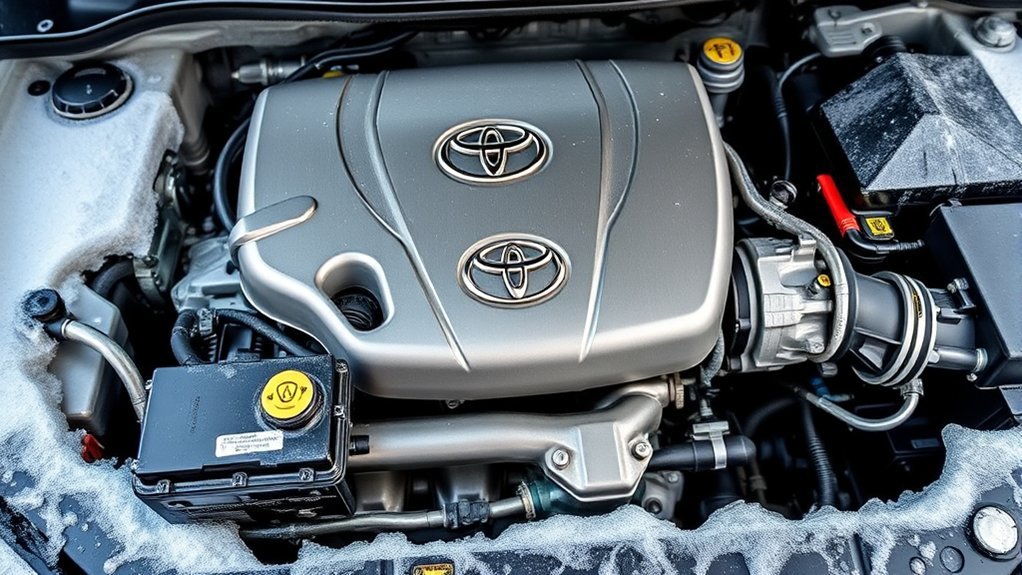
Toyota RAV4 engine bay cleaning should be dry-first, not pressure-washed. Toyota’s current RAV4 owner guidance warns against applying water inside the engine compartment because wet electrical components can create a fire risk. For routine cleaning, vacuum loose debris, apply cleaner to a cloth or soft brush, use only a thoroughly wrung-out damp microfiber for residue, and let the bay dry completely before restarting.
Last updated: September 19, 2026 — manufacturer guidance, source links, and safety steps rechecked for this revision.
Quick Answer
Do not power wash or hose-rinse a Toyota RAV4 engine bay. Toyota warns against applying water inside the engine compartment because electrical components may be affected and may create a fire risk. Remove loose dirt dry, apply a compatible cleaner to a cloth or brush, wipe residue with a thoroughly wrung-out damp microfiber, and let the bay dry fully before restarting.
Key Takeaways
- Toyota advises against applying water inside the RAV4 engine compartment, so the owner guidance does not provide a manufacturer-approved pressure-washer setting for under-hood cleaning.
- Use a dry-first method: vacuum loose debris, agitate grime with soft brushes, and spot-clean with a product applied to the cloth or brush.
- Keep electrical connectors, the fuse and relay box, alternator, intake openings, sensors, ignition parts, and aftermarket wiring dry.
- On Hybrid and Plug-in Hybrid models, never touch or clean orange high-voltage cables, high-voltage connectors, the service plug, inverter components, or charging hardware.
- Do not start the vehicle if water may have entered the intake or if connectors, ignition components, or hybrid-system parts remain wet.
At a Glance
| Best DIY Scope | Loose dust, leaves, light road film, and accessible cosmetic grime |
| Avoid DIY Cleaning When | There is flood exposure, fuel odor, damaged wiring, a major fluid coating, or damaged high-voltage hardware |
| Tools Needed | Gloves, microfiber cloths, soft detailing brushes, vacuum, absorbent pads, compatible automotive cleaner, and an optional low-pressure blower |
| Main Rule | Keep liquid controlled: apply cleaner to the tool, not across the engine bay, and do not pressure-wash or hose-rinse under the hood |
Warning: Toyota’s current RAV4 owner guidance says not to apply water inside the engine compartment because electrical components can be affected. Use Toyota’s Manuals and Warranties portal to select the manual for your exact model year and powertrain. Covering a few components or selecting a lower pressure does not turn pressure washing into a Toyota-approved under-hood cleaning method.
Which RAV4 Engine-Bay Cleaning Method Should You Use?
Match the cleaning method to the contamination instead of reaching for more water. This keeps routine cosmetic cleaning separate from leak repair, flood inspection, and high-voltage service.
| Condition | Safer Approach | Reason |
|---|---|---|
| Loose dust or leaves | Vacuum, soft brush, dry microfiber | Usually needs no liquid at all |
| Light road film or fingerprints | Cleaner on cloth or brush, then a wrung-out damp wipe | Controls exactly where moisture goes |
| Recurring oil or coolant residue | Diagnose and repair the leak before cosmetic cleaning | Repeated degreasing can hide the source without fixing it |
| Flood exposure, fuel odor, damaged wiring, or high-voltage damage | Professional inspection | Cleaning is secondary to electrical, fire, and contamination hazards |
Why this guide is stricter than generic detailing advice: Many general engine-bay guides allow a low-pressure rinse. Toyota’s RAV4 guidance is more conservative: do not apply water inside the engine compartment. For a RAV4, the model-specific owner guidance should take priority over generic detailing habits.
Why Cleaning Your Engine Bay Can Help With Maintenance
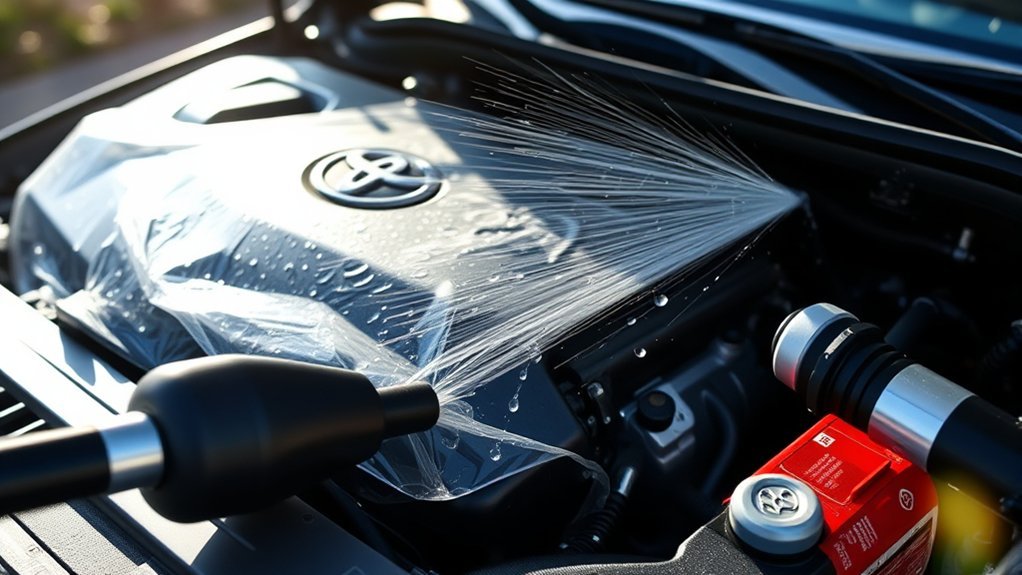
A reasonably clean engine bay can make visual inspections easier. With less dust and oily residue in the way, you may notice a fresh fluid leak, cracked hose, damaged wire loom, loose connector, rodent debris, or missing fastener sooner.
Cleaning does not increase horsepower, improve fuel economy, or replace scheduled maintenance. Its practical value is visibility and access. If the bay becomes oily again shortly after cleaning, treat that as a possible leak rather than a sign that it needs another wash.
A clean engine bay can reveal leaks and damaged wiring more clearly, but cosmetic cleaning does not repair a mechanical problem or improve engine output.
A tidy bay may also make routine servicing easier and improve its appearance for a future buyer. However, resale effects are not guaranteed, and vehicle-inspection requirements differ by location. Cleanliness should never be used to conceal an active leak or recent repair.
[Amazon Products Picked for You]

【COMPLETE 10-PCS UNDER HOOD DETAILING KIT】 Everything you need for a deep engine bay clean. This pro-grade set features our Extra-Long Flexible Brush, a unique natural bamboo horsehair Bristle Brush , a Soft Detailing Brush, a Heavy-Duty Scrub Brush, a Plush Wash Mitt, Two Hex-Logic Applicators for protectants, a Twist Loop Drying Towel, and a durable HDPE Tote Storage Bag. Tackle grease, dust, and grime on any vehicle.

10x GRIP-ROOT WEAVE - TRAP MORE, WORK LESS: Ultra-absorbent microfiber towels Grip Root weave works like PLANT ROOT FOLLICLES, sucking up & LOCKING AWAY 8x to 10x its weight in liquid, particulates, moisture, grime and dirt in far LESS TIME than traditional ‘Heavy Duty’ Cleaning Rags.

High-Quality Tire Cleaning Brush Kit: This wheel cleaning kit contains a premium soft-bristle gray tire brush, a dedicated stiff-bristle rim cleaner brush, and a boar bristle detail brush. It effortlessly cleans dust and grime from tires, wheel rims, and lug nut surfaces without causing scratches.
Essential Preparations Before Cleaning
Prepare the vehicle and work area before touching any engine-bay component.
- Park safely: Choose a level, shaded, well-ventilated area. Apply the parking brake and keep the hood fully supported.
- Turn the vehicle completely off: Confirm that a Hybrid or Plug-in Hybrid RAV4 is not in READY mode. Keep the smart key several feet away so the vehicle cannot be activated accidentally.
- Let every component cool: Do not work around a hot engine, radiator, exhaust component, inverter, coolant circuit, or cooling fan. Electric fans can start unexpectedly under some conditions.
- Inspect before cleaning: Look for fuel odor, active oil or coolant leaks, damaged wiring, loose connectors, exposed copper, rodent damage, or orange high-voltage components that appear damaged. Stop and arrange professional service if you find any of these conditions.
- Remove loose debris: Pick out leaves and large debris by hand while wearing gloves. Use a vacuum and soft brush for dust in corners and around plastic covers.
- Control drips: Place absorbent pads or towels below greasy areas. Do not allow oil, degreaser, or dirty runoff to enter a street or storm drain.
Note: RAV4 layouts and precautions vary by model year, market, and powertrain. Use Toyota’s Manuals and Warranties portal to select the document that matches your exact vehicle before cleaning.
Should You Disconnect the 12-Volt Battery?
Do not disconnect the negative battery terminal solely to make cosmetic cleaning safer. Removing battery power does not waterproof connectors, isolate every circuit, or eliminate hybrid-system hazards.
Battery disconnection can also erase settings or require certain systems to be initialized again. For example, Toyota’s 2023 RAV4 Quick Reference Guide says the power back door needs reinitialization after battery disconnection. That is a model-year-specific example, not a rule for every RAV4.
If you are disconnecting the 12-volt battery for an actual repair rather than cosmetic cleaning, follow the year-specific procedure in the owner/service information. See our RAV4 12-volt battery replacement guide for the separate replacement workflow.
Leave the battery connected unless the owner’s manual or a specific repair procedure for your model instructs otherwise. Keeping the ignition off, the key away, and liquid out of the bay is more important than disconnecting the battery.
Which RAV4 Engine-Bay Components Must Stay Dry?
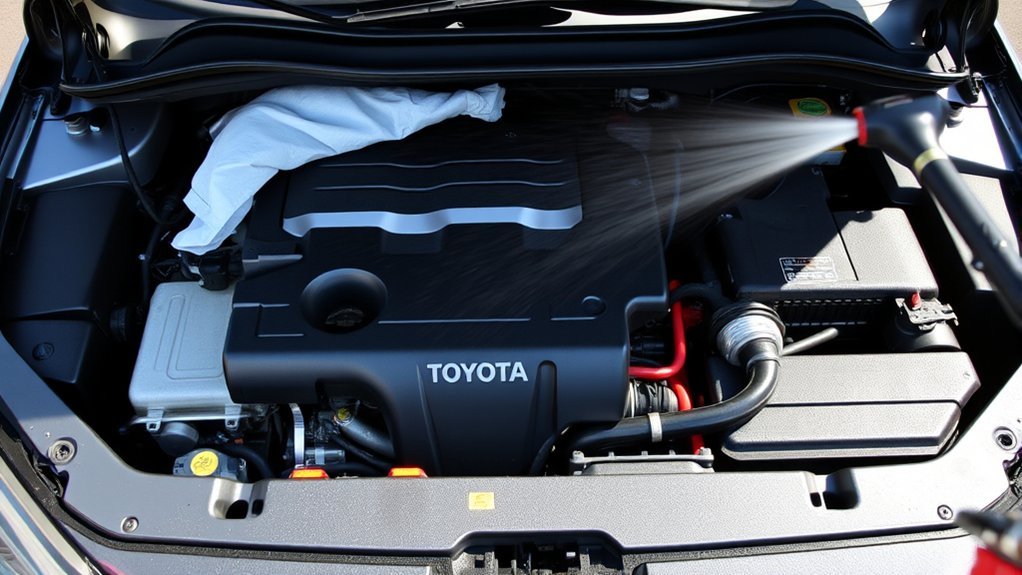
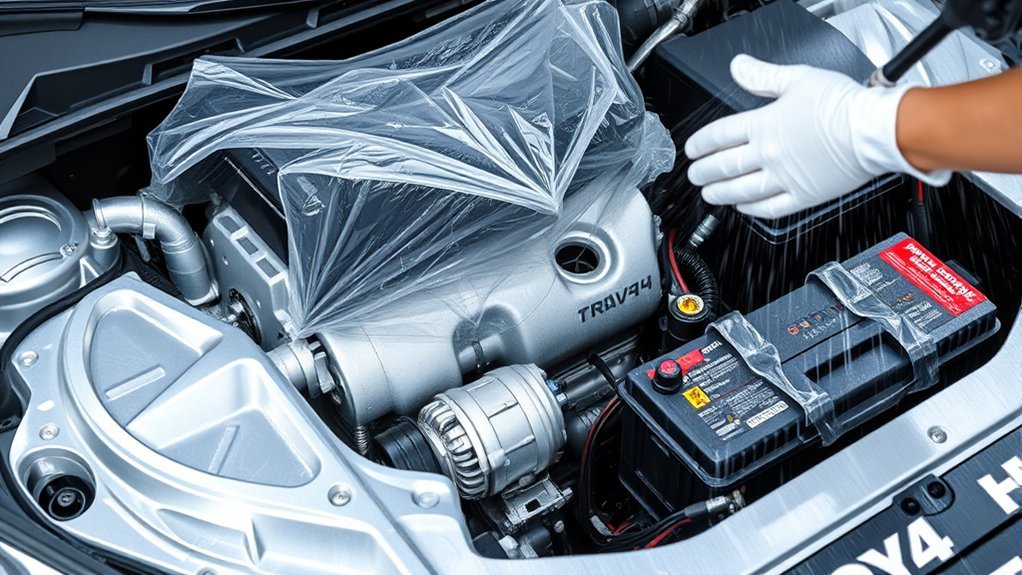
The safest protection is to avoid spraying the engine compartment. Plastic covers or bags may provide limited backup protection during localized damp cleaning, but they should never be treated as waterproof barriers.
[Amazon Products Picked for You]

🚗【Professional 26 Pcs-in-1 Car Cleaning Kit】 The complete and decent car detailing kit equipped with 5 * detailing brush set, 4 * drill brushes, 3 * wire brush, 2 * vent cleaning brush, 1 * wheel brush, 1 * tire brush, 1 * detachable handle, 4 * of strong water absorption cloth cover and a 100ml spray bottle, 1 * dash duster brush, 1 * towel, 1 * car wash mitt, 1 * storage bag. Excellent completion of all works required for external and internal details! A gift for car buffs. Best gifts for men, dad, father's day gifts tool.

【Value 27PCS-in-1 Car Detailing Kit】Our 27 pcs car detailing kit including car Detailing Drill Brushes*5, Car Detailing Brushes*5, Wire Brushes*3, car dash duster Brush*1, tire brush*1, air outlet brush*1, Car Wash Mitt*1, microfiber wax applicator*2, Car Washing Towel*2, Car Foam Drill Polishing Pads*2, Woolen Polishing Pad*2, Sponge Backer*1, tool box * 1. The car accessories for men can satisfy your car’s internal and external beauty and cleaning.(Drill not include). It's pefect valentines day gifts for him, men!

RESTORES THAT FACTORY-FRESH LOOK: Our engine interior dressing spray revives dull engine bay surfaces or a clean, factory-new finish
Electrical Connectors, Fuse Box, Alternator, and Sensors
Keep liquid away from the fuse and relay box, alternator, battery terminals, ignition coils, spark-plug wells, electronic control modules, sensor connectors, ground points, and exposed aftermarket wiring.
Do not force a brush into a connector, pull on wiring, or open electrical housings for cleaning. If a connector seal is cracked, loose, or missing, have it repaired rather than attempting to wash around it.
Air Intake Components
Never direct liquid toward the air-filter housing, intake snorkel, mass-airflow sensor, throttle body, intake manifold openings, or any disconnected intake tube. Water entering the intake can cause a no-start condition or severe internal engine damage.
Keep the air-filter housing closed during cleaning. If the filter or housing is dirty inside, service it according to the owner’s manual instead of trying to rinse it in place.
Hybrid and Plug-in Hybrid Components
Orange cables and orange-marked connectors identify high-voltage components. Do not touch, disconnect, open, scrub, or spray them. Keep cleaning tools and liquid away from the inverter assembly, high-voltage service plug, electric-drive components, onboard charging equipment, and associated high-voltage connectors. Do not remove covers or attempt high-voltage service for cleaning access.
Warning: Stop immediately if an orange cable, high-voltage connector, inverter cover, or charging component is damaged or wet from flooding. Do not attempt to disconnect the high-voltage battery yourself. Arrange inspection by a qualified Toyota or hybrid-vehicle technician.
How Do You Clean a Toyota RAV4 Engine Bay Safely?
Use a dry-first process and introduce only the smallest amount of moisture needed for stubborn grime.
- Vacuum loose dirt: Use a crevice attachment around the cowl, plastic covers, hood channels, and accessible ledges. Keep the nozzle from striking wires or connectors.
- Agitate dry dust: Loosen dust with a clean, soft detailing brush while holding the vacuum nearby to capture it.
- Wipe broad surfaces: Use a dry microfiber cloth on plastic covers, painted metal edges, and other accessible surfaces.
- Choose a suitable cleaner: Use a water-based, non-caustic automotive cleaner only on surfaces the product label identifies as compatible. Spot-test an inconspicuous area first and follow the label’s dilution and dwell-time instructions.
- Apply cleaner to the tool: Put a small amount on the microfiber cloth or brush rather than spraying it throughout the bay. This gives you control over where the product goes.
- Work one small area at a time: Gently loosen grease, then lift it away with a clean cloth. Do not let cleaner dry on the surface.
- Remove residue: Wipe the area with a separate microfiber cloth that has been dampened and wrung out thoroughly. The cloth should not drip.
- Dry immediately: Follow with a dry towel. An optional handheld blower may be used at low pressure and from a distance, but do not force air into connectors, seals, the intake, or electrical housings.
- Inspect your work: Confirm that no cloth, brush, plastic covering, or loose debris remains near belts, fans, pulleys, terminals, or hot components.
- Record anything unusual: Note fresh fluid, damaged insulation, cracked hoses, corroded terminals, or recurring grime in your maintenance log and arrange repair when needed.
Pro Tip: Use several inexpensive detailing brushes and microfiber cloths so that grease from one area is not spread over connectors, painted surfaces, or plastic trim. Retire any cloth that becomes heavily contaminated with oil or grit.
[Amazon Products Picked for You]
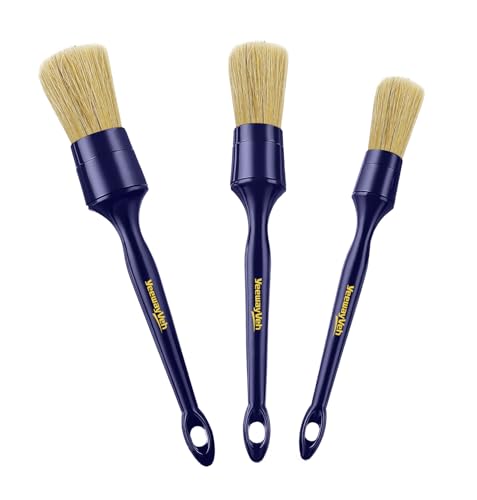
BOAR HAIR DETAILING BRUSH SET: YeewayVeh detailing brush set is made of premium densely bristles, these car detailing brushes can be used with various cleaner for easily and efficiently clean, multi-functional are great for professional detailer.

17" LONG HANDLE FOR HARD-TO-REACH AREAS – Extended handle design allows you to easily clean deep wheel wells, fender flares, undercarriages, suspension parts, and other tight areas without straining your hands or arms.
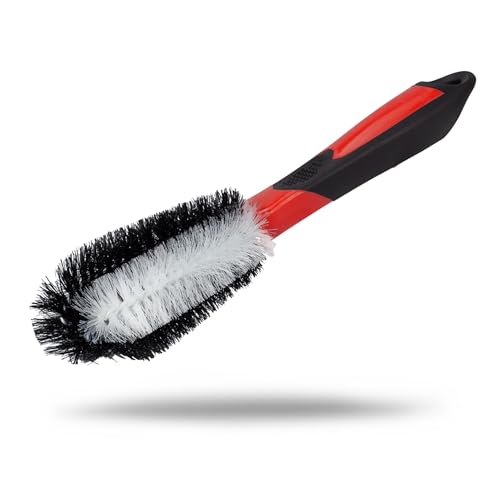
UNIVERSAL COMPATIBILITY – Safe and effective for cleaning engines, wheels, vents, grills, motors, and delicate components in cars, trucks, SUVs, boats, and RVs.
What Should You Avoid When Cleaning a RAV4 Engine Bay?
Can You Pressure Wash or Hose Down a RAV4 Engine Bay?
No—not if you are following Toyota’s owner guidance. Do not spray the RAV4 engine compartment with a pressure washer, garden hose, steam cleaner, or unrestricted pump sprayer. A wider nozzle, lower pressure, or greater distance may reduce impact force, but it does not change Toyota’s warning against applying water inside the engine compartment.
Pressure-washer instructions for the exterior body, wheels, sensors, or underbody are not approval to use the same equipment under the hood. The engine compartment contains intake openings, ignition parts, connectors, and electronic components that require a different cleaning approach.
Ignoring Electrical Components
Do not assume a connector is waterproof because it has a rubber seal. Age, heat, previous repairs, dirt, or a misaligned lock can compromise that seal. Avoid spraying cleaners directly onto sensors, connectors, fuse boxes, ignition coils, battery terminals, and wiring junctions.
Cleaning a Hot Engine
Applying cleaner to hot parts can cause rapid evaporation, staining, fumes, or skin burns. Hot exhaust and cooling-system components are especially hazardous. Wait until the engine bay is cool to the touch.
Using Strong Solvents or Abrasive Tools
Avoid gasoline, brake cleaner, paint thinner, harsh oven cleaners, undiluted caustic degreasers, wire brushes, and abrasive pads. These products can damage labels, paint, aluminum, plastics, rubber, insulation, and protective coatings.
Starting the Vehicle While the Bay Is Wet
Do not use engine heat as the primary drying method. Starting the vehicle before inspection may energize a wet circuit, pull moisture into the intake, or expose a damp area to moving belts and fans.
Applying Dressing to the Wrong Parts
A protective dressing is optional. If you use one, apply a small amount only to compatible exterior plastic covers according to the label. Never put dressing on belts, pulleys, electrical connectors, terminals, intake openings, hoses unless specifically approved, or hot exhaust components.
What Should You Do After Cleaning the Engine Bay?
- Remove every temporary covering: Account for all bags, tape, towels, absorbent pads, and tools before lowering the hood.
- Check for trapped moisture: Inspect connector recesses, spark-plug areas, the air-filter housing, fuse-box edges, battery terminals, and low points where liquid could collect.
- Allow additional drying time: Leave the hood open in a dry, ventilated location until all cleaned areas are dry.
- Confirm the intake is secure: Make sure the air-filter housing, intake ducts, clamps, and caps are properly closed and seated.
- Start only when dry: Once the bay is dry and clear of tools, start the vehicle and watch for warning messages, unusual noises, rough running, or odors.
- Reinspect for leaks: After a short drive, look for fresh oil, coolant, or other fluid that may now be easier to see.
Document the date, mileage, cleaner used, and anything unusual you found. Cleaning records can help distinguish an old stain from a leak that appeared recently.
What If Your RAV4 Runs Poorly After Engine-Bay Cleaning?
If the vehicle behaves differently after cleaning, do not assume it will correct itself. A warning light, misfire, no-start, or hybrid-system message means the cleaning process may have exposed a problem that needs diagnosis.
- Warning light or system message: Turn the vehicle off, photograph or write down the exact message, and inspect only for obvious external moisture or a loose component. Do not disconnect random connectors to clear the warning.
- Rough idle or misfire: Shut the engine off. Moisture may have reached an ignition coil, spark-plug well, sensor, or connector. Continuing to run a misfiring engine can overheat the catalytic converter. After the bay is dry, use normal diagnostic steps rather than adjusting idle settings; our RAV4 rough-idle troubleshooting guide explains that workflow.
- No-start condition: Stop repeated starting attempts. Check whether the intake, fuse area, battery connections, or ignition components became wet and arrange professional diagnosis.
- “Check Hybrid System” or charging warning: Turn the vehicle off and contact a qualified Toyota or hybrid-system technician. Do not touch orange cables or attempt high-voltage repairs.
- Water may have entered the intake: Do not start or crank the engine. Have the intake and cylinders inspected before attempting to run it.
- Burning smell, smoke, heat, or electrical arcing: Move away from the vehicle and contact emergency services if there is an active fire. Do not touch the vehicle or attempt to disconnect a high-voltage system.
How Often Should You Clean a RAV4 Engine Bay?
Toyota does not list routine engine-bay washing as a scheduled maintenance item in its 2026 RAV4 Warranty and Maintenance Guide. There is no Toyota-published fixed engine-bay-cleaning interval.
Clean only when dirt or debris interferes with inspection, after significant dust or mud exposure, or after a repaired leak leaves residue that should be removed. If oil or coolant returns after cleaning, diagnose the source instead of increasing the cleaning frequency.
Environmental and Wastewater Precautions
Engine grime can contain oil, grease, metals, road residue, and cleaning chemicals. The U.S. Environmental Protection Agency’s vehicle-maintenance and washing guidance notes that vehicle washing and maintenance can release hydrocarbons, metals, and other pollutants to stormwater and local waterways.
- Use as little cleaner and water as possible.
- Place absorbent pads beneath greasy areas before cleaning.
- Do not rinse oil, degreaser, or dirty liquid into a driveway, street, storm drain, stream, or soil.
- Dispose of contaminated towels, absorbent material, and collected liquid according to the cleaner label and local waste rules.
- For a heavily contaminated bay, use a professional detailer or repair facility that can capture and manage wastewater.
When Should a RAV4 Engine Bay Be Cleaned Professionally?
Professional service is the safer option when the bay has a major oil or coolant coating, flood exposure, fire-extinguisher residue, rodent-damaged wiring, exposed conductors, damaged connectors, fuel odor, aftermarket electrical modifications, or contamination around hybrid-system components.
A technician should repair an active leak before the area is cleaned. Otherwise, the new fluid may immediately soil the bay again and make it harder to confirm whether the repair succeeded.
Frequently Asked Questions
Is it safe to power wash a Toyota RAV4 engine bay?
No. Toyota’s current RAV4 owner guidance says not to apply water inside the engine compartment because electrical components may be affected. A lower pressure, wider nozzle, greater distance, or plastic covering does not remove that risk. Use a dry-first, controlled damp-wiping method instead.
Can I use a regular garden hose instead of a pressure washer?
A hose produces less impact than a pressure washer, but it can still flood connectors, ignition components, the fuse box, or the intake. Do not hose-rinse the engine compartment. Use a damp, thoroughly wrung-out microfiber cloth for residue removal.
Should I disconnect the battery before cleaning?
Not for routine cosmetic cleaning unless the exact owner’s manual or a repair procedure instructs you to do so. Disconnecting the 12-volt battery does not waterproof components and may erase settings or require systems such as the power back door to be reinitialized.
How often should I clean my RAV4 engine bay?
Clean it as needed rather than on a fixed schedule. Toyota does not publish a routine engine-bay-cleaning interval. Clean when dust, leaves, or mud interfere with inspection, and diagnose any oil or coolant that returns after cleaning instead of repeatedly degreasing the area.
What degreaser is safe for a Toyota RAV4 engine bay?
Use a non-caustic, water-based automotive cleaner only on surfaces its label identifies as compatible. Follow the dilution and dwell-time directions, spot-test first, and apply the product to a cloth or brush rather than spraying the engine bay.
How should I dry the engine bay after cleaning?
Wipe each area immediately with a dry microfiber cloth and leave the hood open in a dry, ventilated location. A low-pressure handheld blower may help, but do not force air into connectors, seals, the intake, or electrical housings. Start the vehicle only after the bay is fully dry.
What should I do if the RAV4 runs poorly after cleaning?
Turn the vehicle off and stop repeated starting attempts. Record any warning message and arrange diagnosis, especially if the engine misfires, the vehicle will not start, or a hybrid-system warning appears. Do not touch orange high-voltage cables or open electrical housings.
Conclusion
For Toyota RAV4 engine bay cleaning, use the least moisture that will do the job. Toyota’s warning against applying water inside the engine compartment makes a dry-first, controlled-wipe method the appropriate default. Work on a cool, fully switched-off vehicle, keep electrical and intake components dry, stay away from high-voltage parts, and apply cleaner only where you can control it.
After cleaning, remove every covering and tool, confirm that the intake and connectors are dry, and watch for warning lights or rough operation at startup. For heavy contamination, flood exposure, damaged wiring, active leaks, or hybrid-system concerns, leave the job to a qualified professional.
Sources
- Toyota Manuals and Warranties — select the exact RAV4 model year and powertrain; current owner guidance includes the engine-compartment water warning.
- Toyota 2023 RAV4 Quick Reference Guide — battery-disconnection and power-back-door reinitialization information.
- Toyota 2026 RAV4 Warranty and Maintenance Guide — factory maintenance and inspection guidance.
- U.S. EPA: Vehicle Maintenance and Washing — detergent, hydrocarbon, metal, grease, and stormwater-runoff precautions.
