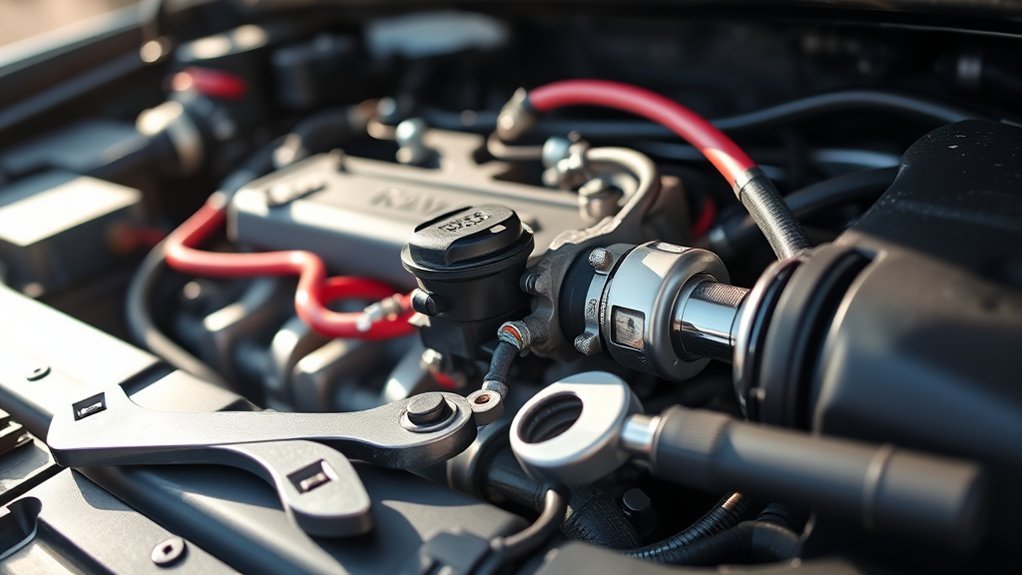
Before you try to adjust idle on a Toyota RAV4, know that a low, rough, or unstable idle can come from several different problems, and the correct fix depends on the model year, engine, and whether the vehicle uses a separate idle air control valve or an electronic throttle body. Before cleaning parts or changing settings, confirm the symptom, scan for trouble codes, and inspect the intake system for leaks or loose connections.
Quick Answer
To fix a Toyota RAV4 with a low or rough idle, first read stored and pending trouble codes, confirm the actual engine speed, and inspect the air-intake tube, vacuum and PCV hoses, electrical connectors, and battery condition. Clean the throttle body only when inspection supports it, and never adjust a throttle stop or idle screw without the exact Toyota service procedure.
Key Takeaways
- Identify the model year and engine before assuming your RAV4 has a separate idle air control valve.
- Read diagnostic trouble codes and save freeze-frame data before clearing anything or replacing parts.
- A true low-RPM condition differs from vibration caused by worn engine mounts at a normal idle speed.
- Vacuum leaks, intake duct damage, throttle deposits, misfires, purge-valve faults, and sensor problems can all affect idle quality.
- Do not use a universal online “idle reset” sequence. Follow the procedure for your exact RAV4 or use factory-level diagnostic information.
At a Glance
| Time Required | 20 to 60 minutes for basic checks; longer if smoke testing or component testing is needed |
| Difficulty | Beginner for inspection and code reading; intermediate for throttle-body service; professional for smoke tests and electrical diagnosis |
| Tools Needed | OBD-II scan tool, flashlight, basic hand tools, gloves, eye protection, and throttle-body-safe cleaner if cleaning is justified |
| Cost | Little or no cost for inspection; repair cost depends on the confirmed fault |
Understanding Idle Issues in Toyota RAV4

Start by describing what the RAV4 is actually doing. A low idle means the engine speed is below the value expected by the engine control module. A rough idle means the engine shakes, misses, or runs unevenly. Those symptoms can occur together, but they do not always have the same cause.
Record whether the problem happens when the engine is cold or fully warm, in Park or Drive, with the air conditioner on or off, or only after the battery was disconnected. Also note whether the engine stalls, the check engine light is on, or the problem began after recent repair work.
Your RAV4’s system also matters. Some older engines use a separate idle air control valve. Many later engines control idle through an electronic throttle body. A RAV4 Hybrid can also stop and restart its gasoline engine during normal operation, so confirm that the behavior is abnormal before treating it as an idle fault. Use Toyota’s model-specific manuals or factory service information for the exact engine.
Warning: Do not turn a throttle stop screw or “idle set screw” as a general repair. On an electronic throttle system, idle is controlled by the engine computer. Changing a factory-set stop can create new drivability, emissions, and safety problems.
Common Causes of Low or Rough Idle
The most likely cause depends on the symptoms and scan data. Avoid replacing sensors simply because they appear on a generic list. Inspect and test the system first.
- Air leak after the airflow sensor: A cracked intake boot, loose clamp, split vacuum hose, leaking intake gasket, or PCV-system fault can upset the air-fuel mixture.
- Throttle-body deposits: Deposits around the throttle plate can reduce the small amount of airflow needed at idle, especially after learned values have been reset.
- Idle air control problem on an equipped engine: An older RAV4 with a separate IAC valve can have a restricted passage, wiring fault, or failed valve.
- Misfire: Worn spark plugs, an ignition-coil fault, injector trouble, low compression, or an air-fuel problem can make the engine shake or stall.
- Airflow or temperature input error: A contaminated mass airflow sensor, incorrect coolant-temperature reading, loose connector, or wiring problem can affect fueling and idle control.
- EVAP purge valve stuck open: Excess vapor flow at idle can create a rough or lean condition, often after refueling.
- EGR fault, if equipped: An EGR valve that does not close at idle can cause rough running or stalling.
- Low system voltage or poor grounds: A weak battery, charging problem, or corroded connection can cause unstable electronic control.
- Engine mounts: Worn mounts can transmit more vibration into the cabin, but they do not normally lower the actual engine speed.
Faulty Engine Mounts
Check the tachometer or scan-tool RPM before blaming the engine management system. If the RPM is stable but the steering wheel, seat, or dashboard vibrates heavily in Drive, worn mounts may be making a normal idle feel rough.
Inspect accessible mounts for torn rubber, collapsed supports, fluid leakage from hydraulic mounts, or excessive engine movement when load changes. Mount testing should be done carefully with the parking brake applied and a helper in control of the vehicle.
Dirty IAC Valve or Electronic Throttle Body
Do not assume the vehicle has an IAC valve. Confirm the component layout for your exact year and engine. If a separate valve is present, inspect its connector, wiring, air passages, and related trouble codes before removing it.
On an electronic throttle system, the throttle motor and position sensors are part of the throttle-body assembly. Deposits can affect minimum airflow, but cleaning should follow the service information for that assembly. Do not force the plate, soak the electronics, or alter the mechanical stop.
How to Diagnose RAV4 Idle Problems Effectively
- Confirm the symptom. Note the warm idle speed, whether it changes in Drive, and whether accessory loads affect it.
- Scan before clearing codes. Read stored, pending, and permanent codes. Save freeze-frame data because it shows conditions when the fault was detected.
- Check for misfire and fuel-control clues. Look for cylinder misfire data, fuel trims, coolant temperature, airflow readings, and throttle data if your scan tool supports them.
- Inspect the intake path. Check the air-filter housing, intake tube, clamps, PCV hoses, vacuum lines, oil cap, dipstick, and electrical connectors.
- Check battery and charging voltage. Low voltage can create misleading symptoms and communication faults.
- Test suspected parts. Use a smoke test, electrical test, pressure test, or component command test instead of replacing parts from a code description alone.
- Repair, clear codes, and verify. Confirm the idle is stable when warm, in gear, and with normal accessory loads. Recheck for pending codes after a road test.
Pro Tip: Do not clear codes at the start. Freeze-frame data and learned fuel-trim values can help you separate an air leak, misfire, sensor problem, and post-battery-disconnect relearn issue.
Cleaning the Throttle Body Safely
Throttle-body cleaning can help when deposits are visible and the diagnosis supports restricted idle airflow. It will not repair a vacuum leak, failed ignition coil, damaged sensor circuit, weak fuel supply, or worn engine mount.
Tools Needed for Cleaning
- Throttle-body cleaner labeled safe for the application
- Lint-free cloths or clean shop towels
- Basic sockets or screwdrivers for the intake duct
- Gloves and eye protection
- A replacement intake clamp, hose, or gasket if damage is found
A torque wrench may be required if the throttle body must be removed. Use the exact torque specification for the model rather than a universal value.
Step-by-Step Cleaning Process
- Park safely. Set the parking brake, switch the engine off, let it cool, and keep the key or smart key away from the vehicle.
- Check the service procedure. Confirm whether the throttle plate may be moved by hand and whether battery disconnection is required. Do not disconnect the battery as a routine step because doing so can erase learned values.
- Remove the intake duct. Loosen the clamps and disconnect only the hoses or connectors needed for access. Photograph their positions before removal.
- Inspect before cleaning. Look for cracks in the duct, loose clamps, heavy deposits, oil contamination, or damaged wiring.
- Clean carefully. Apply cleaner to a lint-free cloth rather than flooding the throttle body. Wipe the bore and accessible plate edge without forcing the mechanism or spraying the motor and connector.
- Reassemble completely. Reconnect every hose and electrical connector, seat the duct fully, and tighten clamps securely.
- Start and verify. Start the engine with accessories off and allow it to stabilize. Follow the model-specific relearn or road-test procedure when required.
Note: A brief change in idle after cleaning or battery service may occur while the control system relearns. Stalling, a warning light, or a condition that does not improve requires diagnosis rather than repeated cleaning.
Checking for Vacuum and Intake Leaks
An unmetered-air leak can have a strong effect at idle because the engine is using relatively little airflow. Begin with the engine off and inspect the complete path from the air-filter housing to the intake manifold.
- Inspect the intake boot. Flex the rubber or plastic duct and look underneath for splits that hide when the duct is installed.
- Check clamps and fittings. Confirm that the air box, throttle-body duct, breather hose, and PCV connections are secure.
- Inspect small hoses. Look for hardened ends, cracks, disconnected lines, or previous repairs near the intake manifold.
- Check the PCV system. A stuck valve, damaged hose, or poor seal can create an air leak or oil-contamination problem.
- Use a smoke test when needed. A low-pressure automotive smoke machine can reveal leaks without spraying flammable solvent around a running engine.
- Verify the repair with scan data. Recheck idle quality, fuel trims, and pending codes after the leak is repaired.
Warning: Do not spray carburetor cleaner, brake cleaner, starting fluid, or another flammable aerosol around a hot or running engine to search for leaks. Fire, inhalation, paint damage, and sensor damage are possible.
Testing Sensors and Related Systems

A trouble code identifies a circuit or operating condition, not automatically a failed part. For example, a lean code can result from an air leak, weak fuel delivery, exhaust leak, purge-valve problem, or inaccurate airflow reading. Replacing an oxygen sensor without testing can leave the real cause untouched.
Compare scan data with engine temperature and operating conditions. A cold engine should not be judged by warm-idle behavior. A coolant-temperature reading that is clearly implausible, an airflow value that does not respond normally, or a throttle signal that disagrees with commanded position deserves further testing.
Inspect sensor connectors for bent pins, oil or water intrusion, broken locks, and rubbed wiring. If the fault appeared after service, first check every connector and hose near the repaired area.
A diagnostic code should guide the next test. It should not be treated as an instruction to replace the component named in the code description.
Idle Relearn After Battery or Throttle-Body Service
No single pedal, ignition, brake, or gear-shift sequence applies to every Toyota RAV4. The correct procedure can vary by model year, engine control system, software calibration, and the repair that was performed.
After reassembly, make sure all intake connections are sealed and all accessories are off. Start the engine and allow it to reach normal operating temperature without repeatedly pressing the accelerator. If the idle does not stabilize, check for a missed hose, loose clamp, stored code, or deposit-related airflow problem.
Some vehicles relearn during normal warm idle and driving. Others may require a Toyota-compatible scan tool or a specific factory procedure. Use Toyota Technical Information System or a qualified technician for the exact method.
Maintenance That Helps Prevent Idle Problems
- Follow the maintenance schedule for the exact year, engine, and driving conditions.
- Replace spark plugs at the specified interval and diagnose ignition coils individually when a misfire occurs.
- Keep the engine air filter and air box properly installed, but do not assume a slightly dirty filter is the cause of every idle complaint.
- Inspect intake, PCV, and vacuum hoses when servicing the air filter or throttle body.
- Use the correct engine oil and address oil leaks that contaminate connectors or intake components.
- Keep battery terminals clean and repair charging-system problems promptly.
- Investigate warning lights and drivability changes early instead of repeatedly clearing codes.
Toyota does not use one universal throttle-body cleaning interval for every RAV4. Inspect and clean based on the model-specific service information, symptoms, and actual deposit buildup rather than an unsupported mileage rule.
When to Seek Professional Help for Idle Problems

Professional diagnosis is the safest choice when the RAV4 stalls in traffic, will not stay running, has a flashing check engine light, smells strongly of fuel, overheats, loses oil pressure, or has severe knocking or mechanical noise. A flashing malfunction indicator can accompany a catalyst-damaging misfire, so reduce driving and arrange service.
Use Toyota’s warning-light information and your owner’s manual to interpret the exact indicator. You can also check the VIN through Toyota’s recall and service-campaign lookup or the NHTSA recall database.
Persistent Idle Issues
Get help when basic inspection, a verified repair, and the proper relearn do not restore a stable idle. A technician can smoke-test the intake, command components with a scan tool, check fuel pressure, inspect ignition waveforms, and perform compression or leak-down testing.
Unusual Engine Behavior
Stop treating the problem as a simple idle complaint if you also have hard starting, major power loss, overheating, loud mechanical noise, heavy exhaust smoke, or repeated stalling. Those symptoms can point to fuel, timing, compression, cooling, or exhaust restrictions that require deeper testing.
Warning Light Activation
A steady check engine light calls for timely diagnosis. A flashing light, red oil-pressure warning, or high-temperature warning deserves immediate attention. Do not keep driving simply because the engine still runs.
Frequently Asked Questions
What RPM should a Toyota RAV4 idle at?
The correct idle speed varies by model year, engine, coolant temperature, transmission position, and accessory load. Use the specification or scan data for your exact RAV4. A cold engine normally idles faster than a fully warm engine.
Can I adjust the idle speed myself?
Do not adjust a throttle stop or idle screw unless the factory procedure for your exact engine specifically requires it. On electronic throttle systems, the engine control module manages idle speed. Manual adjustment can create new faults.
Can a dirty air filter cause a rough idle?
A severely restricted or incorrectly installed filter can affect airflow, but a small amount of dirt is not the first cause to assume. Check the filter housing, intake duct, clamps, airflow sensor connection, codes, and fuel-trim data.
Can disconnecting the battery cause a low idle?
Battery disconnection can erase learned values on some vehicles. If deposits or another airflow problem were being compensated for, the idle may be unstable until the system relearns. Persistent stalling or warning lights still require diagnosis.
How often should I clean the throttle body?
Use the maintenance and service information for your specific RAV4. Clean it when inspection and symptoms support the need, not automatically at a universal mileage interval. Unnecessary cleaning can damage coatings, seals, or electronics if done incorrectly.
Can bad engine mounts make the idle seem too low?
Yes. Worn mounts can transmit vibration into the cabin even when the engine speed is normal. Compare actual RPM with the model specification before treating vibration as an idle-control problem.
Conclusion: Fix the Cause, Not the Idle Setting
A Toyota RAV4 with a low or rough idle needs a structured diagnosis. Confirm the symptom, identify the engine-control system, save scan data, inspect the intake and electrical connections, and test the most likely cause. Throttle-body cleaning can help in the right situation, but it should not replace diagnosis.
Most importantly, avoid generic idle-screw adjustments, unverified relearn sequences, flammable leak-testing sprays, and unnecessary sensor replacement. Use the exact Toyota manual or service information when procedures differ by year and engine, and seek professional help when the vehicle stalls, flashes a warning light, or shows signs of a mechanical problem.
Sources
- Toyota Manuals and Warranties — model-specific owner’s manuals and maintenance information
- Toyota Technical Information System — factory repair manuals, service bulletins, wiring diagrams, and diagnostic information
- Toyota Warning Lights — model-specific warning indicator guidance
- Toyota Recall and Service Campaign Lookup — VIN-based Toyota campaign information
- National Highway Traffic Safety Administration Recall Lookup — U.S. recall, investigation, complaint, and manufacturer-communication search
