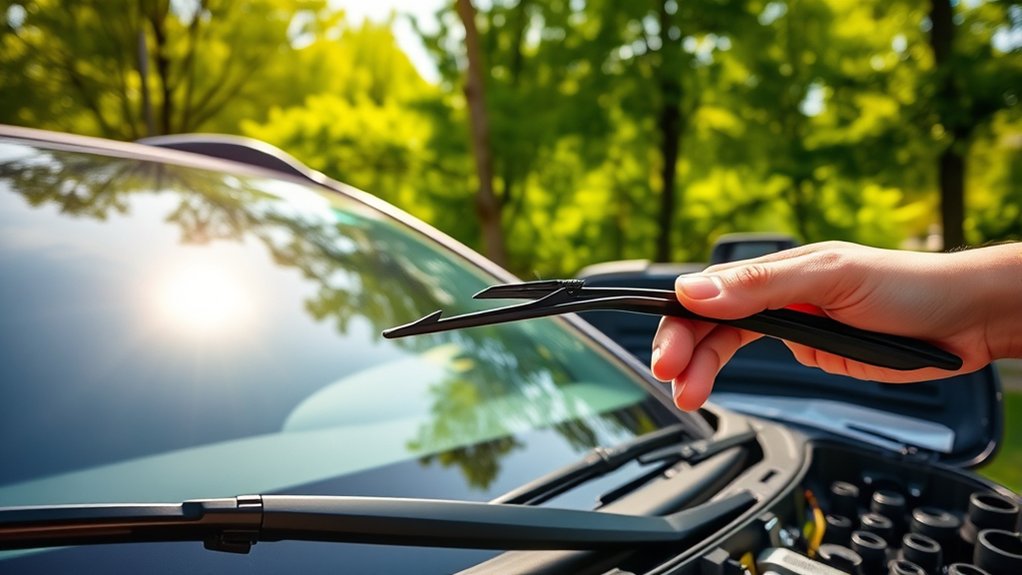
Changing Toyota RAV4 wiper blades is usually a 10- to 20-minute DIY job: verify the exact model-year fitment, move concealed front wipers into the manual-specified service position when required, protect the windshield with a folded towel, release the old blade, lock the replacement onto the correct arm, and test it with washer fluid. Front, rear, and insert-only procedures differ, so match the blade position, connector, and replacement type before removing anything.
Last updated: September 11, 2026. This guide was rechecked against current Toyota guidance, current RAV4 fitment resources, and Toyota’s redesigned 2026 RAV4 information.
Quick Answer
To change Toyota RAV4 wiper blades, confirm the exact model-year fitment, turn off the vehicle, place a folded towel on the windshield, and lift one arm at a time. Release the blade’s connector, attach the matching replacement until it locks, lower the arm carefully, and test the blades with washer fluid.
Key Takeaways
- Confirm the exact driver, passenger, and rear blade fitment for your RAV4’s model year before buying parts.
- For 2026 models, recheck fitment from scratch. Toyota identifies the 2026 RAV4 as an all-new sixth-generation model, so do not assume a prior-year blade or rear-wiper fitment carries over.
- Do not force concealed wiper arms upward. Check your owner’s manual for a service or maintenance position.
- Protect the glass because a spring-loaded metal arm can snap down after the blade is removed.
- Complete blades and rubber inserts use different replacement procedures.
- Replace blades that crack, split, skip, chatter, or leave water in the driver’s viewing area.
At a Glance
| Time Required | About 10 to 20 minutes |
| Difficulty | Easy, once the connector and service position are identified |
| Tools Needed | Folded towel and clean cloth; a small flat-head screwdriver only if the specified insert or latch requires one |
| Cost | Varies by model year, blade position, design, and whether you replace an insert or complete blade |
What Wiper Blade Fits Your Toyota RAV4?
Do not buy blades using a single size recommendation for every Toyota RAV4. The driver, passenger, and rear positions can require different lengths, connectors, and part numbers. Fitment may also change between model years.
For example, the Rain-X fitment guide for the 2024 RAV4 lists a 26-inch driver blade and a 16-inch passenger blade. That example should not be applied automatically to another year.
For a year-by-year starting point, see our Toyota RAV4 wiper blade size guide. Then confirm the current catalog entry for your exact year and blade position before ordering.
Confirm fitment using at least one of these methods:
- Enter the exact year, make, and model into a reputable blade manufacturer’s fitment tool.
- Search the Toyota parts catalog using your vehicle identification number, or VIN.
- Compare the replacement part number with the original blade or insert.
- Check the installation instructions supplied with the replacement blade.
- Verify the front and rear positions separately.
2026 fitment note: Toyota calls the 2026 RAV4 an all-new sixth-generation model. Re-run the fitment lookup for 2026 instead of carrying a 2019–2025 part forward automatically. If reliable catalogs disagree, use the VIN with a Toyota parts department and compare the original connector before buying.
Note: Measuring the old blade can help confirm length, but it does not confirm the connector or guarantee that the previous owner installed the correct part.
Choose Complete Blades or Rubber Inserts
You can replace the complete blade assembly or, on compatible designs, replace only the rubber wiping insert. Choose the complete blade when the frame, adapter, end caps, or pressure points are damaged. Choose an insert only when the existing blade frame is straight, secure, and designed to accept a refill.
- Complete blade: Usually faster to install and supplied with its own connector or adapter.
- Rubber insert: Reuses the existing blade frame and may include or reuse thin metal backing rails.
- Rear blade: Often uses a dedicated connector or compact blade that must be matched separately.
Many aftermarket beam blades are sealed assemblies and are not intended to accept replacement inserts. Do not dismantle a blade unless its instructions specifically describe an insert replacement.
Identifying When to Replace Your Wiper Blades
Inspect your RAV4’s wipers whenever visibility declines and before a season with heavy rain, snow, heat, or ice. Toyota notes that wipers commonly last about 6 to 12 months, but this is a guideline rather than a fixed replacement interval.
The Toyota RAV4 maintenance guide says blades should be free from cracking, splitting, wear, contamination, and deformation. They should also clear the glass without streaking or skipping.
Replace or service the blades when you notice:
- Persistent streaks after the glass and rubber have been cleaned
- Skipping, chattering, or sections that do not touch the windshield
- Cracked, torn, hardened, or permanently bent rubber
- A loose connector, damaged frame, or missing end cap
- Water left in the driver’s main viewing area
- Blade lift or poor contact at road speed
Replace wipers based on their condition and clearing ability, not only the number of months they have been installed.
Squeaking alone does not always mean the blade is worn out. A dry windshield, road film, wax, dirt, or insufficient washer fluid can also cause noise. Clean the glass and blade edge, then test the wipers on a wet windshield before buying another set.
Prepare Your RAV4 Before Removing the Wipers
- Park on a level surface where you can work safely.
- Set the parking brake and turn the vehicle and wiper controls off.
- Disable automatic or rain-sensing operation if your RAV4 has that feature.
- Check whether the wipers can be lifted from their normal parked position without touching the hood.
- Use the service-position procedure in your exact owner’s manual when the arms are concealed below the hood edge.
- Place a thick folded towel on the windshield beneath the arm you are working on.
- Keep each replacement beside its correct driver, passenger, or rear position.
Warning: Never release a raised wiper arm after removing its blade. The spring-loaded metal arm can strike and crack the windshield. Hold the arm securely or rest it carefully on the folded towel.
Toyota’s general wiper replacement guidance warns against lifting concealed wipers when they could contact the hood. Follow the model-year manual instead of forcing the arms upward.
Step-by-Step Guide to Removing Old Wiper Blades
The release method depends on the connector. Common designs use a hook, button, side tabs, locking cover, or vehicle-specific adapter. Look at the connection before pressing or prying anything.
- Raise one arm carefully. Support it with one hand and keep the other arm parked unless your manual instructs otherwise.
- Turn the blade for access. Rotate it until you can see the connector and release mechanism.
- Open or press the release. Press the tab, squeeze the side locks, or open the cover as shown in the blade instructions.
- Slide the blade free. Move it in the direction required by the connector instead of pulling outward at an angle.
- Keep control of the arm. Once the blade is off, hold the metal arm or lower it gently onto the towel.
- Compare the parts. Check the new and old blade lengths, connector positions, curvature, and assigned side.
Do not use a screwdriver automatically. A complete hook-style replacement often releases by hand. Use a small screwdriver only when the manufacturer or Toyota procedure identifies a stopper or locking cover that must be lifted.
Pro Tip: Take a close photo of each connector before removal. You can use it to confirm the adapter orientation if the replacement package includes several pieces.
Replacing Wiper Inserts: A Cost-Effective Solution
Insert replacement can reduce waste and preserve the original blade frame, but it works only when the refill matches the existing blade. Inspect the frame first. Replace the complete assembly if it is bent, corroded, loose, cracked, or unable to hold even pressure against the glass.
For a compatible Toyota-style insert:
- Remove the complete blade from the arm so you can control it on a work surface.
- Find the insert’s locked end, stopper, or retaining notch.
- Release the stopper by hand or with a small flat-head screwdriver only when the design requires it.
- Pull the old rubber insert straight out of the frame.
- Note the position and curve of the thin metal backing rails before removing them.
- Transfer the rails to the new rubber insert when replacement rails are not supplied.
- Feed the new insert through every frame claw without twisting the rubber.
- Seat the retaining notch or stopper fully so the insert cannot slide out.
- Run your fingers along the frame and confirm that every claw captures the correct groove.
Do not reverse the metal rails or force an insert that is too wide. An incorrectly assembled refill may bow away from the glass, slide out, or wipe unevenly.
Installing New Wiper Blades: Tips for a Secure Fit
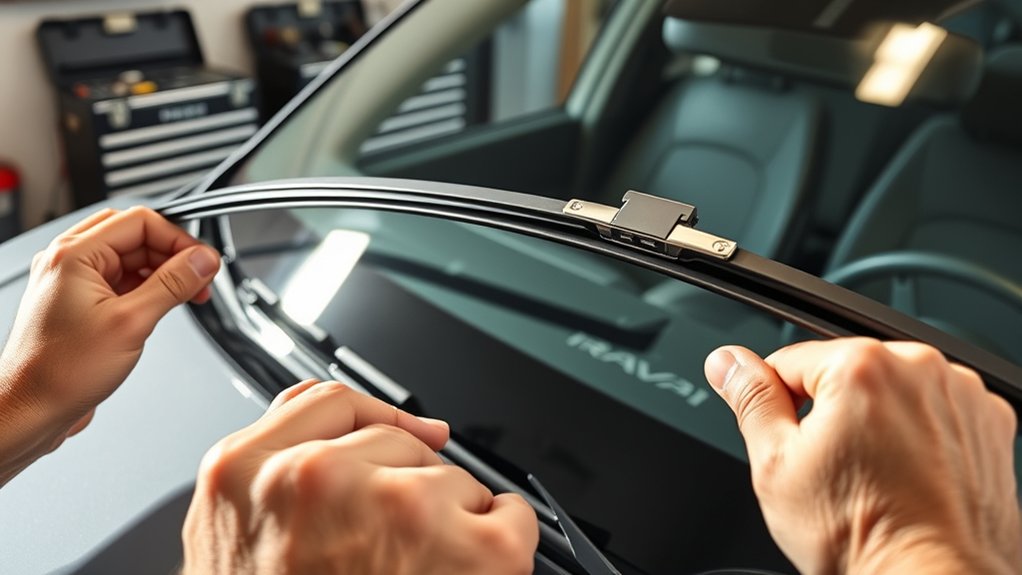
Use the adapter supplied for your exact arm type. A connector may appear to fit while remaining partly open, so confirm the locking feature rather than relying only on resistance.
- Hold the raised arm securely above the protected windshield.
- Orient the new blade so its wiping edge faces the glass and its connector lines up with the arm.
- Slide, press, or rotate the connector into place according to its instructions.
- Listen or feel for the locking click when the design uses one.
- Close any connector cover completely.
- Give the blade a light tug in the removal direction to confirm it is locked.
- Lower the arm slowly until the rubber rests on the windshield.
- Repeat the procedure on the other side with the blade assigned to that position.
After both front blades are installed, clear all tools and packaging from the hood area. Return the wipers from service position as directed by the owner’s manual.
Test the New Wipers
- Wet the windshield with washer fluid before operating the blades.
- Run the wipers at low speed for several cycles.
- Watch for overlap, contact with trim, loose adapters, streaks, or missed areas.
- Stop immediately if the blades strike each other, the hood, the windshield edge, or surrounding trim.
- Recheck the connector and fitment if either blade shifts on the arm.
A new blade can streak when the windshield has wax, oil, adhesive residue, or road film. Clean the glass thoroughly before deciding that the new blade is defective.
How to Replace the RAV4 Rear Wiper
The rear wiper uses its own size and connector, so do not assume it matches either front blade. Clearance under the roof spoiler can also be limited.
- Verify the rear blade or insert using the exact model year and position.
- Turn the rear wiper off and allow it to reach its parked position.
- Lift the arm only as far as its design allows. Do not force it against the spoiler.
- Rotate or tilt the blade to expose its connector.
- Release the latch or pivot the blade free according to the replacement instructions.
- Attach the new rear blade or install the compatible insert.
- Confirm the connector is secure before lowering the arm.
- Test it on a wet rear window and check for spoiler contact.
Stop if the arm will not lift, the blade catches on the spoiler, or the connector does not match. A Toyota parts counter or technician can identify the correct rear part using the VIN.
How to Troubleshoot Common Wiper Blade Problems?
Do not assume every wiping problem requires another set of blades. Work through the glass condition, blade condition, fitment, connector, and arm before replacing parts again.
Streaking Wiper Performance
Clean the windshield with an automotive glass cleaner and wipe the rubber edge with a damp, clean cloth. Remove bugs, wax, oily film, and other contamination.
If streaking remains, inspect the rubber for cuts, flat spots, hardening, or a section that has rolled over. Confirm that the blade is the correct length and that the adapter is fully seated.
Replace the blade when the wiping edge is damaged or when cleaning does not restore a clear sweep.
Noisy Wiper Operation
Squeaking or chatter can result from dry glass, contamination, worn rubber, an incorrect adapter, poor blade angle, or operation over ice. Test the wipers only after wetting the glass.
Remove snow and soften ice with the defroster before operating the wipers. Do not use the wiper motor to break frozen blades away from the windshield. NHTSA also recommends checking all wipers and replacing worn blades before severe winter weather.
Do not apply oil, grease, or silicone lubricant to the wiping edge or windshield. If the mechanical pivot itself squeaks or binds after the blade and glass have been checked, have the linkage inspected.
The Blade Misses Part of the Windshield
A missed arc can indicate the wrong blade, a twisted refill, an adapter installed backward, a bent frame, or insufficient arm pressure. Recheck the part number and compare the installed blade with the original.
Replace a bent blade frame. Have the arm inspected if it appears twisted, sits at a different angle from the other arm, or cannot hold the blade evenly against the glass.
The Blades Overlap or Hit Trim
Stop using the wipers and verify that the driver and passenger blades have not been swapped. Check both lengths against a current fitment guide. Also confirm that each blade is centered correctly in its connector.
The Wipers Do Not Move
A blade replacement will not repair a blown fuse, failed motor, disconnected linkage, frozen mechanism, or electrical fault. Turn the system off if the motor strains, the arms move unevenly, or one arm remains stationary. Have the system diagnosed before further use.
Choosing a Wiper Blade Type and Brand for Your RAV4
Bosch, Rain-X, Michelin, Toyota Genuine Parts, and other manufacturers offer compatible products for certain RAV4 years. Brand alone does not guarantee fit. Select a blade only after its catalog confirms the exact year and position.
| Blade Type | What to Know |
| Toyota-style insert | Reuses a compatible original frame and requires an exact refill profile. |
| Beam blade | Uses a frameless curved structure and can provide even pressure when correctly fitted. |
| Hybrid blade | Combines a supporting frame with an aerodynamic outer cover. |
| Conventional blade | Uses an exposed articulated frame and is often simple to inspect. |
| Winter blade | Designed to resist snow and ice buildup, but still requires exact vehicle fitment. |
Some products add special features. For example, Rain-X states that its Latitude Water Repellency blade transfers a water-repellent treatment to the windshield. Bosch describes its ICON as a beam-style blade. Treat these as product features, not proof that one design is best for every climate or driver.
Use an official fitment resource such as the Toyota windshield-wiper parts catalog or a blade manufacturer’s vehicle finder before ordering.
How to Maintain RAV4 Wiper Blades
- Clean the windshield regularly so grit and oily film do not drag under the rubber.
- Wipe the rubber edge gently with a damp cloth when dirt builds up.
- Keep the washer-fluid reservoir filled with a suitable seasonal fluid.
- Use the defroster and an ice scraper before operating frozen wipers.
- Do not run the blades repeatedly on dry glass.
- Remove leaves and debris from the cowl area without forcing the arms.
- Inspect the blades before a long trip or a season of severe weather.
Avoid household chemicals that leave residue or damage rubber. Do not bend the arm to increase pressure. A weak, twisted, or corroded arm should be inspected rather than reshaped by hand.
Related Guides
Frequently Asked Questions
Can I use different sizes for my RAV4 wiper blades?
The driver, passenger, and rear positions may intentionally use different sizes. Install the exact size assigned to each position for your model year. Do not substitute a longer or shorter blade simply because its connector fits.
How often should I replace my wiper blades?
Six to 12 months is a common guideline, but replace them sooner when they crack, split, skip, chatter, or fail to clear the viewing area. Climate, sunlight, ice, contamination, and use can shorten or extend their service life.
Will cheaper wiper blades reduce visibility?
Price alone does not determine wiping quality. Correct fitment, even glass contact, rubber condition, adapter security, and windshield cleanliness matter more. Replace any blade that leaves persistent water or distortion in your viewing area.
Can I install RAV4 wiper blades myself?
Most owners can replace complete blades with basic precautions. Check the service-position procedure, protect the glass, match the connector, and keep control of the spring-loaded arm. Ask a technician for help when the arm cannot be raised safely or the adapter does not lock.
Do replacement wiper blades include instructions?
Many blades include printed directions, diagrams, a QR code, or online videos for their adapters. Use those instructions together with your RAV4 owner’s manual because the blade maker explains the connector while Toyota explains vehicle-specific arm access and precautions.
Can I replace only the rubber wiper insert?
Yes, when the existing blade frame is reusable and the replacement insert matches its profile and length. Replace the complete blade when the frame, connector, pressure points, or end retainers are damaged. Many aftermarket beam blades do not accept refills.
How do I put RAV4 wipers in service position?
The procedure depends on the model year and equipment. Use the wiper-maintenance instructions in your exact Toyota owner’s manual. Do not force arms upward when they are parked below the hood edge because the arms or hood can be damaged.
Does the 2026 RAV4 use the same wipers as the 2025 model?
Do not assume so. Toyota identifies the 2026 RAV4 as an all-new sixth-generation model. Recheck the exact year and blade position in a current Toyota or blade-manufacturer lookup, and use the VIN when catalogs disagree.
When should I replace the rear RAV4 wiper?
Replace or refill the rear blade when it splits, chatters, skips, or leaves a large uncleared area. Check its fitment separately from the front blades and make sure the replacement clears the roof spoiler throughout its sweep.
Sources
- Toyota: How to Change Windshield Wiper Blades — replacement timing, connector differences, safety preparation, and general installation steps
- Toyota 2024 RAV4 Hybrid Owner’s Manual — model-specific wiper operation and insert-replacement information
- Toyota 2025 RAV4 Hybrid Warranty and Maintenance Guide — inspection criteria for cracking, wear, contamination, streaking, and skipping
- Rain-X 2024 Toyota RAV4 Fitment Guide — example of position-specific blade sizes and connector fitment
- NHTSA Winter Weather Driving Tips — winter washer fluid, wiper inspection, and replacement of worn blades
- Toyota USA Newsroom: Five Things to Know About the All-New 2026 RAV4 — confirms the 2026 RAV4 is the redesigned sixth generation
Conclusion
You can replace Toyota RAV4 wiper blades safely when you verify the exact fitment and treat the front blades, rear blade, and rubber inserts as separate parts. Protect the windshield, use service position when required, keep control of each raised arm, and confirm every connector before testing.
After installation, run the blades on a wet, clean windshield. Correct any overlap, loose fit, noise, or missed area before driving in rain or snow. Replace damaged blades promptly so they can maintain a clear view of the road.

