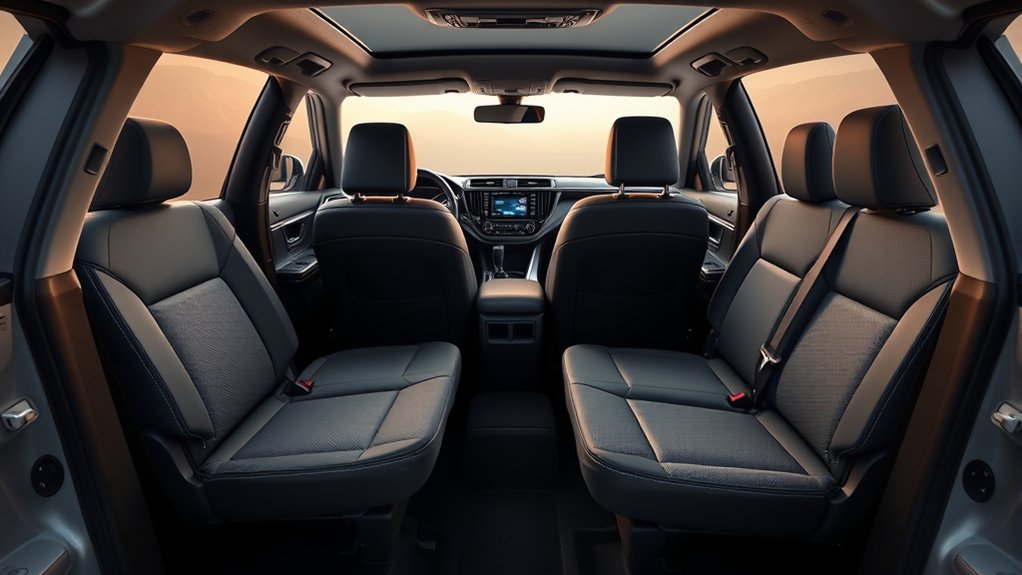
The Toyota RAV4 normally seats five people in two rows. The current 2026 U.S. RAV4 is a five-seat model, and fourth-, fifth-, and sixth-generation RAV4s use a two-row layout. Two historical exceptions explain most of the confusion: the original first-generation two-door was a four-seater, while selected third-generation RAV4s from the 2006–2012 U.S. model years offered a factory third row for up to seven occupants.
Last updated: September 11, 2026
Quick Answer
The Toyota RAV4 normally has two rows and seats five. The current 2026 RAV4 seats five and does not offer a third row. The main historical exception is the third-generation RAV4 sold for the 2006–2012 U.S. model years, when selected models offered a factory two-passenger third row for up to seven occupants. The original first-generation two-door RAV4 seated four, while its longer four-door version seated five.
Key Takeaways
- Current Toyota RAV4 models use a two-row, five-seat layout and do not offer a third row.
- Selected third-generation RAV4 models from 2006–2012 offered optional seven-passenger seating.
- Toyota documented a two-passenger 50/50 Split-and-Stow third row on selected U.S. third-generation grades.
- The original short, two-door first-generation RAV4 seated four, while the longer four-door model seated five.
- Third-row availability varied by country, model year, wheelbase, grade, and factory configuration.
- Check the VIN, owner’s manual, seat belts, and physical seat layout before buying an older RAV4 advertised as a seven-seater.
Toyota RAV4 Seating by Generation
The RAV4’s seating layout has changed less than its exterior design and powertrains. Most versions have two rows and five seating positions. The main exceptions appeared in the first and third generations.
| Generation | Typical Years | Rows | Passenger Capacity | Important Exception |
|---|---|---|---|---|
| XA10 | 1994–2000 | 2 | 4 or 5 | Original two-door versions seated four; longer four-door versions seated five. |
| XA20 | 2001–2005 | 2 | Generally 5 | No factory third-row option. |
| XA30 | 2006–2012 | 2 or 3 | 5 or up to 7 | A factory two-passenger third row was available on selected models, depending on market, model year, and configuration. |
| XA40 | 2013–2018 | 2 | 5 | Toyota discontinued the RAV4’s third-row configuration. |
| XA50 | 2019–2025 | 2 | 5 | Gas, hybrid, and plug-in hybrid versions remained two-row models. |
| XA60 | 2026–present | 2 | 5 | The sixth-generation lineup does not include a third-row configuration. |
Note: Launch years and configurations can differ between countries. The year ranges above follow the commonly used U.S. model-year timeline where applicable. Confirm a vehicle’s exact specification through its VIN, owner’s manual, or Toyota documentation.
Does the Toyota RAV4 Have a Third Row?
The current Toyota RAV4 does not have a third row. Toyota lists the 2026 RAV4 as a five-seat vehicle, and five-passenger seating has been the standard arrangement across nearly every generation.
The exception is the third-generation XA30 RAV4. Toyota produced short- and long-wheelbase versions for different markets, and selected versions could be equipped with two seats behind the second row. Those seats increased total capacity to seven.
For the U.S. market, Toyota’s own late third-generation documentation describes an optional 50/50 Split-and-Stow third-row seat that accommodated two passengers and folded flat under the rear deck. Toyota documented the feature on selected Base/RAV4 and Limited grades, although availability changed by model year. Toyota’s 2012 RAV4 information is one first-party example.
Third-row availability was not universal across every 2006–2012 RAV4. A qualifying model year is only a starting point; the individual vehicle still needs the factory seats, belts, and matching equipment. Verify the vehicle instead of relying only on a seller’s advertisement.
How to Identify a Seven-Seat RAV4
A genuine seven-seat RAV4 should have factory-installed seating and restraint equipment in the cargo area. Before buying one, check for:
- A folding third-row seat behind the second row
- Two additional seat belts and corresponding buckle receivers
- Factory head restraints where required for that configuration
- Trim panels and floor hardware designed around the third row
- Seating information that matches the VIN, owner’s manual, or original brochure
Pro Tip: Ask the seller for a clear photo of the third row in its raised position, including its seat belts. A cargo-area photo with the seats folded away may not prove that the vehicle has a complete factory seven-seat configuration.
The optional third row is compact and is better suited to occasional use than to routine adult travel. Raising it also reduces the space available for luggage behind the seats.
How RAV4 Seating Compares to Other Toyota Models
The RAV4 prioritizes manageable exterior dimensions, two-row passenger space, and cargo flexibility. If you regularly carry more than five people, a Toyota designed with three rows will usually suit you better.
| Model | Typical Layout | Best Fit |
|---|---|---|
| RAV4 | Two rows, five seats | Drivers who want a compact SUV without a third row |
| Highlander | Three rows | Families that need occasional or regular third-row seating |
| Grand Highlander | Three rows | Families wanting more third-row and cargo room |
| Sequoia | Three rows | Buyers needing a full-size SUV |
| Sienna | Three rows | Families prioritizing passenger access and everyday practicality |
| 4Runner | Two rows, with third-row availability varying by year and grade | Drivers prioritizing rugged use and off-road capability |
Seat counts can change between grades and model years. Review the specification page for the exact vehicle you are considering.
XA10 RAV4 Seating (1994–2000)
The first-generation RAV4 did not have one universal passenger capacity. Toyota launched the original model in 1994 as a compact two-door, four-seater. A longer four-door version followed and expanded capacity to five.
This distinction explains why first-generation specifications can appear contradictory. A short-body two-door XA10 may have four designated seating positions, while a longer four-door model may have five.
Both versions used two seating rows. Neither offered a factory third row. Folding the rear seats created additional cargo room, although the exact folding and removal arrangement depended on the body style and market.
Toyota’s official RAV4 history confirms that the initial two-door was a four-seater and that the longer four-door version became a full five-seater.
XA20 RAV4 Seating (2001–2005)
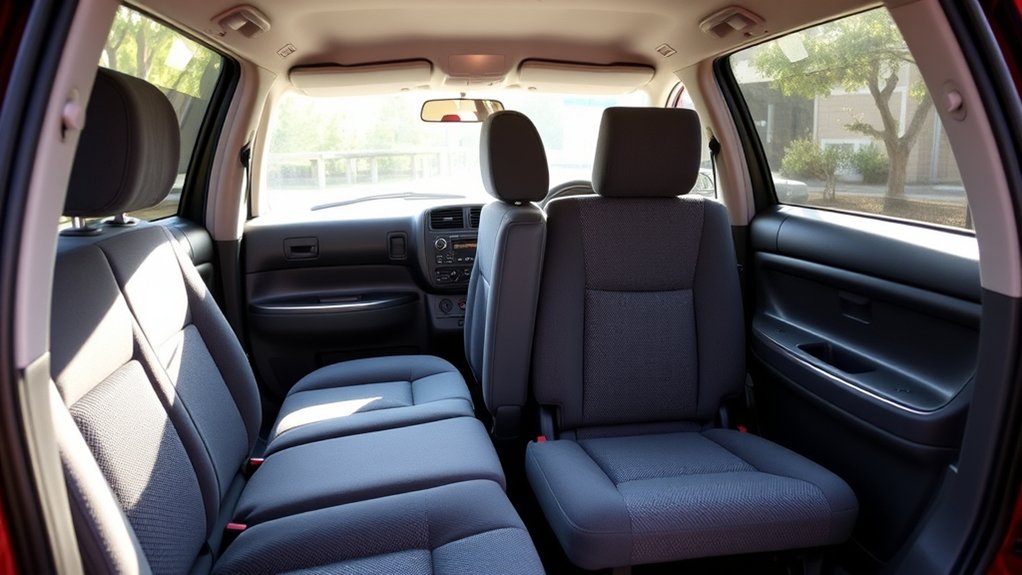
The second-generation XA20 RAV4 retained a two-row layout and generally seated five. The U.S. market received the four-door body style, while some other markets also offered a shorter version.
Standard Five-Passenger Configuration
Two front seats and a rear bench provided the normal five-passenger arrangement. The taller SUV body gave passengers a more upright seating position than a typical compact car.
Front-seat adjustment, upholstery, and convenience features differed by year and trim. A test drive remains the best way to judge legroom, seat support, and visibility for your body size.
Cargo Space Versatility
The rear bench could be split and folded to balance passenger and cargo needs. In some markets, sections of the rear bench could also slide or be removed, adding flexibility for bulky items.
A folded rear seat does not guarantee a perfectly level cargo floor. The floor height and seatback angle can vary by body style and specification.
Third-Row Availability
The XA20 RAV4 did not offer a factory third row. Every designated seating position remained within its two-row cabin.
If you find a 2001–2005 RAV4 advertised as a seven-seater, verify the VIN and physical configuration carefully. An aftermarket seat in the cargo area should not be treated as an approved factory seating position without proper engineering, restraints, and legal certification.
XA30 RAV4 Seating (2006–2012)
The third-generation XA30 is the RAV4 generation most closely associated with seven-passenger seating. Five seats remained standard, but selected versions offered an optional factory third row.
Toyota’s U.S. literature described the available rear system as a 50/50 Split-and-Stow third-row seat. It accommodated two passengers and folded flat under the rear deck. In late third-generation U.S. model years, Toyota documented the option on selected Base/RAV4 and Limited grades. Availability was not identical for every year, market, or vehicle.
| Feature | Details |
|---|---|
| Standard capacity | Five passengers in two rows |
| Optional capacity | Up to seven passengers in factory-equipped versions |
| Third-row design | Toyota documented a two-passenger 50/50 Split-and-Stow seat that folded under the rear deck on selected U.S. versions |
| Third-row availability | Varied by market, model year, grade, and factory configuration |
| Third-row use | Most practical for occasional use because space behind the second row is limited |
| Cargo tradeoff | Less luggage room remains when the third row is raised |
Before purchasing a seven-seat example, raise and lower both rear seats and inspect the belts, buckle receivers, surrounding trim, and folding mechanism. Then confirm that the equipment matches the vehicle’s original specification.
XA40 RAV4 Seating (2013–2018)
The fourth-generation XA40 returned the RAV4 to a standard two-row, five-passenger format. Toyota did not offer a third row in this generation.
Standard Two-Row Configuration
The cabin included two front seats and a three-position rear bench. This layout allowed Toyota to devote the space behind the second row to cargo instead of occasional-use rear seats.
The second-row seatback used a split-folding design, letting you carry a longer item while retaining one or more rear seating positions.
Hybrid Model Seating Options
Toyota added a RAV4 Hybrid during the XA40 generation. It retained the same basic two-row, five-passenger arrangement as the gasoline model.
Equipment such as upholstery material, power adjustment, heating, and driver-seat memory depended on the year, trim, option package, and market. These features should not be described as standard across the generation.
Cargo Space Utilization
The XA40 offers substantial storage behind its second row, and folding the rear seatbacks expands the carrying area. However, one cargo figure should not be applied to every XA40.
Published measurements can differ between gasoline and hybrid models, model years, test methods, and specification sources. Use the brochure or official specification sheet for the exact vehicle when cargo volume is an important buying factor.
XA50 RAV4 Seating Features (2019–2025)
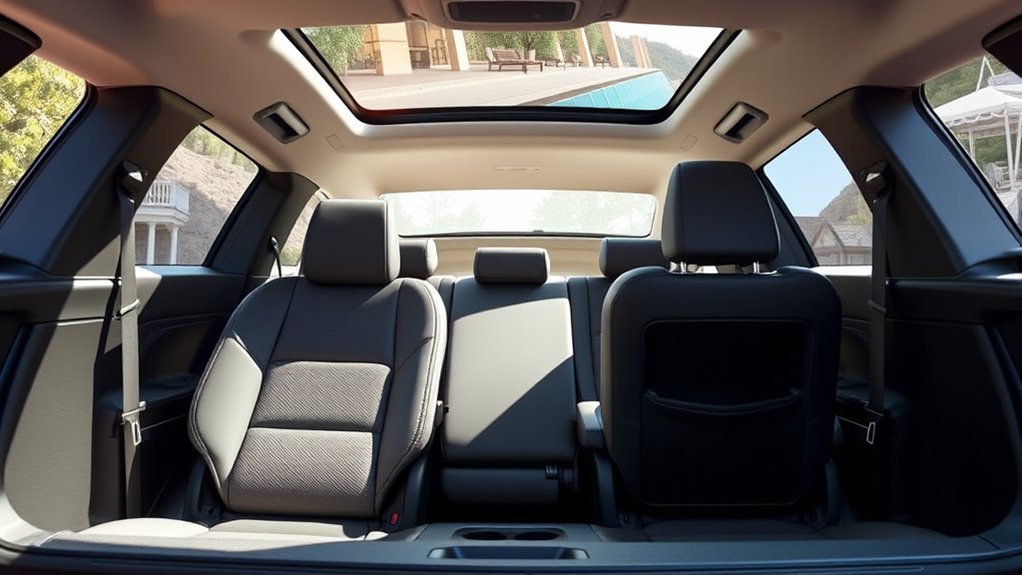
The fifth-generation XA50 RAV4 continued with two rows and five seating positions. Gasoline, hybrid, and plug-in hybrid versions did not add a third row.
A 60/40-split rear seatback allowed you to adjust the cabin for passengers and cargo. Available comfort features included upgraded upholstery, power-adjustable front seats, heating, ventilation, and driver-seat memory, depending on the trim and model year.
Toyota Safety Sense was offered as a vehicle-wide active-safety suite. It should not be described as a feature built into the seats themselves.
Although many fifth-generation versions have similar cabin dimensions, cargo and passenger-space specifications can differ by powertrain. Check the exact gasoline, hybrid, or plug-in hybrid specification rather than relying on a number for the entire generation.
XA60 RAV4 Seating (2026–Present)
The 2026 model begins the RAV4’s sixth generation. Toyota retained the RAV4’s role as a compact, two-row SUV rather than turning it into a three-row vehicle. Toyota’s current U.S. RAV4 listing identifies the vehicle as having five seats.
The current cabin provides five seating positions whether you choose a hybrid or plug-in hybrid powertrain. A different powertrain does not add a third row.
Toyota redesigned the interior and introduced new multimedia and safety technology, including the Arene software platform and Toyota Safety Sense 4.0 in its U.S. launch material.
The sixth-generation U.S. lineup uses hybrid or plug-in hybrid powertrains. Seat materials, heating, ventilation, adjustment, and other comfort features vary across grades.
You can review Toyota’s official 2026 RAV4 announcement and current RAV4 model page for current U.S. specifications and lineup information.
How to Verify the Seating Capacity of a Specific RAV4
A generation guide helps narrow your search, but it cannot replace vehicle-specific documentation. Use these checks before buying or transporting passengers:
- Confirm the model year and market. A configuration offered in one country may not have been sold in another.
- Inspect every designated seating position. Each position should have a proper seat, seat belt, and required restraint hardware.
- Check the VIN. A Toyota dealer or official vehicle-history source may be able to confirm the original specification.
- Read the owner’s manual. It explains seating, head restraints, seat-belt use, child-restraint anchors, and folding procedures.
- Compare the vehicle with its original brochure. This is particularly useful when evaluating a 2006–2012 model advertised with seven seats.
- Do not count the cargo area as passenger space. Passengers should use only designated seating positions with approved restraints.
Using Child Restraints in a Toyota RAV4
A child restraint can be installed in a RAV4’s rear row when the restraint, seating position, and installation method are compatible. Compatibility should be checked for the exact RAV4 model year and the exact child-seat model.
Warning: Follow both the RAV4 owner’s manual and the child-restraint manufacturer’s instructions. Use the seat belt or lower anchors according to those instructions and observe all lower-anchor weight limits. For a forward-facing restraint, NHTSA recommends using the top tether whenever the child-seat and vehicle manufacturers permit it.
The National Highway Traffic Safety Administration recommends choosing a restraint that fits both the child and the vehicle. NHTSA also advises reading both manuals and checking the installation before travel.
Installing three restraints across the rear bench may be possible with certain narrow seats, but fit is not guaranteed. Buckles must remain accessible, and one restraint should not interfere with another. A certified child-passenger safety technician can inspect the installation when you need additional help.
Frequently Asked Questions
Does the current Toyota RAV4 have a third row?
No. The current sixth-generation RAV4 uses a two-row, five-seat layout. Toyota shoppers who regularly need more than five seats should compare three-row models such as the Highlander, Grand Highlander, Sequoia, or Sienna.
Which Toyota RAV4 years offered seven seats?
Selected third-generation RAV4 models from the 2006–2012 U.S. model years offered an optional third row for up to seven occupants. Availability depended on the market, model year, grade, and factory configuration.
Can a Toyota RAV4 seat six people?
A current RAV4 cannot carry six occupants because it has only five designated seating positions. Certain factory-equipped third-generation RAV4s are different because their optional two-passenger third row increased total capacity to seven. Never use the cargo area as an extra passenger position.
Do the 2026 RAV4 Hybrid and Plug-in Hybrid have the same seating capacity?
Yes. The current RAV4 Hybrid and RAV4 Plug-in Hybrid both use a two-row, five-seat layout. The powertrain changes how the vehicle is powered, not the number of designated seating positions.
Can I fit a car seat in a RAV4’s back row?
Yes, compatible child restraints can be installed in approved rear seating positions. Check the child-seat instructions and the owner’s manual for the correct seat-belt or lower-anchor method, tether location, limits, and seating-position restrictions.
What is the maximum cargo capacity of a Toyota RAV4?
No single cargo-capacity figure applies to every RAV4. Maximum volume varies by generation, model year, powertrain, drivetrain, and whether the rear seats are folded. Use the official specification sheet for the exact vehicle you are researching.
Are RAV4 seats adjustable for taller drivers?
RAV4 front seats provide adjustment, but the range and power functions vary by year and trim. Taller drivers should test the driving position, steering-wheel reach, headroom, thigh support, and visibility before buying.
Do the RAV4’s rear seats fold flat?
Most modern RAV4 rear seatbacks fold to create a larger cargo area. However, the resulting surface may have a slight angle or height change rather than being completely level. The arrangement varies by generation and powertrain.
How can I confirm that a used RAV4 is a factory seven-seater?
Inspect the raised third-row seats, belts, buckle receivers, head restraints, and surrounding trim. Then compare the configuration with the VIN, owner’s manual, and original market brochure. A 2006–2012 model year alone does not prove that the individual vehicle received the optional third row.
Conclusion
The Toyota RAV4 is primarily a two-row, five-seat SUV. The current 2026 RAV4 seats five, the original two-door first-generation model seated four, and selected third-generation RAV4s from the 2006–2012 U.S. model years offered an optional factory third row for up to seven occupants. Fourth-, fifth-, and sixth-generation models use a two-row configuration.
If you are evaluating an older RAV4 advertised with seven seats, do not rely on the model year alone. Confirm the body style, market, factory seating hardware, VIN, owner’s documentation, and physical restraints. If you regularly need more than five seats, compare a Toyota designed around three-row passenger use rather than modifying a five-seat RAV4.
Sources
- Toyota: 2026 RAV4 — current U.S. lineup and seating information.
- Toyota UK: Toyota RAV4 History — first-generation four-seat and five-seat body styles and third-generation long-wheelbase history.
- Toyota USA Newsroom: 25 Years of the RAV4 in North America — third-generation growth and optional third-row seating.
- Toyota USA Newsroom: 2012 RAV4 — optional two-passenger 50/50 Split-and-Stow third-row configuration.
- Toyota USA Newsroom: All-New 2026 RAV4 — sixth-generation launch, powertrains, Arene platform, grades, and new technology.
- Toyota Europe Newsroom: All-New Toyota RAV4 Worldwide Debut — sixth-generation status and redesigned cabin information.
- NHTSA: Car Seats and Booster Seats — child-restraint selection, installation, lower-anchor limits, tether use, and owner’s-manual guidance.
