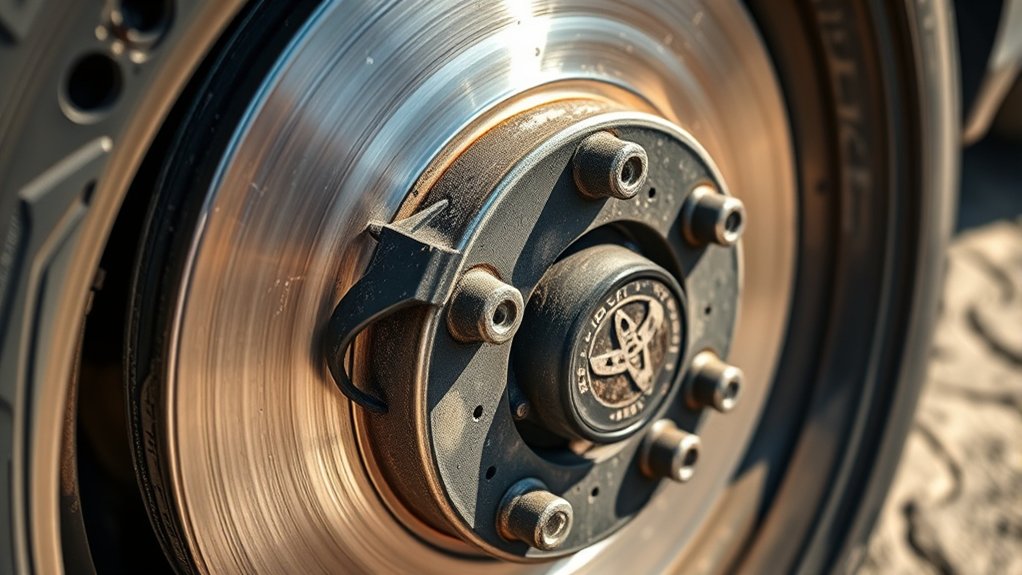
Toyota RAV4 brake pads do not have one guaranteed replacement mileage. Their condition depends on traffic, braking habits, terrain, vehicle load, corrosion, pad material, and brake-system condition. The safest approach is to follow Toyota’s inspection schedule and replace the pads when measured wear, uneven wear, damage, or braking symptoms show that service is needed.
Quick Answer
Toyota does not publish one fixed mileage for every RAV4 brake-pad replacement. Inspect the pads regularly and replace them when they reach the model-year service limit, wear unevenly, or cause warning symptoms. Toyota’s 2025 guide calls for visual checks every 5,000 miles and thickness and rotor-runout checks every 30,000 miles.
Key Takeaways
- Do not replace RAV4 brake pads solely because the odometer reaches a general mileage estimate.
- Toyota’s 2025 U.S. maintenance guide specifies a visual brake-pad and disc inspection every 5,000 miles.
- Toyota specifies pad-thickness and disc-runout measurements every 30,000 miles in that guide.
- Persistent squealing may come from a wear indicator, while grinding, reduced braking, smoke, or major pedal changes require prompt attention.
- Inspect both axles. Do not assume the front or rear pads will always wear first.
- Replace pads as a matched axle set and inspect the rotors, calipers, hardware, hoses, and fluid for related problems.
How Often Should Toyota RAV4 Brake Pads Be Replaced?
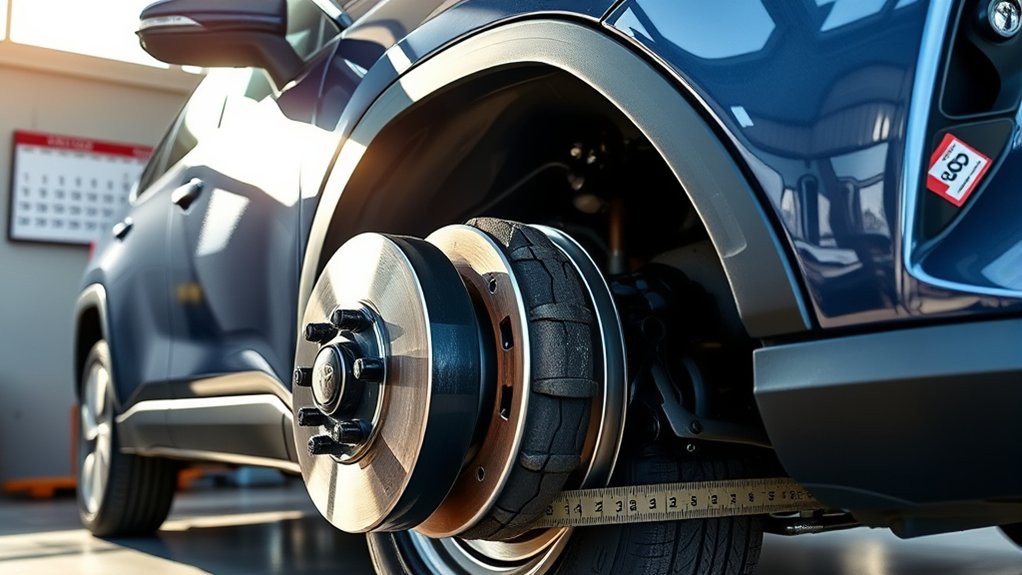
A commonly quoted brake-pad lifespan is about 30,000 to 70,000 miles, but that range is not a Toyota replacement schedule. Some RAV4 pads may need service sooner, while others may remain usable longer. The correct replacement point depends on measured friction-material thickness, wear pattern, rotor condition, and braking performance.
The 2025 Toyota RAV4 Warranty and Maintenance Guide calls for the brake pads and discs to be visually inspected every 5,000 miles. It also calls for pad-thickness and disc-runout inspection every 30,000 miles.
Toyota’s 2025 RAV4 maintenance schedule emphasizes frequent inspection rather than automatic brake-pad replacement at one fixed mileage.
Maintenance schedules and brake specifications can differ by model year, market, and powertrain. Use the Toyota manuals and warranties portal to find the guide for your exact RAV4.
Pro Tip: Ask for a brake-pad thickness measurement during tire rotations. A written measurement for each inner and outer pad makes it easier to track wear instead of relying on a broad mileage estimate.
Signs Your RAV4 Brake Pads or Brakes Need Inspection
Brake noise alone does not identify every problem. Consider the type of noise, when it occurs, and whether braking feel has changed.
Persistent squealing or screeching
A recurring high-pitched squeal may come from a mechanical wear indicator contacting the rotor. Brief noise after rain, washing, or an overnight stop can also come from surface moisture or light rotor rust. Have persistent or worsening noise inspected instead of assuming every squeal requires immediate pad replacement.
Grinding or metal-on-metal noise
Grinding can mean the friction material is exhausted and the pad backing plate is contacting the rotor. Continued driving may damage the rotor and reduce braking performance.
Brake-pedal or steering-wheel pulsation
Pulsation can involve disc runout, disc-thickness variation, uneven material deposits, loose or worn components, or other brake faults. It should not be diagnosed as pad wear without an inspection.
Pulling, reduced stopping performance, or an unusual pedal
A vehicle that pulls while braking, takes longer to stop, or develops a soft, sinking, unusually hard, or inconsistent pedal may have a problem beyond normal pad wear. Possible causes include caliper trouble, hydraulic leaks, contaminated friction surfaces, air in the system, or other brake-system faults.
Burning odor, smoke, or excessive heat
A sharp burning smell, visible smoke, or extreme heat near a wheel can indicate overheated or dragging brakes. This is not a normal pad-replacement reminder.
Brake or ABS warning light
Do not assume a dashboard light is a brake-pad-life indicator. Warning-light meanings vary by model year and system. Check the exact symbol in your owner’s manual or through Toyota’s warning-light information.
Warning: Stop driving as soon as it is safe if braking power drops, the pedal sinks, smoke appears, a red brake warning remains on, or the vehicle becomes difficult to stop. Arrange professional inspection or towing rather than testing the brakes in traffic.
What Affects Toyota RAV4 Brake-Pad Wear?
Brake-pad wear varies because each vehicle experiences different loads, temperatures, roads, and maintenance conditions.
- Stop-and-go traffic: Repeated braking creates more friction-brake use than steady highway driving.
- Aggressive braking: Late, hard stops generate more heat and can increase pad and rotor wear.
- Hills and mountain roads: Long descents can heat the brakes, especially when the driver rides the pedal instead of using an appropriate lower drive range where the owner’s manual permits it.
- Towing and heavy loads: More vehicle mass requires the brakes to absorb more energy during a stop.
- Corrosion and road salt: Rust can restrict pad movement, damage hardware, or contribute to uneven wear.
- Sticking slide pins or calipers: A pad that remains partly applied can wear much faster than the pad on the opposite side.
- Pad and rotor condition: Incorrect parts, contaminated surfaces, damaged hardware, and poor installation can shorten service life.
- Previous maintenance: A used RAV4 may have mismatched pads, old hardware, worn rotors, or incomplete service records.
Smoother driving can reduce unnecessary wear. Leave more following distance, release the accelerator early, and brake progressively when traffic allows. These habits also give you more time to react safely.
How to Decide Whether the Brake Pads Need Replacement
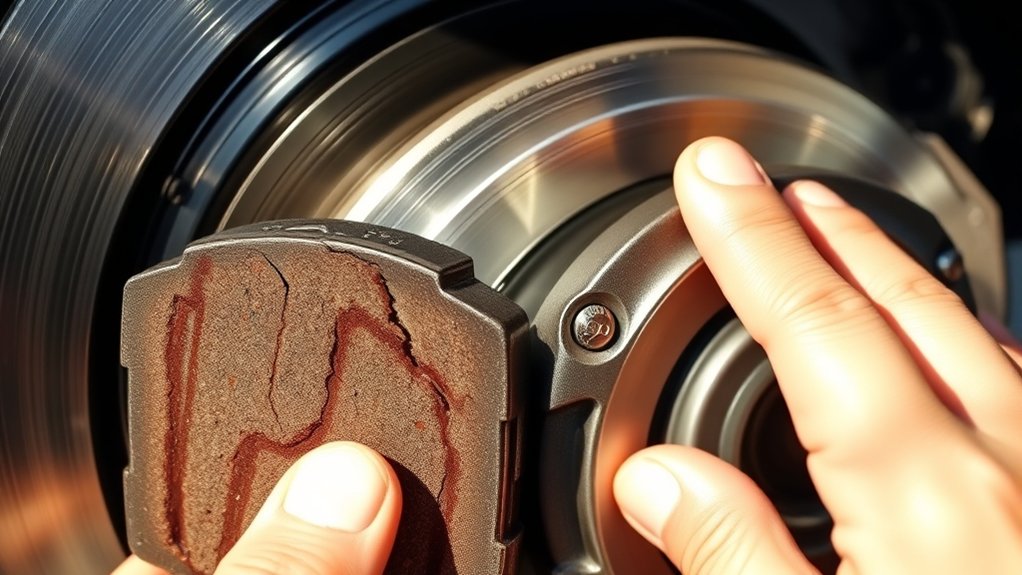
A proper brake inspection considers more than the odometer. The technician should check all accessible inner and outer pads, because one pad can wear faster than the others.
Replacement may be needed when:
- The friction material is at or near Toyota’s service limit for the exact model year.
- A wear indicator is contacting the rotor.
- One pad is much thinner than its matching pad.
- The pad is cracked, contaminated, glazed, separating, or otherwise damaged.
- A caliper, slide pin, or hardware problem has caused abnormal wear.
- Grinding or another confirmed wear symptom is present.
- The pads cannot safely remain in service until the next planned inspection.
Brake pads should be replaced as a matched set on the same axle. Replacing only one wheel’s pads can produce uneven braking and does not correct the cause of unequal wear.
Inspect the rotors at the same time
Toyota’s maintenance guidance calls for checking the discs for runout, excessive wear, damage, and fluid contamination. A technician should measure rotor thickness and runout against the specifications for your exact RAV4.
Rotors may need resurfacing or replacement when they are below specification, deeply scored, cracked, severely rusted, heat-damaged, or unable to provide a suitable surface for the new pads. Rotor replacement is not automatically required with every pad change, but skipping the inspection can lead to noise, pulsation, or poor pad bedding.
Note: Uneven pad wear is a diagnostic clue, not just a reason to install new pads. The caliper, slide pins, boots, clips, rotor, and hydraulic system should be checked so the replacement pads do not develop the same problem.
Do Front or Rear RAV4 Brake Pads Wear Out First?
Do not assume that one axle will always wear first. Braking force, stability-control activity, road conditions, corrosion, caliper movement, driving habits, and parking-brake design can all affect the wear pattern.
One RAV4 may use its front pads faster, while another may show greater rear-pad wear. The useful question is not which axle “should” last longer, but whether all inner and outer pads are wearing evenly and remain above the model-specific service limit.
You do not have to replace front and rear pads at the same time when one axle still has safe, even wear. However, both sides of the axle being serviced should receive a matched pad set.
Choosing the Right Brake Pads for a Toyota RAV4
Brake parts can vary by RAV4 year, trim, drivetrain, powertrain, wheel package, and axle. Confirm compatibility using the vehicle identification number when possible.
Consider the following when comparing replacement pads:
- Exact application: Verify the model year, front or rear axle, and required brake package.
- Friction formulation: Ceramic and semi-metallic formulas can differ in noise, dust, cold response, heat tolerance, pedal feel, and rotor wear. No material is automatically best for every driver.
- Hardware: Determine whether clips, shims, wear indicators, and other required hardware are included or must be purchased separately.
- Manufacturer instructions: Follow the specified installation and bedding procedure.
- Part quality: Choose genuine Toyota parts or reputable application-specific parts that meet the vehicle’s braking requirements.
A shop should identify the brand and part number on its estimate rather than describing the pads only as “standard,” “premium,” or “lifetime.”
Toyota RAV4 Brake-Pad Replacement Cost
Brake-service costs depend on the model year, axle, labor rate, pad brand, hardware, rotor condition, taxes, and location. A quote for pads only should not be compared directly with one that includes rotors, hardware, caliper work, or brake-fluid service.
RepairPal’s Toyota RAV4 brake-pad replacement estimate, updated June 18, 2026, lists an average range of $320 to $384. Its estimate lists approximately $122 to $179 for labor and $198 to $205 for parts. Taxes, fees, location differences, and related repairs are excluded.
Before approving a repair, ask the shop to state:
- Whether the quote covers the front axle, rear axle, or both.
- The brake-pad brand and part number.
- Whether new clips, shims, or other hardware are included.
- The measured thickness of each pad.
- The rotor thickness and runout measurements.
- Whether the rotors will be reused, resurfaced, or replaced.
- Whether caliper, hose, fluid, or parking-brake work is recommended.
- The labor, parts, taxes, fees, and warranty terms as separate items.
Grinding or severely uneven wear can increase the bill because the rotors, calipers, or related hardware may also require service.
Can You Replace RAV4 Brake Pads Yourself?
An experienced DIY mechanic can replace brake pads, but brakes are safety-critical. The job requires the exact model-year procedure, correct lifting points, secure jack stands, wheel chocks, a calibrated torque wrench, an appropriate piston-retraction tool, and the correct torque specifications.
If your RAV4 has an electronic parking brake, use the correct Toyota procedure before retracting or servicing the rear calipers. Forcing a rear piston without the required procedure can damage components.
Do not attempt the repair when you lack safe lifting equipment, model-specific service information, experience diagnosing uneven wear, or a way to verify the completed repair. Never work under a vehicle supported only by a jack.
After installation, the brake pedal must be restored to a firm feel before the vehicle moves. Follow the pad manufacturer’s bedding instructions, check for leaks or abnormal noises, and confirm that the vehicle stops straight in a safe area.
Related Guides
Frequently Asked Questions
Can I replace brake pads myself on a Toyota RAV4?
Yes, but only when you have safe lifting equipment, the exact model-year procedure, proper tools, torque specifications, and enough experience to inspect the rotors, calipers, hardware, and hydraulic system. A qualified technician is the safer choice when you are uncertain.
How do I choose the right brake pads for my RAV4?
Match the pads to the exact model year, powertrain, trim, axle, and brake package. Use the VIN when possible. Compare friction material, included hardware, manufacturer instructions, warranty terms, and suitability for your normal driving conditions.
What tools are needed for replacing RAV4 brake pads?
Typical tools include wheel chocks, a suitable floor jack, correctly rated jack stands, sockets, a breaker bar, a calibrated torque wrench, a caliper hanger, brake cleaner, and the correct piston-retraction tool. Exact needs vary by model year and axle.
Do Toyota RAV4 brake pads come with a warranty?
Warranty terms vary by seller and manufacturer. Some aftermarket warranties cover manufacturing defects or provide replacement parts under specific conditions, but they may exclude labor, rotors, misuse, installation problems, and routine wear. Toyota’s new-vehicle warranty treats replacement of worn brake pads and linings as a normal maintenance expense.
How does weather affect RAV4 brake-pad life?
Weather does not create one automatic replacement interval. Moisture can cause temporary rotor rust or noise, while road salt and winter contamination can contribute to corrosion and restricted hardware movement. Inspect the brakes when noise persists, wear becomes uneven, or the vehicle has experienced severe winter conditions.
Do the front and rear brake pads need replacement at the same time?
Not necessarily. The front and rear axles can wear at different rates. Replace both sides of the axle being serviced as a matched set, and inspect the other axle rather than replacing it automatically when it still has safe, even wear.
Do RAV4 rotors need replacement whenever the pads are changed?
No. A technician should measure rotor thickness and runout and inspect for scoring, cracks, corrosion, overheating, and contamination. A rotor can be reused only when it remains within specification and provides a suitable surface for the replacement pads.
Does a Toyota RAV4 have a brake-pad warning light?
Equipment and indicators vary by model year. Do not assume that a brake or ABS light simply means the pads are low. Identify the exact symbol in your owner’s manual and arrange an inspection when the manual directs you to do so.
Conclusion
Replace your Toyota RAV4 brake pads according to measured wear and brake condition, not a universal mileage deadline. Toyota’s 2025 maintenance guide calls for visual inspection every 5,000 miles and pad-thickness and disc-runout checks every 30,000 miles.
Persistent squealing, grinding, pulling, pulsation, overheating, warning lights, or changes in pedal feel deserve prompt inspection. Replacing pads before metal-to-metal contact can protect the rotors and help preserve consistent braking performance.
Sources
- Toyota 2025 RAV4 Warranty and Maintenance Guide — brake inspection intervals, maintenance explanations, qualified-technician guidance, and warranty exclusions.
- Toyota Manuals and Warranties — model-year owner’s manuals and maintenance guides.
- Toyota Warning Lights — official guidance for identifying model-specific dashboard warnings.
- RepairPal Toyota RAV4 Brake Pad Replacement Cost Estimate — national repair-cost estimate updated June 18, 2026, plus common symptoms and service inclusions.

