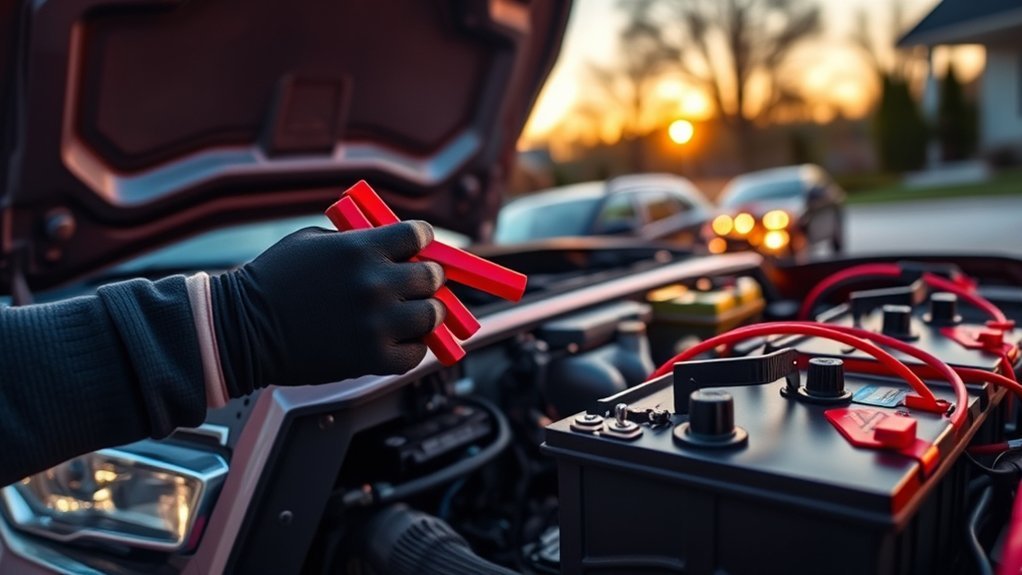
A dead 12-volt battery can leave your Toyota Tacoma clicking, dim, or completely unresponsive. You can often get it running with a compatible 12-volt donor vehicle and properly rated jumper cables. The connection order matters because the final ground connection should be away from the discharged battery. Always check the owner’s manual for your exact model year and powertrain before you begin.
Last updated: September 19, 2026
Quick Answer
Turn both vehicles off, connect red to the Tacoma positive terminal or approved positive jump point, red to donor positive, black to donor negative, and black to the Tacoma’s specified metallic ground point. Start the donor, then follow your Tacoma model-year manual for the required donor engine speed and waiting time before starting the truck. Current fourth-generation procedures call for slightly increasing donor engine speed for about five minutes. Remove the clamps in reverse order after the Tacoma starts.
Key Takeaways
- Confirm the donor vehicle has the compatible 12-volt system required by your Tacoma and check both owner’s manuals.
- Never jump-start a battery that is frozen, cracked, swollen, loose at a post, or leaking.
- Make the final black connection to the Tacoma’s approved ground point, away from the discharged battery.
- Follow the model-year manual for donor engine speed and waiting time; do not assume one RPM procedure applies to every Tacoma generation.
- On newer Tacomas, keep the electronic key with you because connecting booster cables may activate the alarm or lock the doors.
- One successful jump does not prove the battery or charging system is healthy.
At a Glance
| Time Required | About 10–20 minutes, depending on model-year instructions and battery condition |
| Difficulty | Easy to moderate, with careful polarity and connection-point checks |
| Tools Needed | 12-volt jumper cables or a compatible jump pack, eye protection, gloves, and the model-year owner’s manual |
| Cost | No added cost with existing cables and a helper vehicle; roadside service, testing, charging, or replacement may cost extra |
Warning: Stop if you see battery cracks, swelling, leaking fluid, a loose terminal post, smoke, or melting cables. Do not attempt to jump a frozen battery. Keep flames, cigarettes, sparks, jewelry, and metal tools away from the battery, and never touch the red and black clamps together.
Preparation Checklist Before You Jump-Start Your Tacoma
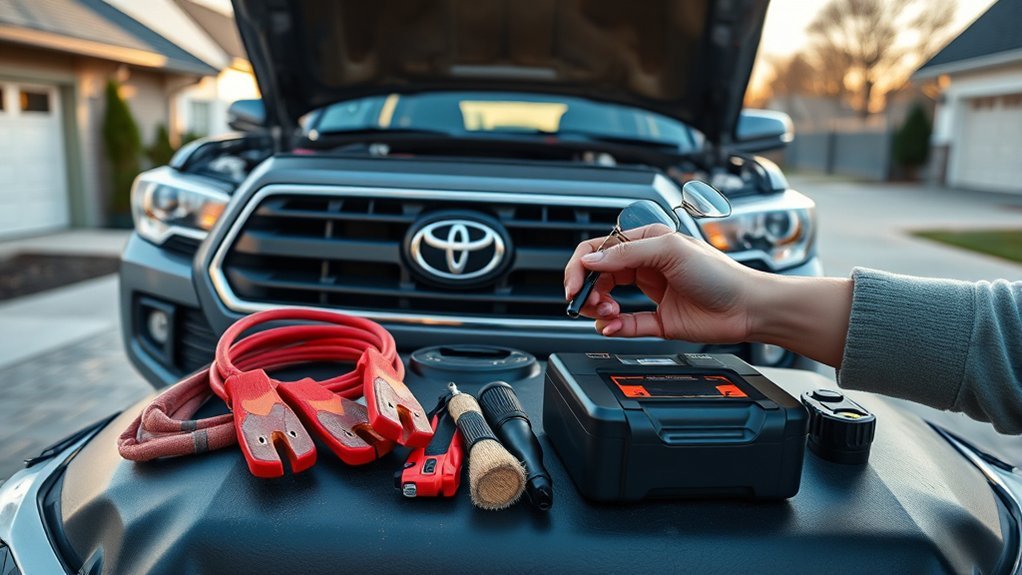
Start with the Toyota owner’s manual for your exact Tacoma. Battery location, approved jump points, donor-engine instructions, and hybrid precautions can vary by model year and powertrain. Follow the manual if it differs from general instructions.
- Use only a compatible 12-volt donor vehicle or a jump pack suitable for the truck and used according to its manufacturer’s instructions.
- Park both vehicles on firm, level ground and make sure they do not touch.
- For an automatic transmission, select Park. For a manual transmission, use the position and procedure specified by the owner’s manual and fully set the parking brake.
- Set both parking brakes and turn off lights, climate control, audio, chargers, and other unnecessary accessories.
- Switch off both vehicles before connecting the cables.
- On newer Tacomas, keep the electronic key with you and do not leave it inside the truck. Connecting booster cables may activate the alarm or lock the doors.
- Inspect both batteries, cables, and clamps for damage. Do not use frayed, melted, or overheated cables.
- Wear safety glasses and protective gloves.
Remove loose metal jewelry and keep tools away from exposed terminals. If either vehicle is a hybrid or electric vehicle, confirm that its manual permits the intended jump-start role. Do not assume a hybrid vehicle may safely be used as a donor for another vehicle.
Pro Tip: Open the model-year manual on your phone before connecting anything. A labeled positive terminal and Toyota-specified metallic ground point are safer than guessing from nearby bolts or brackets.
[Amazon Products Picked for You]
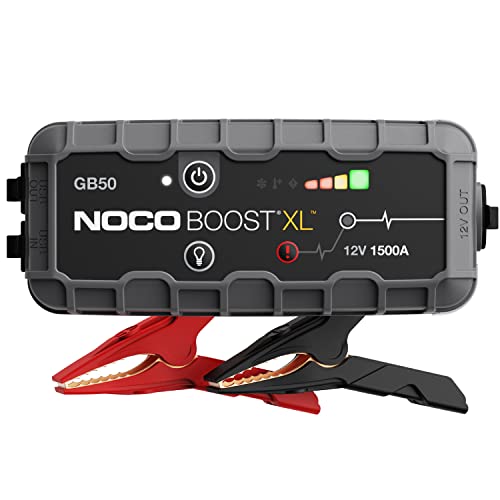
START DEAD BATTERIES — Instantly start dead batteries with 1500 amps of peak lithium power. Up to 30 starts per charge on engines up to 7.0L gas and 4.5L diesel.

POWERFUL CAR BATTERY JUMP STARTER: The ET03 car battery jump starter can easily jump-start all 12V common vehicles with up to 8.0L gas and 7.0L diesel engines in seconds with its peak current reaching 4000 amps. Supports 50 jump starts at most on a single charge and suitable for lawnmowers, motorcycles, passenger cars, trucks, and even boats, etc.

HIGH-PERFORMANCE JUMP STARTING - The car jumper starter portable pack has a 45C high-rate lithium battery and 37WH capacity that can start 6.0 L gas/3.0 L diesel engines and other 12 V vehicles like motorcycles, cars, SUVs, pickups, or lawnmowers.This jump starter's powerful 1500 A peak suit current quickly starts low-voltage and fully-drained batteries, stocking stuffers for men and women.
How to Position Both Vehicles Safely
Move the donor vehicle close enough for the cables to reach without stretching. Park nose-to-nose or side-by-side only when you can keep the vehicles from touching. Leave enough room to open both hoods and move safely between the engine bays.
Avoid traffic lanes, standing water, fuel spills, dry grass near hot exhaust parts, and steep or unstable ground. Route the cables away from fans, belts, pulleys, exhaust components, and hood latches. Keep bystanders and pets back while you work.
Locate the Tacoma Battery and Safe Grounding Points
Tacoma battery and jump-point layouts differ by generation and powertrain, so do not rely on one universal location. Find the positive battery terminal or dedicated positive jump point shown in the model-year manual, then identify Toyota’s specified metallic ground point before attaching any cable.
[Amazon Products Picked for You]
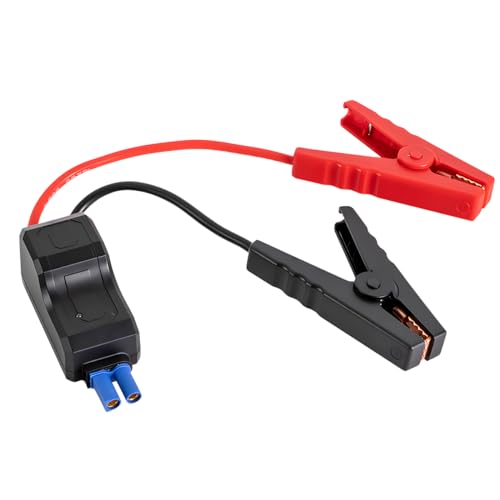
【Five Fold Protection】: This product can be anti-reverse charging, anti-over-discharging, anti-over-current, anti-reverse connection, anti-short circuit. Intelligent alarm system, safe and durable, built-in small wire to stabilize the current. Used to connect (car emergency jump starter and car battery), start the car, can prevent the positive and negative poles of the power supply collision and thus lead to short-circuit situation, high safety factor.
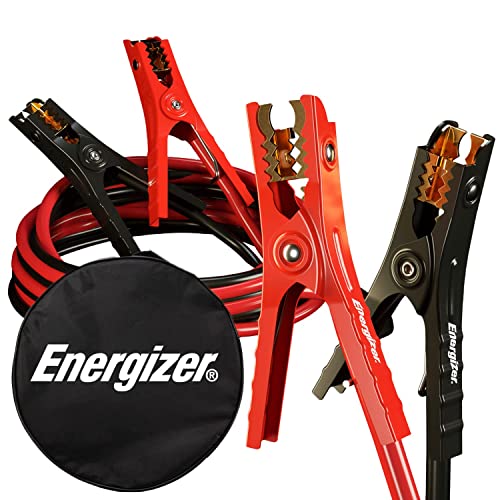
ENERGIZER 16 FEET JUMPER CABLES - 6 Gauge, 16 FT booster battery jumper cables for jump starting a dead or weak battery. Ideal for trucks, SUVs, full-size cars, mid-size cars and small/compact cars

Heavy Duty Jumper Cable:Adopts 8 GA 12 FT high-quality CCA red and black cable,premium PVC sheath, with good electrical conductivity, durable, heavy-duty and other characteristics.The booster cables used to jump start dead or weak batteries, are powerful helper in emergencies,perfect for small/compact cars,coupe, sedan,motorcycle
Battery Location Guide
On a conventional gasoline Tacoma, locate the 12-volt battery or positive connection point shown in the owner’s manual. On an i-FORCE MAX hybrid, the jump-start procedure concerns the low-voltage system—not the high-voltage traction battery. Use only the low-voltage positive jump point and ground point shown in the Tacoma Hybrid owner’s manual, and never touch orange high-voltage cables, connectors, or traction-battery components.
Make sure the positive connection point is accessible and the clamp can grip clean metal. Light surface corrosion may interfere with a good connection. If corrosion is heavy, the terminal is loose, or the post moves in the battery case, stop and arrange professional service.
Identifying Positive Terminal
Confirm the “+” symbol before attaching a red clamp. Never use wire color alone because replacement cables, covers, or previous repairs may differ. If the Tacoma has a dedicated remote positive terminal, open its protective cover and use that point exactly as the manual directs.
Do not attach a positive clamp to an unmarked bolt, fuse-box fastener, body panel, or painted surface. Reversed polarity can create intense arcing and damage the battery, cables, fuses, wiring, control modules, or charging system.
Safe Chassis Ground Points
The final black clamp belongs on the Tacoma’s designated metallic ground point shown in the manual. It should be a solid, stationary connection away from the discharged battery, fuel-system components, moving parts, and delicate brackets.
Do not guess at painted sheet metal, thin brackets, fuel-system parts, or a moving engine component. Avoid the discharged battery’s negative post unless the model-year manual specifically directs you to use it.
Clamp Cables to Jump-Start the Tacoma (Exact Red/Black Order)
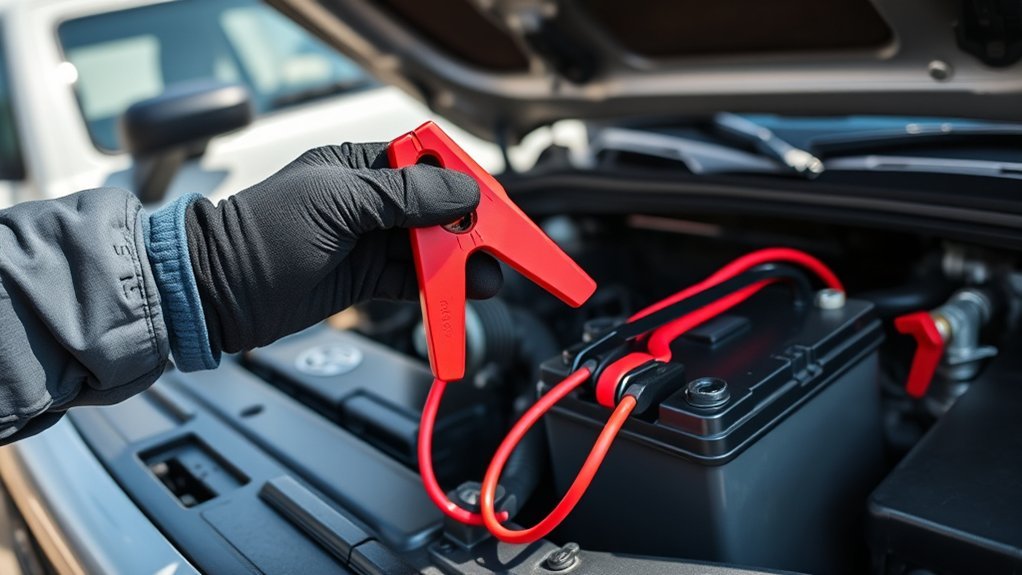
Keep both vehicles off while you make all four connections. Hold each clamp by its insulated handle and keep the unused clamps separated.
- Red to Tacoma positive: Attach one red clamp to the Tacoma’s positive battery terminal or approved positive jump point.
- Red to donor positive: Attach the other red clamp to the donor battery’s positive terminal.
- Black to donor negative: Attach one black clamp to the donor battery’s negative terminal.
- Black to Tacoma ground: Attach the final black clamp to the Toyota-specified metallic ground point on the Tacoma, away from the discharged battery.
Check every connection before starting either vehicle. The clamps should be secure, correctly polarized, and clear of fans and belts. If a clamp sparks heavily, slips, becomes hot, or contacts the wrong terminal, stop and inspect the setup before continuing.
Think “Tacoma positive, donor positive, donor negative, Tacoma ground.” Disconnect in the exact reverse order.
[Amazon Products Picked for You]

Strong And Safe Clamps: The TOPDC Jumper Cables booster cable has four giant alligator clamps with strong jagged teeth and springs for excellent grip force. The jaws are strong and make connections easy. And the High Peak Jumper Cables has insulating rubber material to prevent electric shock and protect the safety of users. The clamps are engineered with reinforced structure and well-designed jaws that provide a firm, secure grip on both top-post and side-terminal batteries, ensuring long-lasting durability and ease of use.
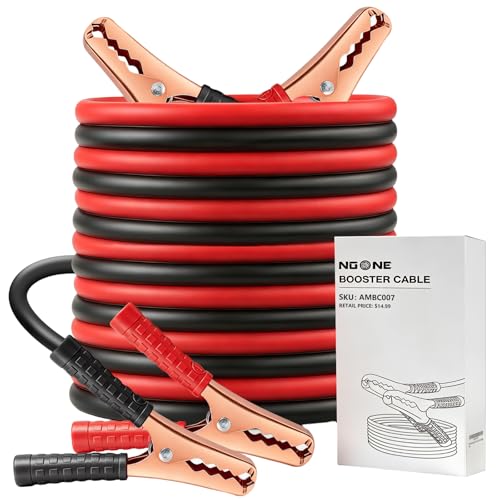
UNIVERSAL FITMENTS :NOONE 10 FT car jumper cables support 200A peak current for jumping start 12/24V car battery. So NOONE booster cables are suitable for your vehicles with up to 3.0 L Gas Engines

ORIGINAL PART FOR MEGAWISE jump starters compatible with all megwise models.
Start the Donor Vehicle and Then the Tacoma
Once the clamps are secure, start the donor vehicle. Follow your Tacoma owner’s manual for the required donor engine speed and charging period before trying to start the truck. Current fourth-generation procedures call for increasing donor engine speed slightly and maintaining it for approximately five minutes; older Tacoma instructions can differ.
Start Donor Vehicle First
Confirm both parking brakes are set and the vehicles are secured before starting the donor. Watch for warning lights, smoke, unusual odors, arcing, or hot cables. Shut the donor off immediately if anything looks wrong.
| Step | Action |
|---|---|
| 1 | Recheck all four clamps |
| 2 | Confirm both vehicles are secured |
| 3 | Start the donor vehicle |
| 4 | Follow the Tacoma manual’s donor-speed and waiting-time instructions |
| 5 | Attempt to start the Tacoma normally |
Wait Before Cranking
Do not use a universal waiting or cranking number for every Tacoma generation. Follow the model-year procedure. Current fourth-generation instructions call for supplying charge from the donor for about five minutes before the Tacoma start attempt.
If the first start attempt fails, stop and recheck the clamp contact and polarity. Follow Toyota’s model-specific retry instructions rather than making repeated back-to-back attempts. Continuous or repeated unsuccessful starting attempts can overheat electrical components and will not correct a failed battery, poor connection, or non-battery fault.
Follow Your Model-Year Donor RPM Instruction
Toyota’s donor-engine instruction has changed across Tacoma generations. Current fourth-generation procedures call for slightly increasing donor engine speed for about five minutes, while some older Tacoma manuals specify approximately 2,000 rpm. Follow the exact manual for your truck rather than assuming normal idle or aggressively racing the donor engine.
Can You Use a Portable Jump Pack on a Tacoma?
A compatible 12-volt portable jump starter can be useful when another vehicle is unavailable, but its operating sequence depends on the jump-pack manufacturer. First identify the Tacoma’s approved positive jump point and metallic ground point in the Toyota manual. With the pack switched off unless its instructions state otherwise, connect red to the approved positive point and black to the specified Tacoma ground. Activate the pack only as directed, start the Tacoma normally, then switch off and disconnect the pack in the manufacturer’s specified order.
Do not bypass a reverse-polarity, temperature, or connection warning merely to force the pack to operate. A deeply discharged or damaged battery may require charging, testing, or replacement instead. For the broader differences between booster cables and portable starters, see the complete jumper-cable and portable-starter guide.
What to Do If the Tacoma Won’t Start (Safe Troubleshooting)
The sound and dashboard behavior can point you toward the next step:
- No lights and no sound: Recheck polarity, clamp contact, cable condition, and the donor source. The Tacoma battery may be severely discharged, a terminal may be loose, or another main electrical fault may be present.
- Rapid clicking: The starter may not be receiving enough usable current. Recheck the connections and donor source before another model-approved start attempt.
- One solid click: The battery may not be the only problem. A starter, relay, cable, ground, or related starting-circuit fault is possible.
- The engine cranks normally but will not start: The problem is probably not a simple low battery. Fuel, ignition, immobilizer, sensor, or engine-control faults may be involved.
- Cables get hot, smoke, or soften: Stop immediately. Turn off the donor and do not touch bare metal until the system has cooled.
- The Tacoma starts and dies: The battery connection, charging system, drive belt where applicable, or another electrical/engine-management fault may need service.
If you cannot confirm the connection points, see battery damage, or notice abnormal electrical behavior, call roadside assistance or a qualified technician. Do not improvise with undersized wire, household extension cords, loose batteries, or unidentified electrical terminals.
Remove Jumper Cables Safely: Step-by-Step Order
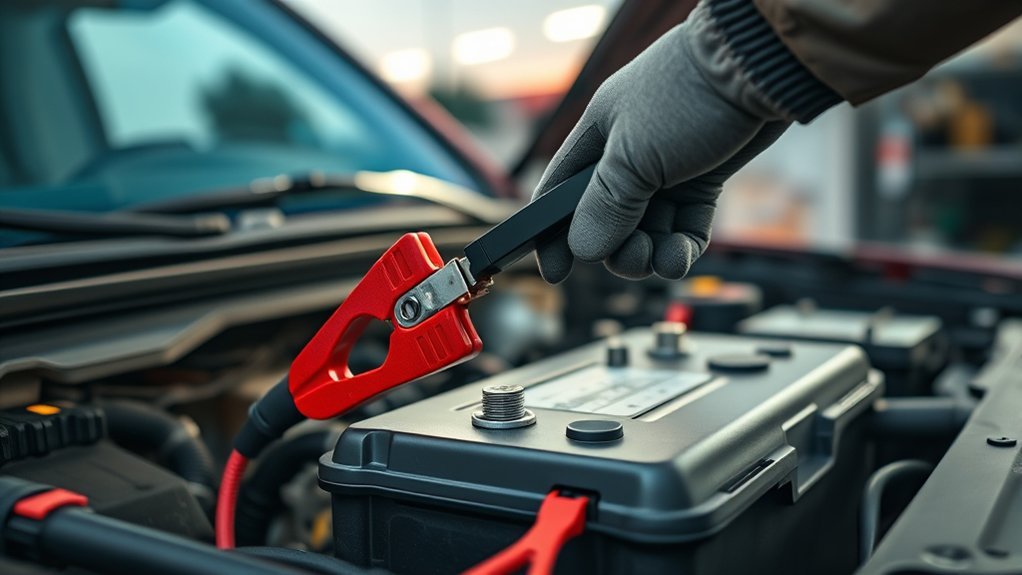
After the Tacoma starts and operates normally, keep the clamps clear of moving parts and remove them in the exact reverse order of connection. Do not let any loose clamp touch another clamp, a terminal, or metal bodywork.
Disconnect Black Cable First
| Step | Cable | Action |
|---|---|---|
| 1 | Black, Tacoma ground | Disconnect first |
| 2 | Black, donor negative | Disconnect second |
| 3 | Red, donor positive | Disconnect third |
| 4 | Red, Tacoma positive | Disconnect last |
Remove the black clamp from the Tacoma ground point first, then remove the black clamp from the donor battery. Hold each disconnected clamp away from the vehicles and from the remaining connected clamps.
Remove Red Cable Last
Remove the red clamp from the donor positive terminal, then remove the final red clamp from the Tacoma positive terminal or approved positive jump point. Close any protective terminal cover and place the cables where the clamps cannot contact each other.
Do not lean over either battery during removal. If the Tacoma begins running roughly, displays a charging-system warning, or stalls, move away from traffic if possible and arrange service.
Post-Jump Checks and Charging Advice for the Tacoma
Keep the Tacoma operating long enough to reach a safe place for testing or charging. Driving can restore some charge, but no fixed number of driving minutes guarantees that a deeply discharged battery is fully recharged. A heavily discharged battery may need an appropriate battery charger and a proper condition test.
- Check for a battery, charging-system, hybrid-system, or check-engine warning.
- Listen for belt squeal where applicable, rough operation, or unusual electrical behavior.
- Avoid shutting the truck off immediately when you are somewhere another no-start would create a safety problem.
- Have the battery and charging system tested when the cause of discharge is unknown.
- Inspect battery-terminal tightness and corrosion.
- Replace a battery that fails proper testing or repeatedly requires a jump.
A successful jump only shows that outside electrical assistance enabled the truck to start. It does not prove that the battery, charging system, terminals, or parked-vehicle electrical draw are healthy. If testing shows that replacement is necessary, see the Toyota Tacoma battery replacement guide. Battery capacity and cold-weather starting requirements are covered separately in the Tacoma battery CCA guide.
If the battery is replaced, return the used automotive battery to a retailer, service center, or approved collection program. The U.S. Environmental Protection Agency’s battery guidance recommends returning automotive lead-acid batteries to a battery retailer or appropriate collection program rather than placing them in household trash or municipal recycling.
Note: A jump-start is a temporary starting aid, not a battery repair. Repeated discharge can point to an aging battery, poor connection, charging fault, or electrical draw while the truck is parked.
When Not to Jump-Start: Frozen, Cracked, or Leaking Batteries
Do not connect jumper cables if the battery is frozen, cracked, swollen, leaking, smoking, unusually hot, or damaged around a terminal post. Stop if you notice a strong abnormal sulfur or rotten-egg odor near the battery.
Move people away from the engine bay, avoid sparks or flames, and arrange professional battery service or towing. Do not try to thaw a frozen battery with a torch, heater, boiling water, or another improvised heat source. Lead-acid batteries can contain corrosive sulfuric acid and can release flammable gases, so wear appropriate eye protection and follow the battery and vehicle manufacturer’s instructions.
Common Mistakes That Can Damage Electronics: How to Avoid Them
- Reversing polarity: Match every red clamp to a confirmed positive terminal or positive jump point and the donor black clamp to donor negative.
- Using incompatible systems: Do not connect a Tacoma that requires a 12-volt booster source to a 24-volt system.
- Guessing at jump points: Use the owner’s manual, especially on i-FORCE MAX models or vehicles with remote terminals.
- Making the final connection at the discharged battery: Use the Toyota-specified Tacoma ground point unless the model-year manual explicitly directs otherwise.
- Leaving the electronic key inside a newer Tacoma: Keep it with you because the alarm or door locks may activate when booster cables are connected.
- Letting the vehicles touch: Keep them separated while making the connections.
- Routing cables near moving parts: Keep cables clear of fans, belts, pulleys, and other moving components before either vehicle operates.
- Assuming one donor RPM applies to every Tacoma: Follow the exact model-year manual instead.
- Repeated unsuccessful starting attempts: Stop and troubleshoot the connections or underlying no-start fault instead of forcing repeated attempts.
- Assuming the problem is solved: Test the battery and charging system when the discharge has no obvious cause.
Frequently Asked Questions
How do you start a Toyota Tacoma with a dead battery?
Use a compatible 12-volt donor or jump pack. Connect red to Tacoma positive, red to donor positive, black to donor negative, and the final black clamp to the Toyota-specified Tacoma ground. Start the donor and follow the model-year Tacoma manual for donor engine speed and waiting time before starting the truck. Remove the clamps in reverse order.
Can jump-starting damage the Tacoma’s alternator or electronics?
A jump performed according to the vehicle manuals should not normally cause damage. Reversed polarity, incompatible voltage, loose or incorrect clamps, severe arcing, damaged cables, or using the wrong connection point can damage fuses, wiring, control modules, the battery, or the charging system.
Can you jump-start a Tacoma i-FORCE MAX hybrid?
Yes, when the problem is the low-voltage system and you follow the exact Tacoma Hybrid owner’s-manual procedure. Use only the specified low-voltage positive jump point and ground. Never attach jumper cables to orange high-voltage wiring, connectors, or traction-battery components, and do not assume the hybrid can be used as a donor vehicle.
Can you use a portable jump starter on a Toyota Tacoma?
A compatible 12-volt jump pack can be used when its instructions permit it. Connect it only to the Tacoma’s approved positive jump point and specified ground, follow the pack manufacturer’s activation sequence, and do not bypass reverse-polarity or other safety warnings unless its instructions specifically tell you to do so.
Why does the Tacoma click but not start after the cables are connected?
Rapid clicking commonly means the starter still lacks usable current because of a discharged battery, weak donor source, or poor connection. Recheck polarity and clamp contact before another model-approved attempt. One heavy click can point to a starter, relay, cable, ground, or other starting-circuit problem.
How long should you drive a Tacoma after a jump-start?
There is no fixed driving time that guarantees a deeply discharged battery is fully recharged. Drive to a safe location for battery and charging-system testing, and use an appropriate charger when the battery needs a full recharge. Repeated jump-starts indicate an underlying problem that should be diagnosed.
Should the donor vehicle idle or be revved when jump-starting a Tacoma?
Follow the instruction for the Tacoma’s exact model year. Current fourth-generation procedures call for increasing donor engine speed slightly for about five minutes, while some older Tacoma manuals specify approximately 2,000 rpm. Do not aggressively race the donor engine or assume one RPM rule applies to every generation.
Conclusion
Jump-starting a Toyota Tacoma safely starts with confirming the correct model-year connection points and following the red-red-black-ground sequence. Keep the electronic key with you on newer trucks, use the Toyota-specified ground, and follow the manual’s donor-engine speed and waiting-time instructions rather than a universal RPM rule. Stop for battery damage, heat, smoke, abnormal odor, or overheating cables. After a successful start, have the battery and charging system checked when the discharge was unexplained or the truck struggles to restart.
Sources
- Toyota Manuals and Warranties — model-year owner’s manuals and vehicle-specific operating instructions
- Toyota Technical Information System — official Toyota service and technical information
- U.S. EPA: Used Household Batteries — handling and recycling guidance for automotive lead-acid and other batteries
- Canadian Centre for Occupational Health and Safety: Garages — Lead-acid Batteries — automotive battery, booster-cable, eye-protection, frozen-battery, spark, and ignition-source precautions
