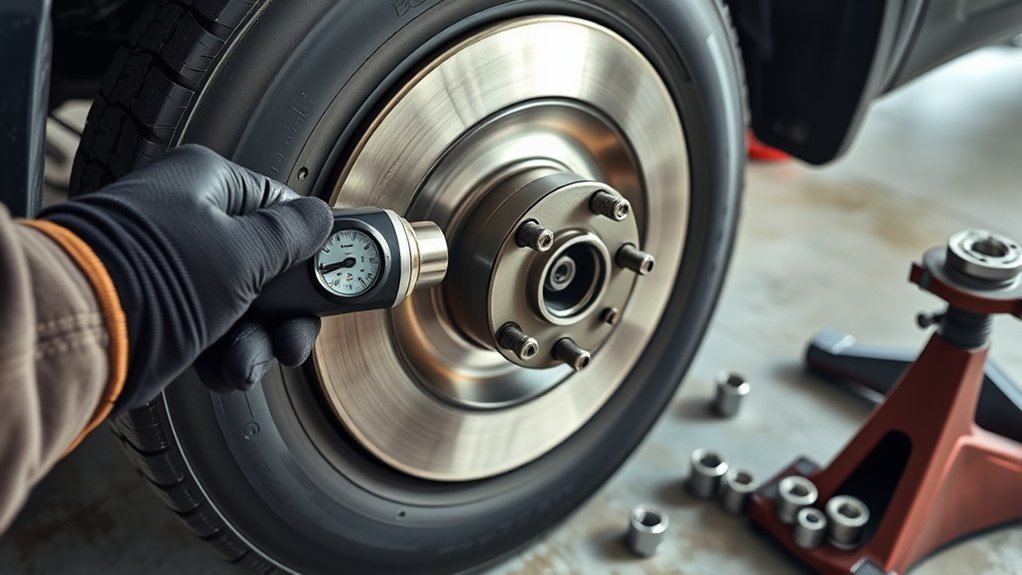
For a U.S.-market Toyota Tundra, the correct factory lug-nut torque depends first on model year and then, on later trucks, on wheel material. Toyota documentation shows 83 ft-lb (110 N·m) for 2000–2006 first-generation factory wheel nuts. Toyota manuals checked for later generations list 97 ft-lb (131 N·m) for factory aluminum wheels and 154 ft-lb (209 N·m) for factory steel wheels. Always confirm the exact model-year manual when wheels, studs, lug nuts, spacers, or other hardware have been changed.
Last updated: September 19, 2026 — first-generation torque, wheel-material differences, lug-pattern guidance, and post-installation retorque guidance rechecked.
Quick Answer
Toyota Tundra factory lug-nut torque is 83 ft-lb (110 N·m) on 2000–2006 first-generation trucks. For factory wheels on later Tundras, Toyota documentation commonly specifies 97 ft-lb (131 N·m) for aluminum wheels and 154 ft-lb (209 N·m) for steel wheels, including a steel spare where applicable. Confirm your exact owner’s manual before tightening, especially with aftermarket wheels or replacement hardware.
Key Takeaways
- Toyota documentation lists 83 ft-lb (110 N·m) for 2000–2006 Tundra factory wheel nuts.
- For later factory setups, 97 ft-lb (131 N·m) is the common Toyota specification for aluminum wheels.
- Toyota documentation lists 154 ft-lb (209 N·m) for applicable factory steel wheels, including a steel spare where specified.
- The Tundra changes from six lugs on 2000–2006 trucks to five lugs on 2007–2021 trucks, then back to six lugs for 2022 and newer trucks.
- Aftermarket wheels may require different lug nuts, seat designs, or torque values.
- Hand-start every lug nut and finish with a calibrated torque wrench using the correct star or crisscross sequence.
- Keep the threads and mounting surfaces clean and dry unless the manufacturer specifically instructs otherwise.
Toyota Tundra Lug Nut Torque by Model Year and Wheel Type
The table below gives the main U.S.-market factory specifications supported by Toyota documentation checked for this update. It is a fast reference, not a substitute for the exact owner’s manual when your truck has changed wheels, studs, lug nuts, spacers, or other hardware.
| Tundra Model Years | Factory Lug Pattern | Factory Wheel Application | Torque Guidance |
|---|---|---|---|
| 2000–2006 | 6 lug | Factory wheel hardware | 83 ft-lb (110 N·m) |
| 2007–2021 | 5 lug | Factory aluminum wheel | 97 ft-lb (131 N·m) |
| 2007–2021 | 5 lug | Factory steel wheel | 154 ft-lb (209 N·m) |
| 2022 and newer | 6 lug | Factory aluminum wheel where listed | 97 ft-lb (131 N·m) in Toyota’s 2022 specification tables; confirm the exact later-model manual |
| 2022 and newer | 6 lug | Factory steel wheel where listed | 154 ft-lb (209 N·m) in Toyota’s 2022 specification tables; confirm the exact later-model manual |
If you also need the lug count, bolt circle, or generation-to-generation wheel-fitment changes, see the Toyota Tundra wheel bolt pattern guide.
Important: Do not choose the torque by wheel position alone. On later factory setups, identify whether the wheel is aluminum or steel. A steel road wheel can use the higher steel-wheel specification just as a steel spare can.
At a Glance
| Time Required | About 15–30 minutes for a four-wheel torque check; longer if a wheel must be removed |
| Difficulty | Beginner for a torque check; intermediate when lifting the truck or removing a wheel |
| Tools Needed | Calibrated 1/2-inch torque wrench, exact-fitting six-point socket, breaker bar or lug wrench, wheel chocks, gloves, and eye protection |
| Cost | No added cost if you own the tools; tool purchase or professional service cost varies |
Understanding Toyota Tundra Lug Nut Torque

Lug-nut torque controls the clamping force that holds your Tundra’s wheel against the hub. The goal is not simply to make each nut feel tight. Every nut must apply a balanced load so the wheel remains seated while driving, braking, cornering, and carrying weight.
Under-tightened nuts may lose clamping force and allow movement between the wheel and hub. Over-tightened nuts can stretch studs, damage threads, distort a wheel, or make roadside removal difficult. Uneven tightening can also prevent the wheel from seating correctly.
The correct torque is the value specified for the exact vehicle, wheel, stud, and lug-nut combination—not the highest number your wrench can apply.
What Is the Correct Toyota Tundra Lug Nut Torque?
The correct value depends on the model year and factory wheel material. Toyota documentation supports 83 ft-lb for first-generation factory hardware, while later manuals separate aluminum and steel wheels at 97 and 154 ft-lb respectively. Aftermarket wheels and replacement hardware require their own documented instructions.
| Wheel Configuration | Torque Guidance | Important Limitation |
|---|---|---|
| 2000–2006 first-generation factory wheel hardware | 83 ft-lb (110 N·m) | Use the exact model-year manual if the wheel or hardware has been changed. |
| Factory aluminum wheels on later Tundras | 97 ft-lb (131 N·m) | Confirmed in multiple Toyota manuals; check the exact model-year specification and wheel package. |
| Factory steel wheels on later Tundras, including a steel spare where applicable | 154 ft-lb (209 N·m) | Do not apply this higher number to an aluminum or aftermarket wheel unless its documentation calls for it. |
| Aftermarket wheels, spacers, replacement studs, or non-OEM lug nuts | Follow the wheel and hardware manufacturer | Wheel material, seat style, stud diameter, thread, washer or shank design, and spacer instructions can change the requirement. |
Warning: Do not assume an aftermarket wheel uses the factory torque or factory lug nuts. A cone-seat nut, flat-seat nut, ball-seat nut, washer-style nut, or shank-style nut must match the wheel’s mounting seat and dimensions.
How Do You Verify Your Tundra’s Correct Torque?
Confirm the specification before loosening or installing wheel hardware. This is especially important on an older truck, a used truck, or a Tundra with modified wheels.
- Identify the model year. Use the VIN plate, registration, or vehicle records rather than relying on appearance.
- Determine whether the wheel is factory or aftermarket. Check the wheel markings, purchase records, or manufacturer information.
- Identify the wheel material. On later Tundras, Toyota documentation can specify different torque for aluminum and steel wheels.
- Check the model-year Toyota manual. Toyota provides year-specific manuals through its Manuals and Warranties portal.
- Check aftermarket documentation. Follow the wheel, spacer, or hardware manufacturer when its instructions differ from factory-wheel guidance.
- Ask a Toyota dealer or qualified wheel shop when documentation conflicts. Do not average two values or choose the one that appears most often online.
Note: An engine description such as “5.7L V8” does not determine lug-nut torque by itself. Model year, wheel material, studs, nuts, and the applicable Toyota instructions matter more than engine displacement.
[Amazon Products Picked for You]

±3% HIGH PRECISION AND COOL APPEARANCE: 1/2 inch drive torque wrench (10-170ft.-lb/13.6-230.5Nm)has a calibration error range of ±3%, high precision, and comes with a corresponding serial number, which is easy to trace the original data, and you can use it with confidence.Hairich torque wrench not only has superior quality but also has a superior appearance. The classic combination of black and red is fashionable and textured, allowing you to enjoy a visual feast during use.
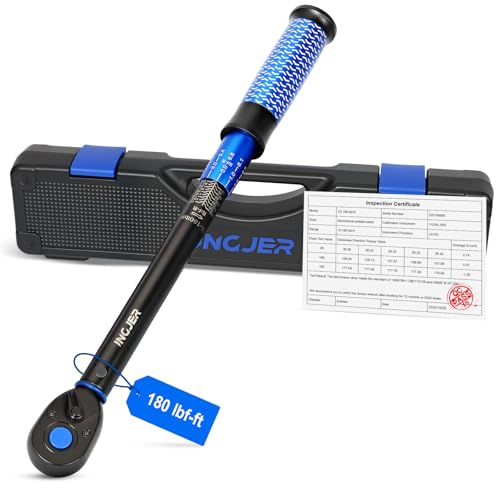
PRECISION-CALIBRATED FOR ACCURACY & RELIABILITY: Experience unparalleled accuracy with a 1/2" torque wrench certified to ±3% (clockwise). Each tool is meticulously calibrated and tested against rigorous standards to ensure consistent, repeatable performance. Prevent under-torquing (which can lead to loosening) and over-torquing (which can cause damage and failure), protecting your valuable equipment and projects.

±3% HIGH PRECISION AND COOL APPEARANCE: 1/2 torque wrench(40-300ft.-lb/33.9-339Nm)has a calibration error range of ±3%, high precision, and comes with a corresponding serial number, which is easy to trace the original data, and you can use it with confidence.Hairich torque wrench not only has superior quality but also has a superior appearance. The classic combination of black and red is fashionable and textured, allowing you to enjoy a visual feast during use.
Tools You Need for Proper Lug Nut Maintenance
A reliable torque wrench is the most important tool because it measures the force applied to the lug nut. A quality 1/2-inch-drive torque wrench usually gives a practical range and useful leverage for Tundra wheel values, especially when the required setting is 97 or 154 ft-lb.
- Calibrated torque wrench: Its working range must comfortably include the required value.
- Exact-fitting six-point socket: The socket should seat fully over the lug nut without looseness or rocking.
- Breaker bar or lug wrench: Use it for loosening stubborn nuts rather than using the torque wrench as a breaker bar.
- Wheel chocks: Chock the wheels that remain on the ground.
- Vehicle jack and rated jack stands: These are required when removing a wheel.
- Clean brush and cloth: Use them to remove loose rust, grit, and debris from the mounting area.
- Gloves and eye protection: Protect your hands and eyes from rust, dirt, and slipping tools.
- Locking-lug key: Keep the correct key available if your truck has wheel locks.
Do not treat a 13/16-inch socket as a substitute for a 22 mm socket. They are different sizes. Factory and replacement lug nuts can also use different hex sizes, so check the hardware installed on your truck and use the socket that fits it precisely.
Choosing the Right Torque Wrench
A click-type, split-beam, beam-style, or quality digital wrench can work when it covers the required range and is in good condition. Follow its manufacturer’s calibration interval and operating instructions.
Do not use a torque wrench to break loose seized nuts unless its manufacturer specifically permits that use. After using an adjustable click-type wrench, return it to the lowest marked storage setting recommended by the tool manufacturer. Do not force it below the scale.
How Do You Tighten Toyota Tundra Lug Nuts Correctly?

Use the following method after installing a wheel or when checking recently installed wheel hardware.
Warning: Work on firm, level ground. Set the parking brake and chock the wheels. Never place any part of your body under a vehicle supported only by a jack. Use correctly rated jack stands at Toyota-approved support points when the wheel is removed.
If you are installing the spare after a puncture, the complete lifting and removal sequence is covered in the Toyota Tundra flat-tire guide.
1. Prepare the Wheel and Hardware
- Inspect the wheel, hub, studs, and nuts for cracks, deformation, severe rust, damaged threads, or an incorrect seat design.
- Remove loose grit, corrosion flakes, and debris from the wheel-to-hub mating surfaces.
- Keep the stud and nut threads clean and dry unless Toyota or the wheel manufacturer specifically instructs you to use a particular product.
- Seat the wheel evenly against the hub before installing the nuts.
Oil, grease, or anti-seize changes thread friction and can produce a different clamping force at the same wrench setting. Do not lubricate the hardware simply to make tightening easier.
2. Hand-Start Every Lug Nut
Thread each nut by hand for several turns. A correctly aligned nut should turn smoothly without a wrench. Stop if it binds, feels gritty, tilts, or becomes tight after only a partial turn.
Forcing a cross-threaded nut with an impact wrench can damage both the nut and the wheel stud. Replace questionable hardware before driving.
3. Follow the Correct Five- or Six-Lug Crisscross Pattern
Tundra lug count changes by generation. The 2000–2006 first generation uses six lugs, 2007–2021 trucks use five lugs, and 2022-and-newer Tundras return to six lugs. Follow the sequence shown in the exact owner’s manual for your truck. On a five-lug wheel, use a star pattern. On a six-lug wheel, alternate across the center rather than tightening in a circle.
- Snug each nut lightly by hand or with a hand tool.
- Set the torque wrench to roughly 50–70% of the final specification.
- Tighten every nut in the correct star or crisscross sequence.
- Set the wrench to the full verified torque.
- Repeat the same sequence until the wrench signals that the setting has been reached.
- Complete one orderly confirmation pass at the final value without repeatedly pumping or clicking the same nut.
When a wheel has been lifted, lower the truck only enough to prevent the wheel from turning before final torque, or follow the lifting and installation method in the Toyota manual. Avoid placing the truck’s full weight on a wheel whose nuts are only finger-tight.
Pro Tip: Stop pulling when a click-type wrench gives its signal. Do not keep pulling after the click or repeatedly pump the wrench on the same nut.
Why Correct Lug Nut Torque Matters
[Amazon Products Picked for You]

14mmx1.5 OE Factory Mag Seat Lug Nuts Replacement for 1998-2007 LX470, 2008-2021 LX570, 1998-2021 LAND CRUISER,2008-2021 SEQUOIA,2007-2021 TUNDRA Stock Wheels .To ensure the accuracy of our service, please carefully check the specific model of your vehicle. If you have any questions, feel free to contact us at any time.

One Piece Design: Our wheel lug nuts are a great choice to replace the original two-piece design nuts. They feature a sturdy one-piece construction and are heat-treated, which effectively prevents the expansion and cracking issues commonly found in original nuts.

【Specifications】14x1.5 Thread Pitch; 22mm Hex; 47mm OAL; Mag Seat -Flat Seat; 12.5 mm Shank Length; Closed End; Color: Chrome
Problems Caused by Under-Torquing
- Loss of clamping force
- Wheel movement against the hub
- Vibration, wobble, or clicking
- Elongated wheel holes
- Damage to studs, nuts, hub surfaces, or the wheel
- Possible wheel separation in an extreme case
Problems Caused by Over-Torquing
- Stretched or weakened wheel studs
- Stripped nut or stud threads
- Distorted wheel seats
- Difficult roadside wheel removal
- Broken studs during later service
- Inaccurate clamping caused by damaged hardware
An impact wrench may be useful for removal or careful initial installation at a controlled low setting. It should not be the tool that determines final torque. Complete the final tightening with a torque wrench.
Why You Should Replace Damaged or Swollen Lug Nuts

Some capped lug nuts can deform or swell when corrosion develops between the outer cap and the nut beneath it. The swollen shape may prevent the correct socket from seating fully, making removal difficult and increasing the chance of rounding the outer surface.
[Amazon Products Picked for You]

SPECIFICATION: M12x1.5 thread - closed end bulge style lug nuts - conical 60 degree seat - 17mm hex - 1.37 in. long - 0.87 in. wide - color: black. Our nuts have an innovative design in appearance due to personal preference
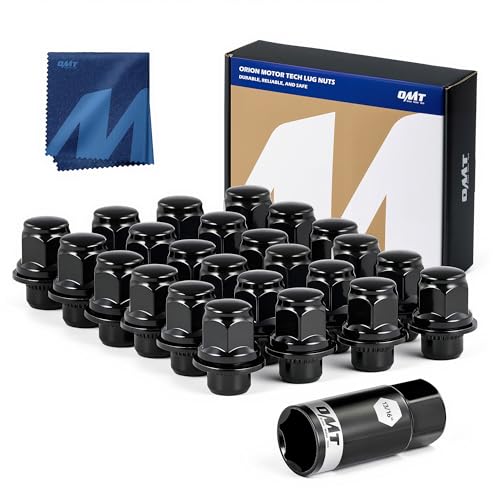
SET OF 24 LUG NUTS: This package includes 24 Orion Motor Tech 12mm x 1.5 lug nuts with a mag seat (1.46" high by 1.18" wide), a socket, and instructions for use to get all your wheels back on the road as soon as possible

Socket Tool: The Wheel Lock Nut Key is compatible with Toyota models and is used to remove and install wheel anti-theft nuts. Please carefully check whether the thread on the product picture is consistent with the thread on your car tire before purchasing.
Signs a Lug Nut Needs Inspection or Replacement
- The normal socket no longer fits fully.
- The outer cap is split, distorted, loose, or visibly enlarged.
- The hex corners are rounded.
- The nut rocks or binds on the stud.
- The threads show galling, flattening, rust loss, or cross-threading.
- The washer or seating surface is cracked, deeply scored, or uneven.
- The nut does not match the wheel’s required seat design.
Choose Replacement Hardware by Compatibility
Do not select replacement lug nuts by appearance alone. Match the thread diameter, thread pitch, seat type, shank dimensions, washer design, overall clearance, and wheel-manufacturer requirements.
Replace damaged wheel studs as well as damaged nuts. A nut that repeatedly loosens, binds, or produces inconsistent torque may indicate a damaged stud, incorrect seat, distorted wheel, contaminated mounting surface, or other installation problem.
Warning: Do not drive if a stud is broken, a nut cannot be tightened correctly, the wheel visibly moves, or you hear clicking accompanied by vibration. Have the wheel hardware inspected before returning the truck to service.
How Do You Choose the Right Lug Nut Socket for a Tundra?
Place a six-point socket over the nut by hand before applying force. The socket should slide on fully and should not rock noticeably. A twelve-point socket offers less contact at the corners and may round a stubborn or swollen lug nut more easily.
Factory and replacement hardware can use different hex sizes, so verify what is installed on your truck. Do not hammer an undersized socket onto a usable lug nut or use an oversized socket that grips only the corners.
If the truck has locking or spline-drive nuts, use the matching key or adapter. Inspect the key for cracks or twisting before applying high force.
What Not to Do When Tightening Your Lug Nuts
- Do not guess the torque. Confirm the value for the model year and wheel.
- Do not use an impact wrench for final torque. Finish with a calibrated torque wrench.
- Do not tighten in a circle. Use the correct five-lug star or six-lug crisscross sequence.
- Do not force a nut that will not turn by hand. Investigate damaged or crossed threads.
- Do not lubricate the threads without documented instructions. Lubrication changes the clamping force produced at a given torque.
- Do not mix seat styles. The nut must match the wheel’s mounting seat.
- Do not use damaged nuts or studs. Replace defective hardware before driving.
- Do not rely on “tight by feel.” Leverage, tool length, and operator strength make this method inconsistent.
- Do not use a torque wrench as a hammer or ordinary breaker bar. Misuse can affect its accuracy.
When Should You Recheck Toyota Tundra Lug Nut Torque?
A torque check is most useful after a wheel has been removed and reinstalled, after tire rotation, after new wheels or tires are fitted, or after wheel hardware has been replaced. Wheel settling, debris, uneven seating, or an installation error can reduce effective clamping force.
Toyota manuals checked for 2007, 2016, and 2021 Tundras instruct owners to check or retighten wheel nuts within 100 miles (160 km) after wheel service. Use the instruction in the manual for your exact model year. As broader tire-industry guidance, Continental recommends a wheel-nut check after approximately 50 km following wheel or tire installation.
A routine check means using the correct manufacturer procedure and torque value in the proper sequence. A torque wrench that clicks before a stationary nut moves does not prove the fastener was installed at exactly that torque; it only confirms that it did not turn below the wrench setting. If you suspect that an impact wrench seriously over-tightened the nuts, have the wheel hardware inspected and reset correctly rather than relying on a simple click check.
Warning Signs That Need Immediate Attention
- New vibration through the steering wheel, seat, or floor
- Clicking or knocking near a wheel
- Visible wheel wobble
- A missing lug nut
- Rust trails or metal dust around the wheel holes
- A nut that repeatedly loses torque
- A wheel that does not sit flush against the hub
Reduce speed and stop in a safe location if you suspect a loose wheel. Do not continue driving simply because the truck still steers normally.
Regular Maintenance Tips for Your Tundra’s Wheels
- Inspect during tire service: Check nuts, studs, wheel seats, and mounting surfaces whenever the tires are rotated or removed.
- Keep hardware clean: Remove loose dirt and corrosion without damaging the threads or seating surfaces.
- Check tool accuracy: Maintain and calibrate your torque wrench according to its manufacturer’s instructions.
- Store the correct key: Keep a locking-lug key in the truck where it can be found during roadside service.
- Use matching replacement parts: Confirm thread and seat compatibility before installing replacement lug nuts.
- Recheck after installation: Follow the interval supplied by Toyota, the wheel manufacturer, or the service shop.
- Investigate repeated loosening: Repeated torque loss is a fault to diagnose, not a normal condition to manage indefinitely.
After wheel service, also verify cold inflation pressure using the door-jamb specification. The separate Toyota Tundra tire-pressure guide explains the correct placard-based procedure.
Frequently Asked Questions
What is the lug nut torque for a Toyota Tundra?
Toyota documentation lists 83 ft-lb (110 N·m) for 2000–2006 Tundra factory wheel nuts. On later factory setups, Toyota manuals commonly list 97 ft-lb (131 N·m) for aluminum wheels and 154 ft-lb (209 N·m) for steel wheels. Confirm the exact model-year manual before tightening.
Which Toyota Tundras use 83 ft-lb lug nut torque?
The 83 ft-lb (110 N·m) factory specification applies to the first-generation 2000–2006 Tundra in Toyota documentation. Do not apply 83 ft-lb to a later Tundra simply because the number appears in a generic chart.
Why does a Tundra use 97 ft-lb for some wheels and 154 ft-lb for others?
Later Toyota Tundra manuals can specify different torque by factory wheel material. Aluminum wheels are commonly listed at 97 ft-lb (131 N·m), while applicable steel wheels are listed at 154 ft-lb (209 N·m). Identify the wheel material and confirm the exact model-year table before tightening.
When should I recheck Toyota Tundra lug nut torque?
Toyota manuals checked for 2007, 2016, and 2021 instruct owners to check or retighten wheel nuts within 100 miles (160 km) after wheel service. Continental gives broader guidance of about 50 km after new wheels or tires. Follow the instruction for your exact Tundra and wheel setup.
Does a Toyota Tundra have five or six lug nuts?
It depends on generation. The 2000–2006 Tundra uses six lugs, the 2007–2021 Tundra uses five, and 2022-and-newer trucks return to six lugs. Use the star or crisscross tightening sequence shown for your exact wheel.
Is a 1/2-inch or 3/8-inch torque wrench better for Tundra lug nuts?
A 1/2-inch-drive torque wrench is usually the more practical choice because its range and leverage suit Tundra wheel values such as 83, 97, and 154 ft-lb. Use a calibrated tool whose rated working range comfortably includes the required setting.
Can I tighten Tundra lug nuts with an impact wrench?
You may use an impact wrench cautiously for removal or controlled initial snugging, but it should not determine final torque. Hand-start the nuts, seat the wheel evenly, and complete the final star or crisscross passes with a calibrated torque wrench.
Do aftermarket Tundra wheels use the factory torque specification?
Not always. Aftermarket wheels may use different materials, seats, nuts, washers, shanks, studs, spacers, or installation instructions. Follow the documented wheel and hardware manufacturer requirements when they differ from factory-wheel guidance.
Conclusion
For factory hardware, Toyota documentation shows 83 ft-lb (110 N·m) for 2000–2006 Tundras. On later trucks, Toyota manuals commonly list 97 ft-lb (131 N·m) for aluminum wheels and 154 ft-lb (209 N·m) for steel wheels. The truck’s generation also determines whether you use a five-lug star pattern or six-lug crisscross pattern.
Confirm the exact model-year manual before tightening, especially with aftermarket wheels, spacers, replacement studs, or non-OEM lug nuts. Clean and inspect the hardware, hand-start every nut, tighten in stages, finish with a calibrated torque wrench, and follow the applicable post-installation recheck interval.
Sources
- Toyota 2006 Tundra Manuals and Warranties — official first-generation manual access
- Toyota 2007 Tundra Manuals and Warranties — official second-generation manual access
- Toyota 2016 Tundra Manuals and Warranties — official model-year manual access
- Toyota 2021 Tundra Manuals and Warranties — official late second-generation manual access
- Toyota 2022 Tundra Manuals and Warranties — official third-generation manual access
- Toyota 2026 Tundra Manuals and Warranties — official current model-year manual portal
- Toyota Tire Inflation / Wheel Lug Torque Reference Chart hosted by NHTSA — Toyota’s 2000-model reference lists the Tundra at 83 ft-lb
- Continental: Retorquing Wheels — staged tightening, crisscross sequencing, and general post-installation wheel-nut checks
- NHTSA TireWise — tire and wheel maintenance safety guidance
