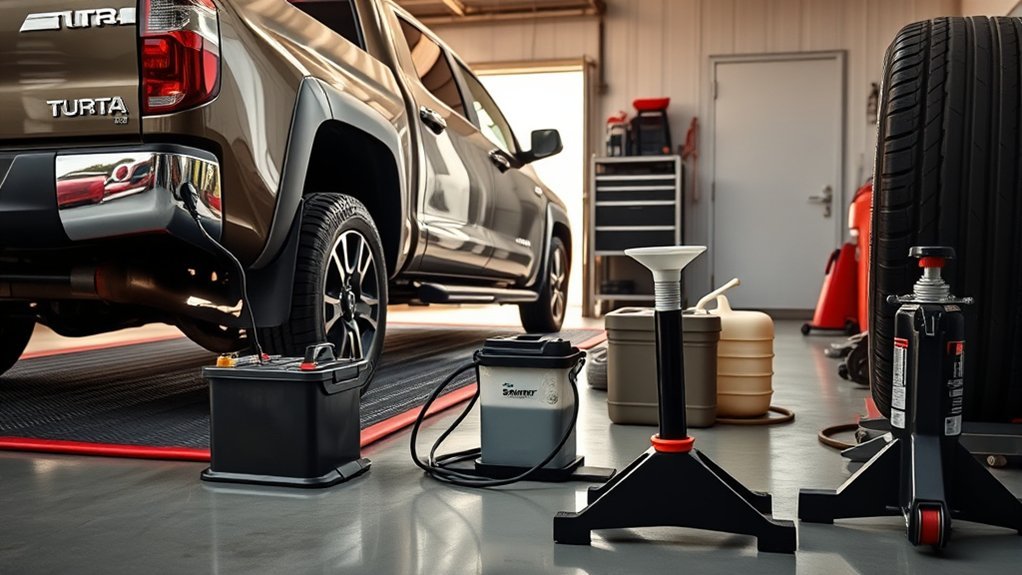
Long-term storage involves more than parking your Toyota Tundra and covering it. Fuel can deteriorate, the 12-volt battery can discharge, tires can lose pressure, moisture can collect, and rodents can damage wiring. A careful preparation routine protects the truck and makes its return to service safer. Always confirm model-specific requirements in your Tundra’s owner’s manual before disconnecting a battery, lifting the truck, or servicing fluids.
Quick Answer
To store a Toyota Tundra for several months, clean and dry it, service only items that are due, protect the 12-volt battery with a compatible smart maintainer, stabilize fresh fuel according to the product label, set cold tire pressure to the door-jamb specification, block pests safely, and inspect the truck monthly.
Key Takeaways
- Use your exact model-year Toyota manual for battery, fuel, fluid, tire, lifting, and hybrid instructions.
- Do not intentionally overinflate the tires or leave the engine oil below the specified level.
- Use a battery maintainer that matches the 12-volt battery’s chemistry and voltage.
- Never use loose mothballs inside the cab, engine compartment, or storage area as rodent repellent.
- Before driving again, remove every plug and chock, inspect for leaks and nests, correct tire pressure, and test the brakes carefully.
At a Glance
| Time Required | About 2–4 hours for cleaning and preparation, plus any scheduled service |
| Difficulty | Easy to moderate; lifting and electrical work require additional experience |
| Tools Needed | Tire gauge, wheel chocks, cleaning supplies, compatible battery maintainer, fuel stabilizer if appropriate, and a fitted breathable cover |
| Cost | Varies by the supplies you already own and whether you purchase a maintainer, tire cradles, or vehicle cover |
Preparing Your Toyota Tundra for Long-Term Storage
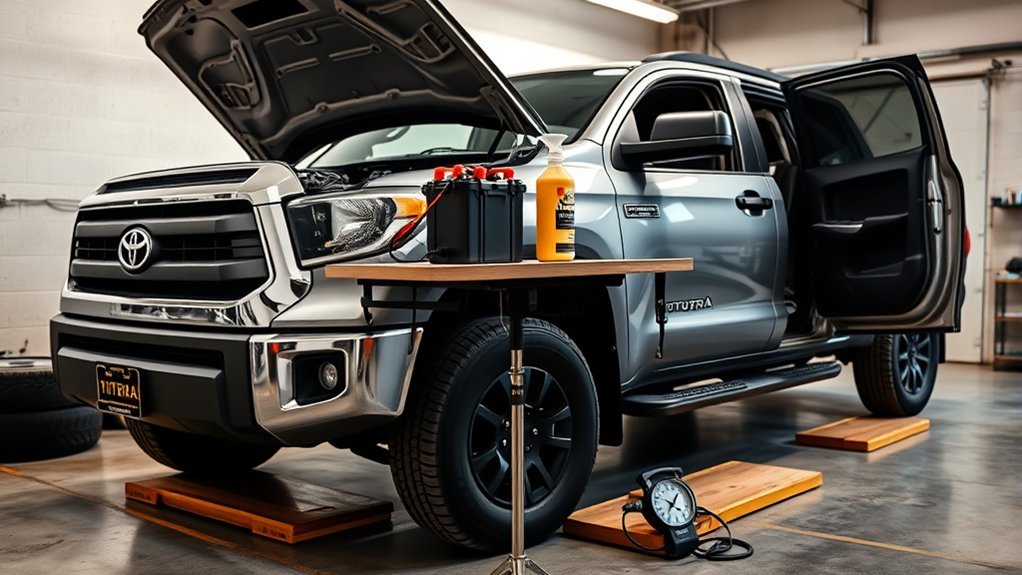
Begin with your exact model year, powertrain, battery type, tire configuration, and maintenance schedule. Specifications can differ between older V8 trucks, newer twin-turbo gasoline models, and i-FORCE MAX hybrids. Toyota’s manual and warranty portal lets you select the correct truck before performing model-sensitive work.
Choose a Safe Storage Location
A clean, dry, secure garage is usually the best option. Park on a level, hard surface away from standing water, fertilizer, road salt, direct sunlight, and leaking pipes. If outdoor storage is unavoidable, choose well-drained ground and use a fitted outdoor cover designed to release trapped moisture.
Avoid storing the truck over grass or bare soil for an extended period. Ground moisture can increase corrosion around the frame, brakes, exhaust, and underbody. Concrete or another stable paved surface also provides safer support for wheel chocks or rated lifting equipment.
Complete a Pre-Storage Inspection
| Area | What to Do |
|---|---|
| Maintenance | Complete any service that will become due during storage, especially an oil change that is already near its time or mileage limit. |
| Leaks | Repair coolant, oil, brake-fluid, fuel, differential, transmission, or transfer-case leaks before parking. |
| Battery | Test the 12-volt battery, clean corrosion, and connect a compatible smart maintainer if the storage location has safe power. |
| Fuel | Use fresh fuel approved for the model year and add stabilizer only according to its label. |
| Tires | Inspect for cuts, cracks, bulges, nails, and uneven wear, then set cold pressure to the door-jamb specification. |
| Cab and bed | Remove food, drinks, paper, pet supplies, tools that may rust, and anything that may attract pests. |
| Documentation | Record the date, mileage, fuel treatment, tire pressures, battery arrangement, plugs installed, and maintenance completed. |
Pro Tip: Attach a bright “remove before starting” checklist to the steering wheel. List every exhaust plug, intake cover, wheel chock, battery connection, charger lead, and tire-support device you installed.
Secure the Truck Without Sticking the Brakes
Park on a level surface, shift the transmission into Park, and place sturdy wheel chocks at the tires. Long storage can allow parking-brake components to stick, especially in damp conditions. Whether you can safely leave the parking brake released depends on the model, surface, slope, and electronic parking-brake design, so follow the model-year manual.
Warning: Never work beneath a Tundra supported only by a jack. Do not use lumber, concrete blocks, bricks, or improvised supports. Use equipment rated for the truck’s weight and Toyota-approved lifting and support points.
Essential Battery Maintenance Tips for Toyota Tundra Storage
The 12-volt battery can discharge while the truck is parked because alarms, control modules, keyless-entry systems, and other electronics may continue using small amounts of power. A compatible automatic battery maintainer is usually the simplest option when reliable electrical service is available.
Select a maintainer that matches the battery’s voltage and chemistry, such as conventional lead-acid, enhanced flooded battery, AGM, or another battery specified for your truck. Modern smart maintainers recharge a battery and then reduce output to a maintenance mode instead of continuously applying a basic trickle charge. Review the maintainer’s instructions before connecting it.
[Amazon Products Picked for You]

Charger, Maintainer & Desulfator - An all-weather battery charger, battery maintainer, trickle charger, and battery desulfator. Perfect for charging and maintaining all 12-volt lead-acid, flooded or sealed maintenance free batteries (AGM and gel cell).

【Battery Charger, Maintainer & Desulfator】An compact size portable 4 in 1 battery charger, battery maintainer, trickle charger, and battery desulfator. Works with all types of 6-volt and 12-volt lead-acid automotive, RV, powersport, and deep-cycle batteries, including flooded, gel, AGM, SLA, VRLA batteries, suitable for cars, golf carts, motorcycles, boats, lawn mowers, marines, ATVs, UTVs etc.

Compact & Robust - Compact size for easy storage. Enhanced plastic case with top grade fire-resistant feature. Perfect for charging and maintaining all 12-volt lead-acid, flooded or sealed maintenance free batteries (AGM and gel cell). Up to 8.5FT cables with SAE quick release connection options: 7.5amp fuse protected Ring Terminals Harness and Fully insulated enhanced 50amp Alligator Clamp Harness. Works with all devices with standard SAE connectors.
Using a Battery Maintainer
- Turn the truck off and remove the key or move the smart key away from the vehicle.
- Inspect the battery case, terminals, and cables for damage or heavy corrosion.
- Confirm the charger setting matches the battery type.
- Connect the leads in the order required by the maintainer and Toyota’s manual.
- Route the cable where it cannot be pinched by the hood or contact hot or moving components.
- Check the maintainer’s status during each monthly inspection.
If you cannot use a maintainer, Toyota may permit disconnecting the negative 12-volt terminal for some models. However, disconnection can reset clock, window, seat, audio, transmission-learning, alarm, and other settings. Confirm the correct procedure before disconnecting anything.
Battery Care for i-FORCE MAX Hybrid Models
An i-FORCE MAX Tundra has a conventional low-voltage electrical system and a separate high-voltage hybrid system. Do not disconnect, open, charge, probe, or service orange high-voltage cables, connectors, or battery components. Follow the hybrid-storage instructions in the exact model-year manual or contact a Toyota service department.
Note: “Battery maintainer” in this guide refers to an approved maintainer for the truck’s 12-volt battery. It does not mean an external charger for the high-voltage hybrid battery.
How to Effectively Manage Fuel During Storage
Start with fresh gasoline that meets the octane and fuel-type requirements in your Tundra’s manual. Ethanol-free fuel is not a universal requirement, and you should not use a fuel outside Toyota’s specifications simply because the truck will be stored.
For storage lasting several months, a fuel stabilizer may slow oxidation and deposit formation. Add only the amount stated on the product label. Add it while the fuel is fresh, then operate the truck long enough to circulate treated fuel through the system before final storage.
- Do not pour in extra stabilizer on the assumption that more provides greater protection.
- Do not fill above the normal safe fuel level or force additional fuel into the filler neck.
- Keep fuel and stabilizer away from sparks, flames, heaters, and smoking materials.
- Follow building rules and local fire codes for a fueled vehicle stored indoors.
- Record the stabilizer brand, amount, and treatment date.
If the fuel later smells sour or varnish-like, the engine runs poorly, or the truck has been stored far beyond the stabilizer’s labeled period, have the fuel system evaluated. Do not attempt to drain a large truck fuel tank without appropriate equipment and a safe disposal plan.
[Amazon Products Picked for You]

Great Product

PRESERVES FUEL: This fuel stabilizer ensures keeps gasoline fresh for up to 24 months for storing vehicles that are not in use, boats, outdoor power equipment during winter months, or stocking up on fuel.
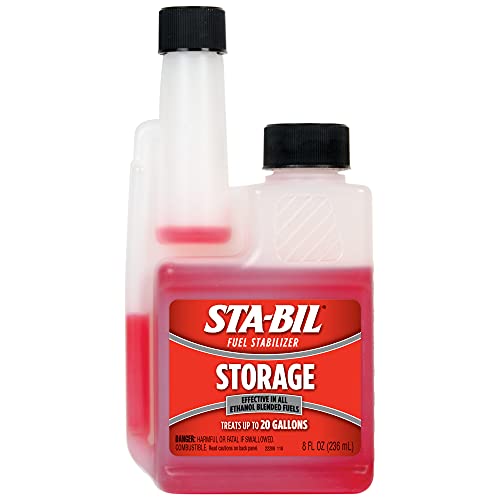
PRESERVES FUEL: This fuel stabilizer ensures keeps gasoline fresh for up to 24 months for storing vehicles that are not in use, boats, outdoor power equipment during winter months, or stocking up on fuel.
Tire Care: Avoiding Flat Spots While Your Tundra Is Stored
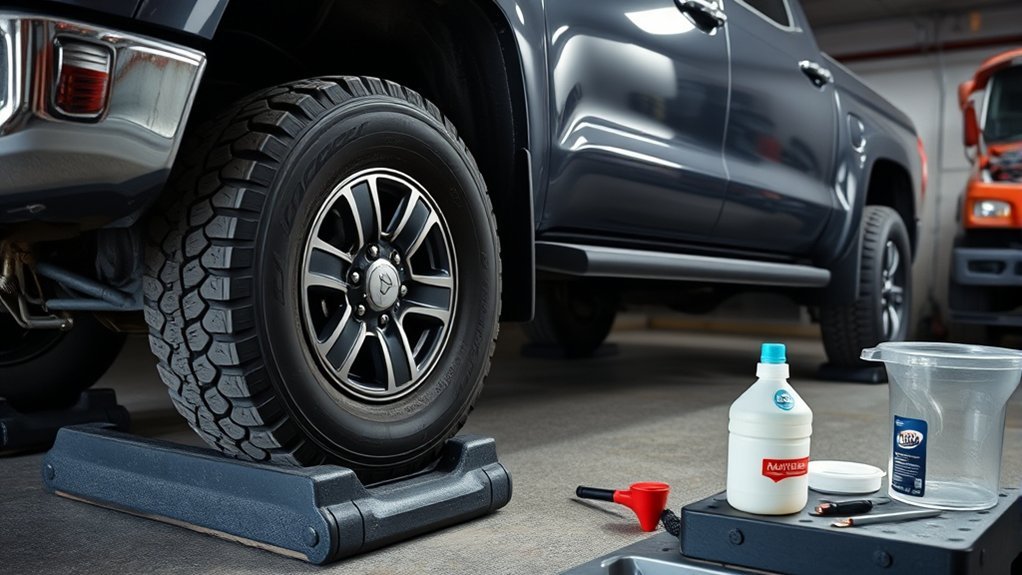
Long periods in one position can temporarily flatten the portion of each tire contacting the ground. Low pressure, cold temperatures, heavy loads, tire construction, and storage duration can make flat spotting more noticeable.
Inflate Tires Properly
Check every tire when cold and use the pressure printed on the Tire and Loading Information label in the driver-side door area. The number molded into a tire’s sidewall is not the normal operating recommendation. NHTSA advises checking cold tire pressure at least monthly and using the vehicle manufacturer’s specified pressure.
Do not automatically add 3–4 psi for storage. If Toyota or the tire manufacturer gives a special storage pressure for your exact tire and vehicle combination, follow that instruction without exceeding applicable limits.
Use Jack Stands
Lifting the truck can reduce tire loading, but it is not required for every storage situation. Tire cradles or flat-spot prevention pads are easier for most owners and keep the suspension in its normal loaded position.
If you choose to lift the Tundra, use a level concrete floor, a jack and stands with sufficient capacity, and only the lift and support points identified for the model year. Account for the truck’s actual weight, accessories, cargo, and fuel. Have a qualified technician position the truck if you are unsure.
Regular Pressure Checks
Check cold tire pressure monthly, including the spare when accessible. Inspect the tread and sidewalls for cracks, cuts, bulges, punctures, weathering, or fluid contamination. Tires age during storage as well as during driving, so tread depth alone does not prove that an old tire is safe.
If the truck remains on its tires and can be moved safely, changing its resting position can reduce prolonged loading on one spot. A complete road drive is better than rolling it only a few inches, but do not drive an uninsured, unregistered, unsafe, or improperly prepared vehicle solely for this purpose.
Essential Fluid Checks for Your Tundra’s Storage
Inspect fluids before storage, but do not replace every fluid without considering its condition and Toyota’s maintenance schedule. Service requirements vary by engine, model year, drivetrain, towing history, climate, and use.
Engine Oil
If an oil change is already due or will become due during storage, change the oil and filter before parking. Use the specified viscosity and fill with the complete quantity required for your engine. After running the engine as directed, wait the specified time, park level, and confirm the dipstick reading.
Warning: Never leave the engine one or two quarts below its specified capacity to prevent overfilling. Add oil carefully, verify the level, and correct any overfill or underfill before operating the truck.
Coolant and Brake Fluid
Check coolant only when the engine is cold. Use the coolant type specified for the truck, and do not mix incompatible coolants. A falling coolant level may indicate leakage that should be repaired before storage.
Inspect the brake-fluid reservoir without contaminating it. A low level can result from brake-pad wear or a leak, so do not treat repeated topping-off as a repair. Have the braking system inspected if the level is unexpectedly low.
Transmission, Differential, and Transfer-Case Fluids
Look under the truck for fresh wet spots around the transmission, transfer case, differentials, axle seals, and driveshaft areas. These fluids normally follow model-specific inspection and service intervals. Do not open sealed systems or perform unnecessary fluid exchanges solely because the truck is entering storage.
Air-Conditioning Refrigerant
Refrigerant is not a routine owner-checkable storage fluid. If the air conditioner cools poorly, leaks, or cycles abnormally, have it diagnosed by a qualified technician using the correct refrigerant equipment.
How to Deter Pests and Moisture in Your Tundra
Rodents may enter through gaps around the engine compartment, air intake, cab, or exhaust. They can damage wiring, insulation, filters, upholstery, and stored belongings. Prevention begins with sanitation and control of the surrounding building.
- Remove food, wrappers, pet treats, seeds, paper, fabric scraps, and nesting material.
- Vacuum the cab, console, under-seat areas, storage bins, and bed.
- Close the windows, sunroof, doors, tailgate, and tonneau cover completely.
- Reduce clutter and food sources around the garage.
- Inspect the storage area for droppings, gnaw marks, tracks, and entry gaps.
- Use suitable traps in the surrounding area where children and pets cannot reach them.
Do not place mothballs in the cab, engine compartment, bed, or open garage. The National Pesticide Information Center explains that mothballs are insecticides intended for closed, airtight containers and are not wildlife repellents.
A purpose-made exhaust or intake plug may help block entry, but it must be compatible with the vehicle, must not trap damaging moisture, and must have a highly visible removal tag. Never start the engine until every plug and cover has been removed.
Store the truck completely dry. In a humid enclosed space, use a stable, non-spill moisture-control product and monitor it instead of leaving an open container that can tip onto carpet or metal. Correct building leaks and drainage problems rather than relying only on cabin desiccants.
Top Cleaning Tips for Your Toyota Tundra Before Storage
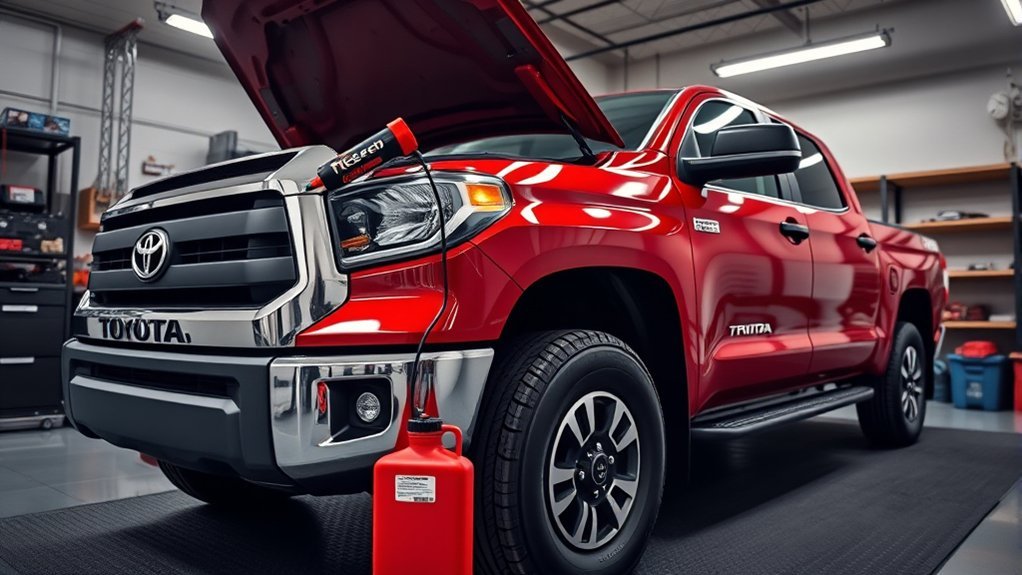
Wash the exterior with an automotive cleaner and rinse away dirt, insects, bird droppings, tree residue, and road film. Pay particular attention to wheel wells, rocker areas, the frame, bumpers, and the underbody if the truck has encountered road salt, mud, sand, or coastal spray.
Dry the truck fully before covering it. Trapped water around seams, trim, weatherstripping, the bed, or underbody can promote corrosion and mildew. Applying an appropriate wax or paint protectant after washing can provide an additional barrier during storage.
Inside the cab, vacuum seats, carpets, mats, cup holders, storage compartments, and the space beneath the seats. Wipe hard surfaces with products suitable for their material. Allow damp carpets, upholstery, and floor mats to dry before closing the truck.
Clean the bed and remove damp cargo, soil, leaves, chemicals, fertilizer, salt, and metal items that may rust. Clean around a bed liner or mat where debris and water can collect.
Using a Vehicle Cover: Why It Matters for Your Tundra
A cover can protect a stored Tundra from dust, sunlight, tree residue, bird droppings, and minor environmental contamination. The wrong cover, however, can trap moisture or rub dirt against the paint.
- Cover only a clean, completely dry truck.
- Use a soft, breathable indoor cover inside a clean garage.
- Use a fitted, weather-resistant, breathable cover for outdoor storage.
- Secure the cover using its intended straps rather than cords that may damage paint.
- Do not allow loose fabric to flap repeatedly against the body in wind.
- Inspect beneath the cover during monthly checks for condensation, pests, abrasion, and leaks.
A cover does not replace a dry storage location. If water repeatedly collects beneath it, correct the fit, improve drainage, or change the storage arrangement.
[Amazon Products Picked for You]

"This car cover Custom Fit for toyota tundra 5.5Ft bed is amazing! It's so thin at the same time the water-proofing is superior. Not only lightweight and soft but also folding it is a breeze, even comes with a storage bag. I'm thrilled with the protection it provides for my car ..."

Fitment: Fit Car Size: 242''L x 81''W x 77''H (approx) / Car Length ( 230~242 inch ), Fit for Ford f150 /Chevy Silverado 1500/Dodge Ram 1500 & 2500 & 3500/GMC Sierra/Toyota Tacoma

【Custom Fit Tundra Truck Cover】Cotryvox Toyota Tundra 1999-2021 Double Cab/CrewMax Cab Short Bed(5.5'-6.5')-Custom Car Cover with Unique Design, Perfect Fit for Superior Protection.This exclusive custom-designed car cover is perfectly tailored to the body curves of your Toyota Tundra, providing exceptional protection. It is precisely suited for a variety of scenarios, making it your ideal choice. Includes a special storage bag and cleaning towel as a bonus gift.
Regular Maintenance Checks During Extended Storage
Inspect the truck about once a month. Keep a written log so you can recognize gradual pressure loss, battery trouble, leakage, pest activity, or moisture changes.
Inspect Fluid Levels Regularly
Look beneath the engine, radiator, transmission, transfer case, axles, shocks, and brake areas for new stains or wetness. Check accessible reservoir levels using the owner’s manual, but do not open a hot cooling system or add fluid repeatedly without identifying why it is disappearing.
Monitor Tire Condition Frequently
Measure cold pressure monthly with an accurate gauge. Correct pressure to the door-jamb specification and inspect for sidewall cracking, bulges, punctures, or visible deformation. Check tire cradles, chocks, stands, and the surrounding floor for movement or damage.
Check Battery Charge Status
Confirm that the maintainer remains powered and displays normal operation. Inspect the cord and leads for heat, abrasion, corrosion, chewing, loose connections, or moisture. If the battery is disconnected, inspect it for swelling, leakage, corrosion, or an unexpectedly low state of charge.
Avoid Short Idle-Only Starts
Do not start the engine occasionally only to let it idle for a few minutes. A short idle period may not fully recharge the battery, evaporate condensation, warm the exhaust, circulate every drivetrain fluid, or clean rust from the brakes.
If the truck is legal, insured, fully prepared, and safe to drive, a proper drive that reaches normal operating temperature and uses the transmission and brakes is more useful than a brief idle. Otherwise, leave the truck stored and maintain the battery correctly.
How to Prepare Your Tundra for Use After Storage
Do not immediately start the engine and drive away. Work through a complete removal and inspection procedure first.
- Remove the cover. Inspect the body, glass, roof, bed, and surrounding floor for damage, moisture, or pest activity.
- Remove every obstruction. Take out exhaust plugs, intake covers, charger leads, wheel chocks, tire cradles, and any other storage device.
- Inspect the engine compartment. Look for nests, droppings, chewed wires, damaged hoses, loose insulation, leaks, and foreign material near belts or fans.
- Inspect underneath. Check for oil, coolant, brake fluid, fuel, transmission fluid, differential oil, or shock leakage.
- Restore the 12-volt battery. Disconnect the maintainer or reconnect the battery according to the manual. Confirm that the terminals are clean and secure.
- Check all tires. Return cold pressure to the door-jamb specification, inspect the spare, and look for cracking, bulges, flat spotting, or punctures.
- Check fluids. Verify engine oil, coolant, brake fluid, and other owner-checkable levels. Service only as required.
- Test the brake pedal. It should feel firm before the truck moves. Investigate a soft pedal, warning light, leakage, or abnormal travel.
- Start the truck. Keep clear of moving components, start normally, and watch for warning lights, unusual sounds, smoke, fuel odor, or leaks.
- Complete a careful test drive. Begin at low speed, test the brakes gently, listen for tire vibration, and confirm normal steering, shifting, charging, and temperature.
An oil change is not automatically required immediately after storage if fresh oil was installed beforehand and remains within Toyota’s time and mileage interval. Change it if it is due, contaminated, diluted, at the wrong level, or recommended by the model-year maintenance schedule.
Before returning to regular use, check for open safety recalls through the NHTSA recall lookup and confirm that registration, inspection, insurance, and scheduled maintenance are current.
Related Guides
Frequently Asked Questions
How long can a Toyota Tundra sit without being driven?
A healthy truck may sit for several weeks, but battery discharge, pressure loss, fuel aging, brake corrosion, and pest activity become more likely as storage continues. For storage lasting several months, prepare the battery, fuel, tires, fluids, interior, and storage area instead of simply parking the truck.
Should I disconnect my Tundra’s battery for long-term storage?
A compatible smart maintainer is often more convenient because disconnecting the 12-volt battery can reset vehicle settings. If a maintainer is unavailable, check the exact model-year manual before disconnecting the negative terminal. Never disconnect or service high-voltage hybrid components.
How should I store an i-FORCE MAX hybrid Tundra?
Follow the hybrid-specific section of the model-year Toyota manual. You may need to maintain the conventional 12-volt battery, but you should not open, disconnect, probe, or externally charge the high-voltage traction-battery system. Ask a Toyota service department about unusually long storage or an existing hybrid warning.
What should I put under the tires during winter storage?
Use purpose-made tire cradles or clean, stable pads rated for the truck’s load. Avoid damp cardboard, loose wood scraps, bricks, and concrete blocks. Store on level pavement and keep every tire at the manufacturer’s cold pressure.
Should I leave the parking brake on during storage?
Parking-brake components can stick after long storage, particularly in damp conditions. On a level surface, some owners use Park and sturdy wheel chocks instead. However, electronic parking-brake behavior varies by model year, so follow Toyota’s instructions and never rely on chocks alone on a slope.
How long does a Toyota Tundra battery last?
Many 12-volt automotive batteries last roughly three to five years, but heat, cold, short trips, electrical load, charging condition, storage, and battery construction can shorten or extend that range. Test the battery when cranking slows, voltage drops, warning messages appear, or the battery approaches the end of its expected service life.
Conclusion
Safe Toyota Tundra long-term storage depends on a complete process: verify model-specific requirements, clean and dry the truck, complete only necessary maintenance, protect the 12-volt battery, treat fresh fuel correctly, use the specified tire pressure, control pests without unsafe chemicals, and inspect the vehicle monthly.
Before driving again, remove every storage device, inspect for leaks and nests, restore the battery, check the tires and brakes, and begin with a careful test drive. These steps reduce avoidable damage and give you a much better chance of returning the truck to service without battery, fuel, tire, moisture, or pest-related surprises.
Sources
- Toyota Manuals and Warranties — model-year owner’s manuals, maintenance information, specifications, and hybrid guidance
- NHTSA TireWise — cold tire pressure, door-jamb placards, tire inspection, aging, and monthly pressure checks
- National Pesticide Information Center: Mothballs — proper mothball use, exposure risks, and why mothballs are not wildlife repellents
- Battery Tender Automotive Battery Chargers — compatible battery chemistry, automatic charging, and maintenance-mode information
- NHTSA Recall Lookup — checking for open vehicle safety recalls before returning the truck to regular use