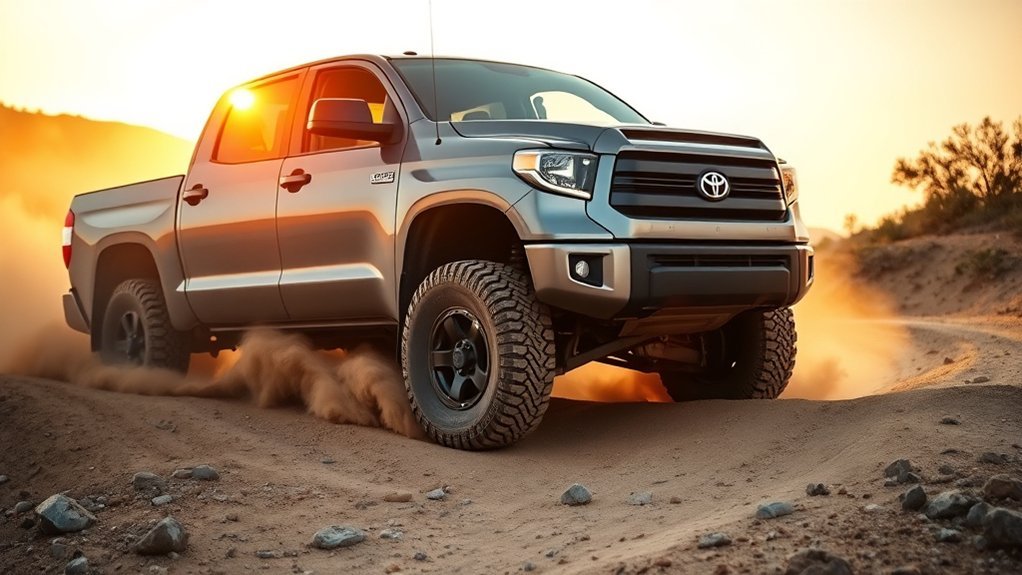
Off-roading in a Toyota Tundra requires more than four-wheel drive and aggressive tires. You need to understand your truck’s model-specific controls, inspect it before leaving pavement, carry safe recovery equipment, and choose terrain that matches your experience. Careful preparation protects your passengers, your truck, and the trail.
Quick Answer
To prepare a Toyota Tundra for off-roading, confirm the truck’s 4WD controls and limits in the model-year owner’s manual, inspect tires and fluids, carry rated recovery and emergency gear, plan a legal route, and drive slowly. Use low range and factory off-road aids only when conditions and your manual call for them.
Key Takeaways
- Verify which 4WD, differential, camera, and terrain-control systems your model year and trim actually have.
- Inspect the truck, plan the route, check the weather, and tell someone where you are going before leaving pavement.
- Carry a usable spare tire, tire tools, an inflator, emergency supplies, and recovery equipment rated for the vehicle.
- Use slow, smooth inputs and assess hills, rocks, ruts, mud, sand, and water before committing.
- Treat lifts, larger tires, lighting, armor, and winches as engineered systems rather than simple cosmetic additions.
At a Glance
| Time Required | About 45 to 90 minutes for route planning, inspection, tire checks, and packing before a basic trail trip |
| Difficulty | Beginner to intermediate for maintained forest roads; advanced obstacles require training and experienced support |
| Tools Needed | Tire gauge, inflator, suitable jack, lug tools, navigation, communication equipment, emergency supplies, and rated recovery gear |
| Cost | Low for inspection and basic supplies; costs vary widely for tires, underbody protection, recovery equipment, and suspension work |
Note: This guide provides general preparation and driving information. Your model-year Toyota owner’s manual, equipment instructions, trail rules, weather conditions, and local laws take priority.
Choosing the Right Toyota Tundra for Off-Roading Adventures
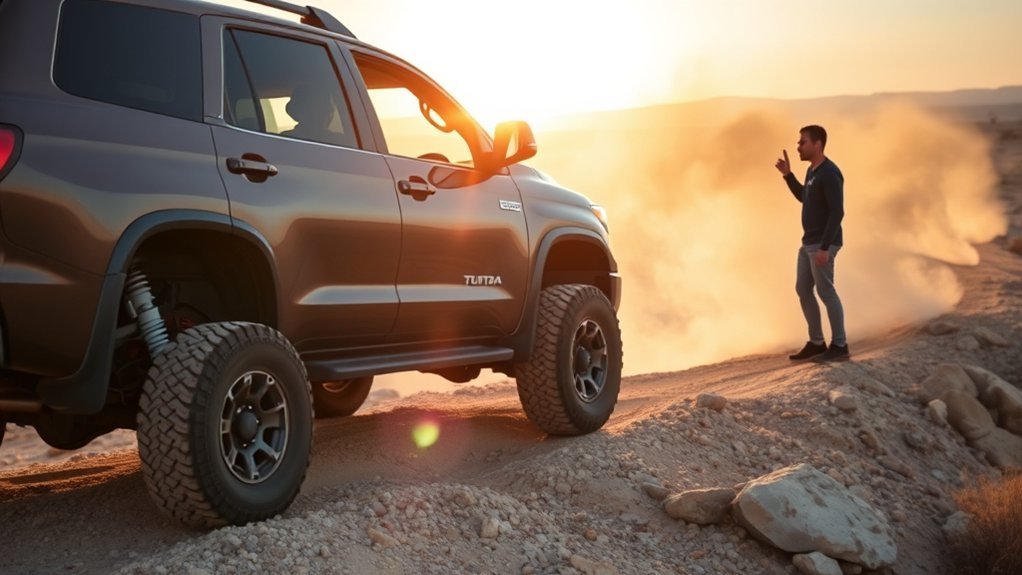
A four-wheel-drive Tundra is generally a better starting point for loose, steep, or uneven terrain than a two-wheel-drive version. However, the 4WD badge alone does not tell you which suspension, differential, cameras, skid plates, or terrain-control systems the truck has.
Features vary by model year, grade, drivetrain, package, and market. Current TRD Pro and eligible TRD Off-Road Package models may include an electronically locking rear differential, Multi-Terrain Select, Crawl Control, Downhill Assist Control, and a Multi-Terrain Monitor. Toyota explains these current systems in its 2026 Tundra product information.
Older Tundras may use different controls or lack these systems completely. Before your trip, open the Toyota Tundra owner’s manual portal and confirm:
- How to engage and disengage four-wheel drive
- When 4HI and 4LO may be used
- How the rear differential lock operates
- Which terrain modes are installed
- Vehicle speed and surface restrictions for each system
- Where approved towing and recovery information appears
Understand 4HI, 4LO, and Gear Selection
In general, 4HI is intended for loose or slippery surfaces where additional traction is needed. Low range provides slower wheel speed and greater control for technical terrain, steep grades, or difficult recovery situations. Exact operating procedures and limits vary, so follow your manual rather than copying another driver’s method.
Current Tundras use an automatic transmission with sequential gear selection. Selecting a suitable lower gear before a descent can help control speed and reduce continuous brake use. Tow/Haul changes transmission behavior for towing and hauling, but it should not be treated as a universal downhill-control system.
Warning: Do not engage a part-time four-wheel-drive system on dry, high-traction pavement unless your specific owner’s manual permits it. Driveline binding can affect steering and damage components.
Inspect and Plan Before Leaving Pavement
A successful trail day begins before the truck reaches dirt. Mechanical problems that seem minor in town can become serious when you are miles from assistance.
Complete a Pre-Trip Vehicle Check
- Tires: Inspect tread and sidewalls for cuts, bulges, punctures, exposed cords, or uneven wear.
- Spare tire: Confirm that it is inflated, accessible, and compatible with your current tire size.
- Jack and lug tools: Make sure the jack can safely lift the truck on the terrain you expect.
- Fluids: Check engine oil, coolant, brake fluid, washer fluid, and visible leaks.
- Brakes: Confirm normal pedal feel and listen for unusual grinding or scraping.
- Steering and suspension: Look for loose components, damaged boots, leaking shocks, or unusual play.
- Battery: Check that the battery is secure and the terminals are clean.
- Lights: Test headlights, brake lights, hazard lights, and any legal trail lighting.
- Underbody: Inspect skid plates, exhaust parts, splash shields, and fasteners.
Plan the Route and Emergency Response
Download maps before leaving cellular coverage. Confirm whether the route is open to full-size motor vehicles, whether a permit is required, and whether seasonal or fire restrictions apply. The U.S. Forest Service provides Motor Vehicle Use Maps and official OHV travel information for National Forest System lands.
Check the weather at the trail, not only at home. Rain can turn a mild road into deep mud, increase rockfall, wash out crossings, or make a return climb impossible. Carry enough fuel for delays and detours, and give a trusted person your route, group information, and expected return time.
Use an offline map, a charged phone, a charging cable or power bank, and a communication method appropriate for remote areas. Do not assume cellular service will be available.
Pro Tip: Choose a turnaround time before starting. Turn back at that time even if you have not reached the planned destination, especially when daylight, weather, or fuel is becoming limited.
Must-Have Gear for Off-Roading Adventures
Pack for the trail, the weather, and the possibility that the truck may be delayed overnight. Store heavy equipment low and secure it so it cannot strike passengers or shift suddenly on a slope.
Tire and Repair Equipment
- A full-size or compatible spare tire
- A tire-pressure gauge
- A portable air compressor rated for truck tires
- A suitable jack and stable jack base
- A lug wrench or correctly sized socket and breaker bar
- A tire repair kit for repairable tread punctures
- Basic hand tools and vehicle-specific spare fuses
Recovery Equipment
- Recovery equipment rated for the Tundra’s weight and the expected load
- Manufacturer-approved recovery points
- Rated connectors that match the recovery equipment
- Traction boards
- A sturdy shovel
- Work gloves and eye protection
- A winch damper or other equipment required by the winch manufacturer
Do not assume a bumper opening, suspension part, tie-down loop, trailer component, or decorative hook is an approved recovery point. Read the truck and equipment instructions before use. Anyone without recovery training should seek experienced help rather than learning under tension.
Emergency and Personal Supplies
The National Highway Traffic Safety Administration recommends carrying practical emergency supplies such as jumper cables, a flashlight, warning devices, a first-aid kit, water, food, a phone, and a charger. For an off-road trip, also consider:
- Weather-appropriate clothing and blankets
- Necessary medication
- Sun protection and insect protection
- A fire extinguisher suitable for vehicle use
- A whistle and visible signaling equipment
- Paper maps as a backup
- Extra drinking water for every passenger
Manage Tire Pressure and Traction Carefully
All-terrain tires can improve durability and traction on loose surfaces, but they do not make the truck immune to punctures or loss of control. They may also change road noise, wet braking, ride quality, fuel use, and steering response.
For normal road use, follow the cold-tire pressure printed on the vehicle placard or specified in the owner’s manual. NHTSA warns that the number molded into the tire sidewall is a maximum tire rating, not the recommended road pressure for your truck.
Experienced off-road drivers sometimes lower tire pressure for specific loose or uneven terrain. The safe amount depends on tire construction, wheel size, vehicle weight, speed, load, and the risk of bead separation or sidewall damage. Do not copy a generic pressure from a video or forum.
If you reduce pressure for trail use:
- Use an accurate gauge.
- Lower pressure gradually and inspect the tire shape.
- Drive slowly and avoid sharp steering inputs.
- Watch for sidewall folding or wheel contact.
- Reinflate to the vehicle’s road specification before sustained pavement driving.
- Inspect every tire after the trip.
Critical Techniques for Safe Mountain Driving
Mountain and technical trails demand slow speed, smooth controls, and careful line selection. Stop before an obstacle when you cannot clearly see the surface, drop, exit, or available turning space.
Climbing Hills
Inspect the hill from a safe location before starting. Confirm that the route continues over the crest and that another vehicle is not descending. Select the required drive mode and gear before the climb, then use steady throttle and avoid abrupt steering.
Do not turn sideways on a steep hill because this can increase rollover risk. If forward progress stops, follow the retreat procedure in your owner’s manual or obtain experienced assistance. Do not attempt an improvised reverse maneuver on a blind or unstable slope.
Descending Steep Grades
Select a suitable low gear before the descent. Keep your speed slow enough that you do not need to ride the brakes continuously. Smooth, controlled braking is safer than repeated hard applications after speed has built up.
If your Tundra has Downhill Assist Control or Crawl Control, learn its operating limits before the trip. These systems can assist the driver, but they do not assess cliffs, traction, washouts, or rollover risk. You remain responsible for steering, route choice, and stopping.
Driving Over Rocks and Ruts
Walk the obstacle when it is safe to do so. Identify sharp rocks, deep holes, underbody contact points, and the location of both front and rear tires. A full-size Tundra has a long wheelbase and wide body, so a line that works for a smaller vehicle may not provide enough clearance.
Use a spotter when the driver cannot see tire placement. Agree on hand signals before moving, keep the spotter visible, and stop immediately if visual contact is lost. Only one person should direct the driver.
Driving in Sand or Mud
Maintain controlled momentum without excessive wheelspin. Spinning tires can dig the truck deeper, damage the trail, and reduce steering control. Use the appropriate terrain mode if your Tundra has one, but do not treat electronics as a substitute for reading the surface.
Avoid entering mud when you cannot judge its depth, base, exit, or environmental impact. Turning around early is usually easier than recovering a full-size truck after it has settled onto the frame.
Managing Side Slopes
Avoid steep side slopes whenever a safer, straighter route is available. Keep heavy cargo low and secured, move slowly, and avoid sudden steering, braking, or throttle changes. Added roof cargo and suspension lifts can raise the center of gravity and reduce your margin for error.
Avoid Flooded Roads and Unknown Water
The National Weather Service warns that two feet of rushing water can carry away SUVs and trucks.
Never drive around a flood barrier or enter moving water with unknown depth. Water can hide a collapsed road, deep hole, current, debris, or soft bottom. Four-wheel drive does not prevent a truck from floating or being pushed sideways. Review the National Weather Service flood-driving guidance and turn around when a crossing is flooded or uncertain.
Recover a Stuck Tundra Safely
Stop early when the truck loses traction. Continued wheelspin often makes the recovery harder. Check whether the vehicle is resting on the frame, differential, suspension, or an obstacle before choosing a recovery method.
- Stabilize the situation: Set the parking brake when appropriate, keep passengers away from traffic and recovery equipment, and assess the terrain.
- Reduce resistance: Clear packed material from around the tires, create a gradual path, and use traction boards when suitable.
- Confirm attachment points: Use only points approved for recovery by the vehicle or equipment manufacturer.
- Match the equipment: Check load ratings, condition, connectors, and manufacturer instructions.
- Create an exclusion zone: Keep bystanders well away from straps, ropes, cables, vehicles, and the direction of pull.
- Communicate: Select one recovery leader and agree on stop signals before tension is applied.
- Stop if conditions change: Reassess if equipment shifts, a vehicle moves sideways, visibility is lost, or an attachment point deforms.
Winching and kinetic recovery store substantial energy in equipment and vehicles. Obtain practical training before attempting either method. When no safe recovery plan is available, contact professional recovery support.
Joining Off-Roading Groups for Support and Learning
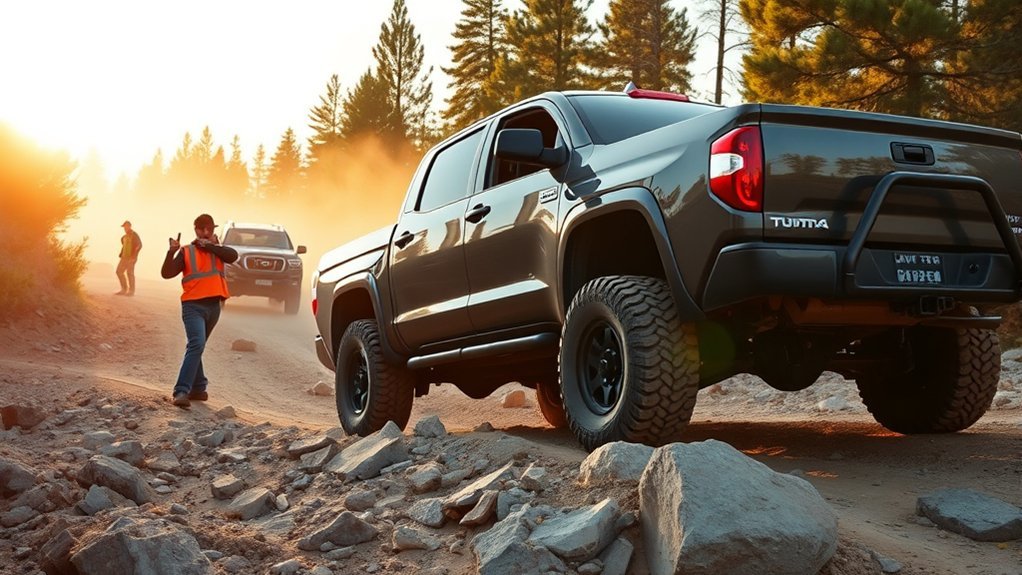
A responsible off-roading group can help you learn route planning, spotter communication, tire care, trail etiquette, and basic recovery principles. Look for groups that match trail difficulty to vehicle size and driver experience rather than encouraging beginners to attempt obstacles beyond their ability.
Organized rides can also provide extra communication, navigation knowledge, and assistance when a mechanical problem occurs. They do not guarantee safety, and you should still carry your own equipment, understand your truck, and remain willing to turn around.
A good group improves communication and learning, but every driver remains responsible for the condition, capability, and safe operation of the vehicle.
Before joining a ride, ask about:
- Trail width, surface, elevation, and obstacle difficulty
- Minimum tire, clearance, recovery-point, or equipment requirements
- Expected fuel range and trip duration
- Radio channels and communication rules
- Group spacing and dust-control practices
- Whether beginners receive instruction
- Whether bypass routes are available
Follow responsible recreation practices and remain on legally designated routes. Tread Lightly provides education on responsible motorized recreation and trail stewardship.
Customize Your Tundra for Better Off-Roading
Modify the truck only after identifying the limits you encounter on real trips. Tires, protection, recovery readiness, and driver training often provide more practical value than a large lift or cosmetic equipment.
Choose Tires for the Terrain and Daily Driving
All-terrain tires are a balanced option for drivers who use both roads and moderate trails. More aggressive tires may perform better in certain mud, rock, or loose-soil conditions, but they can add noise, weight, rolling resistance, and wet-road tradeoffs.
Match the tire’s size, construction, load capacity, and speed rating to the truck and its use. Larger tires can affect clearance, gearing, braking, steering, fuel use, spare-tire fit, and electronic-system behavior.
Add Underbody and Body Protection
Skid plates can help protect vulnerable components from direct contact, but they do not make the underbody damage-proof. Rock sliders, bumpers, and skid plates also add weight, so include them when calculating payload and axle loading.
After installing armor, confirm that it does not obstruct cooling airflow, drainage, service points, sensors, airbags, or suspension travel. Inspect mounting hardware after the first trail trips.
Evaluate Suspension Lifts Carefully
A professionally selected lift may improve ground clearance or tire fitment. It can also change the center of gravity, alignment, steering geometry, driveline angles, suspension travel, camera views, headlight aim, and electronic safety-system calibration.
Choose a system engineered for your exact model, drivetrain, cab, bed, and expected accessory weight. Have the alignment checked after installation and follow any required recalibration procedures. Review local laws, insurance terms, and warranty implications before modifying the suspension.
Use Lighting Responsibly
Auxiliary lighting can improve visibility during legal nighttime trail use. Aim lights carefully to reduce glare, protect wiring with suitable fuses and relays, and comply with road and land-management rules. Turn off off-road lights when they could blind other drivers or trail users.
Plan Winch and Recovery Upgrades as a System
A winch installation may require a compatible bumper or mount, appropriate electrical capacity, rated recovery points, suitable line equipment, and consideration of added front-axle weight. Follow the winch, mount, battery, and vehicle manufacturers’ instructions.
Do not assume an aftermarket bumper is a rated recovery system merely because it includes visible hooks or openings. Confirm the rating and intended use in writing before relying on it.
Inspect Your Tundra After the Trail
A post-trip inspection can reveal damage before the truck returns to highway speeds or daily use.
- Restore tire pressure to the vehicle’s road specification.
- Inspect tread, sidewalls, wheels, valve stems, and lug nuts.
- Check under the truck for fluid leaks or hanging components.
- Inspect skid plates, exhaust parts, brake lines, and suspension components.
- Remove mud or debris that blocks the radiator, brakes, wheels, or drainage points.
- Check the air filter if the trip involved heavy dust.
- Test steering and braking at low speed before entering normal traffic.
- Clean, dry, and inspect recovery equipment before storing it.
- Record any unusual noises, warning lights, impacts, or repairs needed.
Related Guides
Frequently Asked Questions
What Are Some Tips for Beginner Off-Roaders?
Start on a legal, maintained dirt road with an experienced group. Learn your Tundra’s 4WD controls before the trip, inspect the truck, carry emergency and recovery gear, and use slow, smooth inputs. Walk unfamiliar obstacles, accept bypasses, and turn around when weather, traction, clearance, or experience is insufficient.
What Are the Basic 4×4 Off-Road Skills?
Basic skills include selecting the correct drive mode and gear, reading terrain, controlling speed, choosing a tire line, climbing and descending without abrupt inputs, communicating with a spotter, monitoring tire condition, and recognizing when an obstacle requires a bypass or recovery plan.
What Are Common Mistakes When Off-Roading?
Common mistakes include driving too fast, entering unknown terrain without walking it, using the wrong 4WD setting, spinning the tires after traction is lost, carrying loose cargo, relying on unapproved recovery points, ignoring weather changes, entering flood water, and attempting difficult obstacles without enough space to turn around.
What Kind of OHV Is Best for Beginners?
The term OHV covers several vehicle types, while a Toyota Tundra is a full-size road-legal pickup that may also be driven on approved motorized trails. Beginners using a Tundra should start with wide, maintained routes suited to full-size vehicles instead of choosing a trail based only on an OHV label.
Should You Use 4HI or 4LO on a Tundra Trail?
Use the setting required by your model-year manual and the terrain. Generally, 4HI suits loose or slippery surfaces where normal momentum is needed, while 4LO is intended for slow technical terrain, steep grades, or situations requiring finer control. Engage each mode only according to Toyota’s stated procedure and restrictions.
How Much Should You Lower Tundra Tire Pressure Off-Road?
No single pressure is safe for every Tundra, tire, wheel, load, or trail. Pressure changes depend on tire construction, wheel size, vehicle weight, speed, and terrain. Seek model-specific instruction, reduce pressure gradually, monitor sidewall behavior, and reinflate to the vehicle’s road specification before sustained pavement driving.
Sources
- Toyota USA Newsroom: 2026 Toyota Tundra — current transmission, TRD Pro, TRD Off-Road, terrain-control, differential, and camera information
- Toyota Tundra Manuals and Warranties — model-specific operating instructions and vehicle limitations
- U.S. Forest Service Off-Highway Vehicle Program — legal route designations, travel maps, and public-land OHV information
- National Highway Traffic Safety Administration Driving and Vehicle Preparation Guidance — tire-pressure, inspection, route-planning, and emergency-supply guidance
- National Weather Service: Turn Around Don’t Drown — flooded-road and moving-water hazards
- Tread Lightly Education — responsible motorized recreation and trail stewardship
Conclusion
Safe Toyota Tundra off-roading begins with preparation, not modifications. Verify your truck’s model-specific controls, inspect it before the trip, pack rated recovery and emergency equipment, and choose a legal route that matches your ability. On the trail, drive slowly, use smooth inputs, and turn around when clearance, traction, weather, water, or recovery options are uncertain.
Upgrades such as all-terrain tires, skid plates, suspension components, lighting, and winches can improve capability when they are properly selected and installed. They cannot replace training, sound judgment, responsible trail use, or the operating limits in your Toyota owner’s manual.
