
A Toyota Tundra tailgate that will not open may be locked, frozen, under pressure from cargo or a bed cover, disconnected from its mechanical linkage, or affected by an electronic release fault. The safest approach is to identify which tailgate system your truck uses, relieve pressure gently, and avoid forcing the handle or probing blindly around wiring and painted surfaces.
Quick Answer
Unlock the truck, remove pressure from the tailgate, and listen for the latch when you operate the handle or release switch. If it clicks but stays shut, check for ice, debris, a tight tonneau cover, or one bound side latch. If there is no click, inspect the linkage or electronic release system for your model year.
Key Takeaways
- Older Tundras commonly use a mechanical handle and latch rods; 2022-and-newer trucks use an electronic opener switch.
- A click without opening usually points to pressure, ice, debris, misalignment, or a latch that is still holding on one side.
- No sound from an electronic release can indicate a lock, switch, connector, actuator, wiring, or 12-volt electrical problem.
- Do not blindly insert coat hangers, hacksaw blades, or steel strips into the handle opening.
- Replace broken clips or latch parts with model-matched components rather than relying on zip ties or electrical tape.
At a Glance
| Time Required | 10–30 minutes for basic checks; longer if the inner panel or electrical system requires inspection |
| Difficulty | Easy for external checks; moderate for linkage, trim, or electrical diagnosis |
| Tools Needed | Flashlight, gloves, plastic trim tool, model-appropriate screwdriver or socket, automotive de-icer or compatible lubricant, and an optional multimeter |
| Cost | Inspection and cleaning may cost nothing; replacement parts and labor vary by model year, equipment, and diagnosis |
How to Open a Stuck Tailgate in Your Toyota Tundra
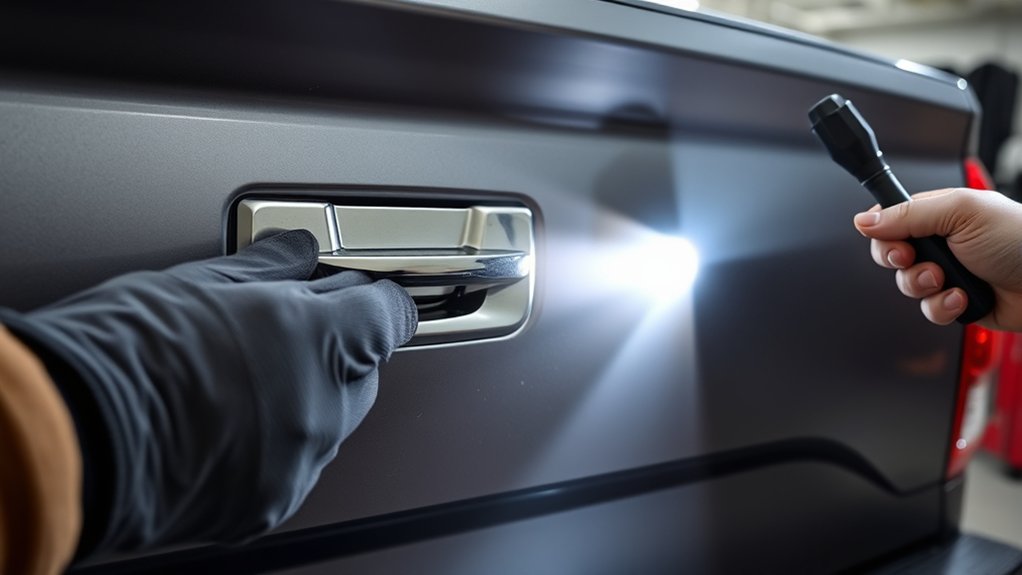
Warning: Park on level ground, set the parking brake, keep fingers clear of both side latches, and have another person support the tailgate if it may drop suddenly. Do not drive with the tailgate open, and do not use open flame, boiling water, or extreme heat to thaw it.
Start with the least invasive checks. Forcing the handle or striking the gate can break the release mechanism, bend the sheet metal, damage the camera wiring, or make an alignment problem worse.
- Unlock the truck completely. Cycle the door locks once and verify that the other locks operate normally. On electronic-release Tundras, the tailgate may not respond while locked.
- Remove external pressure. Move cargo away from the inside of the gate. Fully release or fold back the tonneau cover. Check that a bed mat, seal, ice buildup, or accessory is not pressing against the top or sides.
- Relieve latch tension gently. Press the tailgate inward near the center while operating the handle or switch. Release the inward pressure as the latch activates. Do not kick, pry, or pull violently.
- Listen and feel. A loose mechanical handle suggests a disconnected rod or broken retainer. A firm handle with no movement can indicate a lock or seized linkage. A click from an electronic release means the actuator is receiving a command, but a latch may still be bound.
- Check both lower corners. If one side moves while the other stays tight, one side latch may still be engaged. Apply gentle inward pressure near the tight side while operating the release.
- Stop if force is increasing. If the gate begins flexing, the handle distorts, or a grinding sound develops, move to internal inspection or professional diagnosis.
On current-generation trucks, Toyota instructs the driver to unlock the tailgate before operating it. Depending on equipment, the release may be activated by the handle switch, a switch near the left rear lamp, or the wireless remote. The latch releases electronically, but the tailgate itself opens by gravity. See the applicable Toyota Tundra Owner’s Manual for the exact controls and precautions.
Identify Your Tundra’s Tailgate System First
The correct troubleshooting path depends on the truck’s generation and equipment.
Mechanical-handle tailgates
Many older Tundras use an exterior handle connected to the left and right latches by metal rods or cables. Pulling the handle moves both linkages at once. Common failure points include a broken handle pivot, a disconnected rod, a damaged plastic retainer, corrosion, debris, or one seized side latch.
Electronic-release tailgates
Many 2022-and-newer Tundras use an electronic opener switch and a tailgate lock actuator. Some models can also release the tailgate from the key fob or a switch near the left rear lamp. These trucks still have mechanical latches, but an electrical command initiates the release.
Note: Equipment differs by model year and trim. Use your VIN or exact model year when ordering a handle, clip, latch, actuator, switch, or wiring component.
Common Tailgate Issues in Tundras
| Symptom | Likely causes | Next check |
|---|---|---|
| Handle feels loose | Disconnected rod, broken retainer, damaged handle pivot | Remove the inner access panel and watch the linkage while operating the handle |
| Handle feels firm but gate stays shut | Locked latch, corrosion, ice, debris, accessory pressure, misalignment | Unlock, relieve pressure, inspect both side latches and surrounding gaps |
| Electronic release makes no sound | Tailgate still locked, switch fault, connector problem, actuator fault, wiring issue, weak 12-volt supply | Try every factory release method and confirm normal door-lock operation |
| Electronic release clicks but does not open | Bound latch, ice, load pressure, incomplete actuator travel, one side still engaged | Apply gentle inward pressure and inspect the tighter lower corner |
| Only one side releases | Disconnected linkage, seized side latch, bent rod, striker misalignment | Inspect linkage travel and the unreleased latch from inside the panel |
| Problem appears only in freezing weather | Ice, trapped moisture, frozen seal, contaminated latch lubricant | Thaw safely, dry the mechanism, clean it, and apply a compatible light lubricant |
Tonneau covers and other accessories can also interfere with release. A cover may freeze to the gate, press down on its upper edge, or be adjusted too tightly. Tailgate-assist devices, mats, seals, and aftermarket locks should be inspected for contact or incorrect installation.
If an accessory has been described as a “Gator-Saver,” verify its actual brand, model, and installation instructions. That name is not a standard Toyota tailgate component. Check any Gator-branded cover or other aftermarket product by its exact product name rather than assuming it is part of the factory latch system.
Step-by-Step Troubleshooting for Tailgate Problems
1. Confirm the lock and release command
Unlock all doors and the tailgate. On an electronic-release model, try each available factory method separately: the exterior handle switch, the release near the left rear lamp, and the wireless remote if equipped. A response from one switch but not another points toward a switch or input problem rather than a seized mechanical latch.
2. Inspect the tailgate gaps
Compare the left and right gaps. Look for a side sitting higher, a gate pushed outward by cargo, a cover touching the top edge, bent sheet metal, or signs that the truck bed has shifted after an impact or heavy load.
3. Remove ice and debris safely
Brush away snow and loose dirt. Use an automotive lock de-icer or move the truck into a warmer space. Do not pour boiling water over the latch because it can refreeze, enter connectors, or damage finishes and seals. Once the mechanism is dry, apply a small amount of lubricant that is compatible with automotive latches and low temperatures.
4. Relieve pressure at the affected latch
Operate the release while pressing inward near the lower left corner, then the lower right corner. If one side releases, stop pulling the gate outward and support it while addressing the side that remains latched.
5. Inspect the internal mechanism
If the exterior checks fail, remove the inner access panel using the correct tools for the model year. Watch the handle, rods, actuator, and both latch linkages while another person operates the release. Replace any broken handle, bent linkage, damaged retainer, seized latch, or failed actuator rather than forcing it back into service.
6. Check electrical components when appropriate
On an electronic-release truck, inspect accessible connectors for looseness, water, corrosion, or damaged wiring. Confirm that the truck’s door locks and other 12-volt accessories operate normally. Do not apply power directly to an actuator or probe control-module wiring without the correct wiring diagram and test procedure.
7. Test before fully reassembling
After the repair, operate the release several times with the gate supported. Refit the access panel, close the tailgate gently, and pull it toward you to confirm that both sides are securely latched. Toyota also instructs owners to check that the tailgate is securely locked after closing.
Essential Tools for Fixing Your Tailgate
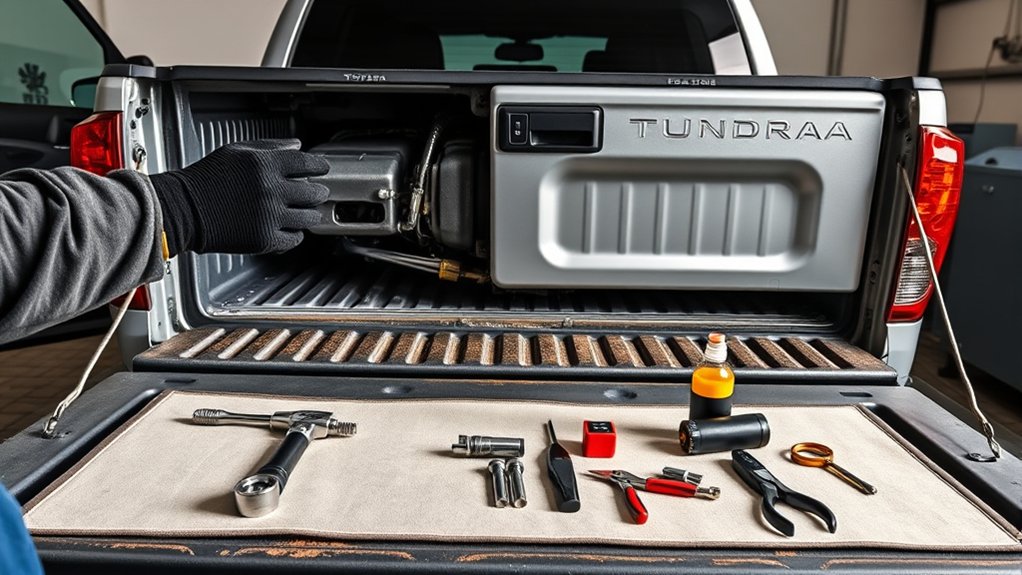
Gather tools that let you inspect the mechanism without scratching the truck or damaging wiring:
- Flashlight or inspection light for viewing both side latches and the internal linkage.
- Work gloves to protect your hands from sharp panel edges.
- Plastic trim-removal tool for lifting the access panel without gouging painted or plastic surfaces.
- Correct screwdriver or socket for the fasteners used on your model year.
- Automotive de-icer for a frozen latch or lock.
- Compatible light or dry lubricant for cleaned latch pivots and contact points.
- Multimeter for qualified electrical diagnosis on an electronic-release model.
- Model-matched replacement clips, rods, handle, latch, or actuator when inspection confirms damage.
Warning: Do not blindly insert a coat hanger, hacksaw blade, screwdriver, or strip of steel pallet banding through the exterior handle opening. These tools can cut wiring, damage connectors, scratch paint, puncture a hand, or jam the mechanism more tightly.
Accessing the Latch Mechanism Inside the Tailgate
The exact access-panel design and fasteners vary, so consult the owner’s manual or the applicable Toyota repair procedure before disassembly. Toyota’s official Technical Information System provides model-specific service information.
- Secure the truck. Park on level ground, set the parking brake, switch the vehicle off, and keep the key or electronic key away from the release switches.
- Protect the tailgate. Place a clean protective cloth around the work area. Do not rest tools against the camera lens or painted surfaces.
- Remove the access-panel fasteners. Use the correct bit or socket. Keep the fasteners organized because lengths and locations may differ.
- Lift the panel with a plastic tool. Do not bend the panel sharply or pull against attached wiring.
- Observe the release mechanism. Have a second person operate the handle or switch while you watch for movement at the center mechanism and both side linkages.
- Release the latch from inside only when visible. Move the proper linkage or release lever with a suitable hand tool. Keep hands out of the latch path and support the gate as it opens.
- Replace the failed component. Reconnect an intact rod with the correct keeper clip. Replace cracked retainers, distorted rods, damaged handles, seized latches, or faulty actuators.
- Reassemble and test. Confirm full travel at both latches before refitting the panel. Close the gate gently and verify secure engagement on both sides.
| Internal finding | Correct repair |
|---|---|
| Rod has fallen out of its retainer | Install the correct replacement retainer and confirm the rod is not bent |
| Plastic clip is cracked or loose | Replace the clip; do not depend on electrical tape |
| Handle moves but one latch does not | Inspect that side’s rod, cable, retainer, and latch for damage or binding |
| Actuator clicks but travel is incomplete | Check for mechanical binding before replacing the actuator |
| Connector is wet or corroded | Disconnect power as directed by the repair manual, repair the moisture source, and service the connector properly |
You normally do not need to remove the complete tailgate or disconnect its support cables to diagnose a release problem. Tailgate removal introduces additional risk to the camera harness, connectors, support hardware, and painted surfaces.
Quick Fixes for Stuck Tailgates
Several low-risk steps may restore operation without disassembly:
- Push and release: Press the tailgate inward while operating the release, then ease off the pressure as the latch moves.
- Thaw and clean: Remove ice and debris, dry the latch area, and lubricate the cleaned pivots lightly.
- Release accessory pressure: Open or loosen the tonneau cover, remove cargo contact, and check seals or mats that touch the gate.
- Cycle the locks: Lock and unlock the truck once, then retry each factory release method.
- Reseat an accessible connector: If the correct panel is already open and a connector is visibly loose, switch the vehicle off and reseat it according to the repair procedure.
Pro Tip: If a temporary zip tie makes a disconnected rod work during diagnosis, treat that as confirmation that the retainer has failed. Replace the retainer promptly. A zip tie or electrical tape should not be considered the finished repair.
Do not trim the factory rubber bumpers to create clearance. If the tailgate binds, diagnose cover pressure, latch contamination, striker alignment, bed deformation, or damaged hardware. Cutting the bumpers can introduce rattles and prevent correct latch positioning.
Long-Term Solutions for Tailgate Problems
Once the tailgate opens, correct the underlying cause rather than repeatedly forcing the release.
- Replace damaged retainers and linkage. Use parts verified for the truck’s VIN because clips, rods, handles, locks, and actuators vary.
- Clean both side latches. Remove compacted dirt, road salt, old contaminated grease, and corrosion before applying fresh compatible lubricant.
- Correct accessory fit. Adjust a tonneau cover, tailgate seal, mat, assist device, or aftermarket lock according to its manufacturer’s instructions.
- Repair water entry. On electronic systems, address damaged seals or connectors rather than repeatedly replacing the actuator.
- Inspect alignment after impact. A bent gate, bed corner, hinge, striker, or latch bracket requires measurement and proper adjustment.
- Test the latch periodically. Open and close the gate, confirm both sides engage, and pull outward after closing to verify it is secure.
Note: Recall and campaign eligibility is VIN-specific. Use the Toyota Recall Lookup or the NHTSA Recall Lookup. A separate 2023 recall involved certain genuine Toyota tonneau covers on some 2022–2023 Tundras; it did not establish a universal Tundra tailgate-latch defect.
When to Seek Professional Help for Tailgate Repairs
Arrange professional diagnosis when the problem extends beyond safe external checks or a clearly visible broken retainer.
- No electronic response: None of the factory release switches produces a click even though the door locks and 12-volt system appear normal.
- Electrical damage: You find corrosion, damaged insulation, melted terminals, water inside a connector, or camera-related warnings.
- Structural misalignment: The tailgate, bed, hinge, striker, or latch bracket appears bent after an impact or heavy load.
- Both latches remain inaccessible: The panel cannot be removed safely while the gate is closed, or excessive force would be required.
- Repeated failure: A new clip, handle, latch, or actuator fails again, suggesting an unresolved alignment or load problem.
- Warranty, recall, or campaign concern: The truck may have open manufacturer coverage or a condition requiring dealer documentation.
A technician can use the applicable repair manual, wiring diagram, scan data, and body measurements to distinguish an actuator fault from a mechanical bind. This avoids replacing electrical parts when the real cause is latch alignment or accessory pressure.
What Owner-Reported Tailgate Symptoms Can Tell You
Tundra owners sometimes describe loose handles, frozen latches, disconnected linkage clips, one-sided release, or electronic switches that click without opening. These reports can help identify possible symptoms, but they do not prove that every Tundra shares the same defect.
The most useful owner report describes the exact model year, release type, sound, handle feel, weather, accessories, and which side remains latched—not simply that the tailgate is “stuck.”
- A loose handle supports inspection of rods, cables, and retainers.
- A firm handle in freezing weather supports checking for ice and contamination.
- A click with no opening supports checking for mechanical pressure or incomplete latch travel.
- Intermittent operation from one switch supports comparing the other release inputs.
- A problem that began after installing a tonneau cover or assist device supports checking adjustment and contact points.
Use owner experiences as diagnostic clues, then confirm the cause through direct inspection, the correct Toyota documentation, and VIN-specific recall information.
Related Guides
Frequently Asked Questions
Why is my Toyota Tundra electronic tailgate release not opening the gate?
The tailgate may still be locked, under pressure, frozen, obstructed, misaligned, or held by one side latch. If the switch makes no sound, check the other release methods, door-lock operation, accessible connectors, the actuator, wiring, and the 12-volt electrical system. If it clicks, inspect for mechanical binding before replacing electrical parts.
Does the Tundra have a true power-opening tailgate?
Current-generation Tundras may have electronic release switches and remote release, but Toyota’s owner documentation describes the tailgate as opening by gravity after the latch releases. Do not assume it has the same motorized opening and closing system as an SUV power liftgate.
How do I manually open a Toyota Tundra tailgate?
Unlock the truck, relieve pressure by pressing the tailgate inward, and operate the normal release. If that fails, remove the inner access panel with the correct tools and move the visible release linkage from inside while another person supports the gate. Do not blindly fish through the exterior handle opening with sharp metal.
What is the most common cause of a stuck Tundra tailgate?
There is no single confirmed cause across every model year. Older mechanical systems may have a disconnected rod, damaged retainer, broken handle, or seized latch. Electronic-release models can also have a lock, switch, connector, actuator, wiring, or low-voltage problem. Ice, debris, accessories, and alignment can affect either type.
How do I open a Tundra tailgate that is jammed on one side?
Support the tailgate and avoid pulling the released side outward. Operate the release while applying gentle inward pressure near the side that remains tight. If it does not release, inspect that side’s linkage and latch through the inner panel. A disconnected rod, seized latch, bent linkage, or striker misalignment may be responsible.
Can I drive with the Toyota Tundra tailgate open?
Toyota warns owners not to drive with the tailgate open. An unsecured tailgate or cargo can create a road hazard, obstruct lighting or the camera, and allow cargo to leave the bed. Repair the latch and confirm both sides are secure before normal driving.
Conclusion
When a Toyota Tundra tailgate will not open, begin with the lock status, accessory pressure, ice, debris, and gentle latch-pressure relief. Then diagnose the symptom according to the truck’s release system: mechanical linkage on many older models or an electronic opener and actuator on current-generation trucks.
A loose rod or broken clip should receive the correct replacement part, not a permanent zip-tie or tape repair. A clicking electronic release should be checked for mechanical binding before the actuator is replaced. Stop and seek professional help when the gate is bent, wiring is damaged, both latches remain inaccessible, or the fault repeatedly returns.
Sources
- Toyota 2024 Tundra Owner’s Manual — tailgate locking, release methods, gravity opening, closing checks, freezing precautions, and safety warnings.
- Toyota 2022 Tundra Hybrid Digital Manual: Tailgate — current-generation operation and driving cautions.
- Toyota 2022 Tundra Quick Reference Guide — tailgate-linked power bed-step and factory control information.
- Toyota Technical Information System — model-specific repair procedures, wiring information, and service documentation.
- Toyota Safety Recall and Service Campaign Lookup — VIN-specific Toyota campaign information.
- National Highway Traffic Safety Administration Recall Lookup — federal recall records and VIN lookup.
