
The Toyota Tundra warranty covers defects in Toyota-supplied materials or workmanship for set time and mileage periods. For a current U.S.-market example, Toyota’s 2026 Tundra guide provides 36-month/36,000-mile basic coverage, 60-month/60,000-mile powertrain and restraint-system coverage, and 60 months of rust-through coverage with no mileage limit. Exact terms depend on your model year, configuration, emissions certification, state, and original in-service date.
Quick Answer
A recent U.S. Toyota Tundra generally has a 3-year/36,000-mile basic warranty and a 5-year/60,000-mile powertrain warranty. Additional coverage may apply to restraint systems, rust-through, emissions parts, and hybrid components. The applicable Warranty & Maintenance Guide—not a general online summary—controls your truck’s exact coverage.
Key Takeaways
- Warranty limits are measured from the truck’s original in-service date and end when either the time or mileage limit is reached.
- Normal maintenance, wear items, accident damage, misuse, overloading, and failures caused by improper repairs are generally excluded.
- Toyota’s general U.S. hybrid policy lists longer coverage for certain hybrid components, but i-FORCE MAX owners should verify their model-year Tundra guide.
- Toyota Financial Vehicle Service Agreements are optional contracts, not free extensions of the factory warranty.
- Remaining factory coverage transfers automatically to later owners; an eligible Toyota VSA has its own transfer rules.
Note: This article summarizes U.S. coverage. Terms may differ in Canada, other countries, California-emissions states, and by model year. Always check the Warranty & Maintenance Guide issued for your truck and the written terms of any service agreement.
What’s Included in the Toyota Tundra Warranty?

The following table uses the 2026 U.S. Toyota Tundra Warranty & Maintenance Guide as a current example. Earlier model years may have different terms.
| Coverage | Typical 2026 Tundra Limit | What to Know |
|---|---|---|
| Basic warranty | 36 months or 36,000 miles | Covers repairs and adjustments needed to correct covered defects in Toyota-supplied parts. Time or mileage, whichever comes first. |
| Air-conditioning recharge, wheel alignment and balancing | 12 months or 12,000 miles | These services have a shorter limit than the main basic warranty. |
| Powertrain warranty | 60 months or 60,000 miles | Covers listed engine, transmission, transfer-case, front-drive, and rear-drive components supplied by Toyota. |
| Restraint systems | 60 months or 60,000 miles | Applies to covered Toyota-supplied seatbelt and airbag systems. Kansas has a longer seatbelt provision for qualifying vehicles. |
| Corrosion perforation | 60 months, unlimited mileage | Covers an original body panel that rusts completely through. It is not general coverage for paint damage or surface rust. |
| Federal emissions | Coverage varies by component | Toyota’s basic coverage may exceed the federal minimum for many parts, while specified components such as the catalytic converter and engine control module may receive longer coverage. |
| Tires | Separate tire-manufacturer terms | Original-equipment tires are covered under the tire manufacturer’s limited warranty rather than Toyota’s basic vehicle warranty. |
When Does the Warranty Start?
Toyota warranty coverage begins on the vehicle’s in-service date. This is generally the first date the Tundra is delivered to its original buyer, leased, or placed into use as a company vehicle or demonstrator. Buying a truck that has been sitting on a used-car lot does not restart the factory warranty clock.
For example, a used Tundra with only 20,000 miles may have no basic warranty left if its original in-service date was more than three years ago. Check both the current mileage and the original in-service date before assuming coverage remains.
Does the Factory Warranty Transfer to a Second Owner?
Yes. Under Toyota’s 2026 U.S. Tundra guide, remaining factory coverage transfers automatically and at no cost to later vehicle owners. The expiration date and mileage limit do not reset when the truck is sold.
Warranty coverage follows the truck, but the original in-service date and mileage limits continue unchanged.
Powertrain and Hybrid System Coverage Explained
What the Powertrain Warranty Covers
The 60-month/60,000-mile powertrain warranty applies only to the components specifically listed in the warranty guide. These commonly include covered internal engine parts, the engine block and cylinder heads, timing components, turbocharger internals and housing where applicable, the transmission and transfer case, propeller shafts, axle housings, drive shafts, bearings, seals, and gaskets.
It does not turn every part connected to the engine into a powertrain component. Electronics, climate-control parts, infotainment equipment, suspension components, and other systems may fall only under the shorter basic warranty unless another specific warranty applies.
Hybrid Coverage for the Tundra i-FORCE MAX
Toyota’s general U.S. hybrid warranty information states that hybrid-related components are covered for eight years or 100,000 miles and that the high-voltage battery on 2020-and-newer Toyota hybrids is covered for ten years or 150,000 miles, whichever comes first.
However, owners should not rely on that general statement alone. Check the Warranty & Maintenance Guide issued for your Tundra’s model year and configuration, or ask a Toyota dealer to confirm coverage by VIN. Emissions certification and state rules may also affect coverage for specific components.
Note: A hybrid warranty covers qualifying defects under its written terms. It is not a promise that the battery or every hybrid component will retain new-vehicle performance for the full warranty period.
Coverage and Exclusions of the Toyota Tundra Warranty
The warranty pays for covered repairs needed to correct defects in materials or workmanship. When a claim is approved, Toyota generally provides the necessary diagnosis, parts, and labor without charging the owner. Toyota or the servicing dealer decides whether a covered component should be repaired or replaced and may use new or remanufactured parts.
Common Warranty Exclusions
The factory warranty generally does not pay for damage or failure caused by:
- Fire, theft, collisions, or other accidents
- Abuse, negligence, racing, competitive motorsports, or overloading
- Improper repairs, alteration, or tampering
- Failure to perform necessary maintenance
- Using fuel or fluids that do not meet the Owner’s Manual specifications
- Defective or improperly installed accessories or replacement parts
- Road debris, stone chips, hail, flooding, salt, tree sap, rail dust, and other environmental conditions
- Water contamination
- Normal noise, vibration, cosmetic deterioration, wear, or aging
- An altered odometer that prevents the actual mileage from being determined
- A salvage, total-loss, or similarly branded vehicle, subject to exceptions such as applicable recalls and emissions obligations
Normal Maintenance and Wear Items
Oil changes, filters, fluid replacement, lubrication, cleaning, spark plugs at their scheduled interval, fuses, worn wiper blades, brake pads, linings, and similar maintenance or wear items are normally the owner’s responsibility. A part may still be covered when it fails because of a qualifying manufacturing defect rather than ordinary use.
Warning: Continuing to drive after a warning light, overheating event, fluid leak, or other obvious fault may cause additional damage. Even when the original failure is covered, damage caused by ignoring the condition may not be.
Do Aftermarket Parts or Independent Maintenance Void the Warranty?
No—not automatically. The Federal Trade Commission’s warranty guidance explains that an automaker generally cannot cancel warranty coverage merely because routine maintenance was performed by an independent shop or because an aftermarket or recycled part was used.
Coverage may be denied for a particular repair when a defective part, incorrect installation, improper repair, or lack of maintenance caused the covered component to fail. Keep dated invoices, receipts, mileage records, part numbers, and fluid specifications so you can document the work performed.
Emissions Warranty Coverage
Emissions coverage is separate from the basic and powertrain warranties. Toyota’s 2026 Tundra guide provides federal emissions defect and performance coverage, with longer periods for certain listed components. California-certified vehicles registered and operated in states that follow California emissions-warranty rules may receive different short-term and long-term coverage.
Because emissions terms depend on the truck’s certification label, registration state, component, model year, and mileage, use the emissions section of your own Warranty & Maintenance Guide rather than assuming every emissions part has the same warranty period.
Towing and Transportation Assistance
The 2026 Tundra guide states that towing to the nearest authorized Toyota dealership is covered when the truck is inoperable because a warranted part failed. Toyota also describes transportation assistance for qualifying warranty repairs that require the vehicle to remain at the dealership overnight. Eligibility and reimbursement conditions apply, so obtain authorization from the servicing dealer before arranging your own towing, rental vehicle, lodging, or transportation.
ToyotaCare Versus Warranty Coverage
ToyotaCare is not the same as the Toyota Tundra warranty. A warranty addresses qualifying defects. ToyotaCare is a separate maintenance and roadside-assistance plan supplied with eligible new vehicles under its own time, mileage, service, and vehicle-specific terms.
ToyotaCare may cover scheduled services such as inspections, tire rotation, and specified oil-and-filter changes. It does not extend the basic warranty or make every repair free. Review your purchase documents or the official ToyotaCare page to confirm the plan supplied with your truck.
How to Make a Toyota Tundra Warranty Claim
- Document the condition. Record warning messages, symptoms, dates, mileage, and the circumstances in which the problem occurs.
- Gather your records. Bring maintenance invoices, receipts, prior repair orders, and information about any relevant accessories or modifications.
- Contact an authorized Toyota dealership. Explain that you are requesting diagnosis under the applicable warranty and ask whether any diagnostic charge could apply if the condition is not covered.
- Request a written repair order. It should identify the concern, diagnosis, covered or non-covered status, parts, labor, and reason for any denial.
- Escalate unresolved concerns. Start with the dealership’s service manager or customer-relations manager. If necessary, contact the Toyota Brand Engagement Center using the details in your warranty guide.
- Use the dispute process when applicable. Toyota’s guide describes an informal dispute-settlement program and state-specific procedures that may need to be followed before pursuing certain legal remedies.
Pro Tip: Ask the service adviser to state the exact warranty provision behind a denied claim. “Not covered” is less useful than a written explanation identifying the excluded cause, component, or expired time-and-mileage limit.
Toyota Tundra Extended Warranty Options
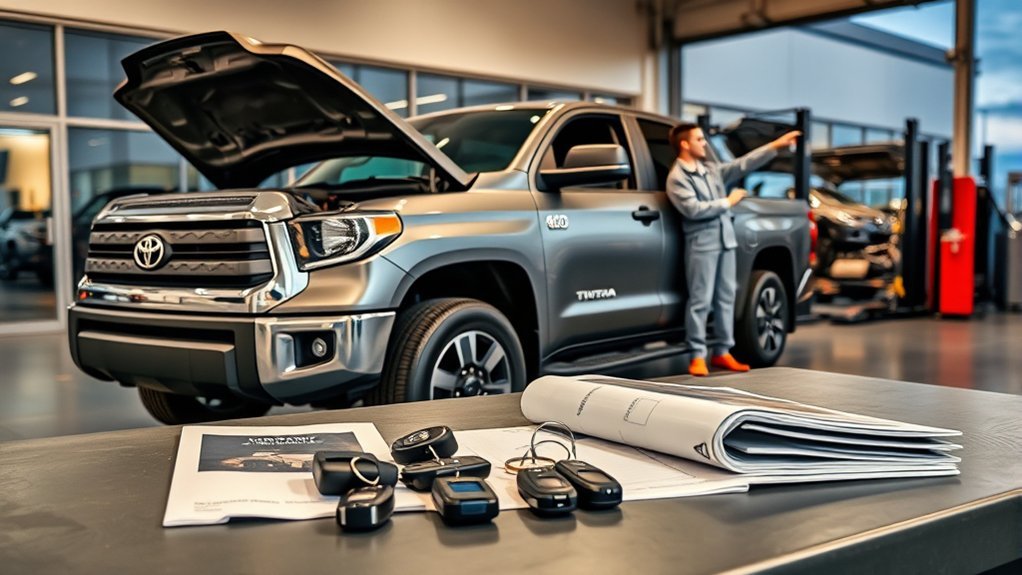
An “extended warranty” sold separately is more accurately called a Vehicle Service Agreement or service contract. It is optional and pays for eligible repairs under the written contract’s covered-component, exclusion, authorization, maintenance, and deductible rules.
Toyota Financial Services currently offers Platinum, Gold, and Powertrain plans for eligible new Toyota vehicles. Availability and terms can change, and not every plan is sold in every state.
| Toyota Financial Plan | Current New-Vehicle Term Options | General Positioning |
|---|---|---|
| Platinum | From 3 years/50,000 total vehicle miles up to 10 years/125,000 total vehicle miles | Toyota Financial’s broadest listed new-vehicle protection, subject to exclusions and the component schedule. |
| Gold | From 3 years/50,000 total vehicle miles up to 8 years/125,000 total vehicle miles | Covers more eligible components than the Powertrain plan but fewer than Platinum. |
| Powertrain | 6 years/100,000 total vehicle miles | Focuses on eligible engine, transmission, axle, and related powertrain components. |
New Toyota vehicles are generally eligible for these plans before reaching three years or 36,000 total vehicle miles, whichever occurs first. Importantly, plan time and mileage are measured from the truck’s original in-service date and zero miles. A ten-year plan purchased when the truck is nearly three years old does not provide ten additional years from the purchase date.
Other Toyota Financial VSA Terms to Compare
- Deductible: Current plans may offer a $0 deductible or a $100 disappearing deductible per eligible repair visit. The $100 amount is generally waived only when the selling dealer performs the covered repair.
- Roadside and travel benefits: Benefits may include roadside assistance, substitute transportation, lodging, or meal reimbursement, but limits, prior authorization, receipts, and covered-breakdown conditions apply.
- Transfer: Toyota Financial says eligible coverage may be transferred once at no cost from the original contract owner to a private party. Dealer transfers are excluded.
- Cancellation: Current terms describe cancellation and possible refunds, processing charges, prorating, and state-specific rules.
- Availability: Programs and terms are not available in every state and may vary by purchase date.
Toyota does not publish one universal Tundra VSA price. The amount depends on the plan, term, deductible, vehicle, seller, location, and other contract factors. Compare written quotes rather than relying on a claimed national “average.”
Pro Tip: Compare the service agreement with the factory warranty that is still active. A contract that begins counting from the original in-service date may overlap existing coverage for several years.
Questions to Ask Before Buying a Service Agreement
- Which exact components are covered, and is the contract exclusionary or named-component coverage?
- Which repairs, diagnostic charges, fluids, seals, gaskets, software, and consequential damage are excluded?
- Does every repair require prior authorization?
- Which repair facilities may perform the work?
- What deductible applies per visit?
- Are towing, rental, meals, and lodging reimbursed only after a covered breakdown?
- When does the contract expire based on the truck’s original in-service date?
- Can the contract be transferred or canceled, and what paperwork or fees apply?
How Warranty Transferability Affects Resale Value
Remaining warranty coverage can make a used Tundra more attractive because a buyer may have protection against certain covered defects. However, transferability does not guarantee a higher selling price. Vehicle condition, mileage, maintenance history, accident history, trim, local demand, and the amount and type of coverage remaining all affect value.
Factory warranty coverage under Toyota’s current U.S. Tundra guide transfers automatically. An optional Toyota Financial VSA follows separate rules and may generally be transferred once to a private buyer. Before advertising a truck as having an extended service agreement, confirm that the agreement remains active and obtain the required transfer instructions.
What Used-Tundra Buyers Should Verify
- The truck’s original in-service date and current mileage
- The model-year Warranty & Maintenance Guide
- Whether the VIN has unrepaired safety recalls
- Maintenance and repair records
- Accident, salvage, total-loss, or odometer history
- Whether an advertised VSA is active, transferable, and correctly assigned to the VIN
- The condition of the powertrain, frame, body, electronics, four-wheel-drive system, and hybrid system where equipped
Use the NHTSA recall lookup to check a specific VIN for unrepaired safety recalls. A recall is separate from the normal factory-warranty period and may still provide a free remedy after the basic warranty has expired.
Frequently Asked Questions
What is covered under my Toyota warranty?
The factory warranty covers eligible repairs needed to correct defects in Toyota-supplied materials or workmanship. The exact parts and limits depend on the applicable basic, powertrain, restraint, corrosion, emissions, hybrid, accessory, or other warranty provision. Normal maintenance, wear, and damage caused by excluded events are generally not covered.
Does Toyota have a 100,000-mile powertrain warranty?
The standard new-vehicle Tundra powertrain warranty is generally five years or 60,000 miles, whichever comes first. Toyota Financial currently offers an optional Powertrain Vehicle Service Agreement for eligible new vehicles with a six-year/100,000-total-mile term, but that paid contract is not the factory powertrain warranty.
What kind of warranty does the Toyota Tundra have?
A recent U.S. Tundra includes basic, powertrain, restraint-system, corrosion-perforation, and emissions warranties. Additional hybrid-related coverage may apply to an i-FORCE MAX model. Tires and accessories can have separate warranty terms, and optional Vehicle Service Agreements are available for eligible trucks.
What year should I stay away from when buying a Toyota Tundra?
There is no single Tundra model year that every buyer must avoid. Condition and history can differ greatly between two trucks from the same year. Check the VIN for unrepaired recalls, review maintenance and accident records, verify remaining warranty coverage, and obtain an independent pre-purchase inspection.
Do I have to service my Tundra at a Toyota dealer to keep the warranty?
Routine maintenance may generally be performed by an independent repair shop or by the owner. Use suitable parts and fluids, follow Toyota’s maintenance requirements, and keep detailed records. A claim may be denied when improper maintenance or repair caused the failure, but using a non-dealer shop does not automatically cancel the entire warranty.
Will modifications void my Toyota Tundra warranty?
A modification does not automatically erase all factory coverage. Toyota may deny coverage for a repair when the alteration, accessory, defective part, incorrect installation, abuse, or changed operating condition caused the failure. Unrelated covered components can remain under warranty.
Is ToyotaCare an extended warranty?
No. ToyotaCare is a maintenance and roadside-assistance plan supplied with eligible new vehicles. It does not extend the basic or powertrain warranty and does not cover every mechanical repair.
How can I check whether my used Tundra still has warranty coverage?
Find the original in-service date, record the current mileage, and compare both with the limits in the model-year Warranty & Maintenance Guide. A Toyota dealer can also check VIN-specific information. For an optional service agreement, contact the contract administrator and confirm that it is active and properly transferred.
Conclusion
The Toyota Tundra warranty provides meaningful protection against covered defects, but each coverage type has its own component list, exclusions, time limit, and mileage limit. Start with the guide issued for your truck’s model year, confirm the original in-service date, keep maintenance records, and obtain written explanations for any denied claim.
When considering extended protection, compare the Vehicle Service Agreement with the factory coverage already in force. Review the total term, deductible, excluded parts, repair-authorization process, transfer rules, and cancellation terms before paying for a plan.
Sources
- Toyota 2026 Tundra Warranty & Maintenance Guide — factory warranty periods, exclusions, towing, maintenance responsibilities, and claim procedures.
- Toyota Manuals and Warranties — general Toyota warranty and hybrid coverage information.
- Toyota Financial Services Vehicle Service Agreements — current plan levels, terms, eligibility, deductibles, transferability, and cancellation information.
- Federal Trade Commission: Auto Warranties and Auto Service Contracts — consumer guidance about aftermarket parts, independent maintenance, service-contract pricing, and contract comparisons.
- ToyotaCare and Maintenance Plans — distinction between maintenance plans and warranty coverage.
- National Highway Traffic Safety Administration Recall Lookup — VIN-specific unrepaired safety-recall checks.
