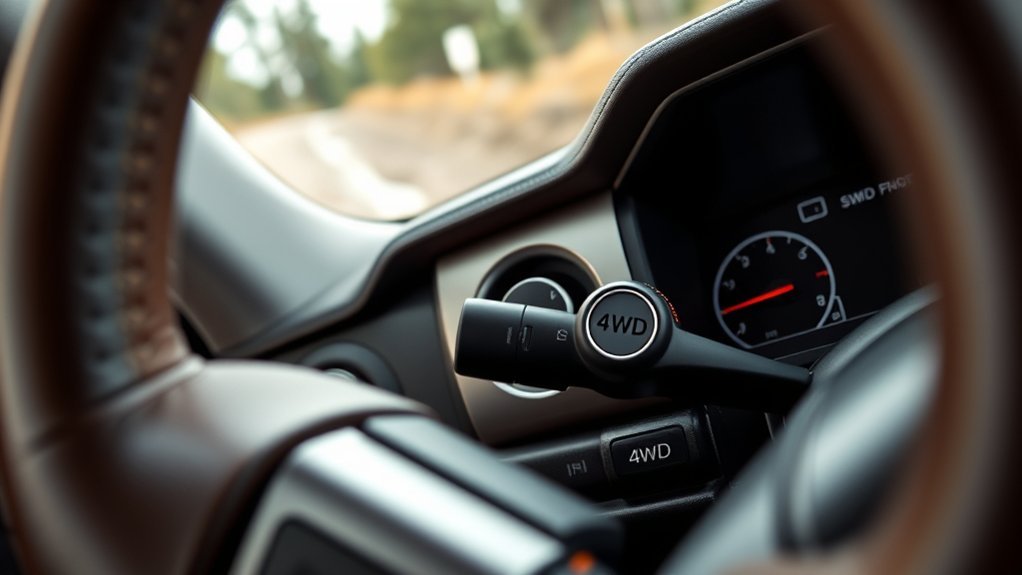
The Toyota Tundra’s four-wheel-drive system gives you three transfer-case settings for different surfaces: 2H for normal pavement, 4H for loose or slippery terrain, and 4L for slow situations that need maximum torque. Choosing the correct mode matters because the Tundra uses part-time 4WD, which can bind if you use 4H or 4L on high-traction pavement.
Quick Answer
Use 2H for normal dry pavement, 4H only on loose or slippery surfaces where the tires can slip, and 4L for slow, high-torque work such as steep grades, deep mud, sand, or recovery. On current-generation Tundras, shift 2H↔4H below 62 mph; stop, hold the brake, and select Neutral before using 4L.
Key Takeaways
- 2H is the normal mode for dry pavement and most everyday driving.
- 4H is for surfaces that permit tire slip, including snow, ice, loose gravel, mud, sand, and off-road tracks.
- 4L is a low-speed range for steep grades, deep terrain, recovery, and hard pulling on a loose or slippery surface.
- Do not use part-time 4WD on dry, high-traction pavement. It can cause steering resistance, tire scrub, driveline wind-up, and component wear.
- Four-wheel drive helps the truck move; it does not shorten stopping distance or make icy corners safe at normal speeds.
At a Glance
| Time Required | A few seconds for 2H↔4H; about 1–2 minutes to stop and complete a 4H↔4L shift |
| Difficulty | Easy, provided the correct speed, transmission position, and surface conditions are used |
| Tools Needed | None; consult the exact model-year owner’s manual if the indicator does not become steady |
| Cost | $0 for normal operation; maintenance or diagnosis costs vary if the system has a fault |
Note: The main procedures below match the 2H, 4H, and 4L selector used on current-generation Tundras. Some older models label 2H as “2WD,” and operating details can vary. Check the owner’s manual for your exact model year before relying on a speed or shifting procedure.
Understanding the Toyota Tundra 4WD System
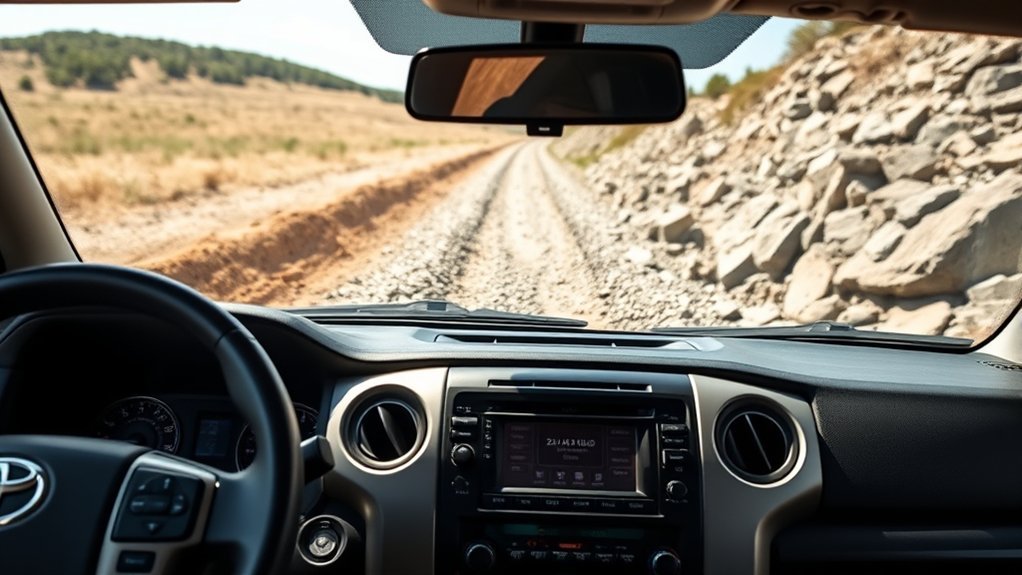
Toyota describes the Tundra’s available system as 4WDemand part-time four-wheel drive with an electronically controlled two-speed transfer case. “Part-time” is the key term: unlike a full-time AWD system, it is not intended to remain in four-wheel drive on every road surface.
In 2H, the engine drives the rear wheels. Selecting 4H or 4L also sends drive torque to the front axle. Because the transfer case couples the front and rear drivetrains, the system depends on some tire slip to release the speed differences that occur while turning. Loose dirt, gravel, snow, ice, sand, and mud can provide that slip. Dry, high-traction pavement normally cannot.
Warning: Do not use 4H or 4L on dry, hard-surfaced pavement. Driveline wind-up can make the steering feel heavy, cause the tires to scrub or hop in turns, and place unnecessary stress on the transfer case, driveshafts, differentials, and axles.
2H: Two-Wheel Drive High Range
Use 2H for dry pavement, normal commuting, highway driving, and most towing on roads with good traction. It provides the quietest normal operation, the least driveline wear, and the best fuel economy of the three settings.
4H: Four-Wheel Drive High Range
Use 4H when you need additional drive traction but can still travel at ordinary off-road or low-grip road speeds. Appropriate surfaces include packed snow, ice, loose gravel, dirt, sand, mud, and off-road tracks where the tires can slip.
Do not treat rain alone as a reason to select 4H. A wet paved road may still provide substantial grip, especially on a straight, clean roadway. Remain in 2H unless the surface is genuinely slippery enough to permit tire slip and your model-year manual allows the use.
4L: Four-Wheel Drive Low Range
Use 4L when you need low-speed control and greater torque multiplication. Typical uses include climbing or descending a steep off-road grade, moving through deep mud or snow, crawling over rocks, recovering a stuck truck, or pulling a load slowly on a loose or slippery surface.
4L is not a normal road-driving or highway-towing mode. Select it only after stopping and completing the required Neutral-position shift.
Which Tundra 4WD Mode Should You Use?
| Driving condition | Mode | Reason |
|---|---|---|
| Dry paved road | 2H | Normal traction; prevents driveline binding |
| Ordinary rain on clean pavement | Usually 2H | Wet pavement may still have too much grip for part-time 4WD |
| Packed snow, ice, or a consistently slippery road | 4H | Adds front-axle drive traction while allowing normal low-grip travel |
| Loose gravel, dirt road, shallow mud, or sand | 4H | The loose surface permits tire slip and 4H improves forward traction |
| Deep mud, deep snow, rocks, or a steep off-road grade | 4L | Provides low-speed torque multiplication and finer control |
| Normal trailer towing on pavement | 2H | Use Tow/Haul as appropriate; 4WD is not needed when traction is adequate |
| Slippery boat ramp or loose launch area | 4H or 4L | Choose 4L only when a very slow pull and additional torque control are required |
Four-wheel drive can help your Tundra get moving on a slippery surface, but it cannot create more tire grip for braking or cornering.
How to Shift Between 2H and 4H
On current-generation Tundras, Toyota permits shifts between 2H and 4H while the truck is moving below 62 mph (100 km/h). That number is the transfer-case shift threshold; it is not a recommendation to drive close to 62 mph on snow, ice, mud, or an off-road trail.
How to Engage 4H While Moving
- Reduce your speed to less than 62 mph and choose a straight, stable path.
- Stop any wheelspin before operating the 4WD control switch.
- Push and turn or shift the selector from 2H to 4H, depending on your model-year control.
- Ease the accelerator briefly while the transfer case changes mode.
- Confirm that the 4H indicator is illuminated steadily before relying on four-wheel drive.
Warning: Never select 4H while the wheels are spinning. Release the accelerator and allow the wheels to regain a similar road speed before shifting.
How to Return From 4H to 2H
- Move onto a surface suitable for 2H and reduce your speed below 62 mph.
- Keep the truck traveling as straight as practical.
- Select 2H.
- Wait for the 4H indicator to switch off.
- If it continues flashing, drive straight at low speed and gently vary the accelerator. Follow the message in the multi-information display if one appears.
Coasting can make the shift feel smoother because it reduces load on the transfer-case components, but a full stop is not normally required for a documented 2H↔4H change.
How to Shift Between 4H and 4L
Shifting into or out of 4L requires a complete stop. Do not attempt to force the selector if the truck is moving or the transmission is not in Neutral.
How to Shift From 4H to 4L
- Stop the Tundra completely on a stable surface.
- Keep your foot firmly on the brake pedal.
- Move the transmission selector to N for Neutral.
- Push and select 4L with the four-wheel-drive control switch.
- Wait for the 4L indicator to become steady.
- Only then move the transmission to Drive or Reverse and proceed slowly.
How to Shift From 4L to 4H
- Stop the vehicle completely and continue holding the brake.
- Select Neutral.
- Push and move the 4WD control switch from 4L to 4H.
- Wait for the 4L indicator to switch off and the transfer change to finish.
- To continue into 2H, complete the separate 4H-to-2H procedure after 4H has engaged.
Note: Do not move the transmission out of Neutral before the 4L shift completes. If the indicator keeps flashing or a buzzer sounds, recheck that the vehicle is fully stopped, the brake is applied, and the transmission is in Neutral.
Benefits and Limits of 4H in Slippery Conditions
In 4H, both axles receive drive torque, so the truck has more opportunities to use available traction when one end of the vehicle is on a low-grip surface. This can make it easier to start from a stop, climb a snowy grade, cross loose gravel, or maintain momentum through mud.
That benefit has limits. If all four tires are on ice, none of them has much grip to use. Excess speed, abrupt steering, or sudden braking can still produce a skid. Follow NHTSA winter-driving guidance: slow down, leave a larger following distance, make smooth inputs, and ensure the truck has suitable tires.
Using 4H on Slippery Hills
Engage 4H before starting a slippery hill rather than waiting until the rear wheels spin. Use steady throttle and preserve momentum without accelerating aggressively. When descending, reduce speed before the grade and use an appropriate transmission range. Four-wheel drive does not prevent the truck from sliding if the tires lose lateral or braking grip.
Should You Use 4H in Rain?
Use surface grip—not the presence of rain alone—as your guide. Stay in 2H on ordinary wet pavement when the tires maintain normal grip. Consider 4H only when the road is consistently slippery or loose enough to permit tire slip, such as a snow-covered road, muddy access route, wet grass, or saturated gravel track.
Using 4L for Maximum Torque and Control
4L changes the transfer-case reduction ratio, allowing the truck to move slowly while producing stronger wheel torque. This gives you finer throttle control and reduces the need to rush an obstacle.
Useful 4L situations include:
- Climbing or descending a steep, loose off-road grade
- Crawling through rocks, ruts, deep mud, or deep snow
- Freeing a stuck vehicle without excessive wheelspin
- Moving a trailer slowly on a loose or slippery launch ramp
- Pulling a heavy load at very low speed on a surface where the tires can slip
Use gentle accelerator input. High engine speed and spinning tires can dig the truck deeper into sand, mud, or snow. When traction improves and low-range torque is no longer needed, stop and return to 4H.
Comparing 4H and 4L for Off-Road Driving

| Feature | 4H | 4L |
|---|---|---|
| Primary purpose | Additional traction on loose or slippery surfaces | Maximum low-speed torque and control |
| Typical terrain | Snow, ice, gravel, dirt, shallow mud, and sand | Steep grades, rocks, deep mud, deep snow, and recovery |
| Shift while moving | 2H↔4H is permitted below Toyota’s specified threshold | No; stop, hold the brake, and select Neutral |
| Driving style | Smooth, moderate progress suited to the surface | Slow and deliberate operation |
| Dry pavement | Do not use | Do not use |
What to Do if the 4WD Indicator Keeps Flashing
A flashing 4H or 4L indicator normally means the requested transfer-case change has not finished. Do not assume the selected mode is available until the appropriate indicator becomes steady.
- Stop wheelspin. Never operate the selector while a tire is spinning.
- Check the shift conditions. For 4L, the truck must be completely stopped, the brake applied, and the transmission in Neutral.
- Straighten the wheels. Driveline load from a tight turn can prevent a clean shift.
- For a delayed 2H↔4H change, travel slowly and straight while gently accelerating and decelerating, or follow the instruction shown in the multi-information display.
- For a delayed 4H↔4L change, keep the truck stopped in Neutral or follow the display instruction to move slowly in Drive or Reverse and stop again.
- If both indicators flash rapidly, a fault may be present. Stop using the selector and arrange a Toyota inspection.
Pro Tip: Make the shift before entering deep snow, mud, sand, or a steep obstacle. Engaging the correct mode while the truck is stable is easier on the system than trying to change modes after the wheels begin spinning.
[Amazon Products Picked for You]

iCarsoft TYT V1.0 can do it all-reads and clears trouble codes on all the systems such as engine, transmission, ABS and SRS etc. Support oil service reset & SAS Reset The...
Signs You Are Experiencing Drivetrain Binding
Part-time 4WD can store torsional load in the driveline when the front and rear tires cannot slip enough to release it. Common signs include:
- Heavy or resistant steering during a tight turn
- Tire chirping, scrubbing, hopping, or skipping
- The truck feeling as though the brakes are dragging
- Difficulty shifting back into 2H
- Clunks as stored driveline tension releases
If these symptoms begin on firm pavement, straighten the wheels, stop accelerating, and move onto a loose or slippery surface when it is safe. Select 2H and allow the change to complete. Do not continue making tight turns in 4H or 4L on high-traction pavement.
Using Tundra 4WD While Towing or Launching a Boat
For ordinary trailer towing on dry pavement, remain in 2H and use the appropriate Tow/Haul setting. Four-wheel drive does not increase the truck’s published tow rating, payload rating, hitch rating, or axle limits.
4H can help when a snowy road, muddy campsite, gravel grade, or slippery launch area reduces rear-wheel traction. Use 4L only for a slow pull on a suitable loose or slippery surface—for example, climbing a steep algae-covered or gravel boat ramp where precise low-speed control is needed.
Warning: Do not use 4L for normal highway towing, and do not select it merely because the trailer is heavy. Low range is a traction and low-speed-control tool, not a way to raise the truck’s towing capacity.
How 4WD Relates to MTS, Crawl Control, Auto LSD, and the Rear Locker
The 2H, 4H, and 4L selector controls the transfer case. Other available systems perform different jobs and depend on trim, package, mode, and model year:
- Multi-Terrain Select (MTS) adjusts traction and vehicle-control strategies for surfaces such as dirt, sand, mud, deep snow, moguls, or rocks.
- Crawl Control manages very low off-road speed so the driver can focus on steering.
- Electronically locking rear differential locks the rear axle shafts together for specific low-speed off-road situations.
- Auto LSD uses brake and engine control to reduce drive-wheel spin under applicable conditions.
- Vehicle Stability Control and traction control help manage wheelspin and directional stability but cannot overcome the physical grip available from the tires.
Do not treat these features as substitutes for selecting the correct transfer-case range. Review the applicable sections of the Toyota Tundra Quick Reference Guide before combining 4WD with a terrain mode or rear differential lock.
Tires Matter as Much as the 4WD Setting
The transfer case can distribute drive torque, but the tires create the actual grip. Check all four tires for correct cold inflation, matching size and load specification, similar tread depth, and damage before difficult travel. Large differences in tire circumference can interfere with vehicle-control systems and place additional load on the driveline.
For snow and ice, suitable winter tires can provide a larger improvement in braking and cornering grip than changing from 2H to 4H alone. NHTSA notes that winter tires are more effective than all-season tires in deep snow. Use chains only when permitted for your tire size and install them according to Toyota’s instructions and local law.
[Amazon Products Picked for You]

275/55R20 117T Bridgestone Blizzak DM-V2 2755520 275 55 20 Tire

Fit: Universal Fit for Cars, SUVs & Pickup Trucks – Designed to fit most tire sizes, these snow chains are perfect for sedans, SUVs, trucks, and even motorcycles.

Built to Keep You Working Through the Winter
Maintenance Tips for Your Toyota Tundra 4WD System
Toyota instructs owners of the documented current-generation system to drive in four-wheel drive for at least 10 miles (16 km) each month so the front-drive components remain lubricated. Perform that exercise only on an appropriate surface that permits tire slip—not on a dry paved highway.
Pro Tip: A maintained gravel road, loose dirt route, or consistently snow-covered road can provide a suitable place for the monthly 4WD exercise. Select 4H before entering the route, drive smoothly, and return to 2H before reaching firm pavement.
Also follow the Toyota Warranty & Maintenance Guide for transfer-case oil, front and rear differential oil, propeller-shaft bolts, and leak inspections. Vehicles used frequently for towing, off-road driving, or other special operating conditions may require additional service.
Arrange an inspection if you notice:
- Persistent flashing indicators or repeated failure to change modes
- Fluid beneath the transfer case or differentials
- Grinding, repeated clunks, or new vibration
- A 4WD warning message that returns after restarting the truck
- Binding that continues after you return to 2H on an appropriate surface
[Amazon Products Picked for You]

Genuine Toyota part that fits your specific vehicle

6Qt Genuine 00289-ATFWS
Compatibility: Front brake caliper wiring kit for Toyota Tundra 2007 2008 2009 2010 2011 2012 2013 2014 4WD.
Common Mistakes to Avoid When Using Tundra 4WD
| Mistake | Possible result | Correct approach |
|---|---|---|
| Using 4H on dry pavement | Binding, tire scrub, heavy steering, and component stress | Use 2H unless the surface permits tire slip |
| Selecting 4H while wheels are spinning | Shock load or incomplete engagement | Release the accelerator and stop the wheelspin first |
| Attempting 4H↔4L while moving | Failed shift, warning buzzer, or drivetrain damage | Stop completely, hold the brake, and select Neutral |
| Driving before the indicator becomes steady | Transfer mode may not be fully engaged | Wait for the indicator and follow the display message |
| Assuming 4WD improves braking | Excess speed and insufficient stopping distance | Slow down, increase following distance, and use suitable tires |
| Ignoring tire or fluid maintenance | Poor system performance and avoidable wear | Follow Toyota’s tire and drivetrain service schedule |
Best Practices for Off-Roading With Toyota Tundra 4WD
- Inspect the route on foot when an obstacle, drop, water crossing, or hidden rut is uncertain.
- Select 4H or 4L before the truck becomes stuck.
- Use smooth throttle instead of relying on wheelspin.
- Keep both hands on the wheel and avoid abrupt steering on low-grip surfaces.
- Maintain enough momentum for sand or mud without using excessive speed.
- Use 4L for controlled descents rather than riding the brakes continuously.
- Know the location of low-mounted components and preserve clearance over rocks and ruts.
- Return to 2H before driving on firm pavement.
- After deep mud, sand, or water, inspect the underside, brakes, wheels, and drivetrain for debris or leaks.
Frequently Asked Questions
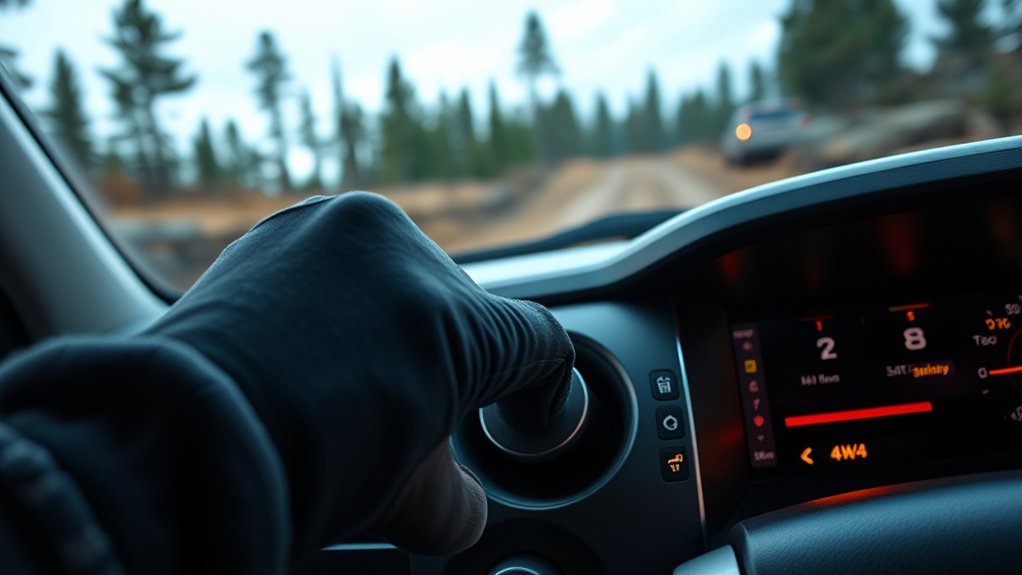
Should I use 2H, 4H, or 4L?
Use 2H for dry pavement and normal driving. Use 4H on loose or slippery surfaces such as snow, ice, gravel, mud, or sand. Use 4L for slow, difficult terrain that requires maximum torque and control, including steep grades, deep mud, rocks, or recovery.
What is the difference between 2H, 4H, and 4L in a Tundra?
2H drives the rear wheels through the normal high range. 4H drives both axles through the high range for additional traction on slip-permitting surfaces. 4L also drives both axles but adds low-range reduction for stronger low-speed torque and finer control.
At what speed can I shift a Tundra into 4H?
Toyota’s documented current-generation procedure permits a 2H-to-4H shift below 62 mph (100 km/h). That is a shift threshold, not a safe target speed for snow, ice, mud, or off-road terrain. Older model years may use a different limit, so check the exact owner’s manual.
How do I shift a Toyota Tundra into 4L?
Stop completely, continue holding the brake, move the transmission to Neutral, and select 4L with the 4WD control switch. Wait for the 4L indicator to become steady before selecting Drive or Reverse.
Can I use 4H on wet pavement?
Not merely because the road is wet. The Tundra’s part-time 4WD system should be used only where the tires can slip. Ordinary wet pavement may still have too much grip, so 2H is normally appropriate unless the road is consistently snowy, icy, muddy, loose, or otherwise low in traction.
Why is my Tundra’s 4H or 4L light flashing?
The requested transfer-case change has not completed. Stop wheelspin, straighten the truck, and satisfy the required shift conditions. For 4L, stop completely, hold the brake, and select Neutral. Follow any multi-information-display message. Rapid or persistent flashing can indicate a fault that needs inspection.
Can I shift directly from 4L to 2H?
Use the documented sequence: stop, hold the brake, select Neutral, and shift from 4L to 4H. After 4L disengages and 4H is established, complete the separate 4H-to-2H change.
Does four-wheel drive help a Tundra stop faster?
No. Four-wheel drive can improve the ability to accelerate by sending drive torque to both axles, but braking depends on tire grip, road conditions, speed, and the brake system. Slow down and leave extra stopping distance on snow, ice, gravel, and mud.
Conclusion
Using your Toyota Tundra’s 4WD system correctly comes down to matching the transfer-case mode to the surface. Keep the truck in 2H for normal pavement, select 4H before entering a loose or slippery route, and reserve 4L for slow terrain that needs additional torque and control. Complete every shift under Toyota’s specified conditions, wait for the indicator to become steady, and return to 2H before driving on firm pavement.
Four-wheel drive is a valuable traction tool, but it does not replace suitable tires, safe speed, adequate following distance, or the instructions in your exact model-year owner’s manual.
Sources
- Toyota 2024 Tundra Quick Reference Guide — 2H, 4H, and 4L purposes and shifting procedures
- Toyota 2024 Tundra Owner’s Manual — indicator troubleshooting, shift warnings, and monthly 4WD usage
- Toyota 2025 Tundra eBrochure — 4WDemand part-time 4WD and two-speed transfer-case specification
- Toyota 2025 Warranty & Maintenance Guide — transfer-case, differential, and special-operating-condition maintenance
- National Highway Traffic Safety Administration Winter Driving Tips — winter speed, braking, preparation, and following-distance guidance