Cold weather can lower the pressure in your Toyota Tundra’s tires even when no air has leaked out. The safe response is not to choose a universal winter number such as 40 PSI. Instead, check all tires while they are cold and restore them to the cold inflation pressures printed on your truck’s Tire and Loading Information label.
Quick Answer
Use the cold tire pressures on your Toyota Tundra’s driver-door placard, not a blanket 40 PSI target and not the maximum pressure molded into the tire. Check the tires after the truck has been parked for at least three hours, then add or release air until each tire matches its listed specification.
Key Takeaways
- A temperature drop of about 5°C to 6°C, or 10°F, can lower tire pressure by roughly 1 PSI.
- Toyota Tundra tire pressure varies by model year, tire size, equipment, and axle, so the driver-door placard is the correct reference.
- Do not intentionally overinflate or underinflate the tires for winter road driving.
- A TPMS light that appears on a cold morning still requires a gauge check, even if the light later turns off.
- Repeated pressure loss in one tire may indicate a puncture, leaking valve, damaged wheel, or bead leak.
At a Glance
| Time Required | 10–15 minutes |
| Difficulty | Easy |
| Tools Needed | Accurate tire-pressure gauge, air compressor or portable inflator, and a valve-cap tool only if needed |
| Cost | No added cost if you already have a gauge and inflator; otherwise the tool cost varies |
What Tire Pressure Should a Toyota Tundra Use in Cold Weather?
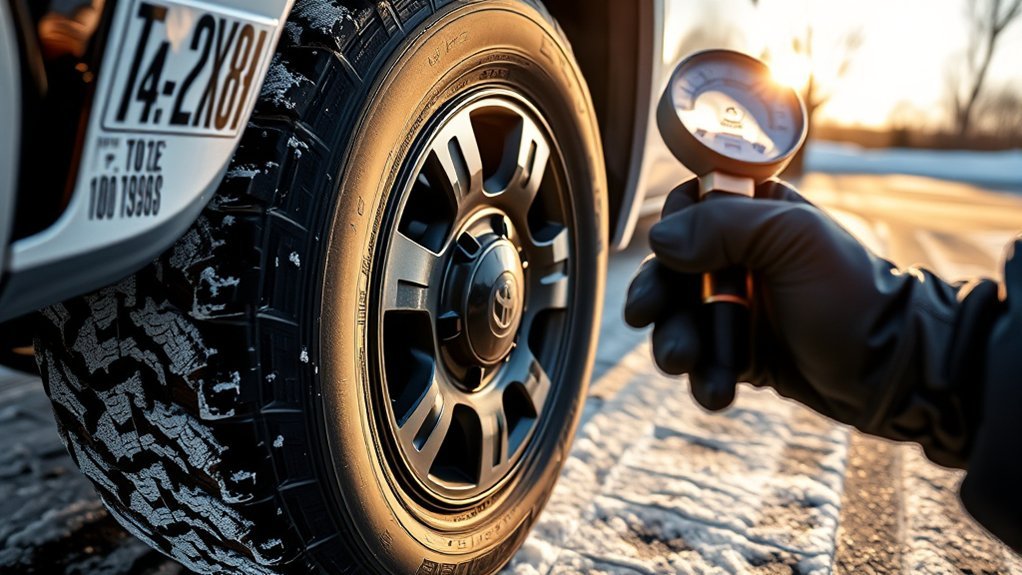
The correct winter pressure is the same vehicle-specific cold inflation pressure Toyota lists for your truck. Look for the Tire and Loading Information label on the driver’s door edge or door jamb. It may list different pressures for the front and rear tires, and the values can vary among Tundra model years, trims, wheel sizes, and original tire specifications.
Toyota’s tire-pressure guidance directs owners to the driver-door label or the owner’s manual for the correct specification. That is why “40 PSI for every Tundra” is not reliable advice. Forty PSI is appropriate only when the label or an approved load-specific instruction for that exact truck calls for it.
[Amazon Products Picked for You]

Enhanced Visibility in Low Light: Features a green backlit LCD screen and integrated flashlight, allowing for clear reading of tire pressure even in dark or dimly light conditions.

1. LONG ZINC ALLOY DUAL HEAD DESIGN : Straight foot air chuck are deisghed for inner wheels or difficult reached valve as well as the 30°reverse chuck are for outer wheels.A good choice for testing your tire pressure also a great father's day gift

PROCESS LEVEL ACCURACY: Each ETENWOLF’s digital tire pressure gauge is calibrated manually to ANSI B40.7 Grade 2A(plus-minus 1 PSI).Presta valve adapter not included, if used for bicycles, it must be purchased separately
What “Cold Tire Pressure” Means
A cold reading is taken before driving or after the truck has been parked for at least three hours. NHTSA treats the manufacturer’s recommended PSI or kPa as a cold-tire specification. Pressure rises as tires warm during driving, so a warm reading should not be bled down to the cold placard number.
Warning: Do not use the maximum pressure molded into the tire sidewall as your everyday target. That number is a tire limit, not the vehicle manufacturer’s recommended operating pressure. Do not exceed the limits for the tire, wheel, axle, or vehicle.
How Temperature Changes Affect Tundra Tire Pressure
Tire pressure changes with temperature because the pressure of a confined gas falls as its absolute temperature falls. The tire does not have to be punctured for a cold-weather pressure drop to appear.
Transport Canada advises that tire pressure changes by about 1 PSI for every 5°C drop in air temperature. A common U.S. rule of thumb is about 1 PSI per 10°F. Both estimates are close enough for planning, but a gauge—not a calculation—should determine the final adjustment.
| Temperature Drop | Approximate Pressure Drop | What to Do |
|---|---|---|
| 5°C or 10°F | About 1 PSI | Check cold pressure and restore the placard value if needed. |
| 10°C or 18°F | About 2 PSI | Expect a noticeable seasonal change; check all tires. |
| 20°C or 36°F | About 4 PSI | Adjust with a gauge rather than guessing from the weather. |
| 30°C or 54°F | About 6 PSI | Recheck after the truck has cold-soaked at outdoor temperature. |
Cold weather changes the reading, but it does not change the target: the goal remains the cold pressure listed for your specific Toyota Tundra.
How to Check and Adjust Toyota Tundra Tire Pressure in Winter
- Park long enough for a cold reading. Leave the Tundra parked for at least three hours. For the most useful winter reading, let the tires reach the outdoor temperature in which the truck will be driven.
- Find the correct pressure. Read the Tire and Loading Information label on the driver’s door edge or jamb. Record the front, rear, and spare-tire specifications if the spare is listed separately.
- Inspect before inflating. Look for a visibly low tire, cuts, bulges, embedded objects, a bent wheel, or a damaged valve stem. Clear snow and ice from the valve area so debris cannot interfere with the valve seal.
- Measure every road tire. Remove the valve cap, press an accurate gauge squarely onto the valve stem, and record the reading. Compare each tire with its correct axle specification.
- Add or release air. Inflate a low tire in short bursts. If a tire is high, release a small amount of air. Recheck until the reading matches the placard value.
- Check the spare. A spare can lose pressure while stored. Its required pressure may differ from the four road tires, so use its listed specification.
- Replace the caps and monitor. Reinstall valve caps, confirm that no valve is leaking, and check again after a major temperature swing, before a long trip, or if the TPMS light returns.
Pro Tip: Keep a quality gauge and a portable inflator in the truck. Gas-station gauges can be damaged or inaccurate, and a portable inflator lets you correct pressure without driving far on an underinflated tire.
[Amazon Products Picked for You]

ADVANCED TRUEGAUGE SCREEN: This battery tire inflator includes updated sensor technology, capable of collecting pressure data from tire inflators at a frequency of 200 times per second. Its valid data rate is higher than 80%, which is 60% better than the market average. From routine maintenance to roadside emergencies, its accurate readings ensure confident pressure checks and a safer driving experience.Suitable as a Father's Day gift for your dad.

RAPID INFLATION & ROAD-READY PORTABILITY: Powerful 120W motor delivers up to 35L/min airflow—inflates a standard car tire (195/65 R15) from 30 to 36 PSI in under 1 minute under ideal operating conditions. Weighs only 2.2 lbs and fits glove compartments or trunks for daily commutes, road trips, and emergencies. Plugs into standard 12V DC car outlet with 15A fuse protection. AIRUN H features its cordless counterpart H2 Pro.

12 V DC/120 V AC Dual Power: The AstroAI Tire Inflator features dual power supplies, compatible with 12 V car cigarette lighters and 120 V household outlets, convenient for both home and travel use. The AstroAI Tire Inflator can easily switch between high-pressure and high-current inflation modes. High-pressure mode inflates car, bicycle and motorcycle tires along with sports equipment and other small inflatables. Large-volume mode inflates bigger low-pressure objects like air mattresses
What If the Truck Is in a Warm Garage?
A tire set to the placard pressure in a heated garage can read lower after sitting outside in freezing weather. The best solution is to check the tires after they have cold-soaked outdoors. When that is not practical, make a safe temporary adjustment, then verify the pressure again outdoors when the tires are cold.
What If the Tires Are Already Warm?
Do not release air merely because a warm tire reads above the cold placard pressure. If a tire is clearly low after driving, add enough air to avoid operating it while seriously underinflated, then recheck and set the final pressure after the tire has cooled for at least three hours.
What a Toyota Tundra TPMS Warning Means in Cold Weather
A cold morning can push a marginally low tire below the Tire Pressure Monitoring System warning threshold. The light may turn off after driving because the tires warm and pressure rises, but that does not prove the tires were correctly inflated when cold. Check them with a gauge as soon as it is safe.
- Solid TPMS light: Stop in a safe place, inspect the tires, and check all pressures. Inflate to the door-placard values.
- Light comes on cold and later turns off: The tires may be only marginally low, but they still need a cold-pressure check.
- Light flashes for about a minute and then stays on: This commonly indicates a TPMS malfunction rather than only low pressure. Arrange diagnosis according to the owner’s manual.
- Light remains on after correct inflation: Allow the system time to update, then follow the model-year-specific owner’s manual. A sensor, registration, initialization, or leak issue may need service.
Note: TPMS is a warning system, not a replacement for monthly gauge checks. The warning may not appear until a tire is significantly underinflated.
Effects of Low or High Tire Pressure in Winter
Underinflated Tires
Underinflation allows excessive sidewall flex and heat buildup. It can make steering response less precise, increase rolling resistance and fuel consumption, accelerate shoulder wear, reduce load-carrying capability, and raise the risk of tire damage. On snow or ice, incorrect pressure also makes the truck’s handling less predictable.
Overinflated Tires
Overinflation is not a winter performance upgrade. Too much pressure can reduce the tire’s ability to absorb bumps, concentrate wear toward the center of the tread, reduce the usable contact area, and worsen ride and grip. Inflating every Tundra to 40 PSI can therefore be as misguided as leaving the tires low.
Should You Air Down for Snow?
Do not intentionally lower tire pressure for ordinary driving on public snow- or ice-covered roads. Off-road drivers sometimes reduce pressure at low speed for specialized terrain, but that practice requires suitable tires, controlled speeds, reinflation equipment, and load-aware limits. It is not a substitute for proper winter tires and placard pressure on the highway.
When Cold-Weather Pressure Loss May Mean a Leak
A similar drop in all four tires after a temperature plunge is often weather-related. One tire falling faster than the others, or pressure that keeps dropping after correction, is more likely to indicate a mechanical problem.
Inspect or have the tire serviced when you notice:
- one tire repeatedly losing pressure while the others remain stable;
- a nail, screw, cut, bulge, cracked valve stem, or damaged wheel;
- hissing near the valve, bead, or tread;
- a TPMS warning that returns soon after proper cold inflation;
- vibration, pulling, thumping, or visible deformation; or
- a sudden pressure drop after hitting a pothole or curb.
Warning: Do not drive on a visibly flat, badly damaged, or rapidly deflating tire. Move to a safe location and use roadside assistance or a properly inflated spare according to the owner’s manual.
Towing, Heavy Loads, and Aftermarket Tires
Tundra owners often tow or carry heavy cargo, but pressure should not be increased by guesswork. Start with Toyota’s label and owner’s manual, stay within the truck’s payload, axle, wheel, and tire ratings, and follow any load-specific instructions Toyota provides for that exact model.
If the truck has non-stock tire sizes, Load Range E light-truck tires, aftermarket wheels, or a modified suspension, the original placard may not be enough to determine the best setup. Ask a qualified tire professional to calculate a load-based cold inflation pressure using the tire manufacturer’s approved load-and-inflation data. Never exceed the lowest applicable rating in the system.
[Amazon Products Picked for You]
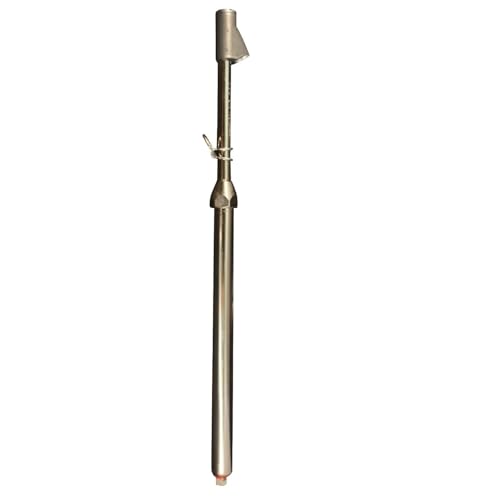
Milton precision engineered service gages provide accurate, long life trouble free performance

【Accurate Digital Tire Gauge】Safeguard your every trip. HYVOHEX tire pressure gauge is certified by ANSI B40.7 Grade 2A standard and equipped with a high-sensitivity sensor to provide you with instant, error-free results (±0.1 PSI). The intelligent anti-interference chip ensures stable operation in extreme temperatures (-4°F-130°F). Whether it is daily commuting or long-distance driving, you can always know the tire condition

【EXTENDED REACH DUAL HEAD】LUMITECO 12" pencil-style pressure gauge is designed with the Integrated Straight foot air chuck and 30°reverse chuck. Ideal for dual wheels and other difficult reached valves. Your good choice for checking tire pressure as well as a great father's day gift.
Common Winter Tire Pressure Misconceptions
| Myth | Fact |
|---|---|
| Every Toyota Tundra should run 40 PSI in winter. | Use the cold pressure on the truck’s door placard. A universal 40 PSI target ignores model and tire differences. |
| Higher pressure always gives better snow traction. | Both underinflation and overinflation can reduce predictable handling and grip. Correct pressure is the target. |
| A TPMS light on a cold morning can be ignored. | Cold may trigger the light, but the tires still need inspection and a gauge check. |
| The pressure on the tire sidewall is the recommended setting. | The sidewall number is not the normal vehicle target. Use the Toyota placard or an approved load-specific instruction. |
| Nitrogen prevents winter pressure changes. | Nitrogen-filled tires still respond to temperature. Air and nitrogen both require regular cold-pressure checks. |
| The 7°C rule tells you how much pressure to add. | The 7°C guideline concerns when winter tires become beneficial; it is not a PSI adjustment rule. |
For severe winter conditions, use four matching winter tires with the three-peak mountain snowflake symbol and adequate tread. Transport Canada notes that all-season and summer tires begin losing elasticity below about 7°C, while winter tires remain more flexible.
Why Proper Tire Pressure Matters for Safety and Performance
Correct inflation helps the tire carry the truck’s load and maintain the shape intended by Toyota and the tire manufacturer. It supports:
- Predictable steering and braking: The truck responds more consistently during lane changes, corners, and emergency stops.
- Proper tire wear: Correct pressure reduces the shoulder wear associated with low pressure and the center wear associated with excessive pressure.
- Fuel efficiency: Proper inflation limits unnecessary rolling resistance.
- Load capacity: A tire cannot safely carry its rated load when it is substantially underinflated.
- Winter readiness: Correct pressure complements—not replaces—winter tires, adequate tread, reduced speed, and longer following distance.
Related Guides
Frequently Asked Questions
Do I need to put more air in my Toyota Tundra when it is cold?
Add air only when a cold gauge reading is below the pressure shown on the driver-door placard. Cold weather often makes seasonal top-ups necessary, but the goal is to restore the listed pressure—not to add an arbitrary amount above it.
Is it normal for tire pressure to change in cold weather?
Yes. Pressure commonly drops by about 1 PSI for each 5°C to 6°C, or 10°F, decrease in temperature. A large or repeated loss in only one tire is less likely to be a normal temperature effect and should be inspected.
What is the 7°C rule for winter tires?
It is a seasonal tire guideline, not a pressure formula. When temperatures consistently reach about 7°C or lower, winter tires generally retain flexibility and cold-weather grip better than summer or many all-season tires.
Is higher or lower tire pressure better in winter?
Neither. The best pressure is the vehicle manufacturer’s specified cold pressure for your Tundra. Deliberate overinflation or underinflation can reduce predictable handling, tire life, ride quality, or load capacity.
Should a Toyota Tundra be set to 40 PSI in winter?
Only when the door placard, owner’s manual, or an approved load-specific instruction for that exact truck calls for 40 PSI. Tundra specifications vary, so 40 PSI should not be treated as a universal setting.
Why does the TPMS light turn off after I start driving?
Driving warms the tires and temporarily raises pressure, which can move a marginally low tire above the warning threshold. The light turning off does not replace a cold gauge check; correct the tires to the placard pressure when they are cold.
Conclusion
Cold weather can lower your Toyota Tundra’s tire pressure enough to affect handling, wear, fuel use, and TPMS operation. The safest winter routine is simple: check all tires cold, use the front and rear pressures on the driver-door placard, inspect any tire that loses air faster than the others, and never substitute a universal 40 PSI target for Toyota’s vehicle-specific specification.
Sources
- Toyota — How to Check Tire Pressure — supports use of the driver-door label, cold measurements, and regular checks.
- NHTSA TireWise — supports cold-pressure definitions, placard use, spare checks, and TPMS warning guidance.
- Transport Canada — Inflating Your Tires — supports the temperature-to-pressure rule of thumb and cold-check procedure.
- Transport Canada — Using Winter Tires — supports the 7°C guideline, four-tire winter setup, and winter-pressure checks.
- Michelin — Tire Pressure — supports monthly checks, use of the vehicle placard rather than the sidewall maximum, and nitrogen guidance.
