Last updated: September 19, 2026 — revised to clarify Toyota Tundra fixed-versus-floating caliper diagnosis and brake-fluid guidance.
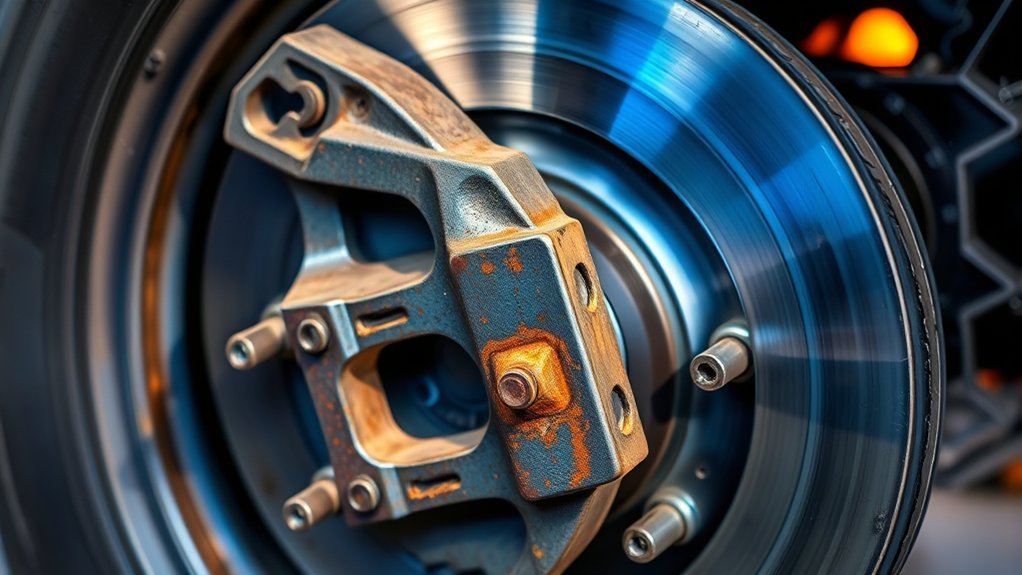
A sticking brake caliper on a Toyota Tundra can create constant brake drag, excess heat, rapid pad wear, pulling, and reduced fuel economy. Because similar symptoms can also come from a restricted brake hose, binding pads or retaining hardware, a parking-brake fault, a tire problem, or worn steering components, confirm the cause before replacing parts. Brake work is safety-critical, and caliper design, specifications, and service procedures vary by model year.
Quick Answer
A sticking Toyota Tundra brake caliper usually shows up as one wheel running much hotter than the opposite wheel, uneven pad wear, brake drag, a burning smell, or pulling. Stop driving if the wheel smokes, the pedal feels abnormal, or braking changes. First identify the brake design: many Tundra front applications use fixed multi-piston calipers, while floating-caliper hardware is used in other positions and applications. Diagnosis must separate a seized piston, pads or retaining hardware binding in a fixed caliper, guide-pin binding on a floating caliper, a restricted hose, and other sources of trapped hydraulic pressure.
Key Takeaways
- A hot wheel or uneven brake-pad wear is a useful clue, but neither proves that the caliper itself has failed.
- Do not rely on a universal brake-temperature cutoff. Compare the same location on the left and right wheels after the same drive.
- Identify the brake design before diagnosing hardware: a fixed multi-piston caliper does not use guide pins the same way a floating caliper does.
- Brake drag can come from a seized piston, binding pads or retaining hardware, frozen guide pins on a floating caliper, a restricted hose, or trapped hydraulic pressure.
- Bleeding removes air after hydraulic work; a complete brake-fluid exchange is a separate procedure.
- Use the exact Toyota manual or repair information for your Tundra’s model year, brake-fluid specification, torque values, bleeding sequence, and parking-brake procedure.
At a Glance
| Time Required | Inspection time varies with model year, brake design, corrosion, access, and the diagnostic steps required. Repair time depends on the confirmed fault. |
| Difficulty | Intermediate inspection; advanced repair because the braking system may need to be opened, bled, and verified. |
| Tools Needed | Wheel chocks, floor jack, correctly rated jack stands, lug tools, torque wrench, flashlight, infrared thermometer, brake-service tools, approved brake lubricant, and the specified brake fluid when hydraulic work is required. |
| Cost | Varies widely. The repair may involve only hardware and lubrication or may require a caliper, hose, pads, rotor, fluid service, and professional labor. |
Warning: Do not continue driving if a wheel is smoking, the truck pulls severely, brake fluid is leaking, the brake pedal feels soft or sinks, the brake warning light is on, or stopping performance has changed. Park away from combustible material and arrange a tow. Never work beneath a Tundra supported only by a jack.
Recognizing Symptoms of a Stuck Caliper
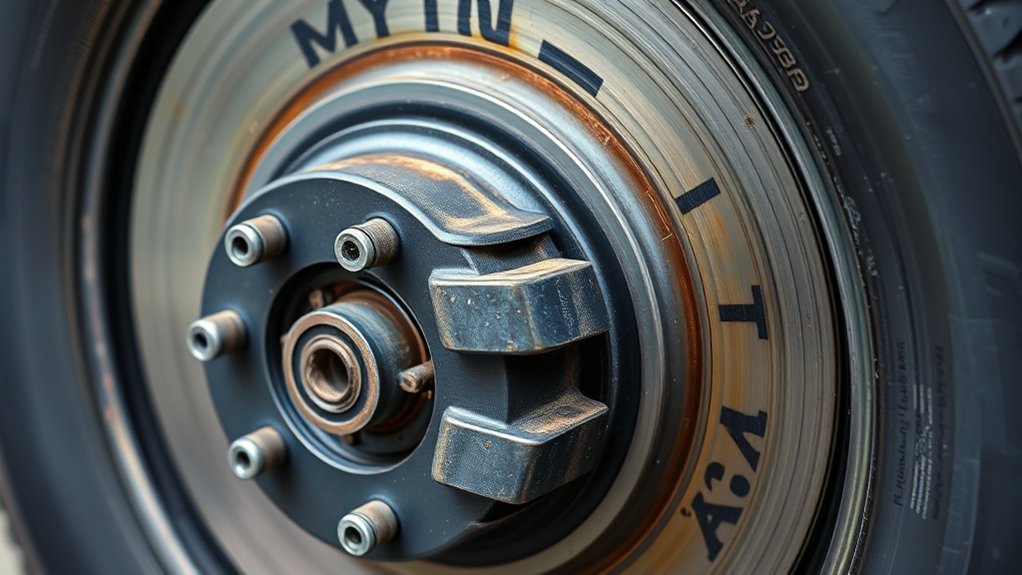
A sticking Toyota Tundra brake caliper may keep one or both pads in contact with the rotor after you release the brake pedal. The extra friction creates heat and wear, but the symptoms can vary depending on whether the piston, guide hardware, pads, hose, or another component is responsible.
- One wheel is much hotter than the matching wheel: After a short drive with minimal braking, a dragging brake may produce a noticeable side-to-side temperature difference.
- Burning or acrid odor: Overheated pads, paint, rubber, grease, or road debris may produce a strong smell. Smoke requires immediate shutdown and towing.
- Uneven pad wear: One inner pad, outer pad, or complete wheel position may wear substantially faster than the others.
- Vehicle pulling: The truck may drift while cruising or pull during braking, although tires, alignment, suspension, steering, and road crown can cause similar behavior.
- Reduced coasting or fuel economy: Constant brake drag makes the truck feel resistant to rolling.
- Discolored rotor or repeated brake dust: Blue or dark heat marks and unusually heavy dust on one wheel suggest excess friction.
- Noise: Scraping, grinding, or groaning can occur, but noise alone does not identify the caliper as the cause.
- Damaged dust boot: A torn piston boot or guide-pin boot, where applicable, can allow water and debris to enter and promote corrosion.
Pro Tip: Compare left and right brake temperatures at equivalent points instead of relying on one universal number. Driving conditions and measurement location can change the reading dramatically. Never touch a suspected hot wheel, rotor, or caliper with your hand.
Identify the Tundra Caliper Design Before Diagnosing It
Do not assume every Toyota Tundra brake caliper uses conventional slide pins. Toyota has used fixed multi-piston front calipers on Tundra applications, while rear brake construction and parking-brake systems vary by generation and model year. Toyota documented four-piston front calipers for the 2014 Tundra, and current-generation Tundra specifications also identify a fixed four-piston front caliper with a floating rear caliper.
On a fixed caliper, the caliper body does not move laterally on guide pins. Diagnosis focuses on individual piston movement, piston boots, pad fit, pad-retaining pins or clips, contact points, and hydraulic pressure. Pad-retaining pins that pass through a fixed caliper should not be confused with the guide or slide pins used to let a floating caliper move relative to its bracket.
On a floating caliper, restricted guide-pin movement can keep one pad loaded against the rotor or prevent the caliper from centering correctly. Inspect the actual guide pins, boots, bushings, pad fit, piston, and hose according to the applicable Toyota repair information.
Important: Identify the affected axle and exact brake assembly before ordering parts or applying lubricant. On a later Tundra with an electronic parking brake or electronically controlled brake system, confirm the model-specific Toyota service procedure before retracting a rear piston or opening the hydraulic system.
Common Causes of Sticking Calipers
A brake that will not release is not always caused by the caliper casting itself. Identifying the brake design and the exact part that is binding prevents unnecessary replacement and helps keep the problem from returning.
- Seized or corroded caliper piston: Corrosion, contamination, a damaged boot, or internal wear can prevent one or more pistons from retracting normally.
- Frozen guide pins on a floating caliper: A floating caliper must move on its guide pins. Rust, torn boots, incorrect lubricant, swollen rubber bushings, or dried lubricant can restrict that movement.
- Binding retaining hardware on a fixed caliper: Corroded pad-retaining pins, clips, springs, or pad contact areas can interfere with free pad movement even though the caliper itself does not slide.
- Brake pads binding in their contact points: Rust beneath hardware, bent hardware, paint buildup, burrs, or incorrect pads can prevent the pads from releasing correctly.
- Restricted flexible brake hose: A damaged hose may permit pressure to apply the brake but restrict the return of fluid when the pedal is released.
- Trapped hydraulic pressure: A hose, master-cylinder issue, ABS hydraulic fault, or another upstream condition can keep pressure at the wheel.
- Incorrect assembly or contamination: Twisted hoses, incorrectly installed hardware, contaminated friction surfaces, or unsuitable lubricant can create drag.
- Rear parking-brake problem: Depending on model year and equipment, rear drag may involve the parking-brake mechanism or its control system rather than the service-brake caliper alone.
- Corrosion and inactivity: Road salt, moisture, long storage, and infrequent brake movement can accelerate rust around pads, pins, brackets, retaining hardware, and pistons.
Note: Brake design and service procedures differ across Tundra generations. Select the exact year and model through the Toyota Manuals and Warranties portal, and use Toyota Technical Information System repair information for specifications and procedures.
[Amazon Products Picked for You]

[Vehicle Fitment]: Compatible with Toyota Sequoia 2008-2015, Tundra 2007-2015---Front Left and Right, Driver and Passenger Side

Kit Includes: 2 Front Performance Brake Calipers; 2 Rear Performance Brake Calipers
Diagnosing Sticking Brake Caliper Problems
Start with the least invasive checks and stop whenever the truck is unsafe to operate. A symptom may point toward one wheel, but the final diagnosis should identify the brake design and determine whether the drag is mechanical or hydraulic.
| What You Find | What It Suggests | Next Direction |
|---|---|---|
| One matching wheel repeatedly runs much hotter | Persistent friction at that corner | Compare wheel drag, pads, piston movement, hardware, hose, bearing, and parking brake |
| Drag releases when a trained technician opens the bleeder | Hydraulic pressure is being trapped upstream | Diagnose the flexible hose and other upstream hydraulic components |
| Drag remains after pressure is released | Mechanical binding is more likely | Inspect piston, pad fit, fixed-caliper retaining hardware, floating-caliper guides, rotor, bearing, and parking brake |
| Rear wheel stays applied or parking-brake warnings appear | Parking-brake or electronically controlled brake involvement may be possible | Use the exact model-year Toyota diagnostic and service procedure |
[Amazon Products Picked for You]

Complete Tool Set: Orion Motor Tech's 24-piece brake caliper compression tool set includes 2 retaining plates, 2 thrust bolt assemblies, 2 brake caliper hangers, and 18 adapters, easily servicing your brakes without damage

[High-Quality Materials]: Caliper pin dust covers are made of high-quality rubber, making them sturdy, durable, resistant to wear and deformation, and providing excellent sealing for long-term use.

Direct replacement - this disc brake caliper repair kit is designed to match the original components required to repair the caliper and restore proper operation of disc brakes on specified vehicles
1. Check for an Immediate Safety Hazard
Do not road-test the truck if there is smoke, a fluid leak, severe pulling, grinding from metal-to-metal contact, a soft or sinking pedal, a brake warning, or clearly reduced stopping ability. Have it towed for inspection.
2. Compare the Wheels After a Controlled Drive
If the truck is safe enough for a brief test, drive a short route while avoiding heavy or repeated braking. Park on a noncombustible surface, secure the truck, and compare corresponding wheel or rotor temperatures with an infrared thermometer. A substantial side-to-side difference indicates excess friction but does not reveal the exact failed part.
3. Raise and Support the Truck Correctly
Chock the wheels, use the lifting points specified for the model, and place the truck on properly rated jack stands. Never crawl beneath or work beside a heavy pickup supported only by a hydraulic jack.
4. Check Wheel Rotation
With the brake released and the transmission and parking-brake condition set according to the proper service procedure, rotate the suspect wheel by hand. Some pad contact is normal, but one wheel should not be dramatically harder to turn than its opposite-side match.
5. Inspect Pads, Rotor, Pistons, Hardware, and Boots
- Compare inner and outer pad thickness.
- Look for taper wear, cracking, glazing, crumbling, or heat damage.
- Inspect the rotor for scoring, heat spots, cracks, and discoloration.
- Identify whether the caliper is fixed or floating before evaluating pin or guide movement.
- On a fixed caliper, inspect piston boots, pad-retaining hardware, and pad contact points.
- On a floating caliper, inspect guide pins, guide-pin boots, pad fit, and caliper movement.
- Confirm that the flexible hose is not twisted, kinked, rubbing, or visibly damaged.
6. Separate Mechanical Drag From Trapped Pressure
A trained technician may momentarily open the caliper bleeder while the wheel is dragging. If the brake releases immediately, hydraulic pressure is being trapped upstream, and the hose or another hydraulic component requires diagnosis. If opening the bleeder does not release the wheel, the piston, pads, fixed-caliper retaining hardware, floating-caliper guides, rotor, bearing, or parking-brake mechanism is more likely binding.
Caution: Opening a bleeder creates the possibility of air entry, fluid loss, paint damage, and reduced braking. The system must be closed, inspected, filled with the correct fluid, and bled according to the model-specific procedure before the truck is driven.
7. Rule Out Conditions That Mimic a Stuck Caliper
Check tire pressure, tire damage, alignment, wheel-bearing play or roughness, steering and suspension wear, rotor condition and runout, dust-shield contact, and parking-brake operation. A pull, vibration, or difficult-to-turn wheel is not enough by itself to condemn a brake caliper.
How to Resolve Sticking Caliper Issues Effectively
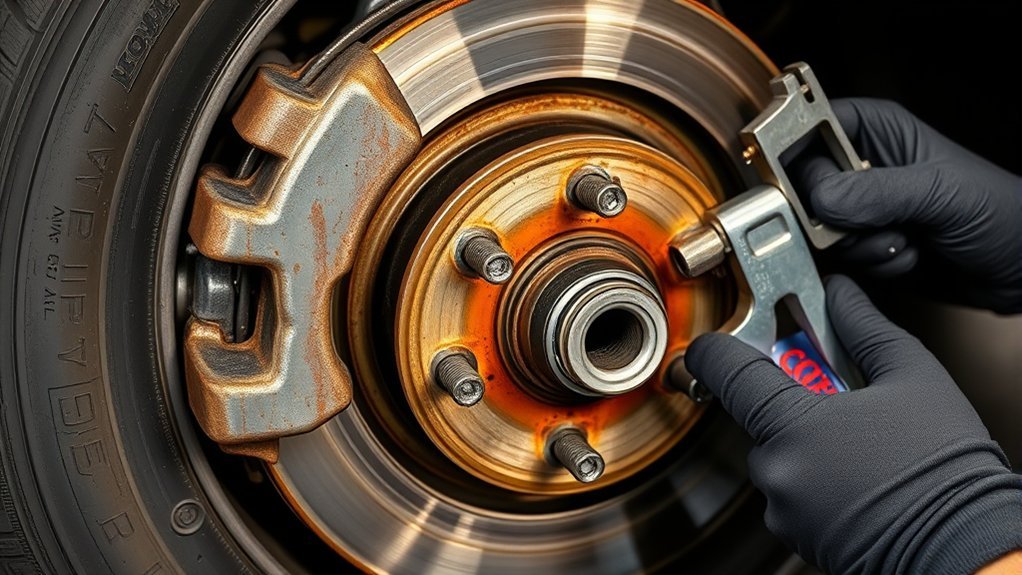
The correct repair depends on the diagnosis. Cleaning and lubricating hardware will not restore a damaged piston or caliper, and replacing a caliper will not correct pressure trapped by a restricted brake hose.
Inspect Caliper Components Thoroughly
- Caliper pistons: Inspect applicable piston boots for leakage, tears, corrosion, or damage. A piston that is corroded, leaking, damaged, or difficult to retract with the correct procedure may require caliper replacement or professional rebuilding.
- Fixed-caliper retaining hardware: Inspect pad-retaining pins, springs, clips, and pad contact areas for corrosion, deformation, or binding. Replace damaged hardware rather than forcing it back into service.
- Floating-caliper guide pins: Where fitted, remove and inspect the guide pins for corrosion, pitting, bent surfaces, dried lubricant, damaged boots, or swollen rubber components.
- Brake pads and contact points: Clean rust and debris from specified pad-support or contact areas without removing excessive material. Install the correct hardware and verify that the pads fit and move as specified.
- Flexible brake hose: Replace a hose that is restricted, cracked, abraded, swollen, twisted, or otherwise damaged. Route it exactly as specified so steering and suspension movement cannot pull or rub it.
- Rotor: Measure thickness and evaluate runout and heat damage using the applicable specification. Replace a rotor that is cracked, below minimum thickness, or too heat-damaged to remain serviceable.
Use only brake-specific lubricant approved for the exact pins, boots, bushings, shims, or contact points being serviced. Apply it only where the Toyota repair information or component manufacturer specifies.
Warning: Never place lubricant, penetrating oil, regular WD-40, anti-seize, brake fluid, or cleaner residue on the brake-pad friction material or rotor friction surface. Contaminated pads generally require replacement.
Replace Affected Parts Promptly
Replace a failed caliper, restricted hose, damaged boot, corroded guide or retaining hardware, or other confirmed defective component rather than attempting to hide the symptom with extra lubricant. If one wheel has overheated, inspect every related component before reassembly.
- Brake pads: Replace pads as an axle set so both wheels on the axle use matching friction material and thickness.
- Rotors: Evaluate both rotors on the axle. Replacement or machining depends on thickness, condition, runout, heat damage, and the applicable service limit.
- Calipers: Replacing the opposite-side caliper may be sensible when both units are similarly aged, corroded, contaminated, or covered by a paired recommendation. It is not a universal requirement for every Tundra repair.
- Hoses: A confirmed internal restriction requires hose replacement even when the hose looks normal externally.
- Hardware and boots: Replace distorted, heavily corroded, swollen, or torn components.
Bleed the Brake System Correctly
If a hose, caliper, line, or other hydraulic component is opened, bleed the brake system using the model-specific sequence and procedure. A complete fluid exchange may also be appropriate when the fluid is contaminated, incorrect, badly discolored, overheated, or due according to the applicable maintenance guidance.
Use only the fluid grade specified for the exact truck. 49 CFR 571.116 requires DOT brake-fluid packaging to instruct users to follow the vehicle manufacturer’s recommendations when adding brake fluid and to keep brake fluid clean and dry. See 49 CFR 571.116 for the federal performance and labeling requirements.
Complete the Post-Repair Safety Checks
- Confirm that every fitting, bleeder, hose connection, and caliper is dry and leak-free.
- Verify that the pedal becomes firm before moving the truck.
- Check the brake-fluid level with the truck positioned as specified.
- Torque caliper, bracket, hose, and wheel fasteners to the exact model-year specifications.
- Confirm that hoses are routed correctly through the full steering and suspension range.
- Verify that each wheel rotates normally when the brake is released.
- Follow the brake-pad or Toyota bedding procedure when applicable.
- Perform an initial low-speed test in a controlled area before normal road use.
- Recheck for leaks, abnormal heat, odor, pulling, and warning lights after the test.
Is It Safe to Drive With Stuck Calipers?
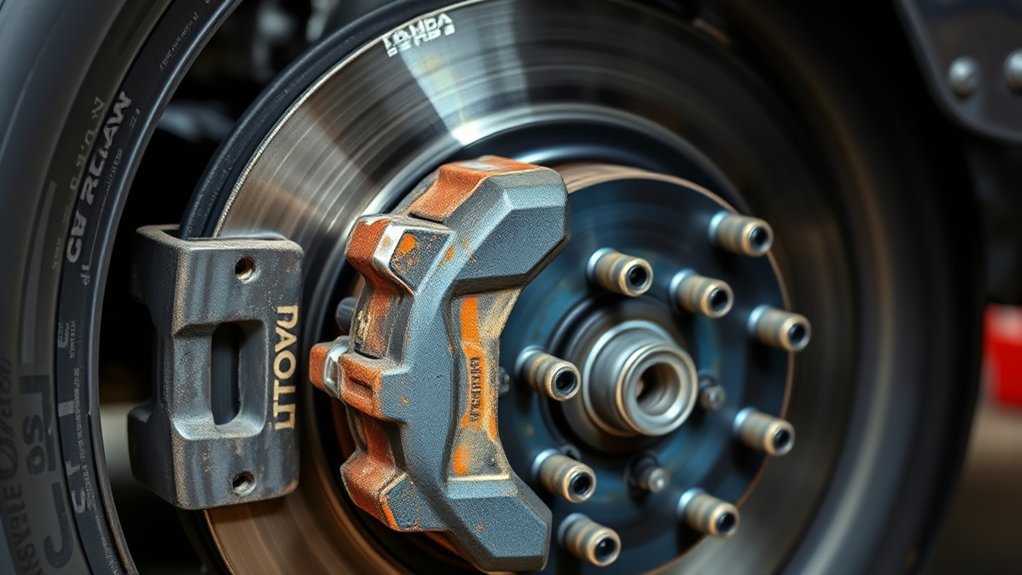
Driving with a confirmed or strongly suspected sticking brake is not recommended. Constant friction can overheat the pads, rotor, caliper, fluid, tire, wheel bearing, and nearby components. It can also change how the truck stops and may cause the affected brake to lose effectiveness after overheating.
Stop and arrange a tow when you notice any of the following:
- smoke or a strong burning odor from a wheel;
- a wheel that is visibly or intensely hot;
- severe pulling or difficulty keeping the truck straight;
- a soft, sinking, unusually hard, or changing brake pedal;
- fluid leaking near a wheel or beneath the truck;
- metal-on-metal grinding;
- a brake-system warning light;
- reduced stopping ability or a longer stopping distance.
A mildly warm wheel without other symptoms is not enough to confirm a stuck caliper, but a repeated and significant difference between matching wheels deserves prompt inspection.
[Amazon Products Picked for You]

【Applicable Vehicle Models】Our brake caliper pin dust cover kit is compatible with Honda Civic (2001-2023), Chevrolet Malibu (2004-2012), Pontiac G5 (2007-2010), and many other cars and trucks. Please refer to the product details or check your vehicle specifications before purchasing to ensure a perfect match

PG Plus uses materials, which perform to Original Equipment specifications or better

Quality Brake Parts
How to Maintain Brakes to Prevent Caliper Issues
Regular inspection cannot prevent every internal failure, but it can catch damaged boots, corrosion, restricted movement, and uneven wear before a brake overheats.
Regular Brake Inspections
- Inspect during tire service: When the wheels are removed, compare pad thickness, rotor condition, boots, hoses, and hardware on both sides.
- Watch for uneven wear: Inner-to-outer or left-to-right differences can reveal binding before the pads are completely worn.
- Check the correct movement points: Verify pad and piston operation on fixed calipers and guide-pin/caliper movement on floating designs whenever the brakes are serviced.
- Repair torn boots early: A damaged boot allows moisture and debris to reach a piston or guide mechanism.
- Address corrosion: Trucks operated in road-salt regions need especially careful inspection of brake hardware, hoses, lines, and mounting surfaces.
- Use the correct fluid: Follow the exact Toyota manual instead of assuming that every Tundra uses the same fluid or service procedure.
Quality Brake Components
Use brake pads, calipers, hoses, seals, boots, hardware, fluid, and lubricant that meet the specifications for the exact truck. Poorly fitting pads, incorrect boots, unsuitable grease, or low-quality hardware can restrict movement or fail under brake-system temperatures.
Do not reuse severely corroded clips or retaining hardware, torn boots, rounded fasteners, contaminated pads, or damaged hoses to reduce the repair cost. The braking system must operate freely and consistently on both sides of the axle.
Check Manuals and Open Recalls
Before ordering parts or beginning work, identify the Tundra’s model year, drivetrain, trim, axle configuration, and brake package. Use the official Toyota manual portal for owner information and Toyota Technical Information System for repair procedures.
Brake drag is not automatically a recall condition, but checking the VIN helps identify any open safety recall or service campaign that may apply. Use the Toyota recall lookup and the NHTSA recall lookup.
Related Guides
Frequently Asked Questions
What are the symptoms of a sticking Toyota Tundra brake caliper?
Common clues include one wheel running much hotter than its opposite-side match, uneven pad wear, reduced coasting, a burning odor, excess brake dust, rotor discoloration, and pulling. None of these symptoms proves that the caliper itself has failed, so inspect the brake design, pads, piston, applicable retaining or guide hardware, hose, rotor, and parking-brake system.
What causes a brake caliper to stay applied after the pedal is released?
Possible causes include a seized piston, pads or retaining hardware binding in a fixed caliper, frozen guide pins on a floating caliper, a restricted flexible hose, trapped hydraulic pressure, incorrect hardware, unsuitable lubricant, or a rear parking-brake fault. The correct repair depends on which component is preventing release.
How do you get a sticking brake caliper to release?
Do not treat forced movement as a completed repair. Identify the caliper design and diagnose whether a piston, pad, retaining or guide hardware, hose, hydraulic system, or parking brake is responsible. Replace damaged components, clean and lubricate only approved contact points, bleed the system after hydraulic work, and complete all leak, torque, pedal, and road-test checks.
Can an internally damaged brake hose mimic a seized caliper?
Yes. A restricted hose may allow hydraulic pressure to apply the brake but slow or block fluid return. A trained technician can use pressure-release testing and other service-manual procedures to distinguish trapped pressure from a mechanically binding brake.
Do Toyota Tundra brake calipers have to be replaced in pairs?
Not in every case. The opposite caliper should be inspected and may also deserve replacement when both are similarly aged, corroded, contaminated, or covered by a paired recommendation. Brake pads should be replaced as an axle set, and both rotors must be evaluated for serviceability.
Is it okay to spray regular WD-40 on brake calipers?
No. Do not spray regular penetrating oil or general-purpose lubricant onto the rotor, pads, piston boot, or caliper hardware as a brake repair. Use brake-specific cleaner and only the lubricant approved for the exact pins, boots, bushings, shims, and contact points specified for that brake design. Keep every friction surface clean and dry.
Can you drive a Toyota Tundra with a sticking caliper?
Driving is not recommended because the brake may overheat and stopping behavior can change. If there is smoke, a strong burning odor, severe pulling, a leak, an abnormal pedal, grinding, a warning light, or reduced braking, stop driving and arrange a tow.
Conclusion
A sticking Toyota Tundra brake should be treated as a safety problem, not simply an inconvenience. First identify the affected corner and the brake design. Then separate trapped hydraulic pressure from mechanical binding in a piston, pad, fixed-caliper retaining hardware, floating-caliper guide mechanism, rotor, bearing, or parking brake. Confirm the exact model-year Toyota procedure, replace damaged parts, bleed the system correctly when opened, and verify pedal feel, torque, leaks, wheel movement, and abnormal heat before returning the truck to normal use.
Sources
- Toyota Manuals and Warranties — official model- and year-specific owner manuals, warranty guides, and maintenance information.
- Toyota Technical Information System — official Toyota repair procedures, specifications, wiring information, and technical publications.
- Toyota USA Newsroom — 2014 Tundra specifications — Toyota documentation of the four-piston front brake-caliper configuration for the 2014 Tundra.
- Toyota Australia — Tundra specifications — Toyota specification data identifying fixed four-piston front and floating single-piston rear calipers on the current-generation Tundra evaluated for Australia.
- 49 CFR 571.116 — Motor Vehicle Brake Fluids — federal brake-fluid performance, packaging, labeling, and contamination requirements.
- Toyota Safety Recall and Service Campaign Lookup — VIN- and plate-based Toyota campaign information.
- National Highway Traffic Safety Administration Recall Lookup — federal VIN-based safety-recall information.