A new Toyota Tundra does not need an extreme or complicated break-in ritual. It needs normal, varied driving without full-throttle acceleration, extreme speeds, prolonged high engine loads, or extended constant-speed cruising. The exact instructions can differ by model year and market, so the owner’s manual for your truck always takes priority.
Quick Answer
Treat the first 1,000 miles as the main Toyota Tundra break-in window. Avoid full-throttle acceleration, extreme speeds, prolonged low-gear operation, and extended constant-speed driving. Avoid sudden stops for roughly the first 200 miles and towing for the first 500 miles. Your model-year owner’s manual takes priority.
Key Takeaways
- Use gentle to moderate acceleration and vary your road speed during the first 1,000 miles.
- Do not invent a fixed 3,000- or 4,000-RPM limit unless your exact owner’s manual specifies one.
- Avoid towing during the first 500 miles and keep heavy payloads to a minimum during the initial break-in period.
- An extra oil change at 500, 1,000, or 2,500 miles is not automatically required; follow the model-year maintenance guide.
- Check Toyota and NHTSA recall tools using the truck’s VIN because campaigns vary by model year and production date.
At a Glance
| Time Required | The first 1,000 miles, with additional precautions during the first 200 and 500 miles |
| Difficulty | Easy |
| Tools Needed | Owner’s manual, odometer, and an accurate tire-pressure gauge |
| Cost | No added cost beyond normal fuel and manufacturer-scheduled maintenance |
Understanding the Importance of the Toyota Tundra Break-In Period

The break-in period is a short phase of controlled, everyday driving. It gives the engine, transmission, brakes, tires, differential, and other moving parts time to begin operating together under a range of normal temperatures and loads.
That does not mean you must drive unusually slowly or keep the engine at one exact RPM. In fact, holding one speed for a long time is one of the habits to avoid. The goal is to use varied but moderate acceleration, braking, and road speeds without subjecting the truck to unnecessary extremes.
Toyota publishes separate manuals for different model years, markets, and configurations. Before relying on any generic mileage number, open the Toyota Manuals and Warranties portal and select the year and model that match your truck.
Note: The i-FORCE MAX hybrid system does not eliminate the need to follow the break-in precautions in the applicable owner’s manual. Because the hybrid system may start and stop the gasoline engine automatically, focus on avoiding aggressive accelerator inputs and excessive vehicle loads rather than trying to control every engine start.
Key Break-In Recommendations for Your Toyota Tundra
The simplest way to understand the Toyota Tundra break-in period is to divide it into three overlapping phases. The exact wording may vary by year, but this timeline reflects the practical precautions owners commonly need to verify in their manual.
| Mileage | Main Precautions | Practical Approach |
|---|---|---|
| First 200 miles | Avoid unnecessary sudden stops and repeated hard braking. | Leave extra following distance and brake progressively when traffic allows. |
| First 500 miles | Do not tow a trailer; avoid unnecessary maximum payloads and severe off-road use. | Use the truck unloaded or lightly loaded for ordinary local and mixed-road driving. |
| First 1,000 miles | Avoid extreme speeds, sudden full-throttle acceleration, extended low-gear driving, and prolonged constant-speed operation. | Vary speed and load naturally while using gentle to moderate acceleration. |
[Amazon Products Picked for You]

Checklist caddy for electric pallet truck


Perfect for truck drivers to conduct thorough pre-trip vehicle inspections.
Vary Your Driving Speeds
Do not set the cruise control and hold one highway speed for hours during the first part of the break-in period. Instead, combine city streets, secondary roads, and shorter highway segments when practical. Natural changes in traffic and terrain provide varied engine speed and load without forcing the truck.
You do not need to make abrupt speed changes. Smoothly accelerate, maintain a speed for a while, ease off, and allow normal transmission shifts. If a long highway trip is unavoidable, periodically change your cruising speed within the posted limit and take normal rest stops.
Avoid High RPMs Without Inventing a Fixed Limit
The original article gave both 3,000- and 4,000-RPM limits, but a generic Tundra guide should not create a universal ceiling. Engines, transmissions, axle ratios, and calibrations differ across model years. Use the tachometer as a general reminder to avoid racing the engine, repeated kickdown acceleration, and sustained operation near the upper end of the rev range.
| Driving Situation | Recommendation | Reason |
|---|---|---|
| Cold engine | Drive gently until normal operating temperature begins to build. | Avoids unnecessary load before fluids have circulated and warmed. |
| Normal acceleration | Use light to moderate throttle and allow ordinary automatic shifts. | Provides useful variation without excessive stress. |
| Merging or avoiding danger | Use the acceleration needed to drive safely. | Safety takes priority over break-in preferences. |
| Repeated high-RPM operation | Avoid during the initial 1,000 miles. | Prevents unnecessary sustained heat and load. |
Gentle Acceleration Is Recommended
Use smooth accelerator inputs and let the transmission shift normally. You may use enough power to merge, climb a hill, or avoid a hazard, but avoid flooring the accelerator merely to test the truck’s performance.
- Increase speed progressively instead of launching from a stop.
- Do not repeatedly force downshifts for maximum acceleration.
- Avoid unnecessary high-speed runs or performance testing.
- Use Eco mode if you prefer its softer accelerator response, but remember that a drive mode does not replace the manual’s break-in precautions.
- Continue varied, moderate driving throughout the first 1,000 miles.
Avoid Towing and Heavy Loads During the Initial Period
Do not tow a trailer during the first 500 miles unless the owner’s manual for your exact model states otherwise. Heavy payloads, deep sand, steep off-road climbs, and repeated high-load hill driving can place similarly demanding loads on the powertrain, cooling system, brakes, and driveline.
Warning: Never sacrifice road safety to preserve a break-in routine. Accelerate firmly or brake hard when needed to avoid a collision. The precautions apply to unnecessary aggressive driving, not emergency maneuvers.
Top Driving Mistakes to Avoid During Break-In
Most break-in mistakes come from placing a sustained or repeated high load on a new truck. A single brief event is unlikely to define the truck’s future, but repeatedly using full power, towing early, or holding one speed for many hours defeats the purpose of a controlled initial period.
Repeated High-RPM Acceleration
Repeated full-throttle starts, aggressive passing runs, and deliberate high-RPM testing are unnecessary during the first 1,000 miles. Apply power progressively and let the automatic transmission select its gears without repeatedly forcing a kickdown.
- Avoid flooring the accelerator from a stop.
- Do not use the break-in period for acceleration testing.
- Allow the truck to warm through ordinary driving before requesting heavier power.
- Use the power needed for safe merging or passing.
- Resume more demanding use progressively after the initial period rather than changing driving style abruptly at exactly 1,000 miles.
Constant-Speed Driving
Extended constant-speed driving limits the natural variation in engine speed and load that occurs during mixed driving. Cruise control is not mechanically harmful by itself, but it can encourage hours of nearly identical operation.
For an unavoidable road trip, vary your speed modestly while obeying traffic laws. Stop at normal intervals, avoid racing the engine after each stop, and do not deliberately shift between extremes.
Towing or Hauling Too Soon
Do not use light towing as a break-in technique. Wait until the minimum towing restriction in the applicable manual has passed, then confirm the trailer’s weight, tongue weight, hitch setup, tire pressures, brake controller settings, and required towing equipment.
What to Do If You Already Drove Hard or Towed
Do not panic after one hard acceleration, emergency stop, or short period at a steady speed. Return to moderate, varied driving and watch for warning lights, fluid leaks, overheating, unusual vibration, smoke, or abnormal noises.
If the truck was heavily overloaded, overheated, displayed a warning, or developed an abnormal sound, stop using it under heavy load and arrange an inspection. Do not order an oil change or engine teardown solely because of one ordinary merge or passing maneuver.
Oil Change Guidelines for New Toyota Tundra Owners
A special 500-, 1,000-, or 2,500-mile oil change is not automatically required just because the truck is new. Toyota’s scheduled-maintenance requirements depend on the model year, powertrain, time, mileage, and operating conditions. Follow the Owner’s Warranty and Maintenance Guide supplied for your vehicle.
An owner may choose an earlier oil change for personal preference, but that choice should not be described as a manufacturer requirement or as a proven way to prevent engine failure. An early service may be appropriate when directed by Toyota, when the oil level is abnormal, after contamination, after certain repairs, or when a qualified technician identifies a specific reason.
- Check the engine-oil level as instructed in the owner’s manual.
- Use the viscosity printed on the oil-fill cap and specified in the manual.
- Use oil meeting the required quality and performance specification.
- Do not assume every Tundra uses 0W-16, 0W-20, or any other single viscosity.
- Use the severe-service schedule when the truck’s operating conditions meet Toyota’s definition.
Pro Tip: Photograph the oil-fill cap, save the maintenance guide digitally, and keep service receipts. This makes it easier to confirm the correct oil and document that maintenance was completed on time.
[Amazon Products Picked for You]


And Vehicle Specific

Advanced protection against the four main causes of engine breakdown: wear friction heat and deposits
How Your Driving Style Impacts Your Tundra’s Performance
Your driving style affects fuel use, brake wear, tire wear, operating temperature, and the loads placed on the powertrain. During break-in, the best approach is moderate rather than excessively timid: drive normally, vary speed, and avoid unnecessary extremes.
| Driving Style | Break-In Impact |
|---|---|
| Gentle, varied driving | Provides changing speed and load without unnecessary stress. |
| Constant highway speed | Reduces variation; break up long stretches and adjust speed when practical. |
| Eco mode | May soften accelerator response, but it is optional and does not replace proper driving habits. |
| Full-throttle or high-speed testing | Creates unnecessary load and should wait until after the initial period. |
| Light towing | Should begin only after the manual’s initial no-towing mileage has passed. |
After the first 1,000 miles, increase demanding use progressively. There is no need to switch instantly from extremely gentle driving to maximum towing, heavy off-roading, or repeated full-throttle acceleration.
Toyota Tundra Owner Break-In Stories: What to Trust
Owner forums contain many break-in routines. Some owners change the oil at 500 or 1,000 miles, while others wait for the scheduled service. Some recommend extremely gentle driving, while others promote aggressive acceleration. These experiences can be useful for identifying questions, but they do not establish what Toyota requires or prove that one routine caused a truck’s later reliability.
Use the owner’s manual—not an unsourced mileage ritual—as the deciding authority for your truck’s break-in and maintenance requirements.
- Treat owner reports as anecdotes rather than controlled evidence.
- Confirm every mileage limit in the manual for your model year.
- Do not assume an optional early oil change is mandatory.
- Avoid aggressive “hard break-in” techniques that conflict with manufacturer guidance.
- Keep records of scheduled maintenance and any dealer inspection.
Understanding Factory Break-In Practices for Your Tundra
Vehicle manufacturers perform production checks before delivery, but owners should not assume those checks complete the break-in process. Toyota’s public owner instructions still apply after the truck leaves the factory.
Claims about exact dyno duration, factory heat cycles, or special break-in oil require manufacturer documentation. Without that documentation, they should not be used to justify an early oil change or aggressive driving.
| Aspect | What Owners Should Know |
|---|---|
| Production testing | Quality checks before delivery do not cancel the owner-manual break-in precautions. |
| Heat cycling | Exact factory procedures are not a substitute for normal varied driving after purchase. |
| Factory-fill oil | Do not drain it early based only on an unsupported claim that it is or is not special break-in oil. |
| Owner action | Follow the applicable manual and maintenance guide. |
Maintaining Your Tundra Post-Break-In for Longevity and Performance
Once the initial break-in period is complete, ordinary scheduled maintenance matters more than any special ritual. Use the time and mileage intervals in the Warranty and Maintenance Guide, and shorten or modify service intervals only when Toyota’s severe-use conditions apply.
A documented, model-specific maintenance schedule is more valuable than an unsourced universal oil-change interval.
- Check engine oil, coolant, brake fluid, tires, and visible leaks regularly.
- Rotate tires and complete inspections at the intervals listed for the truck.
- Use the exact engine-oil viscosity and specification listed in the manual and on the oil-fill cap.
- Follow additional maintenance requirements for towing, dusty roads, repeated short trips, extensive idling, or other severe conditions.
- Address warning lights, overheating, oil-pressure warnings, unusual sounds, smoke, or fluid leaks promptly.
- Review available coverage through ToyotaCare and Toyota maintenance plans.
- Check the truck’s VIN through the Toyota recall and service-campaign lookup and the NHTSA recall database.
[Amazon Products Picked for You]

Compatible with Toyota Tundra (2WD and 4WD) 2007-2019

Toyota Lexus Transfer & Differential Service Gasket Kit
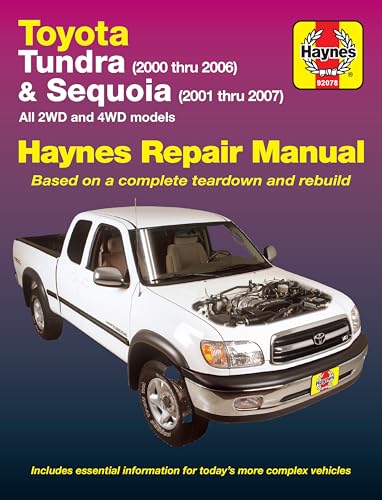
Complete Repair Coverage: Step-by-step repair procedures specific to your vehicle — from routine maintenance like oil changes and air filter replacement to complex engine and transmission repairs
Frequently Asked Questions
How do you break in a new Toyota Tundra?
Drive normally but moderately. Vary your speed, accelerate smoothly, avoid unnecessary high-speed or full-throttle operation, avoid prolonged constant-speed cruising, limit abrupt braking during the earliest miles, and do not tow until the minimum mileage in your model-year manual has passed.
Does Toyota recommend a break-in period?
Toyota owner’s manuals include precautions for new vehicles. The exact mileage and wording can vary, so select your truck’s model year in Toyota’s manuals portal rather than relying on a rule copied from another Toyota model or Tundra generation.
What is the biggest problem with a Toyota Tundra?
There is no single problem that applies to every Tundra. Reliability concerns and campaigns vary by generation, model year, engine, production date, and VIN. Check Toyota’s campaign lookup and NHTSA’s recall database, then have persistent symptoms diagnosed rather than assuming they are normal break-in behavior.
What is the proper engine break-in procedure?
Use smooth, varied driving and avoid repeated full-throttle acceleration, extreme speeds, prolonged low-gear operation, and long periods at one engine or road speed. Do not impose a universal RPM limit unless it appears in the owner’s manual for your exact truck.
Can you use cruise control during the Tundra break-in period?
Brief use is unlikely to create a problem, but avoid using cruise control to maintain exactly the same speed for a long trip during the first 1,000 miles. When practical, vary your speed modestly and take normal rest stops.
Should you change a new Tundra’s oil at 500 or 1,000 miles?
Not automatically. Some owners prefer an early oil change, but it should not be presented as a Toyota requirement unless the applicable maintenance guide, a service campaign, or a qualified technician specifically calls for it. Follow the official time and mileage schedule.
Conclusion
A proper Toyota Tundra break-in is straightforward: drive moderately, vary your speed, avoid unnecessary high-load operation, delay towing for the initial period, and follow the manual written for your exact truck. Do not rely on conflicting RPM caps, universal oil intervals, or unsupported wear statistics. After the first 1,000 miles, increase demanding use progressively and keep the truck on its official maintenance schedule.
Sources
- Toyota Manuals and Warranties — model-year owner’s manuals and Warranty and Maintenance Guides.
- ToyotaCare and Maintenance Plans — Toyota factory-scheduled maintenance information and coverage.
- Toyota Safety Recall and Service Campaign Lookup — VIN- and license-plate-based campaign information for eligible vehicles.
- National Highway Traffic Safety Administration Recall Lookup — U.S. recall, investigation, complaint, and manufacturer-communication information.
- American Petroleum Institute Oil Categories — engine-oil performance classifications and current category information.