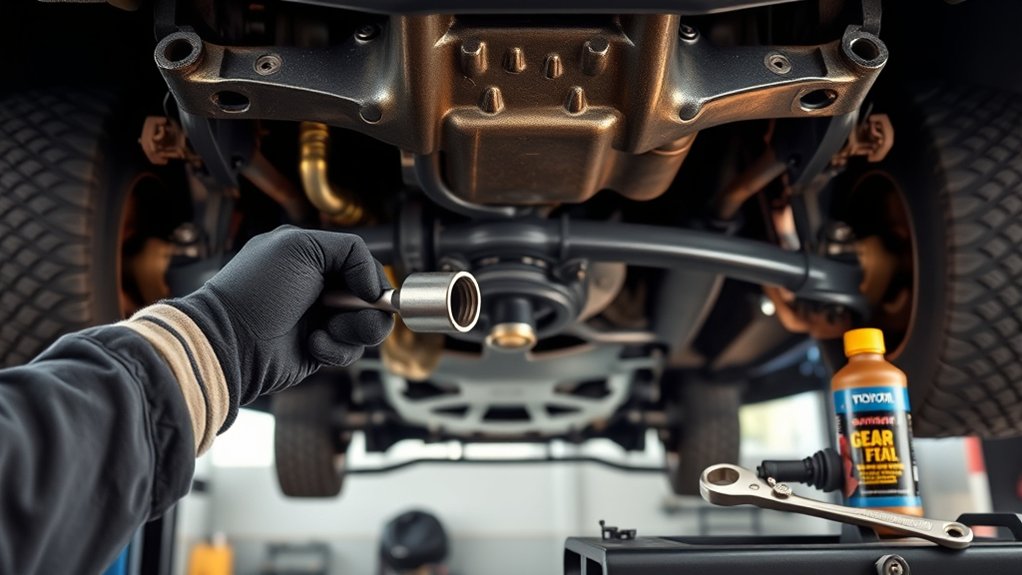
For a 2026 U.S.-market Toyota Tundra 4WD, Toyota schedules transfer-case oil inspection at 30,000-mile/36-month checkpoints under normal use and replacement at those 30,000-mile intervals when the truck is driven primarily on dirt or dusty roads, or primarily while towing, using a car-top carrier, or under heavy vehicle loading. Older Tundras can use different fluid specifications and service details, so the maintenance guide and Owner’s Manual for the exact model year control.
Last updated: September 19, 2026 — rechecked against Toyota maintenance schedules, model-year owner specifications, and current fluid-manufacturer guidance.
Quick Answer
For a 2026 Tundra 4WD, inspect the transfer case oil every 30,000 miles or 36 months through the scheduled maintenance range. Replace it at those same 30,000-mile checkpoints when the truck is driven primarily on dirt or dusty roads, or primarily while towing, using a car-top carrier, or under heavy vehicle loading. Do not apply that interval blindly to older model years.
Key Takeaways
- The 30,000-mile interval applies to qualifying severe use, not automatically to every Tundra.
- A transfer case is fitted to 4WD-equipped trucks; ordinary 2WD Tundras do not use this service item.
- Fluid type changes by generation: a 2015 Tundra 4WD owner specification lists Toyota Genuine Transfer Gear Oil LF SAE 75W at 1.6 qt. (1.5 L), while 2022 and 2026 4WD owner specifications list Toyota Genuine ATF WS at 2.17 qt. (2.05 L).
- Remove the fill plug before opening the drain plug so you do not empty a transfer case that cannot be refilled.
- Leaks, water contamination, metallic flakes, burnt odor, or abnormal 4WD operation require prompt inspection.
At a Glance
| Time Required | About 45–90 minutes, including setup, draining, refilling, and a leak check |
| Difficulty | Moderate; the truck must remain level and the plugs must be tightened to the correct specification |
| Tools Needed | Drain pan, correct plug socket or hex bit, ratchet, torque wrench, fluid pump, wheel chocks, gloves, eye protection, shop towels, and rated support equipment if lifting is required |
| Cost | The cost of the model-specific fluid, two verified sealing gaskets, and any required tools; professional labor varies by location |
Why You Should Care About Transfer Case Fluid Changes
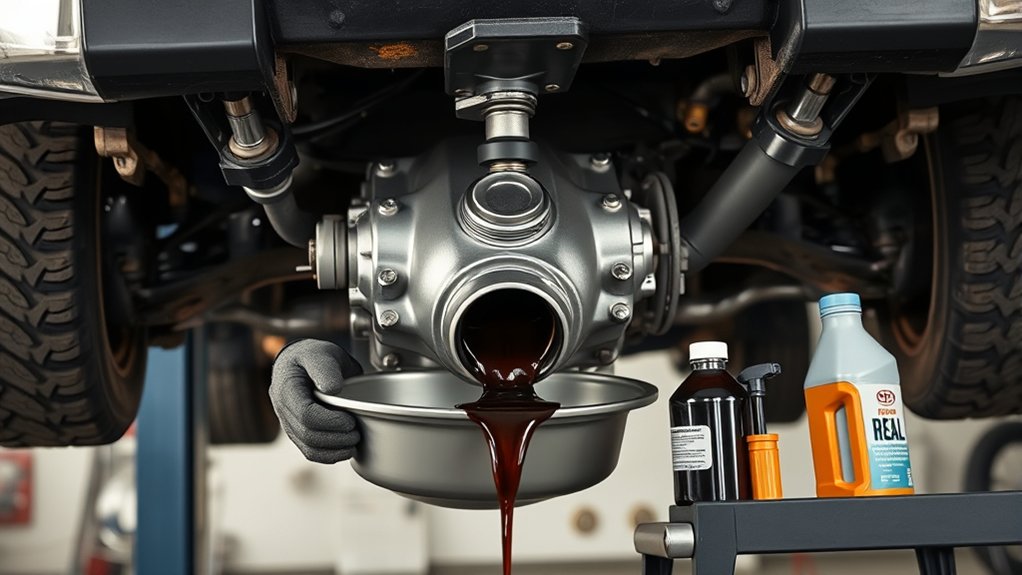
The transfer case sends engine torque to the front and rear axles when four-wheel drive is engaged. Its lubricant reduces friction, carries heat away from loaded surfaces, and helps protect internal gears, bearings, shafts, and chains.
As the oil ages, it can collect fine wear material and contamination. Towing, heavy loading, long periods on dirt roads, repeated water crossings, and sustained four-wheel-drive use can increase the stress placed on the lubricant.
For recent Toyota Tundras, the widely cited 30,000-mile transfer-case interval is a severe-service requirement—not a universal rule for every truck.
Replacing the correct oil at the applicable interval can remove accumulated contaminants and restore the lubricant’s protective properties. It cannot repair an existing leak, damaged bearing, stretched chain, faulty actuator, or another mechanical problem, so unusual noises or 4WD warnings should be diagnosed rather than treated with fluid alone.
Recommended Transfer Case Service Intervals for Your Toyota Tundra
The 2026 Toyota Tundra Warranty & Maintenance Guide lists transfer-case oil as a normal inspection item at 30,000-mile/36-month checkpoints and as a replacement item at those checkpoints when the listed dirt/dust or towing/carrier/heavy-load conditions apply. Toyota’s 2021 and 2024 guides show the same core distinction between normal inspection and special-condition replacement.
| Use Pattern | Recommended Approach | Important Detail |
|---|---|---|
| Primarily driven on dirt or dusty roads | Replace at 30,000-mile intervals when specified by the model-year guide | Occasional dirt-road driving does not automatically mean the truck follows the severe schedule. |
| Primarily used for towing, a car-top carrier, or heavy vehicle loading | Replace at 30,000-mile intervals when specified by the guide | Follow the truck’s towing and payload limits as well as the maintenance schedule. |
| Ordinary paved-road use without frequent towing or heavy loads | For 2026, inspect at 30,000-mile/36-month checkpoints; follow the exact model-year guide for other years | Toyota does not publish one universal 60,000-mile or five-year replacement rule for every Tundra. |
| After deep sand, mud, or water exposure | Inspect the transfer case and related drivetrain components promptly | Water contamination or a submerged breather can justify immediate service. |
| Unknown service history | Inspect for leaks and verify the maintenance history before deciding | A qualified technician can check fluid condition and identify existing mechanical concerns. |
What Counts as Severe Service?
For transfer-case replacement in recent Toyota maintenance guides, the relevant special operating conditions are narrower than the everyday use of the phrase “severe service.” They generally include:
- Driving primarily on dirt or dusty roads
- Driving primarily while towing a trailer
- Using a car-top carrier
- Operating with heavy vehicle loading
Toyota states that additional severe-use services are needed when the majority of the vehicle’s operation occurs under the listed conditions. An occasional trailer trip or short gravel-road drive does not necessarily place the truck on the severe schedule.
Note: Mileage and time are both relevant. When Toyota lists an interval as 30,000 miles or 36 months, service is due at whichever limit is reached first for a truck that qualifies for that schedule.
Why the Model Year Matters
The Tundra has used different transfer cases and lubricants over its production life. That matters because a fluid that is correct for one generation can be wrong for another. Verified owner-specification examples show the change clearly:
| Model-Year Example | Toyota-Listed Fluid | Reference Capacity |
|---|---|---|
| 2015 Tundra 4WD | Toyota Genuine Transfer Gear Oil LF or equivalent, SAE 75W | 1.6 qt. (1.5 L) |
| 2022 Tundra 4WD | Toyota Genuine ATF WS | 2.17 qt. (2.05 L) |
| 2026 Tundra 4WD | Toyota Genuine ATF WS | 2.17 qt. (2.05 L) |
Use Toyota’s Manuals and Warranties portal to select the correct year, or verify the truck by VIN. Do not use a fluid, capacity, gasket number, or torque value copied from an unidentified Tundra. For a year-by-year fluid discussion, see Toyota Tundra transfer case fluid explained.
Choosing the Correct Transfer Case Fluid
Use the Toyota-listed fluid for the exact model year and transfer case. This is not always gear oil: the 2015 Tundra 4WD specification lists Toyota Genuine Transfer Gear Oil LF SAE 75W, while the 2022 and 2026 Tundra 4WD specifications list Toyota Genuine ATF WS. The word “synthetic” by itself does not establish compatibility, and 75W gear oil must not be substituted for an ATF WS application.
| Item | What to Verify |
|---|---|
| Fluid specification | Required Toyota specification, viscosity, and any permitted equivalent |
| Refill quantity | Approximate dry or drain-and-fill capacity for the exact transfer case |
| Level procedure | Whether the correct level is at the lower edge of the fill opening or determined by another model-specific procedure |
| Plug torque | Separate tightening specifications for the drain and fill plugs |
| Sealing gaskets | Correct drain- and fill-plug gasket or washer part numbers for the VIN |
Warning: Using an incorrect lubricant or tightening a plug to an unrelated model’s torque specification can cause poor lubrication, leaks, damaged threads, or transfer-case failure. Confirm all specifications before draining the old oil.
What Signs Indicate Contaminated Transfer Case Fluid?
Fluid appearance can provide useful clues, but color alone is not a complete test. Fresh transfer gear oil may be light amber rather than perfectly clear, and used oil normally changes color during service.
Inspect the oil, plugs, transfer-case housing, and truck’s operation for the following warning signs:
- Milky, cloudy, or foamy oil: This can indicate water contamination, especially after deep water, mud, or flooding.
- Metal flakes, chips, or needle-like pieces: Visible fragments are more concerning than a small amount of fine gray paste on a magnetic drain plug.
- Burnt or sharply acrid odor: This can indicate overheating or severely degraded lubricant.
- Active leakage: Wetness around the plugs, case seam, actuator, seals, or output areas should be traced and repaired.
- Low fluid level: A low level usually points to leakage and should not be corrected without finding the cause.
- Whine, grinding, clunking, binding, or abnormal vibration: These symptoms may indicate mechanical damage rather than fluid age alone.
- Difficulty engaging 4WD or a 4WD warning message: The cause may involve an actuator, sensor, wiring, control system, or internal transfer-case problem.
A light coating of fine metallic paste on a magnetic plug may reflect normal wear; distinct flakes, chips, water, or heavy debris call for closer diagnosis.
If the oil is contaminated with water or contains substantial metal, save a sample and arrange an inspection before continuing to drive. Simply installing fresh fluid may temporarily mask symptoms without addressing the source of the contamination or wear.
Steps for Changing Your Tundra’s Transfer Case Fluid
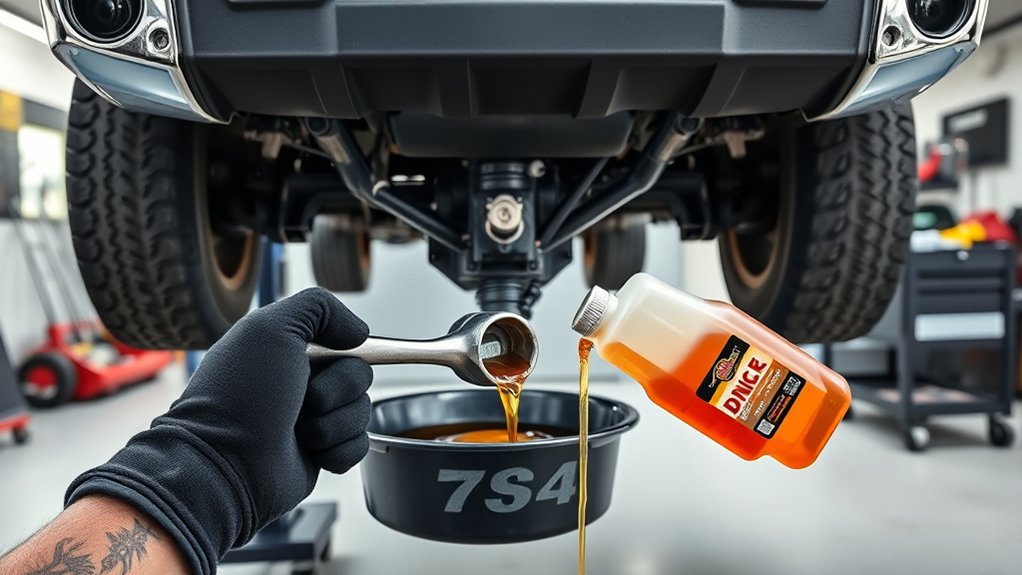
A transfer-case drain and fill is manageable for an experienced DIY owner, but only after the exact fluid, capacity, plug torque, and gaskets have been confirmed.
Warning: Work on a firm, level surface. Apply the parking brake, chock the wheels, allow hot exhaust and drivetrain parts to cool, and wear eye protection. If the truck must be raised, support it at Toyota-approved points with properly rated equipment. Never work beneath a vehicle supported only by a hydraulic jack.
| Step | Procedure | Why It Matters |
|---|---|---|
| 1 | Verify the model-year fluid specification, refill quantity, plug torque, plug locations, and replacement gaskets. | Prevents the use of unrelated all-year specifications. |
| 2 | Drive briefly to make the oil flow more easily, then park on a level surface and let hot components cool to a safe temperature. | Warm oil drains more readily, but hot oil and exhaust parts can cause burns. |
| 3 | Secure the truck, identify the transfer case rather than the transmission or differentials, and clean around both plugs. | Keeps dirt out and prevents draining the wrong component. |
| 4 | Loosen and remove the fill plug first. | Confirms that the case can be refilled before the old oil is released. |
| 5 | Position a drain pan, remove the drain plug, and allow the old oil to drain completely. | The drain opening—not the fill pump—is used to release the old fluid. |
| 6 | Inspect the drained oil and magnetic plug for water, burnt odor, flakes, chips, or excessive debris. Clean the plug without introducing lint. | The drained material may reveal leakage, contamination, or internal wear. |
| 7 | Fit the verified new drain-plug gasket and tighten the drain plug to the model-specific torque. | Reusing a damaged seal or overtightening the plug can cause leakage or thread damage. |
| 8 | Use a clean fluid pump to add the specified oil through the fill opening. Follow the exact level procedure in the manual. | Many units are filled near the lower edge of the opening while level, but the model-specific procedure controls. |
| 9 | Install the verified new fill-plug gasket and tighten the fill plug to its specified torque. | The drain and fill plugs may not share the same specification on every application. |
| 10 | Clean the housing, record the mileage and date, operate the 4WD system as permitted by the Owner’s Manual, and inspect for leaks after the test drive. | A clean housing makes a fresh leak easier to identify. |
Pro Tip: Before draining, confirm that the fluid pump fits the new container and can reach the fill opening. Discovering that the pump does not fit after the transfer case is empty can leave the truck unusable.
Troubleshooting After the Fluid Change
| Problem | What to Check |
|---|---|
| Fill plug will not loosen | Stop before removing the drain plug. Confirm the correct tool and seek professional help if the plug or case could be damaged. |
| Fresh oil leaks from a plug | Check the gasket, plug seating surface, threads, and model-specific torque. Do not keep tightening a leaking plug blindly. |
| Fluid level seems low after service | Confirm that the truck was level, the correct fill procedure was used, and no leak is present. |
| Noise begins after the change | Stop driving and verify fluid specification and level. Continuing to operate an underfilled or incorrectly filled transfer case can cause damage. |
| 4WD does not engage | Follow the Owner’s Manual engagement procedure. If the warning remains, diagnose the actuator, sensors, wiring, control system, and mechanical components. |
| Threads are damaged | Do not install an oversized plug or sealant as a guess. Have the case professionally inspected and repaired. |
Proactive Tips for Your Tundra’s Drivetrain
Transfer-case oil is only one part of the Tundra’s 4WD maintenance. Keep differential service separate because the front and rear axles can use different fluids and intervals; see the Toyota Tundra differential fluid guide for that topic. Use these habits to catch problems before they become expensive:
- Follow the exact maintenance guide for the truck’s model year and actual operating conditions.
- Inspect for transfer-case, transmission, and differential leaks at routine service visits.
- Check the transfer case after deep sand, mud, or water exposure.
- Keep the transfer-case breather and surrounding area free of packed mud and debris.
- Use four-wheel-drive modes only as described in the Owner’s Manual.
- Do not mix the transfer-case service with front- or rear-differential service; each component may use different oil and specifications.
- Record the date, mileage, fluid brand, exact specification, quantity used, and plug-gasket part numbers.
- Investigate warning lights, binding, leaks, or abnormal noise instead of assuming a fluid change will correct them.
Dispose of Used Fluid Responsibly
Collect the drained oil in a clean, leak-proof container and take it to an automotive service facility or local collection program that accepts used gear oil. Do not pour it onto the ground, into a storm drain, or into household plumbing. The U.S. Environmental Protection Agency’s used-oil guidance recommends preventing spills and delivering used automotive oil to an appropriate recycling or collection facility.
Frequently Asked Questions
How often should I change the transfer case fluid on my Toyota Tundra?
For a 2026 Tundra 4WD, Toyota schedules transfer-case oil inspection every 30,000 miles or 36 months under normal use and replacement at those checkpoints when the truck is driven primarily on dirt or dusty roads, or primarily while towing, using a car-top carrier, or under heavy vehicle loading. Check the exact model-year guide before applying that schedule to an older Tundra.
How often should I change transfer case fluid under normal driving?
For the 2026 Tundra 4WD, Toyota lists transfer-case oil inspection at 30,000-mile/36-month checkpoints rather than a universal normal-use replacement interval. Older schedules can differ, so use the maintenance guide for the exact year. An owner may choose earlier preventive replacement, but that is not the same as Toyota’s published normal-service requirement.
When should I change differential fluid on a Toyota Tundra?
The front and rear differentials are separate from the transfer case and have their own inspection, replacement, fluid, capacity, and torque requirements. Recent Toyota guides list additional differential-oil service under certain towing and heavy-load conditions. Check the exact model-year schedule and the Toyota Tundra differential fluid guide before servicing either axle.
How do you know if transfer case fluid needs to be changed?
Use the maintenance interval and service history first. Also inspect for water contamination, burnt odor, low level, leaks, metallic flakes, unusual whine or grinding, binding, or difficulty engaging 4WD. Dark color by itself is not a complete diagnosis.
Can I use Royal Purple Synchromax in a Toyota Tundra transfer case?
Royal Purple’s current lubricant cross-reference lists Synchromax for Toyota Genuine LF Gear Oil applications, so it can be a candidate when your Tundra’s Owner’s Manual specifically calls for that LF gear-oil specification. It is not a default choice for 2022-and-newer Tundras that specify Toyota Genuine ATF WS. Verify the exact model-year requirement first; when in doubt, use the Toyota-specified fluid.
How much transfer case fluid does a Toyota Tundra take?
Capacity varies by transfer case and model year. A 2015 Tundra 4WD owner specification lists 1.6 qt. (1.5 L), while 2022 and 2026 Tundra 4WD specifications list 2.17 qt. (2.05 L). Use the correct Owner’s Manual or Toyota service information for your truck and treat the listed capacity as a reference, not permission to overfill.
Does a 2WD Toyota Tundra have transfer case fluid?
A conventional 2WD Tundra does not use a transfer case because power is not distributed through a selectable four-wheel-drive system. The transfer-case maintenance item applies to equipped 4WD trucks.
Conclusion
For a 2026 Toyota Tundra 4WD, inspect the transfer-case oil every 30,000 miles or 36 months under normal use. Replace it at those same checkpoints when the truck is driven primarily on dirt or dusty roads, or primarily while towing, using a car-top carrier, or under heavy vehicle loading. For older Tundras, follow the exact model-year schedule rather than assuming one all-year interval.
Before performing the service, verify the correct fluid, refill quantity, gaskets, plug torque, and level procedure for the truck’s year and drivetrain. Remove the fill plug first, keep the vehicle safely supported and level, inspect the drained oil, and recheck the case for leaks after refilling.
Sources
- 2026 Toyota Tundra Warranty & Maintenance Guide — current maintenance chart, special operating conditions, inspection guidance, and direction to consult the Owner’s Manual for the correct oil.
- 2024 Toyota Tundra Warranty & Maintenance Guide — explicit 30,000-, 60,000-, and 120,000-mile severe-service transfer-case replacement entries.
- 2021 Toyota Tundra Warranty & Maintenance Guide — severe-service interval and off-road inspection guidance for the previous generation.
- 2018 Toyota Tundra Warranty & Maintenance Guide — earlier model-year inspection and replacement schedule.
- Toyota Manuals and Warranties — model-year Owner’s Manuals and official maintenance publications; used to cross-check the 2015, 2022, and 2026 transfer-case fluid examples.
- Royal Purple Consumer Product Guide — current cross-reference listing Synchromax for Toyota Genuine LF Gear Oil applications, with a manufacturer-recommendation disclaimer.
- U.S. EPA: Managing, Reusing, and Recycling Used Oil — safe collection and recycling guidance for used automotive oil.
