For a factory-equipped 2006 Toyota Tundra 4.7L V8, Toyota specifies Toyota Genuine ATF WS. The five-speed automatic is the A750E in 2WD applications or A750F in 4WD applications. Toyota lists a drain-and-refill capacity of up to 3.0 L (3.2 US qt), while the service procedure checks the final level with the engine idling and ATF at 46–56°C (115–130°F). Aftermarket fluids may advertise Toyota WS compatibility, but that is the fluid manufacturer’s compatibility claim rather than Toyota approval.
Last updated: September 19, 2026 — checked against Toyota owner/maintenance information, Toyota service data, and current fluid-manufacturer documentation.
Quick Answer
A factory-equipped 2006 Toyota Tundra 4.7L V8 uses Toyota Genuine ATF WS. Toyota lists up to 3.0 L (3.2 US qt) for a drain-and-refill. The final level is checked on a level truck with the engine idling and ATF at 46–56°C (115–130°F). Do not substitute Toyota Type T-IV, Chrysler ATF+4, CVT fluid, or an unrelated “universal” ATF.
Key Takeaways
- Toyota Genuine ATF WS is the Toyota-specified fluid for the factory 2006 Tundra 4.7L V8 five-speed automatic.
- Do not confuse Toyota WS with Toyota Type T-IV, Idemitsu Type TLS, Chrysler ATF+4, Dexron, or another unrelated specification.
- An aftermarket fluid may claim Toyota WS compatibility, but Toyota’s owner documentation specifies Toyota Genuine ATF WS; treat aftermarket use as a manufacturer-supported alternative, not Toyota approval.
- Toyota lists up to 3.0 L (3.2 US qt) for a drain-and-refill; the A750E/A750F total dry fill is about 10.4 L (11.0 US qt), so the two numbers are not interchangeable.
- The sealed transmission’s final fluid level is temperature-dependent: Toyota service data specifies a 46–56°C (115–130°F) check range with the engine idling.
- Existing slipping, delayed engagement, metal debris, or a severe burnt odor calls for diagnosis before routine fluid replacement.
What Transmission Fluid Does a 2006 Toyota Tundra V8 Use?
For a 2006 Toyota Tundra 4.7L V8 with its factory five-speed automatic, Toyota specifies Toyota Genuine ATF WS. The 2WD truck uses the A750E and the 4WD truck uses the A750F. Toyota’s owner information identifies WS as ATF JWS3324 or NWS9638 and lists a drain-and-refill capacity of up to 3.0 L (3.2 US qt).
Before buying fluid, confirm that the truck still has its original transmission. A previous owner may have installed a replacement unit, and imported or modified vehicles can differ from the standard North American configuration. Check the VIN-specific documents through the Toyota Manuals and Warranties portal, inspect any transmission identification markings available to a qualified technician, and use Toyota Technical Information System for the applicable repair procedure.
Warning: Do not add Toyota Type T-IV, Idemitsu Type TLS, Chrysler ATF+4, gear oil, CVT fluid, or a generic ATF that does not explicitly list Toyota WS compatibility. A fluid can be high quality or fully synthetic and still have the wrong viscosity and friction characteristics for this transmission.
The transmission is considered “sealed” because it does not use a conventional engine-bay dipstick for routine checking. The level is established through fill and overflow/check plugs. Toyota service data requires the truck to remain level, the engine to idle during the final check, and the ATF to be between 46°C and 56°C (115°F and 130°F).
Why Does Toyota WS Matter in the 2006 Tundra?
Automatic transmission fluid performs several jobs at once. It transfers hydraulic pressure, lubricates gears and bearings, cools internal parts, supports torque-converter operation, and provides the friction behavior needed for controlled clutch engagement.
Using fluid with the wrong viscosity or friction properties may cause delayed engagement, flare between shifts, harsh shifts, shudder, excess heat, or accelerated clutch wear. These symptoms are not guaranteed to appear immediately, which is why “it shifted normally after I added it” does not prove that an incorrect fluid is safe.
Marketing terms such as “full synthetic,” “premium,” and “multi-vehicle” do not replace the required application specification. Toyota’s 2006 owner documentation identifies Toyota Genuine ATF WS and warns that other fluid can degrade shift quality or damage the transmission. That makes the documented WS application—not the marketing label—the key decision point.
The correct specification and an accurately set fluid level matter more than the brand name printed most prominently on the bottle.
Which Transmission Fluids Are Compatible With the 2006 Tundra V8?
The safest approach is to begin with Toyota’s specified fluid and treat every aftermarket option as a product-specific compatibility decision. Do not assume that all low-viscosity ATFs are interchangeable.
[Amazon Products Picked for You]

Automatic Transmission Fluid WS is a world-spec fluid specifically designed for sealed, automatic transmissions.

For best performance, follow the manufacturer's recommendations in your vehicle owner’s manual.

6Qt Genuine 00289-ATFWS
OEM Fluid Recommendations
Toyota Genuine ATF WS is the straightforward OEM choice. It removes uncertainty about whether the product was designed for Toyota’s WS application and is especially sensible when the truck’s maintenance history is unknown.
Toyota’s owner documentation says to use Toyota Genuine ATF WS. The practical advantage is an unambiguous match to Toyota’s specified fluid. If an owner chooses an aftermarket product, that choice should be supported by the fluid manufacturer’s current WS application statement; it should not be described as Toyota-approved unless Toyota itself says so. Correct service procedure, clean equipment, new sealing washers, and an accurate final level remain essential.
Alternative Fluid Options
An aftermarket fluid may be considered when its manufacturer’s current product literature explicitly lists Toyota WS compatibility. That compatibility claim comes from the fluid manufacturer, not Toyota. Product names and formulations can change, so verify the exact bottle and product code at the time of purchase.
One clearly documented example is Idemitsu ATF Type TLS-LV, which Idemitsu states is engineered for Toyota, Lexus, and Scion transmissions requiring WS specifications.
Note: Idemitsu Type TLS-LV and Idemitsu Type TLS are not the same product. The manufacturer lists TLS-LV for WS applications and Type TLS for Toyota T-IV applications. Read the complete label, including the “LV” suffix.
Valvoline’s current U.S. MaxLife Multi-Vehicle ATF page specifically lists Toyota/Lexus WS among its recommended applications. Other multi-vehicle products may also claim WS compatibility, but do not approve any fluid solely from the product family name. Confirm the exact formulation sold in your market and keep the current manufacturer documentation with your service record.
Toyota WS vs. Aftermarket WS-Compatible ATF
OEM and aftermarket fluids can both be reasonable choices when the application is properly documented. The following comparison keeps the decision focused on evidence rather than brand preference.
| Factor | Toyota Genuine ATF WS | Aftermarket WS-Compatible ATF |
|---|---|---|
| Application clarity | Toyota-specified fluid for this application | Depends on current manufacturer documentation |
| Verification needed | Confirm the vehicle requires WS and source genuine Toyota fluid | Confirm exact product, formulation, market, and WS listing |
| Potential advantage | Direct match to Toyota owner-manual wording | May offer local availability or a different price |
| Main risk | Counterfeit or incorrectly sourced product | Treating a manufacturer compatibility claim as Toyota approval |
[Amazon Products Picked for You]
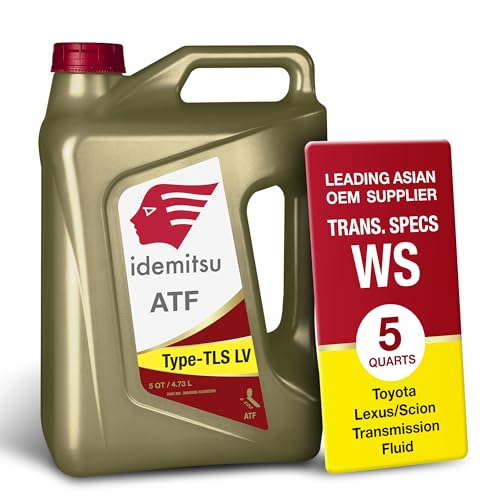
Optimized viscosity and advanced friction reducing additive technology provide exceptional fuel economy performance

For use in 95% of vehicles including most CVTs in operation with US registered light duty applications

Compatible with Toyota/Lexus/Scion: Specially formulated for Toyota, Lexus, and Scion automatic transmissions requiring WS specification, ensuring optimal performance in demanding conditions. Not intended for CVT applications.
OEM Fluid Advantages
Toyota Genuine ATF WS is useful when you want the fewest interpretation steps between the vehicle requirement and the bottle. It also makes the service record easy to understand for a future owner or technician.
OEM fluid does not compensate for incorrect quantity, contamination, loose plugs, reused damaged seals, or an improper temperature check. Procedure quality remains essential.
Aftermarket Fluid Options
A reputable aftermarket product can be considered when its manufacturer clearly accepts responsibility for the application claim. Save a copy or photograph of the current compatibility statement, the bottle label, the product code, the purchase receipt, and the mileage at service.
Avoid relying on statements such as “works in most imports,” “recommended by owners,” or “similar viscosity.” These descriptions do not establish the required friction behavior or exact application coverage.
Mixing Fluids Considerations
A single drain-and-fill does not empty the torque converter, valve body, cooler, and internal passages. Some old fluid remains and mixes with the new fluid. Therefore, the realistic goal is not “zero mixing”; it is avoiding the introduction of an incompatible specification.
When practical, continue using the same documented WS-compatible product for later drain-and-fill services. This simplifies records and reduces uncertainty. However, the specification and current compatibility statement matter more than loyalty to a brand.
If Type T-IV, ATF+4, gear oil, CVT fluid, or another clearly incorrect fluid was added, do not continue driving merely to see whether symptoms appear. Record what was added and how much, then consult a Toyota-qualified technician about the appropriate corrective service.
Benefits of Regular Fluid Changes for Transmission Longevity
Transmission fluid is exposed to heat, shear, oxidation, clutch material, and normal wear particles. A properly timed service can renew part of the additive package, remove some suspended contamination, and provide an opportunity to inspect for leaks or abnormal debris.
Maintenance cannot restore worn clutch packs, repair a failing solenoid, correct a damaged valve body, or undo prolonged operation with a low fluid level. If the truck already slips, hesitates before engaging Drive or Reverse, bangs into gear, shudders repeatedly, overheats, or stores transmission-related diagnostic codes, diagnose the fault before assuming fresh fluid will solve it.
When Should You Change the Transmission Fluid?
Toyota does not give every 2006 Tundra V8 the same automatic-transmission-fluid replacement interval. The owner’s manual says to change ATF as necessary under the applicable special operating conditions. In the U.S. 2006 Tundra maintenance guide, the 60,000-mile/72-month service lists automatic transmission fluid for inspection under the regular schedule and replacement under Driving While Towing. Use the vehicle-specific guide rather than a universal internet interval.
For broader model-year interval guidance, see when to change Toyota Tundra transmission fluid. For this 2006 V8 page, the service plan should also account for:
- Frequent towing or hauling
- Repeated mountain driving
- High ambient temperatures
- Long periods of low-speed work
- Off-road or dusty operation
- Unknown or incomplete maintenance history
- Leaks or prior overheating
- Shift-quality changes
For an older truck with no documented transmission service, a technician may recommend a conservative drain-and-fill and inspection rather than waiting for an arbitrary round-number milestone. That recommendation should be based on the transmission’s behavior, fluid condition, use, and Toyota service information—not a blanket internet rule.
Pro Tip: Record the date, odometer reading, exact fluid name and part number, amount added, amount drained, plug-gasket replacement, and final level-check method. A clear maintenance record is more useful than remembering that the fluid was changed “a while ago.”
How Do You Change Transmission Fluid on a 2006 Tundra V8?
A drain-and-fill on the 2006 Tundra V8 normally removes up to 3.0 L (3.2 US qt), far less than the transmission’s roughly 10.4 L (11.0 US qt) total dry fill. The final level procedure makes this an intermediate-to-advanced task. Obtain the exact Toyota repair instructions before beginning, and do not use the dry-fill capacity as a refill target for a routine drain-and-fill.
At a Glance
| Time Required | Approximately 60–90 minutes, excluding diagnosis, cooling time, or repairs; allow extra time if the ATF must cool below the check-mode starting temperature |
| Difficulty | Intermediate to advanced because the sealed transmission requires an accurate temperature-dependent level check |
| Tools Needed | Level lift or correctly rated four-corner supports, wheel chocks, drain pan, graduated container, correct sockets, torque wrench, fluid pump, scan tool or Toyota check-mode method for ATF temperature, safety glasses, gloves, and new sealing washers |
| Cost | Varies by region, fluid choice, and tool access; Toyota lists up to 3.0 L (3.2 US qt) for a routine drain-and-refill |
Warning: Never work beneath a truck supported only by a hydraulic jack. Use a level lift or correctly rated stands on a stable surface, chock the wheels, wear eye protection and gloves, and avoid contact with hot exhaust components and hot ATF.
[Amazon Products Picked for You]
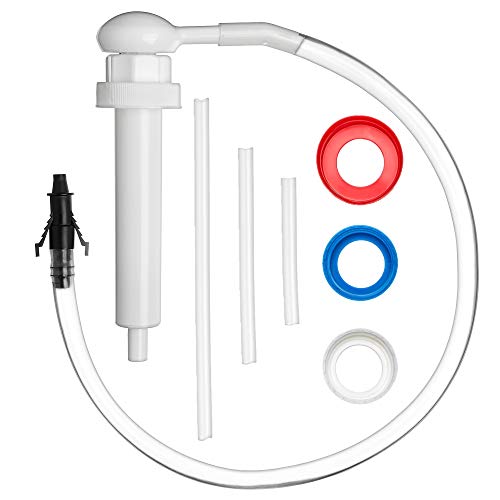
🚙Pumps 1 FULL OUNCE (30cc) per pump stroke. Pumps an entire quart in 32 strokes. DOES NOT FIT STANDARD QUART BOTTLES

Top Off Transmission Fluid with Ease: Keep your ride running smoothly and extend its longevity by effortlessly refilling transmission fluid with Orion Motor Tech 3L transmission fluid pump kit, designed to simplify your maintenance routine.

HANDY DESIGN - Plunger pump design screws in and locks down for storage. A third hand adapter secures the fill tube while pumping, offering convenience and ease of use.
Drain and Fill Process
- Verify the application. Confirm that the truck has the factory transmission requiring Toyota WS. If the transmission has been replaced or the identification is uncertain, resolve that before opening a fluid container.
- Obtain the official procedure. Use Toyota TIS or the correct repair manual for plug identification, sealing washers, torque values, check mode, transmission-fluid temperature range, and final level sequence.
- Gather enough correct fluid. Toyota specifies Toyota Genuine ATF WS and lists up to 3.0 L (3.2 US qt) for a drain-and-refill. Have a little extra correct fluid available for the final overflow-level adjustment; do not use the roughly 10.4 L (11.0 US qt) dry-fill figure as the routine refill target.
- Position the truck safely and level. The final level check is sensitive to vehicle angle. Use a level lift or support all four corners correctly with rated equipment.
- Identify every plug before loosening anything. Confirm the fill, drain, and overflow/check locations from the Toyota procedure. Do not assume that the first plug visible is the drain plug.
- Loosen the fill plug first. This confirms that the transmission can be refilled before the old fluid is released.
- Drain into a clean graduated container. Measure the amount removed and inspect it for water contamination, severe burnt odor, excessive clutch material, or metallic debris.
- Inspect the plugs and seals. Clean the appropriate components and install new sealing washers or gaskets where Toyota specifies them.
- Reinstall the drain plug correctly. Toyota service data lists 20 N·m (15 ft-lb) for the transmission drain plug with a new gasket. Confirm the VIN-specific repair procedure before service.
- Add the initial quantity. Pump the correct WS fluid through the fill opening using the measured drain amount and Toyota procedure as the starting reference.
- Start the engine and circulate the fluid. With the brakes applied and the truck safely supported, follow Toyota’s sequence for moving the selector through the required ranges. Check for leaks.
- Set the final level at the specified temperature. Keep the truck level and the engine idling. Toyota service data specifies checking the overflow level with ATF at 46–56°C (115–130°F). If no fluid exits, the procedure adds 0.4 L (0.42 US qt) before rechecking. A dribble outside the specified temperature range does not confirm the correct level.
- Close and torque the plugs. Toyota service data lists 20 N·m (15 ft-lb) for the overflow plug and 39 N·m (29 ft-lb) for the refill plug, each with a new gasket. Confirm the applicable repair information before service.
- Road-test and inspect. Confirm normal engagement and shift behavior, then inspect for leaks. Investigate any new symptom rather than repeatedly adding fluid.
- Recycle the used ATF. Transfer it to a sealed container and take it to an authorized automotive-fluid recycling facility. Do not pour it onto the ground, into a drain, or into household waste.
Pro Tip: Mark or photograph the fill, drain, and overflow/check plugs after verifying them in the repair information. Similar-looking plugs and nearby drivetrain components make identification errors more likely when working under the truck.
Recommended Fluid Intervals
Do not turn the 3.0 L (3.2 US qt) drain-and-refill figure into a total-capacity figure, and do not turn one owner’s preferred interval into a Toyota requirement. The 2006 U.S. maintenance guide inspects ATF at 60,000 miles/72 months under the regular schedule and lists replacement at that interval for Driving While Towing.
If repeated drain-and-fill services are chosen to renew more of the fluid gradually, use a Toyota-qualified service plan rather than a fixed internet sequence. Repeated fluid replacement is a maintenance strategy, not a guaranteed cure for an existing transmission fault.
Should You Change Old Fluid on a High-Mileage Tundra?
High mileage alone does not prove that fresh fluid will damage a transmission. The greater concern is an already worn or malfunctioning unit whose symptoms may become more noticeable around the time of service.
Before servicing a high-mileage or neglected transmission, check for:
- Delayed engagement into Drive or Reverse
- Slipping or engine-speed flare during shifts
- Repeated shudder
- Harsh or erratic shifting
- Transmission warning lights or stored diagnostic trouble codes
- A severely burnt odor
- Visible metal flakes or substantial debris
- Cooler-line, pan, plug, or seal leaks
- Evidence that the transmission has overheated
If these signs are present, have the transmission diagnosed before authorizing a flush or assuming a fluid change will restore it. A controlled drain-and-fill replaces only part of the fluid and creates an inspection opportunity, but it cannot rebuild worn components. If the truck is already slipping, use the diagnostic checks in Toyota Tundra transmission slipping causes and fixes before treating fluid service as the repair.
A machine exchange is not automatically harmful, and a drain-and-fill is not automatically harmless. The correct decision depends on equipment, procedure, fluid specification, service history, and the transmission’s current condition. Avoid chemical cleaners or universal additives unless Toyota repair information specifically calls for them.
How Do You Judge Transmission Fluid Condition?
Fluid color is one observation, not a complete diagnosis. Evaluate the transmission’s operation, fluid level, odor, debris, leaks, diagnostic codes, and maintenance history together.
| Observation | Recommended Action | What It May Mean |
|---|---|---|
| Red to darker red, normal shifting, no leaks or unusual odor | Review maintenance history and follow the applicable inspection or service plan | Color alone does not determine remaining fluid life |
| Brown fluid without severe odor or symptoms | Inspect history and consider a properly performed drain-and-fill | Normal aging or heat exposure may have darkened the fluid |
| Severe burnt odor, slipping, delayed engagement, or shudder | Diagnose before routine service | Possible overheating, clutch wear, pressure loss, or another internal fault |
| Metal flakes or substantial debris | Stop routine servicing and obtain professional inspection | Possible abnormal internal wear or component damage |
| Milky, foamy, or water-contaminated appearance | Do not continue normal operation; diagnose the contamination source | Possible coolant, water, aeration, overfill, or incorrect-fluid issue |
| Visible leak | Locate and repair the leak, then set the fluid level correctly | Low fluid can cause aeration, pressure loss, heat, and poor shifting |
A laboratory fluid analysis may provide information about viscosity, oxidation, contamination, and wear metals, but it should be interpreted with the service history and operating symptoms. It is most useful when tracking a vehicle over time rather than as a stand-alone pass-or-fail test.
Can Owner Reports Prove ATF Compatibility?
Owner reports can identify common questions, availability problems, and service mistakes. They cannot prove that a fluid is compatible, that a transmission is healthy, or that one product caused a reported improvement.
A driver may notice smoother shifting after service because the old level was low, the new level was corrected, a connector was disturbed, ambient temperature changed, adaptive behavior changed, or a different problem temporarily became less noticeable. Without measurements and a controlled comparison, the product alone cannot be credited.
Use owner experiences as secondary context. Base the actual fluid choice on:
- The truck’s verified transmission and required specification
- Toyota’s vehicle-specific manuals and repair procedure
- The fluid manufacturer’s current application statement
- Accurate quantity and temperature-dependent level setting
- The transmission’s condition before and after service
Frequently Asked Questions
What kind of transmission fluid does a 2006 Toyota Tundra V8 take?
A 2006 Toyota Tundra 4.7L V8 with its factory A750E/A750F five-speed automatic uses Toyota Genuine ATF WS. Toyota lists up to 3.0 L (3.2 US qt) for a drain-and-refill.
What ATF does Toyota recommend?
For the factory application discussed here, the OEM choice is Toyota Genuine ATF WS. Use Toyota’s vehicle-specific documentation rather than assuming that every first-generation Tundra uses the same fluid.
Do I have to use Toyota-brand transmission fluid?
Toyota’s owner documentation specifies Toyota Genuine ATF WS. An aftermarket product may claim WS compatibility, but that is the fluid manufacturer’s claim rather than Toyota approval. “Multi-vehicle” or “full synthetic” alone is not enough.
Can Toyota WS and Toyota Type T-IV be mixed?
Do not intentionally mix or substitute them. WS and T-IV are different applications. If the wrong fluid has been added, document the type and amount and obtain application-specific corrective advice before continued driving.
How much transmission fluid is needed for a drain-and-fill?
Toyota lists a drain-and-refill capacity of up to 3.0 L (3.2 US qt). Factory service information lists about 10.4 L (11.0 US qt) as total dry fill for the A750E/A750F. A routine drain does not empty the whole transmission, so set the final level with Toyota’s overflow procedure.
Should a high-mileage Tundra receive a transmission flush?
Mileage alone does not decide the issue. Diagnose slipping, delayed engagement, shudder, burnt odor, codes, or metal debris first. A measured drain-and-fill is generally the more conservative maintenance service, but it cannot repair existing internal wear.
How is the fluid level checked without a dipstick?
The truck must be level with the engine idling. Toyota service data specifies checking the overflow level with ATF at 46–56°C (115–130°F). Use Toyota TIS or the correct repair manual for the complete check-mode and plug sequence.
What temperature should the ATF be when checking the level?
Toyota service data specifies a 46–56°C (115–130°F) ATF temperature range for the final overflow-level check. The truck must remain level and the engine must be idling while the overflow plug is checked.
Conclusion
For a factory-equipped 2006 Toyota Tundra 4.7L V8 five-speed automatic, Toyota specifies Toyota Genuine ATF WS. Toyota lists up to 3.0 L (3.2 US qt) for a drain-and-refill, while the final overflow check is performed with the engine idling and ATF at 46–56°C (115–130°F). Aftermarket WS-compatible products should be described as manufacturer-claimed alternatives, not Toyota-approved equivalents.
Correct fluid is only part of a successful service. Verify the transmission, loosen the fill plug before draining, use new seals, keep the truck level, and follow Toyota’s temperature-dependent overflow procedure. Diagnose slipping, delayed engagement, shudder, or metal debris before treating a fluid change as the repair.
Sources
- Toyota Manuals and Warranties — vehicle-specific owner, warranty, and maintenance documentation, including the 2006 Tundra owner’s manual.
- Toyota Technical Information System — transmission-specific repair procedures, plug torque values, check mode, ATF temperature range, and fluid-level instructions.
- 2006 Toyota Tundra Scheduled Maintenance Guide — ATF inspection and special-operating-condition replacement schedule.
- Idemitsu ATF Type TLS-LV — manufacturer documentation stating Toyota/Lexus/Scion WS compatibility.
- Idemitsu ATF Type TLS — manufacturer documentation showing that the similarly named Type TLS product is for Toyota T-IV applications.
- Valvoline MaxLife Multi-Vehicle ATF — current U.S. product information listing Toyota/Lexus WS among its recommended applications.
