Toyota Tundra transmission service does not follow one universal 30,000-, 60,000-, or 100,000-mile replacement rule. In Toyota’s cited 2020 and 2026 U.S. schedules, automatic transmission fluid is replaced at 60,000 and 120,000 miles when the truck is driven primarily while towing, using a car-top carrier, or carrying a heavy vehicle load. For normal use, Toyota lists inspection items instead of one universal replacement mileage; the 2026 guide specifically lists ATF inspections at 60,000, 90,000, 120,000, and 150,000 miles.
Last reviewed: September 19, 2026 — Toyota’s 2020 and 2026 U.S. Tundra maintenance schedules rechecked.
How this guide was checked: Factory interval claims were compared directly with Toyota’s 2020 and 2026 U.S. Warranty & Maintenance Guides. Model-specific service procedures should still be confirmed through Toyota repair information for the exact truck.
Affiliate disclosure: This article may contain affiliate links. If you buy through them, we may earn a commission at no extra cost to you.
Quick Answer
Check your model-year maintenance guide first. For 2020 and 2026 U.S. Tundras, Toyota calls for automatic transmission fluid replacement at 60,000 and 120,000 miles when the truck is driven primarily while towing, using a car-top carrier, or heavily loaded. Under normal use, Toyota lists inspection items rather than a universal 100,000-mile fluid change; the 2026 guide lists ATF inspections at 60,000, 90,000, 120,000, and 150,000 miles.
Key Takeaways
- Toyota’s 2020 and 2026 U.S. maintenance guides specify transmission-fluid replacement at 60,000 and 120,000 miles when the truck is driven primarily under the listed towing, carrier, or heavy-loading conditions.
- For 2026 normal service, Toyota lists automatic transmission fluid inspection at 60,000, 90,000, 120,000, and 150,000 miles rather than a universal replacement interval.
- Toyota does not publish a universal 30,000- or 100,000-mile replacement interval for every Tundra and every driving pattern.
- Many Tundras use sealed transmissions. Their fluid level must be set through a model-specific, temperature-dependent procedure rather than an engine-bay dipstick.
- Slipping, harsh shifts, leaks, warning lights, shuddering, or burnt-smelling fluid require diagnosis; a fluid change is not a guaranteed repair.
- Use only the exact transmission-fluid specification and service procedure listed for the truck’s model year and transmission.
At a Glance
| Time Required | A visual leak inspection is brief. A sealed-transmission fluid service takes longer because the truck must be level and the fluid must reach the specified temperature before the level is finalized. |
| Difficulty | Intermediate to advanced. Sealed systems are not suitable for a first-time fluid-change project without the correct service information and temperature-monitoring equipment. |
| Tools Needed | Model-specific repair procedure, level lifting equipment, rated stands or a lift, drain pan, fluid pump, torque wrench, scan tool or approved temperature-monitoring method, exact specified ATF, and new sealing washers or gaskets where required. |
| Cost | Varies by model year, fluid quantity, local labor rates, and whether the truck needs only a drain-and-fill, pan service, leak repair, or diagnostic work. |
Toyota Tundra Transmission Service Intervals
The safest answer is to use the maintenance guide for your truck’s exact model year. Toyota provides downloadable manuals and warranty guides through its official Manuals and Warranties portal.
For useful reference points, both the 2020 Tundra Warranty & Maintenance Guide and the 2026 Tundra Warranty & Maintenance Guide call for automatic transmission fluid replacement at 60,000 and 120,000 miles when the truck is driven primarily while towing a trailer, using a car-top carrier, or carrying a heavy vehicle load.
The normal-service details are not identical. In the 2020 guide, the 60,000- and 120,000-mile entries include inspection of the sealed automatic transmission for signs of leakage. In the 2026 guide, automatic transmission fluid itself is listed for inspection at 60,000, 90,000, 120,000, and 150,000 miles. Neither schedule creates a universal normal-use 100,000-mile replacement rule.
| Driving condition | Toyota guidance / best next step |
| Normal road use within load limits | Follow the inspection points in the model-year maintenance guide. The 2020 guide includes sealed-transmission leakage inspection at the cited 60,000- and 120,000-mile checkpoints. The 2026 guide lists ATF inspection at 60,000, 90,000, 120,000, and 150,000 miles. Toyota does not establish one universal 100,000-mile replacement rule for every Tundra. |
| Primarily towing, using a car-top carrier, or heavily loaded | For the 2020 and 2026 U.S. schedules, replace the automatic transmission fluid at 60,000 miles and again at 120,000 miles. Toyota uses the word “primarily” for the qualifying operating condition, so confirm that the same schedule and wording apply to your model year and market. |
| Leak, warning light, abnormal shifting, shudder, or overheating warning | Arrange diagnosis immediately rather than waiting for the next scheduled interval. Routine fluid replacement may not correct a mechanical, electrical, cooling, or hydraulic fault. |
| Unknown maintenance history | Inspect for leaks, trouble codes, fluid condition, shift quality, and prior repair evidence before choosing a service method. Mileage alone does not determine whether a drain-and-fill, pan service, exchange, or diagnostic repair is appropriate. |
For the 2026 U.S. Tundra, normal service lists ATF inspection at 60,000, 90,000, 120,000, and 150,000 miles, while the special-use schedule lists replacement at 60,000 and 120,000 miles for trucks driven primarily while towing, using a car-top carrier, or heavily loaded. Toyota’s 2020 guide also lists replacement at 60,000 and 120,000 miles under those qualifying conditions.
Note: Some owners or technicians choose shorter preventive fluid-change intervals for a particular truck, but that is separate from the Toyota schedules cited here. A 30,000-mile interval should not be described as Toyota’s universal recommendation. Earlier service should be based on the correct guide, inspection findings, contamination, repairs, or documented operating demands.
Why Transmission Fluid Maintenance Matters
Automatic transmission fluid lubricates moving parts, transfers hydraulic pressure, supports clutch operation, and carries heat away from internal components. Towing and heavy loading increase the work performed by the drivetrain, which is why Toyota places those conditions in a separate maintenance category.
Correct maintenance can reduce avoidable wear and help technicians identify leakage before the fluid level becomes dangerously low. It cannot guarantee that the transmission will never overheat or fail, because cooling-system faults, electrical problems, internal wear, overloading, and improper operation can also cause damage.
The most useful maintenance record includes the service date, mileage, exact fluid used, amount installed, service method, plug or gasket replacements, and any diagnostic findings. Keep the invoice or write these details in the maintenance log.
How to Inspect Your Tundra’s Transmission Fluid System
Do not assume your Tundra has a transmission dipstick. Some older trucks may have owner-accessible level checks, while current maintenance guides refer to sealed transmissions. On a sealed unit, the owner’s practical inspection is mainly a check for leakage, warning messages, and abnormal operation. The actual fluid-level procedure is performed through service plugs at a specified fluid temperature.
Perform a visual leak inspection
- Park on a clean, level surface and look for fresh oily spots after the truck has been sitting.
- Inspect the transmission case, pan area, drain and fill plugs, cooler lines, hose connections, and the area between the engine and transmission.
- Look for wetness that is spreading or collecting dirt, not only an old dry stain.
- Do not crawl beneath a vehicle supported only by a jack.
Watch for operating symptoms
- Delayed engagement when selecting Drive or Reverse
- Engine speed rising without a matching increase in road speed
- Harsh, delayed, or repeated shifts
- Shuddering or vibration during a shift or light acceleration
- Transmission, check-engine, or drivetrain warning messages
- A hot or burnt odor after driving
- New whining, grinding, or clunking noises
Fresh automatic transmission fluid is often reddish, but color alone does not prove that the fluid is correct, properly filled, or free of wear material. Milky fluid may indicate water or coolant contamination, visible metallic debris can indicate internal wear, and a strong burnt odor deserves prompt diagnosis.
Warning: Do not remove a sealed transmission’s check or overflow plug merely to “see whether fluid comes out.” The fluid must be within the specified temperature range, the truck must be level, and the correct fill procedure must be followed. An underfilled or overfilled transmission can shift poorly, aerate the fluid, overheat, or suffer internal damage.
Choose the Correct Transmission Fluid
Tundras have used different transmissions across generations and markets, so a fluid label that says “universal” or “multi-vehicle” is not enough by itself. Confirm the required specification in the owner’s manual or model-specific repair information before opening the transmission.
Use the Toyota Manuals and Warranties portal to locate the correct owner and maintenance documents. Professional and advanced DIY procedures are available through Toyota’s Technical Information System.
- Do not mix fluid specifications unless Toyota’s service information explicitly permits it.
- Do not add a “stop-slip,” seal-swelling, or friction-modifying additive unless it is approved for that exact transmission.
- Use clean fluid from properly sealed containers.
- Keep pumps, funnels, hoses, and containers free of dirt, water, engine oil, gear oil, and other fluids.
Pro Tip: Before draining any fluid, confirm that the correct fill plug can be identified and safely loosened. Draining a transmission first and then discovering a seized, damaged, or misidentified fill plug can leave the truck immobilized.
Drain-and-Fill, Pan Service, or Full Fluid Exchange?
Drain-and-fill
A drain-and-fill removes the fluid that exits through the drain opening and replaces it with the exact specified fluid. It does not remove every drop held in the torque converter, cooler, passages, and clutch circuits. The quantity drained varies by transmission, fluid temperature, vehicle angle, and service procedure.
Pan and strainer service
Pan removal may be appropriate when the model-specific procedure calls for it, when a leak must be repaired, or when contamination and internal debris need to be inspected. Do not assume every scheduled fluid replacement requires pan removal or routine strainer replacement.
Machine exchange or flush
A fluid-exchange machine replaces a greater portion of the old fluid. However, a machine service is not a repair for slipping clutches, valve-body faults, damaged bearings, contaminated coolant circuits, or electrical problems. On a high-mileage truck with unknown history or existing symptoms, obtain a diagnosis before authorizing an exchange or chemical flush.
Note: The correct service method depends on the transmission, model-specific Toyota procedure, service history, fluid condition, and reason for service. A truck with normal operation that is receiving scheduled maintenance is a different case from one with slipping, warning lights, contamination, or unknown history. “Drain-and-fill only” and “always flush” are both overly broad rules.
Steps to Change Transmission Fluid in a Toyota Tundra
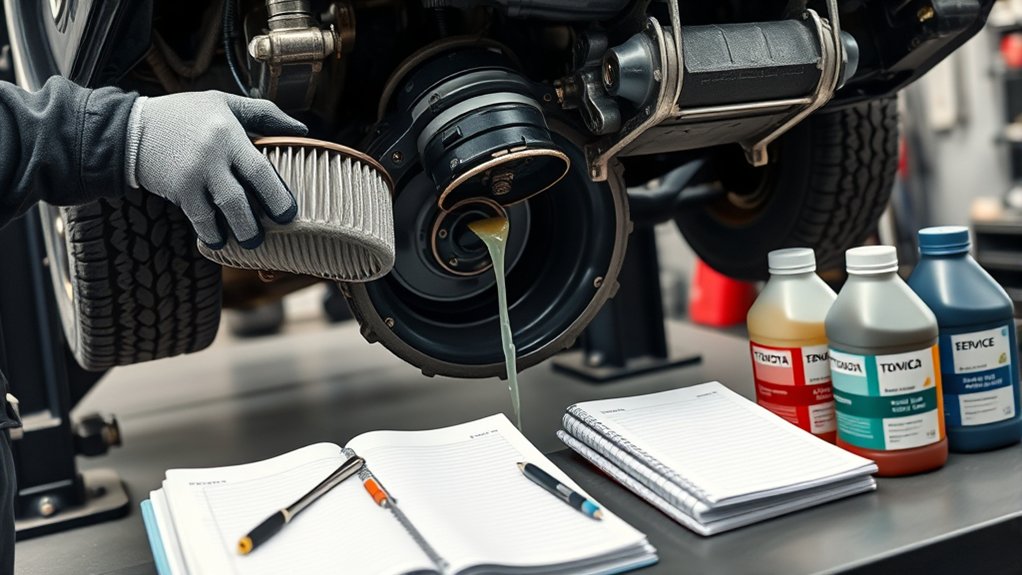
The following is a safe overview, not a substitute for the repair procedure for your exact model and transmission. Plug locations, fluid specification, temperature range, torque values, gasket requirements, and level-setting steps vary.
Warning: Transmission fluid and exhaust components can cause severe burns. Support the truck on a level, rated lift or correctly positioned stands. Never work under a truck held only by a hydraulic jack. Stop and use a qualified shop if you cannot keep the vehicle level, monitor transmission-fluid temperature, or identify the correct plugs.
- Identify the transmission and procedure. Use the VIN, model year, drivetrain, and Toyota service information to confirm the transmission, fluid specification, plug locations, temperature range, capacities, and torque specifications.
- Inspect before servicing. Scan for diagnostic trouble codes where appropriate and check for leaks, damaged cooler lines, warning lights, slipping, shuddering, or unusual noises. Diagnose serious symptoms before changing fluid.
- Prepare the truck safely. Position the vehicle level, apply the parking brake, use wheel restraints, wear eye and hand protection, and place a suitable drain container beneath the transmission.
- Confirm fill access. Identify and loosen the correct fill plug before opening the drain plug. Do not confuse transmission, transfer-case, engine-oil, or differential plugs.
- Drain and inspect the fluid. Remove the specified drain plug, collect the fluid, and inspect it for water, excessive metal, clutch material, or a strong burnt odor. Measure the drained quantity as a reference, not as the sole method of setting the final level.
- Service seals or the pan only as required. Install new sealing washers, gaskets, or specified one-time-use parts. Remove the pan or strainer only when the correct procedure or inspection findings call for it.
- Refill with the exact specified fluid. Pump clean fluid through the designated fill opening. Do not substitute fluid based only on viscosity or bottle color.
- Circulate the fluid. With the service procedure’s safety conditions met, start the engine and move the selector through the required positions so the hydraulic circuits fill.
- Set the final level at the specified temperature. Monitor transmission-fluid temperature using the approved method, keep the vehicle level, and follow the exact overflow or check-plug procedure. Install and torque each plug to the model-specific specification.
- Verify the repair. Clean spilled fluid, check for leaks, road-test the truck if safe, confirm normal shifting, and recheck the serviced areas.
- Record and recycle. Document the mileage, fluid, quantity, and work completed. Store used fluid in a clean, leak-proof container and take it to an automotive facility or approved recycling location. Do not pour it onto the ground, into a drain, or into household waste.
When the Transmission Needs Diagnosis Instead of Routine Service
Do not rely on a fluid change to correct a transmission that is already slipping, entering fail-safe mode, making mechanical noises, or setting diagnostic trouble codes. The problem may involve a leak, solenoid, wiring fault, valve body, torque converter, cooler, control-module calibration, clutch pack, bearing, or internal mechanical damage.
For symptom-specific troubleshooting, see the guides to Toyota Tundra transmission slipping and Toyota Tundra hard shifting.
Arrange professional diagnosis promptly when you notice:
- A transmission or check-engine warning that returns after restart
- Loss of Drive or Reverse
- Severe slipping or delayed engagement
- Fluid actively dripping or pooling
- Milky fluid or suspected water or coolant contamination
- Large metal particles or heavy debris in the drained fluid
- An overheating warning while towing
- A sudden change in shift quality after service
If a problem begins immediately after a fluid service, stop driving when safe and have the fluid specification, level-setting procedure, plug installation, leaks, and diagnostic codes checked.
Transmission Maintenance When Towing
Towing increases transmission load and heat, especially during slow climbs, repeated acceleration, hot weather, headwinds, and stop-and-go traffic. That added demand is why Toyota’s cited maintenance schedules place primarily towing, car-top-carrier use, and heavy loading in the special-operating-conditions category.
- Stay within the truck’s model-specific payload, axle, hitch, and trailer ratings.
- Use the towing features and gear-selection instructions described in the owner’s manual.
- Do not ignore an overheating warning, harsh shifting, or repeated gear hunting.
- Inspect the transmission and cooler-line area for leakage before and after demanding trips.
- Keep records of towing mileage when deciding whether the truck is operated primarily under Toyota’s special conditions.
Toyota’s cited schedule uses the word “primarily” rather than giving a numerical threshold for occasional towing. If your use falls between ordinary commuting and primarily towing or heavy loading, document how the truck is used and apply the maintenance guide for the exact model year rather than inventing a mileage interval.
For the rest of the 4WD driveline, see the separate Toyota Tundra transfer case service interval guide.
Owner experiences can help identify common questions, but they should not replace the maintenance guide, diagnostic data, or the repair procedure for the exact transmission.
Frequently Asked Questions
How often should you change transmission fluid in a Toyota Tundra?
Use the maintenance guide for the exact model year. In the 2020 and 2026 U.S. guides, Toyota specifies automatic transmission fluid replacement at 60,000 and 120,000 miles when the truck is driven primarily while towing, using a car-top carrier, or heavily loaded. The 2026 normal-use schedule lists ATF inspections at 60,000, 90,000, 120,000, and 150,000 miles rather than one universal replacement mileage.
Does Toyota recommend changing Tundra transmission fluid?
Yes, under the special operating conditions listed in the applicable guide. It is inaccurate to say Toyota never recommends replacement. It is also inaccurate to apply the severe-use interval automatically to every truck without checking its model-year schedule and use.
Is 100,000 miles the normal Tundra transmission-fluid interval?
No universal Toyota rule sets 100,000 miles as the normal replacement point for every Tundra. Follow the model-year maintenance guide and consider operating conditions, leakage, symptoms, repairs, contamination, and service history.
Does occasional towing automatically trigger the 60,000-mile replacement schedule?
Not automatically. In the cited Toyota schedules, the additional transmission-fluid replacement applies when the truck is driven primarily while towing, using a car-top carrier, or under heavy vehicle loading. The chart does not give a numerical threshold for occasional towing, so use the exact model-year guide and the truck’s actual duty cycle.
Should you change Tundra transmission fluid at 100,000 miles if it has never been serviced?
Mileage alone does not determine the correct service. Check the model-year schedule, service history, leakage, diagnostic codes, shift quality, fluid condition, and any signs of internal wear before choosing a drain-and-fill, pan service, machine exchange, or diagnostic repair.
Does every Toyota Tundra have a transmission dipstick?
No. Do not assume dipstick instructions apply to your truck. Current Toyota maintenance guides refer to sealed transmissions, which require a model-specific plug and temperature procedure for accurate level checking. Older models may differ.
Is a full transmission flush safe at 70,000 miles?
Mileage alone cannot answer that question. Consider the transmission design, service history, fluid condition, existing symptoms, and Toyota’s procedure. Diagnose a slipping or damaged transmission before authorizing a machine exchange or chemical flush.
Can changing the fluid fix slipping or harsh shifts?
Sometimes incorrect, low, or degraded fluid contributes to poor operation, but a fluid change cannot repair worn clutches, mechanical damage, a failing torque converter, valve-body faults, electrical problems, or cooling-system defects. Diagnose the cause first when symptoms are significant.
What should healthy Tundra transmission fluid look like?
Fresh fluid is often reddish, but appearance alone is not a reliable health test. Correct specification and level are essential. Milky fluid, heavy debris, metal particles, a strong burnt odor, leakage, or abnormal shifting should be investigated.
Conclusion
The correct Toyota Tundra transmission service interval comes from the maintenance guide for the truck’s model year and operating conditions. For the cited 2020 and 2026 U.S. schedules, trucks driven primarily while towing, using a car-top carrier, or heavily loaded receive fluid replacement at 60,000 and 120,000 miles. The 2026 normal-use chart instead lists ATF inspection at 60,000, 90,000, 120,000, and 150,000 miles.
Inspect leaks and symptoms promptly, use the exact specified fluid, and treat sealed-transmission level setting as a temperature-sensitive service procedure. A correct fluid service can support dependable operation, but slipping, warning lights, overheating, heavy debris, or abnormal noises require diagnosis rather than a blind drain, fill, or flush.
Sources
- Toyota 2020 Tundra Warranty & Maintenance Guide — supports the 60,000- and 120,000-mile special-operating-condition replacement requirement and sealed-component leakage inspection guidance.
- Toyota 2026 Tundra Warranty & Maintenance Guide — supports normal ATF inspections at 60,000, 90,000, 120,000, and 150,000 miles and replacement at 60,000 and 120,000 miles under the listed special operating conditions.
- Toyota Manuals and Warranties — official portal for selecting a vehicle and retrieving the matching owner and maintenance documents.
- Toyota Technical Information System — official source for model-specific North American Toyota service information and repair procedures.
- U.S. Environmental Protection Agency: Managing, Reusing, and Recycling Used Oil — supports safe collection and recycling of used automotive fluids.
