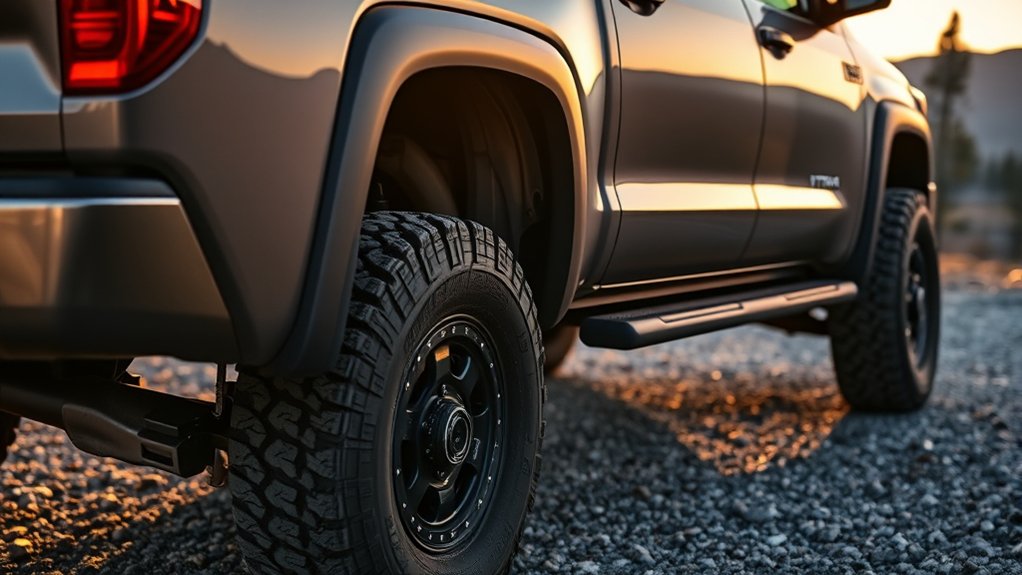
TRD stands for Toyota Racing Development, Toyota’s performance and motorsports engineering brand. On a Toyota Tundra, the TRD badge can identify an off-road package, the more specialized TRD Pro grade, a model-year-specific appearance package, or a genuine accessory. The exact hardware depends on the truck’s year, trim, drivetrain, cab, and market.
Quick Answer
TRD means Toyota Racing Development. On a Tundra, it usually signals Toyota-engineered upgrades for off-road traction, suspension, underbody protection, wheels, tires, styling, or performance. The TRD Off-Road Package adds capability to select grades, while TRD Pro is a dedicated, higher-spec off-road model. Equipment varies by model year.
Key Takeaways
- TRD is not one universal package. Its meaning and equipment change by Tundra model year and configuration.
- TRD Off-Road is an available package on select Tundras; TRD Pro is a separate, more specialized off-road grade.
- For the 2026 U.S. Tundra, Toyota lists Multi-Terrain Select, Crawl Control, Downhill Assist Control, an electronically locking rear differential, and a Multi-Terrain Monitor on TRD Pro and TRD Off-Road Package-equipped trucks.
- Older TRD Sport information should not be treated as current. Toyota’s 2026 Tundra lineup highlights TRD Off-Road, TRD Pro, and TRD Rally instead.
- Check the window sticker or VIN-specific build sheet before buying, because badges and dealer-installed accessories do not prove that a truck has every factory TRD feature.
What Does TRD Mean on a Toyota Tundra?
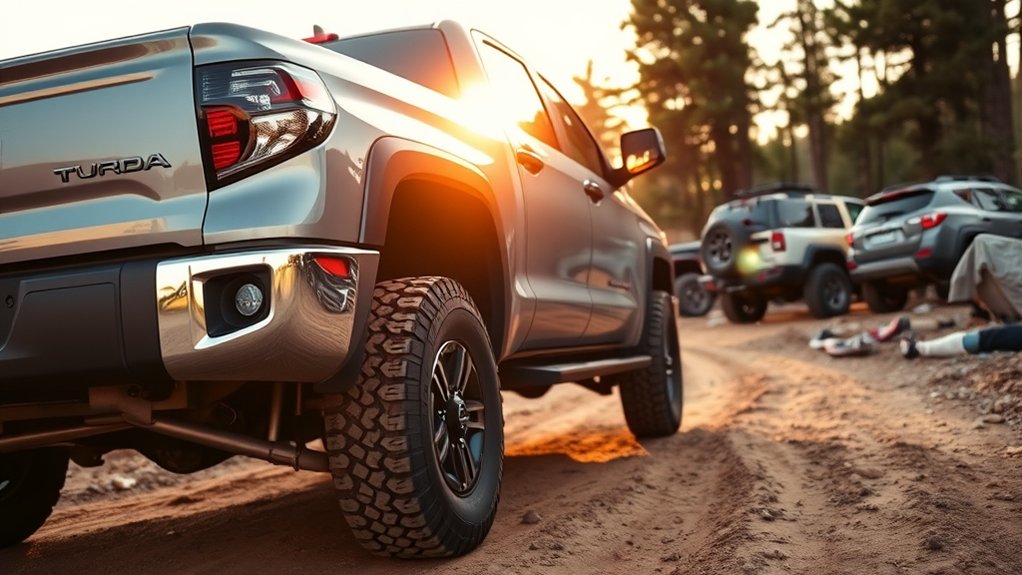
TRD is short for Toyota Racing Development. The name connects Toyota’s racing and performance engineering work with factory vehicles, accessories, and off-road packages. On the Tundra, however, a TRD badge does not always mean the same thing.
Depending on the model year, “TRD” may refer to:
- TRD Off-Road Package: A factory option that adds off-road-focused hardware and electronic trail aids to eligible Tundra grades and configurations.
- TRD Pro: A dedicated factory grade with more specialized suspension, wheels, tires, protection, styling, and standard off-road equipment.
- TRD Rally or another special package: A model-year-specific package that may combine off-road equipment with heritage-inspired appearance details.
- TRD accessories or performance parts: Individual Toyota accessories that can be installed without turning the truck into a factory TRD Pro or TRD Off-Road model.
Note: Toyota changes package names, eligible trims, wheel sizes, suspension components, and standard equipment over time. Always compare information with the specifications for the exact model year and market you are shopping.
TRD Off-Road vs. TRD Sport on the Toyota Tundra
The original TRD Sport comparison needs a model-year warning. TRD Sport appeared on older Tundras as a road-oriented package, but it is not listed as a current 2026 U.S. Tundra grade or featured package. For the 2026 model year, Toyota promotes the available TRD Off-Road Package, the TRD Pro grade, and the TRD Rally Package.
| Comparison | TRD Off-Road | TRD Sport |
|---|---|---|
| Current status | Available on select current Tundra grades and configurations. | An older, model-year-specific Tundra package; not shown in Toyota’s 2026 U.S. Tundra lineup. |
| Primary purpose | Traction, low-speed trail control, underbody protection, and off-pavement capability. | Sportier street appearance and road-focused handling, depending on the model year. |
| Typical equipment | For 2026: Multi-Terrain Select, Crawl Control, Downhill Assist Control, an electronic locking rear differential, and Multi-Terrain Monitor, plus package-specific off-road hardware. | Varied by year and could include street-oriented suspension tuning, wheels, tires, and appearance details. |
| Best fit | Drivers who regularly use dirt roads, trails, campsites, snow, mud, or uneven terrain. | Used-truck shoppers who want a sportier older Tundra and have confirmed its original equipment. |
Do not rely on a universal claim such as “both use 17-inch wheels.” Wheel and tire sizes differ substantially by generation, grade, package, and configuration.
Key Benefits of TRD Packages for the Tundra
A factory TRD option can add meaningful capability, but the benefits depend on which TRD version you choose.
- Better low-speed control: Multi-Terrain Select and Crawl Control can help manage wheelspin and speed on difficult surfaces.
- Improved traction: The electronically locking rear differential on current TRD Pro and TRD Off-Road Package trucks can help both rear wheels turn together when extra traction is needed in the conditions Toyota specifies.
- More trail visibility: Multi-Terrain Monitor camera views can help the driver see obstacles near the truck.
- Purpose-built suspension and tires: TRD Pro receives more specialized off-road suspension, all-terrain tires, and model-specific wheels.
- Undercarriage protection: Skid plates help shield vulnerable components from trail impacts, although they do not make the vehicle damage-proof.
- Integrated factory engineering: Factory-installed hardware is integrated into the truck’s original configuration rather than assembled from unrelated aftermarket components.
- Distinctive appearance: TRD wheels, badging, grille treatments, colors, and graphics give the Tundra a more rugged look.
Pro Tip: Choose TRD equipment for the terrain you actually drive. An all-terrain tire and off-road suspension can add capability, but they may also change road noise, ride feel, fuel use, replacement cost, and handling compared with a street-oriented setup.
What Makes the Tundra TRD Pro Stand Out?
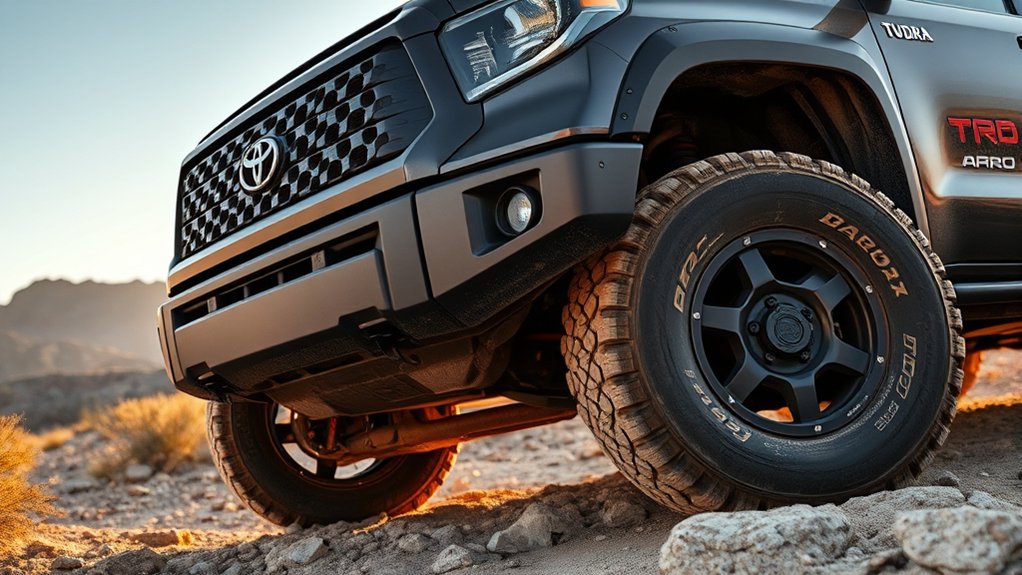
TRD Pro is more than an appearance package. It is the Tundra’s dedicated off-road grade, with hardware and technology that go beyond the regular TRD Off-Road Package. For the 2026 U.S. model, Toyota highlights the following equipment:
| Feature | 2026 Tundra TRD Pro Specification | Why It Matters |
|---|---|---|
| TRD Pro suspension | TRD-tuned FOX shocks with a 1.1-inch front lift. | Improves damping and clearance for rough terrain while retaining road usability. |
| Wheels and tires | 18-inch forged-aluminum BBS wheels with Falken WILDPEAK all-terrain tires. | Provides a durable wheel-and-tire setup intended for mixed surfaces. |
| Off-road controls | Multi-Terrain Select, Crawl Control, Downhill Assist Control, and Multi-Terrain Monitor. | Helps the driver manage traction, speed, descents, and visibility on technical terrain. |
| Rear differential | Electronically locking rear differential for added traction in 4WD Low applications. | Helps when one rear wheel has less grip than the other. |
| Protection and styling | TRD aluminum front skid plate and heritage-inspired “TOYOTA” grille with integrated lighting. | Adds underbody protection and model-specific identity. |
The current Tundra TRD Pro uses FOX shocks and 18-inch BBS wheels—not the Bilstein shocks and generic 17-inch-wheel specification commonly carried over from older Tundra articles.
The 2026 model also makes IsoDynamic front seats available on TRD Pro. These seats are designed to help manage body movement over rough terrain, but they are optional rather than a universal feature on every TRD Pro.
Performance Enhancements in TRD Packages
TRD equipment can improve a Tundra’s performance, but “performance” does not always mean more horsepower. Most TRD off-road upgrades focus on traction, suspension control, tire grip, protection, and driver confidence.
The standard 2026 Tundra powertrains are Toyota’s i-FORCE twin-turbo V6 and available i-FORCE MAX twin-turbo V6 hybrid. Toyota rates the stronger standard versions at up to 389 horsepower and 479 lb.-ft. of torque for i-FORCE, or 437 horsepower and 583 lb.-ft. for i-FORCE MAX. A TRD badge by itself does not automatically raise those ratings.
Toyota has also offered separate TRD performance accessories or packages that can include intake, exhaust, or calibration changes. Those products are distinct from the TRD Off-Road Package and may have their own fuel, compatibility, emissions, installation, and warranty requirements.
Warning: Do not assume an exhaust, lift, tire, or engine modification is factory-approved for every Tundra. Confirm compatibility by VIN, follow the owner’s manual, preserve required emissions equipment, and consider effects on payload, towing, braking, handling, warranty coverage, and driver-assistance calibration.
Reasons to Choose a Tundra With TRD Options
A Tundra with TRD equipment makes the most sense when you value off-road capability and want integrated factory hardware rather than building a truck entirely with aftermarket parts.
Enhanced Off-Road Capability
Current TRD Off-Road and TRD Pro models provide electronic trail aids that help with low-speed control, wheelspin, descents, and obstacle visibility. The locking rear differential can add traction in the operating conditions Toyota specifies, while all-terrain tires and package-specific suspension help the truck cope with loose or uneven surfaces.
Purpose-Built Performance Features
TRD Pro adds a more specialized suspension and wheel-and-tire package than a regular Tundra. The value is not simply a badge or aggressive exhaust note; it is the coordinated combination of suspension, tires, traction technology, protection, and factory tuning.
The fuel tank is not a current TRD Pro advantage. Toyota states that every 2026 Tundra grade now receives a 32.2-gallon tank. The older 38-gallon claim belongs to previous-generation configurations and should not be used as a current specification.
Rugged Aesthetic Appeal
TRD models also look different. Depending on the version, you may get unique wheels, tires, badging, graphics, skid plates, grille treatments, lighting, interior trim, and exclusive colors. On the 2026 TRD Pro, Toyota highlights a heritage-inspired “TOYOTA” grille and the model-year-exclusive Wave Maker exterior color.
How to Identify the Exact TRD Equipment on a Tundra
Badges alone are not enough, especially on used trucks. Owners can add decals, wheels, skid plates, exhaust systems, or grille parts after purchase.
- Check the original window sticker. It should name the factory grade and any installed package.
- Use the VIN with a Toyota dealer. Ask for the original factory build and port- or dealer-installed accessory record.
- Inspect the hardware. Verify the suspension, differential controls, skid plates, cameras, wheels, tires, and interior equipment.
- Confirm the model year. Do not compare a second-generation Tundra’s TRD equipment with a current third-generation truck.
- Review modification records. Aftermarket lifts, tires, tuners, and exhausts may alter how the truck drives and what warranty coverage remains.
Which Tundra TRD Option Is Best?
- Choose TRD Off-Road when you want useful factory trail technology on an eligible mainstream or luxury grade without paying for every TRD Pro feature.
- Choose TRD Pro when off-road suspension, all-terrain tires, protection, distinctive styling, and the most complete factory TRD setup matter more than price or maximum street comfort.
- Consider TRD Rally when shopping a 2026 Tundra and you like Toyota’s Baja-inspired styling with available off-road-oriented upgrades.
- Consider an older TRD Sport only after confirming the exact model-year equipment and deciding that its more street-oriented character fits your needs.
- Choose a non-TRD grade when towing, payload, quiet highway travel, luxury, or lower replacement costs matter more than specialized trail equipment.
No TRD package changes the truck’s door-jamb payload label. Towing and payload limits depend on the exact configuration, installed equipment, passengers, cargo, hitch setup, and trailer.
Frequently Asked Questions
What is the TRD package on a Toyota Tundra?
TRD is a family of Toyota performance and off-road equipment, not one universal package. On a current Tundra, it may refer to the available TRD Off-Road Package, the TRD Pro grade, the TRD Rally Package, or individual TRD accessories. The included features depend on model year and configuration.
Is TRD better than SR5?
They are not direct opposites. SR5 is a Tundra grade, while TRD Off-Road is a package that may be available on an eligible grade. A properly equipped SR5 TRD Off-Road can be better for trails, while a regular SR5 may cost less and provide a simpler road-focused setup.
What is better, TRD or Limited?
Limited is a comfort- and feature-oriented grade; TRD describes performance or off-road equipment. A Limited may also be available with TRD Off-Road equipment in some model years and configurations. Choose based on the exact build rather than the badge alone.
Does a Tundra TRD package add horsepower?
Usually not. TRD Off-Road and TRD Pro primarily improve suspension, traction, protection, wheels, tires, and trail-control features. Separate TRD performance parts or packages may change engine output, but they are not automatically included with every TRD-badged Tundra.
Does the Tundra TRD Pro have a 38-gallon fuel tank?
The answer depends on model year. Some previous-generation Tundras used a 38-gallon tank, but Toyota states that all 2026 Tundra grades have a 32.2-gallon tank. Use the specification for the exact truck you are evaluating.
Is TRD Pro worth the extra cost?
It can be worthwhile for drivers who regularly use rough trails and value its FOX suspension, all-terrain tires, locking differential, cameras, skid plate, and distinctive design. For mostly paved driving, a less specialized Tundra may provide better value, ride comfort, tire life, or fuel economy.
Conclusion
TRD means Toyota Racing Development, but the badge alone does not tell you everything about a Tundra. TRD Off-Road is a package for select trucks, TRD Pro is a dedicated off-road grade, and older TRD Sport information may not apply to a current model. Match the exact year and configuration to Toyota’s specifications, verify the build by VIN, and choose the setup that fits your real driving—not just the decal.
Sources
- Toyota — 2026 Tundra — current U.S. lineup, powertrain ratings, TRD family, TRD Pro wheels, tires, suspension, lift, and grille.
- Toyota USA Newsroom — 2026 Toyota Tundra updates — 32.2-gallon fuel tank, IsoDynamic-seat availability, TRD Rally updates, Multi-Terrain Select, Crawl Control, Downhill Assist Control, locking rear differential, and Multi-Terrain Monitor.
- Toyota — TRD Pro Series — current Tundra TRD Pro suspension, FOX shocks, BBS wheels, Falken all-terrain tires, skid plate, and heritage grille.
- Toyota Racing — Toyota’s current racing program and the connection between racing and performance-ready vehicles.
