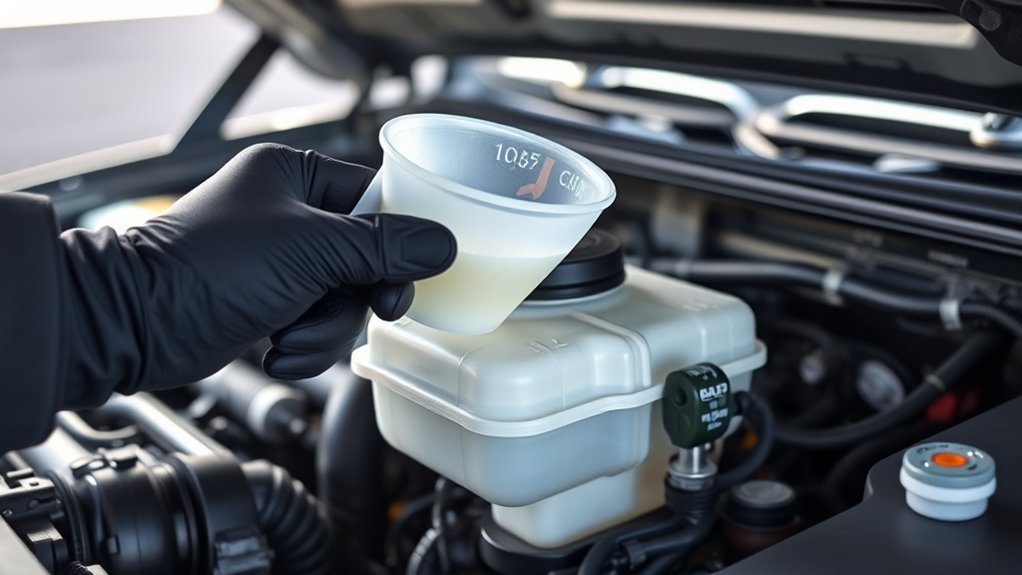
Your Toyota Tacoma may or may not use power steering fluid, depending on its model year. Tacomas with hydraulic steering need the correct fluid level and specification, while the redesigned 2024-and-newer U.S. Tacoma uses electric power steering and has no hydraulic reservoir. Confirm your truck’s system before buying fluid or opening anything under the hood.
Quick Answer
The correct Toyota Tacoma power steering fluid depends on the model year. The 2024-and-newer U.S. Tacoma uses electric power steering and needs no fluid. For an earlier hydraulic-steering Tacoma, check the owner’s manual and use only a fluid whose label explicitly matches the listed specification, often DEXRON II or III ATF.
Key Takeaways
- The 2024-and-newer U.S. Tacoma uses electric power steering and does not have a power steering fluid reservoir.
- Hydraulic-system Tacomas require the exact fluid specification listed in the model-year owner’s manual.
- Do not assume every product carrying the DEXRON name is suitable for your truck.
- Low fluid usually indicates a leak because a sealed hydraulic steering system should not consume fluid.
- A reservoir exchange is safer for most DIY owners than disconnecting a return hose for a complete flush.
- Never use DOT 3, DOT 4, or DOT 5 brake fluid in a Tacoma power steering system.
At a Glance
| Time Required | About 10 minutes for an inspection or 30 to 60 minutes for a reservoir exchange |
| Difficulty | Easy for checking and topping off; moderate for exchanging fluid |
| Tools Needed | Owner’s manual, gloves, flashlight, shop towels, clean funnel, dedicated fluid extractor, and sealed drain container |
| Cost | Low for a basic inspection or reservoir exchange; leak repairs and professional flushing cost more |
Does Your Tacoma Use Power Steering Fluid?
Start by identifying the steering system. The fourth-generation Tacoma introduced for the 2024 model year uses electric power steering. It relies on an electric motor rather than a belt-driven hydraulic pump, so you will not find a power steering fluid reservoir.
Earlier Tacoma models generally use hydraulic power steering. These trucks have a reservoir, pump, hoses, and hydraulic steering gear. Open the owner’s manual or inspect the labeled components under the hood before assuming your truck needs fluid.
Warning: Do not pour fluid into an unfamiliar reservoir. Brake fluid, coolant, windshield washer fluid, transmission fluid, and power steering fluid may be stored in nearby containers. Confirm the reservoir by its cap marking and your model-year manual.
| Tacoma Model Year | Steering System | Fluid Guidance |
|---|---|---|
| 2024 and newer U.S. models | Electric power steering | No hydraulic power steering fluid or reservoir |
| Earlier hydraulic-system models | Hydraulic power steering | Use only the specification listed in the exact model-year owner’s manual |
Understanding Power Steering Fluid: Essential Maintenance Practices
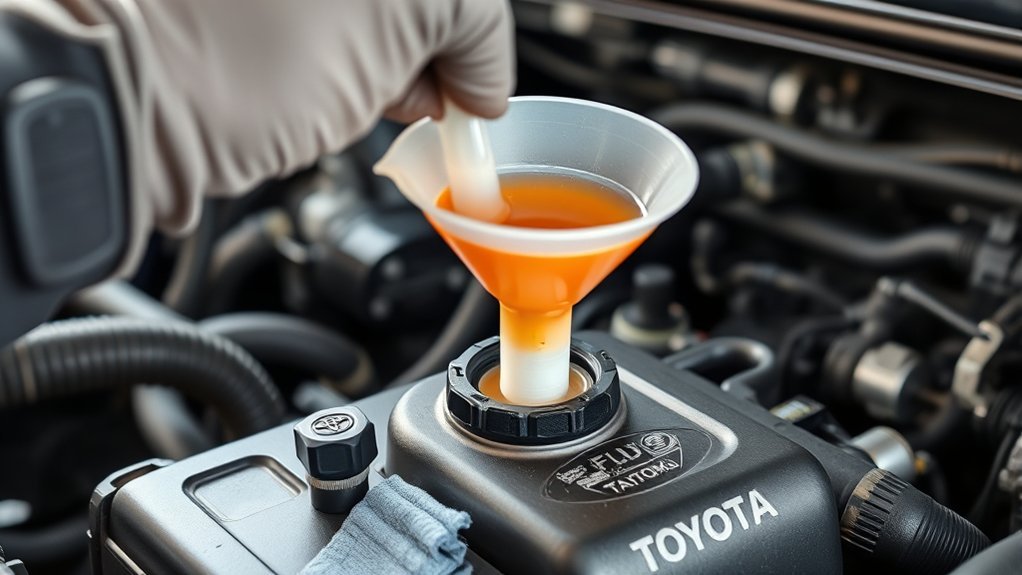
Power steering fluid transfers hydraulic pressure from the pump to the steering gear. It also lubricates the pump and internal seals. A correct fluid level helps the system provide smooth steering assistance without drawing air into the pump.
A hydraulic steering system should not regularly consume fluid. If the level continues to fall after topping it off, inspect the reservoir, pump, pressure hose, return hose, steering gear, clamps, and connections for leakage.
Fluid condition also matters. Compatible fresh fluid may appear red, pink, or amber, depending on the product. Fluid that looks unusually dark, smells burnt, contains visible particles, or develops persistent foam needs further inspection.
Note: Color alone cannot confirm that a fluid is correct or worn out. Compare it with fresh fluid from the same container and consider its smell, clarity, service history, and the truck’s steering symptoms.
How to Properly Check Your Tacoma’s Power Steering Fluid
Park the truck on level ground, engage the parking brake, and switch off the engine. Follow the temperature instructions in your owner’s manual because some reservoirs use separate COLD and HOT level ranges.
- Confirm that the truck has hydraulic steering. A 2024-or-newer U.S. Tacoma uses electric power steering and has no fluid to check.
- Locate the marked reservoir. Use the owner’s manual or under-hood diagram instead of relying on a universal location.
- Clean around the cap. Wipe away dust and grit before opening it so contamination does not enter the system.
- Read the level. Use the translucent reservoir marks or the cap-mounted dipstick, depending on the design.
- Inspect the condition. Look for foam, cloudiness, particles, a burnt odor, or a large difference from fresh compatible fluid.
- Reinstall the cap securely. Wipe away any spilled fluid and inspect the area for fresh leakage.
Pro Tip: Photograph the level and fluid appearance during each oil change. A series of photos can reveal a slow leak or gradual contamination that may be hard to notice during one inspection.
[Amazon Products Picked for You]

100,000 mile fluid life

Genuine OEM Toyota Transmission Fluid

ALL ASIAN CAR COVERAGE: Fully compatible with all Asian vehicles, including Subaru, Honda, Toyota, Lexus, Acura, and Mitsubishi
Choosing the Right Power Steering Fluid for Your Tacoma
Use the fluid specification printed in the owner’s manual for your exact Tacoma year and configuration. You can retrieve model-specific information through the Toyota Manuals and Warranties portal.
Many hydraulic-system Tacoma manuals specify an automatic transmission fluid meeting a DEXRON II or DEXRON III requirement. However, do not buy a product based only on the word “DEXRON.” Read the back label and confirm that the fluid manufacturer explicitly recommends the product for the specification and power steering application listed by Toyota.
Do not substitute Toyota Type T-IV, Toyota WS, brake fluid, engine oil, gear oil, or a universal hydraulic fluid unless the model-specific manual expressly calls for it. Transmission fluid requirements and power steering requirements are separate, even when both systems use an ATF-type product.
Warning: Do not mix an unknown fluid with a new product. If you cannot identify what is already in the system, have the fluid inspected and use the factory repair procedure before adding more.
[Amazon Products Picked for You]

PREMIUM DEXRON 3 TRANSMISSION FLUID – Specially formulated to meet or exceed GM Dexron III and Ford Mercon requirements, delivering reliable performance for a wide range of vehicles.

For use in 95% of vehicles including most CVTs in operation with US registered light duty applications

The service solution for ALL European, North American, and Asian vehicles (Honda fluid recommended for Honda/Acura vehicles)
When and How to Change Your Power Steering Fluid
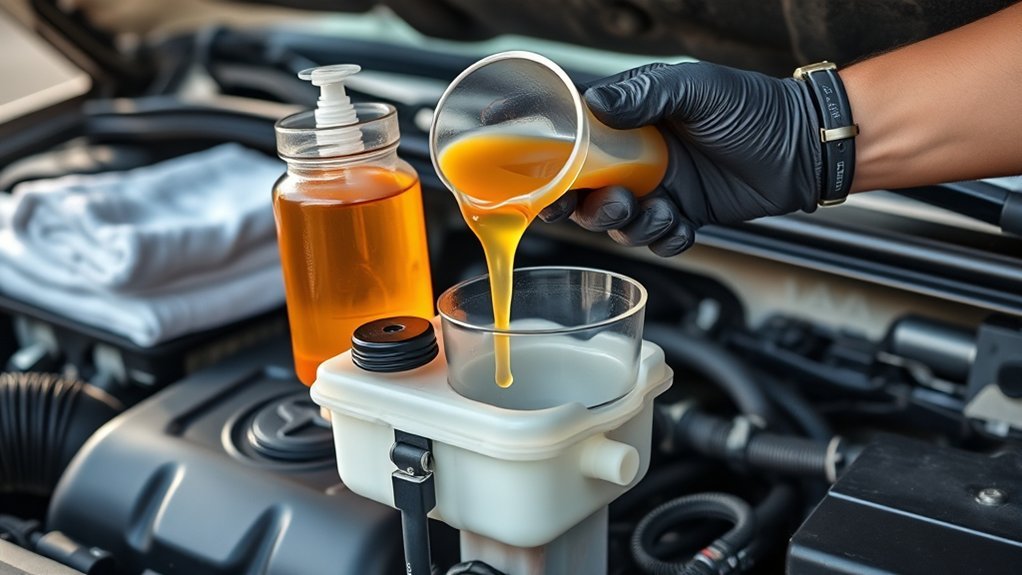
Toyota does not provide one universal power steering fluid replacement interval that applies to every Tacoma. Follow the maintenance information for your exact model year. Consider an inspection or fluid exchange when the fluid is contaminated, repairs have opened the hydraulic system, the pump has been replaced, or steering symptoms suggest air or degraded fluid.
[Amazon Products Picked for You]

Advanced formulation technology provides outstanding protection to the entire power steering system while delivering smooth performance under the most severe operating conditions

ALL VEHICLES - Works for all European, Asian, and US vehicles power steering / servo hydraulic steering systems in modern vehicles (For Honda Vehicles use our Asian Car Power Steering Fluid), this includes SUVs, pickup trucks.
Signs Fluid Needs Change
| Observation | Possible Meaning | Recommended Action |
|---|---|---|
| Dark fluid with a burnt odor | Heat exposure or fluid deterioration | Confirm the correct specification and inspect the system before exchanging the fluid |
| Foam or many small bubbles | Air entry, low level, overfilling, or a suction-side leak | Correct the level, inspect hoses and clamps, and bleed the system as directed |
| Visible particles or metallic debris | Possible component wear or contamination | Stop routine servicing and arrange a professional inspection |
| Repeatedly low level | External or internal leakage | Find and repair the leak instead of repeatedly topping off |
| Whining or stiff steering | Low fluid, trapped air, pump wear, belt trouble, or another steering fault | Check the level and arrange diagnosis if the symptom continues |
Recommended Fluid Types
The correct product is the one that matches your model-specific Toyota requirement. If the manual calls for DEXRON II or DEXRON III ATF, choose a currently available fluid whose manufacturer explicitly lists compatibility with that specification and with hydraulic power steering service.
- Read the owner’s manual and reservoir cap before purchasing fluid.
- Check the product’s back label or technical data sheet, not only the front branding.
- Use a sealed, clean container and a clean funnel reserved for that fluid.
- Do not mix brake fluid, Toyota WS, coolant, or other unrelated fluids into the system.
- Do not add stop-leak products unless a qualified repair professional recommends one for a specific diagnosed problem.
Step-by-Step Reservoir Exchange
A reservoir exchange removes much of the accessible old fluid without opening a steering hose. It is safer and cleaner than a return-line flush for most home mechanics, although it does not replace every drop in the steering gear and lines.
- Verify the system and specification. Confirm that the Tacoma has hydraulic power steering and obtain the exact compatible fluid.
- Park safely. Use level ground, engage the parking brake, switch off the engine, and allow hot components to cool.
- Protect the work area. Wear gloves, place absorbent material around the reservoir, and keep fluid away from belts, painted surfaces, and hot exhaust parts.
- Clean the reservoir cap. Prevent dirt from falling into the hydraulic system.
- Remove the old reservoir fluid. Use a clean fluid extractor or turkey baster reserved only for automotive fluid. Transfer the removed fluid into a sealable container.
- Add the correct fresh fluid. Fill only to the appropriate COLD mark. Do not overfill.
- Circulate the fluid. Reinstall the cap, start the engine, and slowly turn the steering wheel from side to side. Do not hold it against either full-lock stop.
- Switch off and recheck. Allow bubbles to settle, inspect the level, and add only enough fluid to reach the correct mark.
- Repeat when appropriate. Several reservoir exchanges with short driving periods between them can gradually replace more old fluid without disconnecting a hose.
- Inspect and test. Check for leaks, confirm normal steering assistance, and recheck the level after a short drive.
A complete flush normally requires access to the low-pressure return circuit and a model-specific procedure. Incorrect hose identification or an empty reservoir can damage the pump quickly. Use the Toyota repair procedure or have a qualified shop complete this service.
Warning: Never run a hydraulic power steering pump with an empty reservoir. Stop immediately if the pump becomes unusually loud, the fluid foams heavily, or steering assistance suddenly decreases.
Common Symptoms of Low Power Steering Fluid
Low fluid can cause pump noise, inconsistent steering assistance, and stiffness during low-speed turns. However, those symptoms do not prove that the fluid is the only problem. A worn drive belt, failing pump, damaged hose, steering gear problem, low tire pressure, suspension fault, or binding steering component can feel similar.
Whining or Screeching Noises
A hydraulic pump may whine when the level is low or air enters the system. The sound often changes as you turn the wheel. A screech can also come from a slipping accessory belt rather than the fluid itself.
- Check the fluid level using the correct temperature range.
- Look for foam, which can indicate trapped air or a suction-side leak.
- Inspect the belt if the sound resembles a sharp squeal.
- Do not hold the steering wheel against full lock because that raises system pressure and noise.
If the noise remains after correcting the level and bleeding trapped air, have the pump, belt drive, hoses, and steering gear inspected.
Difficulty Steering or Handling
Low hydraulic fluid may make the steering wheel feel heavy, jerky, or inconsistent, especially while parking. Severe loss of assistance can make the truck harder to control even though a mechanical connection remains.
Stop driving and arrange service if steering effort increases suddenly, the wheel binds, fluid pours from the truck, or steering response becomes unpredictable. Fluid replacement will not repair a damaged pump, rack, steering gear, belt, or linkage component.
Visible Fluid Leaks
Power steering fluid may leak from hose crimps, clamps, pump seals, the reservoir, or the steering gear. Fluid can travel across splash shields and frame components, so the drip location may not identify the source.
- Inspect the reservoir and cap for wetness or overfilling.
- Follow the pressure and return hoses with a flashlight.
- Look for damp hose crimps, loose clamps, and fluid around the pump shaft.
- Clean the area and recheck it after a short drive if the source is unclear.
- Repair an active leak instead of relying on repeated top-offs.
The Importance of Regular Power Steering Fluid Checks for Vehicle Health
A quick visual inspection can reveal a slow leak before the reservoir becomes empty. Check the hydraulic steering system during routine under-hood maintenance and before a long trip, especially if the truck has recently developed noise or heavier steering.
Record the level, look for wet hoses, and inspect the fluid for foam or debris. If the level is stable and the fluid remains clean, follow the model-specific maintenance guide rather than changing it solely because a generic mileage number has been reached.
A falling power steering fluid level is a leak warning, not normal fluid consumption.
Tips for Maintaining Your Power Steering System
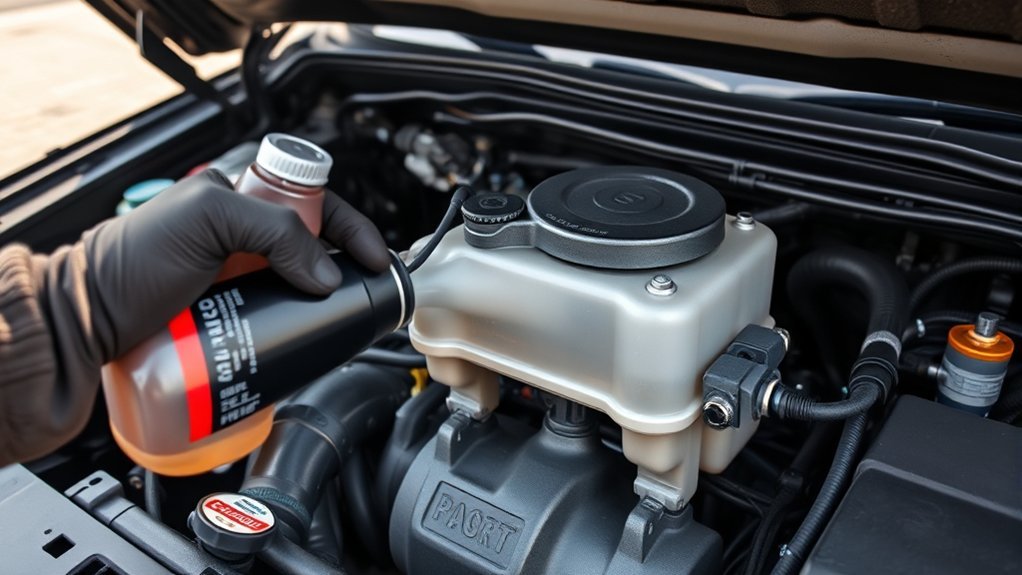
- Confirm the exact model-year fluid requirement before topping off or exchanging fluid.
- Keep the reservoir cap, funnel, and extractor clean to prevent grit from entering the system.
- Maintain the level between the correct marks without overfilling.
- Inspect hoses, clamps, the reservoir, pump, and steering gear for seepage.
- Check the accessory drive belt on models with a belt-driven hydraulic pump.
- Avoid holding the steering wheel against full lock for more than a moment.
- Investigate persistent foam because it can indicate air entry, incorrect level, or a leak.
- Use the model-specific repair procedure after replacing a pump, hose, or steering gear.
- Store removed fluid in a sealed, labeled container and take it to an approved automotive-fluid recycler or household hazardous waste facility.
Related Guides
Frequently Asked Questions
What kind of power steering fluid does a Toyota Tacoma take?
It depends on the model year. For a hydraulic-steering Tacoma, use the exact specification in the owner’s manual. Many manuals call for an ATF meeting a DEXRON II or DEXRON III requirement. Confirm that the product label explicitly lists compatibility with the specified application before using it.
Does a 2024 or newer Toyota Tacoma need power steering fluid?
No. The redesigned 2024-and-newer U.S. Tacoma uses electric power steering. It does not have a hydraulic power steering pump, fluid reservoir, or routine power steering fluid service.
Does Toyota use a special power steering fluid?
Toyota’s requirement varies by vehicle and year. Some hydraulic Tacoma manuals specify an ATF-type product rather than a bottle labeled only as power steering fluid. Follow the specification, not a brand name, bottle color, or generic recommendation.
Does it matter which power steering fluid I use?
Yes. Fluid viscosity, additives, seal compatibility, and low-temperature performance vary. An unsuitable product can cause noise, leaks, poor assistance, seal damage, or pump wear. Use only a fluid that explicitly matches the owner’s manual requirement.
Can I use DOT 3 brake fluid for power steering?
No. DOT 3 is brake fluid designed for a hydraulic brake system. It is chemically different from the ATF-type products commonly specified for hydraulic Tacoma steering systems and can damage seals and other components.
How often should Tacoma power steering fluid be changed?
Do not rely on one universal mileage interval. Follow the maintenance information for your exact model year and inspect the fluid after leaks, steering repairs, contamination, pump replacement, unusual noise, or a noticeable change in steering assistance.
Conclusion
Correct Toyota Tacoma power steering maintenance starts with the model year. A 2024-or-newer U.S. Tacoma uses electric power steering and needs no hydraulic fluid. For an earlier hydraulic model, confirm the exact specification in the owner’s manual, keep the level correct, and investigate any repeated fluid loss.
Use a reservoir exchange for basic DIY maintenance, avoid unverified fluid substitutions, and leave return-line flushing or major leak repairs to the factory procedure or a qualified technician. Prompt attention to noise, foam, stiffness, and leakage can help prevent pump and steering-system damage.
Sources
- Toyota Manuals and Warranties — model-specific owner’s manuals, maintenance information, and fluid requirements
- Toyota USA Newsroom: 2024 Toyota Tacoma — confirms the introduction of electric power steering for the redesigned Tacoma
- 49 CFR 571.116, Motor Vehicle Brake Fluids — identifies DOT 3 as fluid intended for hydraulic brake systems
- U.S. Environmental Protection Agency: Household Hazardous Waste — guidance for handling and disposing of automotive household waste
