
Last updated: September 16, 2026.
The P0012 code on a Toyota Tacoma means the ECM has detected that the Bank 1 intake (“A”) camshaft is more retarded than commanded or is not changing timing as expected. Treat P0012 as a VVT-system diagnosis, not proof that one part has failed. Start by saving the code and freeze-frame data, checking the engine-oil level and specification, and looking for related VVT or camshaft-position codes before replacing parts.
Quick Answer
- Meaning: Bank 1 intake-cam timing is over-retarded or not responding as commanded.
- Common areas to check: low/contaminated oil, incorrect oil viscosity, restricted oil flow, the OCV/VVT solenoid, its filter or wiring, the camshaft timing gear/phaser, and mechanical valve timing.
- Possible symptoms: a check-engine light, rough idle, hesitation, reduced power, hard starting, or worse fuel economy. Some trucks may show few symptoms beyond the light.
- First diagnostic move: record all stored and pending codes plus freeze-frame data, then check the oil level and condition before clearing anything.
- Stop driving and arrange a tow if the P0012 appears with a low-oil-pressure warning, severe rattling, stalling, overheating, smoke, or major power loss.
Source basis: Toyota service information for older Tacoma engines shows P0012 diagnosis centered on VVT operation, valve timing, the oil control valve, and the OCV filter. Exact tests and specifications vary by model year and engine, so use the Toyota repair information for your specific Tacoma.
What Does the P0012 Code Mean for Your Toyota Tacoma?
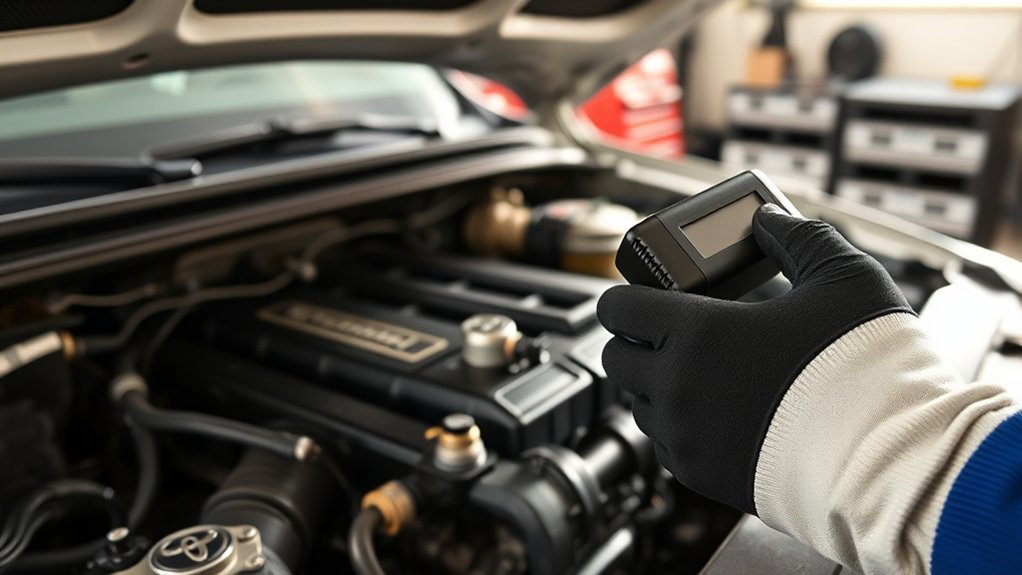
When your Toyota Tacoma stores P0012, the ECM sees the Bank 1 intake camshaft timing as too far retarded, or it sees too little change when it commands the VVT system to move the camshaft. Bank 1 is the bank that contains cylinder No. 1. On an inline-four engine there is only one cylinder bank; on a V6, Bank 1 identifies the side containing cylinder No. 1.
The code does not prove that the camshaft position sensor, timing chain, or VVT solenoid has failed. Toyota VVT systems use engine-oil pressure, an oil control valve (OCV, often called the VVT solenoid), and a camshaft timing gear/phaser to change intake-cam timing. A restriction, electrical fault, mechanical timing problem, or oil-pressure problem can produce the same code.
The OBD-Codes technical reference gives the generic P0012 definition. For a Tacoma, the model-year Toyota service procedure should control the actual test sequence and specifications.
What Symptoms Can a Tacoma P0012 Code Cause?
A check-engine light may be the only obvious sign, but camshaft timing that is not following the ECM command can also affect drivability.
- Rough or unstable idle
- Hesitation or reduced acceleration
- Reduced fuel economy
- Hard starting or occasional stalling
- Reduced engine power
- Abnormal engine noise if there is an oil-pressure or mechanical-timing problem
Do not use symptoms alone to identify the failed part. A rattle, for example, does not specifically prove an “over-retarded camshaft”; it can point to a mechanical timing, lubrication, or other engine problem that needs prompt diagnosis. For broader warning-light triage, see the Toyota Tacoma check-engine light guide.
What Causes the P0012 Code to Trigger?
P0012 can be triggered by several faults that prevent the intake camshaft from reaching the timing the ECM commands. The most useful way to think about the code is by system: oil supply, OCV/VVT control, mechanical timing, and electrical feedback.
[Amazon Products Picked for You]

GENUINE OEM: Original Toyota/Lexus factory oil filter part number 90915-YZZN1, ensuring perfect fit and optimal performance for your vehicle

100% Genuine Oil Filters: These oil filters are designed specifically for select Toyota/Lexus vehicles and is manufactured to meet all OEM specifications for quality and performance. These are the latest version of this filter.

Effectively removes contaminants
Oil Level, Viscosity, Pressure, or Flow Problems
The VVT system depends on correctly specified engine oil and adequate oil pressure. Low oil, degraded oil, the wrong viscosity, sludge, or a restricted oil passage can keep the camshaft timing mechanism from responding correctly.
If the oil is low, correct the level and check for leaks or consumption. If the oil is overdue, contaminated, or the wrong viscosity, service it with the specification required for the truck’s exact model year and engine. A P0012 that appears soon after an oil change also deserves a check for the correct oil grade, correct fill level, and a properly installed filter.
If the truck shows a low-oil-pressure warning, do not assume an oil change alone is enough. Stop the engine and diagnose the pressure problem before continuing to drive.
OCV, VVT Gear, Wiring, and Mechanical Timing Problems
The oil control valve (OCV/VVT solenoid) can stick, become restricted, or fail electrically. Some Tacoma engines also use a serviceable OCV filter that can become clogged. Damaged wiring or a poor connector can prevent the ECM from controlling the valve.
If oil supply and electrical control are correct, diagnosis moves toward the camshaft timing gear/phaser and mechanical valve timing. A loose, worn, or jumped timing chain can put actual cam timing outside the expected range. A related camshaft or crankshaft sensor fault can also confuse the timing calculation, which is why related DTCs should be diagnosed rather than ignored.
How Serious Is the P0012 Code, and Can You Drive?
P0012 deserves prompt diagnosis, but the code by itself does not tell you whether the truck is safe for a specific trip. If the engine runs smoothly, oil pressure is normal, there is no severe noise, and the check-engine light is steady, a short and gentle trip for diagnosis may be reasonable.
Stop driving and arrange professional help if you also see a low-oil-pressure warning, flashing check-engine light with severe rough running, overheating, smoke, repeated stalling, loud mechanical rattling, or major loss of power. Those conditions can indicate a problem more serious than the P0012 code alone.
Avoid towing, hard acceleration, high engine speed, and long trips until the cause is known. Do not use an arbitrary “one week” deadline; urgency depends on oil pressure, noise, drivability, and the underlying fault.
How Do You Diagnose P0012 on a Toyota Tacoma?
Use a model-year-specific diagnostic path. Toyota service information for older Tacoma engines checks VVT operation, mechanical valve timing, the OCV, and the OCV filter rather than treating P0012 as an automatic sensor or timing-chain replacement.
Start With Codes, Freeze-Frame Data, and Oil Checks
- Scan before clearing anything. Record P0012, all stored and pending codes, and the freeze-frame data. Related camshaft-position, crankshaft-position, oil-pressure, or VVT circuit codes can change the diagnostic path.
- Check the oil level on level ground. Correct a low level with the exact oil specification required for the truck.
- Verify oil condition and viscosity. If the oil is contaminated, overdue, or the wrong grade, correct that before condemning VVT hardware.
- Inspect for an oil-pressure warning, leaks, sludge, and obvious wiring damage. A true oil-pressure problem takes priority over normal P0012 troubleshooting.
Test the VVT System Before Replacing Parts
- Inspect the Bank 1 OCV/VVT solenoid connector and wiring for looseness, corrosion, damaged insulation, or oil contamination.
- Use Toyota Techstream or a capable bidirectional scan tool, when supported, to compare commanded and actual cam timing and to run the applicable VVT active test.
- Follow the service manual for your exact engine to test the OCV. Older Tacoma procedures may include a resistance check and a removed-component actuation test; do not reuse those specifications on a different engine.
- Inspect the OCV filter where the engine uses a serviceable filter. A clogged filter can restrict oil flow to the VVT mechanism.
- If VVT control is not the cause, verify mechanical valve timing and inspect the camshaft timing gear/phaser and timing-chain system according to the service manual.
- After the repair, clear the code, complete the appropriate confirmation drive, and rescan for pending as well as stored codes. One short drive may not be enough to prove the fault is gone.
Do not make a compression test or camshaft-position-sensor replacement a routine first step unless other symptoms, codes, or service-manual tests point there. The code identifies a timing-control performance problem, not a single failed component.
How Do You Fix a Toyota Tacoma P0012 Code?
The correct repair is the one that fixes the confirmed cause. A useful repair order is:
- Correct low oil level, overdue/contaminated oil, or an incorrect oil specification.
- Repair damaged OCV/VVT wiring or connector problems.
- Clean or replace a clogged serviceable OCV filter when the model-year procedure identifies it as the fault.
- Replace the OCV/VVT solenoid only if testing shows it is sticking or electrically out of specification.
- Repair incorrect mechanical valve timing, a faulty camshaft timing gear/phaser, or timing-chain components if inspection confirms the problem.
- Address camshaft/crankshaft sensor or circuit faults when related codes and testing support that diagnosis.
After the repair, save the final scan results and verify that P0012 does not return as a stored or pending code after the applicable monitor runs. See how to clear Tacoma check-engine codes safely for the scan-and-rescan workflow.
[Amazon Products Picked for You]

Fitment - The engine timing chain kit Replacement for Toyota Tacoma 2005-2015 4.0L, 4Runner 2003-2009 4.0L, FJ Cruiser 2007-2009, Tundra 2005-2010 4.0L.
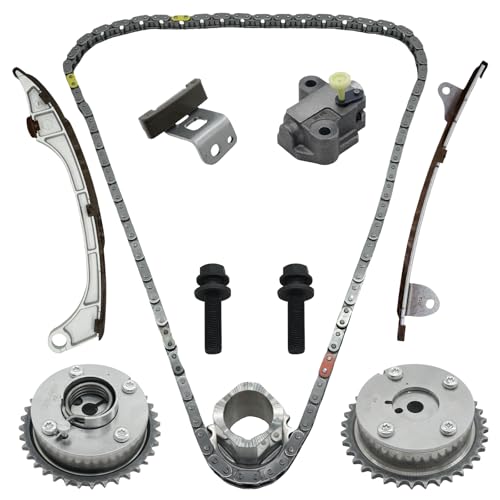
Compatible With: This timing chain kit compatible with Toyota Camry 2.5 2010-2014, RAV4 RAV 4 2.5 L 2009-2011, Highlander 2.7 2009-2014, Venza 2.7L 2009-2012, Sienna 2.7 2011-2012, Avalon 2.5L 2013, fits for Scion TC 2.5 2011-2012

Please confirm this item fits for your vehicle (Check Fitment Data Above or see description below)
What Does a P0012 Repair Cost?
The cost depends on the cause, engine, model year, labor rate, and whether the repair is an oil service, electrical repair, OCV replacement, VVT gear/phaser repair, or mechanical timing work. Because those jobs differ greatly, a universal P0012 price range can be misleading.
| Confirmed Cause | Typical Cost Level |
|---|---|
| Incorrect/overdue oil or filter | Lowest |
| Connector/wiring or OCV filter issue | Low to moderate |
| OCV/VVT solenoid replacement | Moderate |
| Camshaft timing gear/phaser repair | Moderate to high |
| Timing-chain/mechanical timing repair | Highest |
Ask for a diagnosis tied to test results before authorizing expensive timing work. Replacing the cheapest part first is not a reliable strategy if the fault is caused by oil pressure, wiring, or mechanical timing.
[Amazon Products Picked for You]

[Vehicle Fitment]: Compatible with Toyota 4Runner 2003-2009 V6 4.0L, FJ Cruiser 2007-2009 V6 4.0L, Tacoma 2005-2015 V6 4.0L, Tundra 2005-2011 V6 4.0L

✅Precise Vehicle Fitment & Complete OE Reference 2PCS Left & Right VVT Solenoid fits Toyota 4Runner 2003-2009, FJ Cruiser 2007-2009, Tacoma 2005-2015, Tundra 2005-2011 (4.0L V6 Engine). Interchange OE: 917-231,917-238,153300P010,1533031010,077145704K,153400P010,1534031010.

[Engine Variable Valve Timing (VVT) Solenoid Replaces Part Number:] 1533031010,1534031010.Please Check the OEM Part Number and Make Sure Your Part Number Matches this Part Number Before Buying!
How Do Oil Changes Help Prevent P0012 Problems?

Clean oil at the correct level and viscosity helps the Variable Valve Timing system respond as designed. It also reduces the chance that sludge or debris will restrict the OCV, filter, or VVT oil passages.
However, oil changes are preventive maintenance, not a guaranteed P0012 repair. If the code returns after the oil level and specification are corrected, continue diagnosis instead of repeatedly changing oil.
Use the Exact Oil Specification for the Model Year and Engine
- Check the owner’s manual for the required viscosity and oil performance standard.
- Keep the oil level within the specified range; do not overfill.
- Use the model-year maintenance schedule rather than assuming every 5,000-mile service visit requires an oil change.
- Shorten the interval only when Toyota’s special-operating-condition schedule or the exact maintenance guide calls for it.
For example, Toyota’s 2023 Tacoma maintenance guide specifies a 10,000-mile/12-month oil-and-filter interval for qualifying 0W-20 use under normal conditions, while listed special operating conditions can require 5,000 miles/6 months. Use the guide for your exact truck rather than copying one interval across all Tacoma generations. Toyota’s maintenance schedule tool is the best starting point.
Oil Maintenance and Timing-Chain Health
Correct oil level, viscosity, and service timing support the chain tensioning and VVT systems, but Toyota does not give every Tacoma a universal “inspect the timing chain every 30,000 miles” service item. Mechanical timing should be inspected when symptoms, codes, noise, or the service procedure point to it.
For a broader model-year maintenance framework, see the Toyota Tacoma maintenance schedule guide.
How Do You Check the Camshaft Oil Control Valve?
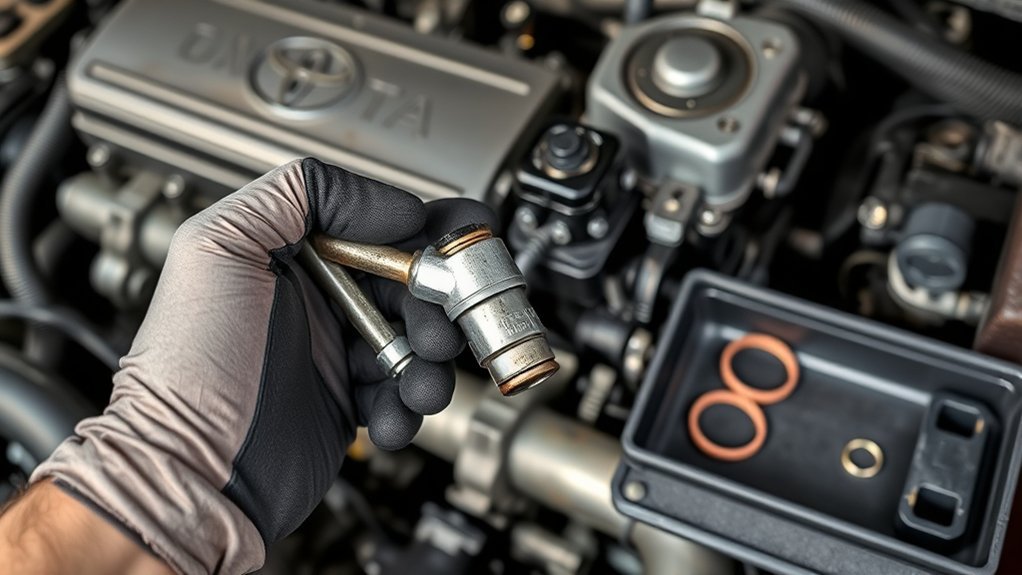
The camshaft oil control valve (OCV), often called the VVT solenoid, meters oil to the VVT mechanism. A sticking valve, restricted filter, electrical fault, or wiring problem can prevent the intake camshaft from following the ECM command.
- Identify the correct Bank 1 intake OCV for your exact engine.
- Inspect the connector and wiring before removing parts.
- Use the model-year service manual for resistance, actuation, and removal procedures. Do not assume one Tacoma engine’s resistance value, pinout, or 12V bench-test procedure applies to another.
- Inspect the OCV and serviceable filter, if equipped, for debris or restriction.
- Replace the valve only when it fails the applicable test or remains mechanically stuck after the permitted cleaning procedure.
Avoid applying battery voltage to an installed valve while the engine is running unless the exact Toyota service procedure calls for that test. Older Tacoma manuals often use a scan-tool active test on the running engine and a separate bench test after OCV removal.
What Does Variable Valve Timing Do?
The Variable Valve Timing (VVT) system changes camshaft timing to match engine operating conditions. The ECM commands an OCV, oil pressure moves the camshaft timing mechanism, and camshaft/crankshaft position feedback tells the ECM whether the requested timing was achieved.
If oil flow is restricted, the OCV cannot respond, the timing gear/phaser sticks, or mechanical timing is wrong, the actual cam angle may stay behind the target and trigger P0012. This is why a good diagnosis checks the system rather than replacing a sensor based on the code name alone.
What Motor Oil Should You Use in a Toyota Tacoma With P0012?
Use the oil grade specified for the exact Tacoma model year, engine, and market. Do not choose oil based only on the P0012 code.
| Tacoma Example | Oil Guidance |
|---|---|
| 2016–2023 U.S.-market Tacoma | Toyota documentation specifies SAE 0W-20 for the available 2.7L and 3.5L engines; use the exact manual for the truck. |
| 2024+ U.S./Canada 2.4L turbo Tacoma | Toyota service information specifies ILSAC GF-6A SAE 0W-20; verify the exact owner’s manual for the model year and market. |
| Older Tacoma engines | Specifications vary. Some 2.7L applications use 0W-20 while 4.0L V6 applications can specify 5W-30. Check the exact manual before filling. |
Modern oil categories change over time, so the current bottle label may show a newer API or ILSAC category than the truck’s original manual. The key is to meet the viscosity and performance requirements Toyota allows for that engine. See the API engine-oil category reference and the Tacoma oil-viscosity guide for more context.
How Can You Reduce the Chance of Another P0012 Code?
Preventive maintenance should follow the exact Toyota schedule for the truck, not a universal interval created for all Tacomas.
| Maintenance Task | When to Do It |
|---|---|
| Check engine-oil level | Regularly and whenever a warning, leak, or abnormal engine behavior appears |
| Change engine oil & filter | At the interval in the exact model-year maintenance guide; special operating conditions may shorten it |
| Inspect OCV/VVT wiring and filter | When P0012, related VVT codes, or service-manual diagnostics call for it |
| Inspect mechanical valve timing | When diagnostic testing, abnormal noise, or related timing codes indicate a mechanical problem |
Keep service records with the oil viscosity, date, mileage, and any diagnostic codes. That history makes it easier to spot a wrong-oil event, recurring VVT fault, or code that appears after a specific repair.
Bottom Line
For a Toyota Tacoma with P0012, begin with evidence: save the scan data, verify oil level and specification, inspect the VVT/OCV circuit, and follow the model-year service procedure before buying parts. If the truck has low oil pressure, severe noise, stalling, overheating, or major power loss, stop driving. If it runs normally with a steady check-engine light, arrange diagnosis promptly and avoid heavy use until the cause is confirmed.
Frequently Asked Questions
What Is the Fix for a P0012 Toyota Code?
There is no single P0012 fix. Save the codes and freeze-frame data, check oil level and specification, inspect the OCV/VVT wiring and filter where applicable, test VVT operation, and verify mechanical timing if the earlier checks pass. Replace a part only when testing identifies it as the cause.
What Is the Cause of the Code P0012?
Common causes include low or contaminated oil, incorrect viscosity, restricted VVT oil flow, a sticking or electrically faulty OCV/VVT solenoid, a clogged OCV filter where fitted, wiring faults, a sticking camshaft timing gear/phaser, or incorrect mechanical valve timing.
What Is the Code P0012 on a Toyota Tacoma?
P0012 means the ECM detected the Bank 1 intake camshaft timing as too retarded or not responding to the commanded timing change. It identifies a VVT timing-control problem, not one guaranteed failed part.
What Does “Camshaft Position Timing Over-Retarded Bank 1” Mean?
It means the actual position of the Bank 1 intake camshaft is behind the target the ECM expects. Bank 1 is the bank containing cylinder No. 1; an inline engine has only one bank.
Can I Drive With a P0012 Code?
A short, gentle trip for diagnosis may be reasonable if the engine runs normally, oil pressure is normal, and there is no severe noise or other urgent warning. Stop and arrange a tow if you have a low-oil-pressure warning, loud rattling, major power loss, repeated stalling, overheating, smoke, or severe rough running.
Can an Oil Change Fix P0012?
It can if the code was caused by low, contaminated, overdue, or incorrectly specified oil that prevented normal VVT operation. An oil change will not fix damaged wiring, a failed OCV, a stuck timing gear/phaser, low oil pressure from another cause, or incorrect mechanical valve timing.
Should I Replace the VVT Solenoid First?
No. P0012 does not prove the VVT solenoid is bad. Check the oil, related codes, wiring, VVT response, filter, and mechanical timing as the applicable Toyota procedure directs before replacing parts.
