
A flashing TPMS light on your Toyota Tacoma usually means the tire pressure monitoring system has detected a malfunction, not simply a low tire. If the light flashes for about a minute and then stays on, check every tire with a gauge and arrange a TPMS diagnosis if the flashing pattern returns.
Quick Answer
A Toyota Tacoma TPMS light that flashes for roughly 60 to 90 seconds and then stays on signals a system malfunction. A steady light usually warns of significant underinflation. Check all tires at the cold pressure shown on the driver-side door placard, then have the sensors and system tested if flashing continues.
Key Takeaways
- A steady TPMS light and a flashing-then-solid light do not mean the same thing.
- Use the pressure listed on your Tacoma’s door placard or owner’s manual, not a generic 32–35 PSI range.
- Check tire pressure manually because a malfunctioning TPMS may not warn you about a low tire.
- Reset and initialization procedures vary by model year, so follow your Tacoma’s manual rather than a universal button sequence.
- Persistent flashing usually requires a TPMS-capable scan tool and sensor testing.
At a Glance
| Time Required | 10–20 minutes for pressure checks; longer if professional diagnosis is needed |
| Difficulty | Easy for tire checks; professional-level for electronic diagnosis and sensor registration |
| Tools Needed | Accurate tire-pressure gauge, air source, flashlight; TPMS scan or activation tool for diagnosis |
| Cost | Little or no cost if inflation is the only issue; diagnosis and sensor replacement costs vary |
What a Flashing TPMS Light Means in Your Tacoma
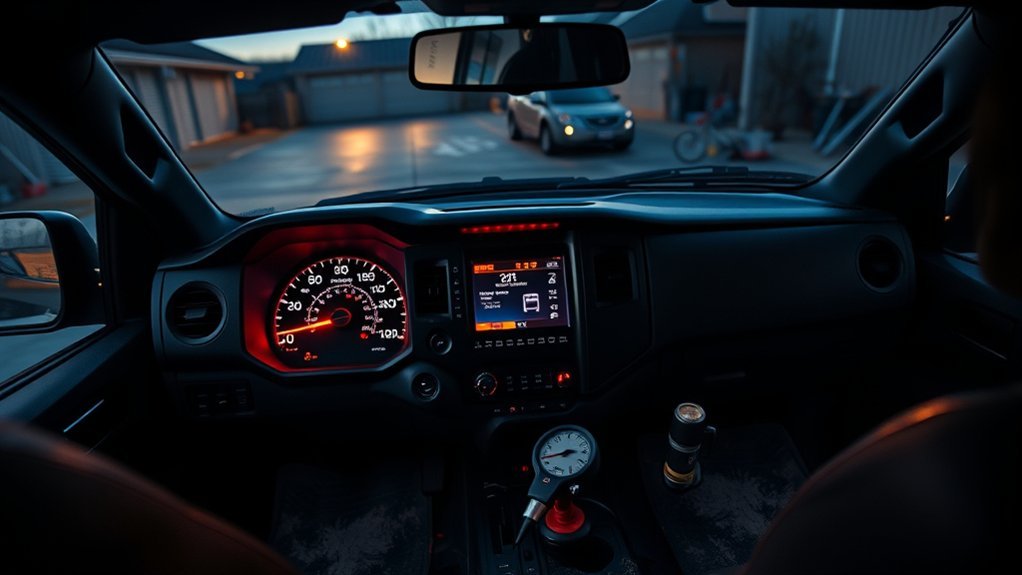
Your Tacoma’s tire pressure monitoring system warns you about significant underinflation and alerts you when the monitoring system itself cannot operate correctly. Under the federal TPMS standard, a combined warning light must flash for at least 60 seconds but no longer than 90 seconds when the system detects a malfunction. It then remains illuminated while the fault exists.
A steady light usually means one or more tires are significantly underinflated. A light that flashes for about a minute and then stays on means the TPMS may not be able to detect or report low pressure correctly. Both conditions deserve attention, but they require different next steps.
| Light Pattern | Likely Meaning | What to Do |
|---|---|---|
| Steady after startup | One or more tires may be significantly underinflated | Stop safely, inspect the tires, and check pressure with a gauge |
| Flashes for about 60–90 seconds, then stays on | TPMS malfunction | Check pressure manually and schedule system diagnosis |
| Comes on during a cold morning, then turns off | Pressure may be close to the warning threshold | Check and adjust all tires when cold |
Warning: If a tire looks flat, has a bulge or visible damage, loses air quickly, or causes pulling or vibration, stop in a safe place. Do not keep driving on a damaged or severely underinflated tire.
Common Causes of a Flashing Tacoma TPMS Light
A flashing warning points to a fault in the monitoring system. Low pressure can exist at the same time, but low pressure by itself normally produces a steady warning rather than the flashing malfunction sequence.
- A failed or weak wheel sensor: Each sensor contains electronics and an internal power source. A sensor that stops transmitting can trigger the malfunction warning.
- Unregistered sensor IDs: New sensors, replacement wheels, or a second wheel set may need model-specific registration before the truck recognizes them.
- An incompatible or missing sensor: Some aftermarket wheels or replacement sensors may not communicate correctly with the Tacoma’s system.
- Sensor or valve-stem damage: Tire installation, corrosion, impact damage, or a leaking valve assembly can affect the sensor.
- A receiver, antenna, wiring, or control-module fault: These problems are less common but require electronic diagnosis.
- A temporary communication problem: Radio interference or a sensor that has not updated yet may cause an intermittent warning. A repeated startup pattern still needs inspection.
If the light began flashing soon after tire service, wheel replacement, or sensor replacement, tell the technician exactly what work was performed. That history can shorten the diagnosis.
Checking and Adjusting Tire Pressure
Always check tire pressure before focusing on the electronics. A malfunctioning TPMS may not warn you when a tire is low, so a manual gauge becomes especially important.
[Amazon Products Picked for You]

Enhanced Visibility in Low Light: Features a green backlit LCD screen and integrated flashlight, allowing for clear reading of tire pressure even in dark or dimly light conditions.

1. LONG ZINC ALLOY DUAL HEAD DESIGN : Straight foot air chuck are deisghed for inner wheels or difficult reached valve as well as the 30°reverse chuck are for outer wheels.A good choice for testing your tire pressure also a great father's day gift
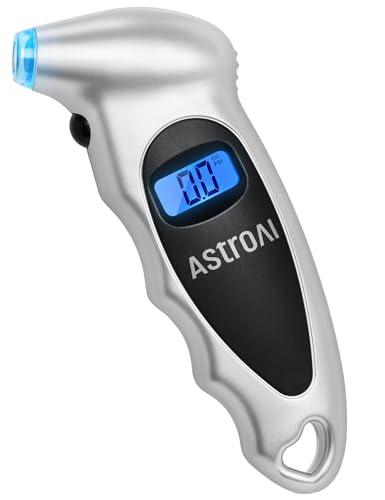
Accurate, Dependable Readings: Factory‑calibrated to ±1 PSI, so you can confidently match your vehicle’s recommended PSI (check the door jamb sticker). Ideal for monthly checks and road trips — consistent results every time, cold or warm.
Use the Door-Placard PSI, Not a Generic Range
Toyota Tacoma tire pressures vary by model year, trim, tire size, and front-to-rear specification. Find the correct cold tire pressure on the Tire and Loading Information label on the driver-side door edge or pillar. You can also confirm it in your model-year Toyota owner’s manual.
Do not use the maximum pressure molded into the tire sidewall as your normal target. That number describes the tire’s limit under specified conditions, not the vehicle manufacturer’s recommended operating pressure.
Manual Pressure-Checking Technique
- Park the Tacoma for at least three hours when possible so the tires are cold.
- Inspect each tire for nails, cuts, bulges, cracking, or obvious deflation.
- Remove the valve cap and press an accurate gauge firmly onto the valve stem.
- Compare the reading with the door-placard specification for that axle.
- Add air in small amounts if the pressure is low, then recheck it.
- Release air carefully if the pressure is high, then measure again.
- Repeat the process for every road tire and manually check the spare if equipped.
- Reinstall each valve cap and watch for repeated pressure loss over the next few days.
The National Highway Traffic Safety Administration recommends checking tires monthly when cold and reminds drivers that TPMS does not replace routine pressure checks.
Pro Tip: Write down the front and rear placard pressures before moving around the truck. Some vehicles use different specifications by axle, and a written note helps prevent mix-ups.
What to Do When the TPMS Light Flashes
[Amazon Products Picked for You]

🌟KEEP YOUR TIRES IN TOP SHAPE: VXDAS GM TPMS Relearn Tool Plus is a 2 in 1 tool that resets your sensor and maintains tire pressure. Works for GM vehicles (Chevy / Buick / GMC / Opel /Cadillac etc)equipped with 315/433 MHz.

[Accurate Real-time Monitoring & Multi-Alert System]: Tymate TM7 tpms sensor can be used to monitor your tires’ pressure and temperature data within robust accuracy of ±1.5 PSI or ±3°F (The units can be displayed as ℃ or ℉ & BAR or PSI). Designed with six distinct alarm modes: high/low pressure, fast leakage, high temperature, sensor low battery, and sensor signal lost. This system is a reliable tool for maintaining tire health, and it is especially beneficial for DIY enthusiasts and pre-owned vehicle markets, where constant vigilance on tire conditions is paramount for safety and vehicle longevity

[Discover Five Alarm Modes and Simple Setup for Alarm Thresholds]: With the Tymate Tire Pressure Monitoring System TM2, you'll access six distinct alarm modes, covering fast leak detection, high/low-pressure alerts, high-temperature warnings, and sensor low voltage/signal loss notifications. Upon pairing, the system seamlessly configures the current pressure as the reference point, allowing for easy setup of alarm thresholds (with an Alarming Range from +25% PSI to -15% PSI of Reference Pressure)
1. Check Tire Pressure First
Pull over safely if the warning appears while driving. Inspect all tires and use a gauge as soon as practical. Correct any low tire to the door-placard pressure, but do not assume inflation has repaired the flashing malfunction.
If a tire will not hold pressure, install the spare according to the owner’s manual or arrange roadside assistance. A repeated loss usually indicates a puncture, valve leak, bead leak, or wheel damage that needs repair.
2. Restart the Truck and Observe the Pattern
After checking the tires, restart the Tacoma and watch the warning light. A normal lamp check lasts only briefly. If the light begins the same extended flashing sequence and then remains on, the system still detects a malfunction.
Write down when the warning started and whether it followed a tire rotation, new tires, new wheels, a sensor replacement, or cold weather. Also note whether the dashboard shows individual tire pressures or dashes for one or more positions.
3. Use a Reset or Initialization Control Only When Your Manual Calls for It
Tacoma procedures differ by generation and model year. Some models use a physical initialization switch, while others use a dashboard or multimedia menu. Some faults require sensor ID registration with a TPMS-capable tool and cannot be corrected by pressing a button.
Use Toyota’s model-specific owner’s manual to confirm whether initialization is appropriate and how to perform it. Do not initialize the system with incorrect tire pressures because the truck may store an improper reference value.
Note: Resetting or initializing a TPMS is not the same as repairing a failed sensor. If the light flashes again, the fault remains.
4. Do Not Disconnect the Battery as a Routine TPMS Reset
Disconnecting a battery is not a universal Toyota TPMS repair and does not fix a failed sensor, damaged valve stem, missing sensor ID, or communication fault. It can also erase settings or create unrelated relearn tasks. Skip battery-disconnection tricks unless a Toyota repair procedure for your exact model specifically requires them.
5. Arrange TPMS Diagnosis if Flashing Continues
If pressure is correct and the warning still flashes at startup, schedule a tire shop or Toyota service visit. Tell the technician your model year, recent tire or wheel work, and which pressure readings or dashboard positions appear abnormal.
How to Test Your TPMS Sensors
Proper sensor testing requires a TPMS-compatible activation or scan tool. A standard code reader may read engine-related faults but may not communicate with the tire pressure system.
A qualified technician can:
- Activate each wheel sensor and confirm that it transmits a signal.
- Compare sensor IDs with the IDs stored in the vehicle.
- Read TPMS diagnostic trouble codes from the appropriate control module.
- Check for a missing, damaged, incompatible, or incorrectly programmed sensor.
- Inspect valve stems, seals, wheel condition, and tire leaks.
- Register replacement sensor IDs and complete any required relearn procedure.
Consumer TPMS tools can be useful when they explicitly support your Tacoma’s model year and sensor frequency. Follow the tool maker’s compatibility information and Toyota’s procedure rather than assuming every scan tool performs registration.
[Amazon Products Picked for You]
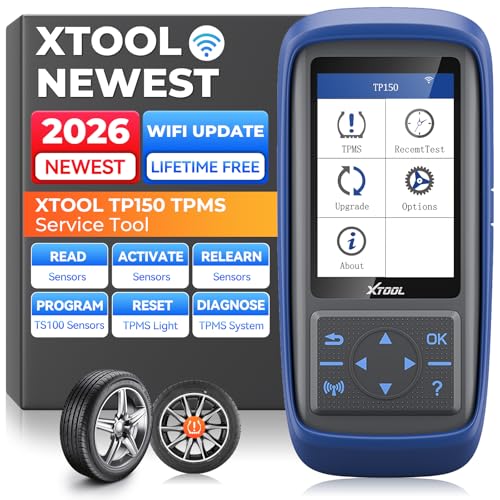
Why XTOOL TP150 TPMS Relearn Tool Stands Out: Perfect for DIYers and professional technicians, the XTOOL TP150 TPMS Reset Tool combines TPMS diagnostics, sensor activation, relearn, reset and sensor programming with XTOOL TS100 Sensors in one portable tool, making common TPMS service easier in one device. Its durable physical button interface is easy to operate with greasy gloves, making it ideal for garages, workshops, or roadside use. Check tire pressure, reset TPMS warning lights, and simplify sensor service with simple, easy-to-use controls. Supports the newest car models with frequent lifetime software updates and 13+ languages. 𝐍𝐎𝐓𝐄: TPMS Programming for XTOOL Sensors Only.
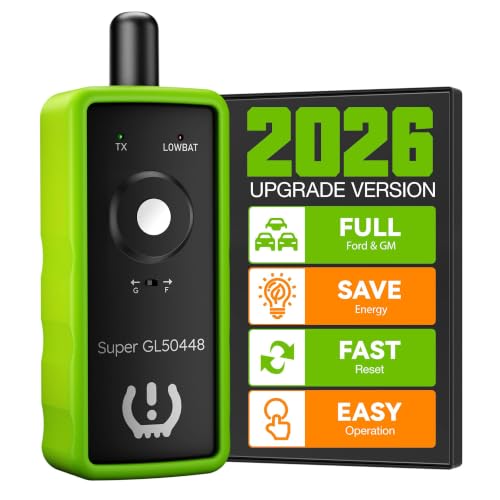
INNOVATIVE 2-IN-1 DESIGN: VXDAS TPMS relearn tool supports for GM and Ford series vehicles, (Buick, Cadillac, Chevrolet, GMC, Lincoln, Mazda, F150, F250, Focus, Fusion, and more). The added "G" and "F" model switch button on top makes it more convenient to use
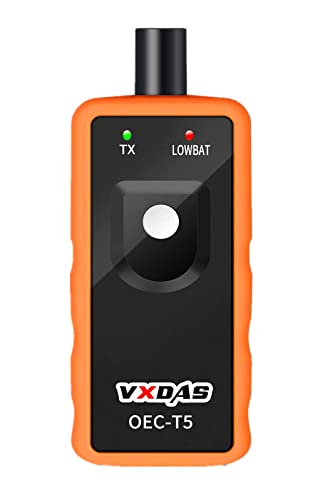
🚗2023 UPDATED FOR WIDER COMPATIBILITY: Specifically designed to work with most GM vehicles 2006-2023 (Chevy / Buick / GMC / Opel /Cadillac and more) equipped with 315/433 MHz. Your vehicle deserves the best tire pressure sensor reset tool.(It is not suitable for heavy trucks with more than 4 tires or vehicles with an external TPMS system.)Tip:Based on factory and customer-tested models shown in A+, please refer to the car model list to confirm compatibility with the VXDAS TPMS tool.
Signs You Need Professional TPMS Assistance
- The light flashes for about a minute at every startup and then remains on.
- The warning returns after all tires are adjusted to the correct cold pressure.
- One or more dashboard pressure positions show no reading or an implausible value.
- The problem started after installing new tires, wheels, or sensors.
- A tire or valve stem leaks, or a sensor was damaged during tire service.
- Several sensors fail to respond to an activation tool.
- The truck has correct pressures, but the system will not complete initialization or registration.
Federal guidance notes that a malfunctioning system may not detect low pressure as intended. Until the repair is complete, check tire pressure manually and more often than usual.
What to Do After Testing Your TPMS Sensors
Repair the cause instead of clearing the warning alone. Replace a failed or damaged sensor, repair any air leak, register sensor IDs when required, and complete the model-specific initialization or relearn process.
You do not automatically need to replace every sensor when one fails. If all sensors are the same age and the tires are already being removed, ask the technician about the condition and remaining service expectations of the other units. Base the decision on test results, labor overlap, and your budget.
After service, confirm that:
- All tires match the cold pressures on the door placard.
- The flashing sequence no longer appears at startup.
- Any individual pressure display updates normally.
- The repaired tire holds pressure over several days.
- The invoice lists the sensor position, part or ID information, and work performed.
Note: The TPMS warning is separate from the Check Engine light. Repairing a tire-pressure sensor does not normally clear an engine or emissions fault.
Can You Drive With a Flashing TPMS Light?
You may be able to drive cautiously to a repair facility when all tires are correctly inflated, no tire is damaged, and the truck handles normally. However, the system may not warn you if a tire loses pressure during that trip.
Do not continue driving if a tire is visibly low, pressure drops rapidly, the sidewall is damaged, or the Tacoma pulls, shakes, or becomes difficult to control. Use roadside assistance or a safe spare-tire procedure instead.
A flashing TPMS light means you should trust a manual pressure gauge until the monitoring system is working correctly again.
Sources
- Electronic Code of Federal Regulations, 49 CFR 571.138 — TPMS warning and malfunction-indicator requirements
- NHTSA TireWise — cold-pressure checks, monthly maintenance, and warning-light guidance
- Toyota Owner’s Manuals and Warranties — model-specific Tacoma procedures and specifications
- Toyota Warning Lights — Toyota guidance to use the correct owner’s manual for vehicle-specific indicators
- Bridgestone Tire Pressure Guide — manual gauge technique and cold-pressure basics
Frequently Asked Questions
Why is my Tacoma TPMS light blinking?
A flashing light that lasts about 60 to 90 seconds and then stays on indicates a TPMS malfunction. Common causes include a failed sensor, an unregistered replacement sensor, incompatible wheels or sensors, or a receiver or control-system fault.
Why is my tire-pressure light blinking when my tires are properly inflated?
Correct pressure rules out underinflation but does not rule out a system fault. Check every tire manually, observe the startup pattern, and have the sensors tested if the light continues to flash.
Can low tire pressure make the TPMS light flash?
Significant underinflation normally produces a steady warning. The extended flashing-then-solid sequence indicates a malfunction, although a low tire and a system fault can exist at the same time.
Where is the TPMS reset button on a Toyota Tacoma?
The location and procedure depend on the model year. Some Tacomas use a physical initialization switch, while others use a vehicle-settings menu. Check the owner’s manual for your exact year before pressing or holding any control.
Will disconnecting the battery reset the Tacoma TPMS light?
Battery disconnection is not a universal TPMS repair and will not fix a failed sensor or missing sensor registration. Use the model-specific Toyota procedure or have the system diagnosed.
How long should I drive after correcting tire pressure?
Update time varies by model and condition. Some systems refresh after normal driving, while others require initialization or sensor registration. Follow your model-year owner’s manual instead of relying on a universal speed-and-time rule.
Conclusion
A flashing Toyota Tacoma TPMS light is a system-malfunction warning, while a steady light usually points to significant underinflation. Start with a safe visual inspection and a cold-pressure check using the driver-side door placard. If the light still flashes, use the model-specific Toyota procedure and have the sensors tested with TPMS-capable equipment. Until the system is repaired, check tire pressure manually.
