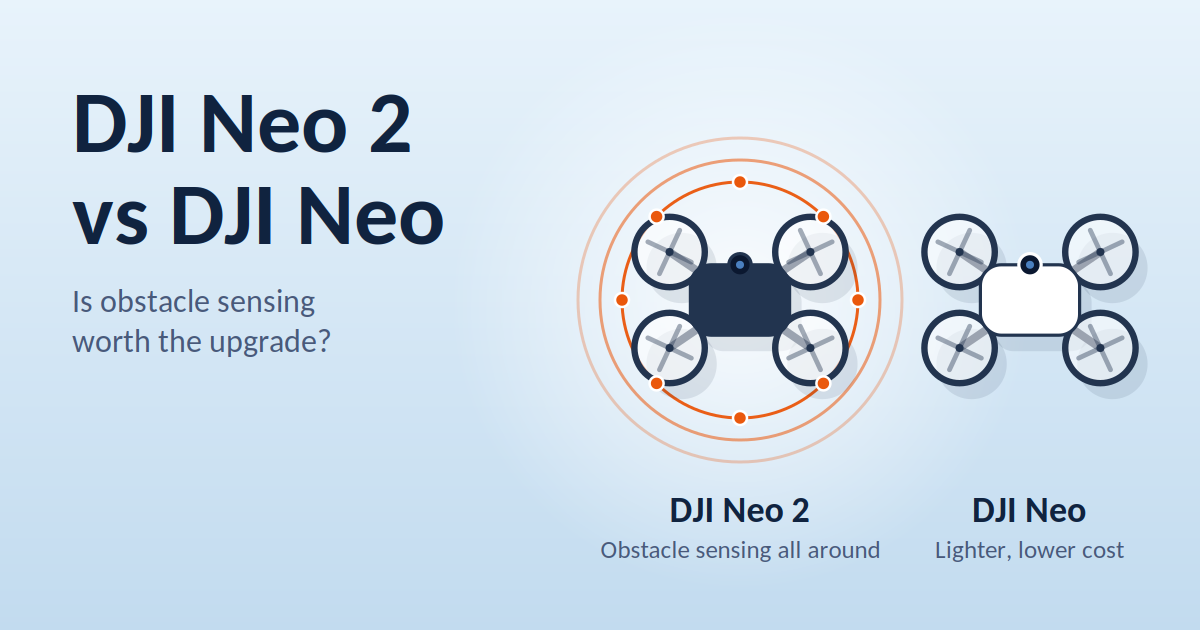
The DJI Neo 2 vs DJI Neo decision comes down to one question: is obstacle sensing worth paying more for?
The DJI Neo 2 adds omnidirectional obstacle sensing, a two-axis gimbal and faster tracking. The DJI Neo is lighter and costs less, but it has no obstacle avoidance.
We compared DJI’s specifications, safety records and owner and reviewer feedback from non-Amazon sources. This is a research-based comparison, not our own flight test.
DJI Neo 2 vs DJI Neo: Quick Comparison
| Product | Best for | Obstacle sensing | Weight | Gimbal and video |
|---|---|---|---|---|
 Mid-range
|
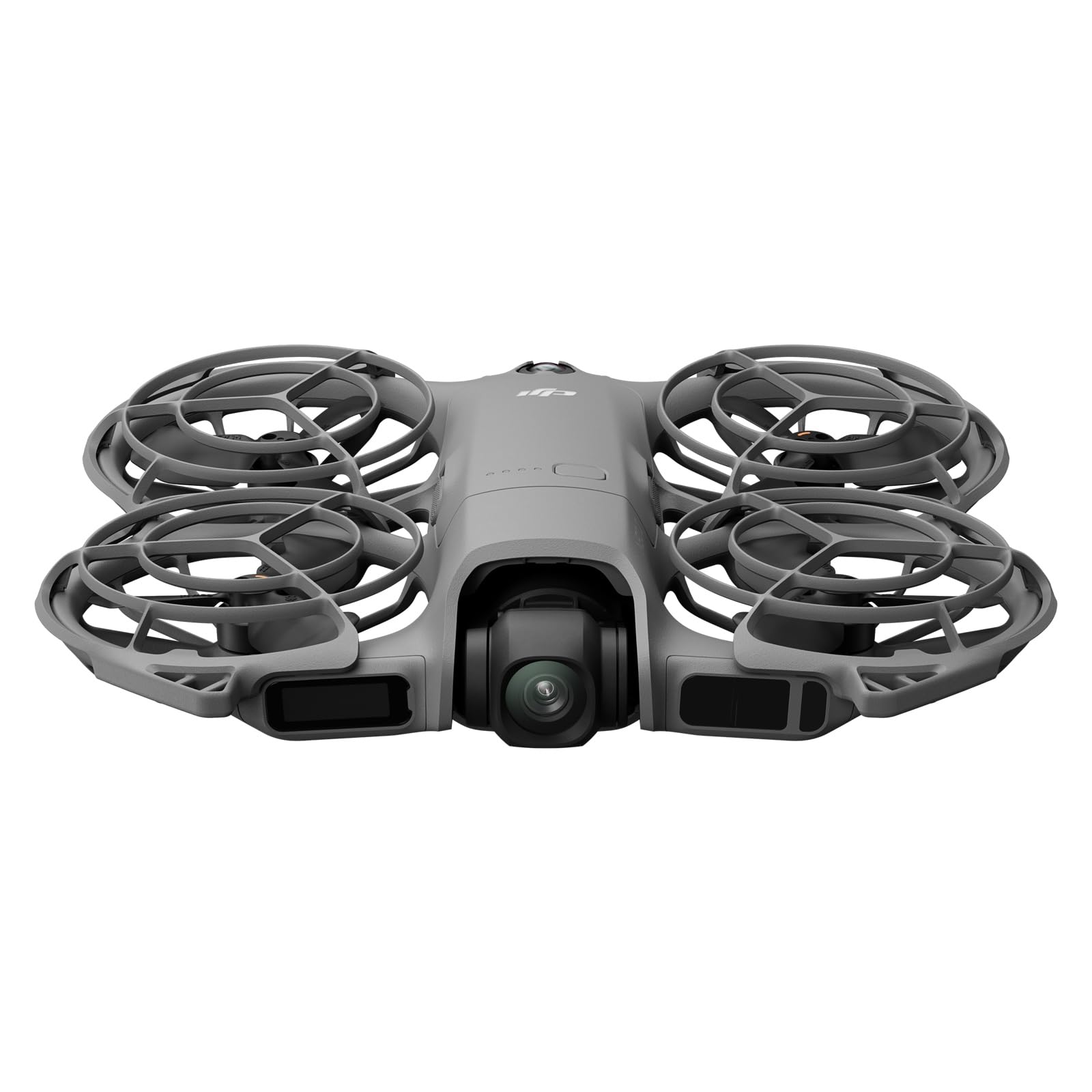
Moving subjects, trails and first-time flyers | Omnidirectional: vision sensors, forward LiDAR and downward infrared | 151 g (160 g with the Digital Transceiver) | Two-axis gimbal, 4K up to 100 fps |
 Budget
|
Open-space flying at the lowest cost | None for obstacles; downward sensors only help it hold position | 135 g | Single-axis gimbal, 4K at 30 fps |
Quick Verdict
DJI Neo 2: What You Get
Bottom line: The Neo 2 is the better pick if you fly near trees, walls or people and want the drone to help avoid collisions. You pay more for that.
- Obstacle sensing: Omnidirectional, using vision sensors, forward LiDAR and downward infrared, so it can steer around obstacles when tracking from the front or sides.
- Weight: 151 g (160 g with the optional Digital Transceiver), under the 250 g threshold used in many drone rules.
- Camera and gimbal: 12 MP, 1/2-inch sensor with an f/2.2 lens, a two-axis gimbal and 4K video at up to 100 fps.
- Rated flight time: Up to 19 minutes, though reviewers report roughly 10 to 16 minutes in real use.
- Onboard storage: 49 GB.
The Neo 2 keeps the palm takeoff and pocketable size of the original, then adds the sensing the Neo lacks. That makes tracking along a trail, or flying indoors and near buildings, less risky.
Tracking and stability improved too. DJI lists follow speeds up to 12 m/s in open areas, and wind resistance rises from a rated 20 to 28 km/h on the Neo to 29 to 38 km/h.
The catch is real flight time and cost. Expect shorter flights than the rating, so plan on spare batteries. Sensing also has limits: it works up to set flight speeds, and reviewers note full obstacle avoidance is off in Sport mode.
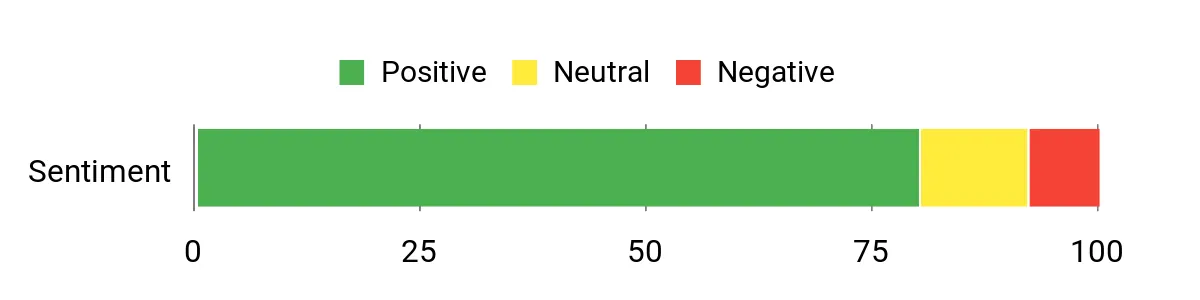
- Omnidirectional obstacle sensing
- Two-axis gimbal and 4K up to 100 fps
- Faster tracking and higher wind resistance than the Neo
- 49 GB of onboard storage
- Palm takeoff and gesture control
- Real flight time runs shorter than the rating
- Heavier and costs more than the Neo
- Controller or goggle flight needs the optional Digital Transceiver
DJI Neo: What You Get
Bottom line: The Neo is the lighter, lower-cost pick for casual palm-launch flying, as long as you can fly it where nothing is in its way.
- Obstacle sensing: None for obstacles. Downward vision and infrared sensors help it hold position, not avoid objects.
- Weight: 135 g, also under the 250 g threshold used in many drone rules.
- Camera and gimbal: 12 MP, 1/2-inch sensor with an f/2.8 lens, a single-axis gimbal and 4K video at 30 fps.
- Rated flight time: Up to 18 minutes from the included battery.
- Onboard storage: 22 GB, with no memory card slot.
The Neo does the essentials well. It launches from your palm, tracks you with its camera and needs no controller, which makes it easy to bring on a hike or bike ride.
The trade-off is that it has no obstacle sensing. If tracking takes it through trees or past walls, you are the only safety system. Its follow mode is also slower than the Neo 2’s, so a brisk cyclist can outpace it.
The camera and wind limits are worth knowing about. Video is 4K at 30 fps from a small sensor, and wind is where it reaches its limits sooner than the Neo 2. For social clips in calm weather, that is usually enough.
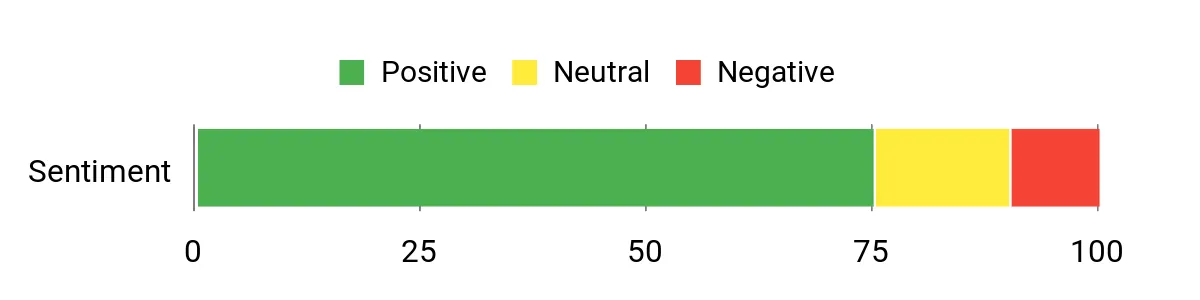
- Lightest of the two at 135 g
- Palm takeoff and controller-free tracking
- Stabilized 4K video that suits social clips
- Lower cost than the Neo 2
- Built-in propeller guards
- No obstacle sensing
- Slower tracking and lower wind resistance than the Neo 2
- 22 GB of storage with no memory card slot
DJI Neo 2 vs DJI Neo: Key Differences
Obstacle Sensing and Safety
The Neo 2 combines vision sensors around the drone, forward LiDAR and downward infrared sensing. The Neo senses only downward, and that helps it hold position rather than avoid objects.
In practice, the Neo 2 can steer around a branch while tracking, where the Neo will hit it. Choose the Neo 2 for trails, indoor rooms and first flights. The Neo suits open fields, beaches and parks. Both have propeller guards that limit damage from light contact.
Tracking Speed and Wind
DJI lists follow speeds up to 12 m/s for the Neo 2 in open areas. The Neo follows more slowly and can fall behind a brisk cyclist. Rated wind resistance also rises from 20 to 28 km/h on the Neo to 29 to 38 km/h on the Neo 2.
The Neo 2 is the better fit for cycling, running and breezy coastlines. The Neo works for walking pace and light wind.
Camera, Gimbal and Video
Both use a 12 MP, 1/2-inch sensor. The Neo 2 adds a faster f/2.2 lens, a two-axis gimbal and 4K up to 100 fps. Vertical video is 2.7K on the Neo 2 and 1080p on the Neo. The Neo records 4K at 30 fps with a single-axis gimbal.
The Neo 2 gives smoother footage, slow motion and sharper vertical clips for social posts. The Neo’s 4K is enough for casual sharing. Neither replaces a larger drone in low light.
Weight, Storage and Battery Life
The Neo weighs 135 g. The Neo 2 weighs 151 g, or 160 g with the Digital Transceiver. Rated flight time is close at 18 and 19 minutes. Storage is 22 GB on the Neo, with no card slot, and 49 GB on the Neo 2.
The weight gap is small in a bag, so choose on features. Both need spare batteries. Choose the Neo 2 if you record a lot of clips and do not want to offload footage as often.
Controls and Accessories
Both can take off from your palm and fly without a controller. The Neo 2 also adds a small display and side buttons for controller-free flight, and it lists gesture control. To use a DJI controller or goggles with the Neo 2, you need the optional Digital Transceiver, which adds about 9 g. The Neo pairs with DJI controllers such as the RC-N3 directly.
Choose the Neo 2 for hands-free solo shooting. Choose the Neo if you want a simpler controller setup without an extra module.
Which One Should You Buy?
- Choose DJI Neo 2 if: you fly near trees, walls or crowded spaces and want the drone to steer around obstacles.
- Choose DJI Neo if: you fly in open areas and want the lowest cost and lightest body.
- Choose DJI Neo 2 if: you track cyclists or runners, or fly in breezy conditions.
- Choose DJI Neo if: you mostly shoot walking-pace clips and social posts where 4K at 30 fps is enough.
- Choose DJI Neo 2 if: you want smoother footage from the two-axis gimbal, slow motion and more onboard storage.
- Choose DJI Neo if: you want a model DJI still supports through its official US channels.
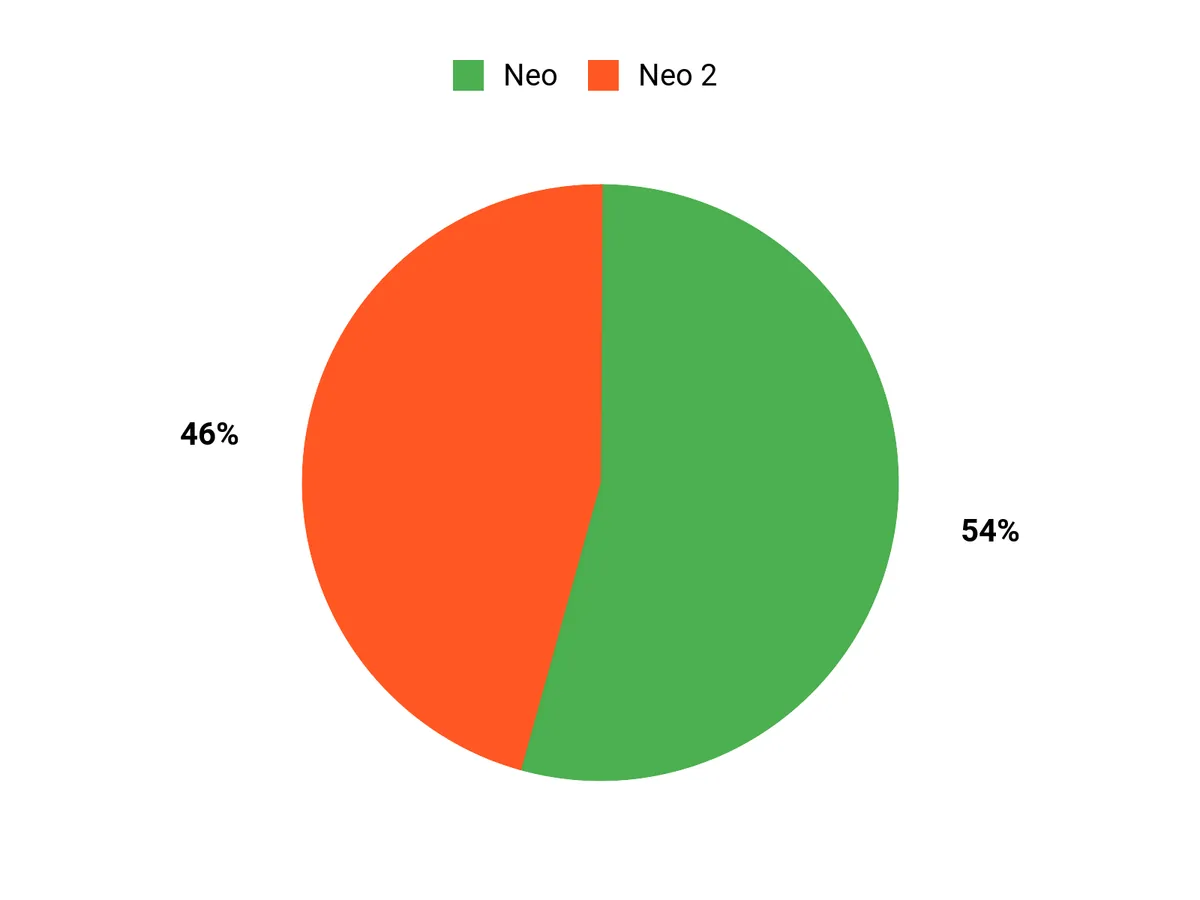
Is the Upgrade Worth It?
The Neo 2 costs more than the Neo. That extra money buys omnidirectional sensing, a two-axis gimbal, 4K slow motion, faster tracking, higher wind resistance and more storage.
Those gains matter most if you ride, run, fly on trails or want a forgiving first drone. If you mostly fly in open space at walking pace, you can save money with the Neo. Also remember the Neo 2 Drone Only comes without a controller, so adding one raises the total.
How We Compared Them
- Key specs: DJI’s product pages and launch materials, cross-checked with major retailer listings and specialist reviews.
- Safety: We looked for recalls and safety notices on both models and found none.
- Compatibility: Controllers, goggles and the DJI Fly app for each drone, plus what each Amazon listing includes.
- Real-world use: Patterns reported in more than one non-Amazon source, such as flight time and obstacle sensing. We do not quote reviews.
What to Check Before You Buy
Bundle Contents
The Neo 2 listing linked here is the Drone Only version, with one battery, propeller guards and no controller. Fly More combos add three batteries and a charging hub, and the combo with the RC-N3 controller includes the Digital Transceiver. The Neo listing linked here is the controller-free version with one battery and propeller guards. Its combos add batteries, a charging hub and, in the Fly More Combo, the RC-N3.
Registration and Local Rules
Both drones are under 250 g and carry C0 class marks under EU rules, which can simplify registration and operating rules in many places. Rules for commercial flying are stricter, so check your local aviation authority before you fly for work.
App Setup
Both drones use the DJI Fly app. Amazon’s Neo listing notes the app was removed from Google Play, so Android users should download it from DJI’s official website. Check the same steps for the Neo 2 before you buy.
Mistakes to Avoid When Choosing Between These Two
- Buying the Neo 2 Drone Only and expecting to fly it with a controller or goggles. That needs the Digital Transceiver.
- Treating obstacle sensing as a guarantee. It has speed limits, so keep the drone in sight.
- Planning around rated flight time. Real flights run shorter, and each listing includes one battery.
- Choosing the Neo for fast tracking near trees. It has no obstacle sensing and follows more slowly.
- Skipping the app setup steps, especially on Android.
FAQs
What Is the Main Difference Between the DJI Neo 2 and DJI Neo?
The main difference is obstacle sensing. The Neo 2 senses obstacles in all directions using vision sensors, forward LiDAR and downward infrared, while the Neo only senses downward for positioning. The Neo 2 also adds a two-axis gimbal, faster tracking and more storage, while the Neo stays lighter and costs less.
Is the DJI Neo 2 Worth Upgrading To?
Yes, if you fly near trees, buildings or moving subjects. Obstacle sensing, faster tracking and higher wind resistance are real gains there. If you mostly fly in open space at walking pace, the DJI Neo still covers casual shooting for less.
Which Is Better for Beginners?
The Neo 2 is the more forgiving choice, because obstacle sensing catches many beginner mistakes. Both drones offer palm takeoff, propeller guards and controller-free flight. If you will practice in a wide open area, the Neo is still a good starter and costs less. Sensing helps, but it does not replace watching the drone.
Which Is Better for Cycling or Running?
The DJI Neo 2 is the better fit. DJI lists follow speeds up to 12 m/s in open areas, and obstacle sensing helps on tree-lined paths. The original Neo follows more slowly and has no obstacle sensing. For walking or slow jogging in open space, the Neo can still work.
Do You Need a Controller to Fly Them?
No. Both can take off from your palm and fly without a controller, using a button press or the DJI Fly app. For a DJI controller or goggles, the Neo 2 needs its optional Digital Transceiver, which some combos include. The Neo pairs with controllers such as the RC-N3 directly.
Which Is Lighter and Easier to Carry?
The Neo is lighter at 135 g, compared with 151 g for the Neo 2 or 160 g with the Digital Transceiver. Both stay under 250 g and both have propeller guards, so either fits in a bag easily. The gap is small, so pick on features unless every gram counts.
Can You Buy the DJI Neo 2 in the US?
Amazon carries a listing for it, but DJI said the Neo 2 would not be officially available through its own US channels after the global launch. Confirm the seller and ask how warranty and support will work, since reviewers note DJI Care plans are unavailable. The original Neo has been reported as still officially supported in the US.
How Can You Maximize Flight Time and Reliability?
Plan several short flights with spare batteries and a charging hub, because single-battery time runs shorter than the rating. Keep firmware and the DJI Fly app updated, and avoid strong wind and low light for important shots. Removing propeller guards can add flight time, but keep them on while learning new modes.
Final Verdict
In the DJI Neo 2 vs DJI Neo choice, the deciding factor is where and what you fly. The Neo 2 makes tracking near trees, walls and other people something you can trust more, and it adds a better gimbal, faster tracking and more storage. The Neo keeps the core pocket-drone experience for less money.
Neither replaces a larger camera drone in low light, and both need spare batteries for longer sessions. If you buy the Neo 2 in the US, confirm the seller and support terms first.