
Your Toyota Tacoma uses exhaust sensors to help control fuel delivery, monitor emissions, and check catalytic-converter performance. A trouble code can point you toward the affected circuit, but it does not prove the sensor itself has failed. Diagnose the code, wiring, exhaust leaks, and fuel-trim data before replacing parts.
Last updated: September 11, 2026
How this guide was checked: This article was reviewed against Toyota service-information resources, CARB OBD-II guidance, Bosch lambda-sensor technical material, and sensor-manufacturer installation instructions. It does not claim hands-on testing of every Tacoma generation.
Quick Answer
A Toyota Tacoma oxygen sensor measures oxygen in the exhaust so the engine computer can manage the air-fuel mixture and monitor emissions. A failing sensor may trigger the check engine light, increase fuel use, or cause poor drivability, but similar symptoms can come from wiring, exhaust leaks, fuel problems, or the catalytic converter.
Key Takeaways
- Upstream air-fuel ratio sensors help the engine computer adjust fuel delivery; downstream oxygen sensors mainly monitor catalytic-converter operation.
- A diagnostic trouble code identifies a circuit or operating condition, not automatically a failed sensor.
- Check freeze-frame data, fuel trims, wiring, connectors, and exhaust leaks before ordering a replacement.
- Sensor location, quantity, part number, test values, and torque specifications vary by Tacoma model year and engine.
- Work only on a cool exhaust and support the truck correctly if you must raise it.
At a Glance
| Time Required | Varies by sensor position, mounting style, access, and corrosion; inspect the location before starting |
| Difficulty | Moderate; diagnosis is more important than removal |
| Tools Needed | OBD-II scan tool, digital multimeter, oxygen-sensor socket or the correct flange/wrench tools for the sensor mounting style, ratchet, torque wrench, safety glasses, gloves, and approved lifting equipment when required |
| Cost | Varies by model year, engine, sensor position, diagnostic time, and local labor rate; match the replacement by VIN |
What Is an Oxygen Sensor and How Does It Work?
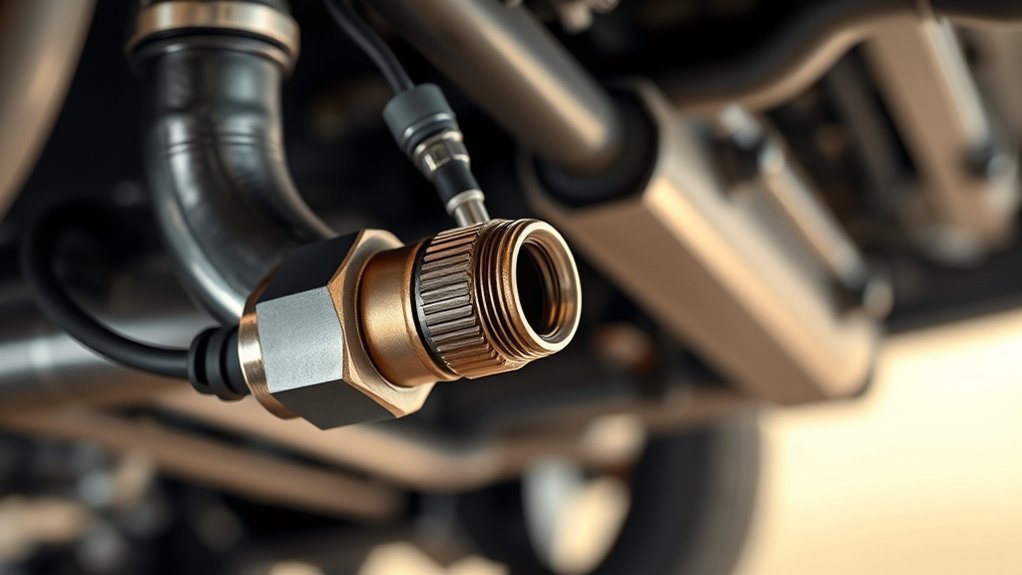
An oxygen sensor, also called a lambda sensor, sits in the exhaust stream and reports exhaust oxygen information to the engine control module. The computer combines that signal with data from other sensors to manage fuel delivery and emissions. Bosch explains that lambda-sensor feedback allows the control unit to regulate the air-fuel mixture near the range needed for effective catalytic-converter operation.
Tacomas may use more than one sensor type. A switching oxygen sensor changes its signal around the rich-to-lean transition. A wideband air-fuel ratio sensor provides a broader, more precise measurement. Do not assume every sensor should show the same voltage pattern because the expected signal depends on sensor design, scan-tool interpretation, model year, and engine.
Key Functions of the Oxygen Sensor in the Toyota Tacoma
The sensors around the catalytic converter do related but different jobs. The sensor before the converter helps the computer manage combustion. The sensor after the converter helps the on-board diagnostic system judge whether the converter and emissions system are operating as expected.
Oxygen Level Detection
The sensor reacts to changes in exhaust oxygen and sends an electrical signal to the engine computer. The computer evaluates that signal with engine temperature, airflow, throttle position, load, and fuel-trim information. Sensor response is continuous during suitable operating conditions, but the exact update rate and normal values vary by system.
Fuel Mixture Regulation
During closed-loop operation, upstream sensor feedback helps the computer correct short-term and long-term fuel delivery. A false lean signal can make the computer add fuel, while a false rich signal can make it reduce fuel. However, vacuum leaks, exhaust leaks, weak fuel pressure, dirty injectors, misfires, and wiring faults can create similar readings.
| Factor | How It Affects Diagnosis |
|---|---|
| Engine Temperature | The system may stay in open loop until operating conditions are met |
| Throttle Position | Acceleration and deceleration change commanded fueling |
| Engine Load | High load can change fuel strategy and sensor behavior |
| Exhaust Leaks | Outside air can create misleading lean readings |
| Sensor and Wiring Condition | Heater, signal, ground, or connector faults can set codes |
Know Which Tacoma Sensor You Are Testing
Sensor count and location vary across Tacoma generations, engines, and emissions packages. Use the VIN and the model-specific repair manual before testing or buying a part. Toyota’s Technical Information System provides factory repair information, wiring diagrams, diagnostic procedures, and specifications for supported vehicles.
- Sensor 1 normally means the upstream sensor before the catalytic converter.
- Sensor 2 normally means the downstream sensor after the catalytic converter.
- Bank 1 is the cylinder bank containing cylinder No. 1.
- Bank 2 applies only to engines with two cylinder banks and is the opposite bank.
Quick Tacoma Sensor Identification
| What You See | What It Usually Means | Diagnostic Implication |
|---|---|---|
| Inline four-cylinder engine | Only one cylinder bank | Bank 1 is the only bank, but sensor quantity and exhaust layout still depend on the application |
| V6 engine | Two cylinder banks | Confirm which side contains cylinder No. 1 before choosing Bank 1 or Bank 2 |
| Sensor 1 | Upstream or pre-catalyst position | Usually provides fuel-control feedback and may be called an air-fuel ratio sensor |
| Sensor 2 | Downstream or post-catalyst position | Primarily helps monitor catalytic-converter performance |
| Parts listing says “A/F sensor” | A wideband-style air-fuel ratio sensor may be used | Do not apply narrowband voltage-switching expectations unless the Toyota procedure specifies them |
Note: Parts listings may call the upstream unit an air-fuel ratio sensor rather than an oxygen sensor. Match the connector, wire length, position, emissions specification, engine, and VIN.
What Are the Symptoms of a Bad Toyota Tacoma Oxygen Sensor?
A failing sensor can affect fuel control or emissions monitoring, but no single symptom confirms the diagnosis. Start with the stored codes and operating data instead of replacing the sensor based only on fuel economy, idle quality, or smell.
Poor Fuel Economy Issues
If an upstream sensor reports inaccurate information, fuel trims may move too rich or too lean. That can increase fuel consumption. Before blaming the sensor, check tire pressure, maintenance condition, fuel trims, intake leaks, exhaust leaks, injector operation, and driving conditions.
Performance Degradation Symptoms
Possible symptoms include hesitation, rough idle, sluggish acceleration, stalling, or an emissions-test failure. These symptoms are not specific to an oxygen sensor. Ignition misfires, vacuum leaks, fuel-delivery problems, mass-airflow faults, and mechanical engine issues can cause the same complaints.
Engine Light Activation
The check engine light often provides the first useful clue. The OBD-II system stores a diagnostic trouble code and freeze-frame data when it detects a monitored fault. A steady light usually allows careful driving for diagnosis, but a flashing light can indicate a catalyst-damaging misfire and requires prompt attention. For broader warning-light triage, see the Toyota Tacoma check engine light guide.
Warning: Reduce speed and stop driving as soon as it is safe if the check engine light flashes, the engine shakes badly, power drops sharply, or you smell intense raw fuel. Continued operation can overheat and damage the catalytic converter.
How Oxygen Sensor Failure Affects Engine Performance
An upstream sensor or air-fuel ratio sensor can influence fuel corrections during closed-loop operation. An inaccurate signal may contribute to poor fuel economy, hesitation, rough running, or elevated emissions. A downstream sensor usually has less direct effect on fuel delivery because its main job is monitoring catalyst performance, although strategies vary by vehicle.
Do not treat a catalyst-efficiency code as proof that either the converter or an oxygen sensor has failed. Exhaust leaks, misfires, fuel-control problems, sensor response faults, and converter deterioration can produce overlapping data. Diagnosis must compare the code, freeze frame, fuel trims, sensor graphs, and vehicle-specific test procedure.
How Do You Diagnose a Toyota Tacoma Oxygen Sensor?

Effective diagnosis starts with an OBD-II scan tool and a visual inspection. A digital multimeter can help with wiring and heater-circuit checks, but use the Toyota wiring diagram and test procedure. A professional exhaust-gas analyzer can add evidence, but it is not essential for every repair.
Essential Diagnostic Tools
| Tool | Purpose |
|---|---|
| OBD-II Scan Tool | Read stored, pending, and permanent codes; view freeze frame, fuel trims, readiness, and live data |
| Digital Multimeter | Check power, ground, continuity, and heater resistance using model-specific specifications |
| Smoke Machine | Find intake leaks that can create lean conditions |
| Oxygen-Sensor Socket | Remove and install a threaded sensor without damaging the harness; some flange-mounted applications use different hardware |
| Gas Analyzer | Provide additional professional evidence about combustion and emissions |
Step-By-Step Diagnosis Process
- Record every code. Save stored, pending, and permanent codes before clearing anything.
- Review freeze-frame data. Note engine temperature, speed, load, fuel trims, and the conditions present when the fault set.
- Identify the exact bank and sensor. Confirm the engine, emissions package, and sensor position with factory information.
- Inspect the exhaust and wiring. Look for leaks, melted insulation, rubbed wires, bent pins, corrosion, and loose connectors.
- Check related engine conditions. Diagnose misfires, vacuum leaks, fuel-pressure issues, oil burning, or coolant intrusion first.
- Evaluate live data. Compare commanded mixture, fuel trims, and upstream and downstream signals under the conditions specified by Toyota.
- Test the heater circuit. Verify power, ground, resistance, and control only with the correct wiring diagram and specifications.
- Confirm the repair. Clear codes only after recording data, complete the required drive cycle, and verify that the code and symptoms do not return.
Pro Tip: Graph live data instead of watching one number. A graph makes slow response, dropouts, heater warm-up, and the relationship between upstream and downstream sensors easier to see.
How Do OBDII Codes Help Diagnose Oxygen Sensor Issues?

OBD-II codes narrow the search to a circuit, sensor position, response problem, heater fault, fuel-control condition, or catalyst-monitor result. The California Air Resources Board explains that OBD-II stores malfunction information to help a technician locate and repair emissions-related problems. A code is a starting point, not a parts-replacement instruction.
| Code Family | General Meaning | What to Check |
|---|---|---|
| P0130-P0167 | Many oxygen-sensor circuit, response, or heater faults | Correct bank/sensor, wiring, connector, heater circuit, exhaust leaks, and sensor response |
| P0171 / P0172 / P0174 / P0175 | Fuel system too lean or too rich | Fuel trims, intake leaks, fuel pressure, injectors, airflow measurement, exhaust leaks, and sensor bias |
| P0420/P0430 | Catalyst efficiency below the monitored threshold | Misfires, fuel control, exhaust leaks, sensor operation, and catalytic-converter condition |
Do not clear codes before saving freeze-frame data. Clearing diagnostic information can reset readiness monitors, so an emissions inspection may show incomplete monitors until the truck completes the required operating conditions. The exact drive pattern varies by model and monitor. If readiness remains incomplete after a repair, see the Toyota Tacoma OBD-II readiness monitors guide.
What Else Can Cause a Toyota Tacoma Oxygen Sensor Code?
Heat, age, vibration, damaged wiring, water intrusion, road debris, and exhaust leaks can affect sensor operation. Oil burning, coolant entering the combustion chamber, an overly rich mixture, or unsuitable sealants can contaminate the sensing element. Off-road use may increase the chance of harness or exhaust damage, but four-wheel drive itself does not directly damage the sensor.
Fuel additives should not automatically be blamed for a code. Diagnose the underlying condition and use only products approved for the vehicle. If the old sensor shows heavy deposits, identify the cause before installing a replacement or the new sensor may fail again.
When Does a Tacoma Oxygen Sensor Actually Need Replacement?
Replace the sensor when testing confirms it is slow, biased, open, shorted, contaminated beyond recovery, physically damaged, or has a failed heater and the wiring and control circuit are sound. A steady check engine light, reduced fuel economy, rough idle, or sulfur-like odor justifies diagnosis, but none proves the sensor needs replacement.
- Seek immediate service for a flashing check engine light, severe misfire, overheating converter, raw-fuel smell, or major loss of power.
- Schedule diagnosis soon for a steady light, repeated sensor-circuit code, worsening fuel economy, or failed emissions inspection.
- Do not replace the sensor yet when the only evidence is a generic code description without wiring, leak, and live-data checks.
How to Replace Your Oxygen Sensor: A Step-by-Step Guide
Replacement is reasonable only after diagnosis confirms the sensor or its integrated heater has failed. The procedure below is general because access, connector routing, torque, shields, mounting style, and sensor design vary among Tacoma model years and engines.
Warning: Exhaust components can cause severe burns. Let the truck cool, park on a level surface, set the parking brake, chock the wheels, and use the manufacturer-approved lift points and properly rated stands. Never work under a vehicle supported only by a jack.
- Confirm the replacement part. Match the VIN, engine, emissions specification, bank, and sensor position. Avoid universal sensors that require splicing unless the manufacturer provides an approved procedure.
- Record diagnostic data. Save codes, freeze-frame data, fuel trims, and readiness status before disconnecting the battery or clearing memory.
- Cool and secure the truck. Disconnect the negative battery cable only when the model-specific procedure requires it and after preserving needed settings.
- Locate the connector. Release the connector lock without pulling on the wires. Note the original harness routing and clips.
- Remove the old sensor. Use the correct tool for the sensor’s mounting style. Apply penetrating oil to stubborn exhaust hardware if needed, while keeping chemicals away from the sensor tip and connector.
- Prepare the new sensor. Follow the sensor maker’s instructions. If anti-seize is already pre-applied, do not add more. If the maker calls for compound, use only the specified material and keep it off the sensing element. Flange-type sensors may use a supplied gasket instead.
- Install carefully. For a threaded sensor, start it by hand for several turns to avoid cross-threading. For a flange-mounted sensor, position the supplied gasket and hardware as instructed. Tighten the sensor or hardware to the model-specific Toyota or sensor-manufacturer specification.
- Route and connect the harness. Keep wiring away from hot exhaust parts, sharp edges, and moving components. Reinstall every clip and heat shield.
- Verify the repair. Reconnect anything removed, clear codes when appropriate, start the engine, check for exhaust leaks, review live data, and complete the required monitor drive cycle.
Preventative Maintenance Tips for Long-Lasting Oxygen Sensors
Most Tacoma oxygen sensors are replaced because testing identifies a fault, not as a routine service item at one universal mileage. Follow the maintenance and emissions-warranty information for your model year, and use the correct fuel, oil, coolant, and sealants.
- Repair misfires, rich-running conditions, oil consumption, and coolant leaks promptly.
- Keep exhaust leaks from developing near the sensor and catalytic converter.
- Protect sensor wiring and connectors during exhaust, transmission, and off-road repairs.
- Do not pressure-wash electrical connectors or coat them with unapproved chemicals.
- Use a direct-fit, VIN-matched sensor from a reputable manufacturer.
- Check the Toyota warranty booklet before paying for an emissions-related repair.
Frequently Asked Questions
What Is the Work of an Oxygen Sensor in a Toyota Car?
It reports exhaust oxygen information to the engine computer. Upstream sensors help manage fuel delivery, while downstream sensors help monitor catalytic-converter performance and emissions-system operation.
What Happens When the Oxygen Sensor Goes Bad?
You may see a check engine light, increased fuel use, rough running, hesitation, or an emissions-test failure. The same symptoms can come from leaks, wiring faults, misfires, fuel problems, or a damaged catalytic converter, so test before replacing.
What Is the Main Function of the Oxygen Sensor?
Its main function depends on position. The upstream sensor supports fuel-control feedback. The downstream sensor helps the OBD-II system monitor the catalytic converter and emissions performance.
How Many Oxygen Sensors Does a Toyota Tacoma Have?
There is no single sensor count that applies to every Tacoma. Inline four-cylinder engines have only Bank 1, while V6 engines can have Bank 1 and Bank 2. The total number of upstream and downstream sensors also depends on model year, emissions package, and exhaust layout, so confirm the VIN and Toyota service or parts information before ordering.
Which Sensor Is Bank 1 Sensor 1 on a Toyota Tacoma?
Bank 1 is the cylinder bank containing cylinder No. 1, and Sensor 1 is the upstream sensor before the catalytic converter. On an inline four-cylinder Tacoma there is only one cylinder bank. On a V6, confirm the cylinder No. 1 side with model-specific Toyota service information.
Can an Exhaust Leak Cause an Oxygen Sensor Code?
Yes. An exhaust leak can introduce outside oxygen and distort the readings used for fuel-control or catalyst-monitor diagnosis. Inspect the exhaust near the relevant sensor and converter before replacing a sensor solely because a lean, response, or catalyst-efficiency code is stored.
What Is the Oxygen Sensor Drive Cycle for Toyota?
Toyota does not use one universal drive cycle for every Tacoma and monitor. After a repair, follow the model-specific procedure or drive normally through cold starts, warm-up, steady cruising, acceleration, and deceleration until the required readiness monitors complete.
Can I Drive With an Oxygen Sensor Code?
A steady check engine light usually allows a careful trip for diagnosis if the truck runs normally. Stop driving and seek prompt service if the light flashes, the engine misfires badly, power drops, or you smell raw fuel.
Should I Replace All Tacoma Oxygen Sensors at Once?
Usually not. Replace the sensor that fails the correct diagnostic test. Inspect the others and address any shared cause, such as contamination, damaged wiring, or an engine running too rich.
Conclusion
Your Toyota Tacoma’s oxygen and air-fuel ratio sensors are important parts of the fuel-control and emissions systems, but a code alone does not prove a sensor is bad. Confirm the bank and position, inspect wiring and exhaust leaks, review fuel trims and live data, and follow the model-specific Toyota procedure. Diagnose first and replace only the component that testing proves has failed.
Sources
- Toyota Technical Information System — factory repair manuals, wiring diagrams, diagnostic procedures, and model-specific specifications
- Toyota Owners Manuals and Warranty Guides — model-year maintenance, warning-light, and warranty information
- California Air Resources Board OBD Program — how OBD monitors emissions-related components and stores diagnostic information
- CARB OBD II Systems Fact Sheet — warning-light behavior, readiness monitors, and repair guidance
- Bosch: History of the Lambda Sensor — sensor function, air-fuel control, and switching versus wideband technology
- NGK Oxygen Sensor Installation — installation, anti-seize, gasket, torque, and harness-routing guidance
