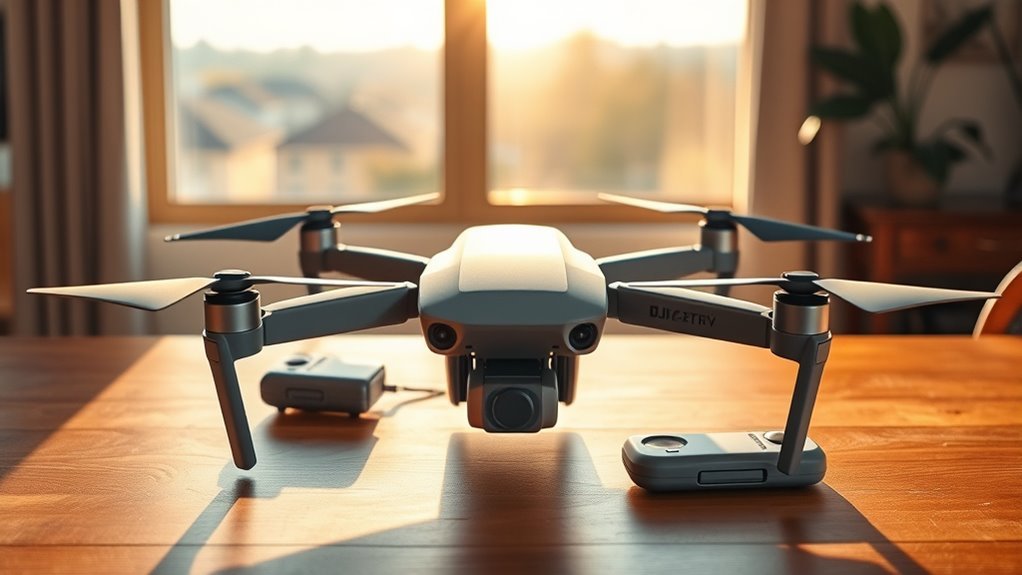
The DJI Mavic 4 Pro is designed for aerial photographers and filmmakers who need detailed images, flexible camera movement, and longer flight sessions. Its upgraded camera system and Infinity Gimbal offer meaningful advantages over older Mavic models. However, flight specifications, U.S. availability, and warranty coverage deserve careful attention before you buy.
Quick Answer
The DJI Mavic 4 Pro is a premium triple-camera drone with a 100MP Hasselblad camera, 6K/60fps HDR video, a rotating Infinity Gimbal, and up to 51 minutes of rated flight time. Its imaging upgrades are substantial, but U.S. buyers should compare retailer availability, warranty terms, and actual operating requirements before purchasing.
Last checked: October 11, 2026. Key specifications, listed prices, and U.S. operating requirements were checked against DJI, retailer, and FAA sources.
Key Takeaways
- The three cameras offer 28mm, 70mm, and 168mm equivalent focal lengths, giving you more composition options without changing aircraft position.
- The Infinity Gimbal supports full camera-roll movements and an upward tilt of 70°, but it does not provide unlimited horizontal panning.
- DJI’s 41 km figure describes maximum total flight distance under controlled conditions. The separate O4+ transmission rating reaches 30 km under FCC test conditions.
- The parallel charging hub can charge three batteries together with a suitable power adapter, although charging time depends on input voltage.
- U.S. retailer listings exist, but buyers should confirm the exact product version, warranty eligibility, and support arrangements.
What the DJI Mavic 4 Pro Offers
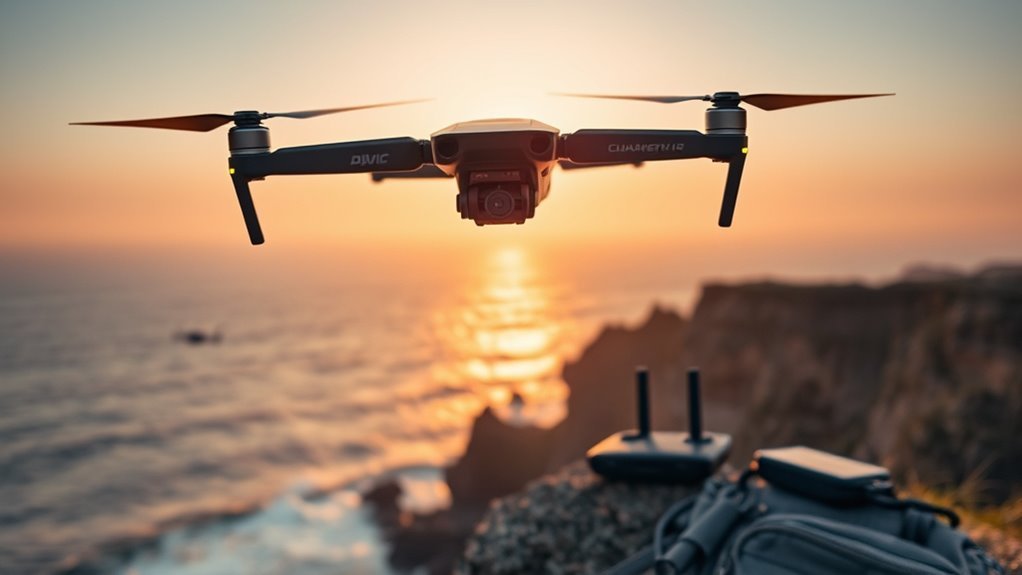
The DJI Mavic 4 Pro combines a 100MP 4/3 CMOS Hasselblad main camera, two telephoto cameras, and a redesigned three-axis Infinity Gimbal. Its main camera records up to 6K video at 60 frames per second, making it suitable for demanding photography and video assignments.
According to DJI’s official Mavic 4 Pro specifications, the aircraft weighs approximately 1,063 g and offers the following headline capabilities.
| Feature | DJI Mavic 4 Pro |
|---|---|
| Main camera | 100MP 4/3 CMOS Hasselblad |
| Additional cameras | 48MP medium telephoto and 50MP telephoto |
| Maximum main-camera video | 6K at 60fps |
| Gimbal | Three-axis Infinity Gimbal with 360° roll capability |
| Maximum flight time | 51 minutes |
| Maximum flight distance | 41 km total under controlled conditions |
| Maximum horizontal speed | 90 km/h (approximately 56 mph) in Sport mode under specified test conditions |
| Transmission system | DJI O4+ |
| Obstacle sensing | Omnidirectional vision system with forward-facing LiDAR |
| Internal storage | 64GB standard; 512GB Creator Combo version |
The Mavic 4 Pro’s main advantage is how these features work together. You can switch between wide and telephoto views, make unusual camera moves, and spend more time composing shots before landing to change batteries.
Its sensing system also supports obstacle detection in low light. However, sensing performance depends on conditions, and the aircraft still requires active pilot supervision.
How Does the Infinity Gimbal Change Aerial Shooting?
The Mavic 4 Pro’s Infinity Gimbal allows the camera to rotate through a full circle on its roll axis. It can also tilt upward by 70°, allowing shots that would be difficult with a conventional camera gimbal.
This distinction matters because the advertised 360° movement does not mean unrestricted horizontal panning. Instead, the camera rotates around its viewing axis to create roll effects, change orientation, and capture unusual compositions.
DJI specifies a controllable roll range of -40° to 400° and a controllable tilt range of -90° to 70°.
These movements create several practical filming options:
- Continuous camera rolls: Rotate the image while maintaining the aircraft’s flight direction, creating transitions without flying a complete circular maneuver.
- Upward architectural shots: Aim above the horizon to capture buildings, bridges, and structures from lower aerial positions.
- Vertical compositions: Use gimbal rotation to capture portrait-oriented footage for mobile viewing and social media.
- Straight-down framing: Point the camera toward the ground for overhead landscapes, patterns, and property photography.
- Controlled reveals: Combine tilt and roll movements with smooth aircraft motion for distinctive cinematic sequences.
Greater freedom to orbit subjects and reveal architecture from uncommon angles, with smoother shot transitions and more precise framing.
The three-axis stabilization system helps reduce unwanted camera movement during flight. Still, strong wind, rapid acceleration, and sudden directional changes can affect footage.
For professional filming, the biggest benefit is creative flexibility. You can make more camera movements without depending entirely on aircraft positioning.
DJI Mavic 4 Pro Camera and Image Quality
The DJI Mavic 4 Pro uses three cameras to cover wide, medium, and longer telephoto perspectives. Its primary Hasselblad camera has a 100MP 4/3 CMOS sensor, while the other cameras provide 48MP and 50MP capture options.
Each camera serves a different purpose. The wide camera handles landscapes and general aerial filming, while the telephoto lenses help isolate distant subjects without moving the drone as close.
| Camera | Specifications | Best Uses |
|---|---|---|
| Hasselblad main | 100MP, 4/3 CMOS, 28mm equivalent, f/2.0–f/11, 6K/60fps | Landscapes, architecture, detailed photography, and high-resolution video |
| Medium telephoto | 48MP, 1/1.3-inch CMOS, 70mm equivalent, f/2.8, 4K video | Subject isolation, compressed landscapes, and cinematic detail shots |
| Telephoto | 50MP, 1/1.5-inch CMOS, 168mm equivalent, f/2.8, 4K video | Distant details, tighter framing, and layered landscape compositions |
What Does the 100MP Hasselblad Camera Actually Improve?
The main camera can capture photographs at 25MP or 100MP. Higher-resolution shooting provides additional detail for cropping and large prints, provided the subject, focus, and lighting support that detail.
The 100MP mode is not automatically the best option in every situation. For example, the 25MP mode can be more practical when you need smaller files or want to work quickly.
Hasselblad Natural Color Solution supports consistent color rendering, while RAW capture gives photographers greater flexibility when editing exposure and color.
The main lens also has a variable aperture from f/2.0 to f/11. This helps you control exposure and depth of field without relying entirely on shutter speed and ISO.
Video Quality and Low-Light Performance
The main camera records up to 6K/60fps HDR video, while both telephoto cameras support 4K recording at 60fps and additional recording modes.
DJI also provides 10-bit color options, including D-Log and HLG recording modes. These are useful for color grading and preserving tonal detail during post-production.
In low light, the main camera’s larger sensor and adjustable aperture provide useful flexibility. However, higher ISO settings still introduce noise, and motion blur remains possible with slow shutter speeds.
For the best results, choose your camera based on the scene rather than relying on the highest megapixel figure alone.
Flight Time, Speed, and Real-World Range
The DJI Mavic 4 Pro has a rated maximum flight time of 51 minutes, a maximum hovering time of 45 minutes, and a maximum total flight distance of 41 km. These are controlled-test figures rather than guaranteed results for every flight.
DJI measures its maximum flight time while the aircraft travels forward at a constant speed under conditions equivalent to no wind at sea level. This differs from filming a moving subject, hovering in wind, or repeatedly accelerating.
How Long Does the Battery Last in Practice?
Actual flight time depends on several conditions:
- Wind: Strong headwinds require more power and reduce usable endurance.
- Flight style: Frequent acceleration, climbing, and abrupt maneuvers consume more energy than steady flight.
- Temperature: Cold conditions can reduce battery performance.
- Battery condition: Aging and poorly maintained batteries may provide less usable capacity.
- Return distance: Pilots must reserve enough power to return and land safely.
Do not plan a commercial shoot around using every minute of the maximum rating. Allow enough battery reserve for unexpected conditions and landing.
Does 41 km Mean the Drone Can Fly 41 km Away?
No. DJI’s 41 km specification is the maximum total flight distance measured under controlled conditions. It does not represent a guaranteed one-way distance from the pilot.
For a round-trip mission, the aircraft must travel outward, return to its landing location, and retain enough energy for a safe landing.
DJI also lists a maximum horizontal speed of approximately 90 km/h (56 mph) under specified Sport mode test conditions. This helps with repositioning, but it does not remove the need for safe operating limits.
Warning: Manufacturer flight-distance and transmission figures are not permission to fly beyond visual line of sight. U.S. pilots must follow applicable FAA visibility, airspace, and operational requirements. A functioning video signal does not replace direct visual awareness of the aircraft.
How Stable Is DJI O4+ Video Transmission?
The DJI Mavic 4 Pro uses the O4+ video transmission system, which supports a maximum rated transmission distance of 30 km, or approximately 18.6 miles, under FCC test conditions.
Under CE, SRRC, and MIC standards, DJI lists a maximum transmission distance of 15 km. These values apply to unobstructed environments without interference.
That distinction is important because real operating conditions often involve buildings, trees, competing wireless signals, and changes in aircraft orientation.
What Affects Video Signal Stability?
O4+ uses multiple antennas and supported frequency bands to help maintain communication. However, signal quality still depends on the environment.
- Urban interference: Nearby wireless devices and radio activity may reduce reliable transmission distance.
- Physical obstacles: Buildings, trees, and terrain can block or weaken the connection.
- Antenna orientation: Poor controller positioning can reduce signal quality.
- Regional frequency limits: Available transmission power and frequency bands vary by country.
- Flight conditions: The aircraft’s position and surrounding environment can affect the live video feed.
DJI rates the remote-controller live view at up to 1080p/60fps. This is the video feed used for monitoring and does not mean the aircraft records only at that resolution.
The system’s low-light image-monitoring quality should not be confused with its radio performance. Darkness affects camera visibility and obstacle sensing differently from wireless signal strength.
For demanding aerial work, the most useful improvement is a clearer, more dependable monitoring connection within appropriate operating conditions.
What’s New in the RC Pro 2 and Battery Dock?
The DJI RC Pro 2 controller and Mavic 4 Pro Parallel Charging Hub improve two parts of the flying workflow: camera monitoring and battery preparation. Both are especially useful for operators handling multiple flights in one session.
However, package contents differ, and buyers should confirm which controller and charging accessories are included with their selected bundle.
RC Pro 2 Upgrades
The DJI RC Pro 2 features a 7-inch Mini-LED display with a rated peak brightness of 2,000 nits and sustained brightness of 1,600 nits. The larger screen helps pilots judge framing, focus, and exposure in bright outdoor conditions.
DJI’s RC Pro 2 product specifications confirm several practical improvements over the DJI RC 2.
- Rotatable display: Supports portrait-oriented framing and monitoring.
- Collapsible controls: The control sticks fold into the body for transport.
- Automatic power-on: Extending the controller’s screen powers it on and raises the control sticks.
- Dedicated adjustment dial: Allows faster camera-setting changes.
- High-gain antennas: Support O4+ transmission with compatible aircraft.
- Built-in microphone: Provides additional audio recording and communication options.
- Internal storage: Includes 128GB of storage and microSD expansion support.
The controller has a rated battery life of up to four hours under DJI’s test conditions.
One detail worth correcting is its power-on behavior. The RC Pro 2 does not require the drone’s arms to extend before it can turn on. Its automatic startup is triggered by extending the controller’s own screen.
For pilots who often work in bright sunlight or use vertical video, the improved display and control layout are practical upgrades.
Battery Dock Benefits
The DJI Mavic 4 Pro Parallel Charging Hub can charge up to three Intelligent Flight Batteries. With the appropriate high-power adapter, it supports simultaneous charging and reduces the need to swap batteries manually.
According to DJI’s Parallel Charging Hub documentation, the hub also supports sequential charging and a power accumulation function.
Charging speed depends on the adapter, mains voltage, and battery conditions.
| Charging Setup | DJI Rated Charging Time |
|---|---|
| 240W adapter, one battery | Approximately 51 minutes |
| 240W adapter, three batteries, 200–240V input | Approximately 90 minutes |
| 240W adapter, three batteries, 100–127V input | Approximately 110 minutes |
| 100W USB-C adapter, one battery | Approximately 80 minutes |
The hub can also transfer remaining energy from several partly depleted batteries into the battery with the highest remaining charge. This feature can help consolidate usable power when a normal charging source is unavailable.
With suitable stored battery power, the hub can function as a power bank for compatible devices.
For crews filming throughout the day, these features make battery management easier. The hub is most useful when paired with extra batteries and a compatible charger.
DJI Mavic 4 Pro vs. Mavic 3 Pro
The DJI Mavic 4 Pro improves on the Mavic 3 Pro in camera resolution, gimbal movement, telephoto capability, and rated flight time. However, the older model remains capable, particularly when its existing video quality already meets your requirements.
DJI’s official Mavic 3 Pro specifications provide a useful reference for comparing the two generations.
| Feature | Mavic 4 Pro | Mavic 3 Pro |
|---|---|---|
| Main camera | 100MP 4/3 CMOS | 20MP 4/3 CMOS |
| Main lens | 28mm equivalent, f/2.0–f/11 | 24mm equivalent, f/2.8–f/11 |
| Medium telephoto | 48MP, 70mm equivalent | 48MP, 70mm equivalent |
| Long telephoto | 50MP, 168mm equivalent | 12MP, 166mm equivalent |
| Main camera maximum video | 6K/60fps | 5.1K/50fps |
| Gimbal | Infinity Gimbal with 360° roll | Conventional three-axis gimbal |
| Maximum flight time | 51 minutes | 43 minutes |
| Maximum total flight distance | 41 km | 28 km |
| Approximate takeoff weight | 1,063 g | 958 g |
Design and Camera Upgrades
The biggest imaging improvement is the Mavic 4 Pro’s 100MP main camera. Compared with the Mavic 3 Pro’s 20MP main sensor, the newer model offers more recorded pixels for detailed photographs and cropping.
However, resolution alone does not determine image quality. Lens design, sensor processing, lighting, and camera settings also affect the result.
The longer telephoto camera represents another major change. The Mavic 4 Pro uses a 50MP sensor behind a 168mm equivalent lens, compared with the Mavic 3 Pro’s 12MP camera at 166mm equivalent.
The medium telephoto cameras have similar headline resolution and focal length, so this part of the upgrade is less dramatic on paper.
The Infinity Gimbal provides the clearest difference in filming style. Camera-roll movements and wider tilt control let filmmakers create compositions that are harder to reproduce with the Mavic 3 Pro.
Low-light obstacle sensing also improves through the newer vision system and forward-facing LiDAR, although detection remains subject to operating limits.
Flight Time and Range
The Mavic 4 Pro increases rated maximum flight time from 43 to 51 minutes. That difference can provide additional time for framing, repeated takes, and returning safely after a complex shot.
Its rated maximum total flight distance also increases from 28 km to 41 km under DJI’s specified testing conditions.
O4+ transmission provides another upgrade over the Mavic 3 Pro’s O3+ system. However, transmission improvements are separate from legal operating distance and battery endurance.
For an existing Mavic 3 Pro owner, upgrading makes the most sense when the new camera, gimbal, or endurance directly improves paid work or a frequently used creative workflow.
If your current drone already delivers the required output, the additional expense may be harder to justify.
U.S. Availability and Pricing
The DJI Mavic 4 Pro’s U.S. purchasing situation has changed since its initial launch. Although the product faced trade-related complications and lacked a normal direct U.S. launch through DJI’s online store, domestic retailer listings are available.
For example, B&H lists the standard DJI Mavic 4 Pro at $2,199 and showed it in stock when checked on October 11, 2026.
The retailer also lists a Mavic 4 Pro Fly More Combo at $2,899. Prices and inventory can change without notice.
Which Package Should You Consider?
- Standard package: A practical starting option for buyers who want the aircraft and a compatible controller without a larger accessory bundle.
- Fly More Combo: Better suited to pilots who need additional batteries and accessories for longer shooting sessions.
- 512GB Creator Combo: A higher-tier option for production users who want expanded internal storage and the RC Pro 2 controller.
The original $2,899–$3,899 Fly More price range should not be treated as one fixed package price. Package names, controller choices, and retailer configurations need to be distinguished.
What About Imported Units and Warranty Coverage?
Purchasing a drone from an overseas seller may create complications with warranty service, returns, support eligibility, and product-region compatibility.
However, it is not accurate to assume every imported Mavic 4 Pro has region-locked firmware or that every U.S. retailer purchase lacks warranty coverage.
Before paying, confirm the exact manufacturer part number, selling region, seller authorization, return policy, and DJI service eligibility.
Note: Domestic retailer availability, official DJI online-store availability, and DJI warranty eligibility are separate questions. A U.S. listing does not automatically confirm every service benefit. Get the seller’s warranty and return terms in writing before purchasing a high-value imported configuration.
Can You Legally Operate the Mavic 4 Pro in the United States?
Yes. A DJI Mavic 4 Pro can be operated in the United States when the aircraft and pilot meet applicable FAA requirements. Where the drone was purchased does not, by itself, determine whether a particular flight is legal.
Because the Mavic 4 Pro weighs approximately 1,063 g, it exceeds the recreational registration exemption for drones weighing 250 g or less.
Under the FAA drone registration requirements, aircraft that must be registered must also comply with applicable Remote ID rules.
Your operating requirements depend on the purpose of the flight.
- Recreational flying: The pilot must complete the FAA’s TRUST test and follow the rules for recreational flyers.
- Commercial flying: Non-recreational operations generally require an FAA Part 107 Remote Pilot Certificate and compliance with Part 107 rules.
- Airspace: Controlled or restricted locations may require authorization or may prohibit drone operation.
- Visual line of sight: The pilot must follow applicable visibility rules, regardless of the aircraft’s advertised transmission range.
- Night operations: Additional training and lighting requirements may apply, including anti-collision lighting for Part 107 night operations.
The FAA’s Part 107 operating guidance explains commercial operating limitations, visual line-of-sight rules, and airspace responsibilities.
The Mavic 4 Pro’s low-light sensing and camera performance do not replace legally required anti-collision lighting or pilot awareness.
Who Should Buy the Mavic 4 Pro?
The DJI Mavic 4 Pro makes the most sense for photographers and filmmakers who can benefit from its three-camera system, 100MP stills, 6K video, and Infinity Gimbal. These capabilities provide the strongest value when they support demanding or repeatable creative work.
Best Suited to Professional Photographers
Commercial photographers working on landscapes, architecture, real estate, and detailed aerial images may benefit from the main camera’s higher resolution.
RAW capture and adjustable exposure settings also support more flexible editing for demanding deliverables.
Best Suited to Video Creators
Filmmakers who need rolling transitions, unusual upward perspectives, and multiple focal lengths may find the Infinity Gimbal especially useful.
The three-camera system allows different compositions without changing lenses or bringing the aircraft unnecessarily close to a subject.
Best Suited to Multi-Flight Production Work
Operators filming over several hours can benefit from longer rated battery endurance, extra battery packs, and the Parallel Charging Hub.
The Fly More Combo offers a practical route for expanding a working kit, while the Creator Combo targets users who need its additional production features.
Who Should Consider Something Else?
The Mavic 4 Pro may be unnecessary for casual pilots who mainly record short travel clips, share standard-resolution social videos, or rarely use telephoto cameras.
It is also a harder purchase to justify if you already own a Mavic 3 Pro and do not need its newer gimbal movements or additional still-image resolution.
For U.S. buyers, uncertain warranty terms or restricted service options may also outweigh the performance benefits of a particular imported unit.
Choose the Mavic 4 Pro when its camera and workflow improvements solve a real need, rather than upgrading solely for larger specification numbers.
Frequently Asked Questions
Can You Fly a DJI Mavic 4 Pro in the US?
Yes, the DJI Mavic 4 Pro can be flown legally in the United States when applicable FAA requirements are met. It requires registration because it weighs more than 250 g. Recreational pilots must complete TRUST, while commercial operators generally need Part 107 certification. Remote ID, airspace restrictions, and visual line-of-sight requirements also apply.
Why Is the DJI Mavic 4 Pro Not Available in the USA?
The claim that the Mavic 4 Pro is completely unavailable in the United States is outdated. DJI faced trade and customs complications during its initial launch, but domestic retailers now list the aircraft for purchase. Availability through DJI’s own online store, individual retailer stock, and warranty eligibility may differ.
How Far Can You Fly a DJI Mavic 4 Pro?
DJI rates the Mavic 4 Pro for a maximum total flight distance of 41 km under controlled conditions. Its O4+ transmission system is rated for up to 30 km under unobstructed FCC test conditions. Neither figure represents a guaranteed safe one-way flight distance. Battery reserve, interference, weather, and legal operating limits determine practical distance.
What Is the Maximum Flight Time of the Mavic 4 Pro?
The DJI Mavic 4 Pro has a rated maximum flight time of 51 minutes under controlled test conditions. DJI also rates maximum hovering time at 45 minutes. Real-world endurance varies with wind, temperature, battery condition, and flying style. Pilots should always retain enough charge for a safe return and landing.
Conclusion
The DJI Mavic 4 Pro delivers meaningful improvements in aerial photography and video production. Its 100MP Hasselblad camera, upgraded telephoto system, Infinity Gimbal, and longer rated flight time make it a capable platform for demanding creative work.
Its greatest strengths are image quality, compositional flexibility, and production efficiency rather than headline range figures alone. Before buying in the U.S., compare the available packages and confirm the seller’s warranty and support terms. For professionals who can use its distinctive features regularly, the Mavic 4 Pro is a compelling upgrade.
Sources
- DJI Mavic 4 Pro Official Specifications: Camera sensors, video formats, Infinity Gimbal movement, aircraft weight, battery endurance, flight distance, transmission ratings, and charging conditions.
- DJI RC Pro 2 Product Documentation: Display brightness, controller functions, automatic startup, folding controls, and controller specifications.
- DJI Mavic 4 Pro Parallel Charging Hub: Simultaneous charging, compatible adapters, charging times, and power accumulation features.
- DJI Mavic 3 Pro Official Specifications: Previous-generation camera system, gimbal, weight, flight endurance, and flight-distance figures.
- B&H Photo — DJI Mavic 4 Pro Standard Package: U.S. retailer availability, listed price, and package configuration.
- B&H Photo — DJI Mavic 4 Pro Fly More Combo: U.S. bundle price and retailer availability.
- Federal Aviation Administration — How to Register Your Drone: Aircraft registration, Remote ID, and recreational registration exemptions.
- Federal Aviation Administration — Small UAS Regulations, Part 107: Commercial pilot requirements, operating restrictions, and visual line-of-sight rules.

