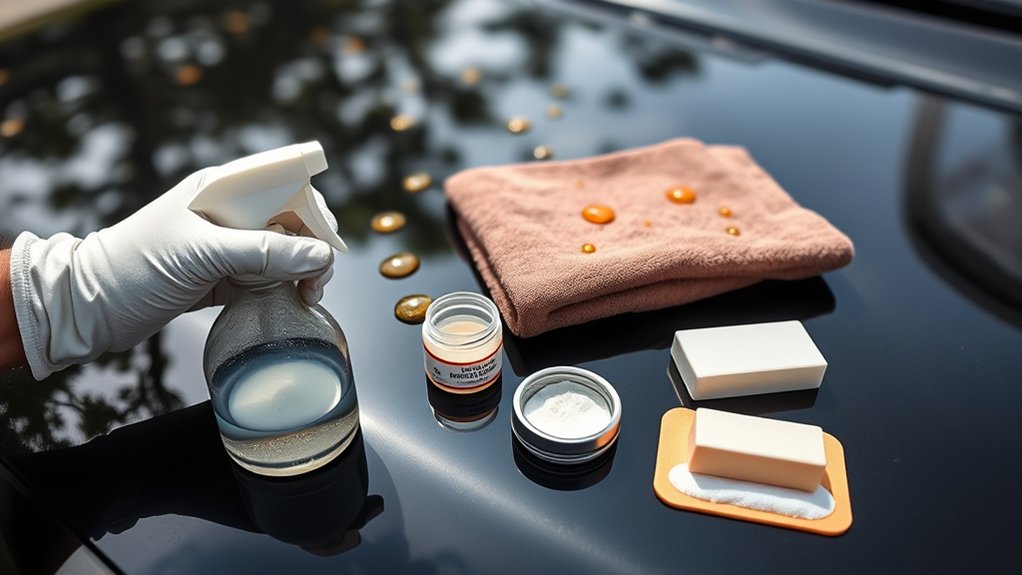
To remove tree sap from Toyota Tacoma paint safely, work on cool, clean paint and start with the least aggressive method: wash first, then use a tree-sap or adhesive remover that explicitly lists automotive clear coat. Wipe with fresh microfiber instead of scraping. Hardened spots may need repeated label-directed treatments; use lubricated detailing clay only for thin bonded residue after the main deposit is gone. When the area is clean, wash off remover residue and restore wax, sealant, or coating protection.
Last updated: September 11, 2026
Method note: This guide prioritizes manufacturer-labeled surface compatibility and a least-aggressive escalation sequence. A household product is not treated as paint-safe just because it can dissolve sticky residue.
Quick Answer
Wash and dry the sap-covered area, then apply an automotive tree-sap or adhesive remover according to its label. Let it work for the recommended time, wipe gently with microfiber, and repeat if needed. Never use a razor blade or hard scraper. Finish by washing the spot and restoring wax or sealant.
Key Takeaways
- Work in shade on paint that feels cool to the touch.
- Use a remover specifically labeled as safe for automotive paint or clear coat.
- Avoid razor blades, box cutters, fingernails, abrasive pads, and forceful scrubbing.
- Use a lubricated detailing clay only for light bonded residue that remains after chemical cleaning.
- Wash away product residue and reapply paint protection after the sap is gone.
At a Glance
| Time Required | Varies by sap age, affected area, and product directions; hardened sap may need several gentle treatment cycles |
| Difficulty | Easy, with patience |
| Tools Needed | Car-wash soap, water, microfiber towels, automotive sap or adhesive remover, label-required protective equipment, and optional detailing clay with lubricant |
| Cost | Varies with the remover, microfiber towels, and paint-protection products you already have |
How to Safely Remove Tree Sap From Your Tacoma Paint
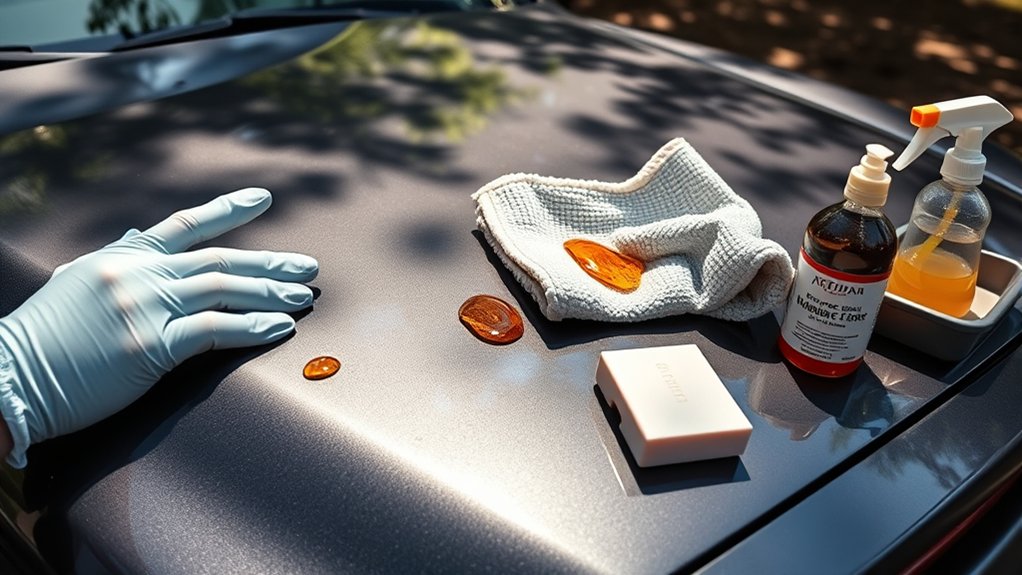
Start with the least aggressive method and increase cleaning strength only when the sap remains. Fresh droplets may come off during a normal wash. Dried or baked-on spots usually need an automotive remover and more than one treatment.
Warning: Never use a razor blade, box-cutter blade, metal scraper, fingernail, abrasive pad, acetone, gasoline, or lacquer thinner on painted Tacoma panels. These methods can scratch, haze, soften, or strip the clear coat.
Check the Surface Before You Begin
Confirm that the spot is on glossy factory paint rather than matte paint, vinyl wrap, paint protection film, plastic trim, or an aftermarket coating. Those surfaces can require different products. Review the remover’s label and your model-year guidance through Toyota’s manuals portal before treating an unfamiliar finish.
Inspect the area under bright, indirect light. If the sap sits over chipped paint, exposed metal, a deep scratch, or peeling clear coat, stop and ask a professional detailer or body shop to assess it.
Essential Tools and Materials for Sap Removal
You do not need sharp tools. A small set of paint-safe supplies gives you better control and reduces the chance of adding scratches while removing the sap.
Essential Cleaning Products Needed
- pH-balanced automotive wash soap and clean water
- Several clean, soft microfiber towels
- An automotive tree-sap, adhesive, or residue remover labeled safe for clear coat
- Nitrile gloves or the protective equipment listed on the product label
- Automotive wax, sealant, or the coating-maintenance product already used on your Tacoma
A consumer product such as Goo Gone Automotive Spray Gel specifically lists tree sap and automotive clear coat among its intended uses. This does not mean every Goo Gone formula or household adhesive remover is suitable for painted vehicles, so check the exact label.
Recommended Tools for Safety
Keep at least three microfiber towels ready: one for applying or blotting the remover, one for lifting softened residue, and one for the final wash and dry. Replace a towel as soon as it becomes dirty or sticky so you do not drag hardened sap across the paint.
Use the protective equipment and ventilation required by the remover’s label or safety data sheet. Follow the manufacturer’s directions for dwell time, rinsing, storage, first aid, and any heat or ignition precautions.
Optional Supplies for Stubborn Residue
A lubricated automotive clay bar can remove a thin film or sap mist that remains after washing and chemical treatment. Meguiar’s states that its Smooth Surface Clay Kit is non-abrasive, clear-coat safe, and intended for bonded contaminants including tree-sap mist.
Do not use clay on a dry surface. Use plenty of the clay lubricant supplied or recommended by the clay manufacturer. If you drop the clay, discard it because trapped grit can scratch paint.
Step-by-Step: Remove Tree Sap From Toyota Tacoma Paint
The following sequence works for isolated sap spots on glossy automotive paint. Read the label for your selected cleaner first because application and dwell times vary by formula.
1. Gather Necessary Supplies and Move Into Shade
Park the Tacoma in a garage or shaded area and let hot panels cool. Direct sun can dry cleaners too quickly and make the sap harder to work with. Prepare your soap, water, towels, remover, gloves, optional clay, and paint protectant before starting.
2. Wash and Dry the Area
Rinse loose grit from the panel. Wash the affected section with automotive soap and a clean mitt or microfiber towel, then rinse and dry it. This step prevents dust from becoming an abrasive while you work on the sap.
Fresh sap may release during washing. If it does, do not continue with a stronger chemical treatment. Inspect the surface and move to the protection step.
3. Soften the Sap With an Automotive Remover
Patch-test the product on a small, inconspicuous painted area. If the finish remains unchanged, apply a controlled amount to the sap or to a clean cloth as directed by the label. Allow only the recommended dwell time.
Blot or wipe with light pressure. Do not grind the towel into the paint. Turn to a clean section of microfiber after each pass so the loosened residue does not spread.
Pro Tip: For a thick, hardened droplet, hold a product-dampened microfiber cloth against the spot for the label-approved dwell time. This keeps the remover in contact with the sap without scraping.
4. Repeat With Patience
One light treatment may not remove old sap. Reapply the product as directed and repeat the gentle blotting process. Several mild cycles are safer than one aggressive attempt.
Stop if the paint becomes soft, dull, discolored, sticky, or unusually warm. Wash the area immediately and seek professional advice.
5. Use Clay for Light Bonded Residue, If Needed
After the main droplet is gone, lightly glide a properly lubricated clay bar over any remaining roughness. Use short passes and almost no downward pressure. Re-knead the clay to expose a clean surface as residue transfers to it.
Clay is for bonded surface contamination, not for forcing off a solid lump. Return to the remover if a raised sap deposit remains.
6. Wash, Inspect, and Restore Protection
Wash the treated spot with automotive soap and water to remove cleaner residue, then dry it with a fresh microfiber towel. Check the panel from several angles.
- If the paint looks clean and glossy, apply wax, sealant, or your coating’s approved maintenance product.
- If a faint outline remains but the surface feels smooth, the clear coat may be stained or etched.
- If the area feels rough, repeat only the least aggressive step that still applies.
- If you see haze, cracking, color transfer, or exposed base coat, stop and arrange a professional inspection.
A clear-coat-safe protectant, such as an automotive wax made for glossy paint, helps restore the sacrificial layer that cleaning may weaken. Meguiar’s describes its Ultimate Paste Wax as safe for glossy paint and clear coat. For a broader explanation of wax types and paint protection, see our car wax guide.
How Should You Treat Fresh vs. Hardened Tree Sap?
Fresh sap is usually softer and easier to remove during a normal wash. Hardened sap needs more patient softening because the deposit has dried and bonded more firmly to the surface. Use the spot’s condition—not extra force—to decide the next step.
| What You See or Feel | Safest Next Move | When to Stop |
|---|---|---|
| Fresh, soft droplet | Rinse, wash, and blot gently. If it releases, skip stronger chemistry. | Stop once the surface is clean; move to protection. |
| Dry but slightly flexible spot | Use an automotive sap or adhesive remover whose label allows the painted surface. Repeat gently as directed. | Stop if the finish becomes dull, soft, sticky, or discolored. |
| Hard, raised, amber-like deposit | Use repeated label-directed softening cycles. Do not pry at the edge. Use clay only after the main raised deposit is gone. | Stop if several correct treatment cycles do not improve it. |
| Smooth surface with a visible shadow | Do not keep adding solvent. The remaining mark may be staining or clear-coat etching. | Arrange professional inspection if the mark matters or the finish looks damaged. |
Effective Tips for Safe Sap Removal

- Treat sap as soon as practical, before repeated heat cycles harden it.
- Work on one small spot at a time so you can control dwell time.
- Use clean microfiber and change towels often.
- Follow the exact directions for the product and surface.
- Wash the area after using a solvent-based cleaner.
- Restore wax or sealant after the panel is clean.
Note: Hand sanitizer, household Goo Gone, rubbing alcohol, and WD-40 are not interchangeable with a product that explicitly states it is suitable for automotive paint. Formula strength, added ingredients, and label directions can differ.
Common Tree Sap Removal Mistakes to Avoid
- Scraping the deposit: A razor, box cutter, fingernail, metal edge, or dry plastic card can leave scratches or chips.
- Using an unlabeled household solvent: A product that works on glass, fabric, or tools may not be safe for cured automotive clear coat.
- Working on hot paint: Heat can shorten dwell time and increase streaking or staining.
- Scrubbing hard: Pressure and repeated dry rubbing can create haze and swirl marks.
- Skipping the pre-wash: Dirt around the sap can scratch the panel during wiping.
- Ignoring the product label: Leaving a cleaner on too long can be as risky as using the wrong cleaner.
- Failing to rinse and protect: Cleaner residue and a stripped protective layer can leave the area vulnerable.
How to Reduce Future Tree Sap Buildup
You cannot guarantee that sap will never stick, but routine care can make cleanup easier. Keep the Tacoma’s glossy paint protected with a compatible wax, sealant, ceramic coating, or paint protection film. Follow the product maker’s maintenance instructions rather than layering incompatible products.
Inspect the hood, roof, bed rails, mirrors, and upper door surfaces after parking under trees. Remove fresh contamination promptly with a safe wash method. Whenever practical, park in a garage or away from branches that regularly drip sap.
A smooth, protected surface does not make paint sap-proof. It gives you a sacrificial layer and reduces the time contaminants remain directly on the clear coat.
What Product Types Are Safest for Tree Sap Removal?
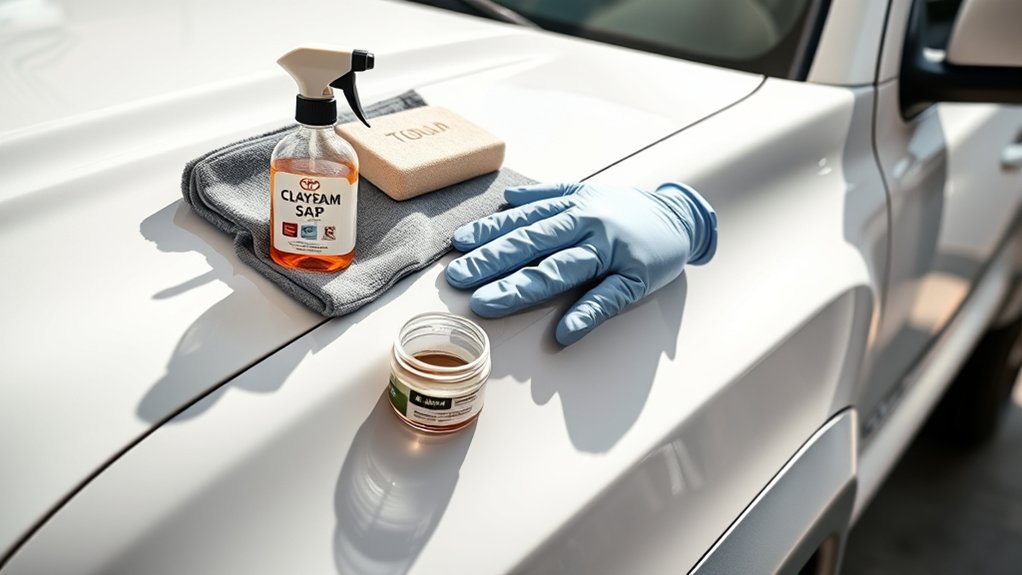
Choose products by their stated surface compatibility, not by how strong they smell or how quickly they dissolve household adhesive.
- Automotive sap or adhesive remover: Best first choice for a defined sap spot when the label lists automotive paint or clear coat.
- Automotive bug-and-tar remover: Useful only when the manufacturer also permits the product on painted exterior surfaces and the label directions fit the contaminant.
- Lubricated detailing clay: Best for fine bonded residue or sap mist after the main deposit has been removed.
- Automotive wash soap: Required for pre-cleaning and for washing away remover residue.
- Clear-coat-safe wax or sealant: Used after cleaning to restore protection on glossy paint.
Goo Gone Automotive is a clearly labeled consumer option for tree sap and automotive clear coat when used as directed. Meguiar’s Smooth Surface Clay Kit is an option for remaining tree-sap mist or bonded residue. A professional product such as 3M Adhesive Remover may be suitable for most cured automotive paints, but 3M labels that specific product for industrial or occupational use, not general consumer use.
When to Call a Professional
Stop the do-it-yourself process when the sap is spread across a large area, sits on damaged or repainted panels, or remains after several label-directed treatments. A professional detailer can identify whether the remaining mark is residue, staining, oxidation, or clear-coat etching.
Paint correction uses abrasives to level defects and should not be attempted casually. If the clear coat is cracked, peeling, burned, or worn through, a body shop may need to repair or refinish the panel.
Related Guides
Frequently Asked Questions
How do you remove tree sap from a car without damaging the paint?
Wash and dry the area, patch-test an automotive sap or adhesive remover, and use it according to the label. Blot or wipe gently with clean microfiber, repeat as needed, wash away residue, and restore wax or sealant. Avoid scraping and aggressive rubbing.
How do you remove hardened tree sap from Toyota Tacoma paint?
Wash and dry the panel first, then use a tree-sap or adhesive remover whose label allows automotive clear coat. Give it only the directed dwell time, wipe gently with fresh microfiber, and repeat instead of scraping. If the raised deposit is gone but a thin rough film remains, use properly lubricated detailing clay. If the surface feels smooth but a shadow remains, stop using cleaner because the mark may be staining or etching.
Will WD-40 remove tree sap from car paint?
WD-40 Company has published tree sap among the listed uses for WD-40 Multi-Use Product, but that is not the same as a paint-specific sap-removal procedure for every Tacoma finish. A dedicated automotive remover whose label explicitly lists tree sap and automotive clear coat gives clearer surface-compatibility and cleanup directions.
Can tree sap permanently damage car paint?
Tree sap can leave staining or etching, especially after it hardens and repeatedly heats in the sun. If the surface feels smooth after removal but a shadow remains, cleaning may be complete and the clear coat may need professional polishing or repair.
Will Goo Gone remove tree sap from car paint?
Goo Gone Automotive Spray Gel lists tree sap and automotive clear coat among its intended uses. Pretest it, follow the label, let it work only for the directed time, wipe with a clean cloth, and wash the area with soap and water afterward. Do not assume every Goo Gone formula has the same surface approval.
Can you use rubbing alcohol on Toyota Tacoma paint?
Rubbing-alcohol concentration and paint condition vary, so it should not be the automatic first choice. Start with a product labeled for automotive clear coat. If a vehicle or product manufacturer specifically approves alcohol for your finish, patch-test it and use the stated dilution and method.
What should you do if a mark remains after the sap is removed?
Wash and dry the area, then inspect it under bright, indirect light. If the deposit is gone but a smooth-looking outline remains, the mark may be staining or etching rather than leftover sap. A reputable detailer can test a small polishing step and determine whether the panel needs paint correction or body-shop repair.
Conclusion
You can remove tree sap from Toyota Tacoma paint without adding damage when you use patience and the least aggressive method. Cool and clean the panel first, soften the deposit with a product labeled for automotive clear coat, wipe with fresh microfiber, and repeat rather than scrape. Once the sap is gone, wash the area, inspect the finish, and restore its protective wax or sealant.
Sources
- Toyota Manuals and Warranties — model-year owner-manual access and vehicle-specific care guidance.
- Goo Gone Automotive Spray Gel — tree-sap use, clear-coat compatibility, patch testing, dwell, wiping, and soap-and-water cleanup directions.
- Meguiar’s Smooth Surface Clay Kit — clear-coat-safe clay use for bonded contaminants and tree-sap mist.
- Meguiar’s Ultimate Paste Wax — clear-coat-safe paint protection after cleaning.
- 3M Adhesive Remover — non-abrasive residue removal on most cured automotive paint; professional or occupational use restrictions apply.
- AAA Via — How to Remove Tree Sap From Your Car — expert-backed guidance on prompt cleaning, gentle washing, stronger spot treatments when needed, and restoring wax afterward.
- WD-40 Multi-Use Product — Published Uses List — lists tree sap among published uses; this is not a Tacoma-specific paint-care procedure.
