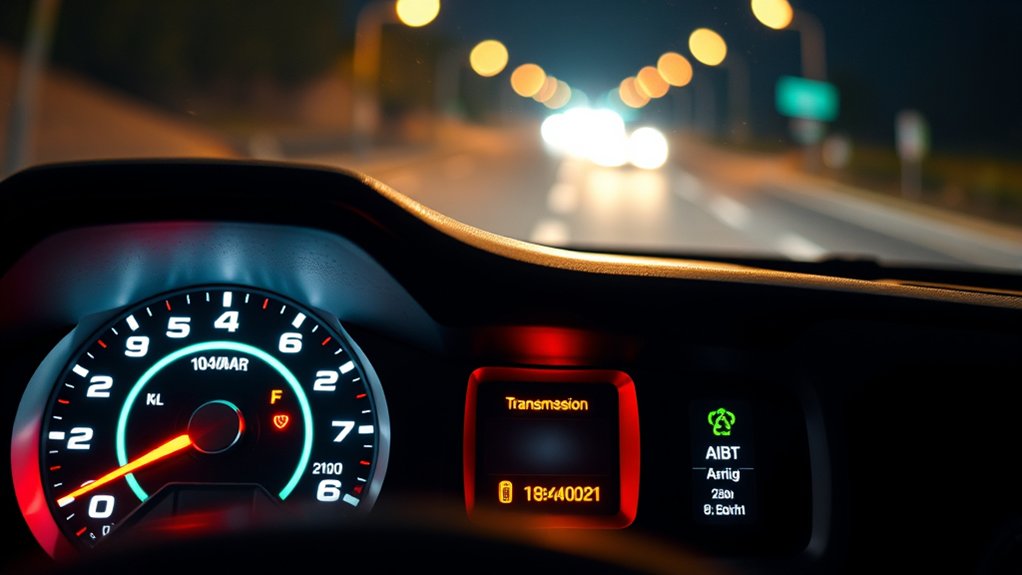
A Toyota Tacoma transmission temperature warning light means the automatic transmission fluid is too hot or the truck has detected a transmission-temperature-related condition that requires attention. Stop as soon as it is safe, reduce the load, shift to Park, and follow the exact dashboard message and owner’s-manual instructions for your model year.
Do not assume one cooling procedure applies to every Tacoma. Toyota’s 2024 Tacoma automatic-transmission instructions say to stop safely, shift to P, and wait until the high-temperature warning clears; if it does not clear, contact a Toyota dealer. Older Tacoma manuals also use an “A/T OIL TEMP” warning but may give slightly different wording and procedures.
Quick Answer
Stop driving as soon as you can do so safely, shift to Park, set the parking brake, and follow the exact dashboard message and owner’s manual for your Tacoma. Toyota’s 2024 Tacoma transmission section says to wait in P until the warning clears; if it does not clear, contact a Toyota dealer. Do not resume towing, climbing, or other heavy-load driving while the warning is active. If the warning returns, the truck shifts abnormally, or fluid is leaking, arrange professional diagnosis.
Key Takeaways
- A transmission-temperature warning means you should reduce load and stop safely instead of continuing to tow, climb, crawl off-road, or accelerate hard.
- The exact warning and cooling procedure vary by model year, so follow the dashboard message and the owner’s manual for your Tacoma.
- Toyota’s 2024 Tacoma automatic-transmission instructions say to stop, shift to P, and wait for the warning to clear; contact a dealer if it does not clear.
- Possible causes include demanding use, low or incorrect fluid, restricted cooling, sensor or wiring faults, and internal transmission trouble.
- Fluid-checking procedures differ by transmission. Some Tacomas use a sealed or level-plug system that must be checked within a specified temperature range.
- If the warning returns, shifting becomes abnormal, smoke appears, or fluid is leaking, stop driving under load and arrange service or towing as appropriate.
Last updated: September 19, 2026
At a Glance
| Time Required | No universal cooling time applies. Follow the dashboard and manual, and wait until the warning clears when your model-specific procedure instructs you to do so. |
| Difficulty | Basic for the roadside response; professional skill is usually needed for fluid-level checks and diagnosis. |
| Tools Needed | Owner’s manual and flashlight. A technician may need a scan tool, lift, temperature data, and Toyota service information. |
| Cost | Stopping and inspecting for obvious leaks costs nothing. Diagnostic and repair costs depend on the confirmed cause. |
Warning: Do not remove a hot transmission fill plug, drain plug, level plug, or cooler line. Hot fluid can cause severe burns. Do not add fluid unless you know the required specification and the correct model-specific level procedure.
Understanding the Transmission Temperature Warning Light
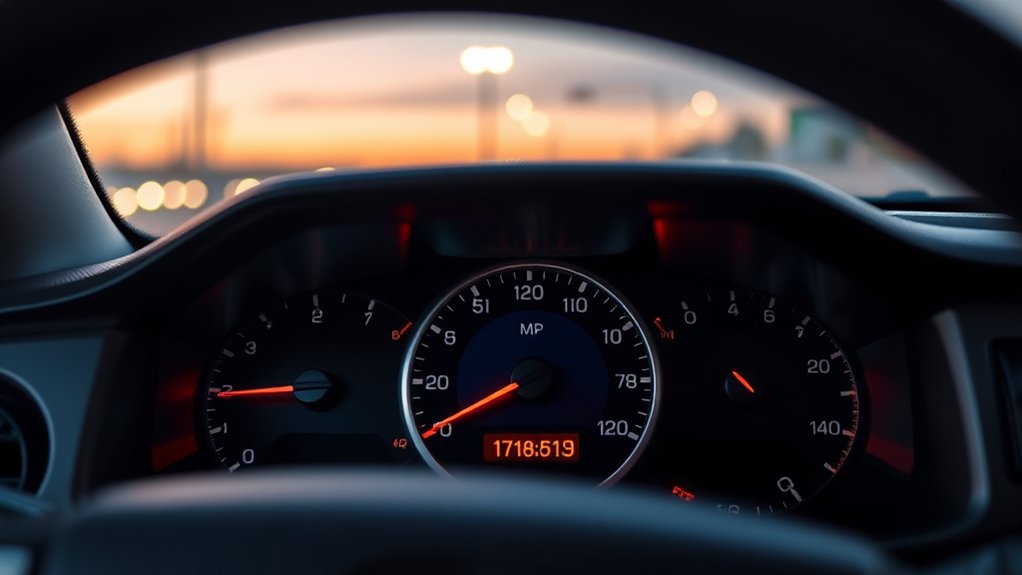
Depending on the Tacoma’s year and instrument cluster, you may see a dedicated temperature light, an “A/T OIL TEMP” indicator, or a written high-temperature message. Older Toyota manuals identify the warning as an automatic-transmission-fluid temperature light. The 2024 Tacoma uses the message “Transmission Oil Temp. High Stop in a Safe Place and See Owner’s Manual.” Check the Toyota owner’s manual for your exact vehicle rather than assuming another model year uses the same procedure.
The warning does not identify one failed part. It tells you that the truck has detected an excessive transmission-fluid temperature or a related condition that requires corrective action. Continuing under high load can increase transmission stress and may lead to damage.
Do not assume that one universal temperature number applies to every Tacoma. Warning thresholds, fluid-level check temperatures, transmission designs, and control strategies vary with the transmission and model year.
The warning is an instruction to reduce risk and follow Toyota’s procedure—not permission to keep driving until the truck begins shifting poorly.
Model-Year Instructions Matter
Toyota’s own manuals show why one universal answer is not enough:
| Manual Example | Toyota Instruction |
|---|---|
| 2004 Tacoma | Slow down, pull off the road, stop safely, place the selector in P, and wait with the engine idling until the A/T temperature light goes off. If it does not go off, seek assistance. |
| 2024 Tacoma — automatic-transmission section | Immediately stop safely, shift to P, and wait until the transmission-oil-temperature warning message goes off. If it does not go off, contact a Toyota dealer. |
| 2024 Tacoma — warning-message section | Toyota also lists the high-transmission-temperature message among warnings for which the vehicle should be stopped safely and the dealer contacted. Follow the live message and complete manual for your exact truck. |
See Toyota’s 2024 Tacoma warning-message instructions and the model-specific manual before deciding whether to idle, shut down, restart, or continue driving.
What to Do Immediately When the Warning Appears
Use the following response unless the dashboard message or your exact owner’s manual gives a different instruction:
- Reduce the load. Ease off the accelerator and stop climbing, accelerating hard, or applying unnecessary throttle.
- Move to a safe location. Pull completely away from traffic when conditions allow.
- Shift to Park. Set the parking brake and keep your foot on the brake until the truck is secure.
- Read the complete dashboard message. Follow its instruction and the matching owner’s-manual procedure.
- Do not guess whether to shut the engine off. Some Tacoma instructions call for waiting in P with the engine running or idling. Follow the procedure for your model year.
- Stop towing or hauling. Do not resume a steep climb, off-road crawl, or heavy-load trip while the warning remains active.
- Look for an obvious leak. Check the ground without crawling beneath an unsecured vehicle or touching hot components.
- Wait for the warning to clear when instructed. A fixed cooling time cannot tell you whether the transmission is ready to continue.
If the warning clears and your manual allows driving again, proceed cautiously only if the Tacoma engages and shifts normally and there is no visible leak, smoke, or strong burning odor. Avoid towing, steep grades, and high load. If the warning returns, stop again and arrange professional diagnosis.
Common Causes of the Transmission Temperature Warning Light
The warning can appear after demanding use or because a fault prevents the transmission from controlling temperature correctly. Possible causes include:
- Heavy towing or payload: Pulling a trailer or carrying a heavy load can increase torque-converter and clutch heat.
- Steep grades: Long climbs, repeated shifting, and low-speed hill work can place sustained demand on the transmission.
- Slow off-road driving: Sand, mud, rock crawling, or deep snow may combine high drivetrain load with limited vehicle speed and airflow.
- High outside temperature: Hot weather can make it harder for the cooling system to reject heat under heavy load.
- Low fluid: A leak or incorrect previous service may reduce lubrication and cooling capacity.
- Incorrect or contaminated fluid: The wrong specification, contamination, debris, or severely degraded fluid may affect transmission operation.
- Restricted cooling: Damaged cooler lines, blocked airflow, a restricted heat exchanger, or another cooling-system problem may allow temperatures to rise.
- Sensor or wiring fault: A failed temperature sensor, damaged connector, corroded terminal, or wiring problem can produce an incorrect reading or temperature-related code.
- Internal transmission trouble: Slipping clutches, torque-converter problems, valve-body faults, bearing damage, or restricted hydraulic flow can create excess heat.
- Control-system fault: A transmission-control or engine-control problem can affect shifting, pressure control, torque-converter lockup, or temperature reporting.
A warning light alone cannot confirm which cause is present. A technician may need stored diagnostic trouble codes, freeze-frame information, live temperature readings, fluid inspection, cooler checks, and a road test.
Signs Your Transmission May Be Overheating
Watch for symptoms that appear with or shortly before the warning:
- Delayed engagement after selecting Drive or Reverse
- Harsh, late, or repeated shifts
- Engine speed rising without matching vehicle acceleration
- Shuddering during acceleration or torque-converter lockup
- Reduced-power or fail-safe operation
- A burning or unusually hot odor
- Red, brown, or oily fluid beneath the truck
- Whining, grinding, buzzing, or other new noises
- Smoke from beneath the vehicle
A smell does not identify the leaking system by itself. Coolant, engine oil, transmission fluid, electrical insulation, and debris on the exhaust can produce different odors. Smoke, a large leak, loss of drive, or severe shifting means you should stop and have the truck towed.
Immediate Troubleshooting Steps for the Transmission Warning Light
Once the Tacoma is safely parked and cool enough to inspect, start with observations that do not require opening the transmission.
Check for Leaks and Recent Service
Look for fresh fluid beneath the transmission, cooler lines, radiator or heat-exchanger area, and the path where the truck was parked. Do not crawl under a vehicle supported only by a jack.
Consider whether the transmission was recently serviced. An incorrect fluid, incorrect fluid level, loose plug, damaged seal, or disturbed cooler connection may contribute to a warning.
Check Fluid Levels Safely
First determine which fluid-checking system your Tacoma uses.
- Dipstick-equipped system: Follow the exact owner’s-manual procedure for fluid temperature, engine operation, gear selection, and parking surface.
- Sealed or level-plug system: Do not guess the level. These systems may require the vehicle to remain level while fluid temperature is monitored and the level is checked through an overflow or level plug.
For example, Toyota service procedures for certain A750-equipped Tacomas specify that the fluid-level inspection be performed within a narrow 36–46°C (97–115°F) temperature window. That is an example for those applications, not a universal Tacoma specification. Use the service procedure for the exact transmission in your truck.
Do not add a “universal” automatic transmission fluid simply because the bottle claims broad compatibility. Use only the specification listed for the exact model, transmission, and market.
Note: Fluid color alone cannot prove that the transmission is healthy or failed. Level, odor, debris, contamination, symptoms, codes, and service history must be considered together.
Inspect Visible Wiring Connections
After the vehicle has cooled, visually inspect accessible wiring near the transmission and cooler-line area. Look for loose connectors, impact damage, melted insulation, corrosion, rodent damage, or wiring pulled tight after recent work.
Do not disconnect connectors while the ignition is on. Avoid forcing locks or probing terminals with tools that can spread or short them. Record what you see for the technician.
Scan for Diagnostic Trouble Codes
A basic code reader may show powertrain codes, but a Toyota-capable scan tool can provide more useful transmission data. Record codes and freeze-frame data before clearing anything.
Useful diagnostic information may include:
- Transmission-fluid temperature readings
- Input and output speed-sensor data
- Commanded gear and actual gear behavior
- Torque-converter lockup information
- Shift-solenoid or pressure-control faults
- Communication or sensor-circuit codes
Pro Tip: Do not clear codes before diagnosis. Stored codes and freeze-frame data can show the temperature, load, speed, and operating conditions present when the warning appeared.
Why Transmission Fluid and Leak Inspections Matter
Transmission fluid lubricates moving parts, carries hydraulic pressure, supports clutch operation, and transfers heat. A leak, incorrect level, wrong specification, or contaminated fluid can affect several of those functions at once.
That does not mean every Tacoma owner should open the transmission or check the level monthly. Follow the inspection and service schedule in the Warranty and Maintenance Guide for your exact year and use pattern.
Prevent Overheating During Demanding Use
Before towing, hauling, or driving off-road:
- Stay within the truck’s tow, payload, axle, tire, and hitch limits. See the Toyota Tacoma towing-capacity guide for the difference between advertised tow ratings, payload, axle ratings, and loaded trailer limits.
- Use the correct trailer equipment and weight distribution.
- Confirm that cooling-system components and grille airflow are unobstructed.
- Repair fluid leaks before loading the truck.
- Use the drive mode, transmission range, and gear-selection guidance in the owner’s manual.
- For slow, difficult terrain, understand when your truck’s low range is appropriate; the Tacoma 4WD system guide explains 2H, 4H, and 4L basics.
- Reduce speed and load when temperature, terrain, or repeated shifting begins to increase drivetrain stress.
Repeated transmission-temperature warnings during normal driving are not normal. They require diagnosis even when the warning later turns off.
Use Symptoms and Fluid Condition Together
| Observation | What It May Mean | Recommended Action |
|---|---|---|
| No warning, no leak, normal shifting | No obvious current symptom | Follow the model-specific maintenance guide. |
| Low fluid or visible leak | Seal, plug, line, cooler, or previous-service problem | Avoid heavy driving and have the leak and level checked correctly. |
| Burnt odor, debris, or contaminated fluid | Possible overheating, clutch wear, or contamination | Arrange diagnosis before authorizing a flush or major repair. |
| Warning returns after cooling | The load condition or underlying fault remains | Stop driving under load and schedule professional diagnosis. |
| Loss of drive, severe slipping, smoke, or large leak | Potential serious failure or fire risk | Stop safely and have the vehicle towed. |
When It May Be Safe to Drive Again
A warning that turns off after the truck cools does not prove that the underlying cause is fixed. Resume driving only when your model-specific dashboard message and owner’s manual allow it and all of the following are true:
- The temperature warning has cleared.
- No fluid is visibly leaking.
- There is no smoke or strong burning odor.
- Drive and Reverse engage normally.
- The transmission shifts normally at low speed.
- You can avoid towing, heavy payload, steep grades, and hard acceleration.
- You have a safe place to stop if the warning returns.
If your manual allows you to restart and continue after the warning clears, drive only as far as needed to reach a safe destination or service facility. Stop immediately if the warning returns or the transmission begins slipping, shuddering, banging into gear, or losing drive.
Knowing When to Seek Professional Help
Arrange professional diagnosis when:
- The warning remains active after you follow the dashboard and owner’s-manual instructions.
- The warning returns during light or normal driving.
- The truck has delayed, harsh, slipping, or missing shifts.
- You see a leak or a correct model-specific check confirms low fluid.
- The warning started soon after transmission, radiator, cooler, engine, or electrical work.
- A scan tool shows transmission, temperature-sensor, solenoid, pressure, or speed-sensor codes.
- You hear grinding, whining, or other new mechanical noises.
- You are not sure which fluid or checking procedure applies.
Ask the technician to document the codes, fluid level, fluid condition, leak source, temperature readings, cooler operation, and road-test findings. A temperature warning does not by itself prove that the complete transmission needs replacement.
Preventive Maintenance Tips for Your Toyota Tacoma
Use the maintenance schedule written for your Tacoma’s exact model year, engine, transmission, and operating conditions. Do not rely on one fluid-change interval for every Tacoma.
Good preventive practices include:
- Inspect the parking area for fresh leaks.
- Address damaged cooler lines, connectors, and underbody components promptly.
- Use the exact fluid specification listed by Toyota.
- Keep service records that identify the fluid and procedure used.
- Follow additional maintenance requirements for towing, heavy loading, prolonged idling, off-road use, or other severe conditions listed in the guide.
- Check the grille, radiator, and heat-exchanger area for mud, debris, or damage after off-road driving.
- Investigate repeated high-temperature warnings instead of repeatedly cooling the truck and continuing.
Should You Add a Transmission Cooler?
Do not add an aftermarket cooler solely because the warning appeared once. First confirm the cause and identify the cooling equipment already fitted to your Tacoma.
A cooler must be suitable for the exact transmission, climate, factory plumbing, towing use, and warranty requirements. Poor installation can create leaks, restricted flow, improper warm-up, or other problems. Diagnose the warning first and discuss any cooling-system modification with a qualified technician familiar with the vehicle.
Real-Life Experiences: What Tacoma Owner Reports Can Tell You
Recent fourth-generation Tacoma owner discussions include anecdotal reports of transmission temperatures rising during sustained low-speed climbs, towing, and off-road use. Some owners report warnings or protective operation, while others report similar driving without a warning. A representative Tacoma4G owner discussion illustrates that variation.
Owner reports are useful for identifying questions to investigate, but they cannot diagnose your truck or establish that every Tacoma has the same behavior. Trucks may differ by model year, powertrain, transmission, load, tires, modifications, terrain, software calibration, codes, and service history.
Use owner reports to create a diagnostic checklist:
- Record the conditions: Note outside temperature, road grade, speed, trailer weight, payload, drive mode, selected range, and how long the truck had been operating.
- Photograph the warning: Capture the symbol and complete dashboard message when it is safe to do so.
- Preserve diagnostic data: Do not clear codes before a technician reads them.
- Check recent work: Mention any fluid, radiator, cooler, battery, wiring, or transmission service.
- Request evidence: Ask for test results before approving a transmission replacement or major repair.
Frequently Asked Questions
What does A/T OIL TEMP mean on a Toyota Tacoma?
A/T OIL TEMP means automatic-transmission fluid temperature. If the warning comes on while driving, treat it as a high-temperature warning and follow the procedure in the owner’s manual for your Tacoma’s model year. Do not continue towing or other heavy-load driving while the warning remains active.
What would cause the transmission temperature light to come on?
Possible causes include heavy towing, steep grades, slow off-road driving, hot weather, low or incorrect fluid, restricted cooling, damaged cooler lines, a faulty temperature sensor, wiring trouble, or an internal transmission fault. Codes, live data, fluid checks, and inspection are needed to confirm the cause.
Can I drive with the transmission temperature light on?
Do not continue normal driving while the warning is active. Move to a safe place and follow the dashboard and owner’s-manual instructions. If the warning remains, returns, or appears with leaking fluid, smoke, severe slipping, or loss of drive, stop driving and arrange professional help or towing.
How long does Toyota Tacoma transmission fluid take to cool?
No single cooling time applies. Cooling time changes with load, outside temperature, airflow, fluid level, cooler operation, and the cause of the warning. Follow the model-specific dashboard and owner’s-manual procedure and wait for the warning to clear when instructed rather than relying on a fixed number of minutes.
Should I shut off the engine when the Tacoma transmission-temperature warning appears?
Do not assume that shutting the engine off is the correct procedure for every Tacoma. Some Toyota Tacoma manuals instruct the driver to stop, shift to P, and wait with the engine running or idling until the warning clears. Follow the exact dashboard message and owner’s manual for your model year instead of guessing.
Will the warning reset after the transmission cools?
The visible warning may turn off when the detected temperature condition ends, but stored diagnostic information may remain. A warning that turns off does not prove the fluid level, cooler, sensor, wiring, or transmission is healthy. Investigate repeated warnings.
Can towing cause the warning light?
Yes. Trailer weight, steep grades, repeated shifting, low speed, hot weather, and high payload can increase transmission heat. Confirm that the truck, hitch, tires, axle loads, trailer brakes, and operating method meet Toyota’s requirements before towing again.
Should I add transmission fluid when the light comes on?
Not unless the correct model-specific procedure confirms that the level is low. Adding fluid without knowing the required specification, fluid temperature, and level procedure can overfill the transmission or introduce the wrong fluid. Check the exact Toyota procedure or have the level measured professionally.
Conclusion
When your Toyota Tacoma displays a transmission temperature warning, reduce the load and stop safely. Shift to Park and follow the exact dashboard and owner’s-manual instructions for your model year rather than relying on a universal cooling time or shutdown procedure.
If the warning returns, remains active, the truck shifts poorly, or you find leaking fluid, arrange a proper diagnosis. Codes, live temperature data, fluid level, cooler operation, wiring, recent service, and the driving conditions should be checked before anyone identifies the cause or recommends major transmission work.
Prevent repeat problems by staying within towing and payload limits, using the correct fluid and service procedure, selecting the appropriate drivetrain range for demanding terrain, and investigating repeated warnings instead of repeatedly cooling the truck and continuing.
Sources
- Toyota Manuals and Warranties — model-year owner’s manuals and Warranty and Maintenance Guides.
- 2024 Toyota Tacoma Owner’s Manual — Warning Messages — Toyota instructions for the “Transmission Oil Temp. High” message.
- 2004 Toyota Tacoma Owner’s Manual — Toyota’s earlier A/T fluid-temperature warning procedure.
- Toyota Warning Lights — Toyota guidance for identifying warning lights and consulting the vehicle manual.
- Toyota Service Scheduling — Toyota dealer-service resources.
- Toyota Recall and Service Campaign Lookup — VIN-based Toyota recall and campaign information.
- NHTSA Recall Lookup — federal recall, investigation, complaint, and manufacturer-communication resources.
- Toyota Technical Information System — Toyota repair manuals, service bulletins, and diagnostic procedures for technicians.
