
For a Toyota Tacoma with part-time four-wheel drive, use 2H for normal driving on dry, hard-surfaced roads. In 2H, the truck uses rear-wheel drive in high range. Switch to 4H when the surface is loose or slippery enough to allow some tire slip, and reserve 4L for slow, difficult terrain. Current Tacoma lineups also include full-time 4WD configurations, so confirm which system your truck has before applying part-time 2H/4H rules.
Quick Answer
Use 2H for normal driving on dry, hard-surfaced roads in a Tacoma with part-time four-wheel drive. Use 4H when snow, ice, loose dirt, gravel, mud, or another low-traction surface permits some tire slip. Reserve 4L for slow, demanding terrain. Follow your model-year owner’s manual whenever you change modes.
Last updated September 19, 2026: model-year scope, current fourth-generation shift guidance, rain/gravel guidance, troubleshooting, sources, and schema were rechecked.
Key Takeaways
- Use 2H for dry pavement, routine city driving, and highway travel.
- Choose a drive mode according to traction and surface conditions, not speed alone.
- Use 4H on slippery or loose surfaces that allow the tires to slip slightly.
- Use 4L only for slow, demanding conditions such as steep grades, deep mud, or deep sand.
- Never shift modes while the wheels are spinning, and always follow the instructions for your Tacoma’s model year.
2H Decision Snapshot
| Normal part-time 4WD setting | 2H on dry, hard-surfaced roads |
| Switch to 4H when | The surface is loose or slippery enough to allow tire slip, such as snow, ice, loose gravel, dirt, or mud |
| Use 4L when | You need low-speed control and maximum low-range pulling force on steep or difficult terrain |
| Current fourth-generation 2H↔4H shift threshold | Below 62 mph (100 km/h) on the cited part-time 4WD system; verify your exact model-year manual |
Which Toyota Tacomas Have 2H?
This guidance applies mainly to Tacomas with a selectable, part-time four-wheel-drive system. These trucks normally provide 2H, 4H, and 4L settings through a dial, switch, lever, or electronic control.
- Two-wheel-drive Tacoma: The truck already drives the rear wheels and does not need a selectable 2H setting.
- Part-time 4WD Tacoma: You normally use 2H on dry pavement, 4H on appropriate slippery or loose surfaces, and 4L for slow, difficult terrain.
- Full-time 4WD Tacoma: The operating choices differ and may not include the same selectable 2H mode.
Toyota’s official 2026 Tacoma information confirms that the current lineup includes 2WD plus on-demand and full-time 4WD configurations. Because equipment changes by generation, trim, transmission, and market, use Toyota’s owner’s-manual portal to find the instructions for your truck.
For a broader explanation of the transfer-case modes, see Toyota Tacoma 4WD System Explained. If you are unsure which drivetrain you have, see Tacoma Part-Time vs. Full-Time 4WD.
Note: Toyota manuals may label the setting as 2H, H2, or 2HI. These labels generally refer to high-range two-wheel drive, but the controls and shifting limits are model-specific.
Understanding 2H Mode and Its Benefits
What Does 2H Mean on a Toyota Tacoma?
On a part-time 4WD Tacoma, 2H means two-wheel drive in high range. The rear wheels propel the truck, while the transfer case remains in its normal high-range gearing. Toyota has also used labels such as 2WD, H2, and 2HI on different Tacoma generations, so the name on your selector may differ even when the basic function is similar.
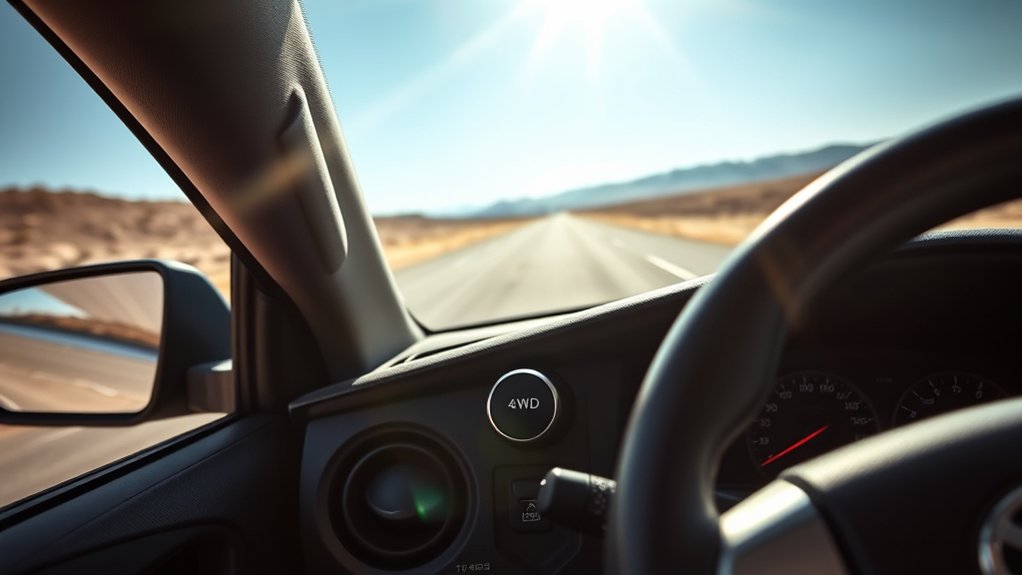
In a part-time 4WD Tacoma, 2H sends engine power to the rear wheels while keeping the transfer case in high range. Toyota describes 2H as the normal setting for dry, hard-surfaced roads in its fourth-generation part-time 4WD owner’s-manual guidance.
Using 2H under normal road conditions provides several practical benefits:
- Lower drivetrain resistance than part-time 4H
- Better fuel efficiency under comparable driving conditions
- Less unnecessary wear on four-wheel-drive components
- A quieter and smoother driving experience on firm pavement
- Normal steering behavior without part-time 4WD binding
These benefits do not mean that 2H provides the best traction in every situation. Snow, ice, deep mud, loose sand, and steep off-road surfaces may require 4H or 4L.
Should I Use 2H Right Now?
Use 2H when the road provides enough traction for rear-wheel drive. Common examples include:
- Dry city streets
- Dry highways and interstates
- Normal commuting and errands
- Firm, maintained roads without deep snow, mud, or loose sand
- Driving after you leave a slippery or loose surface and return to firm pavement
Use a simple decision rule: if the surface is firm and the rear tires have adequate traction, stay in 2H. If the surface is loose or slippery enough to permit tire slip and you need more drive traction, 4H may be appropriate. If you need low-speed gearing for a steep or difficult obstacle, use 4L according to the manual.
Road condition matters more than vehicle speed. You may use 2H at low, moderate, or highway speeds when the surface is suitable. On the cited fourth-generation part-time system, the 62 mph (100 km/h) figure is the maximum speed for completing a 2H↔4H shift, not a minimum speed for using 2H and not a universal speed limit for every Tacoma generation.
Choose the drive mode for the surface and available traction, not speed alone.
How to Shift Into 2H Safely
The following process reflects the general procedure for many part-time 4WD Tacomas. Your model may use a different control or speed limit, so check its manual first.
- Make sure the wheels are not spinning or slipping. Ease off the accelerator and regain stable traction before changing modes.
- Reduce your speed as required. Toyota’s cited fourth-generation part-time 4WD guidance requires the vehicle to be below 62 mph (100 km/h) for both 2H→4H and 4H→2H shifts. Older Tacoma generations can use different procedures.
- Select 2H. Turn or move the 4WD control to the 2H position. Some controls require you to push the dial before turning it.
- Drive smoothly and preferably in a straight line. Avoid abrupt acceleration while the transfer case completes the change.
- Check the indicator. On many Tacomas, the 4HI indicator stops flashing and turns off after 2H engages. Do not assume that your truck has a separate 2H light.
Pro Tip: Return to 2H before continuing on firm, dry pavement. Do not wait until you are traveling at high speed or making a tight turn to change out of part-time 4H.
Shifting between 4H and 4L is different. On the cited fourth-generation part-time system, Toyota requires a complete stop and Neutral for an automatic transmission; a manual-transmission model requires a complete stop with the clutch pedal held down. Older generations can differ, so follow the exact low-range procedure in your manual. For a dedicated walkthrough, see How to Shift Into 4LO on a Toyota Tacoma.
Warning: Never shift from 2H to 4H while the wheels are spinning. Do not use part-time 4H or 4L on firm, dry pavement unless your owner’s manual specifically permits it. Doing so can cause binding, difficult steering, tire scrub, and unnecessary drivetrain stress.
2H vs. 4H vs. 4L: Key Differences
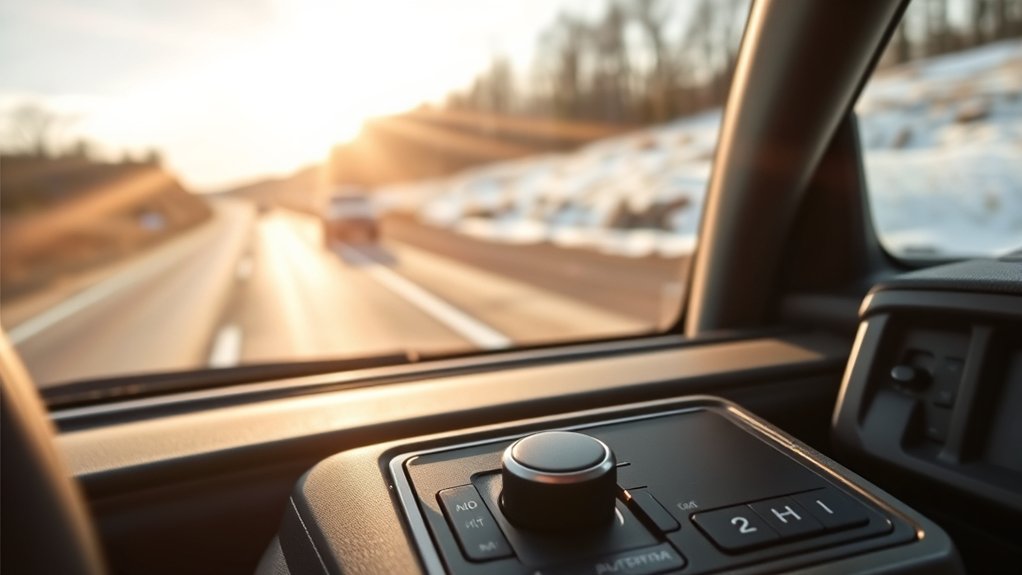
Each mode serves a different purpose. The correct choice depends on the road surface, available traction, required speed, and how much pulling force you need.
| Mode | How It Works | Best Uses | Avoid |
|---|---|---|---|
| 2H | Rear-wheel drive in high range | Dry pavement, commuting, highway travel, and firm roads | Deep snow, deep mud, loose sand, or situations where rear-wheel traction is inadequate |
| 4H | Four-wheel drive in high range | Snow, ice, loose gravel, dirt, mud, and off-road tracks that allow tire slip | Firm, dry, high-traction pavement on a part-time 4WD system |
| 4L | Four-wheel drive with low gearing and increased wheel torque | Slow crawling, steep grades, deep mud, deep sand, deep snow, or difficult pulling | Normal road speeds and ordinary pavement driving |
Fuel Economy Comparison
2H generally provides the best fuel efficiency of the three settings because the truck is not driving the front axle through the part-time 4WD system. However, no reliable universal percentage describes the difference. Fuel use also depends on speed, tire pressure, tire type, temperature, load, terrain, and driving style.
Use 4H or 4L when conditions require them rather than avoiding four-wheel drive solely to save fuel. Maintaining control is more important than a small change in fuel consumption.
Traction and Control Differences
2H can provide predictable handling on dry pavement, but it sends driving force only to the rear wheels. In 4H, the front and rear axles both receive power, which can help the truck move on slippery or loose surfaces.
Four-wheel drive does not shorten every stopping distance, restore grip to worn tires, or prevent hydroplaning. All four tires still depend on their tread, inflation pressure, and contact with the road.
Usage Scenarios and Recommendations
| Condition | Likely Mode | Reason |
|---|---|---|
| Dry pavement | 2H | Normal traction is available, and part-time 4WD is unnecessary. |
| Ordinary wet pavement | Usually 2H | Rain alone does not automatically require part-time 4H on the current fourth-generation system. Reduce speed and increase following distance; use 4H only when the surface permits tire slip and your model-year manual supports it. |
| Snow or ice | 4H | Four driven wheels can improve the ability to move and maintain momentum. |
| Maintained gravel road | 2H or 4H | 2H may be sufficient when the road is firm. Select 4H when gravel is loose, steep, or slippery. |
| Loose dirt or moderate mud | 4H | Added driven-wheel traction helps without low-range gearing. |
| Deep mud, deep sand, or steep crawling | 4L | Low range supplies greater control and wheel torque at low speed. |
Common Misconceptions About Using 2H Mode
Fuel Economy Misunderstandings
2H usually consumes less fuel than part-time 4H under comparable dry-road conditions, but you should not expect a fixed percentage. Claims that 4H always uses 10%, 15%, or 20% more fuel ignore the differences among model years, tires, temperatures, speeds, and driving conditions.
Off-Road Capabilities Confusion
Using 2H does not prevent a Tacoma from traveling on every unpaved road. A firm dirt road or maintained gravel road may not require four-wheel drive. However, 4H becomes useful when the road is loose, steep, muddy, snowy, or otherwise difficult for the rear tires to manage.
Choose 4H before you become stuck, but only after the wheels have stopped spinning. Waiting until the rear tires are already spinning can make the shift harder and increase the risk of drivetrain stress.
Performance Expectations Clarified
2H is not a performance or top-speed mode. It is the normal high-range, rear-wheel-drive setting for suitable road conditions. It does not automatically improve cornering, braking, or wet-weather grip.
Part-Time and Full-Time 4WD Are Not the Same
A part-time 4WD Tacoma normally uses 2H on firm pavement because its 4H setting is intended for surfaces that allow some tire slip. A full-time 4WD Tacoma is designed differently and can use four-wheel drive on pavement in its normal unlocked operating mode. Toyota’s 2026 lineup includes both on-demand and full-time 4WD configurations, so do not transfer instructions from one system to another.
How to Fix 2H Engagement Problems
If your Tacoma does not appear to return to 2H, remain calm and avoid forcing the control. The correct response depends on the indicator pattern and your model year.
- Stop wheelspin. Do not continue changing modes while one or more tires are spinning.
- Drive straight. If the 4HI indicator continues flashing, move forward in a straight line while gently accelerating or decelerating, provided it is safe.
- Reverse briefly if the manual permits it. A short, straight reverse movement may help release driveline tension and complete the shift.
- Avoid tight turns. Turning sharply can keep tension in a part-time 4WD drivetrain.
- Recheck the selector and indicator. Make sure you selected 2H rather than stopping between positions.
- Consult the manual. Indicator behavior and troubleshooting procedures differ among generations.
On the cited fourth-generation part-time system, rapidly flashing 4HI and 4LO indicators together can indicate a four-wheel-drive system malfunction. If both indicators flash rapidly, multiple drivetrain warnings appear, or the truck remains stuck in a mode after you follow the manual’s procedure, stop using the system as soon as you can do so safely and arrange inspection by a qualified technician or Toyota dealer.
Cold weather can slow some transfer-case operations, especially shifts involving low range. However, temperature does not justify repeatedly forcing the selector or driving at an unsafe speed.
Best Practices for Maintaining 2H and 4WD Performance
Reliable mode changes depend on the transfer case, actuators, tires, and related drivetrain components. Use these maintenance practices:
- Check tire pressure monthly while the tires are cold. Use the pressure printed on the driver-side door placard or specified in the owner’s manual, not the maximum pressure molded into the tire sidewall.
- Inspect tire tread and condition. Uneven tread depth, mismatched tire sizes, or severely worn tires can affect handling and place extra strain on four-wheel-drive components.
- Rotate tires on schedule. Follow Toyota’s recommended pattern and interval for your model.
- Use matching tires. Keep the same approved size, construction, and similar tread depth at all four positions unless Toyota specifies otherwise.
- Follow transfer-case service intervals. Inspect for fluid leaks and use the specified fluid.
- Operate the 4WD system periodically if instructed. Toyota’s cited fourth-generation part-time 4WD guidance recommends driving at least 10 miles (16 km) in four-wheel drive each month to lubricate front-drive components. Verify whether your own model-year manual gives the same recommendation.
The National Highway Traffic Safety Administration recommends checking tire pressure at least monthly when the tires are cold and inspecting tread at the same time. Tire condition remains important regardless of which drive mode you select.
Ensuring Safe Operation in 2H Mode
- Use 2H for normal driving on dry, firm roads.
- Slow down before conditions become slippery or visibility becomes poor.
- Do not rely on four-wheel drive to compensate for worn tires.
- Do not shift modes while the tires are spinning.
- Return a part-time 4WD system to 2H when you reach firm, dry pavement.
- Use 4L only at low speed and only after following the correct engagement procedure.
- Investigate warning lights or repeated engagement failures promptly.
For a current fourth-generation part-time 4WD Tacoma, rain by itself does not automatically require 4H. If the paved surface still provides high traction, remain in 2H, reduce speed, and increase following distance. Use 4H only when the surface is slippery enough to permit tire slip and your model-year manual supports it. Older Tacoma generations may describe wet-road 4WD use differently, so check the manual for your truck.
Frequently Asked Questions
When should I use 2HI on a Toyota Tacoma?
Use 2HI, also called 2H or H2, for normal driving on dry, firm pavement in a Tacoma equipped with part-time four-wheel drive. It is suitable for commuting, highway travel, and most routine trips.
Is 2H the normal mode for everyday driving?
Yes. On a part-time 4WD Tacoma, 2H is normally the correct setting for everyday driving on dry paved roads. A full-time 4WD or two-wheel-drive Tacoma may use different controls.
Can I use 2H when it is raining?
On the current fourth-generation part-time system, rain alone does not automatically require 4H. If the pavement still provides high traction, remain in 2H, reduce speed, and increase following distance. Use 4H only when the surface permits tire slip and your model-year manual supports it.
Can I drive on gravel in 2H?
Yes, 2H may be sufficient on a firm, maintained gravel road. Select 4H when the gravel becomes loose, steep, muddy, snowy, or difficult for the rear tires to manage.
When should I use 4HI in a Tacoma?
Use 4HI on slippery or loose surfaces such as snow, ice, loose dirt, gravel, or moderate mud. On a part-time 4WD system, avoid using 4HI on firm, dry pavement unless your owner’s manual specifically permits it.
Can I switch from 4H to 2H while driving?
Yes on the cited fourth-generation part-time system: reduce speed below 62 mph (100 km/h), select 2H, and confirm the 4HI indicator goes out. Older generations can use different procedures, so follow the manual for your model year.
Do I need to stop before shifting into or out of 4L?
On the cited fourth-generation part-time system, stop completely and hold the brake before shifting between 4H and 4L. Use Neutral with an automatic transmission; on a manual transmission, hold the clutch pedal down. Confirm the exact procedure in your model-year manual.
What should I do if the 4HI light keeps flashing?
Make sure the wheels are not spinning, then drive straight while gently accelerating or decelerating. A short, straight reverse movement may also help if your manual permits it. On the cited fourth-generation system, rapidly flashing 4HI and 4LO indicators together can indicate a malfunction that needs inspection.
Does using 2H save fuel?
2H generally provides better fuel efficiency than part-time 4H under comparable dry-road conditions because fewer drivetrain components are being powered. The exact difference varies, so a fixed percentage is not reliable.
Conclusion
Use 2H as the normal setting for dry, hard-surfaced roads when your Tacoma has a part-time four-wheel-drive system. Switch to 4H when the surface is loose or slippery enough to allow tire slip and extra drive traction is needed, and reserve 4L for slow, demanding terrain. Choose the mode for the surface rather than speed alone, and do not assume that one Tacoma generation follows another generation’s shifting procedure.
Before changing modes, stop any wheelspin and check the instructions for your model year. Correct tire pressure, adequate tread, and prompt attention to warning lights are just as important as selecting the right drive mode.
Sources
- Toyota Tacoma fourth-generation part-time 4WD owner’s-manual guidance — 2H, 4H, and 4L uses; 62 mph (100 km/h) 2H↔4H shift threshold; low-range procedure; indicator troubleshooting; and monthly 4WD-use guidance.
- Toyota Owner’s Manuals and Warranty Information — model-year-specific operating instructions.
- Toyota: The 2026 Toyota Tacoma — Adventure Awaits — current lineup confirmation for 2WD plus on-demand and full-time 4WD configurations.
- NHTSA TireWise — cold tire-pressure checks, tread inspection, and tire-safety guidance.

