
Toyota ATF WS is specified for many Toyota Camry automatic transmissions and hybrid transaxles, but the Camry name alone is not enough to choose a fluid or service interval. The correct answer depends on the model year, market, drivetrain, and transmission. Confirm those details in Toyota’s documentation before buying fluid, topping off the unit, or approving a transmission service.
Quick Answer
Toyota ATF WS is correct for many Camry automatic transmissions and hybrid transaxles, but not every year, market, or drivetrain. Confirm the fluid in your exact owner’s manual or Toyota service information before buying it. Then follow the model-year maintenance chart; inspection and replacement rules vary with mileage and operating conditions.
Key Takeaways
- Use your Camry’s model year, market, drivetrain, and VIN to verify the exact transmission-fluid specification.
- A hybrid eCVT does not automatically use the fluid intended for a conventional belt-type CVT.
- Toyota does not publish one universal Camry fluid-change interval; follow the maintenance guide for your exact vehicle.
- An inspection entry is not the same as a replacement requirement.
- Sealed units may need a level vehicle, measured fluid temperature, an overflow procedure, and model-specific torque values.
Does Your Toyota Camry Use ATF WS?
ATF means automatic transmission fluid. WS is Toyota’s World Standard fluid designation. It identifies a particular viscosity, friction, lubrication, and temperature-control requirement; it does not mean that every Toyota transmission uses the same fluid.
Many later Camry automatic transmissions and hybrid transaxles specify Toyota Genuine ATF WS. Older Camrys, vehicles sold in another market, and different transmission designs may require another specification. Select your exact vehicle through Toyota’s Manuals and Warranties portal and confirm the specification before purchasing fluid.
Note: The Toyota maintenance examples in this article come from U.S.-market guides. Canadian and other-market Camrys may have different documentation, terminology, warranty conditions, and service schedules.
[Amazon Products Picked for You]

Automatic Transmission Fluid WS is a world-spec fluid specifically designed for sealed, automatic transmissions.

For best performance, follow the manufacturer's recommendations in your vehicle owner’s manual.

6Qt Genuine 00289-ATFWS
Why the Transmission Type Matters
The word “CVT” can be misleading when choosing fluid. A Camry hybrid may use an electronically controlled power-split transaxle commonly described as an eCVT. That design is not automatically the same as a conventional belt- or chain-driven CVT, and the name does not prove that Toyota CVT Fluid FE is correct.
| Description | Fluid Rule | Common Mistake |
|---|---|---|
| Conventional automatic transmission | Use the exact ATF specification listed for the model year and transmission. | Assuming every Camry uses WS because many later models do. |
| Hybrid power-split eCVT or transaxle | Use the fluid named in the hybrid Camry manual; many applications specify ATF WS. | Buying conventional CVT fluid merely because the vehicle is described as having an eCVT. |
| Older or other-market Camry | Consult the documentation issued for that market, year, engine, and transmission. | Applying a current U.S.-model specification to a different vehicle. |
Correct transmission fluid lubricates gears and bearings, transfers heat, supports hydraulic operation where applicable, and supplies the friction characteristics required by clutches and other internal components. A different viscosity or additive system can interfere with shifting, lubrication, pressure control, or material compatibility.
How to Confirm the Correct Camry Transmission Fluid
Use the following order instead of relying on a parts-store lookup, bottle color, internet forum, or general “universal fluid” claim:
- Identify the market and model year: A U.S.-market schedule or specification may not apply to a Camry sold elsewhere.
- Identify the drivetrain: Note whether the vehicle is gasoline-only or hybrid and whether it is front-wheel drive or all-wheel drive.
- Use the VIN when possible: The VIN helps a Toyota dealer or qualified parts supplier identify the original transmission or transaxle application.
- Read the vehicle-specific documents: Check the specifications section of the owner’s manual, the Warranty and Maintenance Guide, and Toyota repair information.
- Match the complete product claim: Confirm the exact fluid name, specification, container label, and current manufacturer data sheet.
- Verify the service procedure separately: The correct fluid does not by itself establish the fill quantity, temperature range, plug torque, or level-setting method.
Pro Tip: Photograph the front and back of every fluid container used during service. Keep the invoice with the product name, quantity, mileage, date, and shop information so the specification can be verified later.
[Amazon Products Picked for You]
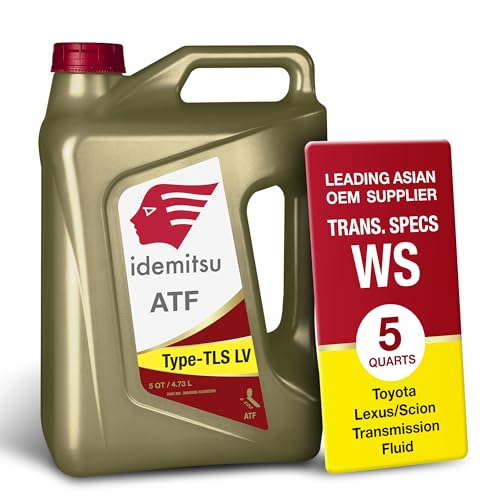
Optimized viscosity and advanced friction reducing additive technology provide exceptional fuel economy performance

Enhanced friction durability for smooth transmission performance

For use in 95% of vehicles including most CVTs in operation with US registered light duty applications
Common ATF WS Issues to Avoid
Most fluid-service errors involve the wrong specification, an interval copied from another vehicle, contamination, or an incorrect final level. These mistakes matter because many Camry transmissions and transaxles are sealed and require a precise procedure.
Mixing Fluid Types
Do not intentionally mix Toyota ATF WS with T-IV, Toyota CVT Fluid FE, Dexron products, or another drivetrain fluid unless Toyota’s documentation for the exact transmission expressly permits it. These products can use different viscosities, base oils, friction modifiers, and additive packages.
A routine drain-and-fill normally leaves some old fluid in the torque converter, passages, cooler, or transaxle. That unavoidable residual amount is different from topping off the unit with an unrelated product. When the existing fluid is unknown, investigate the service history before adding more.
Warning: Do not select transmission fluid by color, a broad “multi-vehicle” statement, or the word “CVT” alone. Confirm the exact Toyota specification and the transmission position being serviced before opening a container.
Confusing Hybrid eCVT and Conventional CVT Fluid
A Camry hybrid’s eCVT description refers to how the hybrid transaxle varies its effective ratio; it does not automatically identify the lubricant. Toyota CVT Fluid FE is intended for specific conventional CVT applications and should not be substituted merely because “CVT” appears in a vehicle description.
Likewise, a product marketed for an electric drive unit or “e-transaxle” is not a universal substitute for ATF WS. Use it only when Toyota’s documentation for the exact Camry transaxle names that specification.
Ignoring Fluid Change Intervals
Follow the maintenance chart for your model year. Some Toyota guides list periodic inspections during normal operation and replacement only under identified special operating conditions. Other years may use different mileage, time, or operating-condition entries.
Missing required maintenance can leave aged, contaminated, or incorrect fluid in service. Replacing fluid much more often than Toyota’s schedule is not automatically better, however. Every unnecessary service introduces cost and another opportunity for contamination, a wrong product, damaged threads, or an inaccurate level.
Using a One-Size-Fits-All Maintenance Rule
The original fluid, transmission design, model year, climate, load, driving pattern, service history, and previous repairs all affect the maintenance decision. Advice such as “change it every 15,000 miles,” “always change it at 30,000,” or “never touch it before 100,000” cannot safely cover every Camry.
Start with the official schedule. When records are missing or the vehicle has transmission symptoms, request an inspection and diagnosis before authorizing routine fluid service.
Camry ATF WS Change Intervals by Driving Condition
Toyota does not provide one ATF WS replacement interval for every Camry. The correct chart is tied to the model year and market, and it distinguishes normal inspections from additional maintenance required when the vehicle is used primarily under listed demanding conditions.
For example, the U.S.-market 2026 Camry Warranty and Maintenance Guide includes automatic-transmission-fluid inspections at specified normal-service mileages. Its special-operating-conditions chart lists replacement at 60,000 miles when the vehicle is driven primarily while towing, using a car-top carrier, or carrying heavy loads. Occasional use does not automatically satisfy the guide’s “primarily” condition.
The U.S.-market 2018 Camry Warranty and Maintenance Guide illustrates why the model year matters. At 60,000 miles or 72 months, it lists fluid replacement for specified towing, car-top-carrier, or heavy-loading use and for extensive idling or long-distance low-speed operation such as police, taxi, or door-to-door delivery work.
| Situation | Best Approach | Why |
|---|---|---|
| Normal driving with a known history | Follow the inspection and replacement entries in the exact model-year guide. | Toyota’s chart reflects that vehicle’s drivetrain and maintenance design. |
| Towing, car-top-carrier use, or heavy loading | Read the special-operating-conditions chart and its footnotes. | Higher sustained load can increase drivetrain temperature and stress. |
| Commercial-type idling or low-speed operation | Check whether the exact model-year guide lists this condition. | This condition appears in some Camry guides but not necessarily every year. |
| Unknown service history | Verify the specification, inspect for leakage, and request a condition-based assessment. | The previous fluid, level, and service method may be unknown. |
| Shifting problems or warning messages | Diagnose the fault before treating the visit as routine maintenance. | Fluid service cannot repair every mechanical, electrical, hydraulic, or control-system fault. |
The correct Camry transmission-fluid interval comes from the maintenance chart for that vehicle—not from a mileage rule copied from another Toyota.
Inspection Versus Replacement
An “inspect” entry does not necessarily direct the technician to drain the fluid. Depending on the guide, the inspection may involve checking the sealed transmission for leakage, examining related hoses or connections, reviewing fluid condition when a sample is available, and recommending additional work only when the findings justify it.
A “replace” entry is a scheduled fluid service under the conditions attached to that chart position. Read the footnotes carefully because a letter in the table may apply only to towing, loading, dusty-road use, or another named condition.
What the Correct ATF Does Inside the Transmission
When ATF WS is the specification required for your Camry, using the correct fluid supports the transmission or transaxle as it was designed to operate:
- Friction control: The specified fluid helps clutches and other friction elements engage as intended.
- Lubrication: It separates gears, bearings, bushings, and other moving surfaces.
- Heat transfer: The fluid carries heat away from loaded internal components.
- Hydraulic performance: In units with hydraulic circuits, the correct viscosity supports pressure regulation and shift control.
- Material compatibility: The specified formulation is intended for the unit’s seals and internal materials.
- Corrosion and deposit control: The additive package helps protect internal surfaces and control oxidation products during service.
These benefits depend on both the correct specification and the correct level. A premium label cannot compensate for an incompatible product, contamination, or an inaccurate fill.
How to Maintain Your Camry’s Transmission Fluid

A repeatable, vehicle-specific process is safer than relying on appearance or a generic mileage interval:
- Record the vehicle details: Save the model year, market, VIN, drivetrain, and current mileage.
- Check Toyota’s documents: Confirm the fluid specification and the applicable maintenance chart.
- Review the driving conditions: Determine whether the vehicle is used primarily under any condition listed in the special-service chart.
- Inspect for leakage: Look for wet areas around the transmission or transaxle, axle seals, cooler hoses, drain and fill plugs, and underbody panels.
- Watch for operating changes: Record delayed engagement, harsh shifts, slipping, shuddering, unusual noises, or warning messages.
- Use the specified service method: Follow Toyota’s procedure for fluid temperature, vehicle level, overflow checking, quantity, plug seals, and torque.
- Document the work: Keep the product name, quantity, mileage, date, and invoice.
- Recycle the used fluid: Store it securely and take it to an approved collection facility.
Sealed Transmission Level Checks
A transmission described as sealed may have no owner-facing dipstick. “Sealed” does not mean that the fluid can never be inspected or replaced; it means the service procedure may use fill and overflow plugs instead of a dipstick.
The final level may depend on the vehicle being level and the fluid being within a specified temperature range. Too little fluid can reduce lubrication or hydraulic performance. Too much can cause aeration, foaming, leakage, or incorrect operation. Do not invent a universal temperature, capacity, or torque value—those details must come from the repair information for the exact transmission.
A low reading should prompt an investigation for leakage, an incorrect earlier fill, or a previous repair issue. It should not be treated as a routine top-off without identifying why the level is low.
Drain-and-Fill Versus a Powered Exchange
A drain-and-fill removes part of the old fluid and replaces it with a measured amount of the specified product. Some fluid usually remains in the torque converter, passages, cooler, or hybrid transaxle. This method may be appropriate when it matches Toyota’s procedure for the unit.
A powered exchange moves a larger volume through the system. It is not automatically required for every Camry. Before approving one, confirm that the method is appropriate for the exact transmission, that the machine is not contaminated with another fluid, that no unapproved cleaner or additive will be used, and that the final level will be set according to Toyota’s procedure.
A service marketed as a “flush” should not silently include solvents, detergents, or universal treatments. Ask the shop to identify every product it plans to introduce into the transmission.
Questions to Ask Before Authorizing Service
- Which Toyota fluid specification does my VIN require?
- What exact fluid brand and product name will you use?
- Is the service a drain-and-fill, pan service, powered exchange, or repair procedure?
- Will any cleaner, conditioner, or additive be introduced?
- How will the transmission-fluid temperature be measured?
- How will the final level be checked?
- Will new plug gaskets or seals be installed where required?
- Will the invoice show the fluid quantity, product, and service method?
When Professional Service Is the Safer Choice
Professional service is the safer choice when the unit lacks a dipstick, needs scan-tool temperature data, has a suspected leak, contains an unknown fluid, displays warning messages, or operates abnormally. Diagnosis can separate routine maintenance from a mechanical, hydraulic, electrical, software, or hybrid-system fault.
Warning: Hot transmission fluid can cause severe burns, and an improperly supported vehicle can fall. Use equipment rated for the vehicle’s weight and follow the repair manual. On a Camry Hybrid, never touch or disconnect orange high-voltage wiring, connectors, or components as part of routine fluid service.
Alternatives to Toyota Genuine ATF WS
Toyota Genuine ATF WS is the most direct choice when the manual names ATF WS. An aftermarket product may claim suitability for WS applications, but compatibility must be evaluated by the specific product—not merely by the company name.
- Aftermarket WS-compatible fluid: Read the current container and product data sheet. Confirm that the manufacturer specifically identifies the required WS application.
- Toyota T-IV: Do not treat T-IV as a substitute for WS unless Toyota documentation for the exact transmission permits it.
- Toyota CVT Fluid FE: Do not use it because the Camry is described as having an eCVT. Use it only when the exact Toyota manual requires it.
- Other electric-drive or e-transaxle fluids: These are not universal Camry fluids. Use one only when the vehicle-specific Toyota specification names it.
- Dexron or multi-vehicle ATF: A general compatibility statement is not enough. The product must explicitly address the required application, and the owner accepts the fluid manufacturer’s compatibility representation.
Companies such as Idemitsu or AMSOIL sell multiple transmission products with different applications. Evaluate the complete product name, current technical data, and written suitability claim rather than assuming every fluid from one brand is equivalent.
In the United States, using a third-party product or an independent repair shop does not automatically cancel the entire vehicle warranty. However, coverage may be denied for damage caused by an incompatible fluid, contamination, an incorrect level, or improper work. The Federal Trade Commission’s repair-restriction guidance explains this distinction. Warranty law and remedies differ outside the United States, so consult the terms that apply where the vehicle was sold and serviced.
[Amazon Products Picked for You]
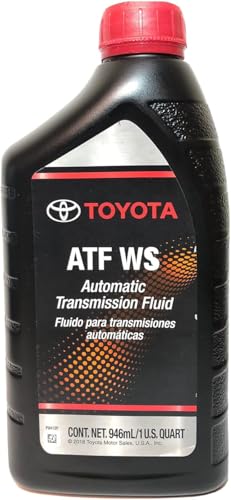
Transmission Fluid


Vehicle Fitment Notes: World Standard Transmission can be identified by: 1) Dipstick is No Longer Installed. 2) WS is stamped on the refill plug. NOT COMPATIBLE With any other TRANSMISSION FLUID 1 Quart Container Please refer to the owners manual to confirm this is the correct fluid Compatible with your s transmission.
When Fluid Service Is Due—or Diagnosis Comes First
Change the fluid when the maintenance guide requires replacement, when an authorized repair procedure calls for new fluid, or when diagnosis identifies contamination or an incorrect product. Do not choose the interval solely because another Camry owner follows it.
Recommended Decision Order
- Check the model-year maintenance guide. Follow its normal-service inspection entries.
- Review special operating conditions. Look for towing, heavy loading, carrier use, commercial operation, or other conditions listed for that year.
- Confirm both mileage and time. Some schedules specify whichever limit occurs first.
- Consider the service history. Missing records, earlier transmission repairs, leakage, or suspected wrong fluid justify closer inspection.
- Diagnose symptoms first. Do not expect a fluid change to repair worn clutches, a damaged bearing, a valve-body fault, bad wiring, a failed sensor, software issues, or another internal problem.
- Choose the service method. Use the drain, fill, exchange, or repair procedure specified for the exact unit.
Signs of Fluid Degradation or Transmission Trouble
Arrange an inspection when you notice any of the following:
- Fluid beneath the vehicle or wetness around a transmission seal, cooler line, or service plug
- Delayed engagement after selecting Drive or Reverse
- Harsh, inconsistent, or unusually slow shifting
- Engine-speed flare, slipping, or loss of drive
- Shuddering during acceleration or torque-converter lockup
- A burnt odor or visible contamination in a properly obtained fluid sample
- Metallic particles or debris beyond the fine paste that may collect on some magnets
- A transmission, hybrid-system, master-warning, or check-engine message
- New whining, grinding, or rattling noises associated with vehicle movement
These symptoms do not prove that old fluid is the only problem. They can also result from leakage, an incorrect level, overheating, electrical faults, worn components, control-system problems, or an unrelated engine or hybrid-system issue.
What Fluid Color Can and Cannot Tell You
Fluid color can change during normal use and varies with lighting, contamination, and the product formulation. Darker fluid alone does not establish a replacement interval. A burnt odor, suspended debris, water contamination, foaming, or evidence that the wrong product was installed deserves further investigation, but no visual chart replaces the maintenance guide or a proper diagnosis.
Note: Keep used transmission fluid in a closed, leak-resistant container and do not mix it with solvents, coolant, fuel, or other chemicals. Take it to a collection or recycling facility that accepts automotive fluids and follow your local municipal, provincial, state, or national requirements.
Sources
- Toyota Manuals and Warranties — provides vehicle-specific owner documentation and maintenance guides.
- 2026 Toyota Camry Warranty and Maintenance Guide — supports current U.S.-market inspection entries, special operating conditions, and the 60,000-mile example.
- 2018 Toyota Camry Warranty and Maintenance Guide — demonstrates model-year differences and the 60,000-mile/72-month special-condition entries.
- Federal Trade Commission Repair-Restriction Guidance — supports the U.S. warranty distinction between choosing independent service and damage caused by improper parts or work.
- U.S. Environmental Protection Agency Used-Oil Guidance — supports secure storage, separation from chemicals, spill prevention, and recycling.
Frequently Asked Questions
What does ATF WS mean?
ATF means automatic transmission fluid, and WS is Toyota’s World Standard designation. It identifies a specific fluid requirement rather than a universal product for every Toyota transmission.
What is the difference between Toyota ATF WS and ATF T-IV?
WS and T-IV are different Toyota fluid specifications with different operating characteristics. Do not substitute or intentionally mix them unless Toyota’s information for the exact transmission specifically permits it.
Does every Toyota Camry use ATF WS?
No. The correct fluid depends on the Camry’s model year, market, drivetrain, and transmission. Select the exact vehicle in Toyota’s manual portal or verify the specification by VIN before buying fluid.
How often should Toyota ATF WS be changed?
Follow the maintenance guide for the exact model year and market. Some Camry guides schedule inspections during normal service and replacement under listed demanding conditions. A universal 15,000-, 30,000-, or 100,000-mile interval is not reliable for every Camry.
Does a Camry Hybrid eCVT use Toyota CVT Fluid FE?
Not automatically. A hybrid power-split eCVT is not the same as a conventional belt-type CVT. Many Camry hybrid transaxles specify ATF WS, but the exact owner’s manual or Toyota service information must control the choice.
Can you mix ATF WS with CVT Fluid FE or another e-transaxle fluid?
Do not intentionally mix them. They are separate specifications intended for particular drivetrain designs. Use only the fluid identified by Toyota for the exact transmission or transaxle.
Is a drain-and-fill better than a transmission flush?
A drain-and-fill may match Toyota’s procedure for some units, while a powered exchange may be unnecessary or inappropriate for others. Confirm the approved method, fluid, equipment cleanliness, additives, and final level-setting procedure for the exact transmission.
Will aftermarket transmission fluid void a Toyota warranty?
In the United States, using a third-party product does not automatically cancel the entire warranty. Coverage may still be denied for damage caused by an incompatible fluid, contamination, an incorrect level, or improper service. Rules differ in other countries.
Does dark transmission fluid always need to be changed?
No. Fluid can darken during normal use, and color alone does not establish a service interval. A burnt odor, debris, water, foaming, leakage, or abnormal operation warrants closer inspection.
Can changing the fluid fix harsh shifting or slipping?
Not necessarily. Incorrect, contaminated, or low fluid can affect operation, but harsh shifting or slipping may also involve worn parts, leakage, a valve-body fault, wiring, sensors, software, or another mechanical problem. Diagnose symptoms before relying on maintenance as a repair.
Conclusion
Toyota ATF WS can support smooth, reliable operation when it is the fluid specified for your Camry. The essential first step is identifying the exact model year, market, drivetrain, and transmission instead of applying a rule written for another vehicle.
Use Toyota’s vehicle-specific manual and maintenance chart, distinguish inspection from replacement, and avoid mixing unrelated fluid specifications. When the transmission is sealed, leaking, filled with an unknown product, or operating abnormally, a model-specific inspection and diagnosis are safer than guessing at the fluid, interval, or service method.
