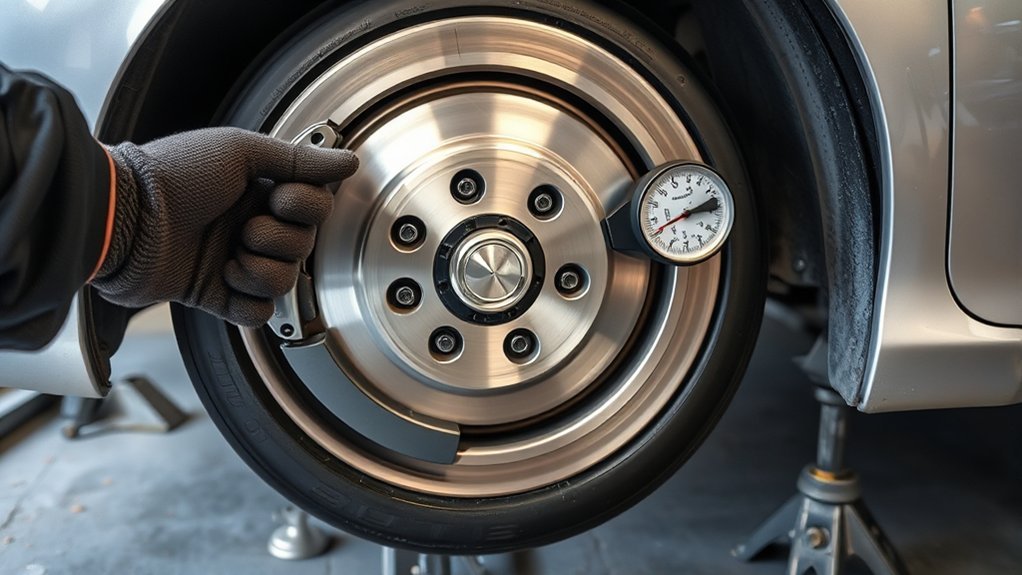
If your Toyota Camry vibrates when braking at low speeds, the most likely cause is uneven braking force at one or more wheels—not simply a “warped rotor.” Common sources include brake-disc thickness variation, lateral runout, uneven pad deposits, sticking caliper hardware, rust, or a loose or worn steering or suspension part. The pattern of the vibration helps narrow the cause.
Quick Answer
A Toyota Camry that shudders or pulses only while braking usually needs its brakes and hubs measured for rotor thickness variation and runout. Worn pads, sticking calipers, rust, uneven wheel-lug torque, hub problems, or loose suspension parts can also contribute. Stop driving and arrange an inspection if braking feels weak, the car pulls sharply, or grinding is present.
Key Takeaways
- Brake pedal pulsation is commonly linked to disc thickness variation, rotor or hub runout, or uneven friction-material transfer.
- Wheel alignment alone rarely creates a brake-only vibration, but worn tie rods, ball joints, control-arm bushings, wheel bearings, or tires can amplify it.
- Old brake fluid is a safety and maintenance concern, but it is not a typical cause of a rhythmic low-speed brake shudder.
- A correct diagnosis requires inspection and measurements; replacing pads or rotors without checking the hub, caliper, and installation can allow the vibration to return.
At a Glance
| Time Required | About 30–60 minutes for a basic inspection; longer if runout, disc thickness, wheel-bearing play, or ABS data must be tested |
| Difficulty | Moderate to advanced; brake and hub measurements require proper lifting equipment and service data |
| Tools Needed | Wheel chocks, jack stands, flashlight, torque wrench, brake micrometer, dial indicator, and—when ABS activation is suspected—a compatible scan tool |
| Cost | Varies widely: inspection may require only labor, while pads, rotors, calipers, hubs, suspension parts, or ABS repairs have very different costs |
Warning: Brakes are safety-critical. Do not drive the Camry if the brake pedal sinks, stopping distance increases, a red brake warning light stays on, fluid is leaking, the vehicle pulls hard, or metal-on-metal grinding is heard. Never work beneath a vehicle supported only by a jack.
Common Causes of Brake Vibration in Your Camry

When a Toyota Camry vibrates during braking, first determine whether the vibration occurs only when the brake pedal is applied. A shake that also appears while cruising may point to a tire, wheel, axle, or driveline problem rather than the brakes alone.
The most common brake-related causes include:
- Disc thickness variation or uneven pad deposits: Small differences around the rotor create changing brake torque as the wheel turns. Drivers often call this a “warped rotor,” although the disc may not be visibly bent.
- Rotor or hub lateral runout: A rotor that does not rotate squarely can develop uneven wear. Rust or debris between the rotor and hub, hub damage, bearing play, or installation error can contribute.
- Sticking caliper slides or piston: A dragging or unevenly applying caliper can overheat one side, wear pads unevenly, and create vibration or pulling.
- Pad contamination, glazing, or uneven wear: Oil, grease, overheated friction material, or mismatched pad contact can make braking inconsistent.
- Rust or corrosion: Surface rust after rain or storage may cause a brief rough feeling. Heavy pitting or a rust ridge may require repair.
- Loose or worn steering, suspension, or wheel-bearing parts: These components may not create the brake torque variation, but they can turn a small brake disturbance into a noticeable steering-wheel shake.
- Unwanted low-speed ABS activation: A damaged wheel-speed sensor, tone ring, wiring fault, or excessive bearing play can make the ABS pulse the pedal near a stop. Normal ABS pulsation can also occur during hard braking on loose, wet, icy, or uneven surfaces.
The best diagnosis separates the source of the changing brake force from the parts that transmit or amplify the vibration.
Signs of Rotor Runout, Thickness Variation, and Brake Vibration
Brake-disc problems can create a repeated pulse that follows wheel speed. As the Camry slows, the pulse usually becomes slower. The location of the sensation offers a useful clue, but it is not a substitute for measurement.
| What You Feel | More Likely Areas to Check |
|---|---|
| Pulse mainly in the brake pedal | Disc thickness variation, rotor or hub runout, rear brake variation, or ABS activation |
| Steering wheel shakes while braking | Front brake torque variation, front hub or bearing issue, or looseness in steering and suspension parts |
| Seat or body shudders more than the steering wheel | Rear brakes, rear hubs, or chassis movement; model-year brake design matters |
| Vehicle pulls to one side | Sticking caliper, contaminated pad, hydraulic restriction, tire issue, or uneven braking force |
| Rapid pedal chatter near a stop | Possible unwanted ABS activation; scan wheel-speed data and inspect sensors, tone rings, wiring, bearings, and tire sizes |
There is no single road-speed threshold that proves the rotors are at fault. A problem may be noticeable at low speed, high speed, or both, depending on its severity and how the vibration travels through the vehicle.
Note: A brief pedal pulse during a hard stop on a slippery or rough surface can be normal ABS operation. Repeated pulsing during gentle braking on dry pavement deserves diagnosis.
How Brake Pads and Calipers Contribute to Vibration
Brake pads do not usually cause a strong cyclic vibration merely because they are thin. However, pad condition often reveals the real problem. Tapered wear, one pad much thinner than its mate, blue or glazed surfaces, crumbling friction material, or contamination can indicate a sticking caliper, seized slide pin, heat damage, or improper installation.
| Condition | Likely Effect on Braking |
|---|---|
| Uneven or tapered pad wear | Points to caliper, slide, bracket, or alignment problems within the brake assembly |
| Oil- or grease-contaminated pads | Reduced or uneven friction; contaminated friction parts normally require replacement after the leak is corrected |
| Glazed or overheated pads | Noise, reduced bite, pulling, or uneven friction |
| Sticking caliper piston or slides | Dragging, overheating, uneven wear, pulling, and possible recurrence after new pads or rotors |
| Incorrect bedding or uneven transfer layer | Brake torque variation that can feel like rotor warping |
After installing pads or rotors, follow the friction-material manufacturer’s bedding procedure. Do not improvise repeated high-speed stops on public roads.
How Wheel Alignment, Tires, and Suspension Affect Brake Vibration
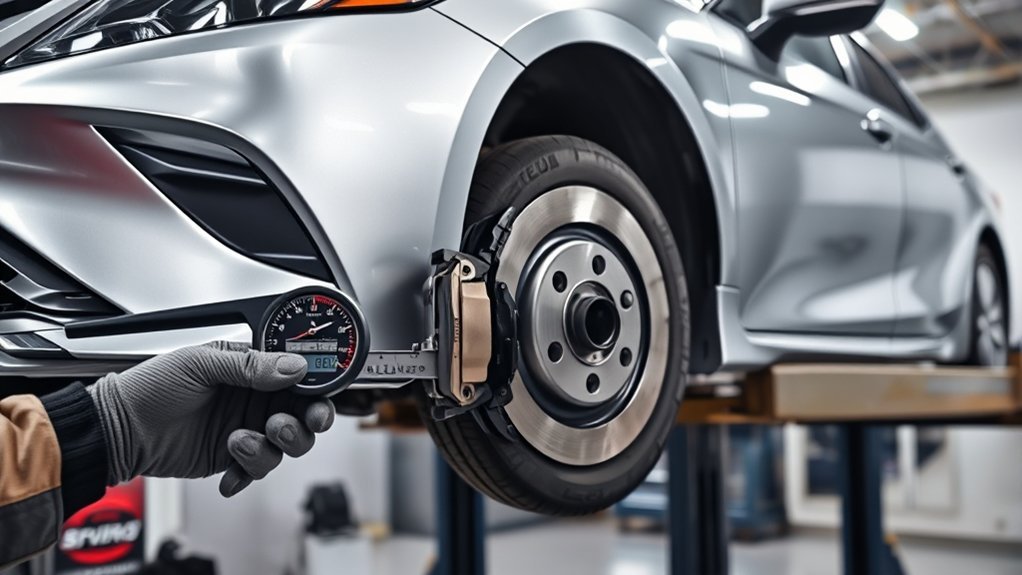
Poor wheel alignment is not a common direct cause of a pedal pulsation that appears only during braking. Alignment can cause pulling, off-center steering, and uneven tire wear. Those tire and handling problems may make a braking complaint feel worse, but an alignment should not replace a brake inspection.
Check these related components when the steering wheel shakes or the Camry wanders under braking:
- Tires and wheels: Confirm matching tire sizes, correct pressure, no belt separation or sidewall bulges, and no bent wheel. A vibration that remains with the brakes released is a strong clue.
- Wheel bearings and hubs: Bearing play or hub runout can affect rotor position and wheel-speed sensor signals.
- Tie rods, ball joints, and control-arm bushings: Looseness allows the wheel to move when braking force loads the suspension.
- Struts and mounts: Worn damping or damaged mounts can increase shake and reduce control.
- Alignment: Check alignment after worn parts are repaired, after impact damage, or when the vehicle pulls or tires wear unevenly.
Pro Tip: Before authorizing an alignment as the cure for brake shudder, ask what brake, hub, tire, or suspension measurement identified the cause.
How to Diagnose and Fix Common Brake Vibration Problems
There is no reliable “quick fix” until the cause is known. A good inspection follows the symptom from the road test to the brake assembly, hub, wheels, suspension, and—when needed—the ABS system.
1. Confirm the Symptom Safely
On a safe, legal road, note whether the vibration occurs only with the brakes applied, whether it changes with pedal pressure, where it is felt, and whether the car pulls. Avoid repeated hard stops. If braking ability is reduced or warning signs are severe, have the vehicle towed.
2. Inspect Brake Components Thoroughly
With the vehicle securely supported, inspect both sides of each axle rather than judging only the easiest visible pad. Look for:
- Uneven pad thickness, taper, glazing, cracks, or contamination
- Rotor scoring, heat marks, heavy rust, cracks, or a pronounced wear lip
- Sticking caliper slides, damaged boots, leaks, or a piston that does not retract correctly
- Rust or debris between the rotor and hub mounting faces
- Loose wheel bearings, damaged hubs, or play in steering and suspension joints
- Incorrect tire sizes or pressures and visible wheel or tire damage
3. Measure Before Replacing Parts
A visual inspection alone cannot confirm disc thickness variation or lateral runout. A technician should measure rotor thickness at several evenly spaced points with a brake micrometer and check assembled runout with a dial indicator. Results must be compared with the specification for the exact model year, trim, axle, and brake package in the Toyota owner information or Toyota repair information.
If runout is excessive, the technician should check the rotor mounting face, hub face, wheel bearing, and installation before condemning the rotor. Otherwise, a new rotor can develop the same problem.
4. Check for Unwanted ABS Activation
If the pedal chatters mainly just before the vehicle stops, scan the ABS system and compare live wheel-speed readings. A sensor or tone-ring fault, wiring issue, bearing play, or mismatched tire circumference may cause one wheel speed to drop out early. An illuminated ABS or stability-control warning light strengthens this suspicion, but a fault can exist without a light.
5. Repair the Root Cause
The correct repair may include cleaning the hub face, correcting runout, machining a serviceable rotor, replacing rotors, servicing or replacing a caliper, installing pads, repairing a hub or bearing, fixing suspension looseness, or correcting an ABS signal fault.
Rotors may be machined only when the finished thickness will remain above the manufacturer’s minimum and the rotor has no disqualifying cracks, severe corrosion, or heat damage. Pads are replaced as an axle set. For consistent braking, rotor service is normally performed on both sides of the same axle, following model-specific service information.
Wheel fasteners must be tightened evenly with a calibrated torque wrench to the specification for the exact Camry. Uneven or excessive tightening can distort the installation and contribute to recurring runout.
Importance of Quality Brake Components for Performance
Brake parts must match the Camry’s model year, trim, axle, wheel size, and brake package. Quality matters, but “OEM only” is too simple: Toyota Genuine parts are a sound choice, and reputable aftermarket parts that meet the correct specifications can also perform well when installed properly.
Quality Rotor Selection
Choose rotors with correct dimensions, minimum-thickness markings, consistent machining, and appropriate corrosion protection. Even a premium rotor can vibrate if the hub face is rusty, the bearing has play, the caliper drags, or the wheel fasteners are tightened incorrectly.
- Correct fit: Verify the part by VIN or exact application, not by appearance alone.
- Proper finish and cleaning: Remove shipping coating as directed and keep friction surfaces free of grease.
- Installation control: Clean the hub, check runout, and torque the wheel correctly.
OEM and Reputable Aftermarket Parts
| Component | What to Verify |
|---|---|
| Brake Rotors | Exact dimensions, minimum thickness, vane design, finish quality, and runout after installation |
| Brake Pads | Correct shape and compound, intact shims and hardware, and axle-set replacement |
| Calipers | Correct piston and bracket design, free slide movement, sound seals, and proper bleeding |
| Hardware Kits | Correct clips, boots, shims, and lubricant placement for the application |
The installer’s measurements and workmanship are as important as the brand name on the box.
Regular Maintenance Tips to Prevent Brake Issues
There is no universal “every six months” brake-inspection or “every two years” brake-fluid rule that fits every Toyota Camry model year and driving condition. Follow the schedule and fluid specification for the exact vehicle, and inspect sooner when symptoms appear.
- Inspect during routine service: Tire rotation or wheel removal is a practical time to compare inner and outer pad wear, rotor condition, hoses, calipers, and hardware.
- Respond to warning signs: Squealing, grinding, pulling, a soft pedal, fluid loss, warning lights, overheating odor, or new vibration should trigger prompt inspection.
- Use correct wheel-installation practices: Keep hub and wheel mounting faces clean and tighten fasteners evenly to the published torque.
- Prevent heat-related deposits: Avoid riding the brakes. After unusually heavy braking, allow the system to cool as driving conditions permit rather than performing more hard stops.
- Check recalls and service information: Use the Camry’s 17-character VIN at the NHTSA recall lookup and review Toyota information for the exact model year.
When to Seek Professional Help for Brake Problems
Arrange a professional brake inspection when the vibration persists, returns soon after brake service, or is accompanied by pulling, noise, heat, warning lights, or reduced stopping performance. A shop should be able to document pad thickness, rotor thickness, rotor runout, hub condition, caliper operation, and any looseness found.
Seek immediate help—and avoid driving—if you notice any of the following:
- A red brake warning light that remains on
- A pedal that sinks, feels unusually soft, or requires pumping
- Visible brake-fluid leakage
- Grinding or severe scraping
- A wheel that becomes much hotter than the others
- Strong pulling, smoke, or a burning odor
- Longer stopping distance or loss of braking force
If a repair estimate simply lists pads and rotors, ask whether the shop checked caliper movement, hub cleanliness, bearing play, rotor thickness variation, and assembled runout. Those checks help prevent repeat repairs.
Understanding Brake Fluid and Its Role in Vibration

Brake fluid transfers pedal force through the hydraulic system. The applicable U.S. brake-fluid standard sets requirements for boiling point, viscosity, compatibility, corrosion resistance, packaging, and labeling. It also directs users to follow the vehicle manufacturer’s recommendation and keep the fluid clean and dry. See 49 CFR 571.116.
Moisture, contamination, air, leaks, or the wrong fluid can reduce braking performance or change pedal feel. Under high heat, degraded fluid can contribute to fade or a soft pedal. These are serious problems, but they do not usually create a regular once-per-wheel-revolution shudder at low speed. That pattern points more strongly to mechanical variation at a brake, hub, wheel, or ABS input.
- Check the level: A low level may reflect normal pad wear, but it can also indicate a leak. Do not keep topping up fluid without finding the reason.
- Use only the specified fluid: Confirm the required type in the exact Camry owner’s manual or reservoir cap. Do not mix incompatible fluids.
- Follow model-specific service guidance: Replace or test fluid according to Toyota’s schedule, service information, operating conditions, and the findings of a qualified inspection—not a blanket interval applied to every Camry.
Note: Brake fluid damages paint and absorbs moisture from the air. Keep containers sealed, use fresh fluid of the correct specification, and clean spills promptly according to the product instructions.
Frequently Asked Questions
Why does my Camry vibrate when I brake?
The most common brake-related causes are disc thickness variation, rotor or hub runout, uneven pad deposits, sticking caliper hardware, or corrosion. Worn steering, suspension, or wheel-bearing parts can amplify the shake. If the vibration happens without braking, inspect the tires, wheels, axles, and driveline too.
Why does my car vibrate when I brake at low speed?
A slow, rhythmic pulse may come from uneven rotor thickness, runout, rust, a rear brake problem, or a sticking caliper. Rapid pedal chatter just before stopping can indicate unwanted ABS activation from a wheel-speed sensor, tone ring, wiring, tire-size, hub, or bearing issue.
What are three common causes of brake pulsation at low speed?
Three common causes are disc thickness variation or uneven pad deposits, excessive rotor or hub runout, and uneven brake application from a sticking caliper. Low-speed ABS activation is another important possibility when the pedal chatters rapidly near a stop.
How do you fix brake shudder at low speed?
Measure rotor thickness and runout, inspect the hub and bearing, compare pad wear, verify caliper movement, and check steering and suspension play. Repair the confirmed cause, then install or machine serviceable friction parts according to Toyota specifications and tighten the wheels evenly with a torque wrench.
Can bad wheel alignment cause brake vibration?
Alignment alone rarely causes a brake-pedal pulse. It can cause pulling and uneven tire wear, and worn suspension parts can amplify brake shake. Diagnose the brake and hub first, then align the vehicle after any loose or damaged steering and suspension parts are repaired.
Is it safe to drive with brake vibration?
A mild vibration may not mean immediate brake failure, but it can hide a caliper, hub, bearing, suspension, or ABS problem and should be inspected soon. Do not drive if stopping performance is reduced, the pedal is soft, fluid leaks, the car pulls hard, a red brake light is on, or grinding occurs.
Conclusion
Low-speed brake vibration in a Toyota Camry is a symptom, not a diagnosis. Disc thickness variation, rotor or hub runout, uneven pad deposits, sticking calipers, rust, wheel-bearing issues, suspension looseness, or unwanted ABS activation can all produce similar sensations. The lasting fix is to measure the brake and hub system, repair the root cause, and install parts correctly—not to replace rotors automatically or rely on alignment or brake-fluid service alone.
Sources
- Toyota Manuals and Warranties — model-specific owner, warranty, and maintenance information
- Toyota Technical Information System — Toyota repair procedures, specifications, and service information
- National Highway Traffic Safety Administration Recall Lookup — VIN-based safety recall information
- SAE Technical Paper 972027: Brake Judder Analysis—Case Studies — engineering background on brake judder diagnosis
- 49 CFR 571.116: Motor Vehicle Brake Fluids — federal brake-fluid performance and labeling requirements
