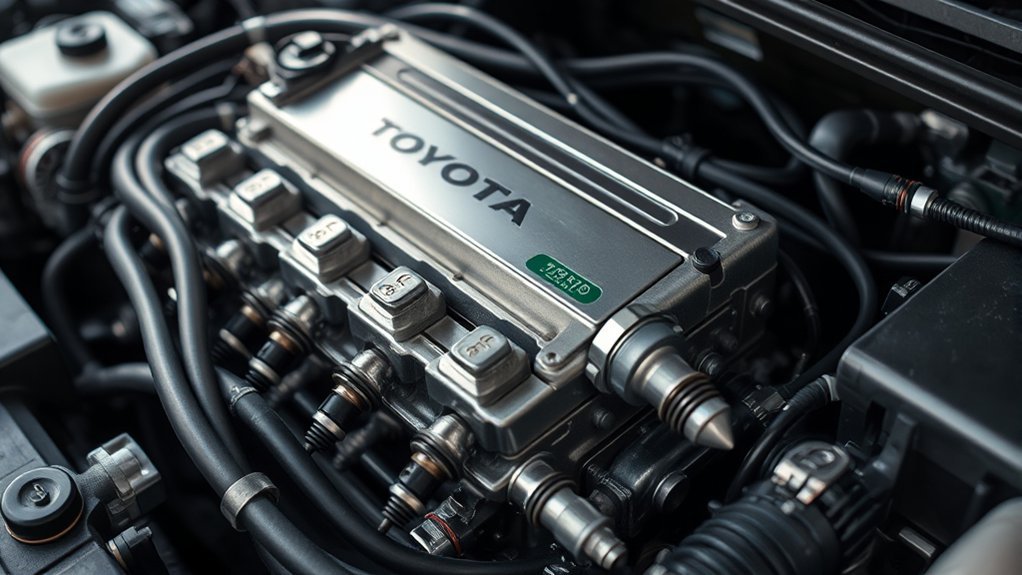
Your Toyota Camry’s fuel injectors help the engine start, idle smoothly, respond to the accelerator, control emissions, and use fuel efficiently. Rough idle, misfires, hesitation, hard starting, or poor fuel economy can occur when an injector is restricted, leaking, or electrically inactive, but those symptoms do not prove that an injector has failed.
A reliable answer starts with the Camry’s model year, engine, market, diagnostic codes, and test results. Ignition, air leaks, fuel pressure, wiring, sensors, stale fuel, and mechanical engine faults must be considered before anyone recommends injector cleaning or replacement.
Quick Answer
A Toyota Camry fuel injector meters and atomizes fuel for one cylinder. Rough idle, misfires, hesitation, hard starting, fuel odor, or falling fuel economy may occur when an injector is restricted, leaking, or electrically inactive, but ignition, air, pressure, sensor, wiring, and mechanical faults can cause the same symptoms. Test before cleaning or replacement.
Key Takeaways
- Camry injection systems vary by model year, engine, and country; verify the engine or VIN before ordering parts.
- Injector symptoms overlap with spark-plug, ignition-coil, air-leak, sensor, fuel-pressure, wiring, and compression problems.
- Toyota does not publish one universal injector-cleaning interval for every Camry and every market.
- A tank additive may help with removable fuel-system deposits, but it cannot repair a leaking, worn, damaged, blocked, or electrically faulty injector.
- Cleaning or replacement should follow a confirmed diagnosis, leak check, and post-repair verification.
At a Glance
| Time Required | About 20–45 minutes for an initial scan and inspection; complete diagnosis may require one to two hours or more. |
| Difficulty | Basic observation is owner-friendly. Injector circuit, pressure, balance, leak, and direct-injection work are professional-level. |
| Tools Needed | Toyota-compatible service information, OBD-II scan tool, electrical test equipment, fuel-pressure tools, and cylinder-test equipment as required. |
| Cost | Varies widely by diagnosis time, injector type, access, parts, seals, labor rate, taxes, and whether one injector or a complete set is required. |
Last updated: September 22, 2026
Editorial scope: This guide is research-based and does not claim a hands-on diagnosis of your specific Camry. Use Toyota service information for the exact model year, engine, market, and VIN before applying vehicle-specific specifications or opening the fuel system.
What Is a Fuel Injector and How Does It Work?
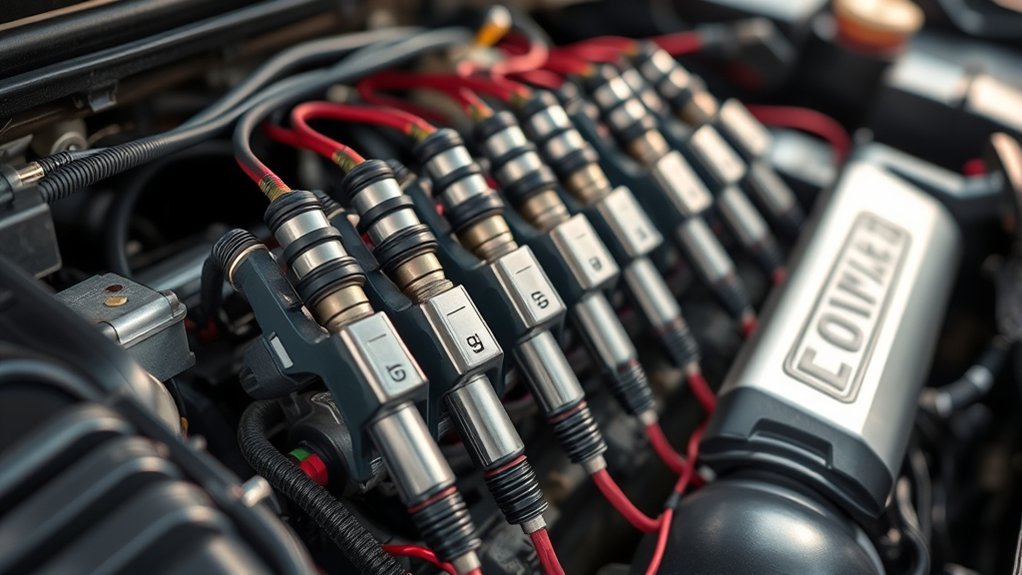
A fuel injector is an electronically controlled valve that releases a measured quantity of fuel. The engine control unit, or ECU, decides when the injector opens and how long it stays open by using information from engine-speed, temperature, throttle, airflow, oxygen, pressure, and other sensors.
The injector’s location depends on the fuel-injection design:
- Port injection: The injector sprays fuel into the intake port before the intake valve.
- Direct injection: The injector sprays fuel directly into the combustion chamber.
- Dual injection: The engine uses both port and direct injectors, selecting or combining them according to operating conditions.
The injector breaks fuel into small droplets so it can mix with air and burn consistently. Accurate delivery supports predictable starting, stable idle, acceleration, fuel economy, emissions control, and catalytic-converter operation.
Which Fuel-Injection System Does Your Camry Use?
Do not identify an injector system from the Toyota or Camry name alone. Toyota has used different engines and injection strategies across model years and countries.
For example, the U.S. 2026 Toyota Camry is sold as a hybrid with a 2.5-liter four-cylinder engine. Toyota’s 2.5-liter Dynamic Force engine technical overview identifies D-4S injection for the applicable hybrid engine. D-4S combines port and direct injection, with the ECU controlling how the two systems operate.
Older Camrys and versions sold outside the United States may use a different engine, injection system, fuel-pressure strategy, or injector part number. Check the owner’s manual, engine code, emissions label, VIN-based parts catalogue, or factory service information before ordering parts or approving a test procedure.
Note: A part advertised as fitting “Toyota Camry” is not specific enough. Confirm the model year, engine, market, injector location, electrical connector, fuel-pressure rating, and Toyota part information.
A fuel injector must meter fuel accurately, seal when closed, respond to its electrical command, and produce the spray pattern intended for that engine.
How Do Toyota Fuel Injectors Affect Engine Performance?
Fuel injectors affect more than engine power. Their timing, flow, sealing, and spray pattern influence starting, idle quality, throttle response, combustion stability, catalytic-converter operation, fuel consumption, and tailpipe emissions.
Fuel Delivery Precision
The ECU controls injector opening time in very small increments. It adds or reduces fuel as engine temperature, load, speed, driver demand, oxygen-sensor feedback, and fuel-pressure conditions change.
Approximately 14.7 parts air to one part conventional gasoline is commonly used as a general stoichiometric reference. It is not one permanent target for every condition. Fuel composition, cold starting, acceleration, catalyst heating, high load, and engine protection can change the commanded mixture.
An injector that flows too little can leave one cylinder lean. An injector that leaks or flows too much can create a rich condition, foul a spark plug, contaminate engine oil, increase emissions, or overheat the catalytic converter.
Combustion Efficiency Improvement
A correct spray pattern helps fuel mix with air before ignition. That supports consistent combustion from one engine cycle to the next.
- Accurate metering helps each cylinder receive the intended fuel quantity.
- Fine atomization improves fuel-and-air mixing.
- ECU corrections adapt delivery as operating conditions change.
- Good sealing prevents fuel from dripping after an injector should close.
- Consistent cylinder fueling supports smooth idle and acceleration.
Cleaning can improve an injector affected by removable deposits. It cannot restore a damaged coil, worn internal valve, cracked body, failed seal, corroded terminal, or mechanically damaged nozzle.
Emission Control Enhancement
The fuel system works with oxygen and air-fuel-ratio sensors, ignition control, evaporative-emissions equipment, exhaust treatment, and the catalytic converter. The ECU monitors combustion results and adjusts fuel delivery within its programmed limits.
A restricted or leaking injector can disrupt that control. The engine may record a misfire, unusual fuel-trim values, an air-fuel imbalance, higher emissions, or a warning light.
Injector trouble can also overheat or contaminate the catalytic converter when unburned fuel enters the exhaust. Prompt diagnosis matters when the check-engine light flashes or the engine runs severely rough.
Does a Toyota Camry Need Routine Fuel Injector Maintenance?
Injector care does not mean purchasing a cleaning service at a fixed mileage without evidence. It means using suitable fuel, following the maintenance information for the exact Camry, keeping related engine maintenance current, watching for changes in operation, and diagnosing active faults promptly.
Good preventive practices can:
- Reduce the chance of deposit-related drivability problems.
- Help the engine maintain predictable fuel control.
- Limit prolonged misfires that could damage other components.
- Catch fuel leaks or electrical damage before they become more serious.
- Avoid replacing injectors when another component caused the symptom.
- Create a useful maintenance and fuel-economy history for diagnosis.
Pro Tip: Keep fuel receipts and calculate economy across several similar tanks. One poor result can come from weather, traffic, idling, tire pressure, short trips, cargo, fuel formulation, or driving speed rather than an injector problem.
Signs That Your Toyota Camry Fuel Injectors Need Attention
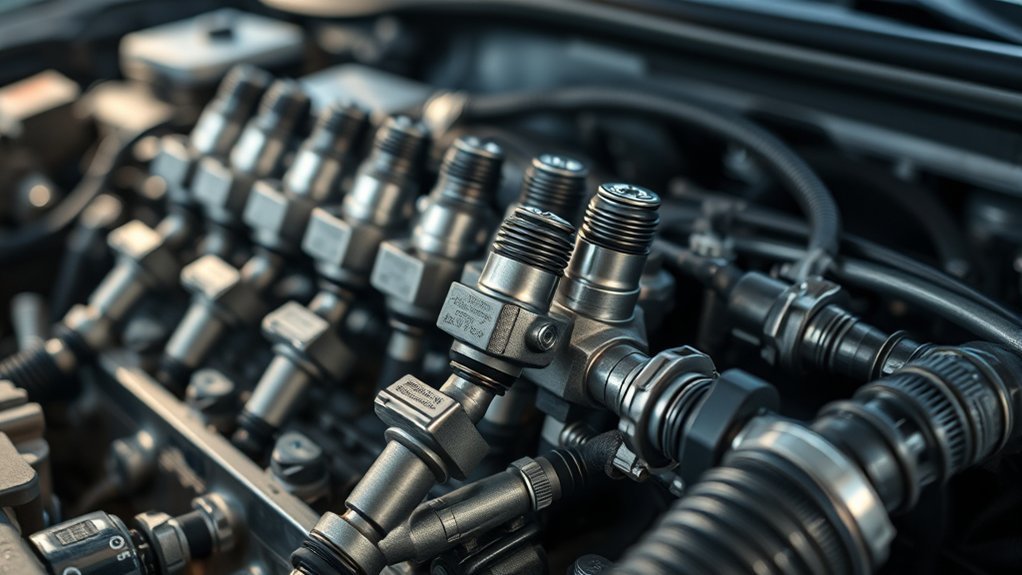
Injector trouble can produce noticeable changes, but no single symptom confirms the diagnosis. Look for a repeatable pattern and note whether it occurs during a cold start, hot restart, idle, acceleration, steady cruising, or heavy load.
Can a Bad Fuel Injector Reduce Fuel Economy?
A leaking injector can waste fuel, while a restricted injector can cause poor combustion and ECU corrections. Fuel-economy loss also commonly results from low tire pressure, cold weather, short trips, traffic, brake drag, air-filter restriction, thermostat or sensor faults, roof racks, cargo, or changes in driving style.
Do not use a universal 10% MPG drop as an injector threshold. Compare several tanks filled in a consistent way, then check for warning lights, fuel odor, rough running, overdue maintenance, and abnormal scan data.
Can a Bad Fuel Injector Cause Rough Idle or Hesitation?
A restricted, leaking, or electrically inactive injector may cause an uneven idle, misfire, stumble, hesitation, or power loss. The symptom may be more obvious during cold starting, acceleration, or high engine load.
Ignition coils and spark plugs can create nearly identical behavior. Vacuum leaks, weak fuel pressure, damaged wiring, low compression, valve trouble, and inaccurate sensor readings can also disturb combustion.
| Symptom | Possible Injector Link | Other Common Causes | Next Step |
|---|---|---|---|
| Cylinder misfire | Restricted, leaking, or electrically inactive injector | Spark plug, ignition coil, wiring, compression, valve sealing, or air leak | Read codes and freeze-frame data, then test the affected cylinder |
| Poor fuel economy | Injector leakage, imbalance, or poor spray pattern | Tire pressure, traffic, cold weather, oxygen sensor, thermostat, or brake drag | Confirm the trend and review fuel trim, temperature, and operating data |
| Hard starting | Leaking injector or inadequate injector flow | Battery, pressure loss, temperature sensor, ignition, purge fault, or stale fuel | Check battery condition, codes, fuel pressure, and residual pressure |
| Fuel odor or smoke | External leak or excessive cylinder fueling | EVAP fault, fuel-line leak, exhaust fault, oil consumption, or another rich-running cause | Stop and inspect promptly, especially when liquid fuel is visible |
How Different Fuel Injector Faults Usually Behave
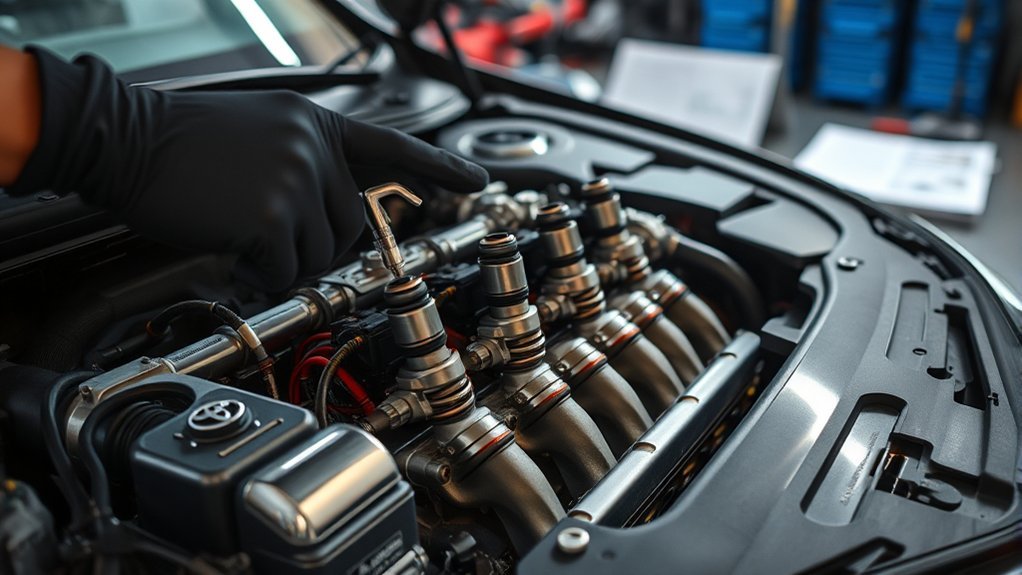
“Bad injector” can describe several different failures. Distinguishing them helps determine whether cleaning, wiring repair, seal replacement, or injector replacement makes sense.
Restricted or Poorly Atomizing Injector
Deposits or contamination can reduce flow or disturb the spray pattern. The affected cylinder may run lean, misfire, hesitate under load, or contribute less power than the others. A removable deposit may respond to appropriate cleaning, but severe blockage or physical nozzle damage may not.
Internally Leaking Injector
An injector that does not seal when closed can drip fuel into the intake port or cylinder. Possible clues include a difficult hot restart, raw-fuel odor, a wet or dark spark plug, rich-running data, pressure loss after shutdown, smoke, or fuel-contaminated engine oil.
Electrically Inactive Injector
A failed coil, open circuit, damaged connector, wiring fault, missing power supply, or ECU-control problem can prevent the injector from opening. The cylinder may misfire consistently, but the injector itself should not be condemned until the command, circuit, resistance or current pattern, and mechanical engine condition have been checked using the correct specification.
External Fuel Leak
A damaged seal, cracked component, loose connection, or rail problem can release fuel outside the engine. This is a fire hazard rather than a cleaning issue.
Warning: If you see liquid fuel, smell a strong persistent raw-fuel odor, or suspect a pressurized leak, shut off the vehicle and keep flames, sparks, cigarettes, chargers, and hot tools away. Do not continue driving. Arrange professional inspection or towing.
What Else Can Mimic a Bad Fuel Injector?
Replacing an injector based on symptoms alone can waste money and leave the original fault unresolved. A careful diagnosis should consider:
- Spark plugs and ignition coils: Weak ignition commonly causes cylinder-specific misfires.
- Vacuum or intake leaks: Unmetered air can create lean fuel-trim values and rough idle.
- Fuel-pump or pressure problems: Low or unstable pressure can affect several cylinders.
- Mass-airflow, oxygen, air-fuel-ratio, or temperature sensors: Incorrect data can cause the ECU to command unsuitable fueling.
- Injector wiring or ECU control: A mechanically sound injector may not receive the proper electrical command.
- Low compression or valve trouble: Mechanical faults can create a persistent misfire that cleaning cannot fix.
- Contaminated or stale fuel: Poor fuel quality can create broad drivability problems.
- EVAP-system faults: Purge problems can affect starting, idle, mixture control, and fuel odor.
- Exhaust leakage ahead of a mixture sensor: Outside air can distort sensor feedback.
- Hybrid-control or engine-temperature strategy: Operating conditions can change when the gasoline engine starts, stops, or warms up.
If misfire is the main symptom, use the separate Toyota Camry misfire diagnosis guide to work through ignition, air, fuel, and mechanical causes. If spark-plug condition or service history is in doubt, see how to replace Toyota Camry spark plugs for model-specific fitment and service cautions.
A diagnostic code identifies a monitored condition or circuit. It does not name the failed part unless testing confirms the cause.
Which Diagnostic Codes Can Point to a Camry Fuel Injector Problem?
The exact codes available depend on the Camry’s model year and powertrain. These common code families can guide testing, but none proves injector failure by itself.
| Code or Code Family | What It Indicates | What It Does Not Prove |
|---|---|---|
| P0300 or P0301–P0304 | Random or cylinder-specific misfire detection | That the injector caused the misfire; ignition, compression, air, valve, wiring, and pressure faults remain possible |
| P0171, P0172, or related bank codes | The ECU reached a lean or rich mixture threshold | That one injector is restricted or leaking; pressure, air leaks, sensors, exhaust leaks, and fuel quality can also matter |
| P0087 or another fuel-pressure code | Measured or commanded fuel pressure is outside the expected range | That an injector is the cause; pump, filter, control, sensor, wiring, supply, or leakage problems must be tested |
| Injector-circuit code | An electrical circuit condition was detected | That the injector coil alone failed; connectors, harnesses, power supply, and ECU control require inspection |
| Air-fuel imbalance code | One cylinder or bank appears to burn differently from the others | Whether fuel, ignition, air, compression, valve sealing, or sensor response caused the imbalance |
Note: Save the codes, status, freeze-frame information, and relevant live data before clearing anything. Erasing codes too early can remove clues about temperature, speed, load, and fuel trim when the fault occurred. For a random or multiple-cylinder misfire, the Toyota Camry P0300 guide explains what the code proves and what still needs testing.
Why Pulse Width and Duty Cycle Matter for Injector Performance
Pulse width and duty cycle describe how the ECU commands an injector. They help trained technicians and calibrators understand fuel demand, but owners should not use one generic number to condemn an injector.
Pulse Width Functionality Explained
Pulse width is the time the ECU commands an injector to remain open, usually measured in milliseconds. A longer command generally delivers more fuel when fuel pressure, voltage, and injector condition remain comparable.
The ECU changes pulse width constantly. Cold starting, acceleration, engine load, speed, sensor feedback, fuel pressure, and hybrid operating strategy can all affect it.
An unusual pulse-width value does not automatically mean the injector is bad. The ECU may be compensating for an air leak, pressure problem, sensor error, combustion fault, fuel composition, or another condition.
Duty Cycle Optimization Importance
Duty cycle expresses injector on-time as a percentage of the available cycle time. It generally rises as the engine requires more fuel and as engine speed reduces the time available for each injection event.
The claim that every injector must remain below 80% is too broad for a Camry owner’s guide. Acceptable operation depends on the injector, pressure, engine design, injection strategy, operating point, and factory calibration.
A technician should compare scan data, pressure measurements, electrical waveforms, and cylinder results with the correct Toyota service information. Duty cycle alone cannot reveal whether an injector is restricted, leaking, electrically damaged, or receiving an incorrect command.
Pulse width shows what the ECU is requesting. It does not prove what quantity of fuel actually left the injector.
How Technicians Diagnose a Camry Fuel Injector Problem
A reliable diagnosis starts with evidence rather than immediate cleaning or replacement. The exact procedure depends on the Camry’s engine and injection system, but a technician may:
- Confirm the complaint. Note whether the symptom occurs cold, hot, at idle, during acceleration, after refuelling, or under load.
- Scan for diagnostic trouble codes. Review current, pending, permanent, and history codes with freeze-frame information.
- Inspect visible components. Check connectors, wiring, accessible fuel lines, seals, grounds, hoses, and signs of leakage or damage.
- Check basic engine condition. Inspect spark plugs and ignition operation, then test compression, cylinder leakage, or valve operation when needed.
- Review live data. Examine fuel trims, oxygen or air-fuel-ratio response, misfire counts, temperatures, airflow, commanded values, and fuel pressure where supported.
- Test injector control. Verify the correct power supply, ECU command, circuit integrity, and electrical waveform using model-specific procedures.
- Compare cylinder contribution. Determine whether one cylinder responds differently from the others without using a test that could damage the catalytic converter or hybrid system.
- Perform a balance or flow test when appropriate. Compare controlled pressure drop, measured flow, or injector output using equipment approved for the system.
- Check for internal leakage. Look for residual-pressure loss, cylinder flooding, an abnormal spark-plug condition, or an injector that does not seal.
- Confirm the repair choice. Decide whether the evidence supports cleaning, wiring repair, seal replacement, pressure-system repair, or injector replacement.
- Verify the result. Check for leaks, repeat relevant measurements, road-test safely, and confirm that the original symptom and code condition have changed.
A misfire code identifies a combustion problem and sometimes a cylinder. Testing must identify whether fuel, ignition, air, wiring, pressure, or engine condition caused it.
What Owners Can Safely Check Before Booking Service
You can collect useful information without opening the fuel system:
- Record when the symptom happens. Note engine temperature, weather, fuel level, speed, load, and whether the vehicle was recently refuelled.
- Read and save codes. A basic OBD-II scan can preserve codes and freeze-frame data. Do not assume that a code names the failed part.
- Check warning-light behavior. A flashing check-engine light and severe shaking require more urgent action than a steady light with normal operation.
- Review recent work. Loose connectors, incorrect spark plugs, disturbed hoses, or wiring damage can appear after other repairs.
- Check maintenance basics. Confirm that spark plugs, air filtration, battery condition, tire pressure, and fuel quality have not been overlooked.
- Look and smell without touching fittings. Stop if you find liquid fuel or a strong persistent raw-fuel odor.
- Check the VIN. Review open recalls, service campaigns, warranty coverage, and model-specific Toyota information before paying for a repair.
Warning: On a hybrid Camry, confirm the vehicle is fully OFF rather than in READY mode, keep the key away from the vehicle, and do not touch orange high-voltage cables, connectors, or the service plug. A hybrid can be ready to start the gasoline engine even when the engine is currently silent.
What to Expect From Fuel Injector Service
“Fuel injector service” can describe several different jobs. Ask the repairer exactly what the quote includes and which test result supports the recommendation.
- Diagnostic inspection: Code scanning, live-data review, visual checks, circuit testing, pressure checks, and cylinder testing.
- Tank additive: A compatible detergent added to the fuel for deposit control. It does not confirm a diagnosis.
- Pressurized on-car cleaning: Specialized equipment supplies an approved cleaning solution while the engine operates. System compatibility and procedure matter.
- Off-car cleaning and flow testing: Injectors are removed, cleaned with specialized equipment, checked for leakage, and compared for flow and spray quality.
- Seal or wiring repair: A leaking external seal, damaged connector, or wiring problem is repaired without assuming the injector body has failed.
- Injector replacement: A failed, damaged, leaking, unresponsive, or non-restorable injector is replaced with the correct part and specified new seals or single-use components.
- Post-repair verification: The technician checks for leaks, reviews data, confirms cylinder contribution, and verifies the original complaint.
[Amazon Products Picked for You]

Upgraded Universal Fuel Injector Tester and Cleaner Tool Kit---Operates injectors individually to diagnose fuel delivery problems on petrol vehicles with electronic fuel injection, such as blockage, leakage, damage, and burnout of the injectors. The included 8-size cleaning adapters combined with the tester pulse mode can quickly clean the injectors. TURN OFF THE ENGINE BEFORE USE.

[High-quality materials] : This fuel injector cleaner is made of high-quality materials and has a long service life. The wire is made of high quality silicone resin with high toughness and better resistance to high and low temperatures. Crocodiles have large opening range and strong bite force. Joint with high hardness corrosion resistant plastic, polygonal convex groove design, enhance friction and anti-slip.

Manual fuel injector cleaning tool: the electrical interface of car fuel injector flush cleaner adapter cleaning tool set nozzle is connected to 12V power supply through this line, which is suitable for fuel injectors of most models. When used with detergent, gasoline can be seen intuitively According to the atomization shape, it can be judged whether there are faults such as clogging oil leakage or lax closure.
Cleaning Versus Replacement
| Condition | Cleaning May Make Sense | Replacement or Other Repair Is More Likely |
|---|---|---|
| Light removable deposits | Yes, when testing indicates restricted flow or poor atomization and the method is compatible | Not unless cleaning fails or testing reveals another defect |
| Failed electrical coil or circuit | No; detergent cannot repair an electrical fault | Repair wiring or control faults, or replace the injector if its coil failed |
| Internal leakage or worn sealing surface | Only if controlled testing shows contamination rather than wear | Replacement is usually appropriate when leakage remains after testing or cleaning |
| External seal leak | Injector cleaning does not repair the seal | Replace specified seals and inspect the injector, rail, bore, and fittings for damage |
| Low system fuel pressure | Not until the pressure fault is diagnosed | Test the pump, supply, pressure control, sensors, wiring, and leakage |
Should One Injector or the Full Set Be Replaced?
Replacing every injector is not automatically required. When one injector has a confirmed electrical or mechanical failure and the others pass leakage, balance, and electrical tests, replacing the failed unit may be reasonable.
A complete set may make more sense when several injectors fail testing, contamination affected the whole system, the injectors have similar deterioration, access labor is unusually high, or the manufacturer’s repair procedure requires matched or updated parts. The decision should follow measurements, parts information, and warranty terms rather than a blanket shop policy.
How Much Does Toyota Camry Fuel Injector Service or Replacement Cost?
Costs vary significantly by model year, injector type, engine access, diagnosis time, parts source, seals, single-use pipes or fasteners, labor rate, tax, and market.
As a dated U.S. example, RepairPal’s Toyota Camry estimate, updated September 3, 2026, lists an average replacement range of approximately US$804–$985. This is an estimate, not a quote for every Camry; year-specific estimates can differ substantially.
For Australian context, AutoGuru’s Camry guide lists examples of roughly AUD $240–$445 for one injector and AUD $840–$1,560 for a set. Actual Adelaide pricing can fall outside those ranges.
Request a written, itemized quote showing diagnosis, labor, injector quantity, parts brand and number, seals, required pipes or fasteners, cleaning or flow testing, taxes, post-repair checks, and warranty.
The useful service is the one supported by test results, not the most expensive cleaning package on the menu.
Are Injector Deposits the Same as Intake-Valve Deposits?
Injector cleaning and intake-induction cleaning are not interchangeable.
- Injector deposits affect fuel flow, sealing, or spray quality at the injector.
- Combustion-chamber deposits form where fuel and air burn and may influence combustion or emissions.
- Intake-valve deposits form on the intake side of the valve. During direct-injection-only operation, tank fuel does not pass over that surface.
A fuel-tank detergent travels through the fuel system. It may help control removable injector and combustion-system deposits when compatible and correctly dosed, but it is not the same as a workshop intake-induction service.
Applicable D-4S engines also use port injection, which introduces fuel upstream of the intake valve under selected conditions. The exact strategy varies, so do not assume that every deposit problem has the same cause or cleaning method.
Can You Clean Fuel Injectors at Home or Should You Seek Professional Help?
You can use a reputable fuel-tank detergent at home when its label confirms compatibility with your fuel, engine, and emissions system. Follow the dosage exactly. Adding extra product or combining several cleaners does not guarantee better results and may create new problems.
A tank additive may help control or reduce light removable deposits. It cannot repair:
- A failed injector coil or damaged electrical circuit
- A cracked injector body
- A leaking external seal
- Mechanical wear that prevents proper sealing
- Severe blockage that does not respond to detergent
- Incorrect fuel pressure or a failed fuel pump
- A spark, compression, sensor, valve, or wiring fault
- An intake-valve deposit that the tank fuel does not directly reach
Seek professional help when the engine misfires, a warning light flashes, fuel is leaking, the raw-fuel odor is strong, or the repair requires opening the fuel rail. Direct-injection components should be handled only with the specified depressurization procedure, service information, protective equipment, replacement seals, and leak-testing method.
Warning: Never loosen a fuel fitting to “see whether fuel comes out.” Residual pressure can spray fuel onto skin, eyes, electrical components, or hot engine parts. High-pressure direct-injection work requires the vehicle-specific Toyota procedure.
[Amazon Products Picked for You]

DESIGNED TO EXCEED EXPECTATIONS: Red Line complete SI-1 fuel system cleaner is a premium fuel additive, providing an effective fuel treatment solution to clean and prevent corrosion in fuel systems.

DESIGNED TO EXCEED EXPECTATIONS: Red Line complete SI-1 fuel system cleaner treatment for cleaning and preventing corrosion in fuel systems

The world’s #1 fuel additive for both gasoline and diesel engines
How Long Do Toyota Camry Fuel Injectors Last, and How Often Should They Be Serviced?
Toyota does not publish one fixed replacement lifespan or one universal injector-cleaning interval for every Camry. Treat injector replacement as condition-based unless the maintenance information for your exact model year and market says otherwise. Follow the correct maintenance guide for the engine, country, fuel, and operating conditions.
The U.S. 2026 Camry Warranty & Maintenance Guide does not list routine injector cleaning or injector replacement in its standard mileage chart. The chart includes an EFI tank-additive item for Hawaii and scheduled inspections of fuel lines, connections, vapor hoses, and related components.
Regional recommendations can differ. Toyota Canada’s maintenance guidance promotes Toyota fuel-system cleaner every 10,000 kilometres or six months and a combustion and EFI cleaner service at 80,000 kilometres or when performance issues occur. That guidance is not a universal service interval for every Camry worldwide.
Arrange diagnosis when you have persistent symptoms, injector-circuit codes, repeated cylinder misfires, fuel leakage, abnormal balance or leakage results, or contaminated fuel. Do not wait for a mileage milestone when an active fault exists.
For older or non-U.S. Camrys, use Toyota’s manuals and warranties portal or the official owner resources for your country. Also check the VIN for recalls, warranty extensions, and service campaigns before paying for a related repair.
Treat injector cleaning as condition-based unless the maintenance information for your exact Camry and market specifies otherwise.
How Can You Reduce Fuel Injector Deposits and Problems?
You cannot prevent every electrical or mechanical failure, but sensible habits can reduce deposit and contamination risks.
- Buy fuel from a busy, reputable station.
- Use the fuel grade and type specified in the owner’s manual.
- Where available, consider gasoline that meets recognized detergent standards. Toyota is among the automakers associated with the TOP TIER detergent gasoline program.
- Avoid repeatedly running the tank extremely low when contamination or water is suspected.
- Do not store the vehicle for long periods with aging fuel without following proper storage guidance.
- Use additives only as directed and avoid mixing several cleaners.
- Repair misfires, pressure faults, fuel leaks, and mixture problems promptly.
- Keep spark plugs, air filtration, battery condition, and other scheduled maintenance current.
- Use the correct replacement injector and all specified new seals or single-use components.
- Keep repair invoices, codes, test results, and fuel records for future diagnosis.
Detergent fuel can help minimize deposits. It cannot correct a damaged injector, repair an electrical circuit, compensate for low fuel pressure, or replace proper diagnosis.
Where to Find Expert Fuel Injector Services in Adelaide, South Australia
Look for an Adelaide workshop that can diagnose Toyota fuel, ignition, wiring, pressure, and mechanical faults rather than offering cleaning as the first and only step. Ask whether the shop has Toyota-capable scan equipment, current service information, fuel-pressure testing tools, electrical test equipment, safe hybrid procedures, and injector balance or flow-testing options.
As of July 2026, the Australian Government’s ABN Lookup lists Adelaide Auto Pro as an active business name under Wandered Pty Ltd. The business website identifies its location as 68 Pym Street, Dudley Park, South Australia 5008. This verifies the business listing and address; it is not an independent endorsement of its injector-testing capability, workmanship, pricing, or suitability for a particular Camry.
Confirm the current business name, services, technician qualifications, opening hours, diagnostic equipment, warranty, and price directly before visiting.
Before approving work, ask:
- Which test indicates that the injector is faulty, leaking, or restricted?
- What were the codes, freeze-frame values, fuel trims, misfire counts, and pressure results?
- Have you ruled out the spark plug, ignition coil, wiring, air leak, fuel pressure, valve sealing, and compression?
- Does the quote include diagnosis, removal, seals, required pipes or fasteners, cleaning, flow testing, replacement parts, and tax?
- Are the parts genuine Toyota, original-equipment, remanufactured, or aftermarket?
- Will you provide the test results and parts information in writing?
- What warranty applies to the diagnosis, service, and installed parts?
- Will you perform a fuel-leak check and verify operation after the repair?
A qualified independent workshop can perform many Camry repairs. Toyota’s Technical Information System provides factory service information for North American vehicles. Australian repairers can obtain relevant information through Toyota Australia’s repair and service information portal.
[Amazon Products Picked for You]
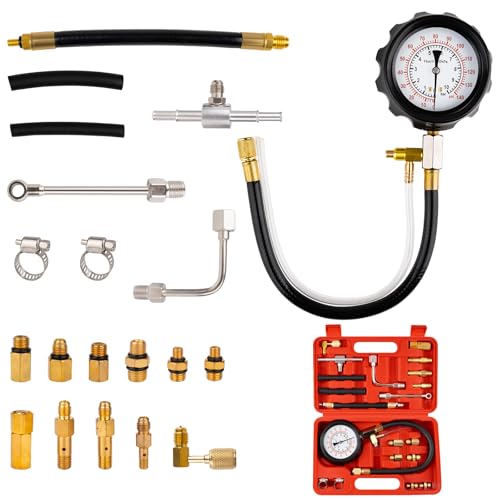
Compatibility Note: For further confirmation of specific model compatibility, refer to the vehicle owner's manual or contact a professional technician. Excludes Fo/rd, K/I/A, Bo/s/ch, C/I/S Je/tro/nic, G//M Th/rot/tle Bo/dy Systems, A/cu/ra, J/ee/p, B/M/W, Ni/s/san, and To/yo/ta fuel systems. Not compatible with small/non/standard S/chra/der vallves, high/pre/ssure direct in/ject/ed engines, or die//sel injection pumps. Verify your vehicle’s vallve size and pressure specs before purchase

Upgraded Universal Fuel Injector Tester and Cleaner Tool Kit---Operates injectors individually to diagnose fuel delivery problems on petrol vehicles with electronic fuel injection, such as blockage, leakage, damage, and burnout of the injectors. The included 8-size cleaning adapters combined with the tester pulse mode can quickly clean the injectors. TURN OFF THE ENGINE BEFORE USE.

【6 Size Adapters Cleaning Tool & Universal Fit】 - Our fuel injector tester cleaner kit are available in 6 sizes of cleaner adapters and are widely used for all types of injectors from 5V-12V, such as EFI and GDI injectors. These include 5 types of adapters with hole diameters of 9.8mm, 10.8mm, 11.8mm, 12mm, 13.5mm, and one type of adapter with threaded holes specifically for BMW N-series injectors, such as N14/N18/N20/N26/N53/N54/N55/N63/S63.
Related Guides
Frequently Asked Questions
How does fuel injection work step by step?
The fuel pump supplies pressurized fuel, sensors report engine conditions, and the ECU calculates the required delivery. It sends an electrical command to each injector, the injector opens for a controlled time, and fuel enters the intake port, cylinder, or both, depending on the system. Mixture-sensor feedback helps the ECU adjust fueling after combustion.
How does a car act when a fuel injector is going out?
You may notice rough idle, misfires, hesitation, hard starting, weak acceleration, fuel odor, a warning light, smoke, or worsening fuel economy. These signs are not unique to injectors, so test the ignition system, wiring, air intake, fuel pressure, sensors, and mechanical engine condition before replacing one.
How does Toyota dual injection work?
Toyota’s D-4S strategy on applicable engines combines port and direct injection. The ECU can select or combine the two delivery methods according to operating conditions. This can support mixture preparation, response, efficiency, and emissions control, but the exact strategy depends on the engine and calibration.
What type of fuel injection does Toyota use?
Toyota has used port injection, direct injection, and dual-injection systems across different engines and markets. Do not identify a Camry’s system from the brand name alone. Verify the model year, engine code, VIN information, emissions label, owner’s manual, or factory service data.
Does fuel injector cleaner work in a Toyota Camry?
A compatible tank cleaner may help with light removable deposits when used at the correct concentration. It cannot repair electrical failure, external leakage, physical damage, severe wear, low fuel pressure, or a non-injector fault. Stop repeated additive use and arrange testing when symptoms continue.
Can you drive with a bad fuel injector?
Driving may worsen a misfire, damage the catalytic converter, contaminate engine oil, increase emissions, or create a fire risk when fuel leaks. Stop driving when fuel is visibly leaking, the raw-fuel odor is strong, the engine runs severely rough, or the check-engine light flashes. Arrange inspection or towing.
Can a faulty injector damage the catalytic converter?
Yes. A leaking injector or severe misfire can send unburned fuel into the exhaust, where it may overheat or contaminate the catalytic converter. A flashing check-engine light or severe shaking requires prompt attention, regardless of whether the injector has been confirmed as the cause.
Should all Camry fuel injectors be replaced together?
Not automatically. One confirmed failed injector may be replaced when the others pass electrical, leakage, and balance tests. A complete set may make sense when several injectors fail testing, contamination affected the system, matched updated parts are required, or access labor changes the economics.
Which codes point to a fuel injector problem?
Injector-circuit, cylinder-misfire, air-fuel imbalance, rich or lean mixture, and fuel-pressure codes may direct testing toward the fuel system. They do not prove injector failure. Wiring, ignition, pressure, air leaks, sensors, valve sealing, and compression must still be checked.
Is intake-induction cleaning the same as injector cleaning?
No. Injector cleaning targets fuel flow, sealing, or spray quality at the injector. Intake-induction cleaning targets deposits in the air path or on intake valves. A tank additive follows the fuel path and may not directly reach intake-valve deposits during direct-injection-only operation.
How long do Toyota Camry fuel injectors last?
Toyota does not publish one fixed replacement lifespan for every Camry. Injector life depends on the engine, injection system, fuel quality, operating conditions, contamination, and electrical or mechanical wear. Replace an injector when diagnosis confirms a fault rather than at a generic mileage.
How much does Toyota Camry fuel injector replacement cost?
As of September 3, 2026, RepairPal lists an average U.S. Toyota Camry fuel-injector replacement estimate of about $804–$985, while year-specific estimates can be much higher or lower. AutoGuru lists Australian examples of about AUD $240–$445 for one injector and AUD $840–$1,560 for a set. Get a VIN-specific, itemized quote before approving work.
Conclusion
Understanding how Toyota Camry fuel injectors work can help you respond quickly to rough idle, misfires, hesitation, hard starting, fuel odor, warning lights, or unexplained fuel-economy loss. Those symptoms identify a need for diagnosis, not a specific failed part.
Consider a hypothetical owner named Lisa whose Camry sputters during acceleration. A restricted injector is possible, but so are a weak ignition coil, worn spark plug, intake leak, damaged connector, low fuel pressure, or valve-sealing problem. Saving the freeze-frame data and comparing ignition, pressure, cylinder contribution, and injector control can prevent an unnecessary cleaning or replacement.
Use the maintenance information for the exact Camry and market, stay within safe DIY limits, and seek professional diagnosis when symptoms persist. A confirmed repair protects engine performance, fuel control, emissions equipment, safety, and your budget.
Sources
- Toyota 2026 Camry Warranty & Maintenance Guide — scheduled maintenance, fuel-system inspection, warranty, and hybrid safety guidance.
- Toyota USA 2026 Camry Overview — current U.S. powertrain and hybrid configuration.
- Toyota 2.5-Liter Dynamic Force Engine Technical Overview — D-4S injection, injector design, and engine-control information.
- Toyota Canada Maintenance Guidance — regional fuel-system cleaner and EFI-service recommendations.
- TOP TIER Gasoline Brands and Detergency Information — detergent standards, sponsoring automakers, and deposit-control information.
- Toyota Australia Repair and Service Information — official access to Australian repair information and specifications.
