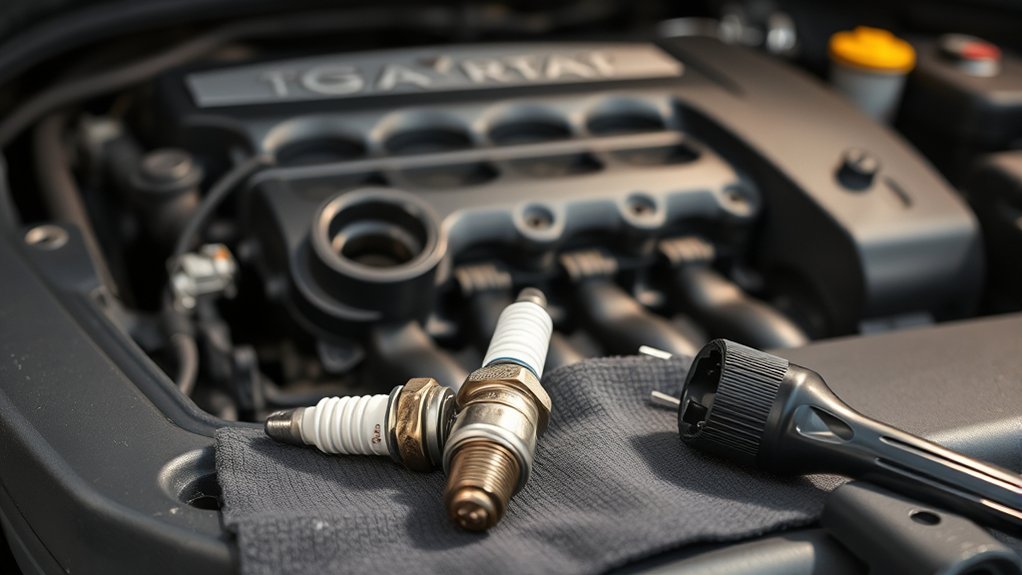
Your Toyota Camry’s spark plug replacement interval depends on its model year and engine. Many recent four-cylinder and hybrid Camrys are scheduled for new plugs at 120,000 miles, while Camrys with the 3.5-liter 2GR-FKS V6 may require them at 60,000 miles. Checking the maintenance guide for your exact vehicle is more reliable than using a generic lifespan based only on plug material.
Quick Answer
Most recent U.S.-market Toyota Camry four-cylinder and hybrid models schedule spark plug replacement at 120,000 miles or 144 months. Camrys with the 3.5-liter 2GR-FKS V6 schedule it at 60,000 miles or 72 months. Older model years can differ, so confirm the interval for your exact year and engine.
Key Takeaways
- The current 2025 and 2026 Camry maintenance charts place spark plug replacement at 120,000 miles.
- The 2024 Camry with the 2GR-FKS 3.5-liter V6 calls for spark plug replacement at 60,000 miles.
- Rough running or a misfire code does not prove that the plugs are faulty; coils, injectors, air leaks, wiring, and mechanical problems can cause similar symptoms.
- Use the exact plug specification for your engine and follow the specified installation torque.
Toyota Camry Spark Plug Replacement Interval
Toyota sets the maintenance interval by engine and model year. It is not safe to assume that every Camry uses the same schedule simply because it has iridium plugs.
| Camry example | Toyota replacement interval | Important note |
|---|---|---|
| 2025–2026 Camry Hybrid | 120,000 miles | Toyota’s current maintenance chart lists replacement in the 120,000-mile column. |
| 2024 Camry with A25A four-cylinder engine | 120,000 miles or 144 months | This is the normal recent four-cylinder interval. |
| 2024 Camry with 2GR-FKS 3.5-liter V6 | 60,000 miles or 72 months | This engine has an earlier required replacement point. |
| Older Camry models | Varies | Use the maintenance guide for the exact year, engine, and market. |
Note: You can select your year and model on Toyota’s official Manuals and Warranties page. The maintenance guide, not a universal plug-material chart, should be your final reference.
Understanding Spark Plugs and Their Role in Your Camry
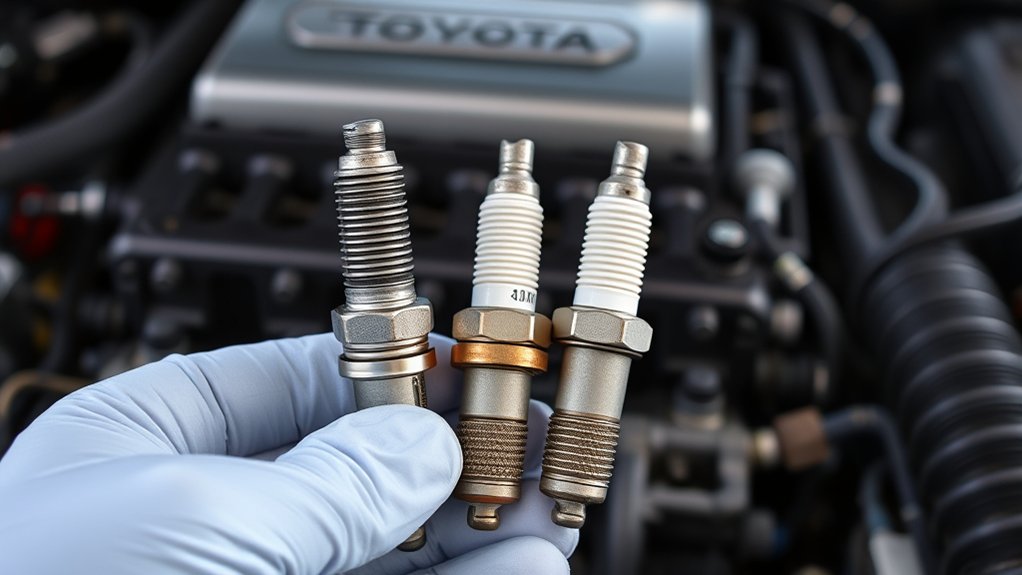
A spark plug uses voltage from the ignition coil to create a spark inside the combustion chamber. That spark ignites the compressed air-fuel mixture so the engine can produce power.
As the center and ground electrodes wear, the ignition system may need more voltage to bridge the gap. Deposits, cracked insulation, oil contamination, incorrect heat range, or physical damage can also interfere with ignition.
Modern Camrys normally use long-life precious-metal plugs. However, the correct replacement point still comes from Toyota’s maintenance schedule. A plug that looks usable beyond the scheduled interval may have increased gap or hidden wear that is difficult to judge by appearance alone.
Copper, Platinum, and Iridium Spark Plugs
The terms copper, platinum, and iridium describe parts of a plug’s construction, but they do not create one universal mileage rating for every engine.
| Plug type | General characteristic | Camry guidance |
|---|---|---|
| Nickel or conventional copper-core | Larger conventional electrode that may wear faster than a precious-metal design. | More common on older applications. Do not substitute one without confirming the exact specification. |
| Platinum | Uses platinum at one or more electrode surfaces for improved wear resistance. | Use only when it matches the original application or an approved equivalent. |
| Iridium | Uses a fine, durable center electrode and is common in modern long-service applications. | Common in recent Camrys, but the engine’s Toyota schedule still determines the interval. |
Pro Tip: Match the part number, thread reach, seat style, heat range, resistor design, and original gap specification. A plug marketed as a premium upgrade is not automatically correct for your engine.
Signs Your Spark Plugs May Need Attention
Worn or fouled plugs can cause drivability problems, but these symptoms are not unique to spark plugs.
| Possible sign | What you may notice | Other possible causes |
|---|---|---|
| Check-engine light | A stored random or cylinder-specific misfire code. | Ignition coil, injector, wiring, air leak, compression problem, or fuel issue. |
| Rough idle | Shaking, uneven engine speed, or vibration when stopped. | Dirty throttle body, vacuum leak, engine mount, injector, or mechanical fault. |
| Weak acceleration | Hesitation, stumbling, or reduced power under load. | Coil breakdown, fuel-delivery problem, restricted exhaust, or sensor fault. |
| Hard starting | Longer cranking time or repeated starting attempts. | Weak battery, fuel-pressure loss, sensor problem, or compression loss. |
| Reduced fuel economy | More frequent refueling without an obvious change in driving. | Tire pressure, weather, driving style, brake drag, sensor faults, or fuel-system problems. |
Warning: A flashing check-engine light usually indicates an active, damaging misfire. Reduce engine load and arrange diagnosis promptly. If the engine is shaking severely, losing substantial power, overheating, or producing unusual odors, stop in a safe place rather than continuing to drive.
Diagnosing Spark Plug Problems Correctly
A trouble code can identify the cylinder that is misfiring, but it normally cannot identify the failed part by itself. For example, P0300 indicates random or multiple-cylinder misfire, while P0301 through P0304 or P0306 point to particular cylinders. The next step is testing, not automatic plug replacement.
Basic Diagnostic Process
- Read the stored and pending trouble codes and review freeze-frame data.
- Confirm whether the plugs are overdue under the exact maintenance schedule.
- Inspect the ignition-coil connectors, wiring, coil boots, and plug wells.
- Remove the plugs only when the engine is cool and the procedure is justified.
- Compare the condition of all plugs rather than judging one plug in isolation.
- Test coils, injectors, fuel delivery, intake leaks, and compression when the evidence does not clearly point to the plugs.
What Spark Plug Condition Can Reveal
- Rounded or eroded electrodes: Normal wear or an overdue service interval.
- Dry black deposits: Possible rich running, repeated short trips, weak ignition, or excessive idling.
- Wet fuel: The cylinder may not be firing consistently.
- Oily deposits: Oil may be entering the combustion chamber or plug well.
- Unusually clean or crusty deposits: Coolant entry or additive deposits may require further diagnosis.
- Cracked ceramic or damaged electrode: Replace the plug and investigate incorrect installation, impact damage, overheating, or detonation.
Cleaning a badly fouled modern plug is usually not a complete repair. The cause of the fouling must also be corrected, or the replacement plug may fail again.
Factors That Affect Spark Plug Life in a Toyota Camry
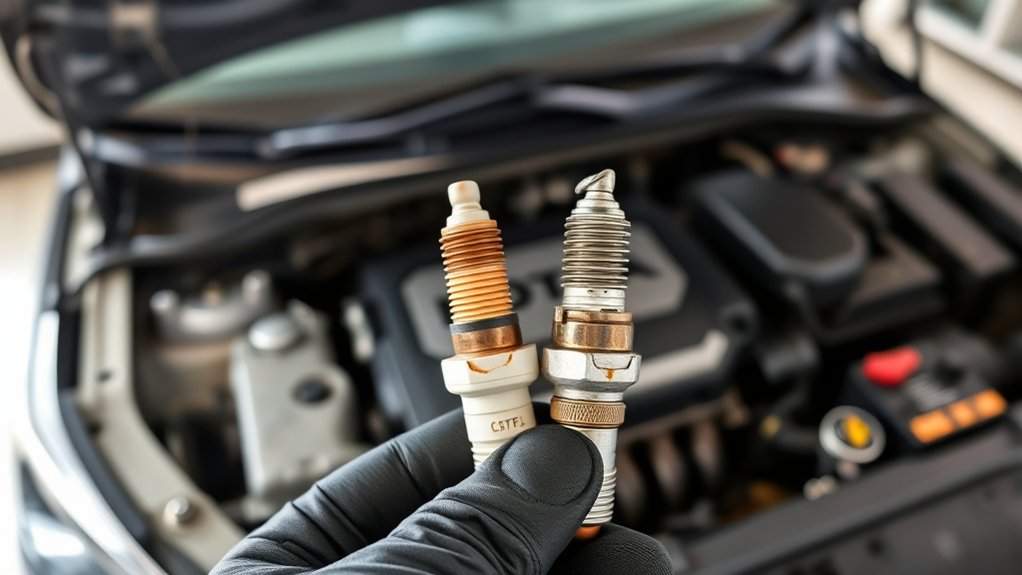
The maintenance schedule assumes a correctly operating engine with the specified plugs installed correctly. Several faults can shorten plug life or cause premature fouling:
- Incorrect plug part number, heat range, reach, or seat design.
- Overtightening, undertightening, cross-threading, or installing a plug in a hot cylinder head.
- Oil entering the combustion chamber or leaking into a plug well.
- Coolant contamination caused by an internal leak.
- A rich air-fuel mixture, leaking injector, or repeated incomplete combustion.
- A weak ignition coil, damaged coil boot, wiring fault, or poor electrical connection.
- Persistent overheating, pre-ignition, detonation, or an incorrect plug heat range.
- Frequent short trips that do not allow the engine to reach full operating temperature.
Towing, idling, dusty roads, and other severe-use conditions affect several Camry maintenance items. However, you should not invent a shorter spark plug interval unless the maintenance guide for your exact model lists one or a diagnosed engine condition requires earlier replacement.
Why Spark Plug Inspection Matters
Inspection is useful when your Camry has symptoms, a misfire code, oil or coolant consumption, or related engine work. It can help a technician distinguish normal electrode wear from a deeper engine or ignition-system problem.
Help Prevent Catalytic Converter Damage
A severe misfire can send unburned fuel into the exhaust. That fuel may overheat and damage the catalytic converter. Replacing an overdue plug can solve a plug-related misfire, but the technician should verify the actual cause rather than assuming every misfire comes from the plugs.
Protect Fuel Economy
Worn or fouled plugs may cause incomplete combustion, hesitation, and increased fuel consumption. There is no reliable universal percentage for the fuel-economy loss because the result depends on the number of affected cylinders, engine load, driving conditions, and the underlying fault.
Maintain Smooth Performance
Correctly operating plugs help the engine start cleanly, idle smoothly, accelerate without hesitation, and keep emissions under control. Scheduled replacement also reduces the chance that severely worn plugs will place extra demand on the ignition coils.
Note: Recent Toyota schedules do not require you to remove long-life Camry spark plugs every 30,000 miles merely to inspect them. Follow the scheduled interval and investigate them sooner when symptoms or diagnostic evidence justify it.
Toyota Camry Spark Plug Replacement Cost
RepairPal’s estimate updated June 18, 2026 lists an average Toyota Camry spark plug replacement cost of $150 to $229 before taxes, fees, location adjustments, and related repairs. Its estimates for many newer Camry model years are higher, so a local written quote is more useful than a single national figure.
What Changes the Price?
- Four-cylinder versus V6 engine.
- Number and price of the required plugs.
- Access to the rear cylinder bank on a V6.
- Local labor rates.
- Corroded, seized, damaged, or cross-threaded plugs.
- Replacement of damaged coil boots, ignition coils, connectors, or seals.
- Additional diagnosis when the plugs are not the true cause of a misfire.
You can review the current national estimate on RepairPal’s Toyota Camry spark plug replacement page.
DIY Versus Professional Replacement
Four-cylinder Camry plug access is often more direct than V6 access, but proper installation still matters. V6 work may require removal of additional intake components to reach the rear bank, depending on the model.
A DIY replacement normally requires the correct spark plug socket, extensions, ratchet, torque wrench, compressed air or another safe method of clearing debris, and the vehicle-specific procedure. Work only on a cool engine, keep dirt out of the plug wells, start each plug by hand, and apply the specified torque.
Warning: Do not guess the torque or apply anti-seize compound to the threads unless the exact Toyota service information or plug manufacturer specifically calls for it. Lubricated threads can change clamping force and contribute to damaged aluminum cylinder-head threads.
The 2025 and newer U.S.-market Camry is a hybrid. Do not touch, disconnect, or work around orange high-voltage cables, connectors, the service plug, inverter components, or the hybrid battery unless you are trained and following the official repair procedure.
Choosing the Correct Spark Plugs
Toyota’s current maintenance guidance says to install plugs of the same type as originally equipped. That means the replacement must match the engine’s required specification, not merely the vehicle name.
Fitment is model-year and engine specific, so the safest approach is to start from a list built for your exact engine rather than a generic part number. For the 2.4L four-cylinder, our roundup of spark plugs for a 2007 Camry 2.4L compares the NGK and DENSO sets that match the factory specification, including the correct gap.
Confirm all of the following before installation:
- Exact model year and engine.
- Verified OE part number or approved cross-reference.
- Thread diameter, reach, and seat type.
- Required heat range and resistor design.
- Specified electrode gap.
- Installation torque and whether the plug is installed dry.
Many fine-wire iridium and platinum plugs are supplied with the correct gap. Do not force a gap tool against a fine center electrode. Verify the specification and inspect for shipping damage instead.
Tips for Extending Spark Plug Life
You cannot prevent normal electrode wear, but you can reduce premature fouling and damage:
- Follow the Toyota maintenance schedule for your exact Camry.
- Install the correct plug specification and torque.
- Repair oil leaks, coolant loss, rich-running faults, and misfires promptly.
- Keep ignition-coil boots and plug wells clean and dry.
- Use the fuel grade specified in the owner’s manual.
- Avoid repeatedly operating the engine with an active misfire.
- Investigate abnormal oil consumption, overheating, or coolant loss instead of repeatedly replacing fouled plugs.
Replacing plugs more often than Toyota requires does not automatically improve performance. If the engine is running correctly and the plugs are not due, unnecessary removal adds cost and creates another opportunity for installation damage.
When to Seek Professional Help
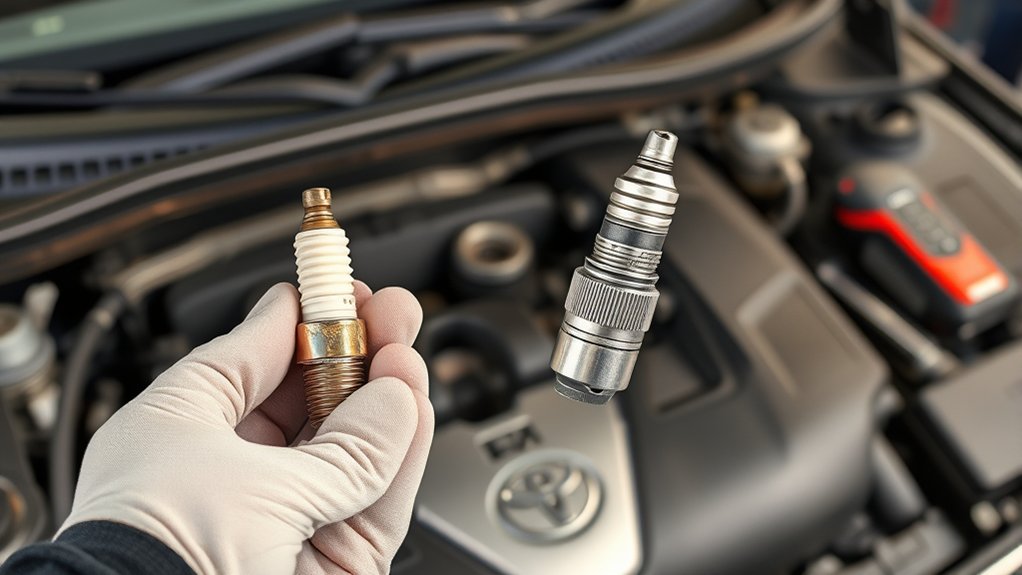
Professional diagnosis is the safer choice when:
- The check-engine light is flashing.
- The engine shakes severely, stalls, or loses substantial power.
- The same cylinder misfires after the plug or coil has been replaced.
- A plug is soaked with oil, fuel, or suspected coolant.
- A plug will not loosen with reasonable force.
- The threads feel rough, damaged, or cross-threaded.
- A coil connector, wiring harness, or plug well is damaged.
- The V6 intake components must be removed and you lack the correct procedure.
- You are working near hybrid high-voltage components.
- You need injector, compression, leak-down, smoke, or fuel-pressure testing.
A qualified technician can determine whether the root cause is normal plug wear, an ignition coil, an injector, a vacuum leak, a mechanical engine problem, or fluid contamination.
Camry Spark Plug Maintenance Checklist
- Identify the exact model year and engine.
- Check the official Toyota maintenance guide.
- Use 120,000 miles only when it matches your engine’s schedule.
- Use 60,000 miles for a recent 2GR-FKS V6 when specified.
- Do not wait for symptoms if the scheduled replacement is already due.
- Do not assume a misfire code proves the plug is bad.
- Use the original plug type or a verified equivalent.
- Install plugs in a cool engine using the specified torque.
- Repair the cause of oil, coolant, or carbon fouling.
- Keep a dated service record with the mileage and installed part number.
Related Guides
Frequently Asked Questions
How often should you replace spark plugs on a Toyota Camry?
Many recent four-cylinder and hybrid Camrys specify replacement at 120,000 miles or 144 months. A recent Camry with the 3.5-liter 2GR-FKS V6 may specify 60,000 miles or 72 months. Older models can use different intervals, so check the maintenance guide for your exact year and engine.
How long does a Toyota spark plug last?
There is no single Toyota-wide lifespan. Current Camry schedules include both 60,000-mile and 120,000-mile replacement points. The correct interval depends on the vehicle, engine, original plug specification, and maintenance guide.
Can a spark plug last 200,000 miles?
A plug may continue firing beyond its scheduled interval, but that does not make 200,000 miles an appropriate maintenance target. Electrode wear and gap growth can increase before a complete failure occurs. Replace the plugs at Toyota’s specified interval instead of waiting for a misfire.
What kills spark plugs quickly?
Common causes include oil or coolant contamination, a rich mixture, leaking injector, weak ignition coil, incorrect heat range, overheating, detonation, damaged insulation, incorrect torque, and the wrong plug specification. The underlying fault must be repaired or the new plug may foul again.
Can bad spark plugs cause a check-engine light?
Yes. A plug that fails to ignite the mixture can produce a random or cylinder-specific misfire code. However, coils, injectors, wiring, vacuum leaks, compression problems, and fuel faults can produce the same codes, so testing is still required.
Should you install iridium plugs in every Camry?
Install the plug type and exact specification listed for your engine. Many modern Camrys use iridium plugs, but choosing a plug only because it is labeled iridium does not guarantee the correct reach, heat range, seat, resistor, or gap.
Conclusion
For most current Toyota Camry owners, the key number is 120,000 miles. The major recent exception is the 2GR-FKS 3.5-liter V6, which Toyota schedules at 60,000 miles. Older models may differ.
Use the official maintenance guide for your exact vehicle, install the specified plug type, and diagnose misfires instead of replacing parts by guesswork. Correct plugs, proper torque, and timely repair of oil, coolant, ignition, or fuel-system faults will help your Camry start smoothly and run reliably.
Sources
- 2026 Toyota Camry Warranty & Maintenance Guide — current 120,000-mile spark plug interval and same-type replacement guidance.
- 2025 Toyota Camry Warranty & Maintenance Guide — hybrid safety precautions, 120,000-mile interval, and plug-selection guidance.
- 2024 Toyota Camry Warranty & Maintenance Guide — 60,000-mile 2GR-FKS V6 interval and 120,000-mile interval for other listed engines.
- 2020 Toyota Camry Warranty & Maintenance Guide — additional confirmation of the 60,000-mile 2GR-FKS V6 requirement.
- Toyota Manuals and Warranties — official lookup page for year-specific owner and maintenance guides.
- RepairPal Toyota Camry Spark Plug Replacement Estimate — current cost estimate and diagnostic overview, updated June 18, 2026.
