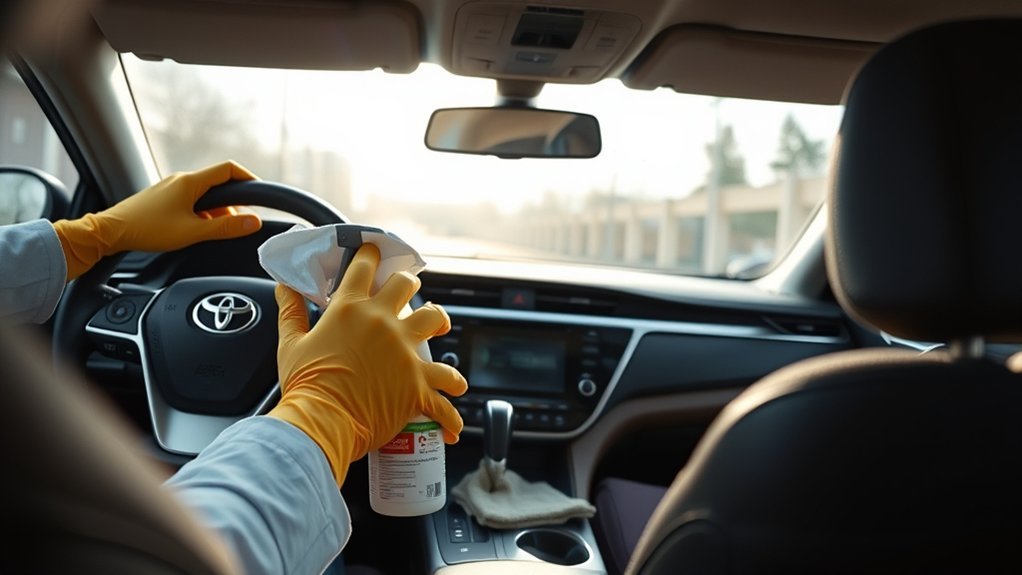
Cleaning the high-touch surfaces in your Toyota Camry can reduce dirt, oils, and germs without damaging the screen, controls, upholstery, or safety equipment. The safest method is to use the least aggressive product that will do the job, follow the product label, and check the care instructions for your Camry’s model year before applying any chemical.
Quick Answer
To disinfect a Toyota Camry safely, first remove dirt with a microfiber cloth and a mild, surface-safe cleaner. Then use an EPA-registered disinfectant only on compatible hard, nonporous surfaces, keeping them wet for the label’s contact time. Never spray electronics directly, soak seat belts, or leave sanitizer in a hot car.
Key Takeaways
- Routine cleaning is usually enough for a personal vehicle; disinfect when someone has been sick, a high-risk passenger uses the car, or another specific need justifies it.
- Clean away dust and grime before applying a disinfectant.
- Use only products approved for the exact surface, and keep disinfected surfaces wet for the contact time printed on the label.
- Apply liquid to a cloth instead of spraying screens, buttons, ports, speakers, or switches directly.
- Treat seat belts, child restraints, leather, cloth, and electronics as sensitive materials that require separate care methods.
At a Glance
| Time Required | 20–35 minutes for the main touchpoints |
| Difficulty | Easy, with careful product selection |
| Tools Needed | Microfiber cloths, vacuum or soft brush, mild cleaner, compatible disinfectant when needed, and optional gloves |
| Cost | About $8–$20 for basic supplies, depending on what you already own |
Gather Your Disinfecting Supplies
Before cleaning, use the Toyota Manuals and Warranties portal to locate the manual for your Camry’s model year. Screen coatings, steering-wheel materials, upholstery, trim finishes, and care restrictions can differ by year and trim.
Gather the following supplies:
- Several clean microfiber cloths: Use separate cloths for the screen, hard trim, and dirty areas so you do not move residue from one surface to another.
- A small vacuum or soft detailing brush: Remove crumbs and grit before wiping. Loose debris can scratch glossy trim and screens.
- A mild, surface-compatible cleaner: Plain mild soap diluted according to the surface-care instructions is often enough for routine cleaning. An automotive interior cleaner may also be used when its label lists the material you are cleaning.
- An EPA-registered disinfectant, when disinfection is needed: Confirm that the label permits use on the specific hard, nonporous material. An EPA registration does not make a product safe for every automotive surface.
- Optional disposable gloves: Use them when the product label recommends hand protection or when cleaning bodily-fluid contamination.
- Hand sanitizer for hands only: When soap and water are unavailable, the CDC recommends a hand sanitizer containing at least 60% alcohol. Do not use hand sanitizer as an improvised cleaner for the dashboard, steering wheel, touchscreen, leather, or fabric.
The FDA states that consumer antibacterial soap has not been shown to prevent illness better than plain soap and water. For vehicle fabrics, use a mild soap or upholstery product that the material manufacturer permits rather than assuming an “antibacterial” formula is better.
Warning: Read every product label before use. Do not mix cleaning chemicals, do not combine bleach with ammonia or another cleaner, and do not use a product in an enclosed vehicle without the ventilation required by its label. Keep chemicals away from children and pets.
[Amazon Products Picked for You]

10x GRIP-ROOT WEAVE - TRAP MORE, WORK LESS: Ultra-absorbent microfiber towels for car Grip Root weave works like PLANT ROOT FOLLICLES, sucking up & LOCKING AWAY 8x to 10x its weight in liquid, particulates, moisture, grime and dirt in far LESS TIME than traditional ‘Heavy Duty’ Cleaning Rags. Each towel features a 2.5mm thick design, providing enhanced durability and better grip during use.

Professional Towels (MIC35303) - Premium 16x16 inch microfiber cleaning cloths for cars; designed for washing, drying, and detailing cars while providing scratch-free results on paint, glass, chrome, and interior surfaces

Unparalleled Cleaning Performance: Our microfiber towels provide outstanding water absorption and adhesion; effortlessly absorb dirt and liquid, delivering exceptional cleaning results that will leave your car looking brand new
Choose Cleaning or Disinfection Based on the Situation
Cleaning removes dirt, oils, and many germs through detergent and wiping. Sanitizing reduces germs to a level defined by the product claim. Disinfecting uses a registered chemical to kill the germs listed on its label.
According to current CDC cleaning and disinfection guidance, regular cleaning is sufficient in most ordinary situations. Consider disinfection after transporting someone who is sick, when a passenger has a weakened immune system, after contamination involving bodily fluids, or when another specific exposure makes it appropriate.
Clean first. Disinfect only when needed, and keep the surface wet for the full contact time stated on the product label.
Identify High-Touch Surfaces in Your Camry
Start with the surfaces touched by the driver and passengers during nearly every trip. The exact controls vary by Camry model year and trim, but the common high-touch areas include:
- Steering-wheel rim, spokes, buttons, and paddle shifters where equipped
- Gear shifter and surrounding console
- Interior and exterior door handles
- Push-button start or ignition key area
- Key fob
- Infotainment screen and physical audio controls
- A/C and heating controls
- Turn-signal and wiper stalks
- Window, lock, and mirror-control buttons
- Parking-brake control where equipped
- Seat-adjustment controls
- Center-console latch, armrest, cupholders, and charging area
- Seat-belt latch plates and buckle-release buttons
- Grab handles, glove-box handle, rear armrest, and rear climate controls where equipped
Do not assume every listed surface can be treated with the same chemical. Screens, coated trim, leather, synthetic leather, cloth, painted buttons, seat-belt webbing, and soft-touch plastics need different care.
How to Disinfect Each Area Step by Step
[Amazon Products Picked for You]
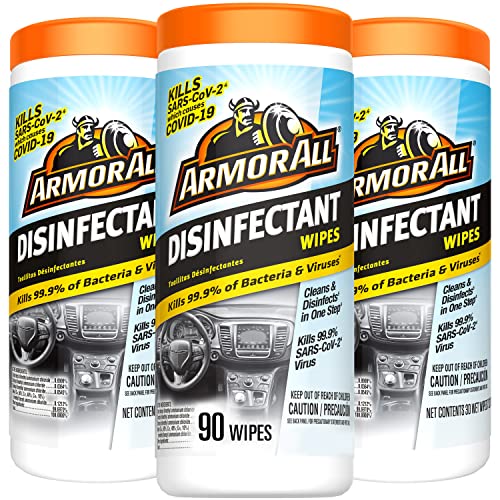
Disinfectant Wipes: 3 packs of 30 Armor All Disinfectant Wipes

NEW SPARKLING SCENTS: Great for daily cleaning, Clorox Disinfecting Cleaning Wipes deliver an effective clean and sparkling scent with every wipe; packaging may vary

Car Interior Cleaner Pack: The Armor All car cleaning kit includes one 30-count canister of Armor All Cleaning Wipes, one 30-count canister of Protectant Wipes and one 30-count canister of Glass Wipes; use these as on-the-go car cleaner wipes
1. Park Safely and Power Down
Park in a shaded, well-ventilated location. Shift into Park, set the parking brake, turn the vehicle off, and allow hot interior surfaces to cool. Powering down reduces the chance of activating controls while you clean and makes it easier to see streaks on the display.
2. Remove Loose Dirt First
Vacuum crumbs from seams, cupholders, the center console, and around buttons. Use a soft brush to lift dust from narrow gaps. Do not push debris into switches, microphones, speakers, USB ports, or screen edges.
3. Test the Product
Read both the product label and your Camry manual. Test the cleaner on a small hidden area and let it dry completely. Stop if you notice color transfer, fading, haze, swelling, softening, tackiness, or a change in texture.
4. Clean Before Disinfecting
Lightly dampen a microfiber cloth with the approved cleaner. The cloth should be damp, not dripping. Wipe away visible soil and skin oils, turning the cloth to a clean side as it becomes dirty.
5. Apply Disinfectant Only to Compatible Surfaces
When disinfection is justified, use an EPA-registered product whose label covers the surface and the intended use. Apply it evenly without flooding seams. Follow the EPA’s safe disinfectant-use guidance and all label directions.
6. Observe the Full Contact Time
The surface must remain visibly wet for the contact time listed on the disinfectant label. If it dries too soon, the label may require another application. Do not guess the time or wipe the product away immediately.
7. Dry and Inspect
After the required contact time, follow the label’s directions for wiping, rinsing, or air drying. Use a fresh microfiber cloth if needed. Before driving, confirm that the steering wheel, pedals, shifter, seat-belt hardware, screen, and switches are dry and functioning normally.
Pro Tip: Fold each microfiber cloth into quarters. This gives you eight clean wiping faces and helps prevent oily residue from being spread back over the dashboard or screen.
Steering Wheel, Gear Shifter, and Hard Controls
Use a lightly dampened microfiber cloth to clean the steering-wheel rim, spokes, buttons, gear shifter, turn-signal stalk, wiper stalk, door pulls, and hard console surfaces. Work around button edges instead of pressing liquid into them.
If using a compatible disinfecting wipe, squeeze out excess liquid first. The wipe should wet the surface without dripping. Follow the contact time, then dry the steering wheel thoroughly so it is not slippery.
Door Handles, Window Buttons, and Mirror Controls
Clean both interior and exterior door handles. For window, lock, and mirror controls, apply the product to the cloth rather than the switch panel. Wipe the top and sides of the buttons without forcing moisture into the gaps.
Infotainment Screen and Glossy Trim
Begin with a clean, dry microfiber cloth. If fingerprints remain, use a cloth only slightly dampened with water or a screen cleaner expressly permitted by the applicable Toyota manual. Wipe gently without heavy pressure.
Never spray the screen directly. Avoid paper towels, abrasive pads, household glass cleaner, ammonia, strong solvents, and any disinfectant not approved for the display coating. Keep liquid away from the screen bezel, buttons, microphone openings, speakers, and ports.
Note: If your disinfectant is not approved for the touchscreen, clean the screen without disinfecting it. Protecting the display coating and electronics is safer than applying an incompatible chemical.
Leather, Synthetic Leather, and Vinyl
Remove dust with a dry microfiber cloth. Apply a small amount of cleaner approved for the exact material to a second cloth, then wipe gently. Do not saturate perforated seats, seams, stitching, or areas containing seat-mounted airbag components.
Many surface disinfectants can dry, discolor, haze, or soften upholstery finishes. Unless both the product label and vehicle instructions permit disinfection, use routine cleaning and reserve stronger treatment for situations where it is necessary.
Cloth Seats, Carpet, and Soft Surfaces
Vacuum first. Spot-clean stains with a fabric-safe cleaner or mild soap solution approved for the upholstery. Blot rather than scrub aggressively, use as little moisture as possible, and let the material dry completely with the doors or windows open in a secure location.
Do not use a hard-surface disinfectant on fabric unless its label specifically includes soft surfaces and the upholstery instructions permit it. A product that is safe for a plastic door handle may not be safe or effective on cloth.
Seat Belts and Buckles
Seat-belt webbing is safety equipment. Follow the cleaning method in the model-year Camry manual. Use minimal moisture, avoid bleach, solvents, dyes, stiff brushes, and aggressive scrubbing, and never soak the belt or place chemicals inside the retractor.
For buckle hardware, remove crumbs around the opening with a soft brush or vacuum. Wipe the exterior release button with a barely damp cloth, keeping liquid out of the mechanism. Allow the belt and buckle area to dry fully before use.
Child Safety Seats
A child restraint has its own cleaning restrictions. Do not treat its cover, foam, harness, buckle, or shell as ordinary Camry upholstery. Follow the exact car-seat manufacturer’s instructions for washing, drying, disassembly, and reassembly. NHTSA advises caregivers to use the applicable child-seat instructions and the vehicle owner’s manual.
Do not machine-wash, soak, bleach, or chemically disinfect a harness unless the child-seat manufacturer expressly allows it. Incorrect cleaning or reassembly can affect fit or performance.
Key Fob and Push-Button Start
Turn the vehicle off and keep the key fob away from the cabin while cleaning to prevent accidental activation. Wipe the fob with a barely damp cloth, avoiding openings and seams. Do not spray it, soak it, or apply liquid around a removable emergency-key slot or battery cover.
Airbag Covers and Safety-System Areas
Use only a lightly dampened cloth on the steering-wheel hub, dashboard airbag cover, seat sides containing airbags, and nearby seams. Do not apply dressings that create gloss, soften materials, or leave a slippery film. Never flood or probe an airbag seam.
Effective Tips for On-the-Go Car Sanitization
For a quick cleanup after shared driving, public facilities, fueling, or handling frequently shared items, remove visible dirt from your hands and use hand sanitizer only when soap and water are unavailable. The CDC recommends at least 60% alcohol for hand sanitizer.
Hand sanitizer is not a substitute for an interior-surface cleaner. It can leave residue, damage finishes, and is not labeled for disinfecting vehicle controls.
If you carry wipes or another cleaning product:
- Keep the container closed and upright.
- Follow all temperature and storage limits on the label.
- Keep it inaccessible to children and pets.
- Remove it from the vehicle when safe storage conditions cannot be maintained.
- Do not place flammable products near cigarettes, lighters, power inverters, heaters, or other ignition sources.
The FDA warns that alcohol-based hand sanitizer is flammable and should be kept away from heat and flames. Rub sanitizer into your hands until they are completely dry before touching a source of heat, sparks, or flame.
Warning: Do not leave a leaking, swollen, damaged, or unlabeled chemical container in the car. If a product spills, ventilate the vehicle, avoid skin and eye contact, and follow the label’s spill and disposal instructions.
[Amazon Products Picked for You]

Interior Car Wipes: One 90 count canister of Armor All wipes for car interior; a car essentials to your car cleaning kit

INTERIOR CLEANER: Quik interior cleaner wipes safely clean and protect all interior car surfaces including plastics, vinyl, leather, rubber, metal and even LCD and navigation screens

USE ON MULTIPLE SURFACES: Great for use in kitchens, bathrooms, floors, and all around the house. Use on stainless steel, sealed granite, and finished wood.
Maintain a Regular Cleaning Schedule for Your Vehicle
A fixed weekly disinfection rule is unnecessary for every driver. Build the schedule around how the Camry is used, who rides in it, and whether surfaces are visibly dirty.
| Situation | Recommended Action |
|---|---|
| Normal personal use | Clean high-touch areas when visibly dirty and as needed to remove oils, dust, food residue, and spills. |
| Frequent passengers, children, ridesharing, or shared family vehicle | Inspect touchpoints several times a week and clean them when needed. A weekly detailed cleaning can be a practical baseline. |
| Passenger is sick or recently ill | Clean first, then disinfect compatible high-touch hard surfaces according to the disinfectant label. |
| Bodily-fluid contamination | Limit contact, use label-required protective equipment, ventilate, and follow the applicable cleanup instructions. Consider professional detailing when contamination reaches porous materials or electrical components. |
| Spill near controls or electronics | Power down, blot without pressing liquid farther inside, and obtain professional help if a control behaves abnormally. |
Set a phone or calendar reminder if it helps you inspect the steering wheel, shifter, door handles, screen, window buttons, seat-belt buckles, cupholders, and backseat area. The goal is a clean, dry, functional interior—not constant chemical treatment.
Troubleshooting Common Cleaning Problems
The Touchscreen Looks Streaky
Use a fresh, dry screen-safe microfiber cloth and wipe lightly in straight passes. Streaks usually mean too much product or a contaminated cloth. Do not add more cleaner until the screen is dry.
A Surface Feels Sticky
Stop using the product. If the material instructions permit it, wipe the area with a clean cloth slightly dampened with water to remove residue, then dry it. Persistent tackiness, softening, or color transfer can indicate chemical incompatibility.
Glossy Trim Looks Hazy or Scratched
Do not polish it with an abrasive compound unless Toyota specifically approves that treatment. Switch to a clean microfiber cloth and a compatible cleaner. Deep scratches or permanent haze may require professional correction or trim replacement.
A Strong Chemical Odor Remains
Move the vehicle to a secure, shaded, well-ventilated area and open the doors or windows. Do not drive if fumes cause eye, throat, breathing, or other physical irritation. Review the product label for ventilation and exposure instructions.
A Button or Control Stops Responding
Stop applying liquid and leave the control alone while the vehicle is powered off. Do not use heat guns, hair dryers, metal tools, or compressed air to force liquid deeper into the assembly. If the problem remains after the area has dried, contact a qualified Toyota service provider.
The Upholstery Changes Color
Blot away excess product with a clean cloth and stop cleaning that area. Do not attempt to neutralize one chemical with another. Consult the product manufacturer, your Camry manual, or a professional automotive upholstery specialist.
Frequently Asked Questions
How do you sanitize high-touch surfaces in a Toyota Camry?
Remove loose dirt, clean the surface with a mild product approved for that material, and then use a compatible sanitizer or disinfectant only if needed. Apply it according to the label, cover the surface evenly, and maintain the required wet contact time. Avoid saturating switches, seams, or electronics.
How do you clean a Toyota touchscreen?
Turn the display off and begin with a clean, dry microfiber cloth. For remaining marks, use a cloth only slightly dampened with water or a cleaner approved by the applicable Toyota manual. Never spray the screen directly, press hard, or use ammonia, abrasives, paper towels, or an unapproved disinfectant.
How do you disinfect the inside of a car safely?
Park, power down, ventilate, vacuum loose debris, and clean visible soil first. Use an EPA-registered disinfectant only on compatible surfaces and follow its directions for protective equipment, application, contact time, wiping, rinsing, drying, and storage. Treat electronics, upholstery, seat belts, and child restraints separately.
How do you clean the inside of a Toyota Camry?
Vacuum the seats, carpet, console, and crevices; wipe hard surfaces with a microfiber cloth and a compatible mild cleaner; clean the touchscreen with a screen-safe cloth; spot-clean upholstery; and follow the model-year manual for leather, seat belts, trim, and safety-system areas. Let all surfaces dry before driving.
Can you use disinfecting wipes on a Toyota Camry interior?
Only when the wipe label permits use on the exact material and your Camry’s care instructions do not prohibit it. Test a hidden spot first, squeeze out excess liquid, keep moisture out of electronics, and follow the contact time. Do not assume a wipe that is safe for a door handle is safe for the touchscreen, leather, cloth, or glossy trim.
Can hand sanitizer be used to clean a steering wheel?
No. Hand sanitizer is formulated for skin and can leave residue or damage leather, synthetic leather, coatings, and plastics. Use a cleaner approved for the steering-wheel material. Hand sanitizer should be reserved for hands and stored according to its label away from heat and flames.
How often should high-touch car surfaces be cleaned?
Clean them when visibly dirty and more often when the vehicle is shared, carries children, or is used for ridesharing. Disinfecting every day or every week is not automatically necessary. Use disinfectant when someone is sick, a vulnerable passenger requires added precautions, or another specific contamination event occurs.
Conclusion
Safely cleaning a Toyota Camry interior means matching the method to the surface. Remove dirt first, use mild products for routine care, and reserve chemical disinfection for situations where it is needed. When disinfecting, choose a compatible product, follow its contact time, and keep moisture away from electronics and safety components.
A consistent inspection and cleaning routine can reduce grime and surface contamination while protecting the steering wheel, screen, controls, upholstery, seat belts, and trim. When the product label and the model-year owner’s manual differ, follow the more restrictive instruction or ask a Toyota service professional before proceeding.
Sources
- Toyota Manuals and Warranties — model-year-specific owner and multimedia manuals.
- CDC: When and How to Clean and Disinfect Your Home — cleaning versus disinfection, pre-cleaning, ventilation, chemical safety, and contact time.
- U.S. EPA: Six Steps for Safe and Effective Disinfectant Use — label-directed selection and use of registered disinfectants.
- CDC: Hand Sanitizer Guidelines and Recommendations — proper use of hand sanitizer containing at least 60% alcohol.
- FDA: Safely Using Hand Sanitizer — flammability, child safety, supervision, and storage precautions.
- NHTSA: Car Seats and Booster Seats — following child-restraint manufacturer instructions and the vehicle owner’s manual.
