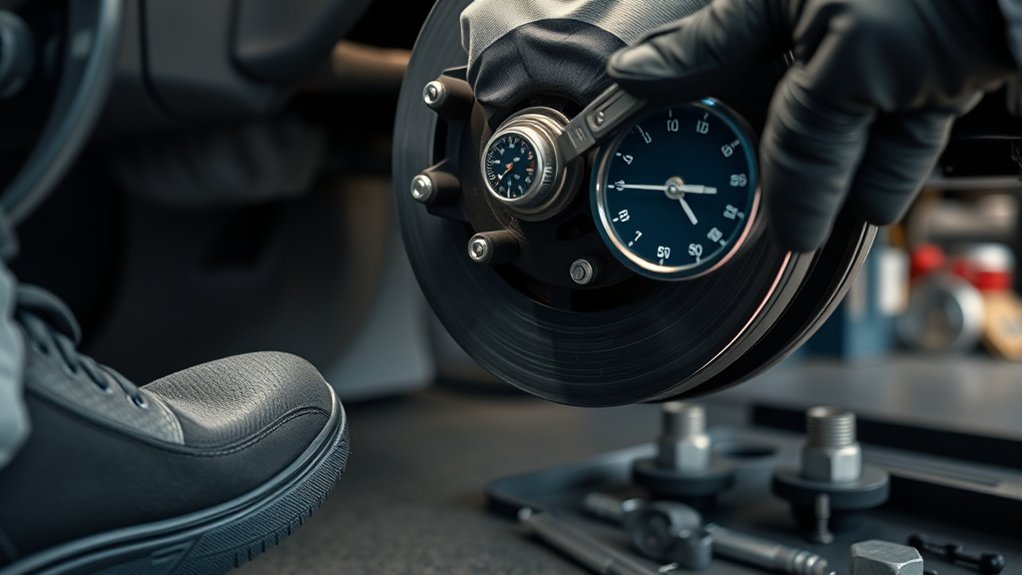
A pulsing brake pedal in your Toyota Camry may feel minor at first, but when the vibration occurs is the most useful clue. Pulsation during ordinary stops commonly points to disc thickness variation, uneven friction-material deposits, excessive rotor or hub runout, or a sticking caliper. A rapid pulse during a hard stop on a slippery surface, however, may simply be normal anti-lock braking system operation.
Model year matters. The U.S.-market 2025 and 2026 Camry is exclusively hybrid and uses electronically managed braking hardware that differs from many older Camrys. Normal brake-system operation can therefore feel different between generations, but a persistent rhythmic pulse during routine dry-road braking still deserves diagnosis rather than being dismissed as a normal hybrid characteristic.
Last updated: September 19, 2026 — substantively reviewed for current 2025–2026 Camry hybrid braking context, rotor-measurement guidance, internal diagnostic links, and structured-data compliance. [VERIFY: add the real author/byline and relevant credentials in the CMS author area.]
Quick Answer
Toyota Camry brake pedal pulsation during ordinary stops usually points to rotor thickness variation, uneven pad deposits, excessive rotor or hub runout, or a sticking caliper. Pulsing only during a hard stop on a slippery surface may be normal ABS operation. Persistent vibration, grinding, pulling, fluid loss, or warning lights needs prompt inspection.
Key Takeaways
- Not every pulsating brake pedal is caused by a physically warped rotor. Uneven rotor thickness, pad deposits, and excessive runout are common explanations.
- A rapid pulse during hard or slippery-road braking may be normal ABS feedback.
- A pulse during routine stops should be diagnosed before pads or rotors are replaced.
- Current U.S. 2025–2026 Camrys are hybrids with electronically controlled braking, so use service information for the exact model year rather than assuming every Camry has the same brake system.
- Grinding, reduced braking, fluid leakage, a sinking pedal, severe pulling, or a red brake warning light requires immediate attention.
- Use specifications for your exact Camry model year. Rotor limits, brake packages, procedures, and torque values can differ.
At a Glance
| Time Required | About 15 to 30 minutes for basic observations and a visual check; full measurement and diagnosis take longer |
| Difficulty | Basic for symptom observation; moderate to advanced for brake disassembly and precision measurements |
| Tools Needed | Flashlight and tire-pressure gauge for basic checks; technicians may also use a micrometer, dial indicator, torque wrench, scan tool, and approved lifting equipment |
| Cost | Basic observation costs nothing; professional diagnosis and repair costs vary by the failed component and local labor rates |
Warning: Stop driving and arrange professional service if braking power drops, the pedal sinks toward the floor, brake fluid is leaking, severe grinding occurs, the vehicle pulls sharply, or a red brake warning light remains on. Never work under a vehicle supported only by a jack.
What Brake Pedal Pulsation Usually Means
Brake pedal pulsation is a repeating rise-and-fall sensation under your foot while the vehicle slows. When it happens during gentle or moderate braking on dry pavement, it usually means a rotating part of the brake or hub assembly is not moving evenly.
The term “warped rotor” is often used for every braking vibration. In practice, the rotor may have disc thickness variation, uneven deposits of friction material, excessive lateral runout, heat spots, or actual physical distortion. These conditions can change the clamping force as the rotor turns, creating the pulse you feel in the pedal.
Note: Rapid pedal feedback during a hard stop, especially on wet, icy, gravel, or otherwise slippery pavement, may be normal ABS operation. Keep firm pressure on the pedal and steer as needed. A recurring pulse during ordinary stops should still be inspected.
Does the Camry Model Year Change the Diagnosis?
Yes. Toyota Camry brake systems, rotor specifications, warning messages, and service procedures vary by generation and powertrain. That difference is especially important on current U.S. models: Toyota made the 2025 Camry exclusively hybrid and retained an all-hybrid lineup for 2026. Toyota also introduced an Electronically Controlled Braking system with on-demand hydraulic pressurization for the ninth-generation Camry. See Toyota’s 2025 Camry technical overview.
Hybrid regenerative braking and electronically controlled hydraulic braking can make pedal response feel different from an older conventional Camry. That does not mean a rhythmic pulse during ordinary dry-road braking should automatically be treated as normal hybrid operation. Identify the model year and powertrain first, then compare the symptom with the owner’s manual and model-specific service information.
Common Causes of Brake Pedal Pulsation in Toyota Camry
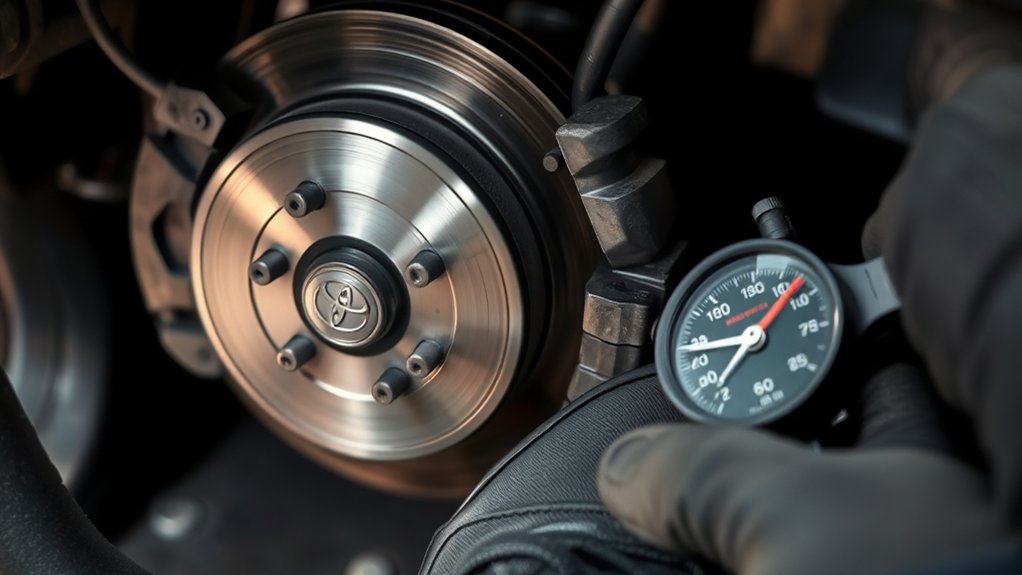
Disc Thickness Variation and Uneven Pad Deposits
Disc thickness variation means the rotor is slightly thicker in some areas than others. As the thicker section passes between the brake pads, hydraulic pressure changes and pushes feedback through the pedal.
Uneven friction-material deposits can create a similar effect. Repeated heavy braking, excessive heat, an unsuitable bedding process, or holding very hot brakes firmly at a stop can contribute to an uneven friction layer. Brake-judder research identifies thickness variation, thermal effects, rotor geometry, and friction variation as important contributors to braking vibration.
Rotor Runout or a Dirty Hub Surface
Lateral runout occurs when the rotor does not rotate perfectly square to the hub. Rust, scale, dirt, or damage between the rotor and hub can prevent the rotor from sitting flat. Excessive hub runout or wheel-bearing play can produce the same problem.
Runout may gradually create uneven rotor wear, so simply installing another rotor without cleaning and measuring the hub can allow the pulsation to return. SAE Recommended Practice J3111_202412 provides current industry guidance for measuring brake-rotor thickness variation and lateral runout.
Sticking Caliper or Uneven Brake Pad Wear
A sticking caliper piston, seized slide pin, damaged pad hardware, or restricted brake hose can apply uneven force or keep a pad in contact with the rotor. Warning signs can include:
- One pad wearing faster than the pad on the opposite side
- The vehicle pulling during braking
- One wheel becoming noticeably hotter than the others
- A burning smell after normal driving
- Blue or dark heat marks on a rotor
A technician should identify why the pads wore unevenly before installing new parts. Replacing pads alone will not correct a seized caliper or contaminated mounting surface.
Normal ABS Operation or an ABS-Related Fault
The anti-lock braking system rapidly adjusts hydraulic pressure when it detects that a wheel may lock. That operation can create a fast pulse or vibration in the pedal during emergency or low-traction braking. Toyota owner guidance for ABS-equipped Camrys instructs drivers to maintain firm pedal pressure rather than pump the brake while ABS is operating.
ABS activation during routine dry-road stops, an illuminated ABS warning light, or unusual braking behavior needs diagnosis. Check the warning-light guidance in your exact Toyota owner’s manual or Toyota’s warning-light resource.
Wheel, Hub, Bearing, Tire, or Suspension Problems
A loose wheel bearing, damaged hub, bent wheel, tire defect, or worn suspension component can amplify braking vibration. These faults may be felt more strongly through the steering wheel or body than through the brake pedal. If the main symptom is steering-wheel shake rather than pedal pulsation, use the dedicated Camry steering-wheel vibration when braking guide to narrow the front-end causes.
Wheel alignment alone does not normally create a rhythmic pedal pulse. Alignment problems are more likely to cause pulling, uneven tire wear, or an off-center steering wheel.
Can Brake Fluid Cause Pulsation?
Old, contaminated, aerated, or leaking brake fluid can affect hydraulic performance, but it is not a typical cause of a wheel-speed-related pedal pulse. Fluid problems more often cause a soft or spongy pedal, excessive pedal travel, reduced braking, fluid loss, corrosion, or heat-related fade.
If the fluid level is low, do not simply top it off and ignore the cause. Low fluid may result from pad wear or a hydraulic leak that needs inspection.
Preventative Tips for Maintaining Smooth Braking
Consistent installation practices and timely inspections can reduce the chance of recurring brake pulsation. For broader service planning, see the Toyota Camry brake inspection guide.
- Follow the correct maintenance guide: Use the schedule for your exact Camry year and operating conditions rather than relying on one universal inspection interval.
- Inspect the brakes when symptoms appear: Do not wait for the next routine service if you notice vibration, pulling, heat, noise, or a change in pedal feel.
- Clean the hub thoroughly: Rust or debris trapped behind a rotor can create runout even when the rotor is new.
- Use a torque wrench: Tighten wheel fasteners evenly in the correct sequence and to the specification for the exact model year.
- Service caliper hardware: Slides, boots, pad-contact areas, and approved lubrication points must move correctly.
- Follow the pad manufacturer’s bedding procedure: Bedding instructions vary by friction material. Avoid using one aggressive procedure for every replacement pad.
- Avoid unnecessary brake heat: Leave extra following distance and use smooth, controlled braking when traffic conditions allow.
Pro Tip: If pulsation begins soon after a brake job, ask whether rotor runout and thickness were measured, whether the hub face was cleaned, and whether the wheel fasteners received a final torque-wrench check. Replacing the same parts again may not solve an installation or hub problem.
Effective Solutions to Repair Brake Pulsation
The correct repair depends on measurements and inspection findings. Avoid replacing parts based only on how the vibration feels.
- Confirm when the vibration occurs: Determine whether it appears only under braking, only after the brakes become hot, or even while cruising.
- Measure rotor thickness: A technician should take measurements at several points around the rotor and compare the variation with the service limit for the vehicle.
- Measure rotor and hub runout: A dial indicator can show whether the rotor or underlying hub is rotating out of plane.
- Inspect the pads and calipers: Uneven wear, glazing, contamination, seized slides, damaged hardware, or a sticking piston must be corrected.
- Resurface or replace the rotor when appropriate: Resurfacing is possible only when the rotor’s condition and remaining thickness meet Toyota’s limits. Replace rotors that are too thin, cracked, severely scored, badly corroded, or damaged by heat.
- Correct hub or bearing problems: Installing another rotor will not solve excessive hub runout or wheel-bearing play.
- Install compatible pads: Select pads designed for the exact Camry model year, trim, and brake package. A friction edge code by itself is not a complete measure of quality or suitability.
- Complete the specified bedding process: Follow the instructions supplied by the pad or brake-component manufacturer.
Note: Do not use a torque value or rotor-thickness limit taken from another Camry year. Select your vehicle through Toyota’s manuals and warranties portal or use verified service information for the exact configuration.
Diagnosing Brake Problems Accurately
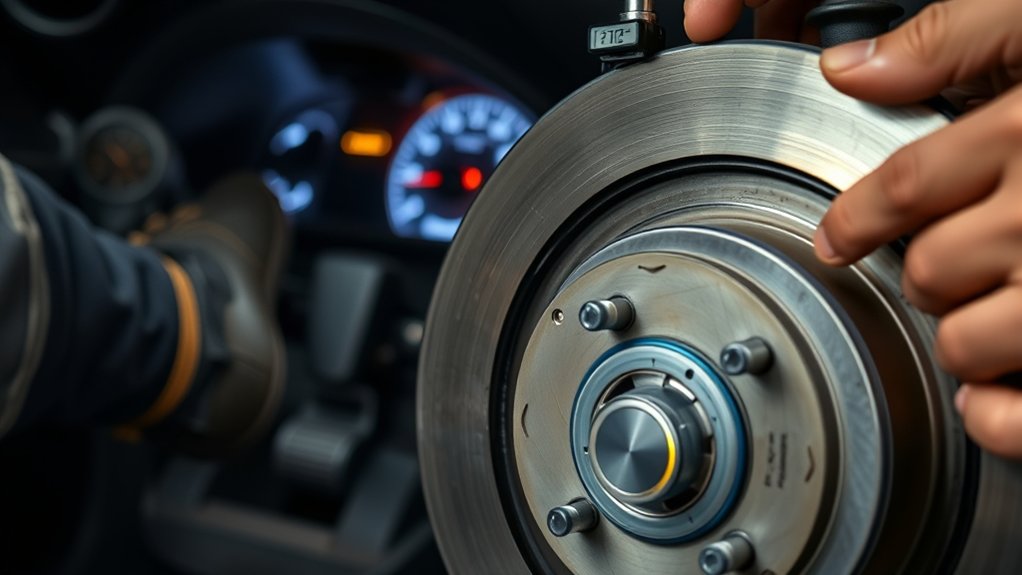
A careful diagnosis begins with the driving conditions and then moves to visual inspection and precision measurements. Measuring the fault matters because pedal pulsation can result from thickness variation, rotor or hub runout, caliper problems, or a non-brake rotating component that produces a similar vibration.
- Record the conditions: Note the vehicle speed, brake pressure, road surface, brake temperature, and whether the vibration occurs during every stop.
- Identify where you feel it: Separate pedal feedback from steering-wheel shake, seat vibration, or whole-vehicle vibration.
- Identify the exact Camry: Record model year, trim, powertrain, and whether it uses hybrid/electronically controlled braking before applying service specifications.
- Check dashboard indicators: Look for red brake, ABS, stability-control, or related safety warnings. A Check Engine Light may need separate diagnosis, but it does not by itself identify the cause of brake pulsation.
- Check recalls and campaigns: Search the VIN through Toyota’s recall page and the NHTSA recall database.
- Inspect visible components: Look for rotor scoring, cracks, corrosion, heat marks, fluid leaks, damaged hoses, and uneven pad wear.
- Measure rather than guess: Use a micrometer for rotor-thickness variation and a dial indicator for rotor and hub runout.
- Inspect related parts: Check caliper operation, wheel-bearing play, hub condition, suspension joints, wheels, and tires.
- Verify the repair: After service, complete the specified bedding procedure and conduct a controlled road test in a safe location.
What the Vibration Location Can Tell You
| What You Notice | Possible Area | Next Check |
|---|---|---|
| Pedal pulses during ordinary stops | Rotor thickness variation, runout, hub condition, or caliper operation | Measure rotor thickness and runout; inspect the hub and caliper |
| Fast pedal pulse during a hard slippery-road stop | Possible normal ABS activation | Check whether it occurs during normal dry-road stops or with an ABS warning light |
| Steering wheel shakes only while braking | Front brakes, front hubs, wheel bearings, steering, or suspension | Inspect front rotor variation, hub runout, bearing play, and suspension looseness; see the Camry steering-wheel vibration guide |
| Seat or floor vibrates while braking | Rear brakes, rear hubs, wheels, or tires | Inspect rear brake and rotating components |
| Vibration continues without touching the brake | Wheel balance, tire damage, bent wheel, bearing, axle, or suspension | Diagnose it as a road-speed vibration instead of assuming the brakes are responsible |
| Pedal feels soft, low, or slowly sinks | Hydraulic leak, air, fluid problem, master cylinder, or another hydraulic fault | Stop driving if braking is reduced and obtain immediate professional inspection |
When to Call in the Pros for Brake Issues
Brake diagnosis requires professional equipment when the cause is not visible or when disassembly and precision measurements are needed. Arrange service promptly when you notice any of the following:
- Persistent pulsation during normal braking
- Grinding, heavy scraping, clicking, or clunking
- A red brake warning or ABS warning light
- A pedal that feels soft, low, or sinks under steady pressure
- Brake-fluid leakage or a repeatedly dropping fluid level
- Strong pulling or unstable steering while braking
- A hot wheel, burning smell, smoke, or severe heat from one corner
- Visible rotor cracks, major scoring, or heavy corrosion
- Pulsation that returns soon after new pads or rotors were installed
- Uncertain rotor-thickness, runout, or torque specifications
If the Check Engine Light is flashing, address that engine-related warning immediately as a separate concern. Do not assume it explains the brake pulsation unless a qualified diagnosis establishes a connection.
Related Guides
Frequently Asked Questions
What causes a Toyota Camry brake pedal to pulsate?
Common causes include rotor thickness variation, uneven friction-material deposits, excessive rotor or hub runout, a sticking caliper, uneven pad wear, and wheel-bearing or hub problems. Rapid pulsing during a hard stop on a slippery surface may instead be normal ABS operation.
Is it safe to drive with a pulsating brake pedal?
A mild pulse may not mean immediate brake failure, but it can signal uneven braking or a component problem that may worsen. Limit driving and arrange an inspection. Stop driving if braking power drops, the pedal sinks, fluid leaks, severe grinding occurs, or the vehicle becomes difficult to control.
Is brake pedal pulsation normal when ABS activates?
Yes. ABS can create rapid pedal feedback during a hard stop when a wheel approaches lockup. Keep firm pressure on the pedal. Pulsation during ordinary dry-road braking, unexpected ABS activation, or an illuminated ABS warning light needs inspection.
Do pulsating brakes always require new rotors?
No. The rotor and hub should be inspected and measured first. Resurfacing may be possible when the rotor remains above its minimum thickness and has no cracks or severe damage. Replacement is safer when the rotor is too thin, cracked, badly scored, heavily corroded, or damaged by heat.
Why did my Camry start pulsating after a brake job?
Possible causes include rust or debris behind the rotor, excessive hub runout, incorrect wheel-fastener torque, unsuitable bedding, reused damaged hardware, a sticking caliper, or a rotor that was not measured correctly. Replacing the pads and rotors again may not help until the underlying cause is corrected.
Can wheel alignment cause brake pedal pulsation?
Wheel alignment by itself does not usually cause a rhythmic pulse in the brake pedal. It can cause pulling or uneven tire wear. Steering-wheel shake while braking is more likely to involve front brake variation, hub runout, wheel-bearing play, suspension looseness, or a wheel or tire problem.
Can bad brake fluid cause a pulsing pedal?
Brake-fluid problems are more likely to cause a soft pedal, excessive travel, reduced braking, leakage symptoms, corrosion, or fade. They are not a common cause of a rhythmic pulse that follows wheel rotation. Both symptoms still deserve inspection because more than one fault can exist.
Can a Camry Hybrid have different brake-pedal feel?
Yes. Hybrid Camrys can combine regenerative braking with hydraulically applied friction brakes, and current 2025–2026 U.S. Camrys use electronically controlled braking. That can make pedal response feel different from an older conventional Camry. A persistent rhythmic pulse during ordinary dry-road braking should still be diagnosed rather than assumed to be normal hybrid operation.
Conclusion
Toyota Camry brake pedal pulsation should be diagnosed by when it occurs, where the vibration is felt, which model year and brake system the car uses, and what measurements reveal. A rapid pulse during a hard low-traction stop may be normal ABS feedback, but vibration during ordinary braking can point to rotor thickness variation, runout, pad deposits, caliper trouble, or a hub-related fault.
Do not replace parts by guesswork or assume a current hybrid Camry behaves exactly like an older gasoline model. Check the rotor, hub, caliper, wheel bearing, installation surfaces, dashboard warnings, and model-specific specifications before choosing a repair. Seek immediate help when braking becomes weaker, the pedal sinks, fluid leaks, warning lights appear, or severe noise or pulling develops.
Sources
- Toyota Manuals and Warranties — model-specific owner manuals, maintenance information, procedures, and vehicle guidance
- Toyota Warning Lights — interpretation of ABS and other safety-system warning indicators
- Toyota Safety Recalls and Service Campaigns — VIN-based Toyota campaign information
- National Highway Traffic Safety Administration Recall Database — recalls, investigations, complaints, and manufacturer communications
- Toyota: 2025 Camry Technical Overview — current-generation hybrid powertrain and electronically controlled braking information
- Toyota: 2026 Camry Overview — confirmation of the 2026 U.S. all-hybrid Camry lineup
- SAE J3111_202412: Brake Rotor Thickness Variation and Lateral Run-Out Measurements — current recommended practice for rotor thickness-variation and runout measurement
- SAE Technical Paper 972027: Brake Judder Analysis — technical analysis of brake-judder causes and diagnostic considerations
- SAE Technical Paper 920554: The Brake Judder Phenomenon — engineering research on brake vibration and excitation mechanisms

